Core research facilities and other facilities that support research
Kansas State University boasts advanced core research facilities and other facilities that support research by each providing state-of-the-art resources, services, technology, products and technical training to researchers. Both types of facilities enable K-State’s cutting-edge research teams and foster interdisciplinary collaboration across scientific domains.
K-State facilities include Analytical, Imaging, and Molecular Facilities, Experimental Facilities, Data Management and Interpretation resources, facilities involved in Maintenance and Distribution of Research Materials, and those providing Production and Repair services.
- Advanced Manufacturing and Bulk Solids Technology Center
- Animal Model/Pathology Core Facility
- Behavioral Neuroscience Core
- Beocat
- Bioinformatics Center
- Biologics Development Module at the BRI
- Biosecurity Research Institute
- Cognitive Neuroscience Core
- Comparative Medicine Group
- Confocal Microscopy and Microfluorometry Core
- Electronics Design Laboratory
- Flow Cytometry Laboratory
- Fungal Genetics Stock Center
- Geographic Information Systems Spatial Analysis Laboratory and GEOCAT
- Herbarium
- Integrated Genomics Facility
- Integrated Molecular Entomology Core
- Kansas Lipidomics Research Center
- Konza Prairie Biological Station
- Large Animal Research Center
- Materials Characterization Lab
- Microscopy Facility
- Model Organisms Kitchen
- Molecular Biology Lab
- Nanotechnology Core
- Neuroinformatics Core
- Next-Gen Sequencing
- NMR Laboratories
- Nuclear Reactor Facility
- Physics Machine Shop
- Plant Growth Facilities
- Plant Transformation Facility
- Protein and Biopolymer Analysis Core Laboratory
- Radioimmunoassay Lab
- Single Crystal X-ray Diffraction
- Soil Testing Lab
- Stable Isotope Mass Spectrometry Laboratory
- Statistical Consulting Laboratory
- Technology Development Institute
- Water Quality Laboratory
- APDesign Fabrication Lab
- Biological and Agricultural Engineering Shop
- Biology Storeroom
- Biomanufacturing Laboratory and Training Facility
- Characterization and Testing Lab
- Chemistry Storeroom
- Electrical and Computer Engineering Shop
- Industrial and Manufacturing Engineering Shop
- Mechanical and Nuclear Engineering Shop
- Plant Disease Diagnostic Laboratory
- Scientific Glass Shop
- Sunderland Innovation Lab
- Veterinary Diagnostic Laboratory
Analytical, imaging and molecular facilities
Advanced Manufacturing and Bulk Solids Technology Center
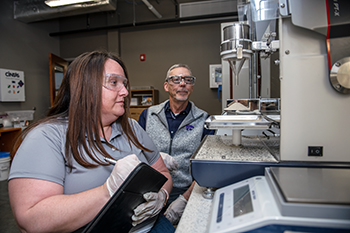 K-State's Advanced Manufacturing and Bulk Solids Technology Center, or BSTC, supports industry by improving technology and knowledge related to powder and bulk solid handling, and the manufacturing process. The center specializes in powder and bulk solids materials testing, education and research on powders and dry bulk materials.
The Bulk Solids Technology Center is the only university-centered facility in North America dedicated to improving technology and knowledge of powder and bulk solids handling.
Confocal Microscopy and Microfluorometry Core
The Confocal Microscopy and Microfluorometry Core provides expertise, training and access to equipment for confocal microscopy and microfluorometry.
The Confocal Core serves faculty, postdoctoral fellows, students and staff of K-State. Users are not charged fees for training and use of the facility but are expected to acknowledge in all publications: Confocal Core supported by CVM-KSU.
Flow Cytometry Laboratory
The Flow Cytometry Laboratory is housed in Mosier Hall, Room K208 of the College of Veterinary Medicine complex. This multi-user core laboratory is equipped with state-of-the-art flow cytometry analyzers by Becton Dickinson (LSR Fortessa X-20 and FACSCalibur).
Integrated Genomics Facility
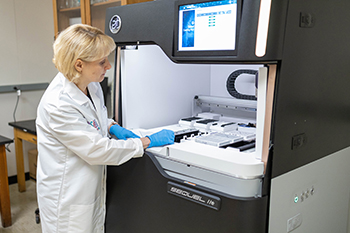 The Integrated Genomics Facility, or IGF, is K-State’s DNA sequencing core facility serving the whole campus. The facility provides service, expertise, research assistants and cutting-edge technology for K-State students and faculty. The training of next-generation scientists is a key part of its mission and annual summer workshops and individual training sessions support this goal.
Kansas Lipidomics Research Center
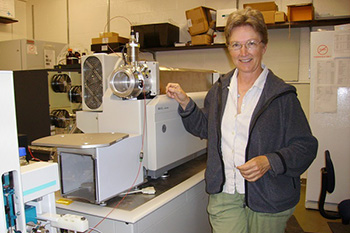
The Kansas Lipidomics Research Center, or KLRC, provides comprehensive, quantitative profiling of lipid molecular species using mass spectrometric technologies. KLRC personnel also work to expand lipid profiling and other metabolomic capabilities, promote collaborative research among lipid scientists, and provide training opportunities for postdoctoral, graduate, and undergraduate students.
Materials Characterization Lab
Materials Characterization Laboratory features a broad range of advanced/state-of-the-art characterization capabilities, including a Bruker D8 Discover X-ray Diffraction (XRD), a Bruker Dimension Nexus Scanning Probe Microscope (SPM/AFM/(with nanoindentation capability coming soon)), a Keyence VHX-X1 Digital Microscope with 3D profile measurement module, along with a ZEISS EVO MA10 Scanning Electron Microscope (SEM, with Oxford Instruments Ultim Infinity 40 EDS to be added soon), Hummer Sputter/C coater (coming soon), Raman spectroscopy, Instron test system, BET surface area analysis, FTIR, Dilatometry and Thermo Analysis system, etc. MCL enables comprehensive materials characterization—from nanoscale imaging to mechanical and chemical analysis.
Microscopy Facility
The Microscopy Facility, located in Ackert Hall, offers specimen preparation services including negative staining, plunge freezing, chemical fixation, freeze-substitution, immuno-labeling, resin sectioning, sputter coating and others. Imaging services include conventional transmission electron microscopy, scanning electron microscopy, light microscopy (phase contrast, differential interference contrast, bright field, dark field), fluorescence microscopy, laser scanning confocal microscopy, fluorescence recovery after photobleaching, Förster resonance energy transfer, cryo-electron microscopy, SEM electron dispersive x-ray spectroscopy, and electron diffraction.
Molecular Biology Lab
The Molecular Biology Lab, located in the Biomedical Core in the College of Veterinary Medicine and associated with the Center for Emerging Zoonotic Infectious Diseases, provides services that include gene cloning, protein overexpression, site-directed mutagenesis, stable and transient transfections, and CRISPR cell library selection and screening.
Nanotechnology Core
The Nanotechnology Core facility in the Department of Anatomy and Physiology in the K-State College of Veterinary Medicine has both analytical and experimental components. The core has two plate readers capable of absorbance, fluorescence, and luminescence-based assays. Molecular biological instrumentation includes a QuantStudio 7 Flex, a Luminex 200, and a Chirascan CD spectrophotometer, enabling the core lab to support RT-PCR, ELISA, chemokine and cytokine assays, and thermodynamic and 3D structural characterization of proteins. State-of-the-art nanoparticle characterization equipment, including Zetasizer, Nanosight, and a CPS high-resolution disk centrifuge, is available for measuring nanoparticle size and concentration in suspension. Microscopic imaging includes bright-field, dark-field, and fluorescence microscopy. A well-equipped tissue culture facility provides services to multiple investigators, and a fully equipped surgical suite for small animals, along with an IVIS bio-imaging system, facilitates in vivo experiments.
Next-Gen Sequencing
The Next-Generation Sequencing Core Lab in the K-State College of Veterinary Medicine provides short and long-read sequencing services. Whole genome sequencing, RNA-seq, metagenomic sequencing, amplicon sequencing, bacterial and viral sequencing, and supporting bioinformatics analyses are offered.
NMR Laboratories
K-State has two NMR facilities, the Mary L. Vanier Biomolecular NMR facility in Chalmers Hall and the Chemistry NMR facility in Chemistry/Biochemistry.
Mary L. Vanier Biomolecular NMR facility
The Mary L. Vanier Biomolecular NMR facility assists K-State life science researchers interested in characterizing protein domain constructs of biologically important gene products, developing robust and general methods for high-level expression and isotopic (15N, 13C and 2D ) enrichment of the protein domains for NMR studies and applying multi-dimensional NMR methodology for determining 3D structure of these domains. They also assist in analyzing the binding of inhibitors to protein molecules and in identifying small-molecular-weight metabolites.
Chemistry NMR Facility
The Chemistry NMR Facility has a wide-bore 600 MHz NMR-MRI and a 400 MHz NMR. The instruments can be used for structural characterization of organic and inorganic molecules, for the study of chemical reactions and chemical interactions between molecules, and for microimaging of small animals and samples up to 3 cm in size.
Plant Disease Diagnostic Laboratory
The Plant Disease Diagnostic Lab identifies plant pathogens for a variety of clients, including research and extension personnel, consultants, commercial producers, landscape companies, and homeowners. The Plant Diagnostic Laboratory also offers recommendations for mitigating the effects of the detected pathogen(s). Data on plant diseases is entered into a nationwide database documenting pathogen occurrence and location.
Protein and Biopolymer Analysis Core Laboratory
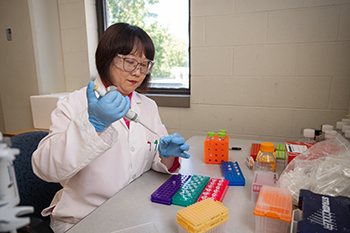 Located in room 413A of the Chemistry/Biochemistry Building, the Protein and Biopolymer Analysis Core Lab, or PBACL, provides integrated synthetic and analytical capabilities for biological materials, including proteins, peptides, and glycans. The laboratory encompasses a wide range of sophisticated technical expertise and state-of-the-art instrumentation.
Radioimmunoassay Lab
The Radioimmunoassay Lab provides radioimmunoassays to quantify compounds of interest, including cortisol in animal serum/plasma and Substance P in animal plasma.
Single Crystal X-ray Diffraction
Diffraction of a small — about 0.1-0.5 mm linear size — single crystal of a compound or compounds of interest results in cell parameters and a list of coordinates that identify the location of each atom in a 3-D structure. The output tables include geometrical characteristics, such as bond lengths and angles. Intermolecular contacts (e.g., hydrogen bonding or specific contacts) can be calculated from the cell parameters and atomic coordinates.
Soil Testing Lab
The Soil Testing Lab provides high-quality analysis of nutrients and other key components of soil, plants, forages, grains, and water for farmers, homeowners, and researchers.
Stable Isotope Mass Spectrometry Laboratory
The Stable Isotope Mass Spectrometry Laboratory, or SIMSL, is dedicated to stable isotope and elemental analysis. SIMSL is equipped for the stable isotopic (‰) and elemental (%) composition analysis of carbon (C) and nitrogen (N), in organic and inorganic phases (solids, liquids and gases) as well as oxygen (O) and hydrogen (H) in water samples.
SIMSL is intended to be a hands-on teaching facility for K-State students and a regional research facility for stable isotope users. The lab supports research across a wide range of natural science disciplines, including ecology, soil science, agronomy, and geology.
Veterinary Diagnostic Laboratory
The primary function of the Veterinary Diagnostic Laboratory, or VDL, is disease detection, surveillance, and outbreak response, serving veterinarians, producers and public agencies across Kansas and beyond. The VDL also serves researchers through its testing services, which it continuously works to improve.
Water Quality Laboratory
The Water Quality Laboratory, located in Throckmorton Hall and sponsored by the Kansas Water Institute, is currently under development. The lab will analyze water components, including trace elements and compounds, herbicides, and per- and polyfluoroalkyl substances for researchers and the public.
Experimental facilities
Animal Model/Pathology Core Facility
The Animal Model/Pathology, or AMP, Core, a component of the Center of Emerging and Zoonotic Infectious Diseases, known as CEZID, and located in the College of Veterinary Medicine, provides personalized, project-specific support and expertise to facilitate the use of animal models and pathological services. Existing infrastructure includes a new laser capture microdissection instrument. The AMP Core also produces hybridomas and hyper-immune sera for the development of diagnostic tests essential to CEZID research projects.
Behavioral Neuroscience Core
The Behavioral Neuroscience (BN) Core provides light microscopes, small-animal care facilities, surgical and other procedural areas, and rooms dedicated to behavioral testing. BN core, supported by the NIH COBRE project, Cognitive and Neurobiological Approaches to Plasticity, also has emergency refrigerator and freezer capacity.
Biosecurity Research Institute
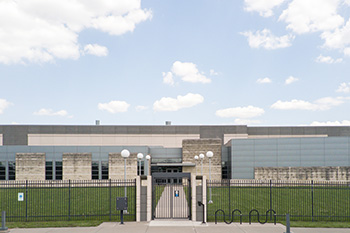 The Biosecurity Research Institute, or BRI, is the home of comprehensive infectious disease research to address threats to plant, animal, and human health, including food-borne pathogens. It provides BSL-3, ABSL-3 and BSL3-Ag spaces that offer a diverse range of research and educational opportunities.
Characterization and Testing Lab
The Characterization and Testing, or CAT, Lab is located in Rathbone 0028 in the Department of Mechanical and Nuclear Engineering. The facility has several instruments that measure the properties of materials, such as hardness, strength, and cyclic and static loading. It also has a microscope/scanning electron microscope combination instrument that can depict objects up to about 1 inch in diameter at 1-µm resolution. Although the primary function of the CAT Lab is teaching, it can be employed for research as its schedule allows.
Cognitive Neuroscience Core
The Cognitive Neuroscience Core supports electroencephalography (EEG), transcranial magnetic stimulation (TMS), and repetitive TMS (rTMS) use for studying the human brain. Core staff assist with participant recruitment, experiment setup, and data analysis. Additionally, the CN Core provides consultation on study design, data collection, and custom data analysis scripts. Located in Bluemont Hall, the Cognitive Neuroscience Core is affiliated with the NIH COBRE project, Cognitive and Neurobiological Approaches to Plasticity.
Integrated Molecular Entomology Core
IMEC is a 2,000-square-foot facility in a secure section of Waters Annex. IMEC includes office, meeting, and laboratory space to study molecular and cellular aspects of arthropod behavior, physiology, and toxicology. The laboratory space is designed to facilitate research requiring both biosafety precautions (up to BSL-2) and arthropod containment (up to ACL-2).
Konza Prairie Biological Station
The Konza Prairie Biological Station is a 3,487-hectare native tallgrass prairie preserve jointly owned by The Nature Conservancy and Kansas State University. KPBS is located in the Flint Hills of northeastern Kansas, a grassland region of rolling hills overlain by shallow limestone soils unsuitable for cultivation. KPBS is operated as a field research station by the Division of Biology and is dedicated to a three-fold mission of long-term ecological research, education, and prairie conservation. It is a unique outdoor laboratory that provides opportunities to study tallgrass prairie ecosystems and conduct basic biological and environmental research across a wide range of taxa and processes. The station is open to scientists and students from throughout the world.
Large Animal Research Center
The Large Animal Research Center provides care for large animals and is an experimental facility that plays an important role in the development of vaccines to combat animal and zoonotic diseases, in animal nutrition research, and in other animal research. It is administered by the Comparative Medicine Group.
Nuclear Reactor Facility
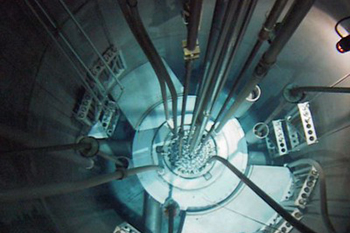
The TRIGA Mark II Nuclear Reactor Facility supports academic and education programs, research, industrial service and outreach. Its research capabilities include a variety of neutron beams for detector testing, internal imaging using neutron radiography and tomography, tracer isotope production, and trace element analysis via neutron activation analysis.
Data management and interpretation
Beocat
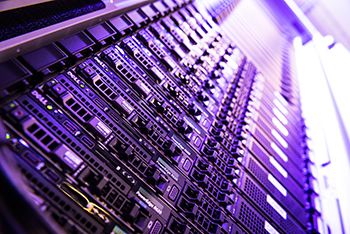
Beocat is the High-Performance Computing cluster at Kansas State University. Itis run by the Institute for Computational Research in Engineering and Science, which is a function of the Computer Science department. Beocat is available to any educational researcher in Kansas (and their collaborators) at no cost. Priority access is given to those researchers who have contributed resources.
Bioinformatics Center
The K-State Bioinformatics Center provides comprehensive services for analyzing biological data and maintains software and pipelines that support analysis across many data types.
Geographic Information Systems Spatial Analysis Laboratory
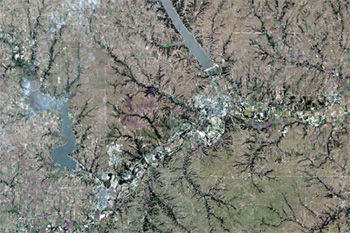 The Geographic Information Systems Spatial Analysis Laboratory, or GISSAL, is a university core facility established in 1990 as an interdisciplinary center supporting geospatial research, learning, and outreach at K-State. The lab specializes in spatiotemporal analytics and geoprocessing tool programming, cartographic and visualization support, map-based communications, GIS web service and map application development, and geospatial data portal design and deployment.
Neuroinformatics Core
The Neuroinformatics Core, affiliated with the NIH COBRE project, Cognitive and Neurobiological Approaches to Plasticity, provides state-of-the-art computing equipment and software applications for neurobiology researchers. NI Core staff are available to conduct personalized training on system resources and help optimize research workflows and software operations. With assistance from NI core staff and the use of Beocat, users often see dramatic increases in analysis and processing speed.
Statistical Consulting Laboratory
Since 1946, Statistical Consulting at K-State has focused on providing statistical expertise in support of research and scholarship of Kansas State University scientists.
Maintenance and distribution of research materials
Biology Storeroom
The Biology Storeroom, located in Ackert Hall’s basement, can provide liquid nitrogen and other laboratory supplies. Contact the storeroom manager for more information.
Chemistry Storeroom
The Chemistry Storeroom, located in King Hall’s basement, can provide dry ice, other chemicals, and laboratory supplies. Non-Chemistry Department purchases must be made using an Interdepartmental Purchase Requisition or Department Purchase Order.
Comparative Medicine Group
The mission of the Comparative Medicine Group is to facilitate animal use in research and teaching at Kansas State University by providing high-quality animal care in accordance with both federal and state regulations and Association for Assessment and Accreditation of Laboratory Animal Care, or AAALAC, guidelines.
Fungal Genetics Stock Center
The Fungal Genetics Stock Center is a resource of the international community of fungal researchers, hosted by K-State since 2014. FGSC was established in 1960 to preserve fungal strains important to genetics research. FGSC has 23,000 Neurospora strains, a growing number of Neurospora knock-outs, over 2,000 Aspergillus strains, and various representatives of other fungi, as well as cloned genes and gene libraries, available for distribution.
Kansas State University Herbarium
The Kansas State University Herbarium is a research natural history museum that serves as a foundational resource for studies of plant biodiversity. The Herbarium was established ca. 1877 and today contains over 180,000 plant specimens from around the world, including vascular plants and bryophytes, with a focus on the Great Plains of North America.
Plant Growth Facilities
Plant Growth Facilities at Kansas State include greenhouses and controlled-environment growth chambers.
Production and repair
APDesign Fabrication Lab
The APDesign Fabrication Lab is a 20,000 square-foot fabrication shop on the lowest floor of Seaton Hall. The shop contains equipment such as laser cutters, a large CNC router, 3D printers, welding equipment, and woodworking and metalworking equipment. Training in the use of shop equipment for users is available and required.
Biological and Agricultural Engineering Shop
The Biological and Agricultural Engineering machine shop constructs, maintains, and tests agricultural equipment used in teaching and research.
Biologics Development Module
The Biologics Development Module at the Biosecurity Research Institute, or BRI-BDM, is a BSL-2 pilot manufacturing lab located within the Biosecurity Research Institute. It’s a location where prototype vaccines and therapeutics for zoonotic diseases can be produced and tested in BRI’s BSL-3 and ABSL-3Ag labs. The BDM-BRI is designed for use by public and private organizations involved in animal biologics and biopharmaceuticals research, development, and production.
Biomanufacturing Laboratory and Training Facility
Located in Seaton Hall, the laboratory is a cutting-edge facility featuring advanced biomanufacturing lab equipment, designed to support hands-on training in biomanufacturing production and complementary analytical techniques.
Electrical and Computer Engineering Shop
The Electrical and Computer Engineering (ECE) shop, located in Rathbone Hall, is primarily used by ECE faculty and students to support teaching and research. Tools and support are available for working with wood and electronics. Non-ECE personnel may inquire about service availability and access with the shop manager.
Electronics Design Laboratory
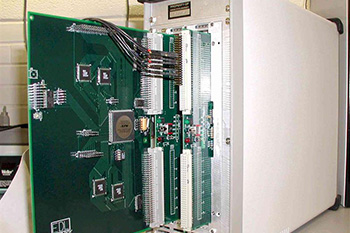 The Electronic Design Laboratory, or EDL, provides researchers with access to advanced electronics, assists with integrating electronics technology into research programs and aids in electronics technology transfer to users by providing ongoing technical support. The EDL works in cooperation with diverse academic departments to pursue a symbiotic approach to problem-solving.
Model Organism Kitchen
The Model Organism Kitchen provides high quality food and culture media, at an affordable price, for maintenance of Drosophila and C. elegans model organism lab strains.
Industrial and Manufacturing Engineering Shop
The Industrial and Manufacturing Engineering shop, located in the College of Engineering, is a machine shop accessible to researchers and students.
Mechanical and Nuclear Engineering Shop
The Mechanical and Nuclear Engineering shop in Rathbone Hall is a research support facility that produces research tools and components for MNE faculty and students, as well as for other departments and colleges on campus, through the design and manufacturing of mechanical components. Milling, turning, and rapid prototyping facilities are available.
Physics Machine Shop
The mission of the Physics Machine Shop, located in Cardwell Hall, is to provide custom machining solutions for all researchers at Kansas State University. We can provide you with one-of-a-kind fixtures and test equipment tailored to your line of research. We are here to help you obtain your research goals and collect precise, repeatable data.
Plant Transformation Facility
The K-State Plant Transformation Facility, housed in the Department of Plant Pathology in Throckmorton Hall, provides plant tissue culture, genetic transformation, and gene-editing support for researchers across campus. We use biolistic and Agrobacterium transformation technologies across a variety of plants, including wheat, soybean, maize, rice, and tobacco. Training is available for researchers seeking expertise in tissue culture and genetic transformation/gene editing. The Plant Transformation Facility also provides wheat transformation and gene-editing services to members of the U.S. Wheat and Barley Scab Initiative community.
Scientific Glass Shop
The K-State Scientific Glass Shop, located in the Chemistry/Biochemistry Building, works with researchers and other customers to design, fabricate, customize, or repair scientific apparatus and prototype glassware.
Sunderland Innovation Lab
The Innovation Lab contains a wide range of resources useful for recreation or research. Some of the many available tools include 3-D printers, laser cutters, the AI studio, the media studio, a recording studio, a video production studio, and loanable equipment, such as cameras.
Technology Development Institute
The Technology Development Institute, or TDI, occupies a 22,000 sq. ft. facility located near the K-State campus. This is a combination of offices, engineering design labs, a 3D printing and scanning studio and a fully equipped prototyping shop where new technologies and products can be designed and fabricated at a single location. Prototyping capabilities range from sheet metal and machined parts to plastic fabrication, assembly and testing.