New K-State research complex to drive innovation for the future of agriculture
L. Eldon Gideon Agronomy Research and Innovation Complex bolsters K-State as a leader in productive, profitable and resilient agriculture
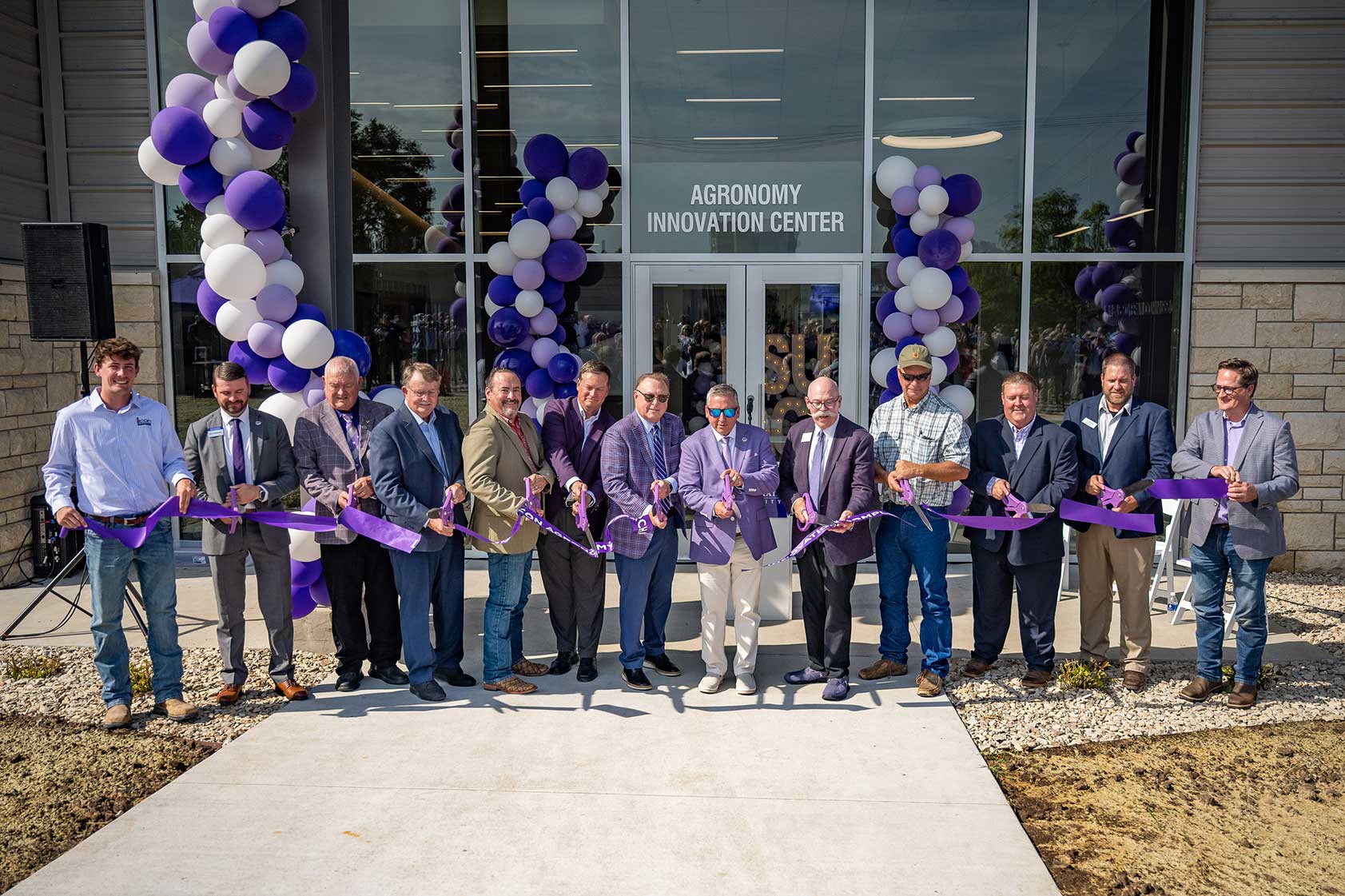
K-State celebrated the ribbon cutting of the L. Eldon Gideon Agronomy Research and Innovation Complex on Aug. 20.

By Kelsey Stremel
College of Agriculture
Thursday, Aug. 20, 2026
Kansas State University is expanding its capacity to develop crops, technologies and management strategies to support producers from Kansas to the world with the opening of the L. Eldon Gideon Agronomy Research and Innovation Complex.
The new complex, which is on K-State's Agronomy North Farm, will help producers increase productivity, use water and nutrients more efficiently, and adapt to changing production conditions. It will bring together researchers, students and partners working in plant genetics, soils, water, cropping systems, precision agriculture and data in a connected research environment — linking laboratory discovery, advanced analysis and field-scale testing.
"K-State has a long history of conducting research that responds to the needs of Kansas agriculture," said Dan Moser, Eldon Gideon dean of K-State's College of Agriculture. "These facilities give our faculty, students and partners greater capacity to work across disciplines, evaluate new ideas and translate research into information, technologies and practices that can make a difference for producers."
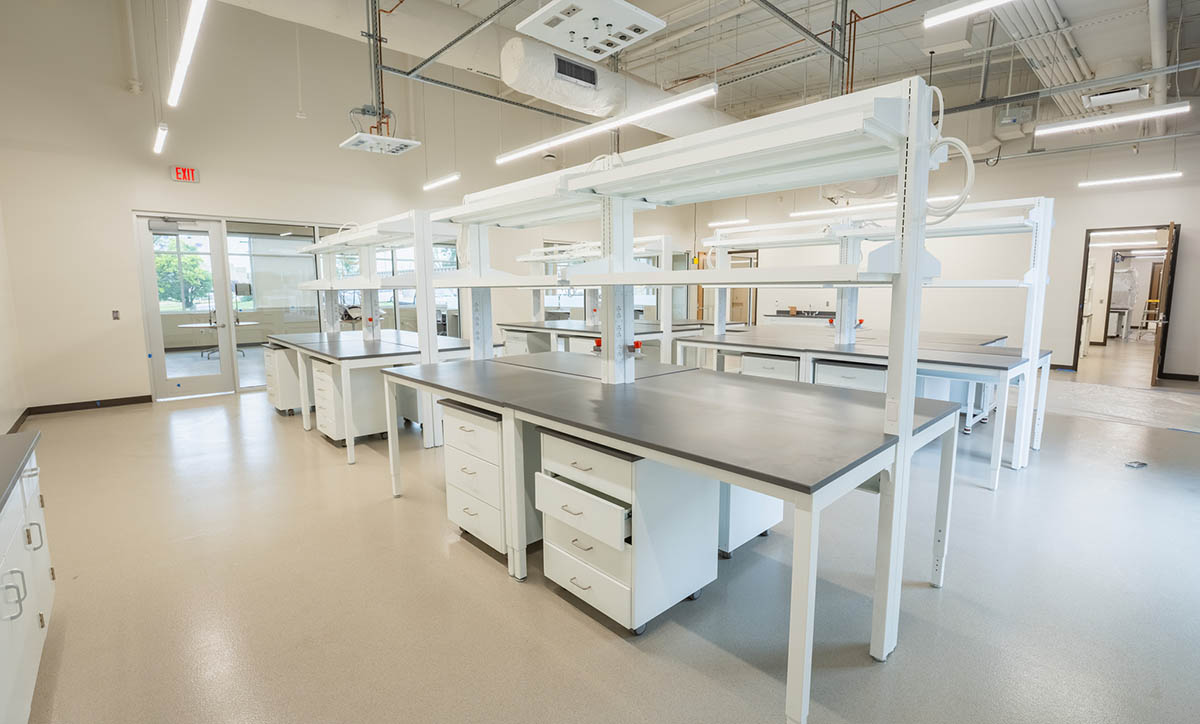
The complex is part of K-State's $210 million Agriculture Innovation initiative, a universitywide investment supported by state and philanthropic funding to expand interdisciplinary research, teaching and engagement in food and agriculture.
For Dorivar Ruiz Diaz, interim head of K-State's Department of Agronomy, that ability to connect people and expertise is one of the most significant opportunities created by the investment.
"Most importantly, this initiative is not just limited to the College of Agriculture; it really extends across the entire institution," Ruiz Diaz said. "These are very complex challenges that we cannot address simply with individual disciplines. We need to be looking at multiple disciplines, from agronomy to sociology to engineering."
Research built around real agricultural challenges
The range of research moving into the complex reflects the complexity of the decisions producers make every day.
How can crops maintain productivity under drought, heat, disease and other stresses? How can producers get more value from every inch of water and dollar spent on fertilizer? Can drones, satellites, sensors and other precision technologies provide better information for decisions during the growing season? How can a greater understanding of soils, roots and microbes lead to healthier crops that make more efficient use of inputs?
K-State researchers in the complex are working to address those questions and more.
Crop breeding programs are developing wheat, sorghum, canola, and soybean varieties and germplasm with traits such as drought and heat tolerance, disease resistance, and improved productivity.
Other research focuses on precision water management and soil-moisture information for irrigated and water-limited production systems; using drones, satellite imagery, variable-rate technology and yield monitors for on-farm decision-making; and improving nutrient management to help producers get greater value from fertilizer while reducing impacts on water quality.
Researchers are also studying how cropping systems affect yield, inputs, economics and producer risks, as well as how relationships between plants and microbes can influence crop health, productivity, and resilience to drought, disease and other environmental stresses.
"The value of this investment will ultimately be measured by what comes out of it — improved crop varieties, more efficient use of water and nutrients, better information for decision-making and graduates prepared to lead the industry," Moser said. "Those outcomes can strengthen farms, agricultural businesses and communities across Kansas and the world."
New complex designed for research, education and collaboration
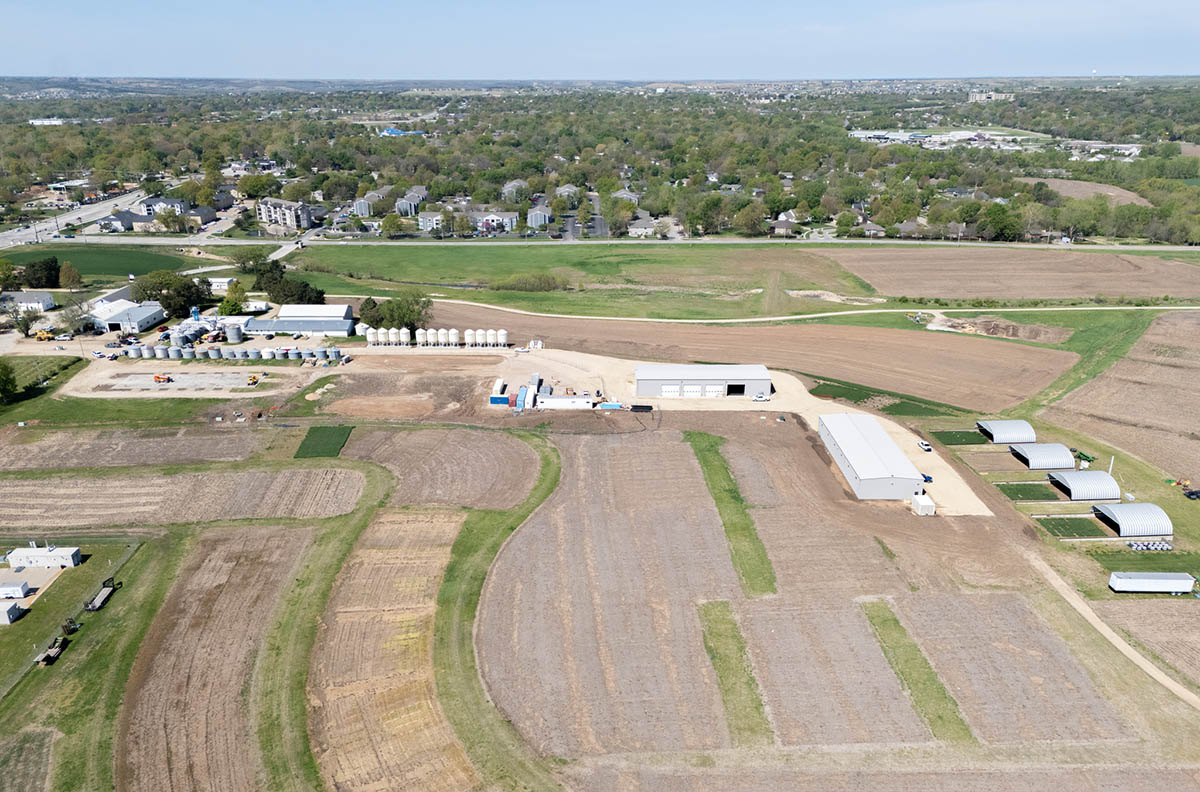
The L. Eldon Gideon Agronomy Research and Innovation Complex includes three complementary facilities designed to support different aspects of agricultural discovery.
The Agronomy Innovation Center creates space for interdisciplinary research and industry collaboration, including a visualization lab, innovation laboratories, data analysis workspaces, conference rooms and a farm observation deck. The center also supports work connected to K-State's Institute for Digital Agriculture and Advanced Analytics.
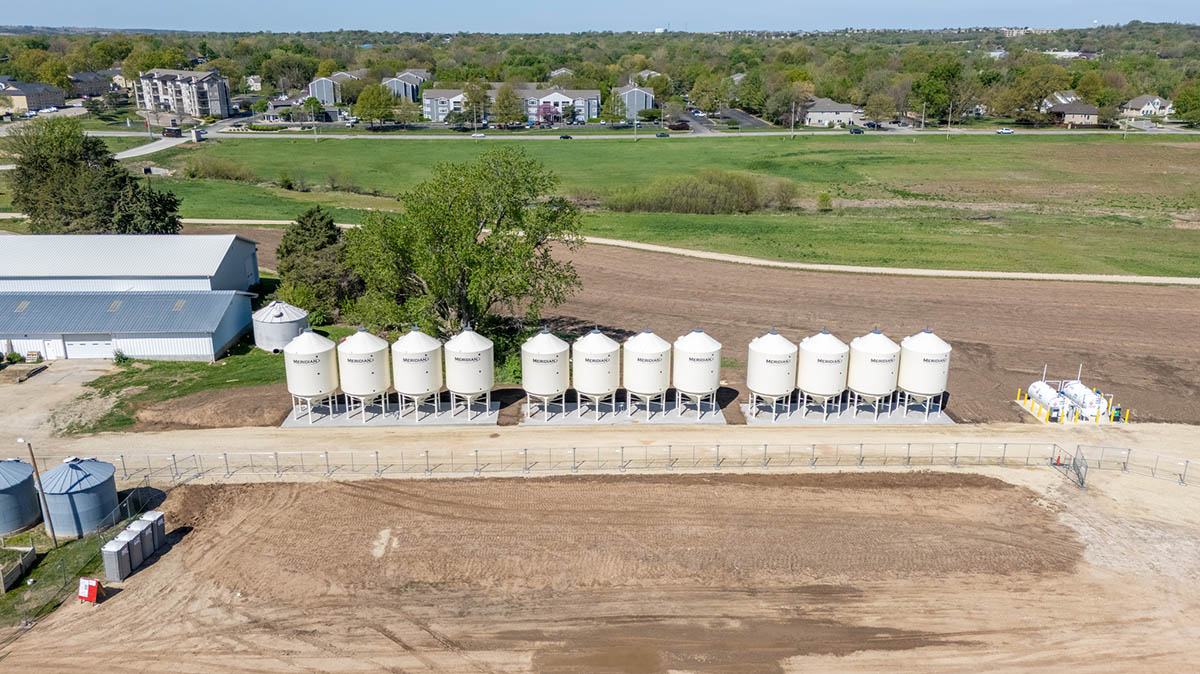
The Agronomy Research Center South provides specialized research spaces in soil science, environmental science, weed science and precision agriculture. The Agronomy Research Center North supports plant breeding and genetics, crop physiology, range science and cropping systems. Both include shared facilities for preparing, storing and analyzing plant and soil materials.
The location on the Agronomy North Farm also places laboratory and data capabilities near field research plots and the existing Agronomy Education Center, strengthening connections among research, student learning and agricultural partners.
"The location and expanded capacity are going to allow us to go to that next step when it comes to research, education and extension," Ruiz Diaz said.
Undergraduate and graduate students will work alongside faculty, research staff and collaborators across projects spanning plant breeding, crop production, soils and water, precision agriculture, and natural resource management. That integration provides opportunities for students to learn in the same environments where K-State researchers are developing cutting-edge agricultural knowledge and technologies.
“The value of this investment will ultimately be measured by what comes out of it — improved crop varieties, more efficient use of water and nutrients, better information for decision-making and graduates prepared to lead the industry. ”
Dan Moser
The Agriculture Innovation Initiative also includes the Bilbrey Family Event Center, the Western Star Global Grain and Food Center and renovations to Weber and Call halls. Together, the investments are intended to create spaces that encourage students, faculty and partners to work across traditional disciplinary boundaries and strengthen public-private collaboration.
With researchers and students now moving into the complex, the investment shifts from construction to discovery and the work of turning that discovery into new tools, practices and opportunities for the future of agriculture.
Learn more about the L. Eldon Gideon Agronomy Research and Innovation Complex and K-State's Agriculture Innovation Initiative at k-state.edu/ag-innovation.
Related Stories
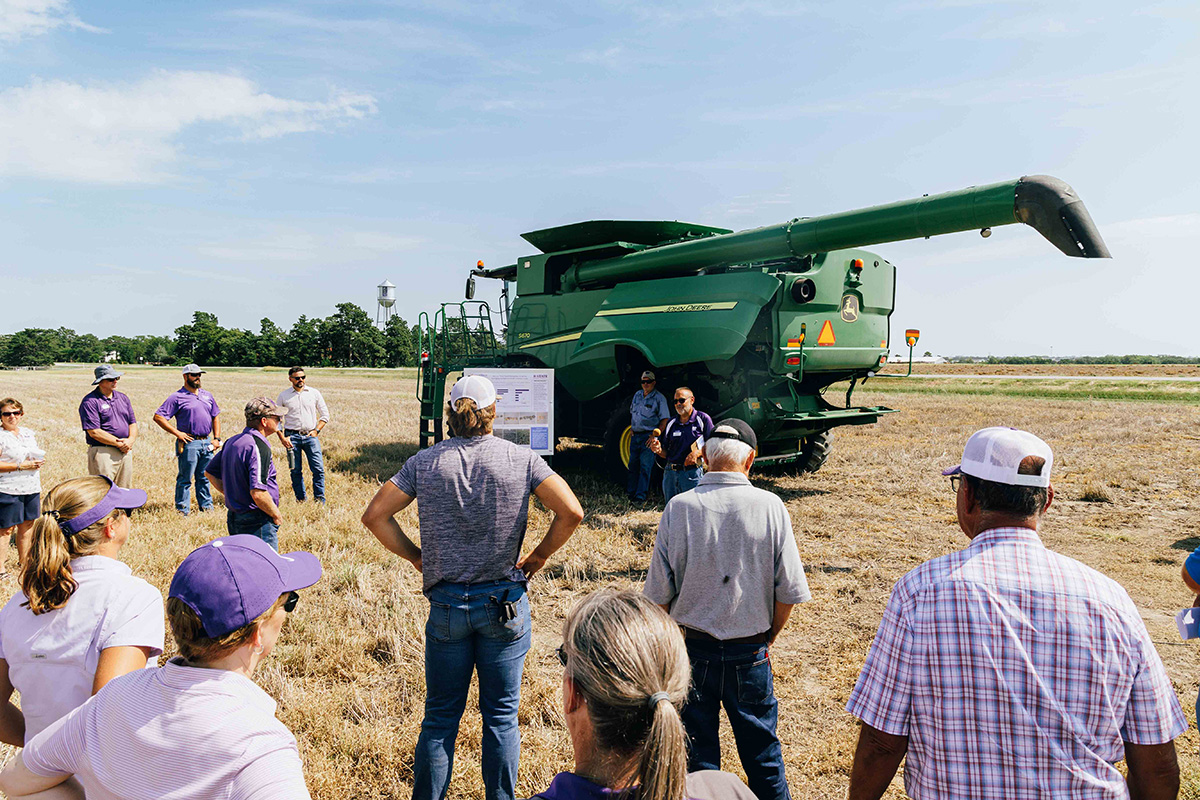
K-State field days connect deep roots of western Kansas research to modern solutions for producers
Upcoming field days in Garden City, Hays and Tribune will bring local community members, producers and agricultural industry partners together with K-State...
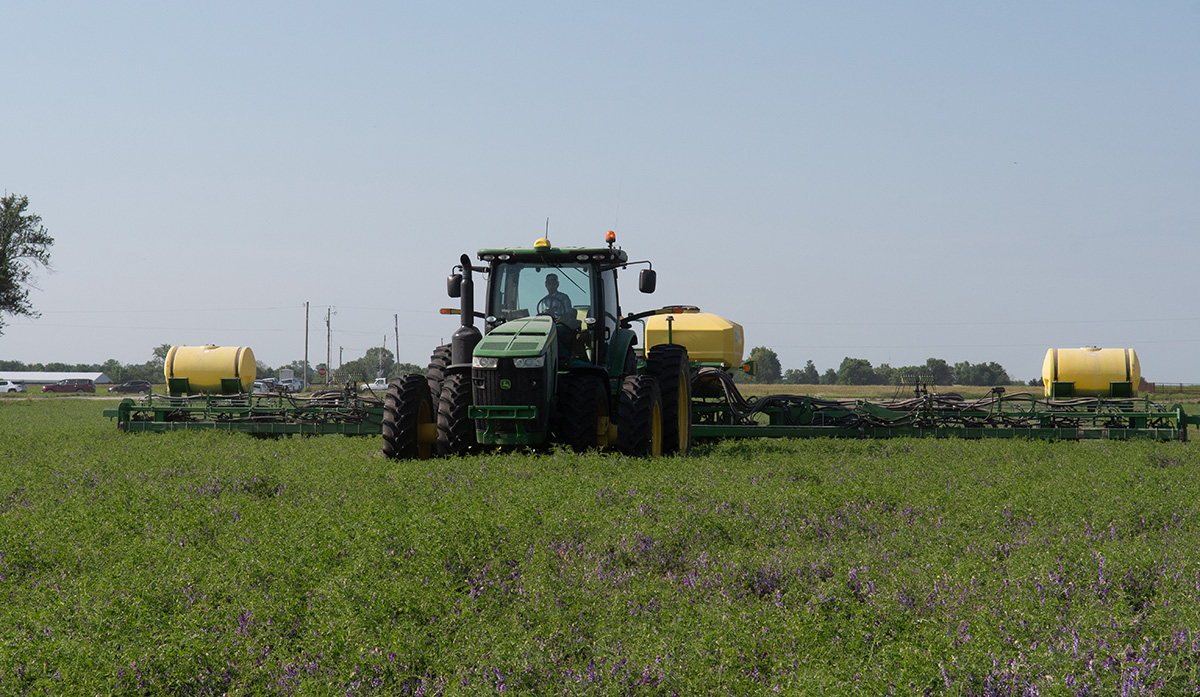
K-State conducts regenerative agriculture research alongside Kansas farmers
As K-State works to advance agriculture, it leverages a network of Kansas farmers, known as the Kansas Soil Health Network, to conduct soil research at seven...
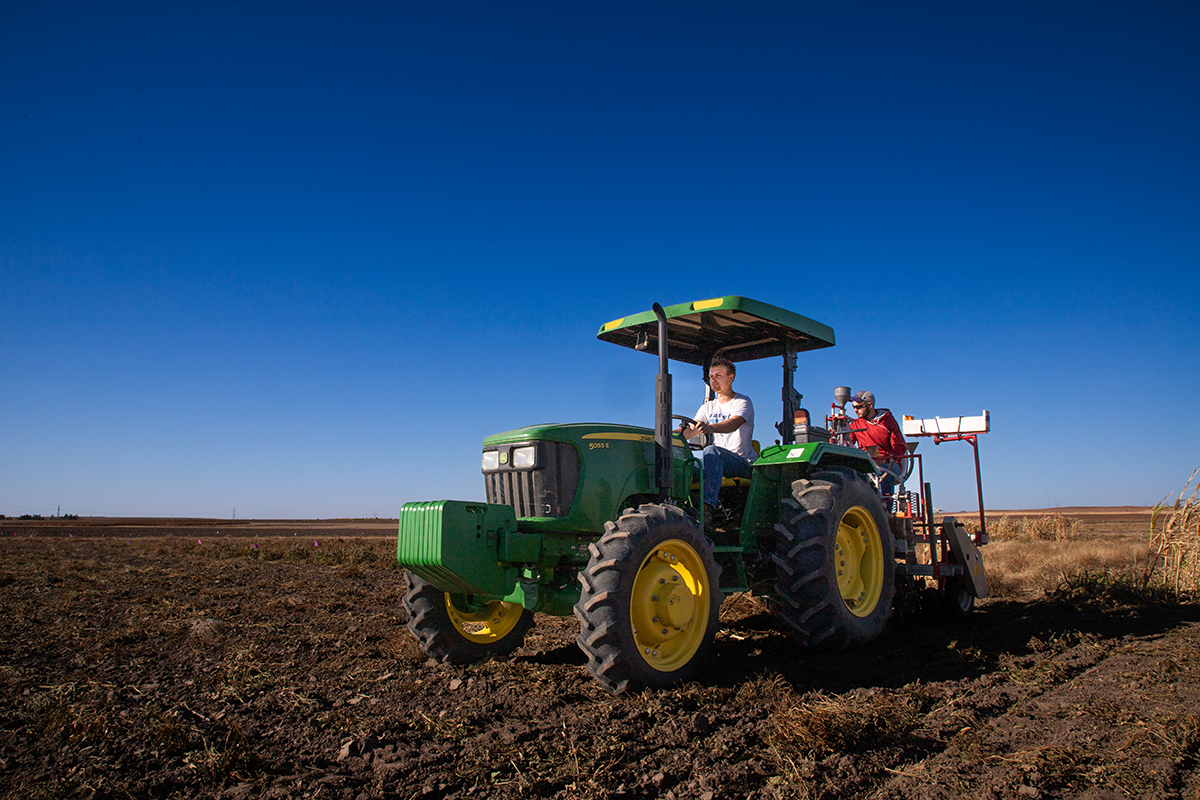
Practical research to help producers
K-State graduate student Zach Carson is exploring ways western Kansas producers can intensify cropping systems while improving profitability and protecting...