K-State conducts regenerative agriculture research alongside Kansas farmers
K-State researchers and farmers collaborate to rebuild soil health and improve profitability
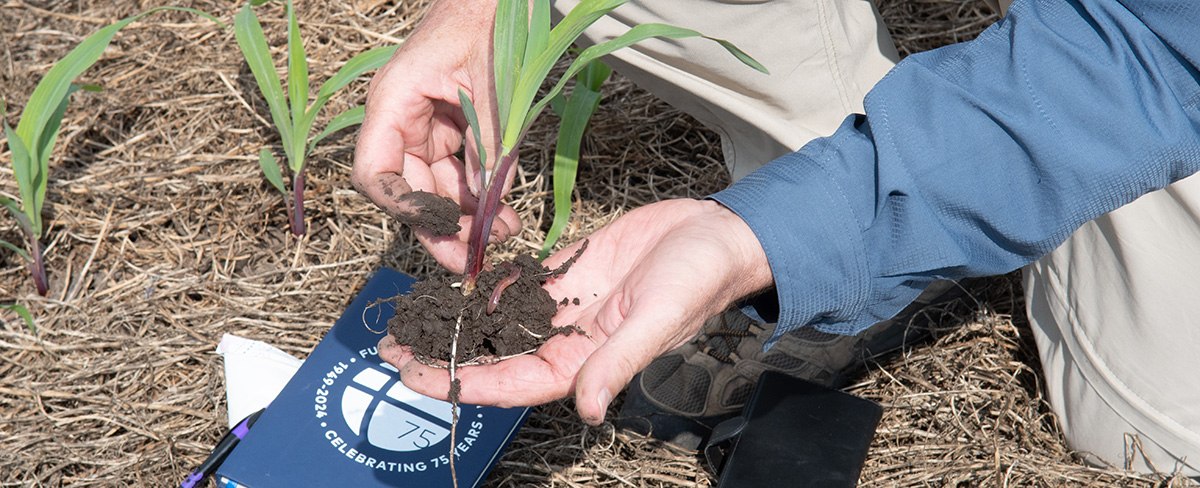
Visitors to the Guetterman Brothers Family Farm field day, co-sponsored by the Kansas Soil Health Network, pulled up clumps of dirt to view the health of the soil. Earthworms are a sign of soil health, aerating the ground with their burrows and creating drainage channels.

By Pat Melgares
K-State Extension
Thursday, July 2, 2026
One after another, visitors to the Guetterman Brothers Family Farms near Kansas' eastern border recently found themselves digging up a clump of soil in freshly-sown and developing crop fields.
Their curiosity had gotten the best of them. Minutes before, they had listened to fifth-generation farmer Hayden Guetterman explain his family's steadfast pledge to improve their farm ground with soil health practices collectively known as regenerative agriculture.
"Regenerative agriculture," says Kansas State University soil scientist Charles Rice, "is a concept that started with soils that have been degraded, followed by designing practices to regenerate or rebuild those soils to make them more productive."
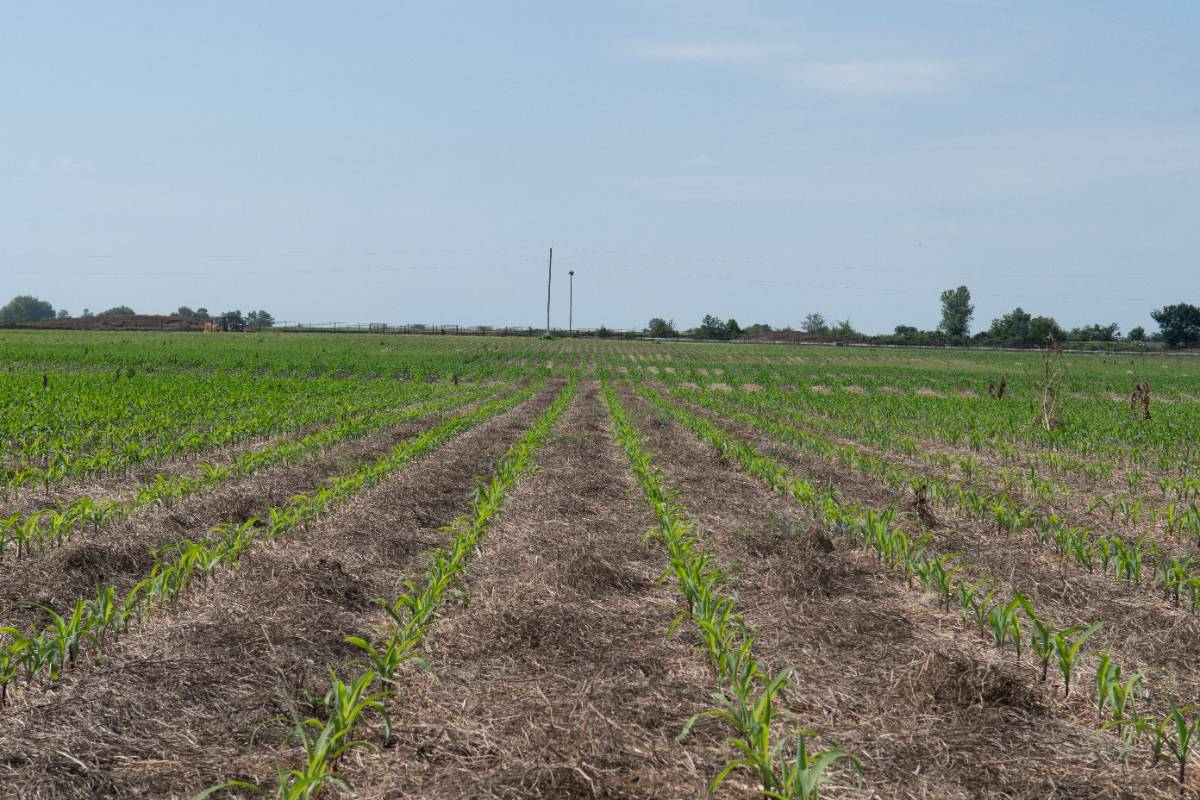
June field day showcases benefits of aggregated soil
The tell-tale signs of success on the Guetterman's farm are simple. Large earthworms — a fisherman's dream — wriggle amongst a clump of dark, well-aerated soil.
"That is really good soil," says John Kirkegaard, a farming systems agronomist with the Commonwealth Scientific and Industrial Organization in Canberra, Australia, and a Fulbright Scholar at K-State this summer.
What Kirkegaard — and the nearly 100 others who attended an early June field day on the farm — witnessed was what scientists call aggregated soil, in which sand, silt and clay particles bind together into larger, stable clusters called aggregates, or peds.
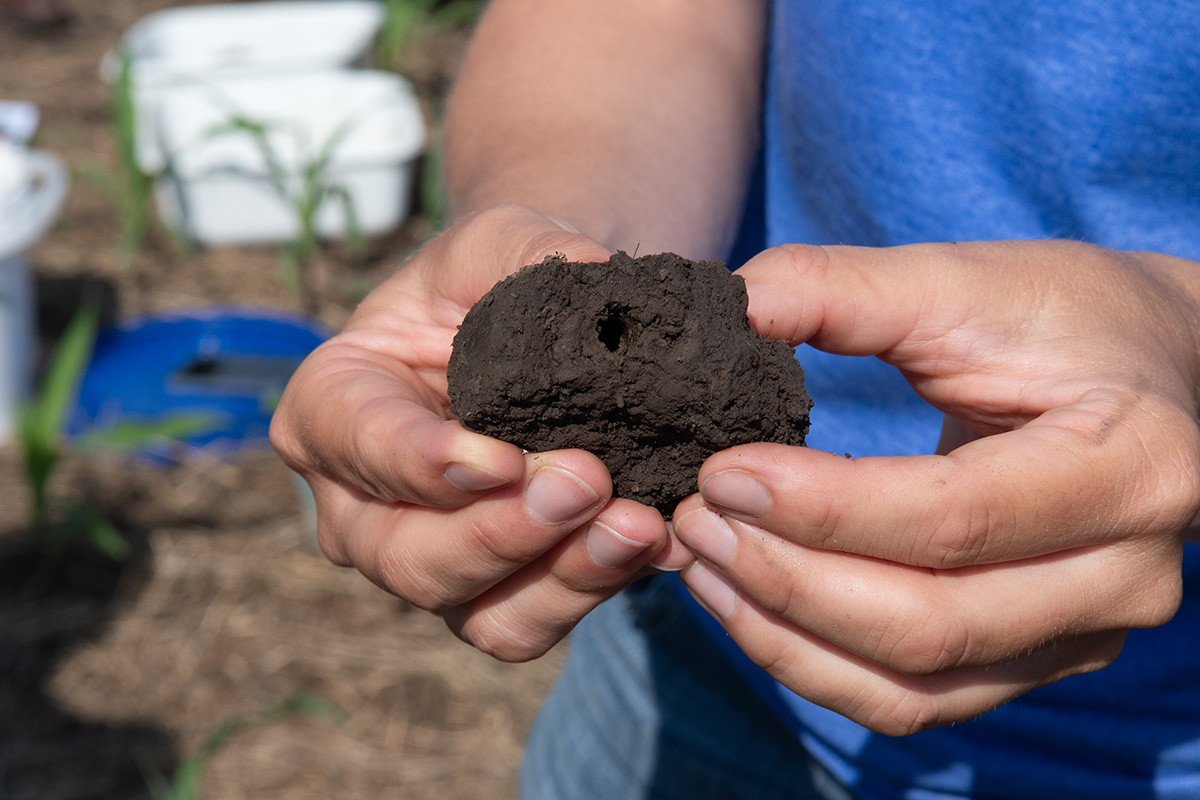
The clusters create a network of pores that allow air, water and plant roots to move easily through the ground. Earthworms are soil engineers, of sorts, aerating the ground with their burrows and creating drainage channels.
Rice says that soil is not merely a structural anchor for crops; it is a living, breathing biological ecosystem.
"Soil is our most precious resource on this planet, and what some people don't realize is that there are more living organisms below our feet than there are above us," Guetterman said. "So, we have got to be cognizant of the organisms that help feed us and help us live on the Earth."
Kansas Soil Health Network connects Kansas farms, K-State research
Rice is a leading national figure in the science of regenerative agriculture. In 2018, with the assistance of the Kansas Corn Commission and a sustainable systems grant from the U.S. Department of Agriculture's National Institute for Food and Agriculture, he established a network of Kansas farmers who would offer their land for university research on regenerative agriculture practices.
That group, known as the Kansas Soil Health Network, spans seven farms, from the Guetterman's farm in the east to E&H Farms in the west, with five in between. The Guettermans are just minutes from the Missouri border, while E&H Farms is less than a mile from the Colorado border.
The research done at network farms supplements the work at K-State's regenerative agriculture innovation farm in Manhattan, which is about a mile north of Bill Snyder Family Stadium on Marlatt Avenue.
"Farms are going to look a little bit different depending on where you're located within the state or within the country, because every farmer grows in a slightly different environment with different soils and different precipitation," said Nick Detter, a K-State Extension assistant with the university's regenerative agriculture initiative.
"Because of that, we were really intentional with this farmer network. We want to make sure that as we talk about regenerative agriculture practices and our research, we're covering all parts of the state. The Guettermans are a prime example of making these practices work out here in eastern Kansas."
K-State distinguished professor outlines common regenerative ag practices
Rice said the foundation of regenerative agriculture is building soil organic matter and restoring the soil's microbial biodiversity, which naturally cycles nutrients and supports plant growth.
He notes five practices commonly associated with regenerative agriculture:
- Minimizing soil disturbance. Reducing or eliminating tillage protects the soil structure, which reduces erosion and maintains soil carbon.
- Maintaining continual living roots. Cover crops, for example, feed the soil's microbial populations and support biological activity.
- Increasing plant diversity. Crop rotations break pest cycles and enrich the soil microbiome.
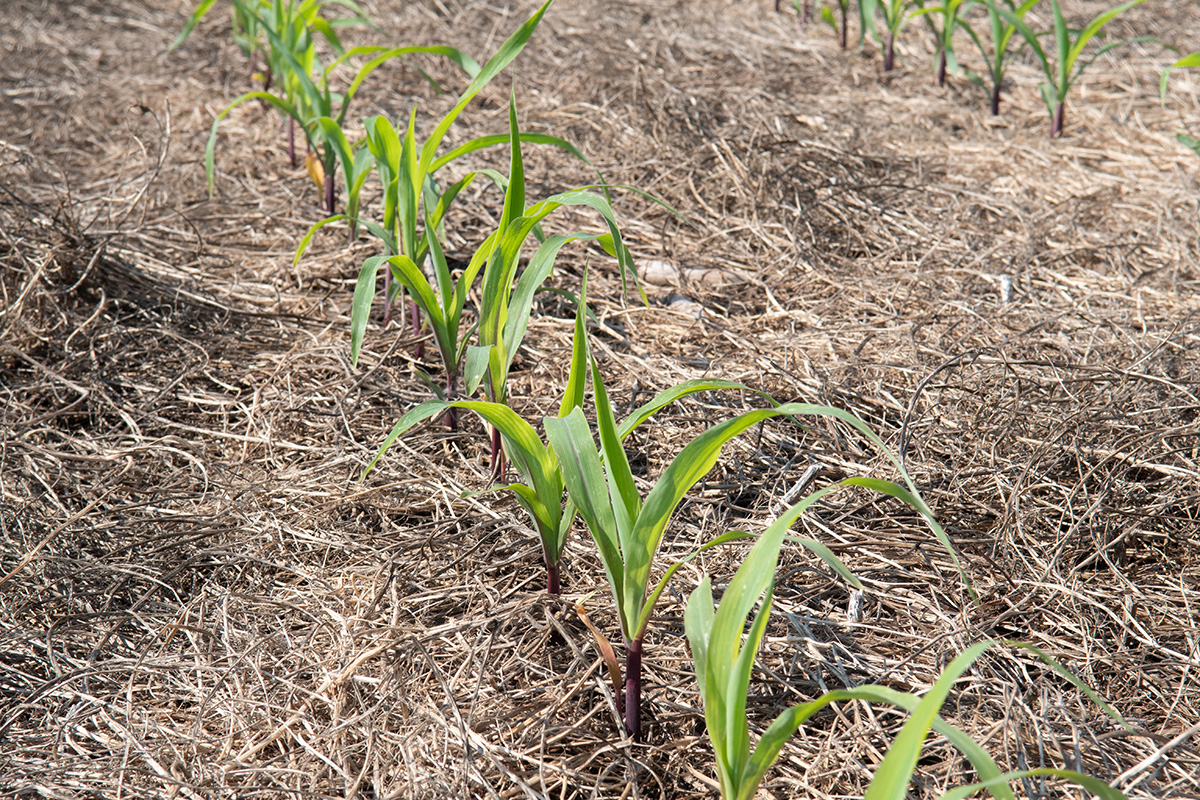
- Keeping the soil covered. Leaving crop residue on the surfaces protects against wind and water erosion while retaining moisture.
- Integrating livestock. Grazing animals help to naturally cycle nutrients back into the soil through manure.
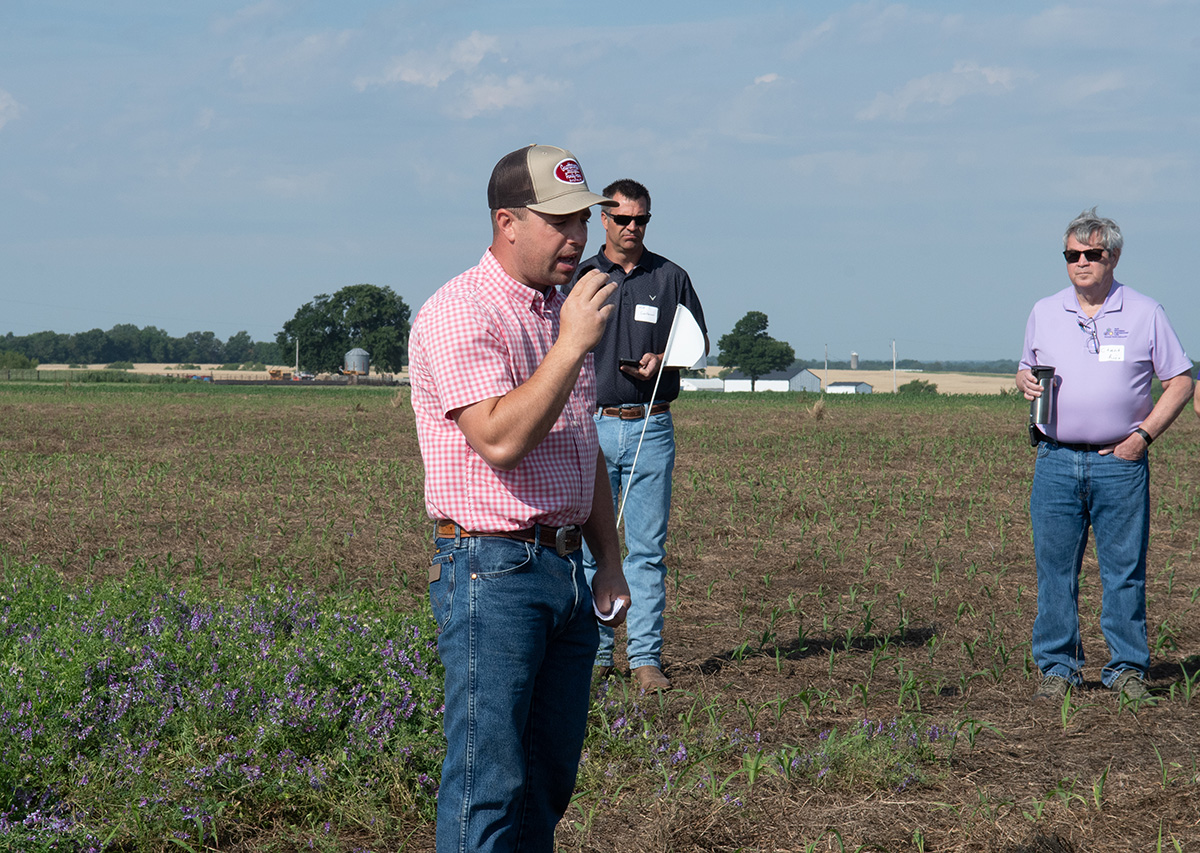
The Guettermans haven't yet incorporated livestock into their land, but according to Hayden Guetterman, they have been no-till farming for three generations. The family's preferred cover crop is hairy vetch, a heavyweight among cover crops for its ability to produce nitrogen, suppress weeds and tolerate Kansas' cold winters.
"The Guetterman farm is one of those examples of a group that is fully committed to this, and they're seeing some success," Rice said. "They have taken these concepts in full stride, and what they're doing now is pushing us K-State researchers, which is good because we want to learn from these innovative farmers, extend that to other farms and show them what can be done."
Healthy soils could lead to healthier foods, farms
K-State agricultural economist Jenny Ifft cited research by graduate student Delide Joseph indicating that farms that incorporate more soil health practices tend to be more profitable. Guetterman said that on his family's farm, profitability isn't necessarily due to producing higher yields; instead, the Guettermans have benefitted from reducing input costs, such as fertilizer and fuel, while maintaining yields.
Rice said K-State researchers also suspect a link between healthy soil and healthier foods grown in that soil.
"The idea is that if you have healthier soils, it provides a full complement of nutrients so that the grains produced are more nutrient dense," he said. "We're not talking about just nitrogen and phosphorus minerals; we're talking about oxidants and other nutrients that aren't routinely measured.
"That's an area where we need to invest and get more research done to document those benefits."
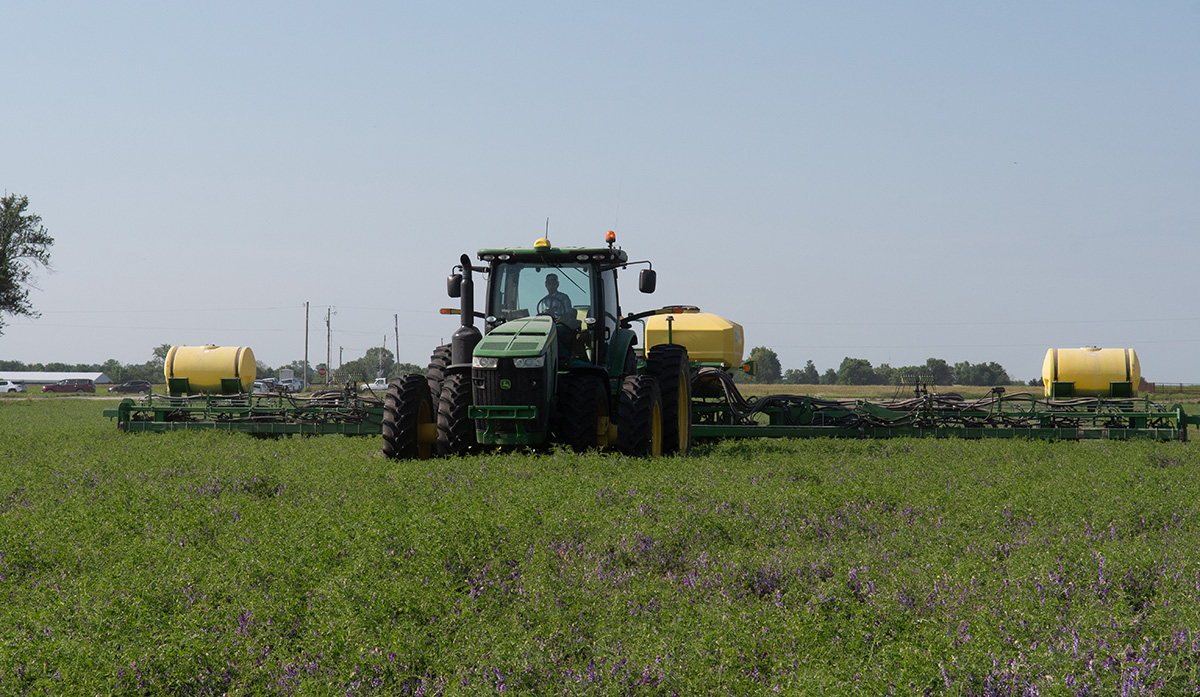
Corporate America is watching. The King Arthur Baking Company was a co-sponsor of the Guetterman Brothers Family Farm field day and recently announced an incentive program for farmers who grow grains on lands managed with regenerative agriculture practices. Many other U.S. and international companies are lining up to capitalize, when appropriate.
For farmers, implementing regenerative agriculture practices "is a learning curve," according to Rice.
"I've told people to expect some failures, but they're going to learn from those failures. It's not going to be a quick fix. This process involves working with biology, working with nature and restoring the soil's capacity to what it was 150 years ago when we first turned the prairie into agricultural land."
Related Stories
K-State steps up corn leafhopper monitoring after detections in Oklahoma
K-State and Kansas Corn have expanded a statewide monitoring network and free testing program to help farmers track corn leafhoppers and corn stunt disease...
Residents rally to rebuild grocery store in Dighton
When Dighton's only grocery store was destroyed by fire, residents faced long drives for basic necessities. A community-led effort, supported by K-State's Rural...
Practical research to help producers
K-State graduate student Zach Carson is exploring ways western Kansas producers can intensify cropping systems while improving profitability and protecting...