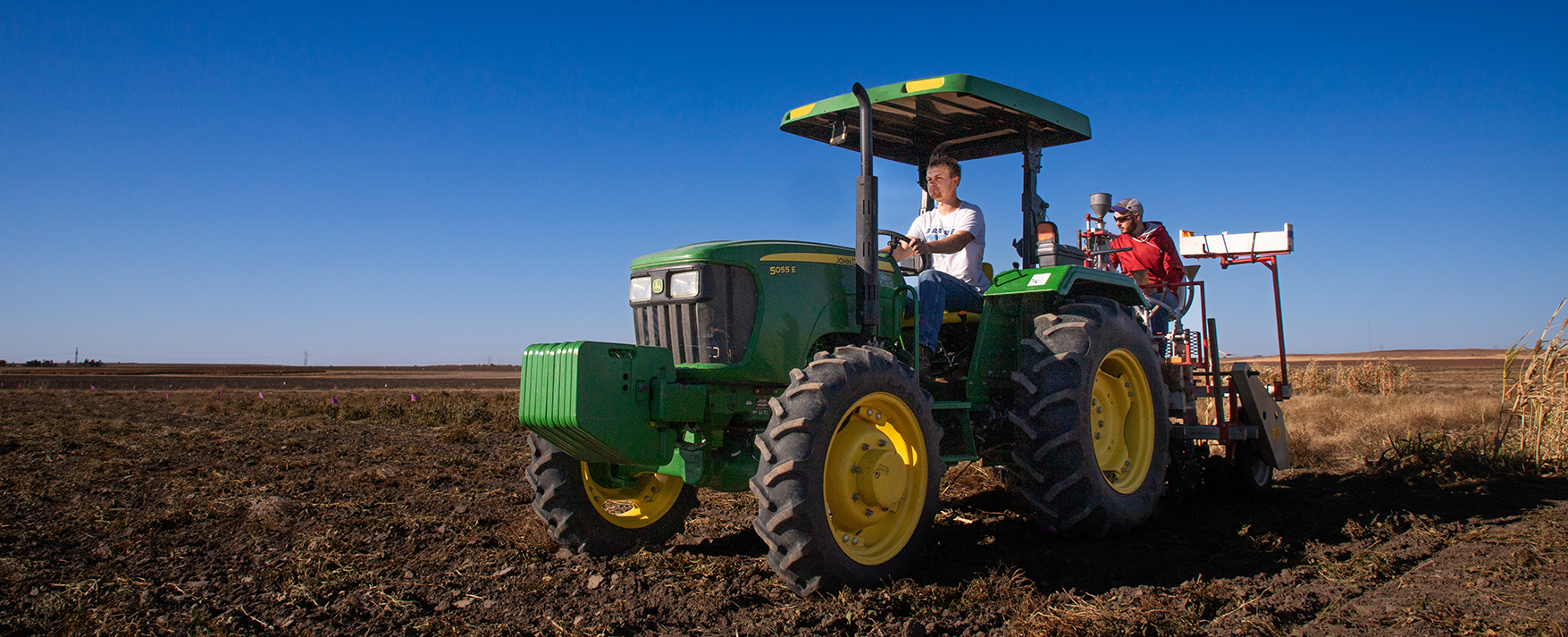
Practical research to help producers
Graduate student Zach Carson examines forage systems for western Kansas farms and ranches

By Kelsey Stremel
College of Agriculture
Tuesday, June 9, 2026
Zach Carson didn't set out to become a researcher.
Growing up on his family's farm near Scott City, he learned agriculture the way many western Kansas producers do — by working alongside family. He watched his father manage dryland realities, tight margins and unpredictable weather. He learned early that farming meant showing up, whether conditions were easy or not.
Now, as a master's student in agronomy at Kansas State University, Carson is exploring ways western Kansas producers can intensify cropping systems while improving profitability and protecting soil through research at the university's Western Kansas Research-Extension Center.
Expert mentors helped Carson move from undergrad tech to Wildcat grad student and researcher
Carson began his higher education journey as a first-generation college student at Fort Hays State University. During his junior year, he took an undergraduate position at K-State's Agricultural Research Center in Hays, a decision that marked the beginning of both his K-State journey and his research career.
Ever since he accepted the undergraduate technician role in Hays, Carson has worked alongside Augustine Obour, associate professor of agronomy and cropping systems specialist at the Agricultural Research Center in Hays, and Logan Simon, southwest area agronomist. He balances fieldwork with data analysis as part of a research team exploring integrated crop-livestock systems in western Kansas.
From planting forage crops and moving grazing panels to collecting field measurements and analyzing results, he helps evaluate how annual forages influence productivity, soil health and long-term resilience. The work highlights the importance of K-State's Agricultural Experiment Station, whose land, equipment and long-term support make it possible to test ideas under real-world conditions and generate findings producers can apply to their own operations.
The experience introduced Carson to research, and it also connected him with mentors who saw potential he hadn't yet recognized in himself.
"Because of Augustine and Logan's guidance, I'm pursuing a higher-level degree in agronomy at K-State," Carson said. "Logan is just an excellent role model, and having somebody like Augustine who is so easy to work with made the next step feel obvious."
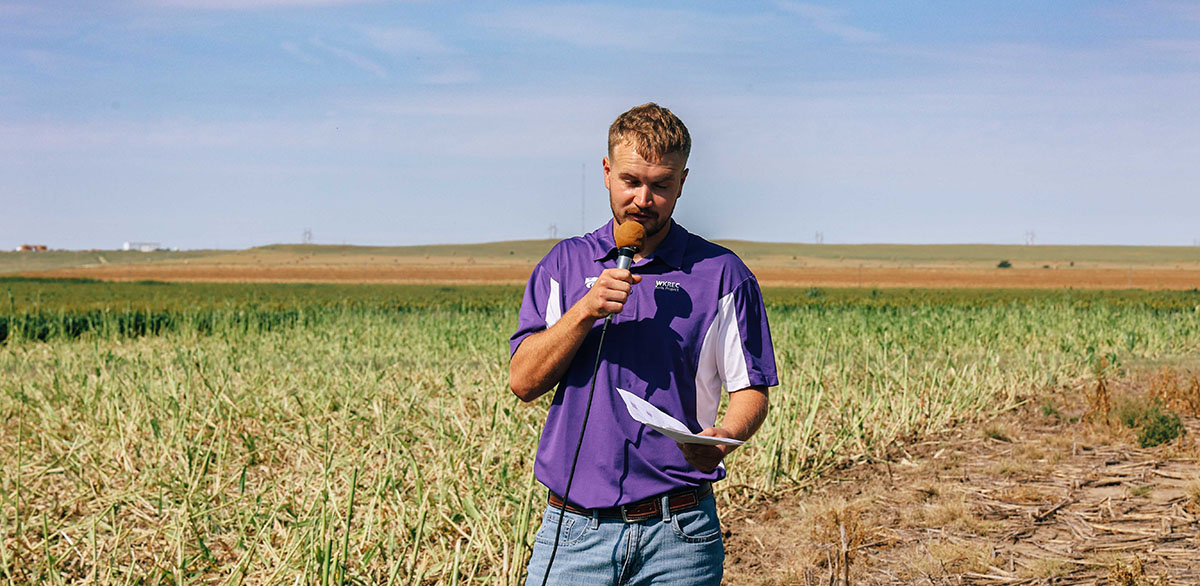
“Producers in the area where I grew up used a lot of tillage, so oftentimes in the winter, we would have major wind erosion. My research questions really came from wondering if there was a better way to improve that system.”
ZACH CARSON
Hometown roots inspire research questions
What began as an undergraduate student agricultural technician position has evolved into a role on the same research team, where Carson now helps investigate the questions that first drew his interest. Today, he is working toward a master's degree in agronomy and exploring ways to make western Kansas cropping systems more productive and resilient.
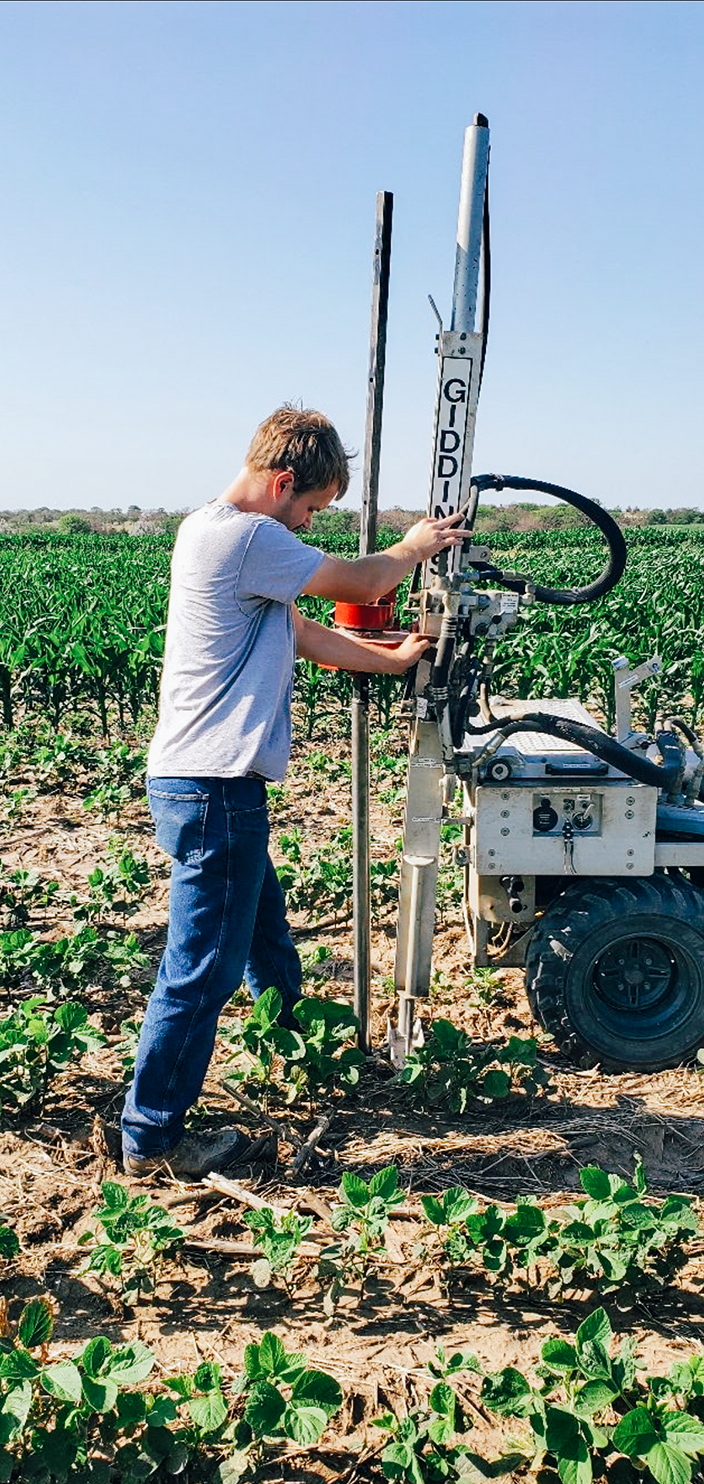
His work focuses on the same wheat-sorghum-fallow rotation he grew up with, exploring whether annual forages — crops planted for livestock feed and grown within a single season — can be incorporated into the system to increase overall productivity while maintaining grain yields and improving soil health.
He is seeking to answer those questions by evaluating whether adding forages can improve total system productivity while also supporting soil health and reducing erosion risks. Carson also examines different forage harvest methods — including haying and grazing — and how those practices influence soil properties, residue retention and subsequent crop performance.
The questions are rooted in firsthand experience.
"Producers in the area where I grew up used a lot of tillage, so oftentimes in the winter, we would have major wind erosion," Carson said. "My research questions really came from wondering if there was a better way to improve that system."
K-State forage research supports real solutions for producers
For Carson, the work is about finding practical solutions producers can realistically adopt.
One study, conducted at the K-State Agricultural Research Center-Hays, compared traditional three-year rotations to intensified forage rotations harvested through grazing and haying methods. Carson and his colleagues found that adding forages increased residue cover and improved indicators of soil health in grazing treatments, including soil carbon concentrations and dry-aggregate stability.
A second study, established on a producer field in Russell County, examined how different grazing intensities affect cover crops and soil conditions. Carson compared ungrazed cover crops, a moderate "take-half, leave-half" grazing strategy, and a graze-out treatment that removed most of the available forage.
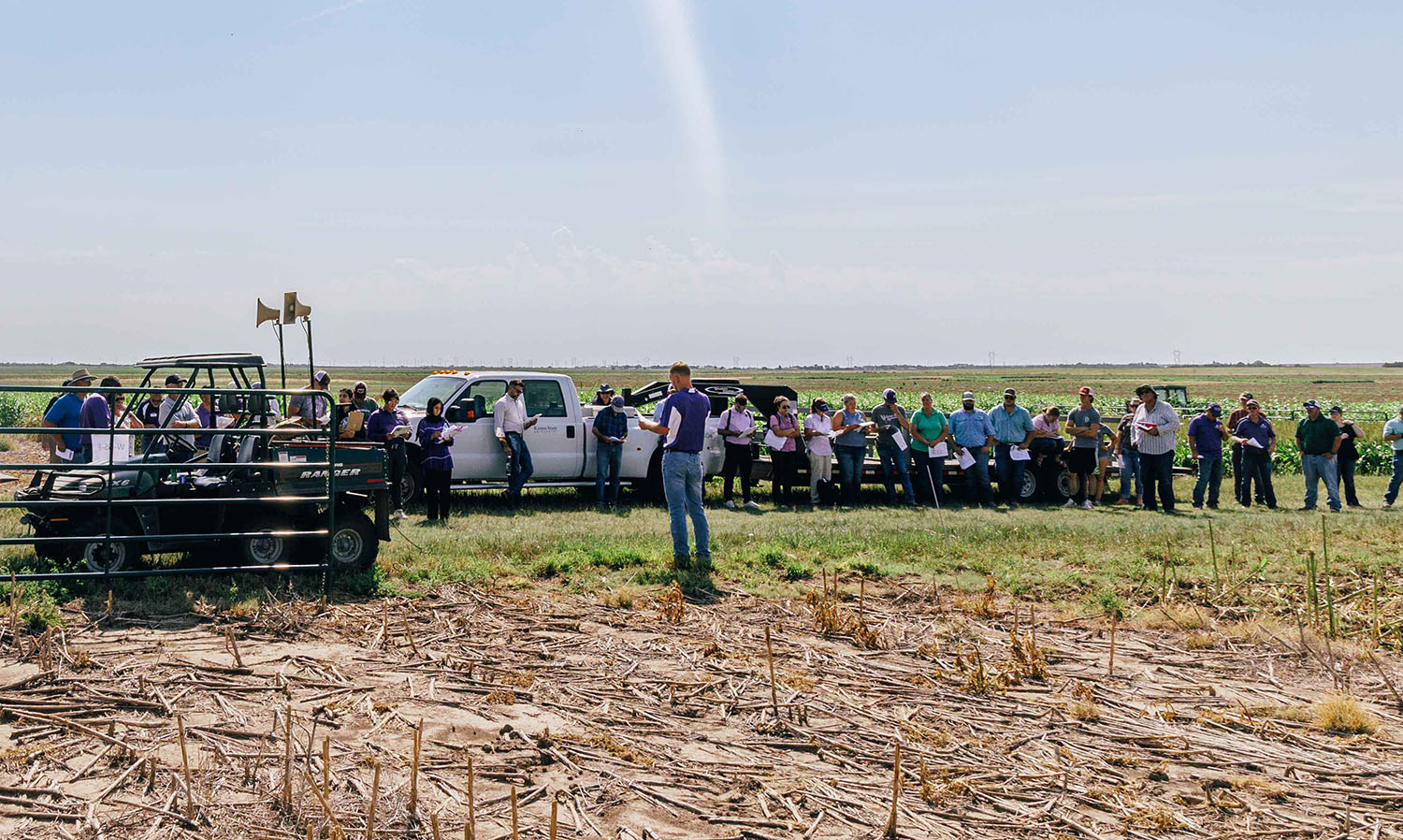
The results challenged some common assumptions.
"If you're responsibly grazing cover crops, that negative impact many farmers worry about isn't really there," Carson said.
Across two years of the study, intensive grazing had little effect on subsequent grain sorghum yields or most soil health measurements. Carson cautions that weather conditions matter and additional research is needed, but the findings suggest producers may have more flexibility than often assumed when grazing cover crops under favorable soil conditions.
From field to future, inspired by family
Working full-time at the K-State Agricultural Research Center while completing graduate school has given Carson a unique perspective on the research. From planting plots and applying fertilizer to collecting soil samples and analyzing data, he has participated in nearly every step of the process.
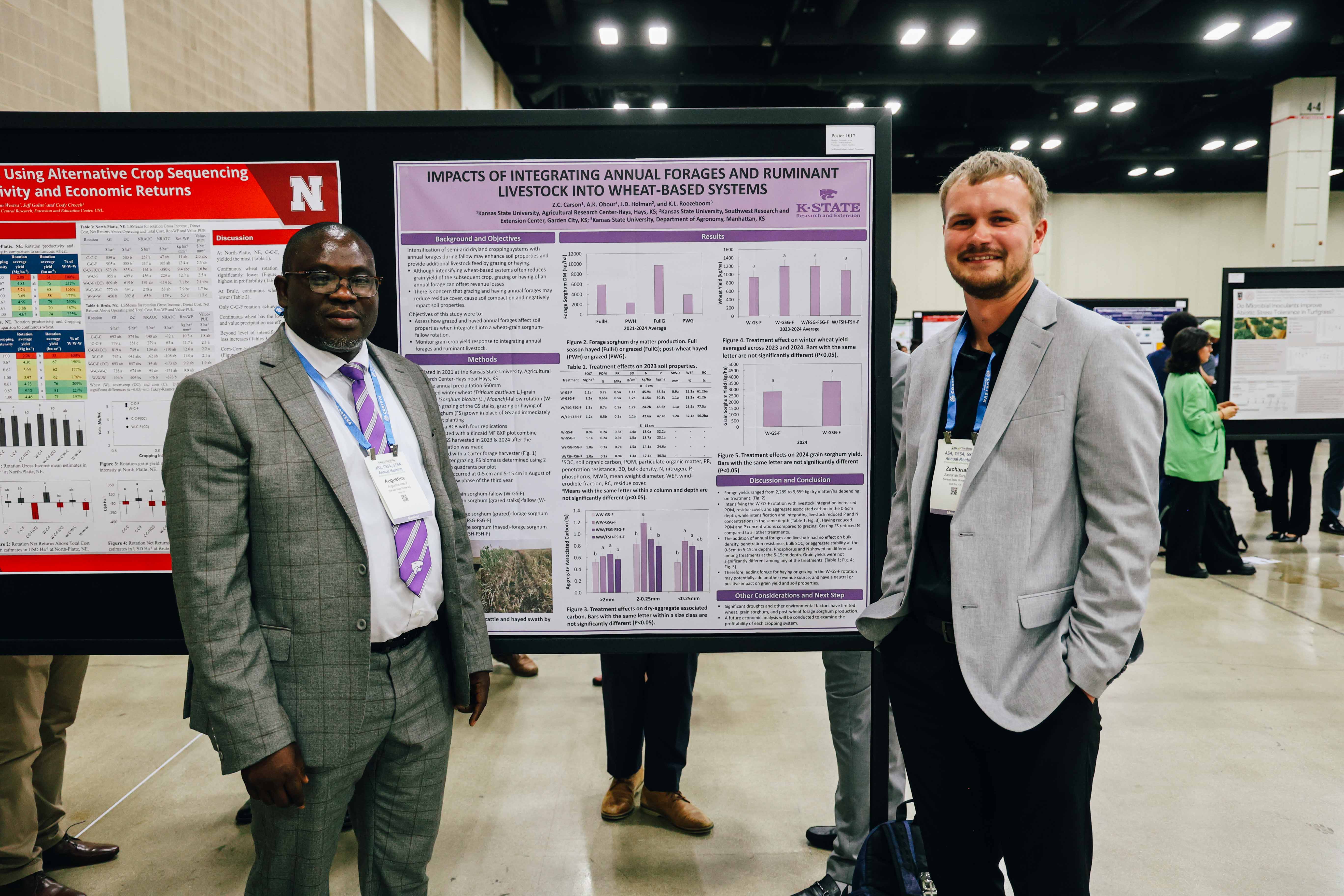
He has also presented his work at national agronomy conferences, sharing results with researchers studying similar questions across the country and gaining new perspectives on agricultural production systems.
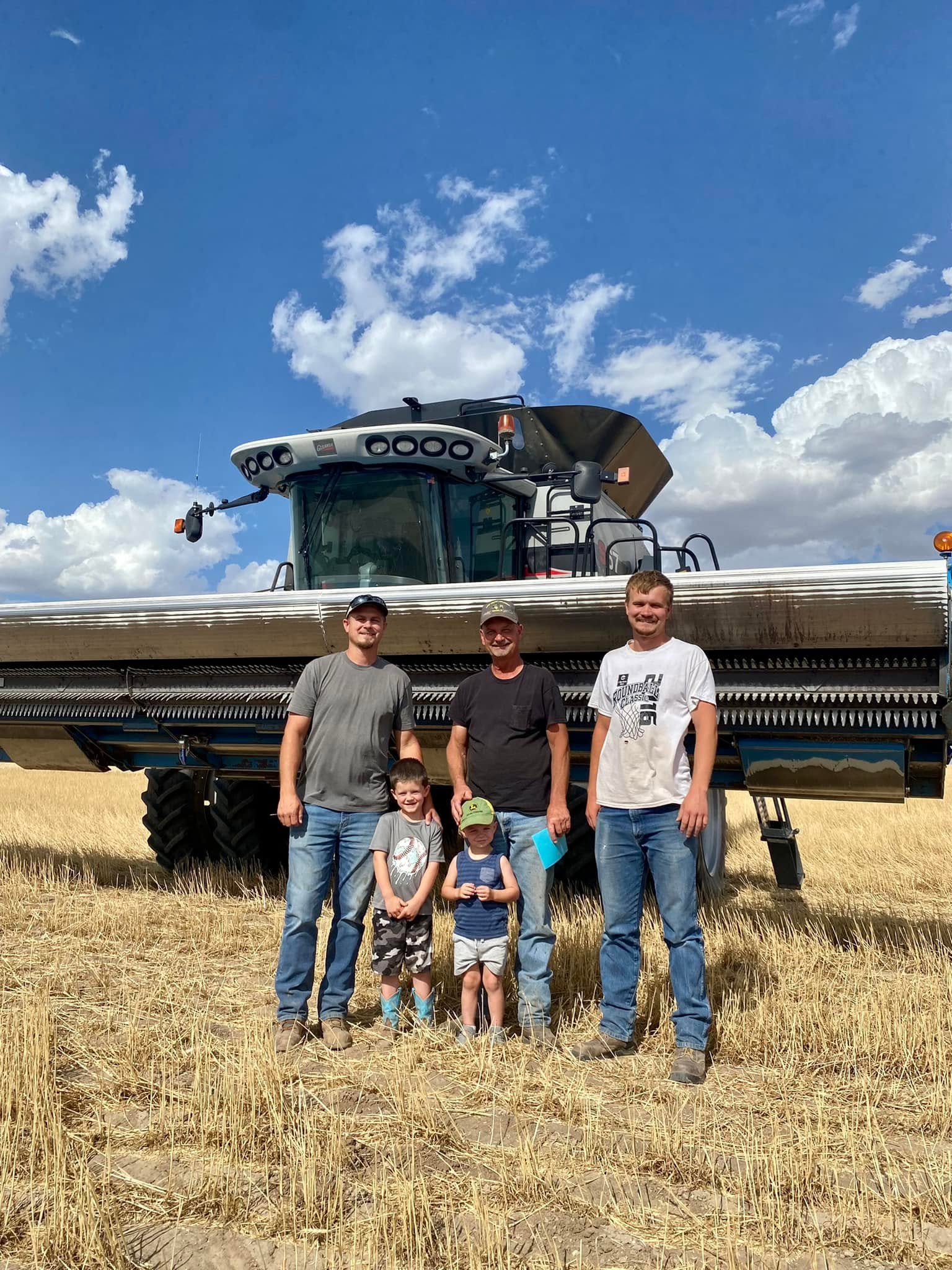 Now, Carson has decided what comes next: After completing his master's degree, he will remain at the Western Kansas Research-Extension Centers and pursue a doctorate at K-State, continuing research focused on practical solutions for western Kansas producers.
For Carson, staying close to home matters.
"I'd really like to stay in western Kansas, be closer to Scott City, closer to family," he said. "I still go home and work on the farm with my dad and my brother."
That connection to home is also what drives his work.
"If it wasn't for my dad, I wouldn't be doing any of it," Carson said. "Watching him every day — out there working hard, showing you what that looks like from the get-go — has been incredible."
For Carson, research is ultimately about helping producers like the ones he grew up around. The questions may be measured in forage biomass, soil carbon and grain yields, but the goal is straightforward: finding practical solutions that help working farms and ranches remain productive in western Kansas.