A world and war away, K‑State is helping restore Ukrainian agriculture
Ukrainian seeds made Kansas the Wheat State. 150 years later, K-State researchers work to rebuild Ukraine as a world breadbasket.
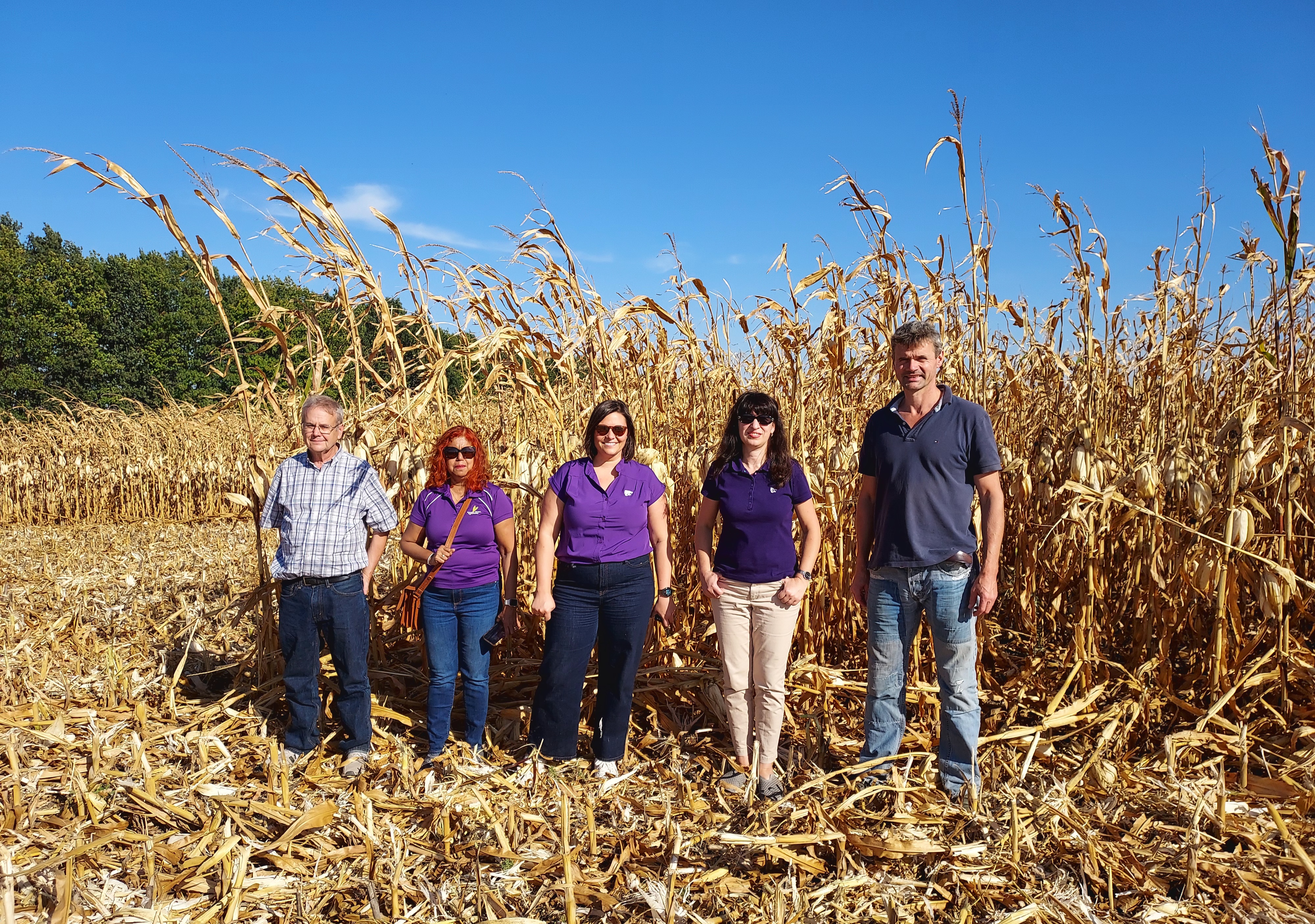
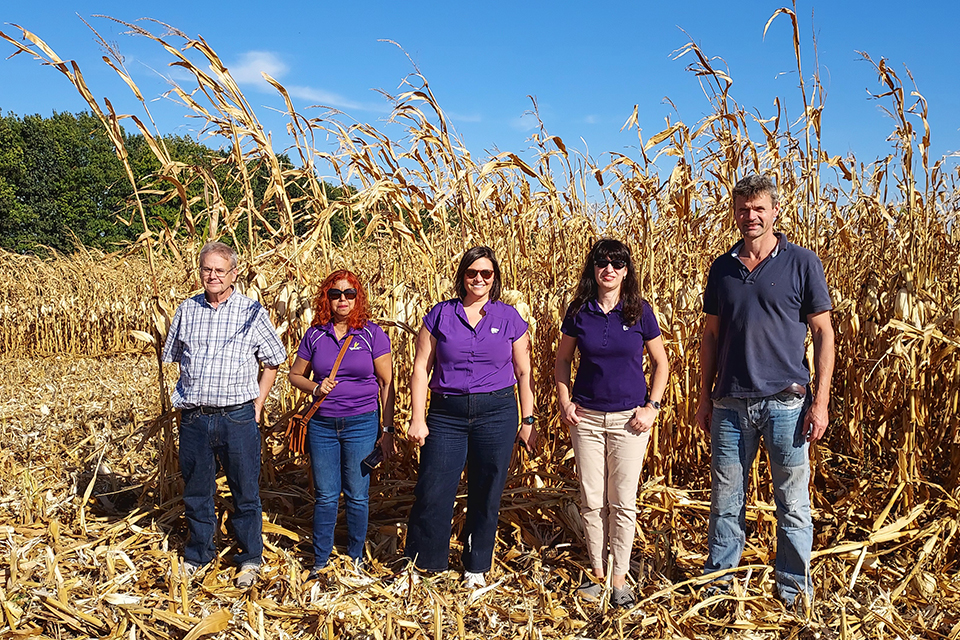 Kansas State University researchers traveled to Ukraine as part of a $9.9 million project to restore the country’s agriculture industry. From left: K-State research team members Dena Bunnel, Ganga Hettiarachchi, Antonina Broyaka and Allen Featherstone and local dairy farmer Kees Huizinga. | Download this photo.
 By Rafael Garcia
K‑State News and Communications Services
Tuesday, Nov. 12, 2024
MANHATTAN — There is no story of Kansas agriculture without Ukraine, because much of the two breadbaskets’ history is woven with the same strands of wheat.
Mennonite settlers, fleeing persecution in the southeast of Ukraine, first arrived in central Kansas in 1874, bringing with them trunkloads of Turkey Red winter wheat seeds that had grown so well in their homeland. Strong and sturdy to survive the harsh Kansas winters and hot summers, it was a grain that matched the resilience of the people who planted it, and fields of Turkey Red quickly spread across Kansas and the Great Plains of North America.
Other wheat varieties followed and descended, but it was Turkey Red that built Kansas as a breadbasket for the U.S.
A century-and-a-half later, Kansas has an opportunity and a responsibility to help rebuild a sister breadbasket in war-torn Ukraine, and Kansas State University experts are leading the charge.
During the next five years, an interdisciplinary team of K-State researchers will use a subcontract of up to $9.9 million from Chemonics International as part of the U.S. Agency for International Development, or USAID, Harvest Activity— a larger, overall $250 million federal grant — to study and help restore Ukraine’s lost agricultural productivity.
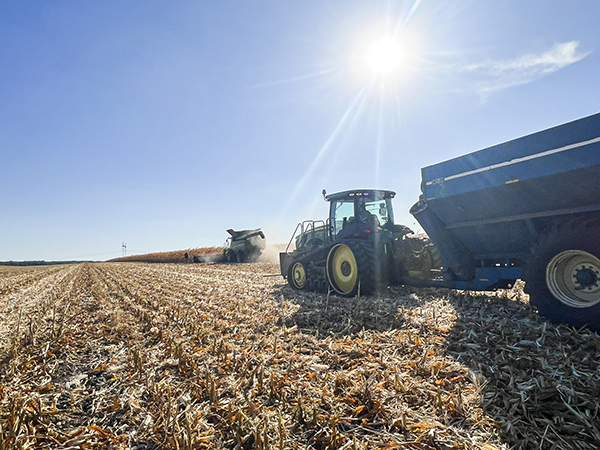
The K-State team combines expertise from professors and extension specialists in nine units across three of K-State’s colleges, as well as through partnerships with researchers at the University of Nebraska-Lincoln and the University of Kansas. Four members of the K-State team traveled to Kyiv, Ukraine, in late September to meet with local partners as they launch the first, exploratory research phase of the five-year subcontract.
It’s a natural extension of K-State’s longstanding investments to work and engage with international partners and a key component of the university’s strategic plan to set a standard as the next-generation land-grant university, said Dena Bunnel, associate director for research and international initiatives in the College of Agriculture.
“We have a responsibility — as researchers, teachers and extensionists — to provide this technical expertise, learning and capacity building to communities around the world in order to build more resilient global food systems,” said Bunnel, a co-principal investigator on the project who also traveled to Ukraine. “Everyone deserves that opportunity, and the benefits of this work extend to Kansans and people around the world.”
Determining destruction in Ukraine’s agriculture industry
K-State was first approached by Chemonics International to participate in the international development firm’s overall $250 million project, granted through USAID, because of K-State’s record of work in global wheat research, including the Feed the Future labs and current USDA-sponsored assessments in Georgia and Armenia, said Allen Featherstone, university distinguished professor of agricultural economics.
“We were chosen as a partner for the expertise we have in crop production,” said Featherstone, who is the principal investigator on the project. “We also produce four of the five crops that Ukraine is predominantly known for — sunflowers, wheat, corn and soybeans. Kansas is a natural place to look to help answer some of these challenges in Ukraine.”
One of K-State’s primary responsibilities in the Ukraine project will be to conduct a yield gap analysis, which measures a country or region’s hypothetical maximum productivity, assuming perfect conditions, versus actual output.
“The goal is to get agricultural production in Ukraine back to, or even beyond, what it was pre-war,” Featherstone said. “There are certainly a lot of challenges in that: the availability or cost of inputs, extensive damage to farms and soil, destroyed or diminished irrigation infrastructure, and a reduction in available labor.”
"Kansas is a natural place to look to help answer some of these challenges in Ukraine."
Since the war started, Ukraine has suffered more than $80 billion in direct and indirect agricultural damages, according to February 2024 reports from the Center for Food and Land Use Research of the Kyiv School of Economics, in collaboration with the World Bank.
That figure has likely continued to soar in the months since, said Antonina Broyaka, extension assistant professor of agricultural economics. Broyaka, formerly dean of the Faculty of Economics at Vinnytsia National Agrarian University in Ukraine, fled the country with her family after life quickly became unsustainable in the early days of the invasion.
She came back to K-State, where she had previously been in 2004 and 2005 as a scholar in the Fulbright Junior Faculty Development Program.
Broyaka, another lead investigator on the project, said she is honored to play a role in helping rebuild her home country’s agriculture industry. In addition to speaking fluent Ukrainian, Broyaka is leveraging the connections she made during 20 years as a professor with local agriculture producers and former students to augment the research teams’ work in the country.
“This is good for K-State’s reputation around the world,” Broyaka said. “To show that we are present there, as we are in Kansas and other places around the world. We have the expertise to do this for ourselves and for other countries.”
All of the analysis and recovery work will involve a wide range of K-State experts, including plant pathologists, grain scientists, agronomists and economists in College of Agriculture; biological and agricultural engineers in the College of Engineering; geospatialists and biochemists in the College of Arts and Sciences; and irrigation specialists from K-State’s Southwest Research-Extension Center, among others.
The collaboration is multidisciplinary land-grant work at its best, Featherstone said.
“This work shows that need for having outstanding, disciplinary excellence that can solve these big challenges that no discipline could address by itself,” Featherstone said.
Both Broyaka and Featherstone underscored the global importance of the work in Ukraine. In an increasingly globalized food system, a war in one country is not disconnected from a drought in another. Food scarcity and high prices drive instability, and K-State’s work is critical to global food systems security.
“Even though missiles aren’t hitting Kansas farms, we feel the effects of the war here, too, as we operate in an open economy,” Broyaka said.
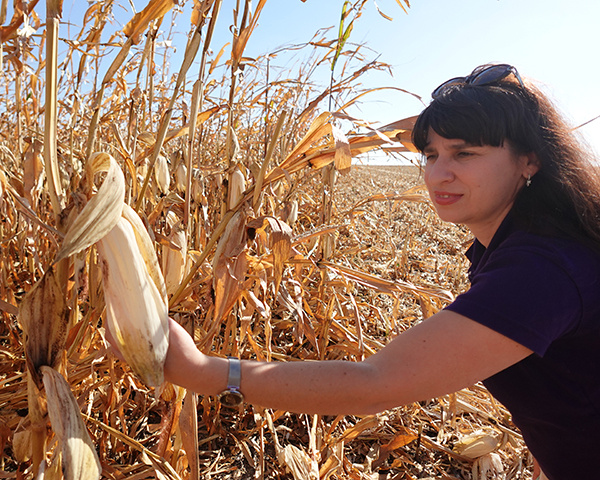
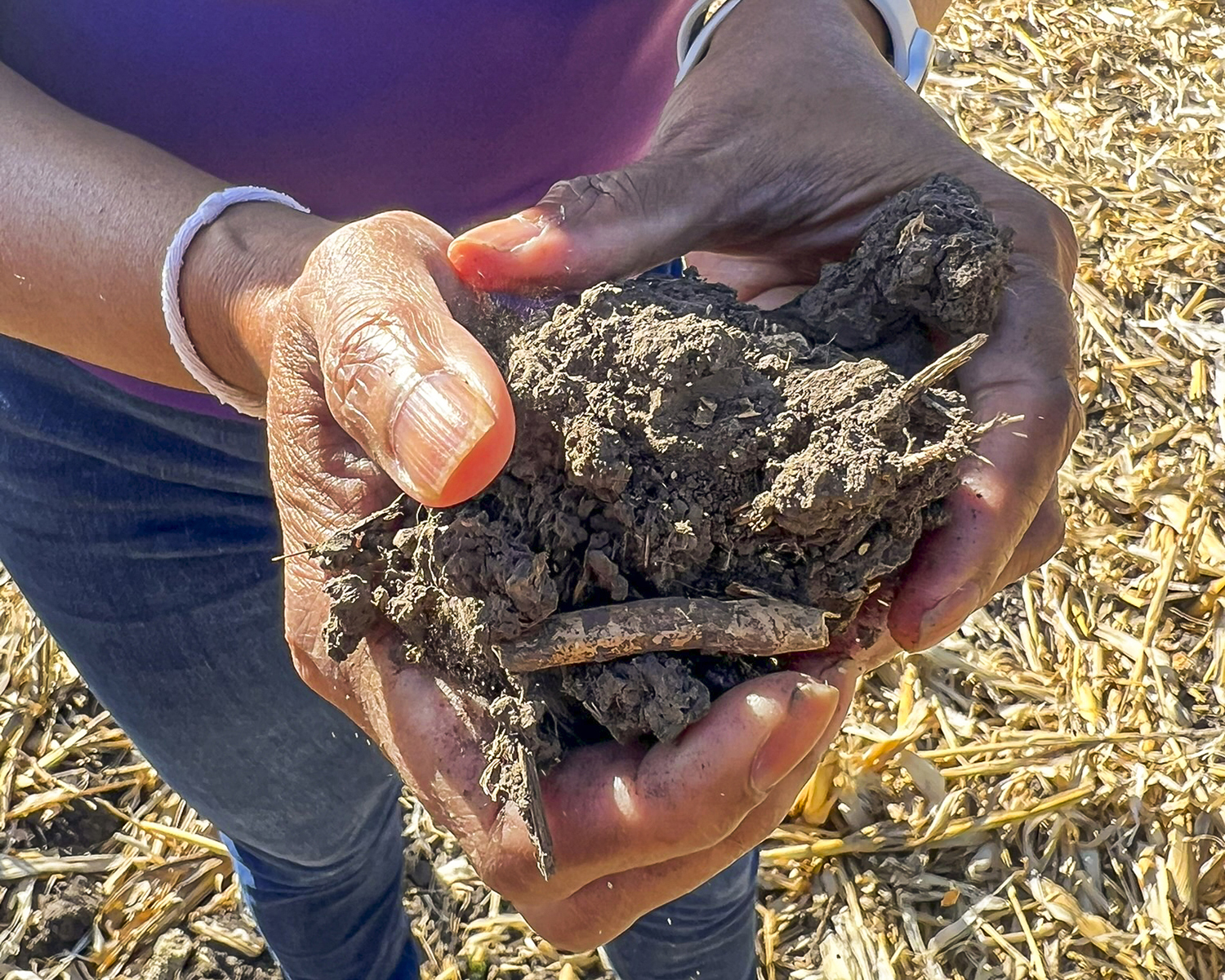 A major component of a K-State research project to help restore Ukraine's agricultural economy will be to revitalize the country's soil — widely considered to be some of the most fertile and productive in the world. | Download this photo.
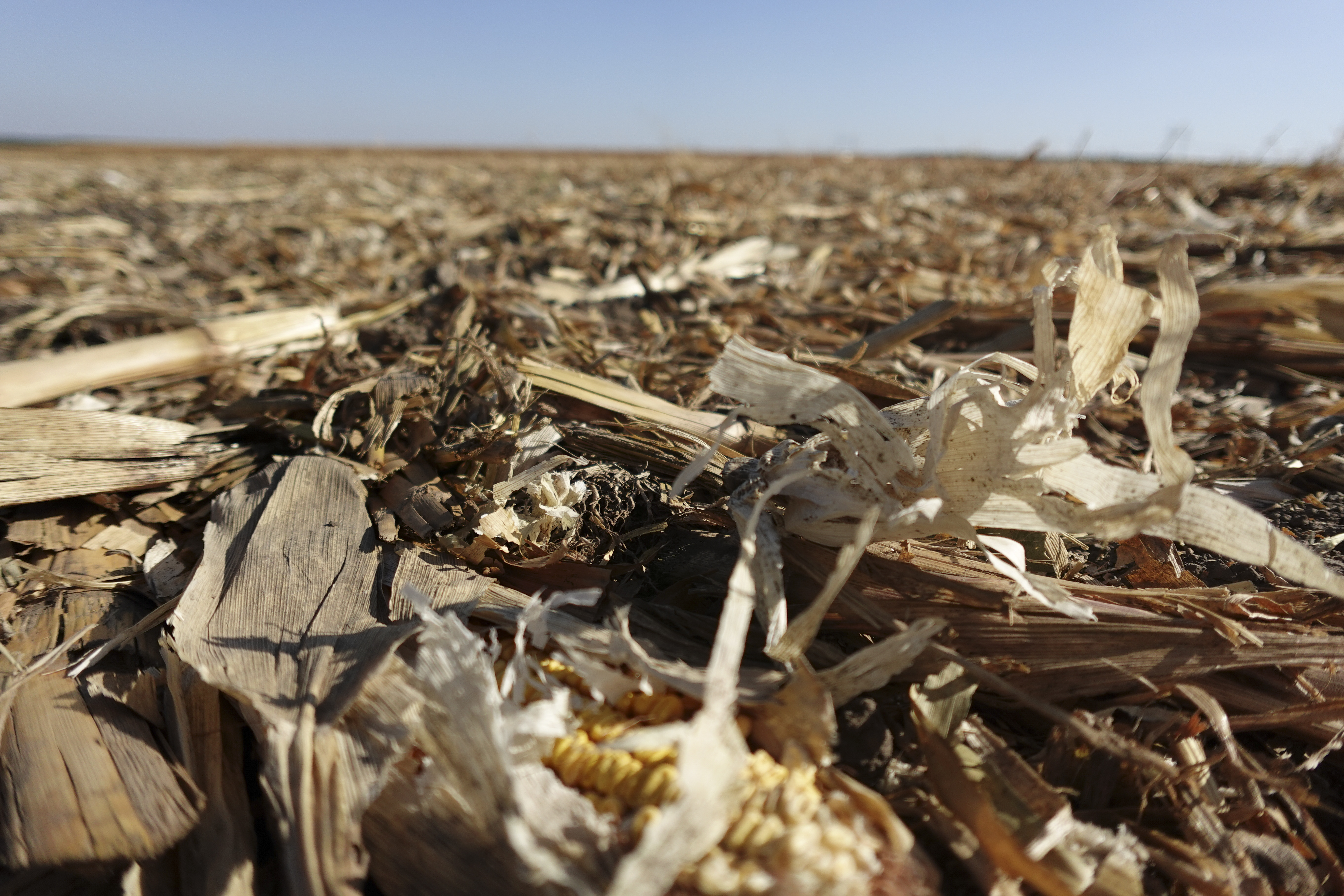
Revitalizing some of the world’s most fertile soil in Ukraine
Some of the most insidious effects of war are the lasting scars it leaves on the land.
When missiles both launch from and strike the ground, and when landmines leave craters strewn across farmland, they can leave behind harmful compounds and chemicals that adversely impact soil health and in the most extreme cases, can make the soil unsuitable for growing food crops.
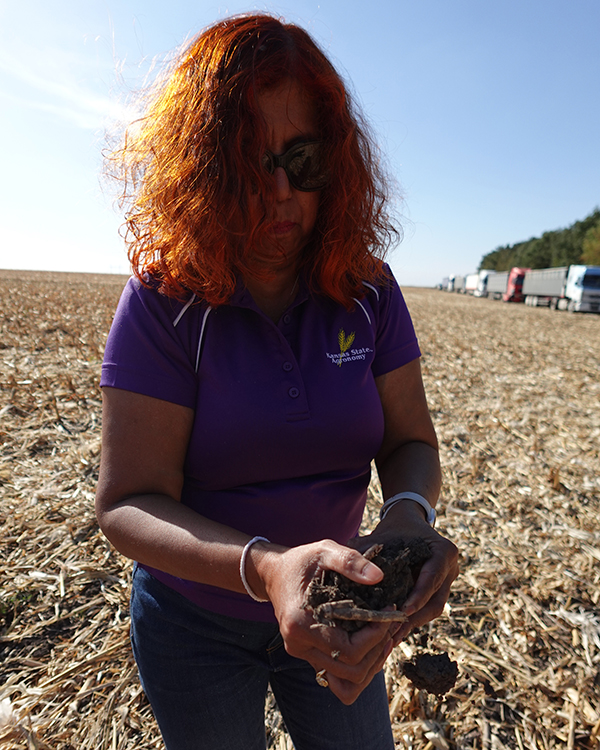
In Ukraine, war has marred large portions of the country’s chernozem — a dark, rich variety of soil commonly referred to as “black gold” that has made the eastern prairies of Ukraine some of the most fertile lands in the world.
But if there’s anything Ganga Hettiarchchi knows, it’s dirt, and she and her team are leading research to revitalize Ukraine’s conflict-impacted soil and restore it to full productivity.
“Ukraine has been blessed with these very rich, dark and fertile soils, so it’s sad to think that there could be widespread damage of these soils from war-related activities,” said Hettiarachchi, a professor of soil and environmental chemistry in the department of agronomy. “But we also have an opportunity to write a new chapter for any damaged soils as we find out how to restore them to full productivity.”
The team’s preliminary work in Ukraine is to understand the level and type of potential harm to Ukrainian soil health in impacted areas.
"This work in Ukraine is a huge responsibility, but it is very rewarding. If we do this right, we can make a difference for these people who have been through a lot."
Hettiarachchi has an extensive background in soil remediation and restoration, including at military installations around the world and areas around decommissioned mines or smelters in southeast Kansas, as well as other parts of the U.S.
She expects these experiences and knowledge to translate well to war-damaged soil.
“What we are hearing is that although there are items you might expect to see in a war zone, like TNT, much of the impact to soils has been from either physical damage or leaving behind trace elements like copper, lead and arsenic,” Hettiarachchi said. “There hasn’t been much soil testing done yet, but where there has been, there has not been evidence of widespread, heavy damage yet that would make it impossible to restore these soils.”
After identifying areas of affected soil to test, the team will then conduct feasibility studies over the next year to see how effectively any adverse effects to soil health can be mitigated.
They will then identify the best management practices Ukrainian farmers can implement to minimize the mobility of any of the potentially harmful trace elements and grow food safely.
“These trace elements, they will not degrade, but we can make them inert or less bioavailable,” Hettiarachchi said. “If they are organic compounds negatively affecting soil health, there are things we can do to accelerate the soil restoration process, such as adding composts and nutrients or aerating the soil. Once we understand what’s in there, we can know how to address it to ensure that Ukrainian farmers can return to productive land as soon as possible.”
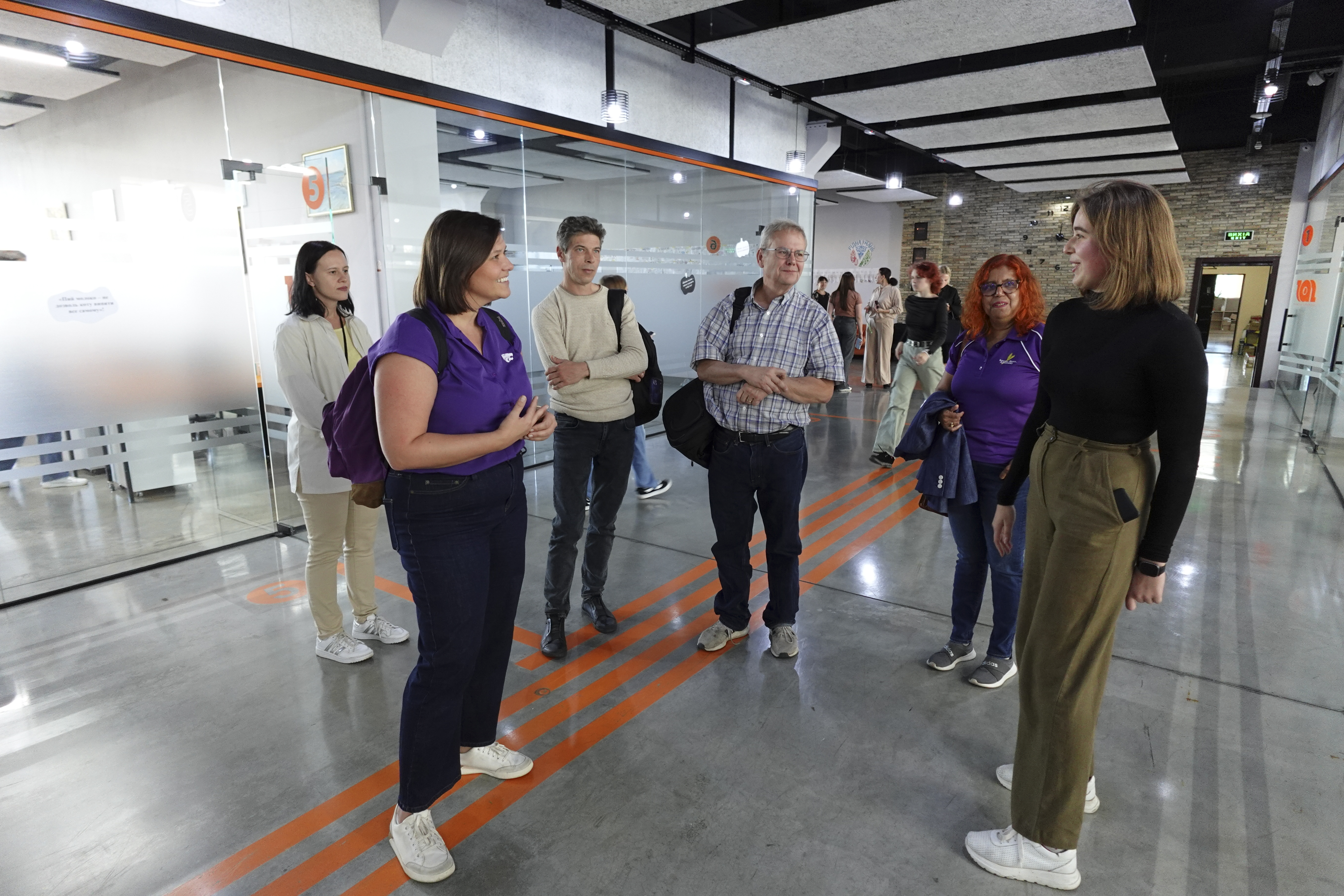
During their trip to Ukraine, members of a K-State research delegation met with several local experts and partners as they lay the groundwork for a five-year, $9.9 million collaborative research project to help the country’s farmers assess and rebuild from damages sustained during war with Russia. | Download this photo.
Sowing seeds for a stronger Ukraine
As the researchers gather information and develop recommendations, much of that work will be left to local farmers and leaders to implement in Ukraine.
Still, it will be with the guidance and advice of K-State experts, much like the land-grant university’s extension work in Kansas. That work will involve training sessions in Ukraine with stakeholders like farmers and agribusinesses, some of whom will also travel to Kansas for training at K-State’s International Grains Program Institute.
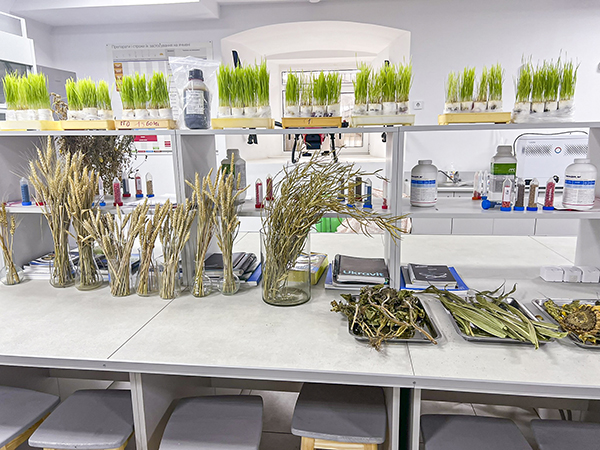
The third and last phase of the project revolves around further outreach, with the hope that more extensive and intensive rebuilding work can start.
In any case, the world cannot wait for the war to end, Broyaka said.
Rebuilding must start now.
“It’s that principle of building back better,” she said. “We don’t want to just return to that pre-war level of productivity. Ukraine will need a strong economy to support the rebuilding process, and as a major global grain exporter, a strong and stable Ukraine supports global food security around the world.”
As the war continues, Ukraine still faces plenty of challenges in reaching those grand ambitions of a plentiful, post-war economy.
"This is good for K-State’s reputation around the world — to show that we are present there, as we are in Kansas and other places around the world."
But in every step of the way, partners like those through Chemonics and at K-State are ready to work together to meet every obstacle.
It's this universitywide, interdisciplinary approach to solving problems in research and applying that knowledge in the real world that allows K-State researchers to tackle any challenge and set a standard as a next-generation land-grant university, Hettiarachchi said.
"When you look at K-State, we have all of this expertise in so many areas that we can put together a team to address any problem anywhere in the world," Hettiarachchi said. "This work in Ukraine is a huge responsibility, but it is very rewarding.
"If we do this right, we can make a difference for these people who have been through a lot,” she added. "We can help restore that pride that Ukrainians have in their economy and in their rich soil."
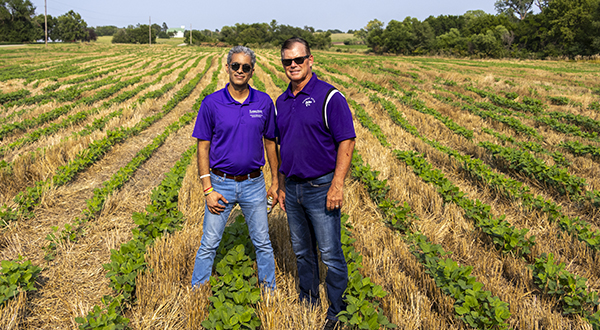
Precision agriculture innovations in Kansas are solutions for the world.
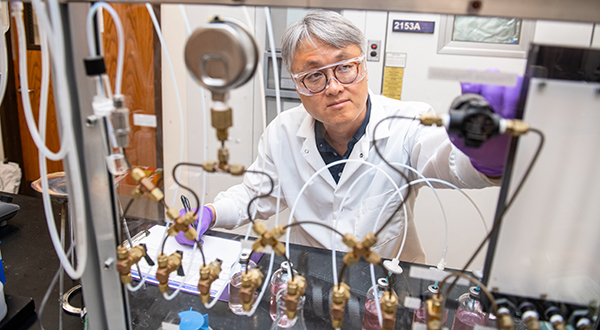
Finding a cause and a solution for greenhouse gases from silage
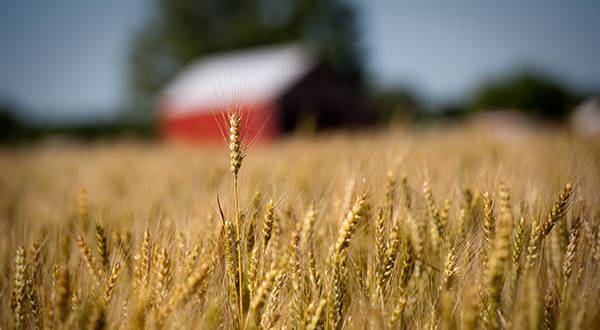
Driving advances in plant and cereal science