'Our society in the age of AI'
K-State's expanded Heartland AI Symposium Nov. 10-12 explores the impact of AI

By Malorie Sougey
News and Communications Services
Friday, Sept. 25, 2026
As artificial intelligence continues to develop exponentially, it can feel impossible to keep up with the latest AI developments and discussions. Raelynne Hale has a solution for that.
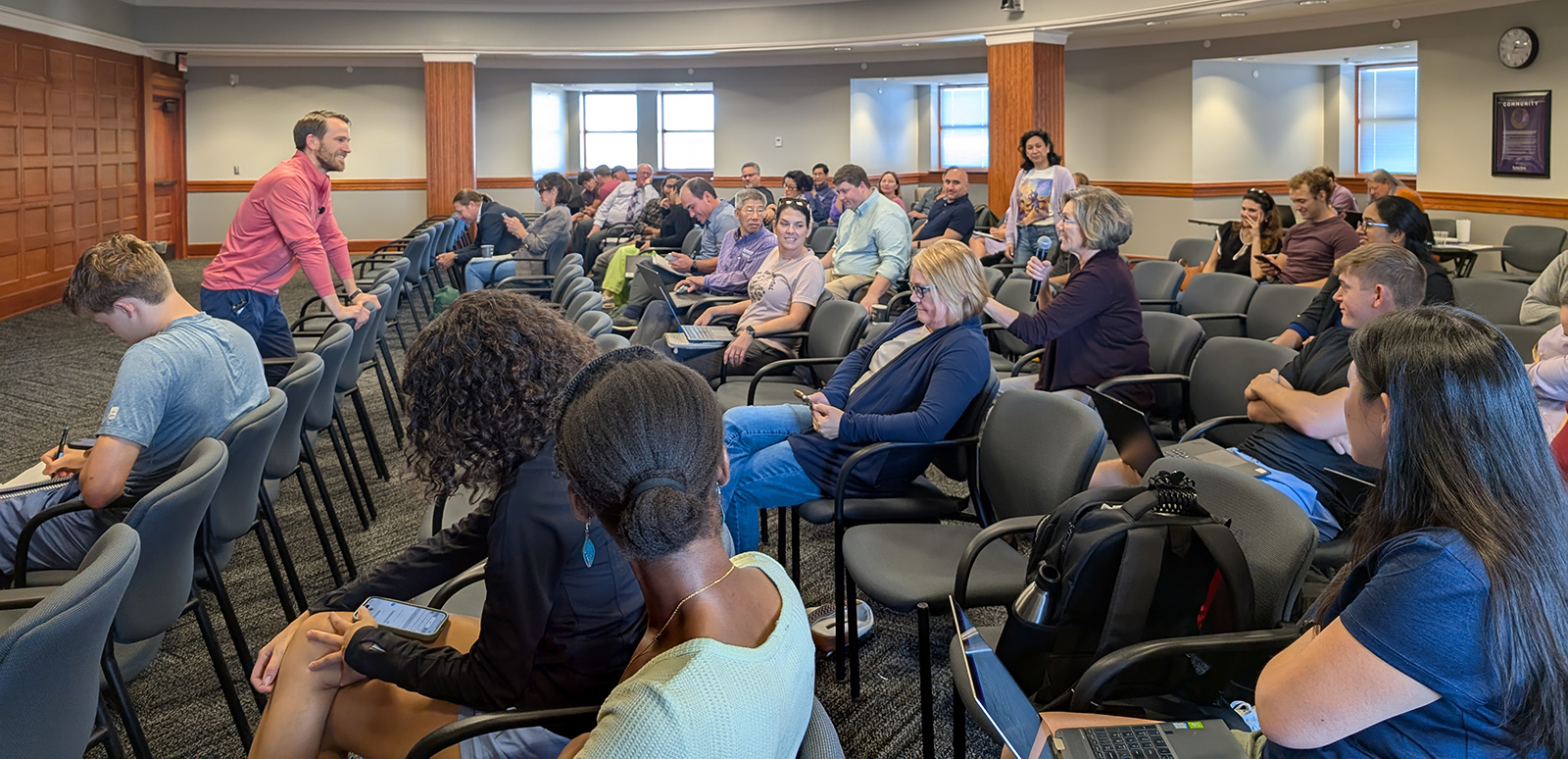
Hale is the founder and director of Kansas State University's Heartland AI Symposium, a three-day event that invites students, faculty, educators, industry professionals and community members to explore how artificial intelligence is shaping education, agriculture, business, creativity and everyday life.
"Since the beginning, the goal of the Heartland AI Symposium has been to bring people together to discuss deeply the impact that AI has made on our lives," Hale said. "The heart of the symposium lies within the idea that humans should be at the center of AI advancements."
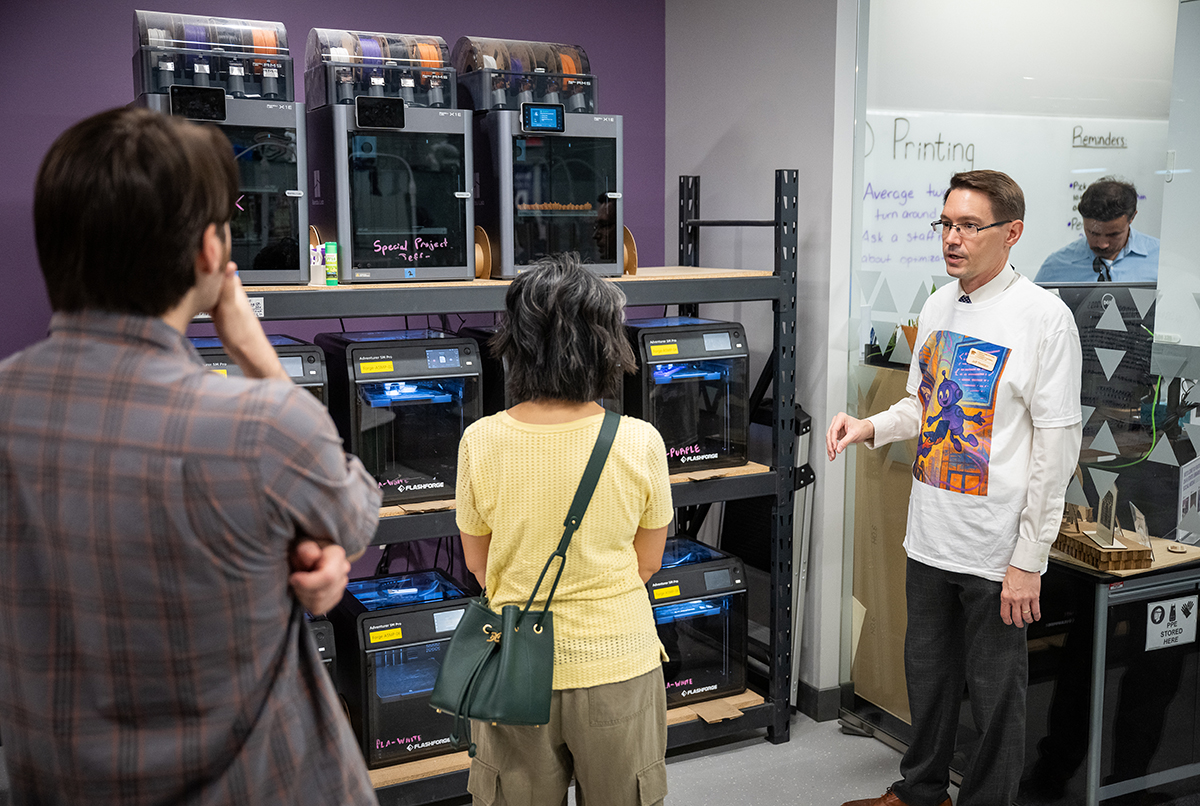
The fifth annual symposium will take place Nov. 10-12 in Manhattan with the theme of "Our society in the age of AI." Expanded this year to be a regional, hybrid and interdisciplinary event, the symposium will offer more than 100 ways for participants to learn about AI — from keynote addresses, themed tracks and sessions to an AI Hackathon and community events.
Anyone interested can register for the symposium by Sept. 30 for an early-bird rate or by Friday, Nov. 7, for regularly priced admission.
"Our goal is to help people understand AI, how it is integrated into their lives, how they can use it if they so choose, and to find community through discussing how AI is impacting their everyday lives," Hale said.
'Something for everyone'
The 2026 Heartland AI Symposium will include topics ranging from the importance of adding friction back into education and AI’s impact on cognition to discussions around AI and natural resources and agriculture.
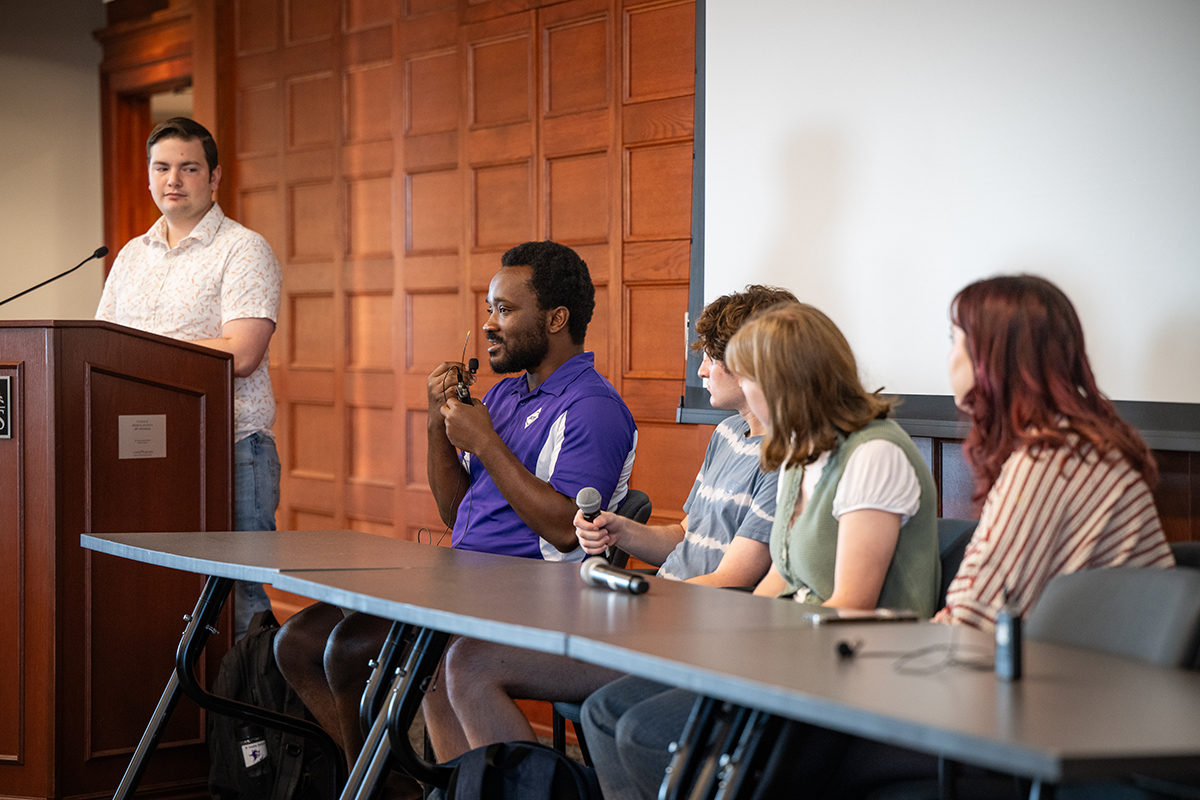
There will be more than 80 concurrent sessions, 12 hands-on workshops, three keynote speakers, two multi-institutional panels, a two-day AI Hackathon and industry networking events.
"There are sessions for beginners and experts, enthusiasts and critics, and we are thrilled to have them all with us so that we can come together to shape our future," Hale said.
Keynote speakers, tracks and workshops offer insight into AI in society
Through engaging keynote talks, hands-on workshops, live demonstrations and interesting sessions, participants will learn how to use AI tools responsibly while examining their ethical, social and environmental impacts.
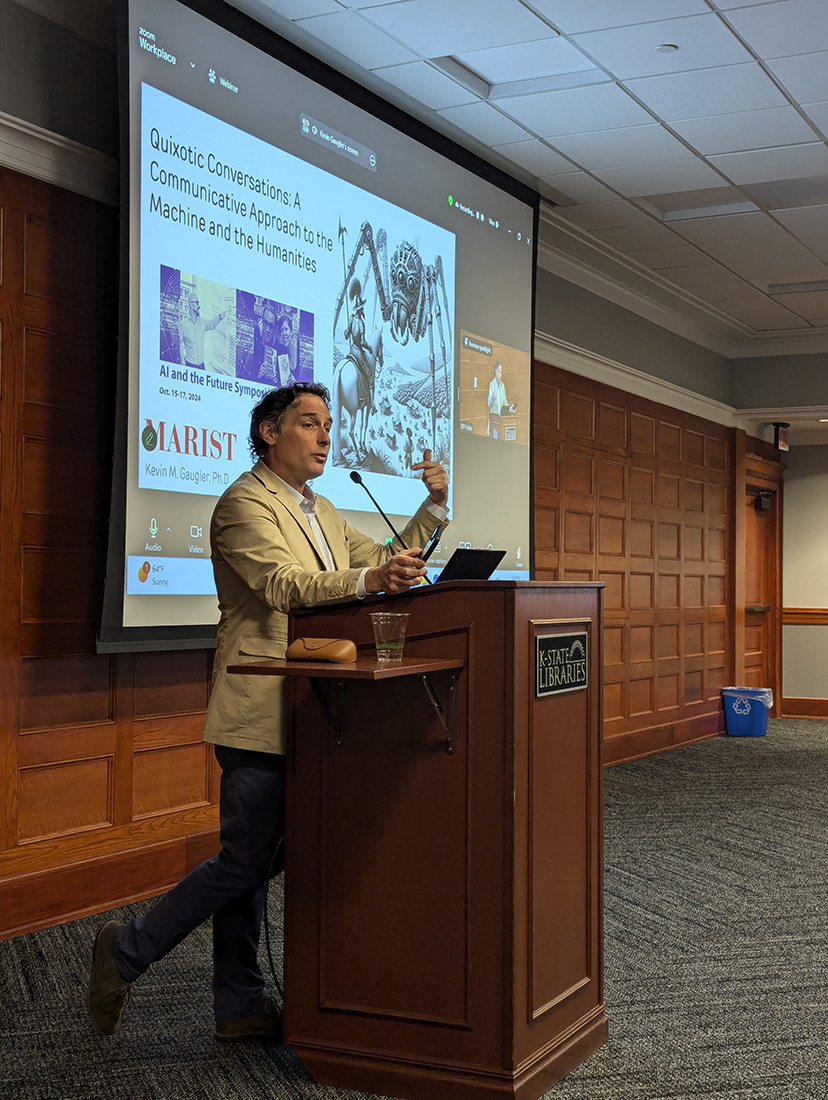 Distinguished keynote speakers will present their expertise to symposium participants throughout the three-day event.
"Our team works to select keynote speakers that represent different fields of thought," Hale said. "Every year, we aim to have a speaker from computer science who can explain how the systems are working in a way that community members can understand. We also invite a philosopher to discuss ethical issues around the technology and a humanities scholar to discuss a range of topics from AI and language to AI and education or how AI affects us as human beings."
Vered Shwartz, assistant professor of computer science at the University of British Columbia and a CIFAR AI Chair at the Vector Institute, will present "Large Language Models are Not Designed to Serve their Diverse User Population” at 9 a.m. on Nov. 10.
Jonathon Herington, assistant professor of health humanities & bioethics at the University of Rochester, will deliver a keynote about "Grieving with Machines: The Ethics of AI Simulations of the Dead” at 4 p.m. on Nov. 10.
Jared Cooney Horvath, Ph.D., MEd, is the director of LME Global as well as a neuroscientist, educator, and best-selling author who specializes in human learning and brain development. He will present "Artificial Intelligence and Genuine Learning: Like Oil and Water” at 9 a.m. on Nov. 11.
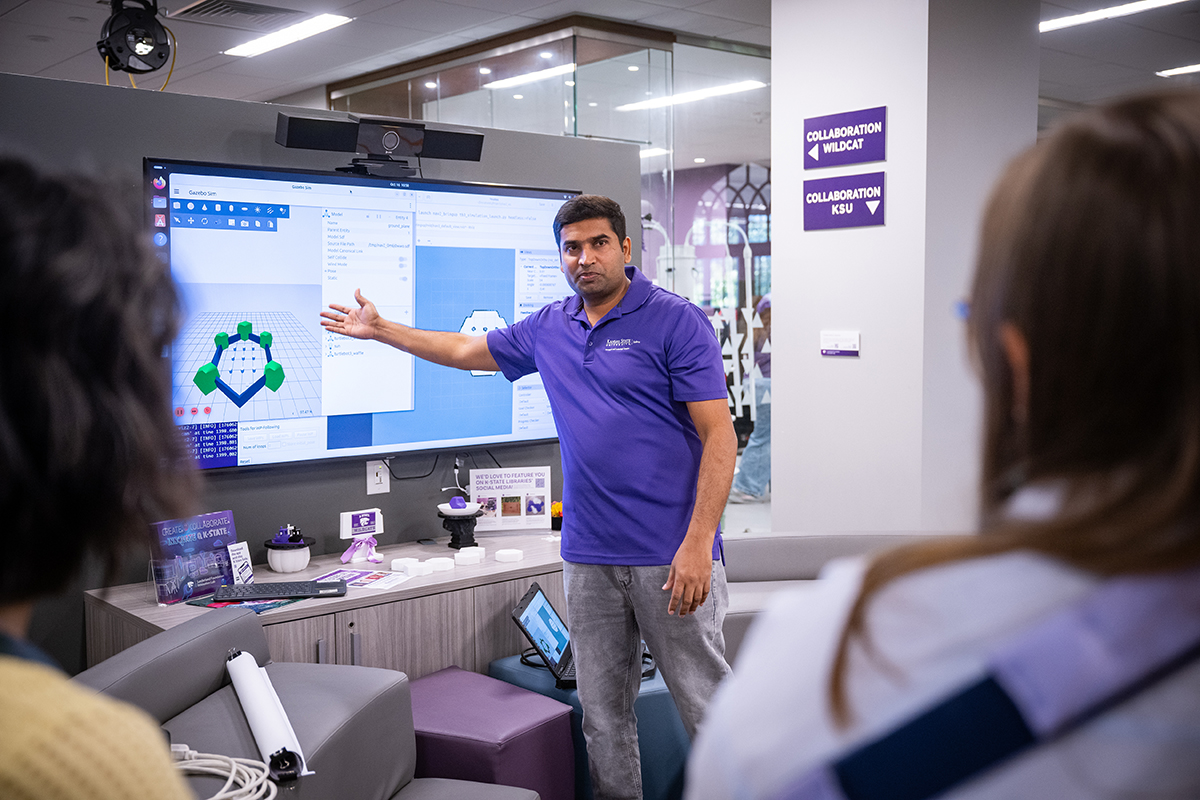
“The heart of the symposium lies within the idea that humans should be at the center of AI advancements.”
Raelynne Hale, symposium director
The symposium will feature sessions organized along several defining tracks for 2026, including:
- AI for the Community
- AI Literacy
- AI Ethics
- AI for Applications in Society
- AI in Agriculture
- The Environment and AI
- Education's Responses to AI
- Student's Responses to AI
- Rights, Protections and Ownership in the Age of AI
- Maintaining the Arts in the Age of AI
- AI Art
- AI and Writing
- Literary Representations of AI
- AI and Ancient Premodern Studies
- AI for Safety and Security Applications
- AI Methods of Research
For more details about the schedule, visit the symposium's agenda page.
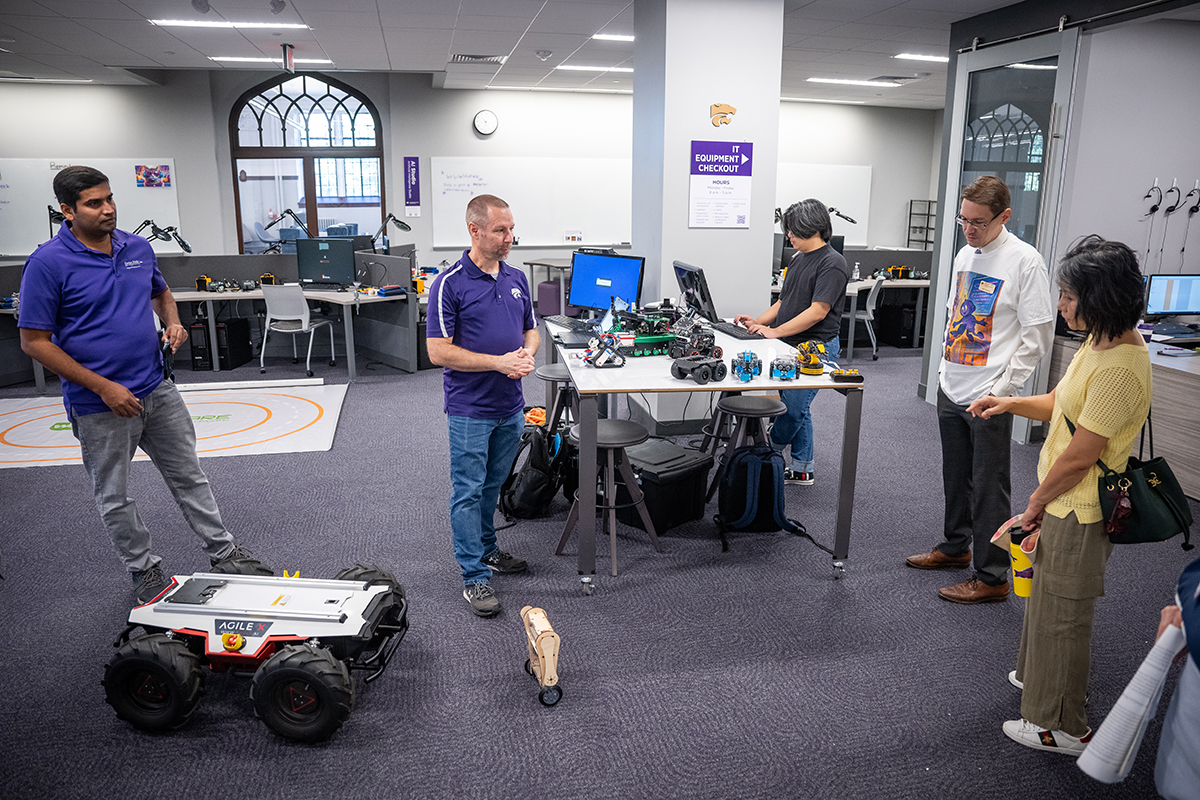
AI Hackathon brings ideas to life
Participants won't just be learning about AI at the symposium. They'll also have an opportunity to take their ideas for apps, websites, AI assistants, business tools and other digital projects and turn them into prototypes at the AI Hackathon.
After taking part in workshops where participants will develop the necessary skills to bring their ideas to fruition — such as prompt engineering, context engineering, AI-assisted development, responsible AI and rapid prototyping — a team of mentors will help them design, build, test and present their projects.
Our goal is to help people understand AI, how it is integrated into their lives, how they can use it if they so choose, and to find community through discussing how AI is impacting their everyday lives.
Winners will be announced at the Heartland AI Symposium Awards Ceremony on Thursday, Nov. 12.
Symposium attendees have the option to join as either a participant, mentor, judge or general volunteer. Learn more about the AI Hackathon on the symposium's website.
Community members are welcome at the Heartland AI Symposium
While some sessions lend themselves more readily to faculty members or students, community members will also have plenty of opportunities to participate in the symposium.
"We have sessions for the community, such as our beloved Manhattan Public Library Town Hall and sessions throughout each day ranging from how to parent in the age of AI to discussions on AI in rural communities," Hale said.
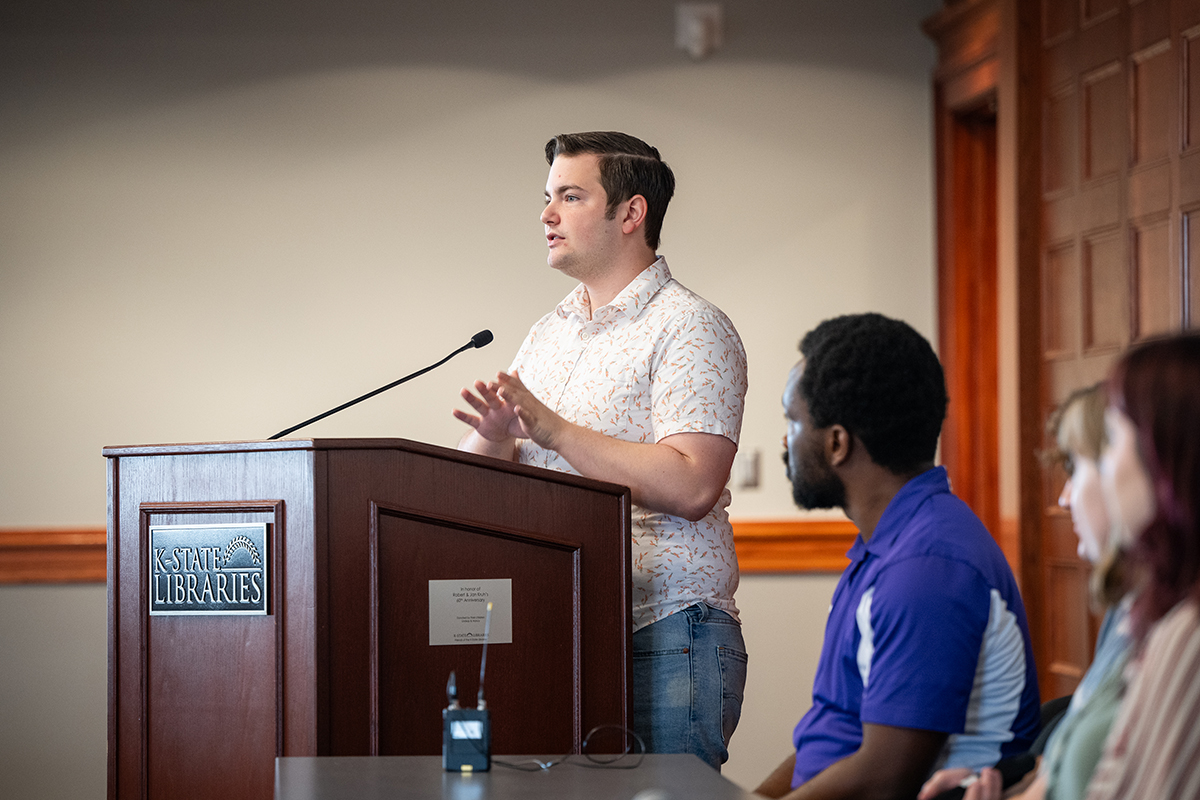
The town hall at the Manhattan Public Library is free for the public to attend and will take place from 6:30-8 p.m. on Tuesday, Nov. 10. There will also be excursions to Manhattan's Museum of Art + Light for an artist talk and a public youth workshop, and symposium registrants can get discounted entry rates to the museum.
"We wanted to create an event that has something for everyone so that we can all come together, find community and shape the future that we want to see," Hale said.
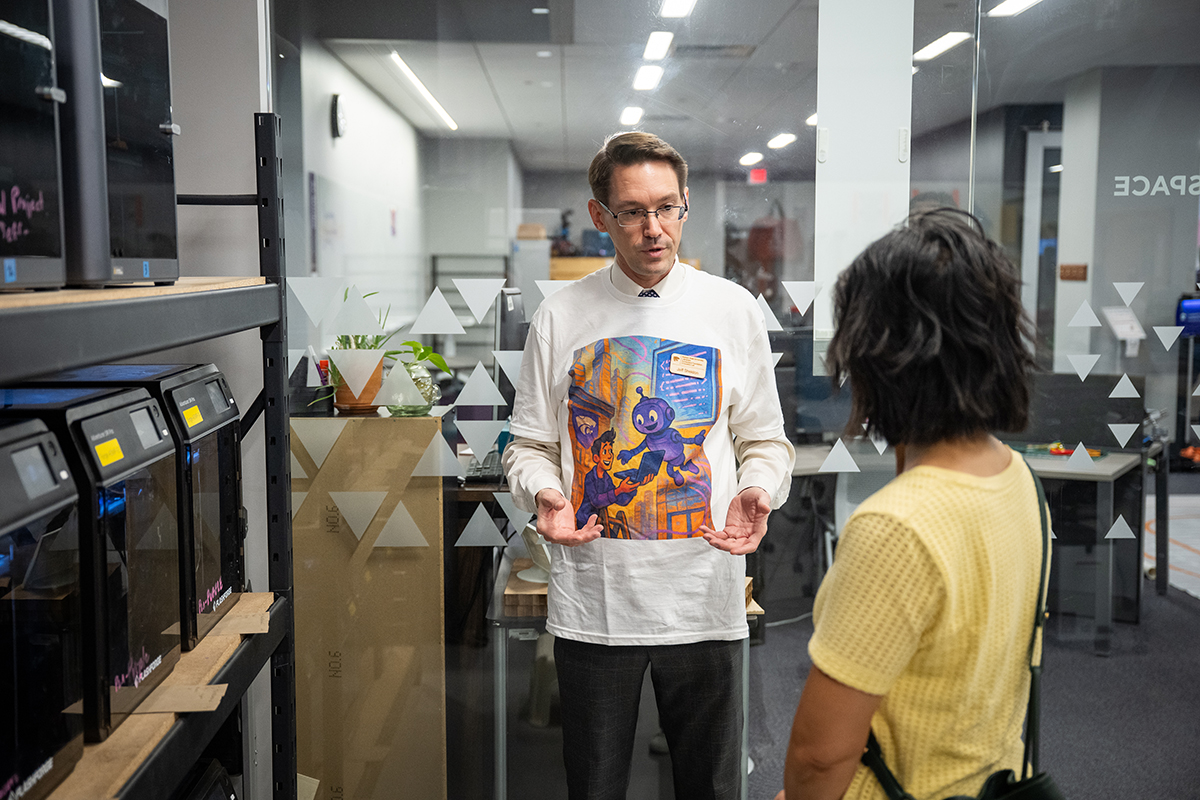
Better together: Regional partners increase symposium expertise
The symposium is an interdisciplinary collaboration among K-State's departments of Modern Languages, Computer Science and Philosophy; Center for Artificial Intelligence and Data Science; Libraries; Sunderland Foundation Innovation Lab; College of Arts and Sciences; Kansas Water Institute; and the Association for Computing Machinery Special Interest Group on Artificial Intelligence.
"As we move ahead steadily and securely like the bison facing a storm, we embrace the advances AI brings, while always staying curious, critical and creative," Hale said. "But we cannot face this new challenge alone, we must come together, across disciplines, industries, ideologies and personal perspectives, to create a bright and beautiful future."
The expanded 2026 symposium also includes regional partners, including the Manhattan Public Library, the Museum of Art + Light, the University of Kansas, the University of Missouri, the University of Nebraska and Wichita State University.
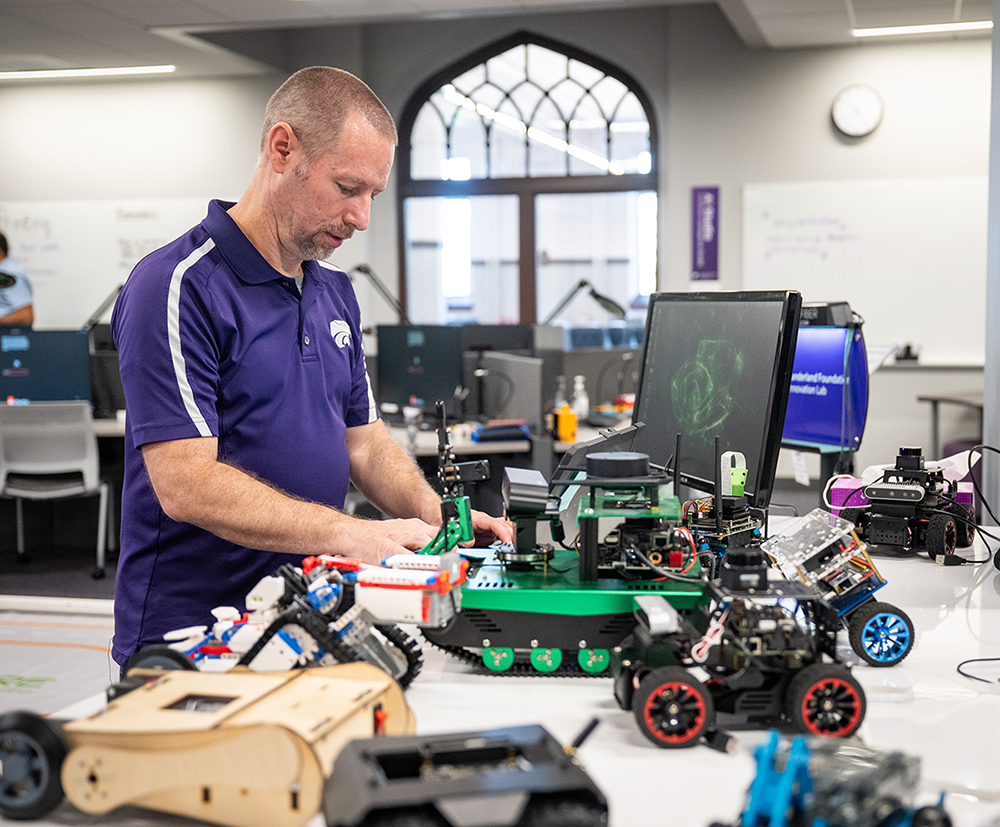
"After four years of holding the symposium, we realized that we need more regional spaces to have discussions about AI and what it means for us here in the Heartland," Hale said. "Our partnering universities form a core part of the symposium expansion team."
By serving on the planning committee, creating partner sessions, and bringing faculty and students to the event to present and participate, the partner universities have helped shape the symposium and will bring a wider variety of research areas to this year's events, including AI's relation to water research and medicine.
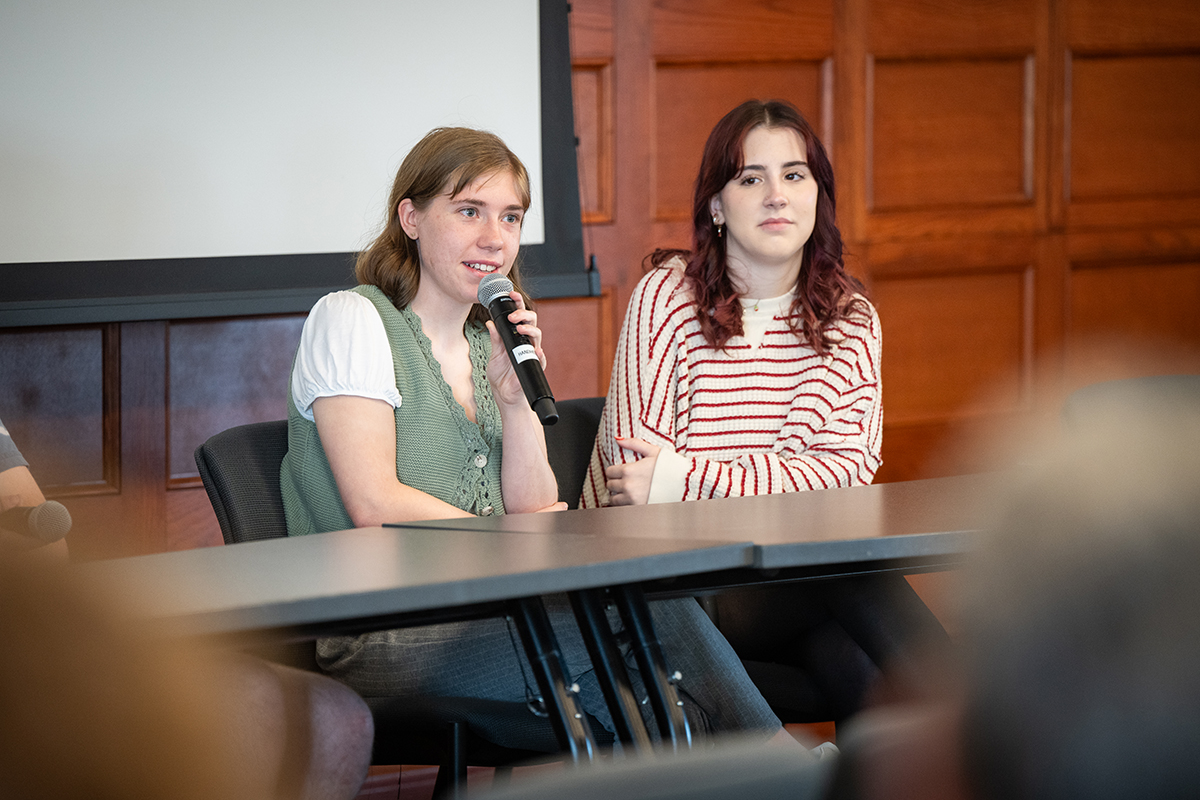
There will also be two multi-institutional panels with representatives from each partner university. One panel will focus on student perspectives on AI, and the other on faculty and staff tensions and hopes regarding AI.
The AI conversation is for everyone
Hale emphasized the importance of having all kinds of viewpoints on artificial intelligence at the summit.
"Whether you like AI or not, it is time to be a part of the conversation," Hale said. "We welcome all voices, perspectives and opinions at the symposium and feel that it is healthy to have debate around such an important topic.
"One of our missions from the beginning is to help inform people about what is happening in the Age of AI so that they can make informed decisions for themselves, whether that be adopting it or advocating for better policies around it in their communities."
Related Stories

Driving innovation in AI
Six projects spanning agricultural AI, STEM education, business curriculum and student success have received funding from the One K-State Fund, the university's...
Mapping the future
As AI begins to reshape the global tech landscape, K-State's computer science department is positioning itself as a leader through innovative academics designed...

K-State leads international collaboration for next-gen global agriculture solutions
K-State researchers are developing an AI-driven system to help soybean farmers worldwide as part of an international project funded by the National Science...