Mapping the future
K-State computer science positions Kansas for its AI era
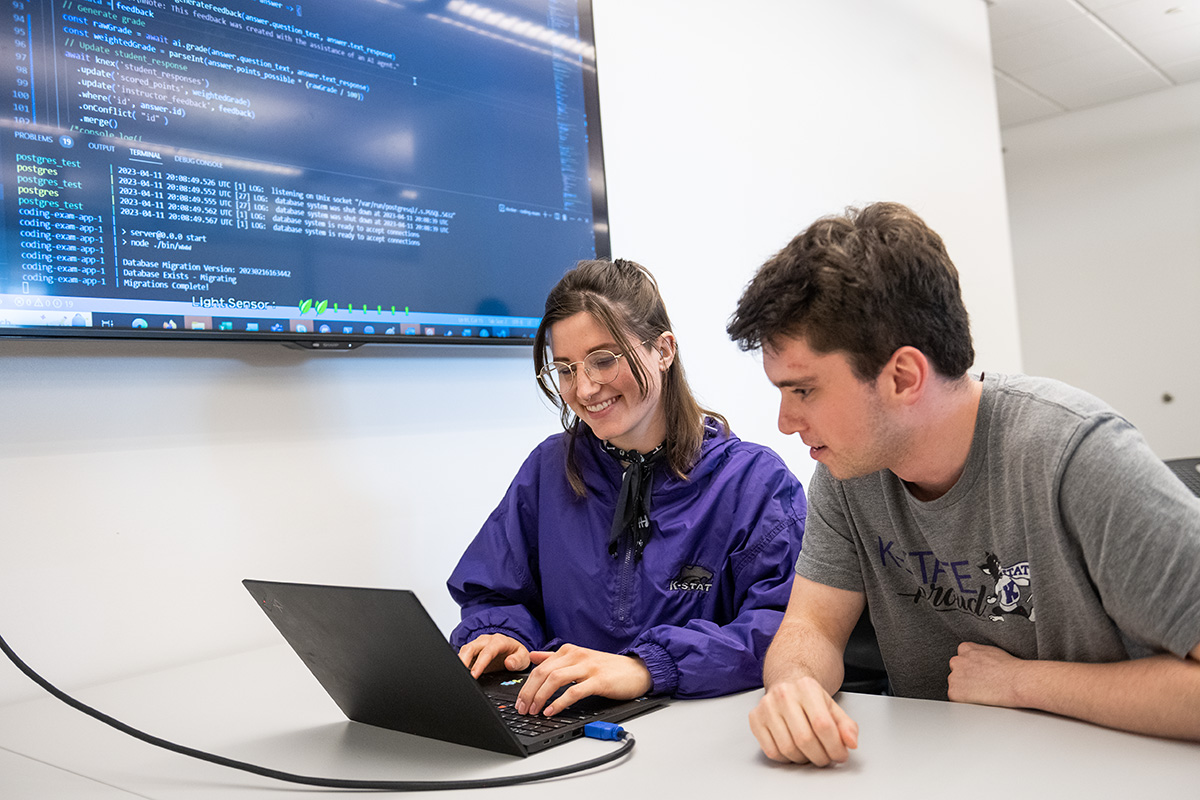
K-State's Department of Computer Science prepares students to be AI leaders in the workforce.

By Grant Guggisberg
Carl R. Ice College of Engineering
Tuesday, April 21, 2026
When it comes to artificial intelligence and its effects on an ever-evolving world, there are more questions than answers on the breadth of what will change and when.
But change is already occurring.
As AI begins to reshape the global tech landscape, Kansas State University's Department of Computer Science is positioning itself not just to keep pace, but to lead. The university is developing an academic pipeline designed to produce an AI-aware, AI-enabled workforce ready to tackle the challenges of a world where the human brain is just one part of the larger picture when it comes to solving problems and completing complex tasks.
Similarly, machine learning and AI have expanded the department's research portfolio into a variety of disciplines and topics that weren't previously connected, as the faculty's AI expertise is utilized in new and groundbreaking ways.
"There's a lot of excitement, and frankly, astonishment, within the department at the capabilities of AI," said Dan Andresen, professor and department head. "For us, it's about how can we use it to the best of our ability in terms of educating our students and our own productivity, but then also through teamwork with other people across campus and across industry to see how it all comes together."
Coming soon: AI degrees and coursework
Andresen doesn't mince words when describing the seismic shift that AI is generating, describing it as a second Industrial Revolution. As such, his department is taking the initiative to develop degree programs centered around AI.
A new master's program focused on the practical systems and applications of machine learning is in the works, with plans to launch in fall 2026, and an undergraduate program is also in development. The programs aim to provide students with the technical proficiency to build and manage AI systems, ensuring they are prepared for high-stakes careers in Kansas' vital industries, from aerospace in Wichita to precision agriculture across the plains.
One of the most significant hurdles in AI education is moving beyond simple tool usage to true mastery. It's the difference between a student who uses a large language model to produce an output and one who truly understands the core principles behind it.
"We don't want to come across as a bunch of Luddites saying scratch your code into these wax tablets," Andresen said. "But we are also trying to communicate to our students that there's really significant evidence that says the best way to really know what's happening with something is to do it by hand and not just rely on tools.
"You can build your intuition and build your knowledge and then go ahead and use the tools."
While the education component is vitally important, the department's mission extends beyond just teaching, and the implications of AI for research in academia are also immense.
Connecting the dots
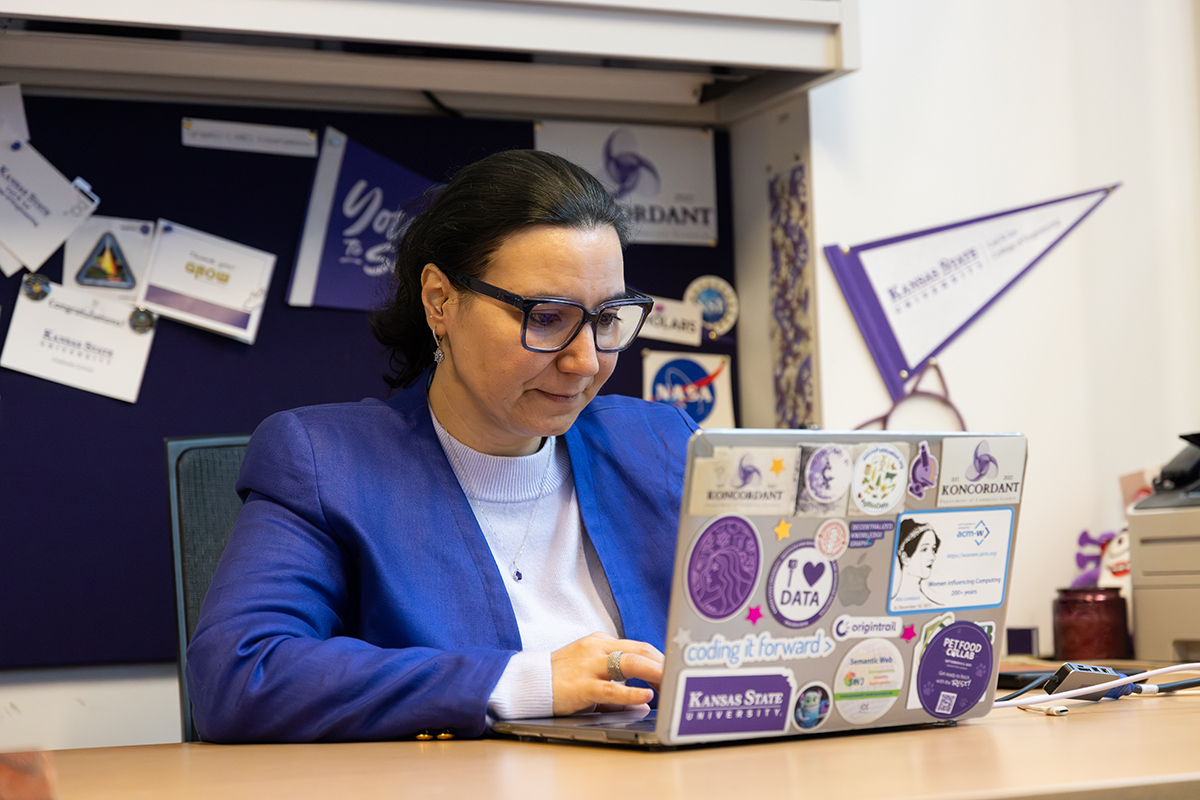
For Hande Küçük McGinty, assistant professor of computer science, what looks like unrelated data points in a spreadsheet are actually a massive, interconnected web waiting to be mapped. Her research lies in the creation and application of knowledge graphs, a data structure that connects entities into a network of information, but in a way that machines can better understand. From a patent-pending project predicting how biological aging affects your health to tracking water contamination for the EPA, McGinty's work focuses on aligning human understanding with machine perception.
But what exactly is a knowledge graph?
"Knowledge graphs use mathematical logic to describe all the concepts and processes that we encounter as well as the relationships among them," McGinty said. "We do this all the time in our heads without thinking about it."
She gave an example of running into a person who always has a cup of coffee in their hand. Human brains make inferences and predictions based on that single data point. Maybe the person frequently goes to Starbucks, or perhaps locally roasted coffee beans would make a good birthday gift for them. Knowledge graphs allow machines to connect the dots in a similar way, turning unstructured data into something far more valuable.
Unlike a spreadsheet or a static database, which requires you to know exactly where every piece of data lives to find a connection, a knowledge graph is built like a set of digital Legos. You can snap new modules of information into the structure as new data emerges and the world changes.
The applications are numerous. In her lab, McGinty and her collaborators are building these graphs to analyze social media patterns to protect youth from dangerous supplements or to help farmers pick seed varieties for maximum yield based on five-year weather fluctuations. The team is constructing knowledge graphs and using them to build patent-pending AI applications to predict how ice crystals will form on the International Space Station or what effects an urban garden might have on the surrounding neighborhoods in large cities. Regardless of the data being organized, the goal is the same: trustworthy AI.
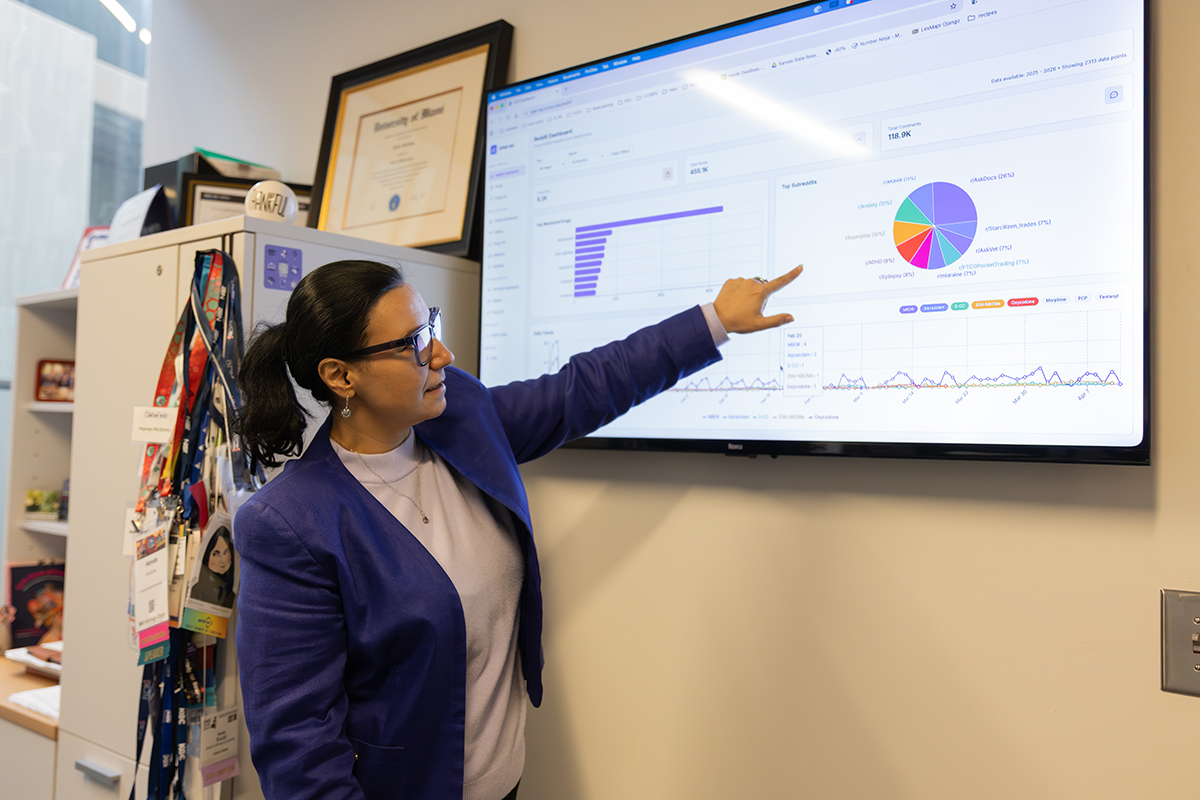
"Because we build these knowledge graphs with the domain experts in mind, they are already grounded in truth," McGinty said. "So, they help with the current AI systems' hallucination tendencies. We are actively improving our systems to reduce hallucinations and make them robust through our research. We are working with the EPA chemists and the agronomists to make sure that my data is indeed representing the truth.
"It's not just us dumping all the data on a graph."
McGinty's team places a strong emphasis on the trustworthiness of its research. To support this commitment, she and her team designed and implemented a first-of-its-kind verifiable reasoner, which is currently patent pending. This reasoner enables AI systems to derive provably correct inferences over the knowledge graph infrastructures underlying the applications they develop.
Building a more accountable AI
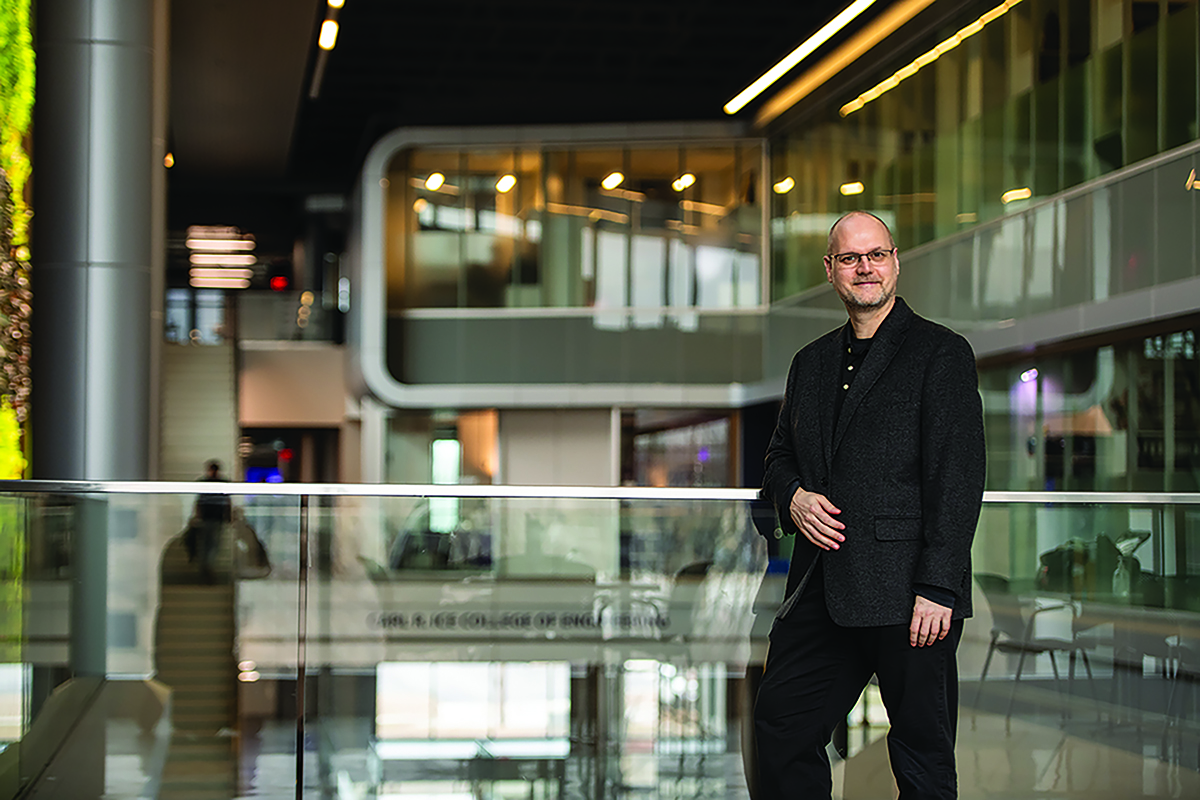
For many, artificial intelligence is a mysterious engine where data goes in and answers come out, with little understanding of what happens in between. Pascal Hitzler, university distinguished professor of computer science and Lloyd T. Smith Creativity in Engineering chair, is working to change that.
His research isn't just about making AI faster or more powerful; it's about making it trustworthy.
"Currently, a lot of development in AI comes out of machine learning," Hitzler said. "The innate problem is that its performance can only be assessed statistically."
In other words, if an AI is 90% accurate, that's great for movie recommendations but terrifying for nuclear power plants or autonomous vehicles where direct bodily harm is possible.
To bridge this gap, Hitzler's lab is looking inside the models, using an approach inspired by neuroscience. Just as neuroscientists map which parts of the brain control specific functions, Hitzler identifies artificial neurons within a network. In one study on scene recognition in images, his team found a specific neuron that became active specifically when it detected a crosswalk.
"By understanding the internal mechanisms, we get additional evidence that helps us make a decision whether we should trust the system or not," he said.
Unlike humans, current AI systems cannot reflect on their own thoughts. By creating a way for systems to verify their internal logic against raw data in real-time, Hitzler is paving the way for safer cyber-physical systems such as autonomous crop sprayers that can detect and correct steering errors before a boom hits the ground or a collision occurs. He has two patents pending related to this line of research.
Beyond the lab, Hitzler is known for his expertise in AI theory and knowledge graphs. He is helping to shape the future of the state of Kansas as a founding member of the new Kansas Legislative Artificial Intelligence Task Force alongside other representatives from higher education, the state legislature, the state's executive branch and the private sector.
Designed to provide a variety of perspectives on the implications of AI for the state, Hitzler will provide his expertise to the group in another example of K-State's commitment to advancing Kansas communities as a next-generation land-grant university.
Whether he is advising others on AI best practices or helping to verify the accuracy of AI systems, Hitzler's goal remains the same: ensuring that as AI becomes more pervasive, it also becomes more accountable.
Teaching the next generation
While the department is still developing its degree offerings centered around AI, Safia Malallah, assistant teaching professor of computer science, has been preparing the next generation of K-State students through an annual coding event for children in grades K-8.
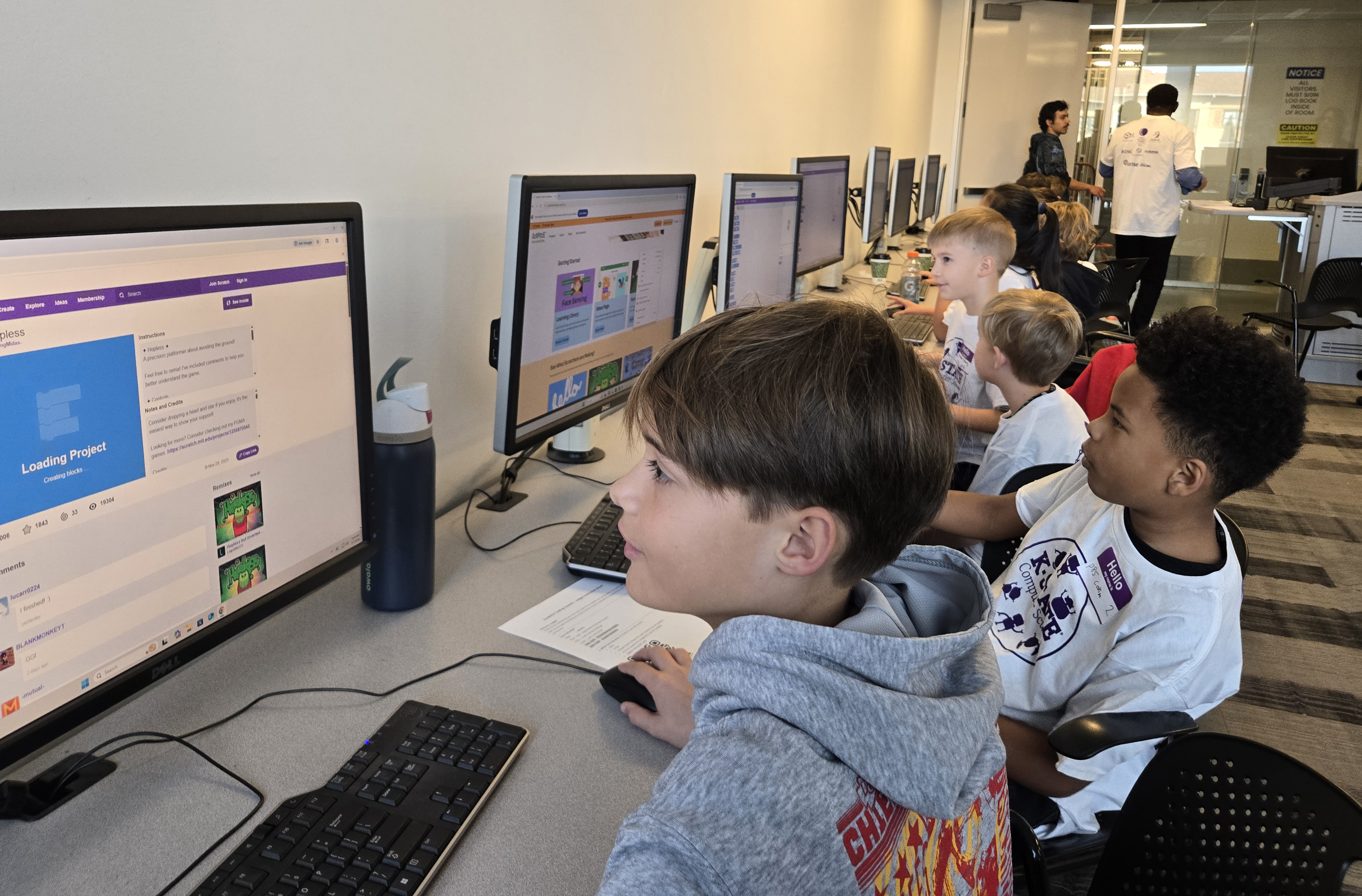
More than 100 students from across Kansas came to the K-State campus for this year's event, which challenged participants to develop the best AI solutions to problems in agriculture, practicing computing by designing and coding animations, games or applications using the Scratch programming language. The event included prizes for students who received the highest scores from the judges, including a Sony PlayStation 5 for the top winner.
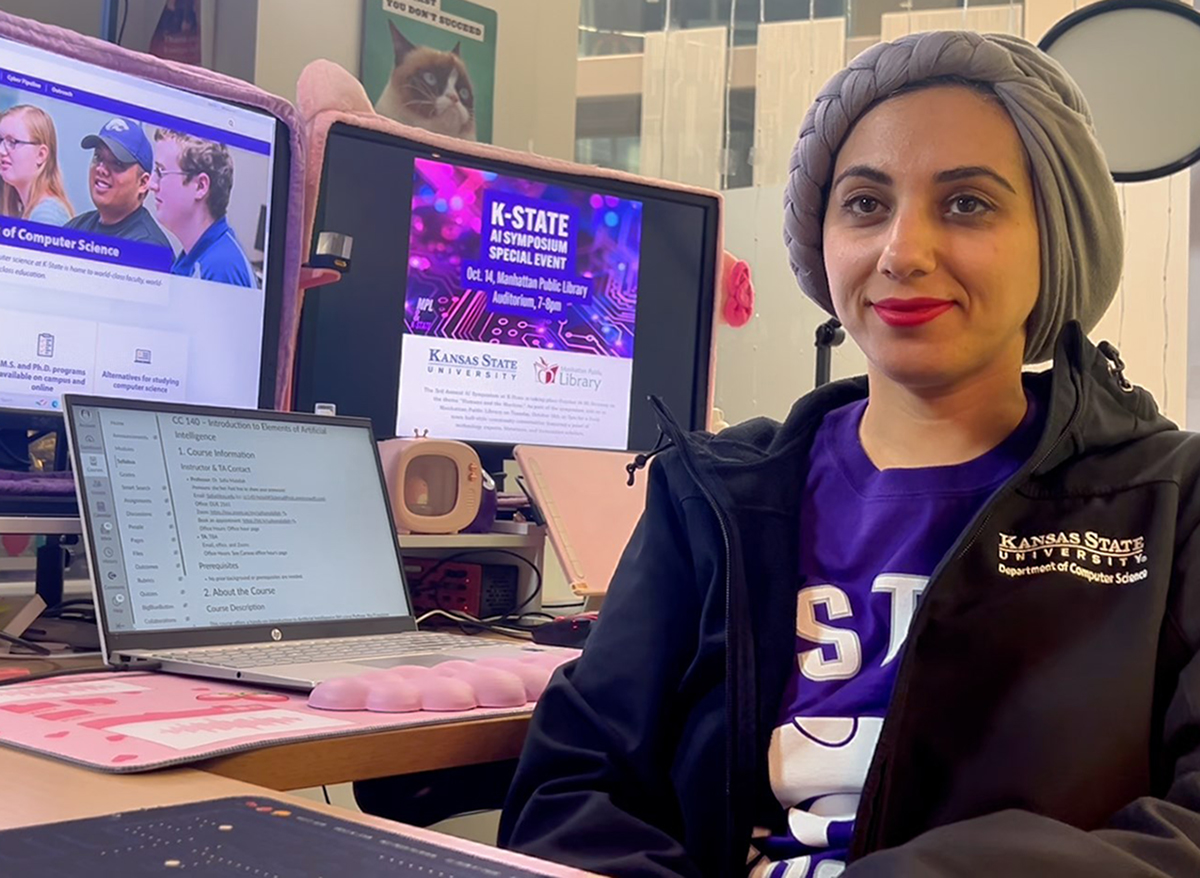
"This event is proof that the College of Engineering is committed to advancing science and technology throughout Kansas, but especially among these young participants," Malallah said. "Involving kids in coding ensures that they are exposed to computational thinking starting at a young age, when their science and technology identity is formed. Exposing students at a young age will lead to a higher number of trained technology professionals in the future, expanding Kansas' pool of talent."
While the kids spent the day coding, parents were also offered the opportunity to hear from Jorge Valenzuela, teaching assistant professor of computer science, in a "Parenting with AI" workshop.
Aimed at answering parents' questions on artificial intelligence and how young students should be using it, the three-session workshop offered parents the chance to discuss this issue with experts as well as each other.
"Parents understandably have a lot of questions about this issue, and it was our goal to provide a space where they can openly discuss these important topics," Valenzuela said. "We wanted to provide accurate information and answer their questions, but also to encourage them to take an active role in their children's education, especially as it relates to AI."
The event is one part of a broader initiative by Malallah and her team to reach young students across Kansas. In the past year, the group has hosted several other AI-related outreach events with nearly 800 children participating, including events at public libraries, science festivals, school visits and other events on the K-State campus.
"One of the key challenges for this age group in Kansas is the limited availability of resources and teacher preparation in AI," Malallah said. "We are actively working to address this gap by developing low-cost, accessible materials that do not require additional financial support from schools, while also supporting educators in integrating AI into their classrooms."
The team's efforts even included the development of an educational storyline centered around two created characters — Data and Pixel — that help introduce AI concepts to young learners through cartoons, storybooks and games based on their adventures.
K-State's multipronged approach to AI research and education affects people of all ages and backgrounds. By serving as the core hub for AI for the Carl R. Ice College of Engineering and the broader campus, the computer science department is ensuring that every K-State student, regardless of their major, is equipped with the tools they need to navigate the coming era.
In the end, K-State's mission is to find the balance between human intuition and machine efficiency to ensure the next generation of Wildcats aren't just watching the revolution, but directing it.
###