Pig protectors
K-State researchers are at the forefront of efforts to improve living conditions in the swine industry

By Pat Melgares
Division of Communications and Marketing
Tuesday, Nov. 17, 2026
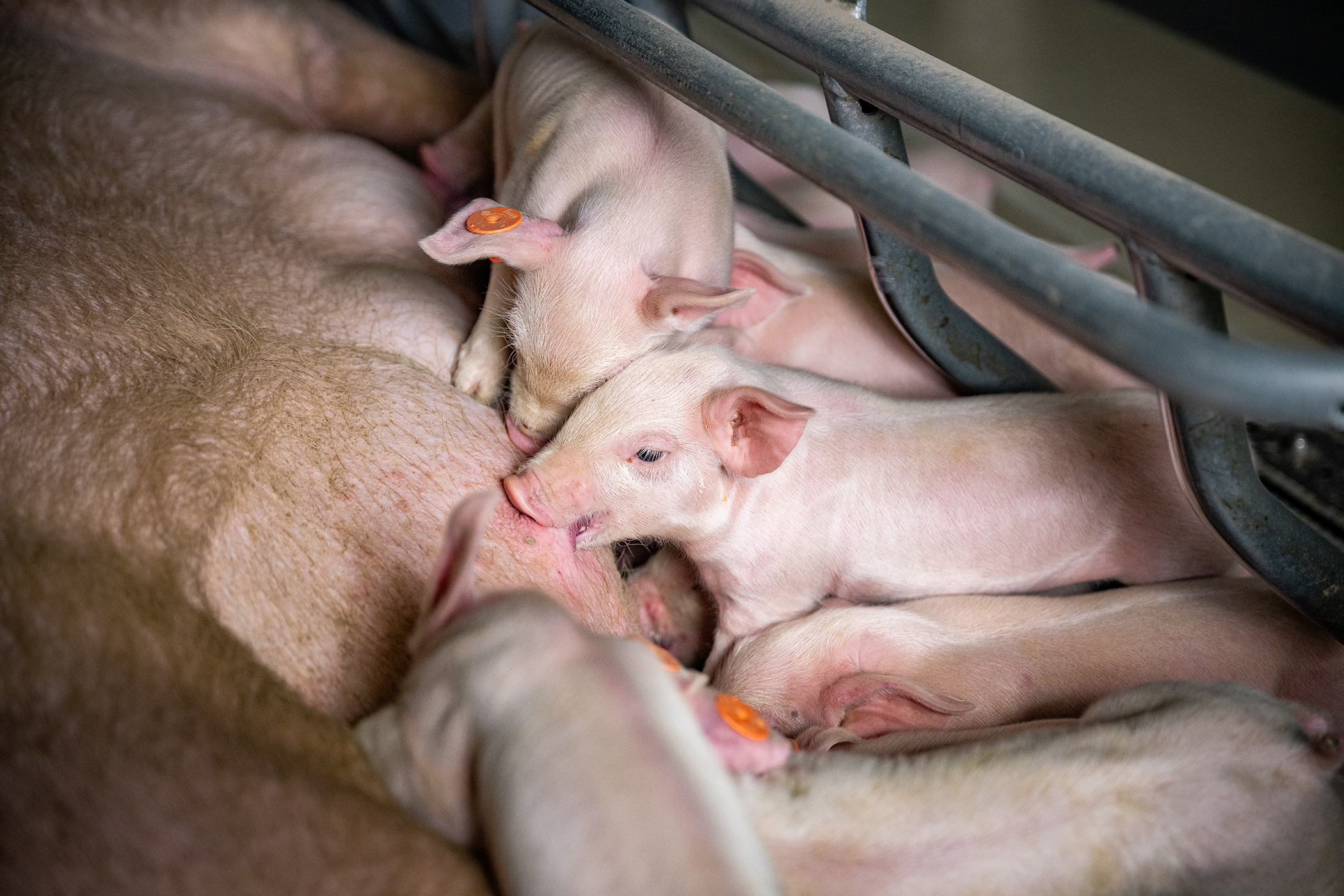
Kansas State University researchers are finding new ways to improve the lives and living conditions of pigs, through improved nutrition, sanitation and management practices, helping swine producers build healthier, more sustainable herds.
The National Pork Board reported in 2025 that roughly 35% of pigs born in the United States die before they make it into the human food chain – as much as $4 billion in losses each year due to stillbirths, pre-weaning deaths, wean-to-harvest deaths and sow mortality. Since the late 1980s, Porcine Reproductive and Respiratory Syndrome, or PRRS, and Porcine Epidemic Diarrhea Virus, PEDV, have significantly added to pig deaths.
The consumer-focused pork board likens the industry's losses to a manufacturer recalling 35% of its product, noting that in such a case, "the manufacturer would stop making their product."
That's not an option for the U.S. swine industry.
Instead, in 2018, the National Pork Board and the Foundation for Food and Agricultural Research committed funds to form a multi-university research and extension effort to reduce mortality and increase survivability in the U.S. commercial swine industry. This has led to a large consortium project that has attracted financial and in-kind support from swine production systems and allied industries.
The project is known as the Improving Pig Livability Project. In collaboration with Iowa State University, K-State researchers have been partners in the project from its beginning, and data indicate they have made a positive difference.
Positive momentum
Joel DeRouchey, a professor of swine nutrition and a livestock specialist with K-State Extension, has been a key figure in planning and hosting an international conference on pig livability in Omaha – the first in 2022, and the second in 2025.
The gatherings, funded through the Improving Pig Livability Project, have marked a watershed moment in the global effort to reduce pig mortality. More than 1,000 people have attended these conferences, representing nearly 200 companies, 31 U.S. states and six countries.
Importantly, the conferences have served as a point of reference for the progress that researchers at K-State and Iowa State have made, including specific farms that have documented:
- Up to 5% improved sow livability.
- Up to 6% improved post-weaning livability.
- More than 14,000 labor hours per year in improved efficiency on U.S. farms.
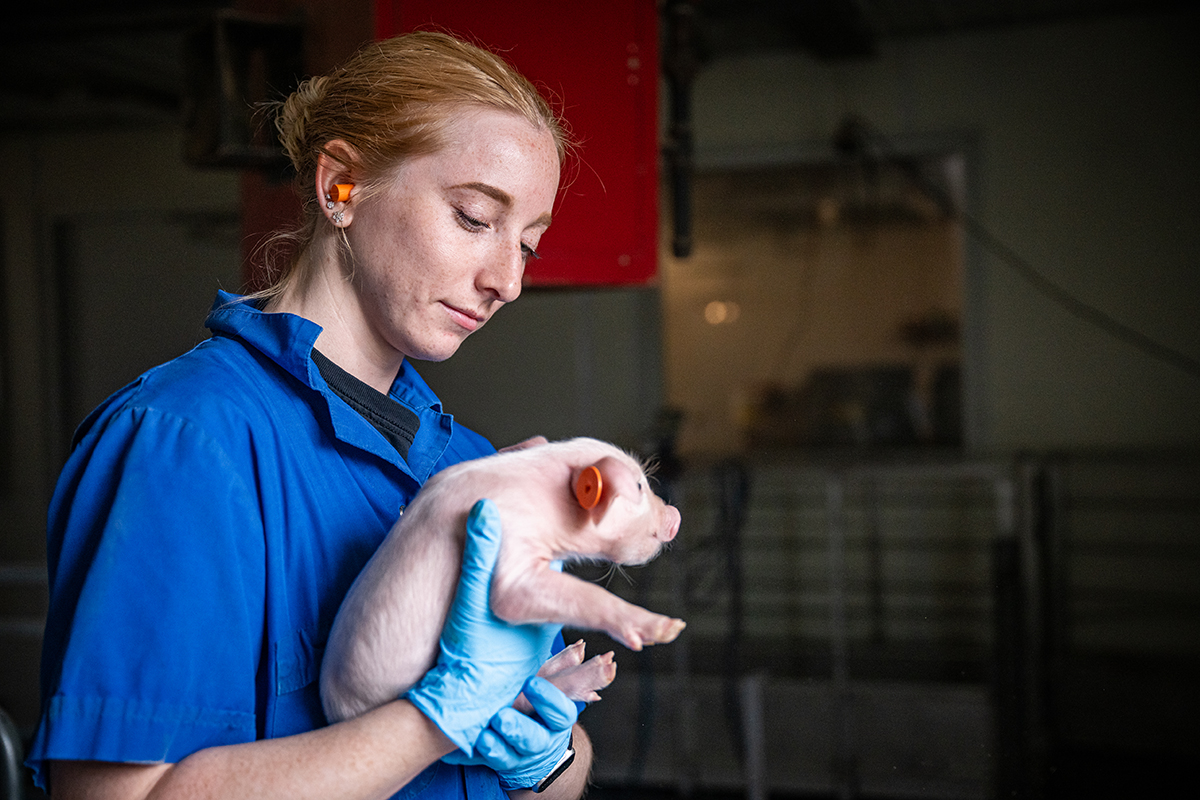
In eight years, researchers with the Pig Livability Project have conducted more than 100 studies, field trials and benchmarking initiatives, increasing industry knowledge by training 27 graduate and veterinary students and more than 60 undergraduate students.
DeRouchey says a premise of K-State's research is that improving pig livability through better health, genetics, nutrition, and daily management protocols not only reduces mortality but also leads to more efficient use of labor, increased producer profitability, and, ultimately, a more sustainable U.S. pork system.
"This consortium project has provided information on practices to improve pig livability to all U.S. and international swine producers, regardless of size or specialization," DeRouchey said. "Since all producers are different in their needs, the wide array of information involving the breeding herd, piglets and finishing pigs is available in multiple formats so the information can get to all swine industry personnel."
Care starts at home
Jordan Gebhardt gained early experience with the pig livability project while a graduate student with K-State's Applied Swine Nutrition team. He's now an associate professor in K-State's College of Veterinary Medicine, specializing in swine production.
In 2025, Gebhardt reported results of a study that looked at the impact of nutrition in young pigs on decreasing their risk of mortality.
His current work examines the importance of barn sanitation practices in the U.S. swine industry.
"The question we're asking is when we have pigs in a building, how do we clean that facility between groups of pigs?" Gebhardt said. "Swine producers clean their buildings all the time, but we want to find out the best ways to do it."
K-State doctoral student Cooper McAuley is laying the foundation for the study by reviewing prior research on the topic.
"One of the biggest takeaways so far is the complexity of an effective sanitation protocol," McAuley said. "It sounds simple when saying we are going to wash a room or a barn, but if each step — such as dry matter removal, pressure washing, the correct use of cleaning agents and proper drying time — is not followed, it could greatly decrease the effectiveness of the disinfection step."
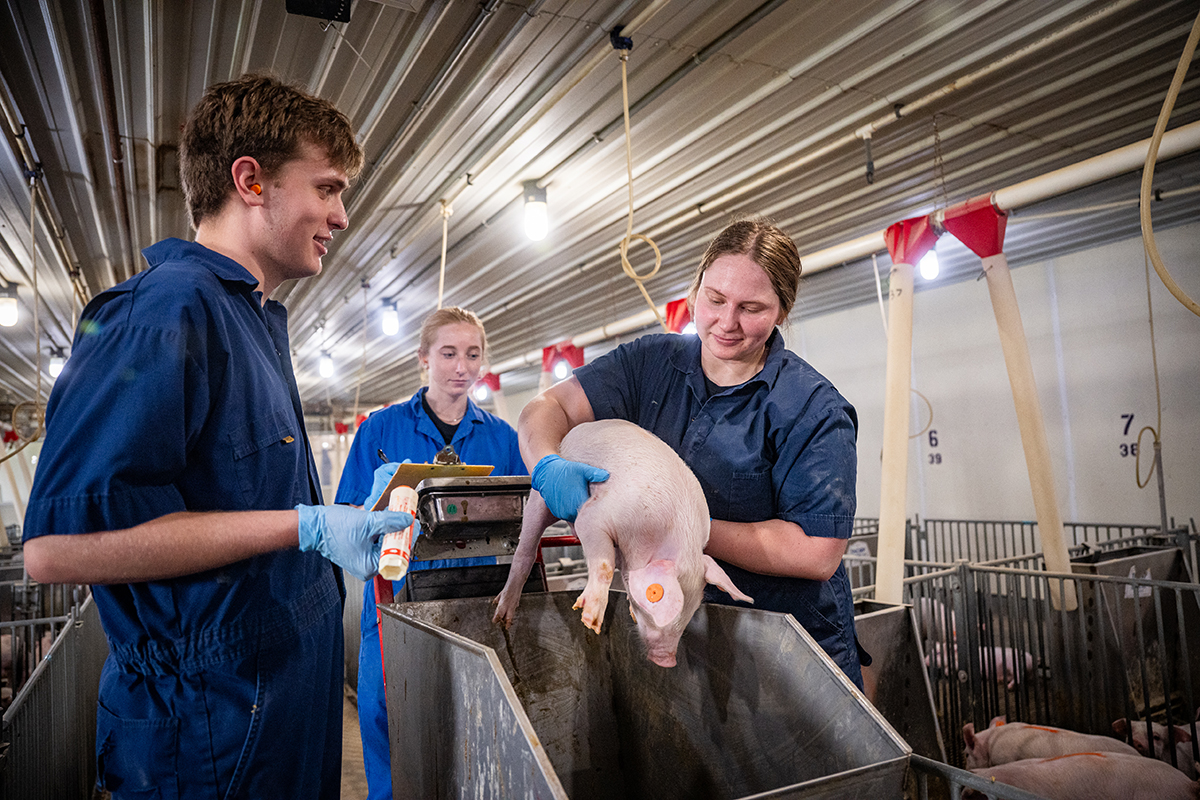
The researchers believe that more effective and practical sanitation strategies could help reduce pathogen transmission between groups of pigs, support herd health and improve pig livability.
"Just as important, identifying effective practices can help producers make informed decisions about how they allocate their time, labor, water and sanitation resources," McAuley said. "The goal isn't to assume every operation needs to change what they're doing, but to use the information collected to help identify where improvements could make the greatest difference."
Gebhardt said the project also includes a survey of U.S. swine producers on current cleaning practices, including the justification for doing – or not doing – certain steps.
"If this work ends up in a research journal, that's great," Gebhardt said. "But that doesn't maximize the impact of this work. The practical takeaway has to reach the swine barn so that it improves the environment for those pigs."
Care for the sow
Katelyn Gaffield is an assistant research professor in K-State's Department of Animal Sciences and Industry, and a member of the university's swine nutrition team. She's currently conducting a study that focuses on the health of the sow – a female pig that has given birth to at least one litter.
According to the U.S. National Institutes of Health, about 1 in 8 sows die during or shortly after giving birth due to sudden death — including gastric disorders, cardiovascular failure or acute infections — lameness, prolapses or other causes.
Gaffield's work focuses on feeding a simplified fiber-rich diet beginning when sows are placed in a farrowing house and continuing for three days after they give birth.
"It's a targeted feeding of a diet that is higher in fiber that will help them through that transition, ultimately leading to improvements in their farrowing performance," Gaffield said. "It may also be a benefit to the livability of those piglets throughout the rest of lactation."
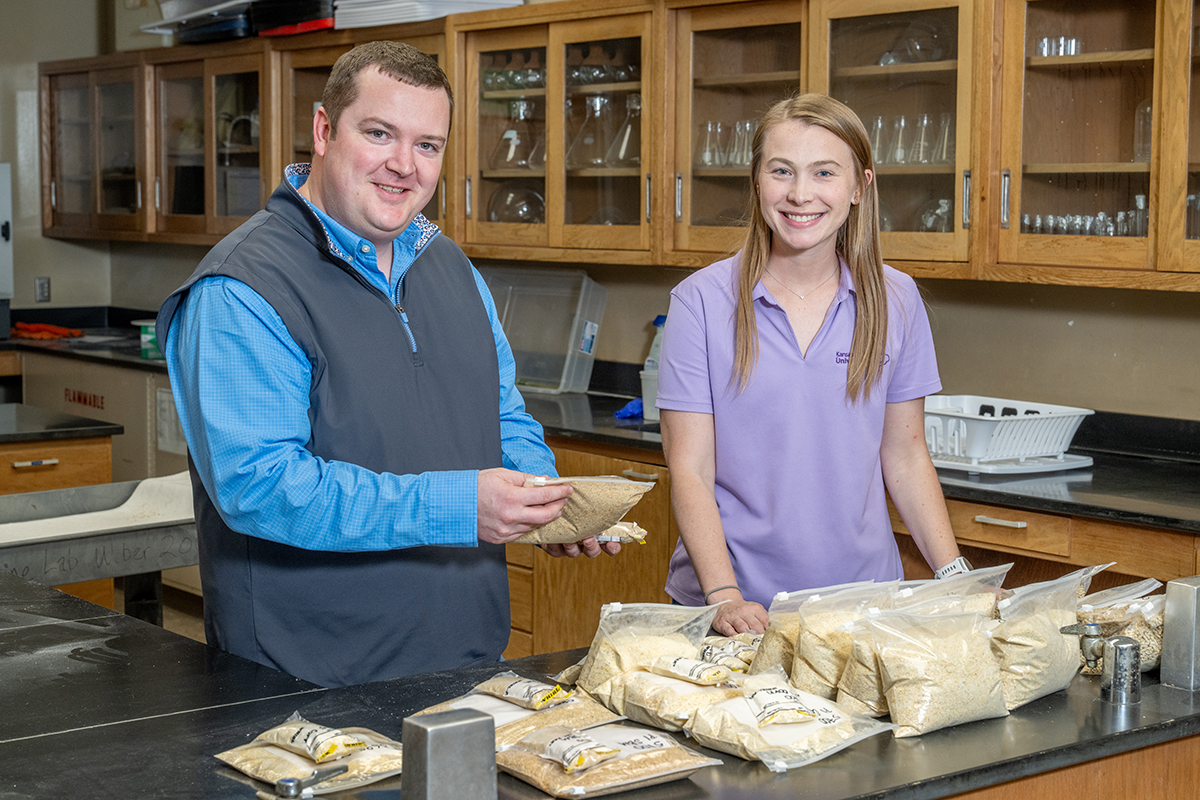
The three-month study with 600 sows took place during summer 2026, in partnership with Seaboard Foods.
"Rather than using complex feeding programs or multiple fiber sources, we evaluated the inclusion of a single fiber source in the diet during the transition period," said Joana Magoga, a K-State doctoral student who was on site for the entire three months. "This approach could offer producers a practical way to support sow performance around farrowing and potentially improve piglet survival."
K-State's work so far is helping to validate results of previous studies, according to Gaffield.
"It gives producers the confidence of having it tested in a commercial setting," she said, "and now we can disseminate that information so that producers can use the information as soon as possible."
More work to be done
DeRouchey said K-State hopes to continue work to protect newborn pigs and sows in the future.
The Pig Livability project received both direct funding from the National Pork Board and the Foundation for Food and Agricultural Research, but the project more than doubled those funding amounts through additional industry grants and in-kind donations to create additional value for the swine industry, he said.
"Project consortium personnel plan on continuing efforts to complete more relevant research in the future to address industry needs," DeRouchey said. "We will continue to work with funding and industry partners who share the vision of the Improving Pig Livability Project.
More information about the project is available at piglivability.org.
Related Stories
Teaching old vaccines new tricks
Japanese encephalitis virus could threaten animal health and pork production if it reaches the U.S. Doctoral candidate Audrey Matheny is exploring whether...
Radiant research
The newest member of K-State's nuclear engineering team is already transforming lives through her research and preparation of the future workforce.
Eavesdropping on hidden bugs
Some crop pests are nearly impossible to see — but they may still be making noise. Research led by entomology graduate student Emily Sur is testing a new...