Eavesdropping on hidden bugs
Research led by graduate student Emily Sur could turn insect vibration into an audio-based warning system for crop pests
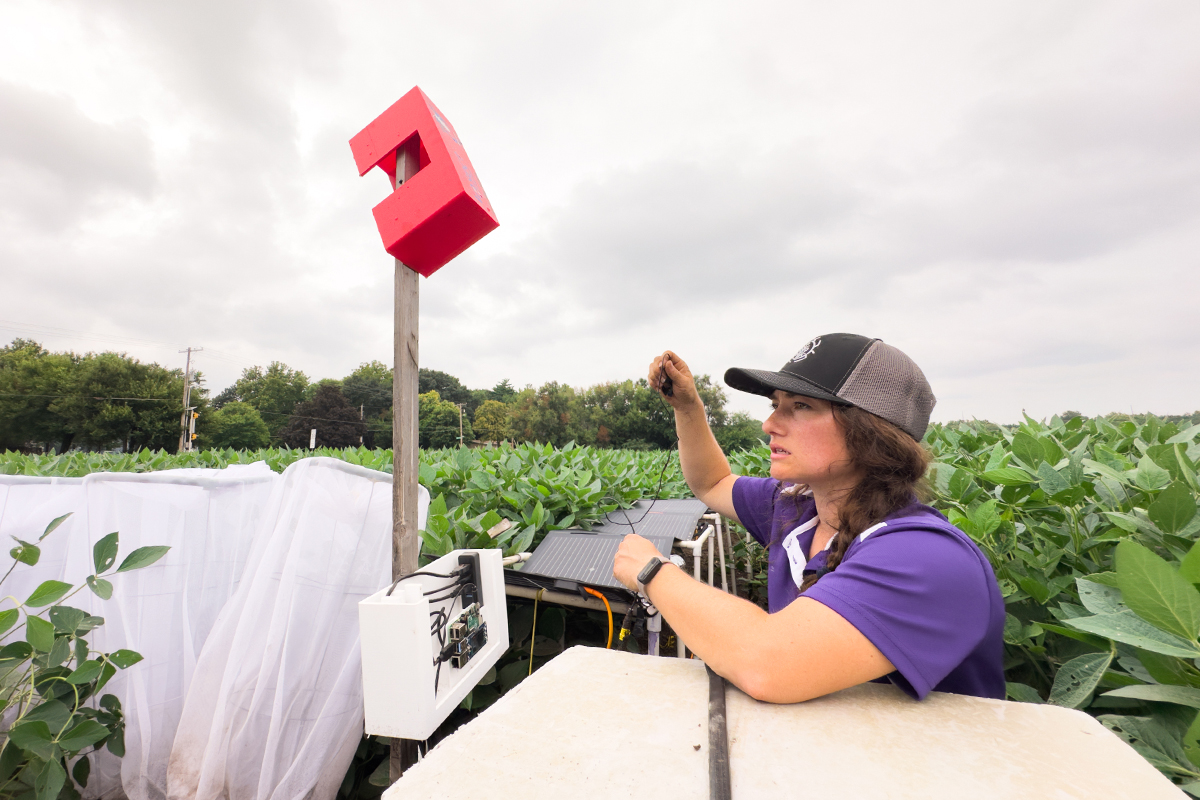
Some crop pests are nearly impossible to see — but they may still be making noise. K-State researchers are testing a new technology that listens to insect activity inside plants.

By Crystal Ly
Department of Entomology
Thursday, Sept. 24, 2026
Crawling through muddy soybean fields to inspect several plant-mounted microphones was not on Emily Sur's graduate school bingo card, but she's not mad about it.
For Sur, her research offers a unique opportunity for her to work at the intersection of entomology, agriculture and emerging technologies while still doing what she loves.
"I've always enjoyed being outdoors, so that's one of the things that drew me to this project, getting to work outside in the fields," said Sur, a master’s student in entomology at Kansas State University.
Sur leads a team of undergraduate students on a project that requires extensive fieldwork to collect unique data: the sounds of insects.
The results could transform how crop health is monitored across the agriculture sector.
Listening to insects
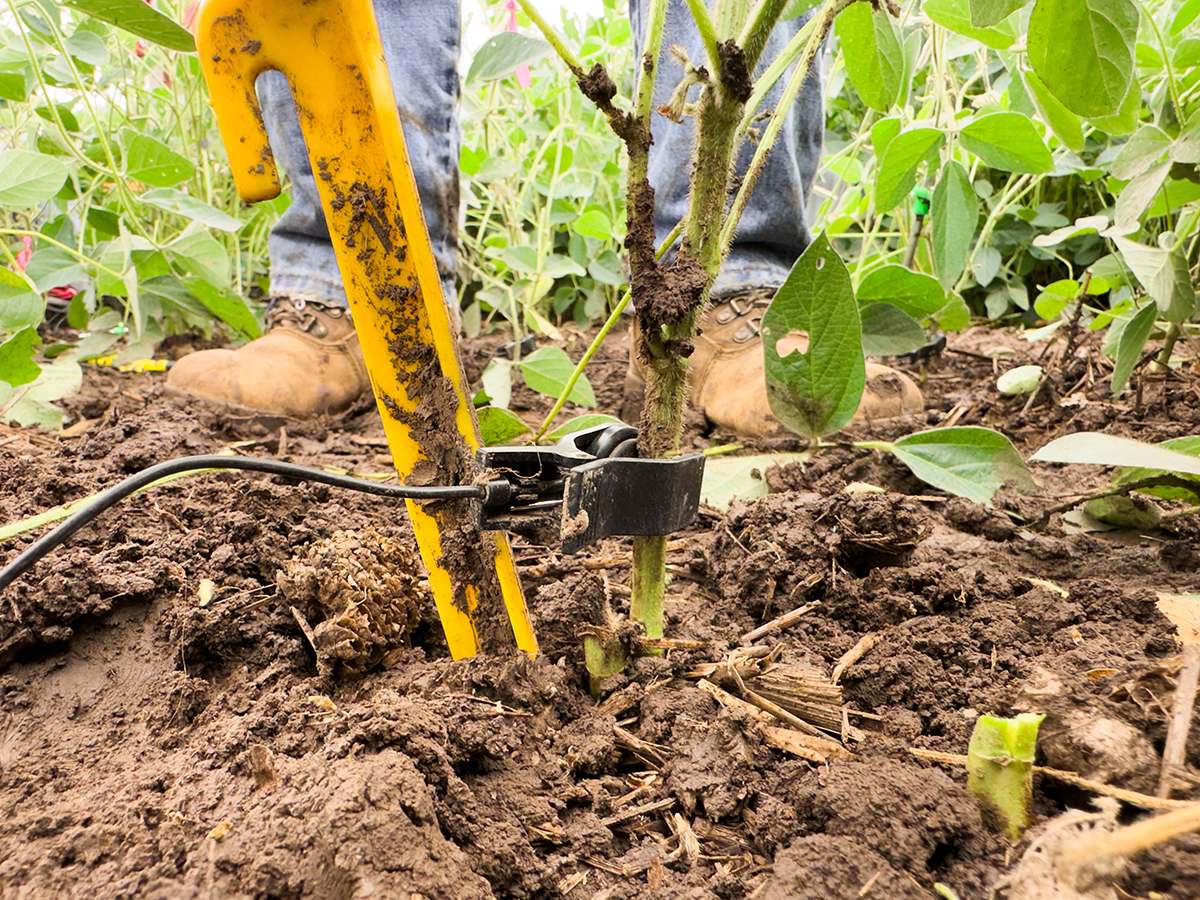
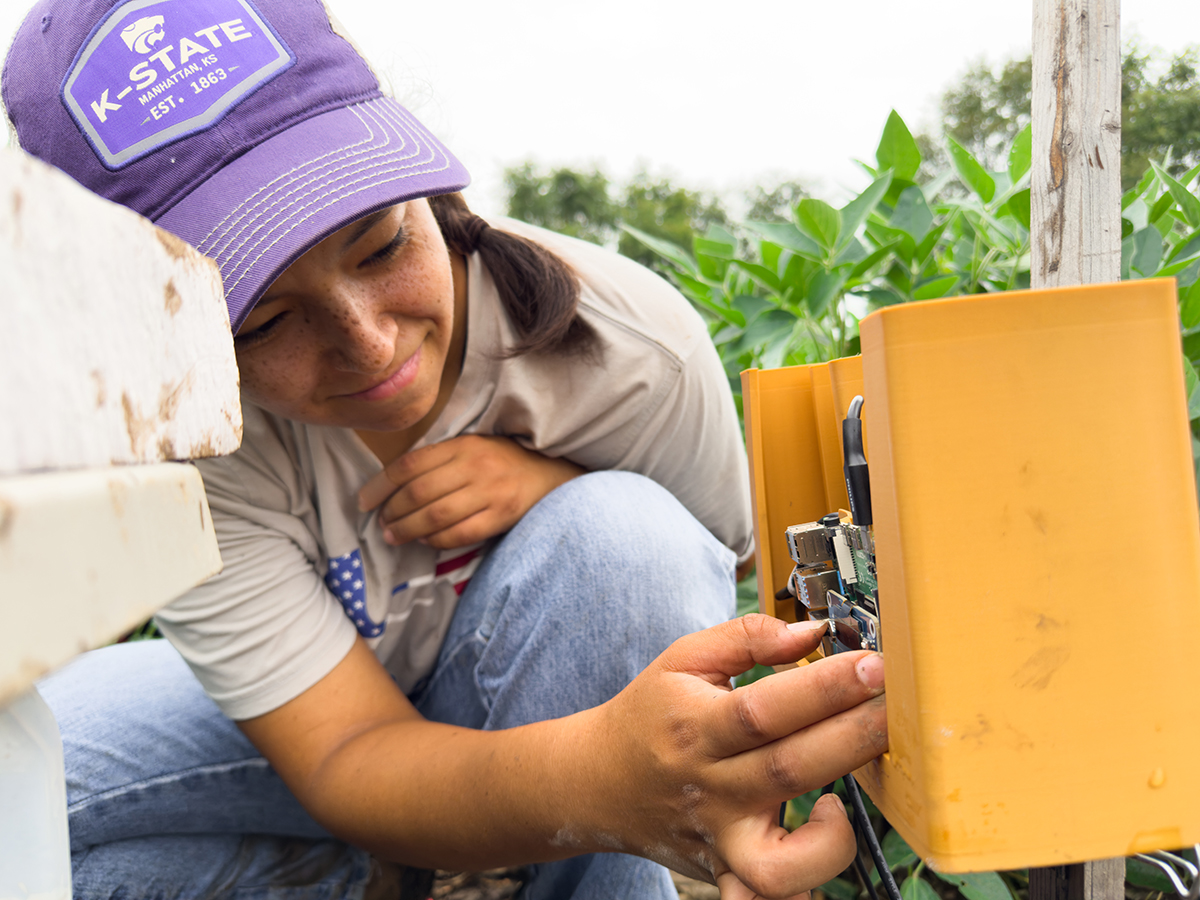
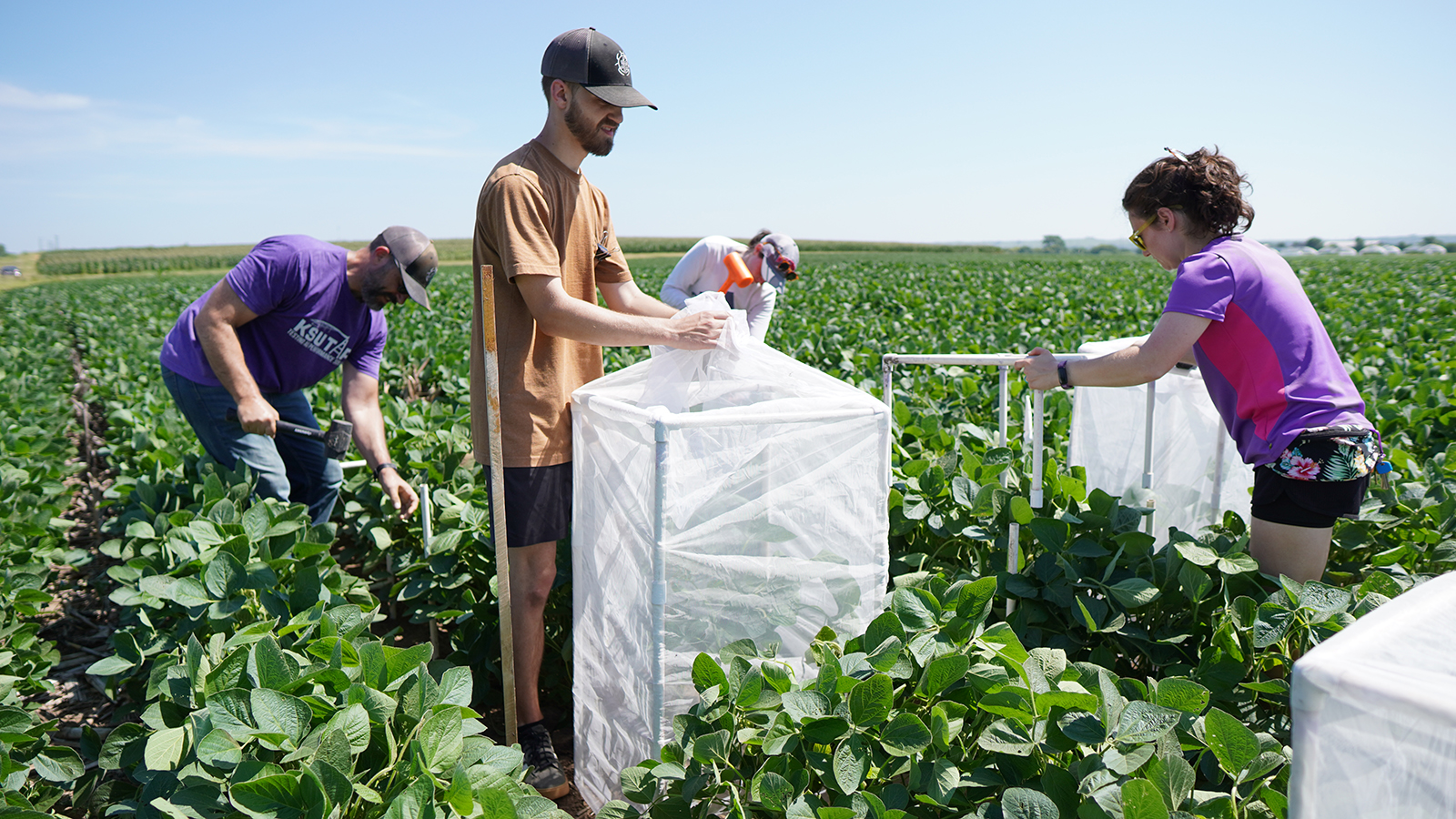
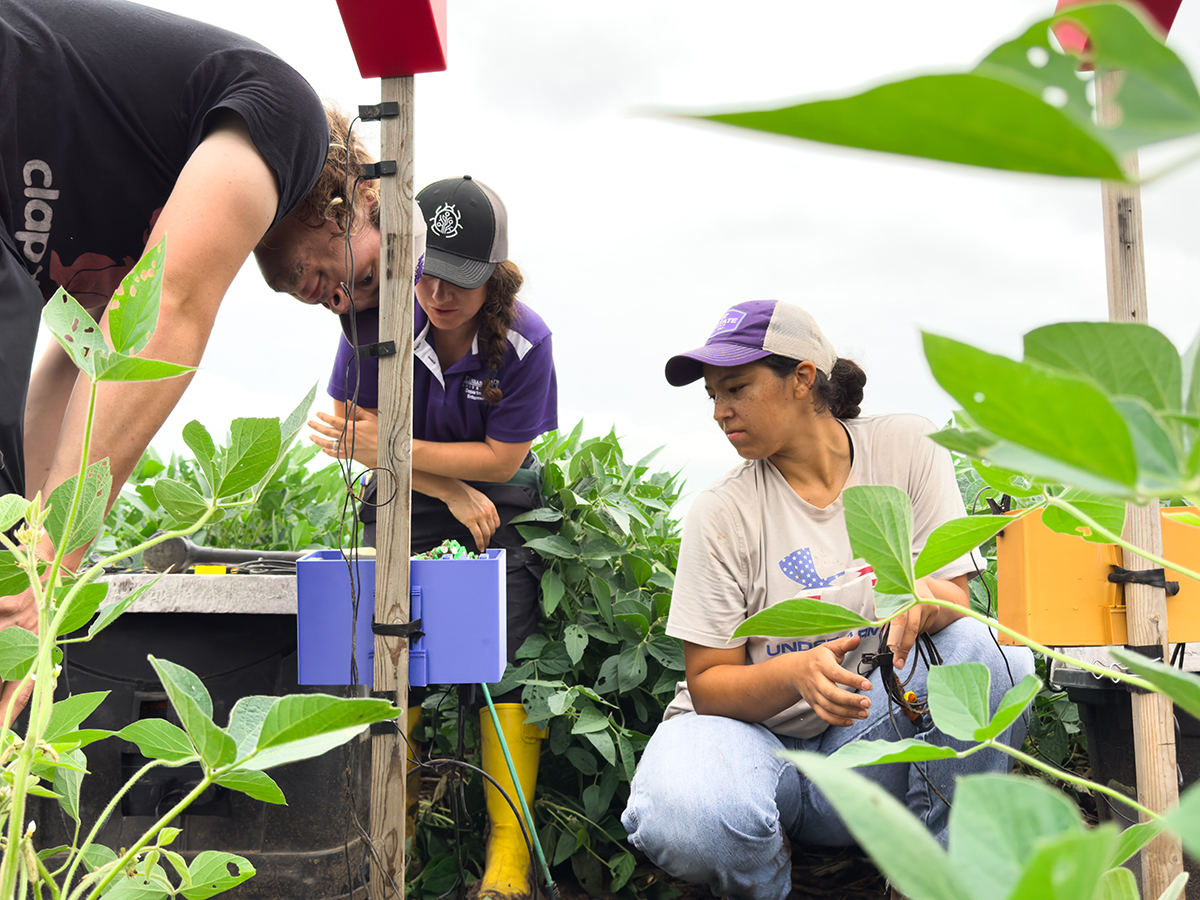
Sur and her students place microphones on soybean plants and record continuously for several days before removing the equipment and carefully examining the plants for evidence of insect activity.
Her research is part of the development of the Insect Eavesdropper, a collaborative, multistate project that uses sound, artificial intelligence and advanced analytics to detect insects hidden within crops. The project is led by Emily Bick, professor of entomology from the University of Wisconsin–Madison.
Bick invented the Insect Eavesdropper, a scientific instrument designed to detect, identify and quantify insect activity by recording the faint plant vibrations that humans can't normally hear.
The goal for the technology is to make pest monitoring more precise and continuous, which could enable earlier detection.
"Many insects that cause economic damage are difficult to see since they feed inside plants, below ground or during times when scouting is impractical," Bick said.
"By 'eavesdropping' on the vibrations insects create as they feed and interact with a plant, we can detect activity without destroying the plant and, ultimately, help growers make better-timed, more targeted management decisions."
Testing the technology at K-State
Developing a useful tool requires expertise across entomology, engineering, artificial intelligence and real-world crop systems, and Bick’s lab released the tool for free use by other academics to help support interdisciplinary development and adoption.
At K-State, Sur is working with her advisor, Brian McCornack, department head and professor of entomology, as well as other university researchers to test the technology in soybean fields and cotton-filled greenhouses against the questions and conditions growers actually face.
McCornack's Field Crop Integrated Pest Management Lab – also known as the "McLab" – was one of the project's first adopters, providing the Bick Lab with critical feedback during its development.
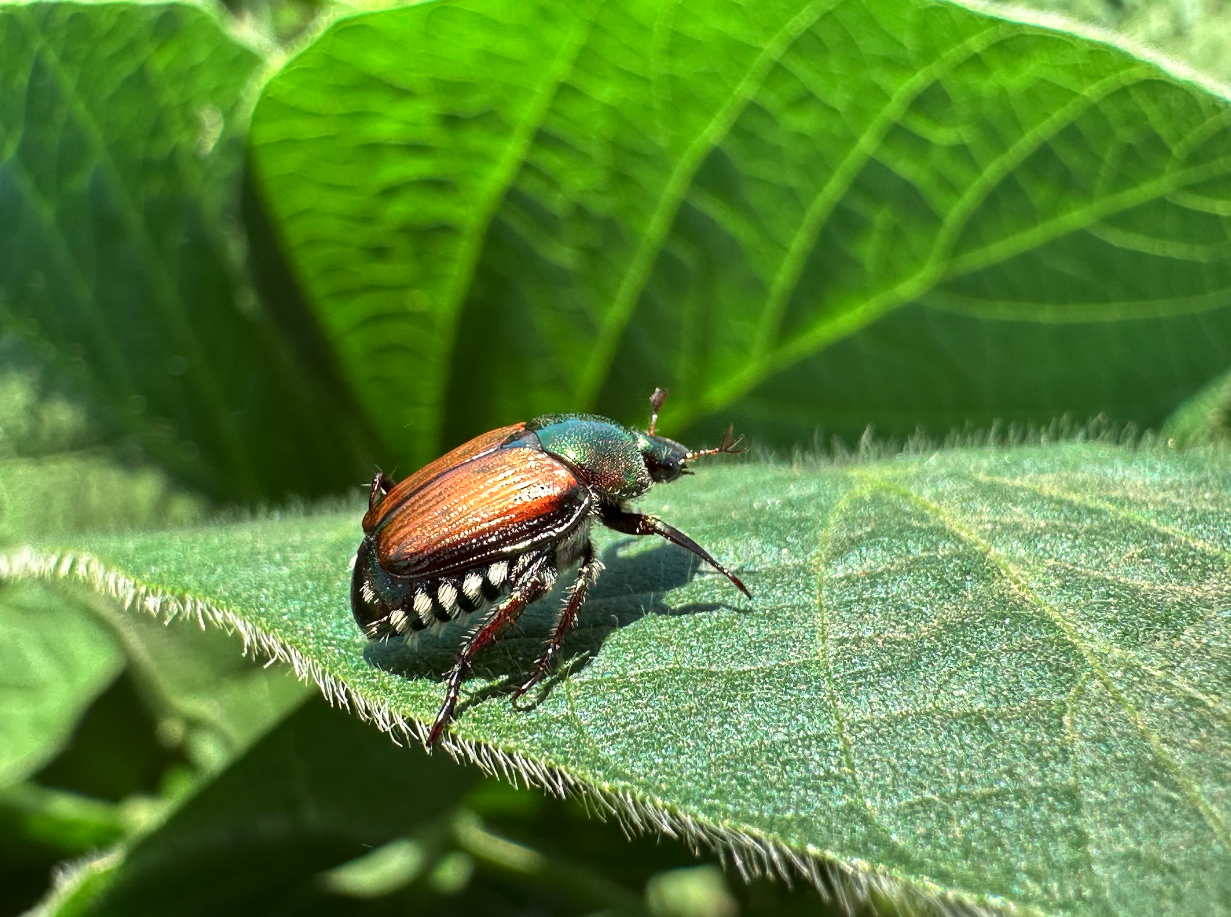
K-State's work in deploying the technology this summer has focused on Dectes texanus — also known as soybean stem borer — that burrows into plant stems and is difficult to detect without cutting open live plants.
“By using this new tool, we can detect these insidious invaders without needing to sacrifice plants,” McCornack said.
The project demonstrates how, with the right alignment, interdisciplinary research can accelerate the path from promising technology to practical agricultural tools.
"Turning promising technologies into tools that can make a real difference for agriculture requires interdisciplinary teams that bring together expertise, research and a commitment to solving real-world problems," McCornack said. "No single lab has all the expertise needed to solve challenges like this.
"K-State is connecting people, technologies and resources to create solutions that can ultimately be used by industry."
Amplifying student success
The project is also creating valuable opportunities for student growth.
The process generates an enormous stream of data, far more than the scientific team could analyze alone. McCornack said they're addressing that by splitting the work: Bick's team develops machine learning models that extract meaningful sound patterns, and collaborators like K-State focus on gathering high-quality data and ensuring field systems operate effectively.
For many students on the team, it's their first experience working on a project of this scale across multiple disciplines and institutions.
This collaboration helps them view their research through a broader lens and understand how it contributes to a greater scientific effort.
"Being able to work with their computer scientists, statisticians and analysts to see what they do with the data really helped me to feel more grounded in what I was doing and come up with future projects," Sur said.
On top of that, students become expert troubleshooters.
"Not everything is going to go right," McCornack said. "A big part of graduate research is taking ownership of a project and developing the mindset that you're the one who will figure out how to solve problems."
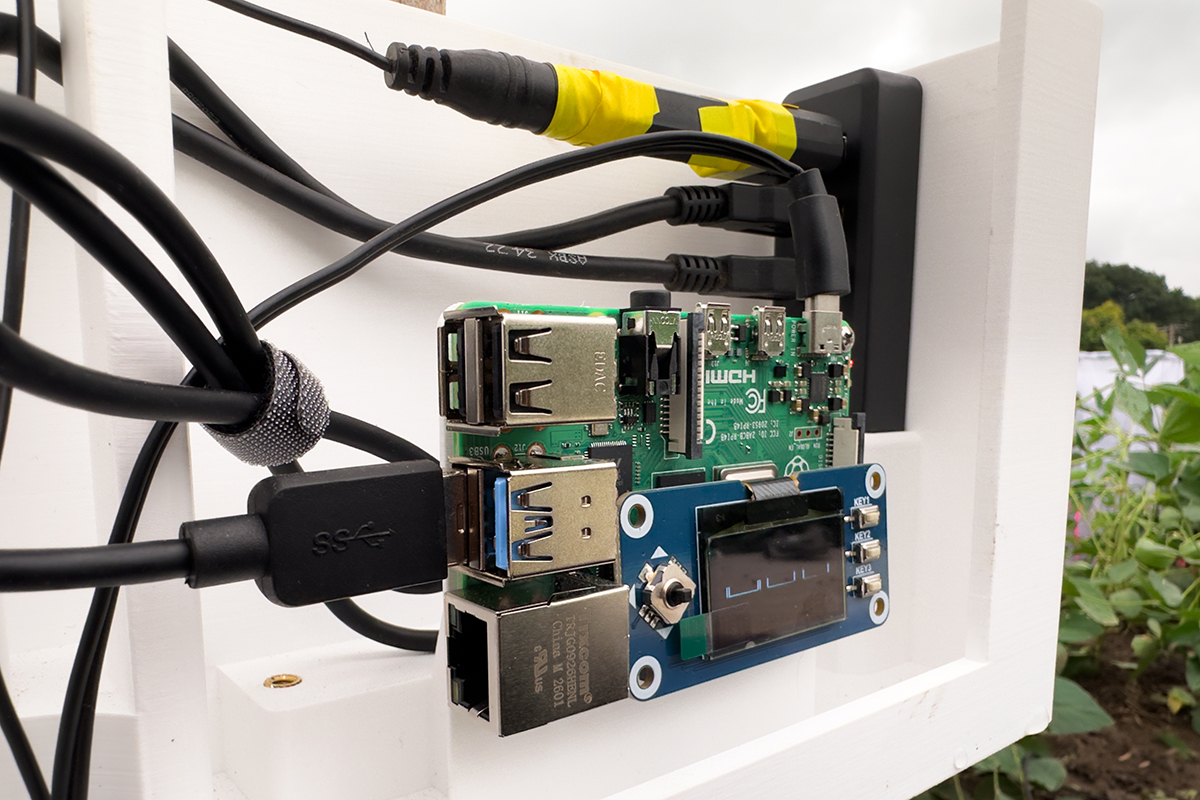
Working on this team has pushed Sur well beyond her disciplinary comfort zone. When researchers began discussing using Raspberry Pis — small, single-board computers that can be plugged into monitors or TVs — in early meetings, she assumed they were talking about dessert.
Her first thought: "That's a computer?"
"Having to troubleshoot and work with technology that I've never worked with before has really helped me grow my confidence in what I can actually accomplish as a researcher," she said.
Graduate students on the research team also gain experience supervising undergraduate research assistants, managing projects and communicating scientific procedures — all skills that will prepare them for future careers in academia, industry or government, McCornack said.
Turning vibrations into insight
The most exciting aspect of the project, McCornack said, is the potential to transform how agricultural professionals monitor crop health.
Common pest detection methods rely on visual observation, and producers and crop advisors often can only identify problems after an infestation has already taken root or caused significant plant damage.
The Insect Eavesdropper introduces another layer of information.

Insects, plants and nature are constantly evolving and changing, and by working on a project where we are looking at things from new perspectives, we are adapting alongside it.
Emily Sur
"We're very visual creatures, and most of our systems are based on what we can see," McCornack said. "But insects also interact with their environments through sounds that our ears simply can't detect."
Eventually, this instrument could identify unusual activity in a field and alert producers to investigate.
McCornack emphasizes that the technology is not intended to replace existing scouting methods. Instead, it provides an additional source of information that can support better decisions.
"The goal is to listen for change," he said. "If something different is happening in a field, those signals can tell us it's time to take a closer look. Better decisions — whether they're related to resource management, pesticide applications or labor deployment — depend on having reliable data."
By combining entomology, engineering and data science, this project is shaping a future where growers can better understand what's happening in their fields before problems become visible.
"Insects, plants and nature are constantly evolving and changing, and by working on a project where we are looking at things from new perspectives, we are adapting alongside it," Sur said.
Related Stories
Protecting the nation's poultry supply
New research at K-State aims to tackle one of the most significant threats to global animal health and food security — highly pathogenic avian influenza —...
K-State joins national effort to prepare next generation of veterinary entomologists
K-State is training future veterinary entomologists through the REEVES program, offering students real-world research experience in livestock insect and tick...
People with purpose: Laura Miller
With a strong commitment to advancing agile approaches for preventing infectious diseases in dogs and horses, Laura Miller focuses on transforming research...