Radiant research
Jessika Rojas' work in radiation processing, nanotechnology and nuclear materials lights the way for a healthier, safer future

By Malorie Sougéy
Division of Communications and Marketing
Wednesday, Oct. 21, 2026
On top of a whiteboard in Ward Hall, the mother of radiation empowers Kansas State University's newest nuclear engineering faculty member.
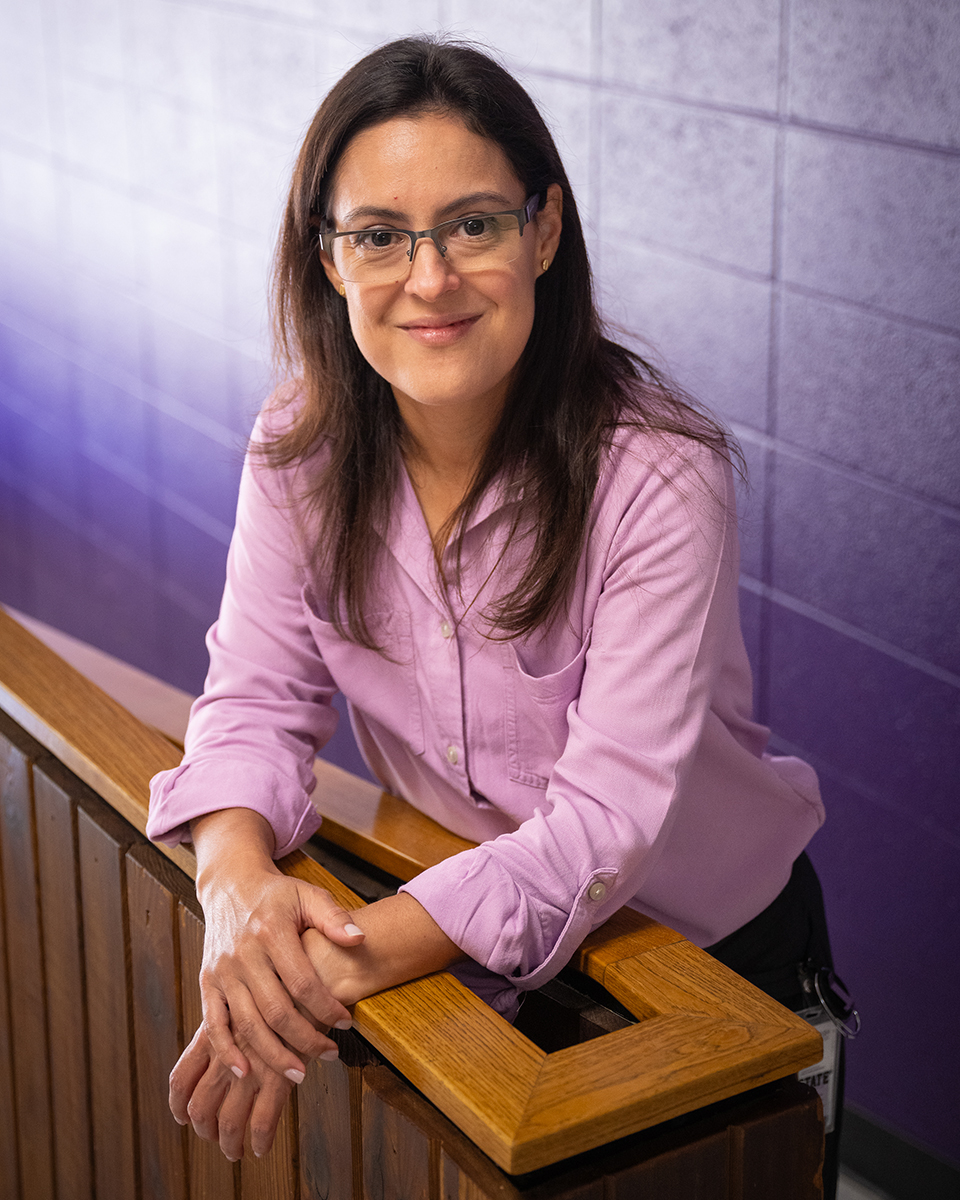
Marie Curie's words — "Nothing in life is to be feared; it is only to be understood" — inspire Jessika Rojas each day as she seeks to develop STEM-based solutions to challenges in human health and nuclear technologies.
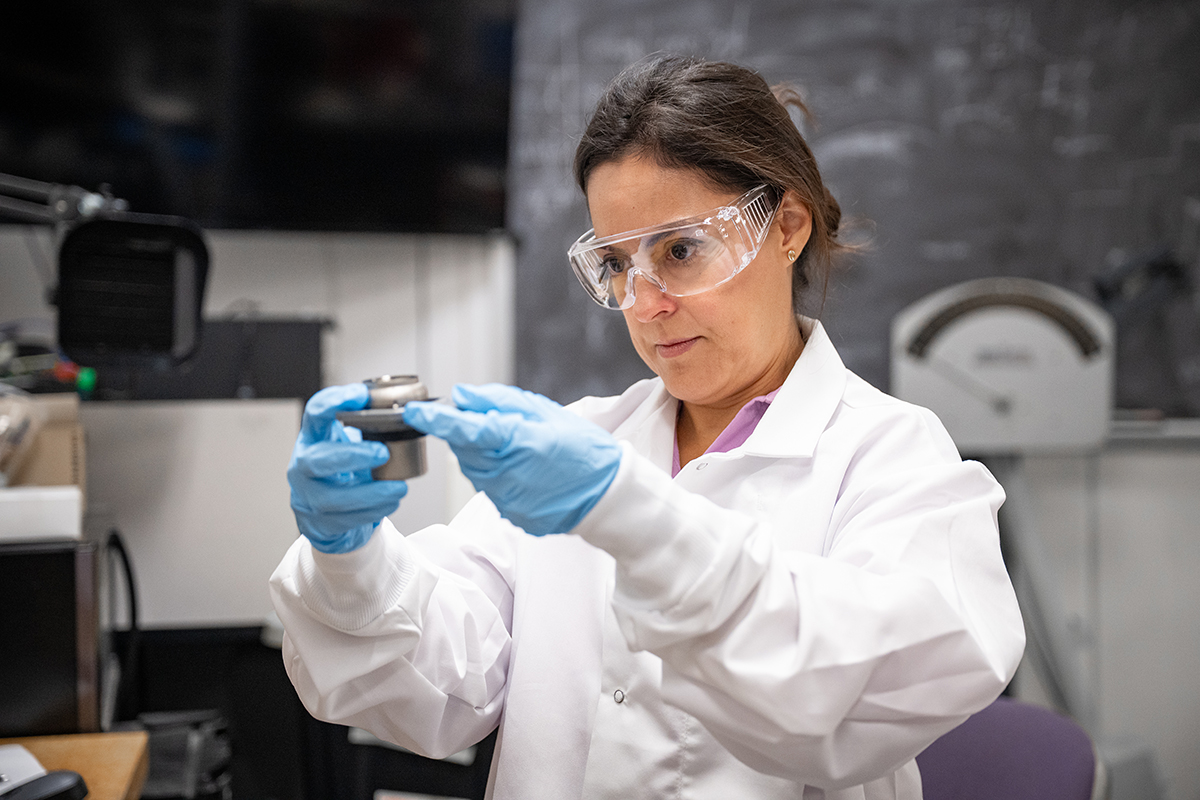
As an associate professor in the Alan Levin Department of Mechanical and Nuclear Engineering, Rojas researches radiation processing, nanotechnology and nuclear materials — all while training Carl R. Ice College of Engineering students to be the next generation of leaders for those fields.
Multidisciplinary research prowess
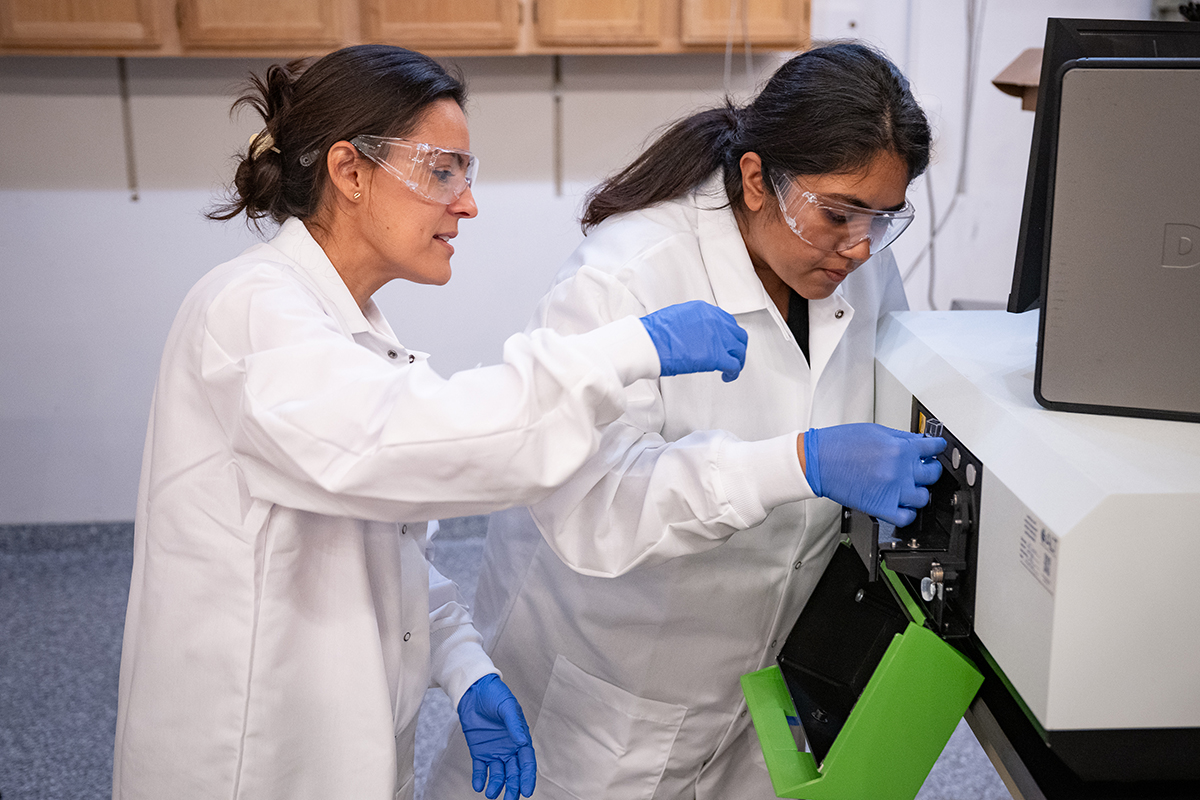
Rojas' body of work spans radiation processing, nanotechnology and nuclear materials. In her lab — the Nanotechnology and Radiation for Advanced Materials and Processes, or NANORAMP, lab — she and her students develop and test materials for applications ranging from cancer treatment to nuclear power.
One application is radiation enhancement for radiotherapy, a medical treatment that uses high-energy beams such as X-rays or protons to kill cancer cells and shrink tumors. But because radiation can also damage healthy tissue, Rojas is investigating how nanomaterials might be able to absorb and amplify radiation specifically within a tumor.
At K‑State, Rojas is finalizing a multi-year National Science Foundation-funded project studying radiation enhancement. Aligning with her interest in bioscience, Rojas is applying her perspective to explore the use of ionizing radiation and radioisotopes for medical applications.
"So basically, we want to answer this question: Can we create novel structures using nanotechnology to enhance or revolutionize therapeutics?" Rojas said.
Radioisotopes for better therapeutics
Rojas is particularly interested in radioisotopes — unstable atoms that release radiation as they decay — for their potential use in therapeutics for cancer treatment.
Her team looks for radioisotopes with specific characteristics, including how quickly they release energy, how far that energy can travel and how it deposits in tissue.
We train our students to see these contemporary issues not just from the perspective of standard practices in the nuclear industry, but also to approach them with curiosity and critical thinking and to contribute to engineering solutions.
Alpha particles can deliver highly localized energy, allowing for the treatment of tissue at the micro scale, while beta particles travel farther, allowing for targeting larger amounts of tissue. Auger electrons, which have less energy and travel shorter distances, could potentially enable treatment at the single-cell level.
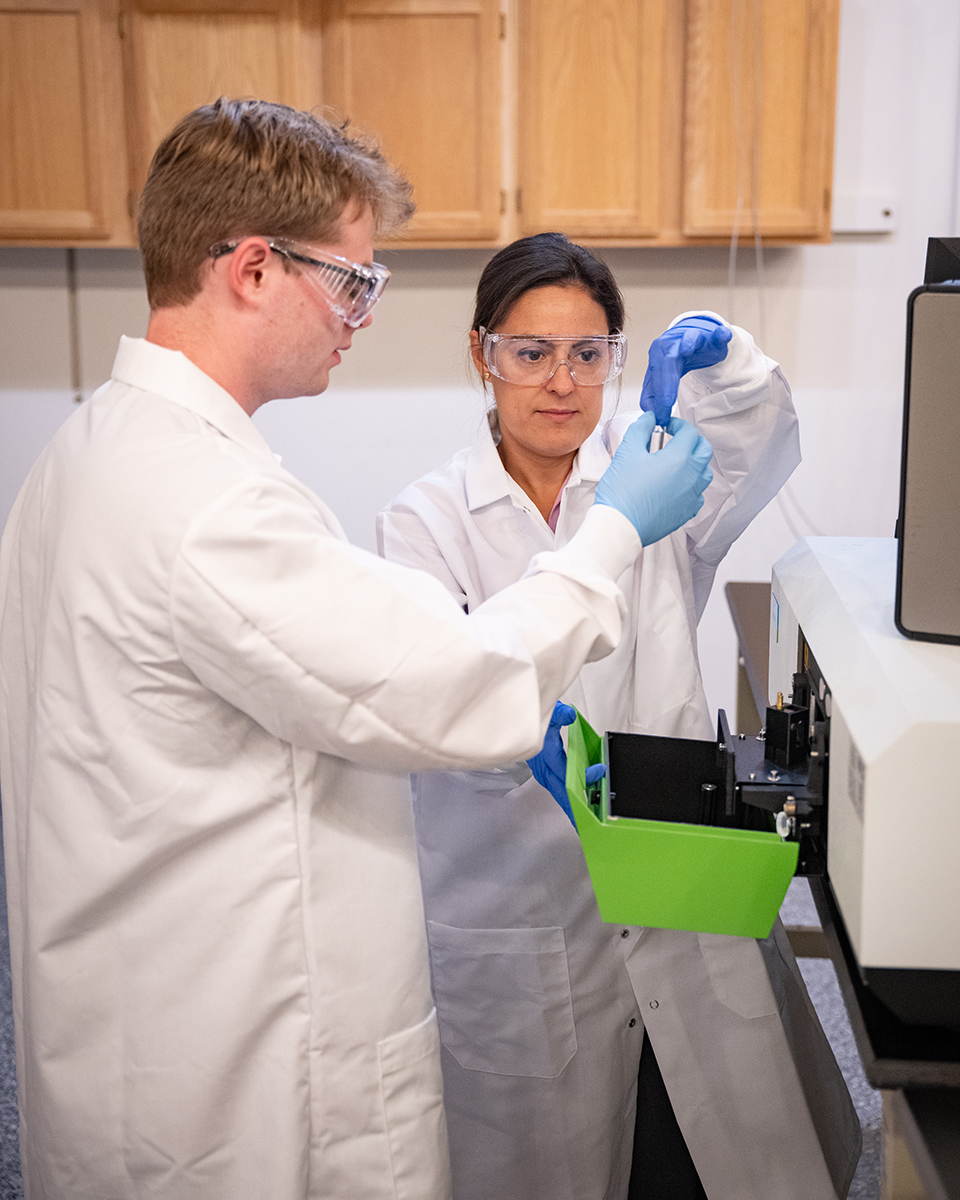 Collectively, these characteristics offer huge potential for more precise cancer treatment with fewer side effects, she said.
"You could deliver these radioisotopes to a tumor, and they will do magic," Rojas said. "The way they will emit their energy is just right there, localized, so with the right delivery platform, nothing is going anywhere else in your body."
As Rojas and her team explore radioisotopes for potential use as radiopharmaceuticals, they must narrow down a broad range of potential options.
Some radioisotopes are ideal candidates based on their chemistry and ability to link with target molecules, while others have ideal half-lives.
"You don't want to have radioisotopes in your body that are emitting radiation for a long time," Rojas said. "We want radioisotopes that have a short half-life that can release a significant amount of energy quickly, so that they can damage the tissue they're targeting."
Nanomaterials for radiotherapy
The pharmaceutical industry currently uses antibodies to carry radioactive atoms to tumor-specific targets.
But Rojas is exploring nanomaterials — which can carry multiple radioactive atoms or medicines on and encapsulated within a single structure — as a better alternative.
"It's not looking at the traditional routes," Rojas said. "It's looking to add radioactive materials to an inorganic structure, and using nanotechnology and what we know about nanomaterials to encapsulate radioisotopes not only one atom at a time, but many atoms, and functionalities, in a single platform."
Radium, discovered by Marie Curie, illustrates the potential. As it decays, it produces a cascade of radioisotopes, making it a powerful option for localized treatment. But it also risks radioactive material moving beyond the targeted area and causing radiotoxicity.
Our work in nuclear materials, radiation science and nanotechnology can change lives. That's the impact that I want to make at K-State and in Kansas — developing this strong platform within the nuclear engineering program where we can advance the applications of this science and technology for the good of society.
Rojas' research investigates the potential for nanomaterials to encapsulate these radioisotopes and contain them where they are needed.
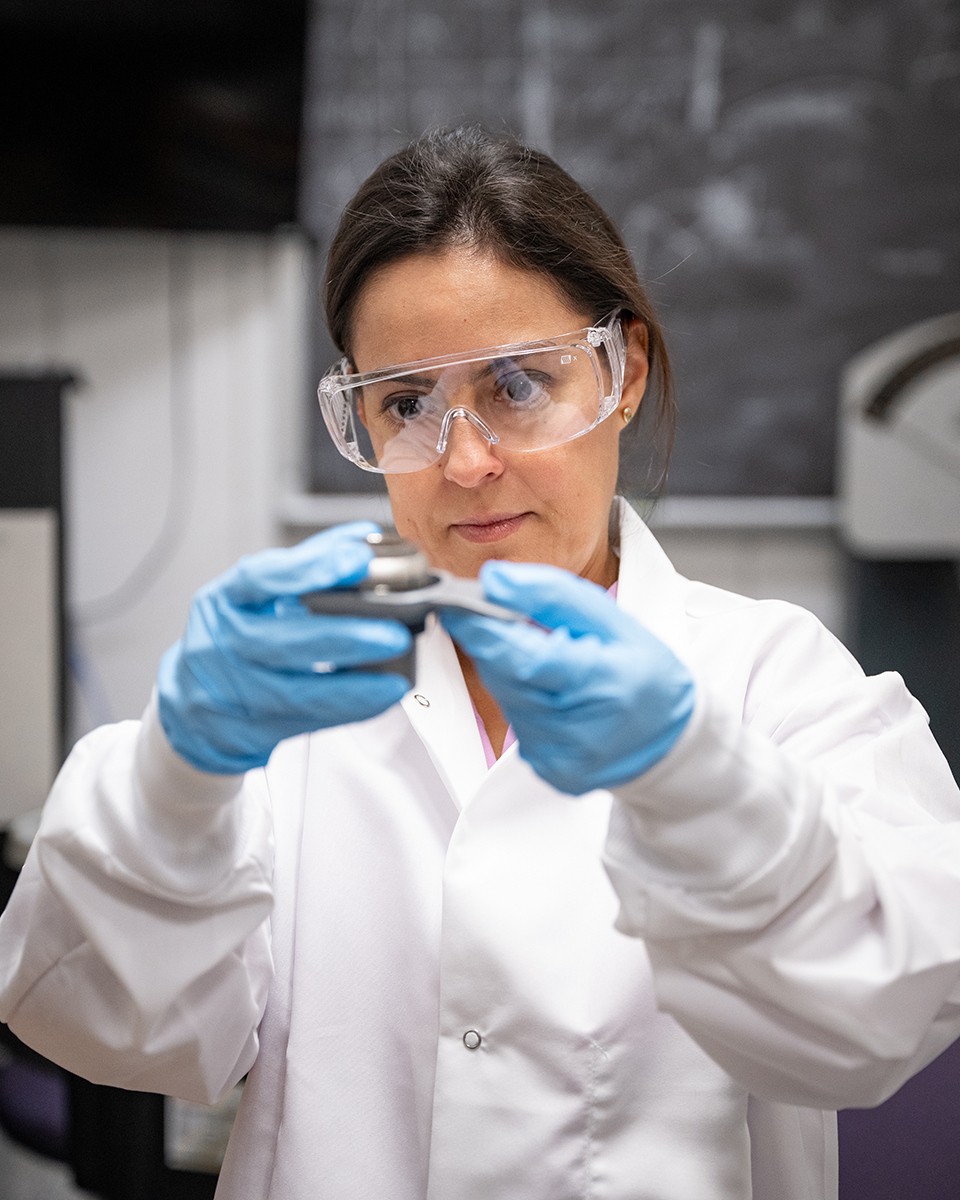 "That's the huge benefit of nanomaterials for therapeutics," Rojas said. "You can engineer them to control what's released and what's not, which means you can greatly reduce side effects."
As the U.S. Department of Energy prioritizes the production of radioisotopes for therapeutics and imaging, there's growing interest in establishing a production line to treat patients worldwide and to deliver radiopharmaceutical platforms.
"At the NANORAMP lab, we investigate platforms to encapsulate these radioisotopes so they can become radiopharmaceuticals with the potential of being used in humans," Rojas said.
Rojas' research extends to nuclear technology, safety
It's not just the medical field that can benefit from Rojas' research. As the nuclear industry continues to prioritize safety, materials work like Rojas' plays a major factor.
She investigates how to make nuclear materials more robust for power production, testing how they perform under the extreme conditions they might encounter in an incident.
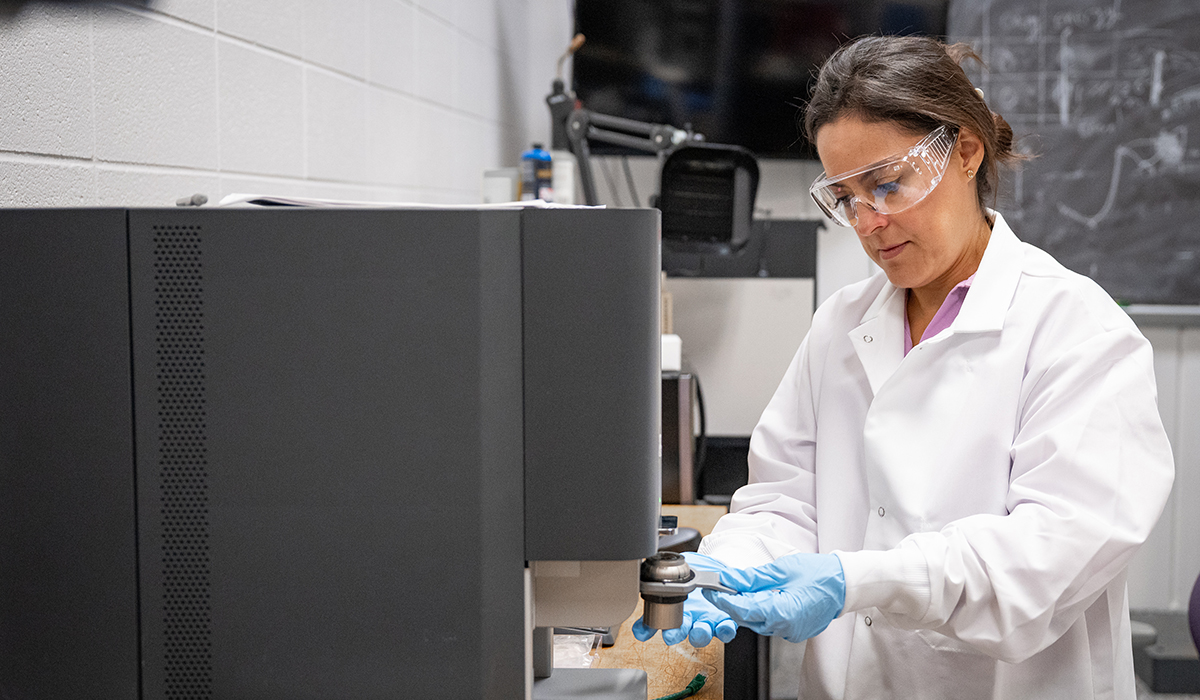
“As university researchers, we can do a lot to help the nuclear industry come up with advanced materials, technologies and testing protocols that can help establish safety limits.”
Jessika Rojas
"To some extent, we know how materials behave in regular conditions of temperature and pressure in a typical nuclear reactor," she said. "But what if we expose these materials to even more aggressive environments that you would see in an incident scenario? How long can materials withstand conditions like rapid heating? And how can we help the nuclear industry understand the limits of operation of these materials?"
This work — guided by the expertise of industry professionals and engineers — informs the development of safety limits and protocols for new and existing plants.
"In nuclear materials, there are many questions to be answered," Rojas said. "As university researchers, we can do a lot to help the nuclear industry come up with advanced materials, technologies and testing protocols that can help establish safety limits."
Shaping the future
With research spanning human health and technology, Rojas is contributing to a better future. But the biggest benefit of her work, from her perspective, is not technological or scientific breakthroughs — it's preparing the professionals of tomorrow.
"We train our students to see these contemporary issues not just from the perspective of standard practices in the nuclear industry, but also to approach them with curiosity and critical thinking and to contribute to engineering solutions."
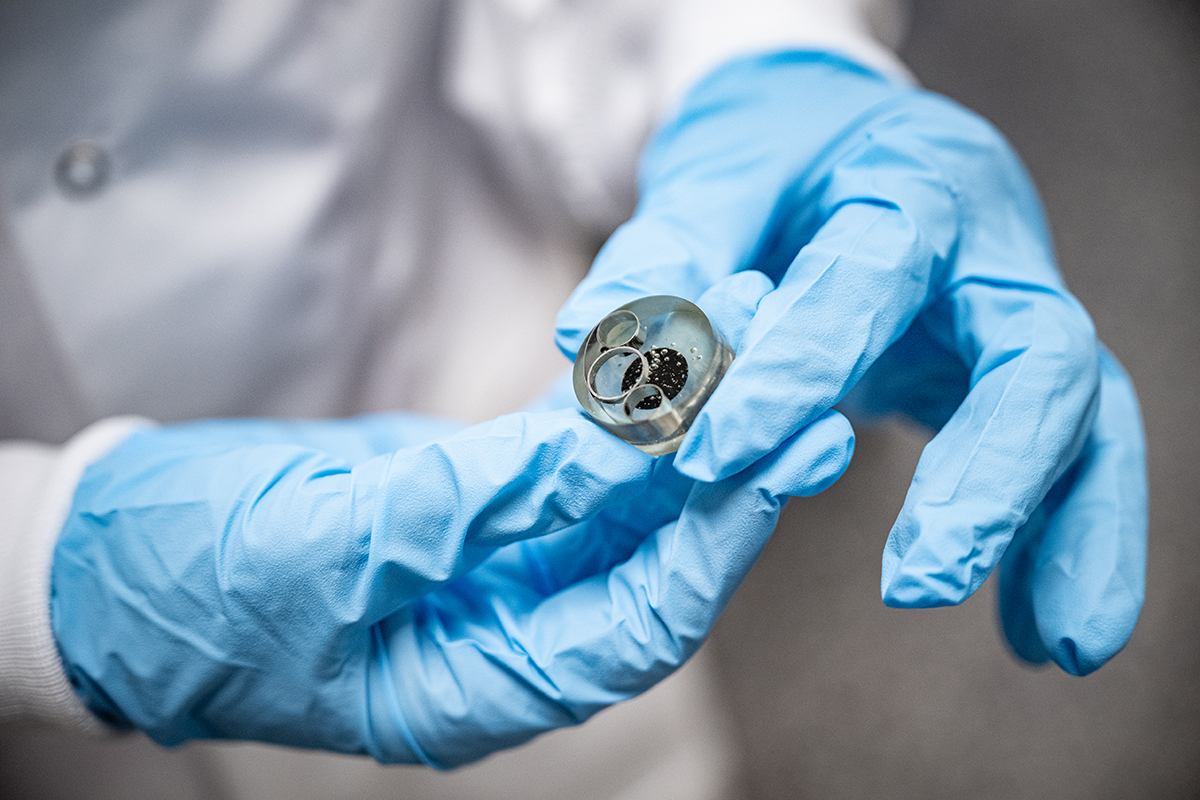
“That's the huge benefit of nanomaterials for therapeutics. You can engineer them to control what's released and what's not, which means you can greatly reduce side effects.”
Jessika Rojas
Her students, she said, will become professionals who further the fields of radiation science, radiopharmaceuticals, nanotechnology, and nuclear materials and engineering.
Nuclear energy and research are often misunderstood, Rojas said, and her work includes showing young children the possibilities of the field through community outreach.
"I want them to have that knowledge so that they don't fear these subjects when they grow up, so that they have the ability to use the words as part of their vocabulary."
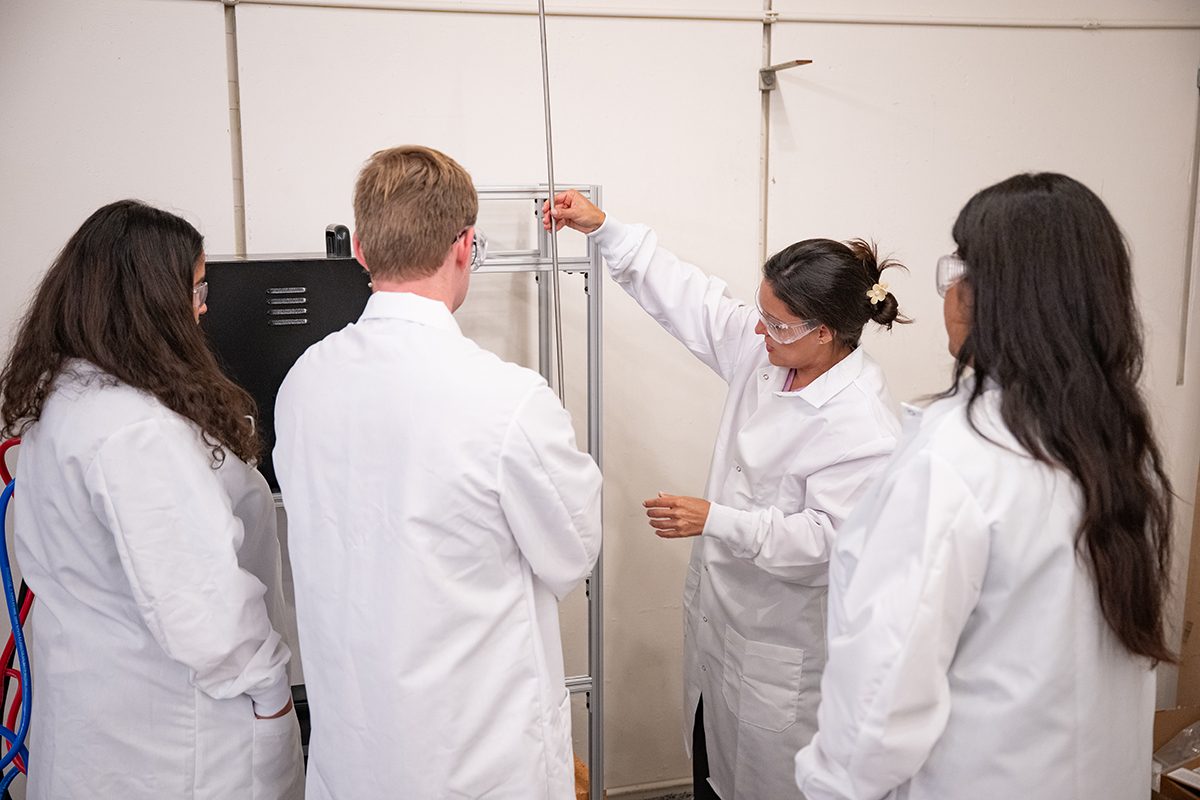
With Rojas finding a new home in K‑State's Carl R. Ice College of Engineering, one thing is certain: Marie Curie's legacy lives on in Rojas and every life she touches through her research.
"Our work in nuclear materials, radiation science and nanotechnology can change lives," she said. "That's the impact that I want to make at K-State and in Kansas — developing this strong platform within the nuclear engineering program where we can advance the applications of this science and technology for the good of society."
Related Stories
Classroom to the cosmos
The Wildcat Space Program is giving K-State students the opportunity to collaborate across disciplines and tackle the real-world challenges of building satellites...

Out of this world research
Amir Bahadori offers a look at one of the most critical challenges in space exploration — and how K-State is working to solve it.
Wildcats at Wolf Creek
K-State is preparing tomorrow's nuclear industry leaders to enter the workforce. Between the top-notch education and research opportunities at K-State and the...