Classroom to the cosmos
Interdisciplinary Wildcat Space Program gives K‑State engineering students opportunity to launch real-world satellite space mission

By Rafael Garcia
K-State News and Communications Services
Wednesday, May 13, 2026
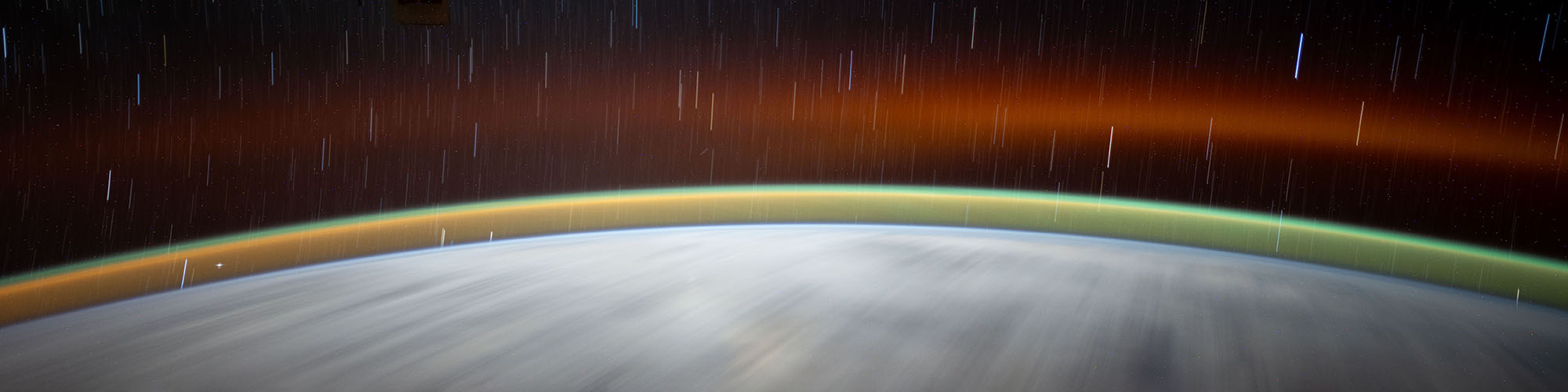
Take a look at the night sky and for a moment notice the faint streaks of sunlight reflecting off satellites overhead. Each glimmers for just a moment, but behind every passing point of light are hundreds of people and thousands of hours spent designing, building and launching these feats of human ingenuity.
At Kansas State University, students in the Wildcat Space Program are learning exactly what it takes to leave their own mark on the sky — in part by building a satellite themselves.
In Paul Snider’s CubeSat class in the Carl R. Ice College of Engineering, K-State students are getting hands-on experience with the various complexities of satellite design, fabrication, research and launch.
They budget power draws, calculate orbital paths and balance risk across hundreds of interactions between systems — all while learning how to work across disciplines to build something better than any one department could by itself.
Putting the pie in the sky
The concept for the class came when Snider, a 1992 K-State alumnus, returned to the Carl R. Ice College of Engineering in 2022 to serve as a professor of practice and share some of his expertise after a long career in the aerospace and satellite industry.
With an eye toward increasing interdisciplinary experiences for students, Snider developed classes that would have students conceptualize potential Low Earth Orbit satellite missions using the CubeSat form factor.
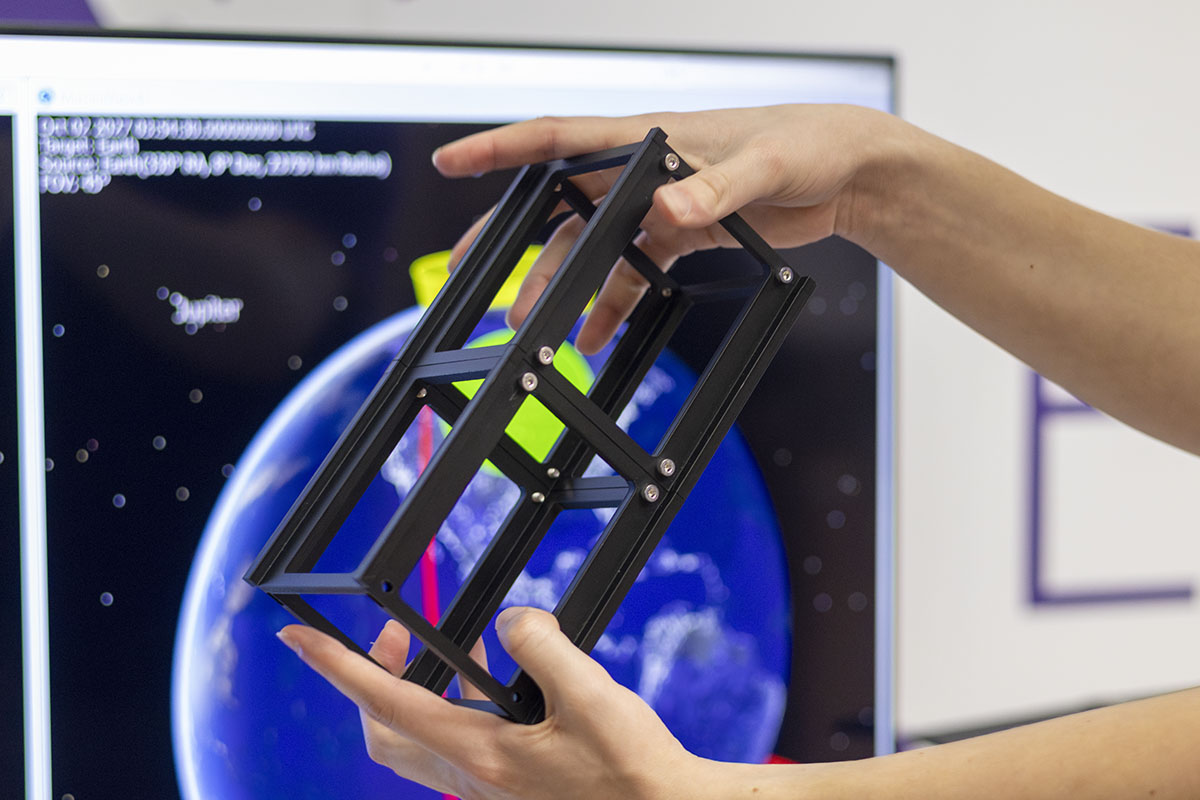
A CubeSat is a type of standardized nanosatellite that offers a lower-cost option for businesses, research institutions and schools to launch research projects into space. Configurable for up to 12 units, a single CubeSat unit is 10 x 10 x 10 centimeters, allowing dozens to be launched at a time on a single rocket.
Starting with a group of freshman honors students, Snider helped them develop ideas for CubeSat missions that students in the college's senior capstone could further refine.
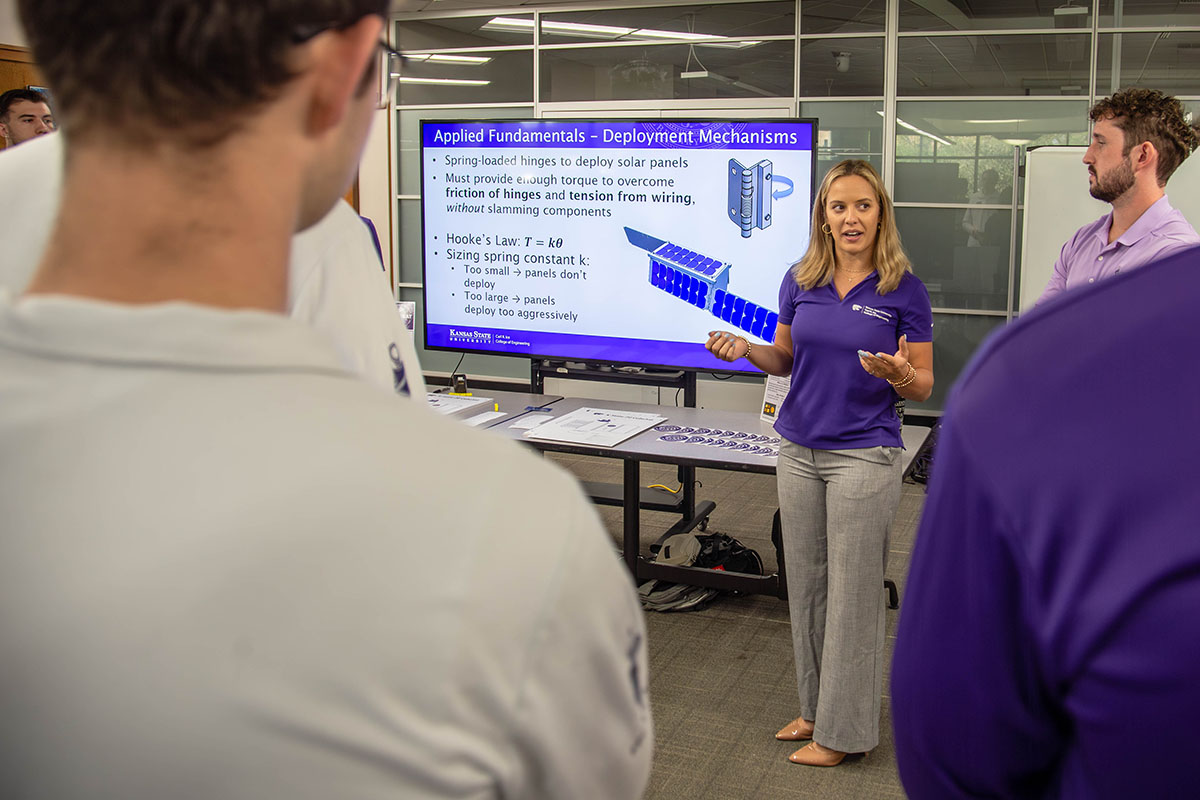
“I’ve learned the general high-level process of building a satellite while working alongside subject matter experts who have actually done this in the real world.”
Bailey Walke
"When we started this project in fall 2024, some of our students gave us some 'pie-in-the-sky' ideas for what would be conceivable for our CubeSat to do," Snider said. "We ended up with roughly 50 different mission ideas, ranging from going to the moon or Mars to things orbiting around the Earth."
Since then, Snider has further developed the project into a technical elective open to students in various engineering disciplines. Each of the college's mechanical and nuclear, electrical, industrial and chemical engineering departments, as well as computer science, are represented in the class. Students from K-State Salina also attend classes remotely and contribute insights from their fields of study in uncrewed aircraft systems and related engineering principles.
"The idea is that this cross-disciplinary design and interaction is what we want to foster," Snider said. "That’s what it’s like working in the real engineering world — you have to work across disciplines to build a satellite."
And in working across disciplines, the students have a chance to teach and learn from each other, said Nalen Rangarajan, senior in computer science and math, Olathe.
"You’re all contributing to this one thing, and you’re learning as you go," Rangarajan said. "I didn’t know a ton about space going in. I had been involved in some research in the math department here, and I was aware of space and confident in my computer science and math skills, but this is really about going outside your comfort zone."
Ad astra…
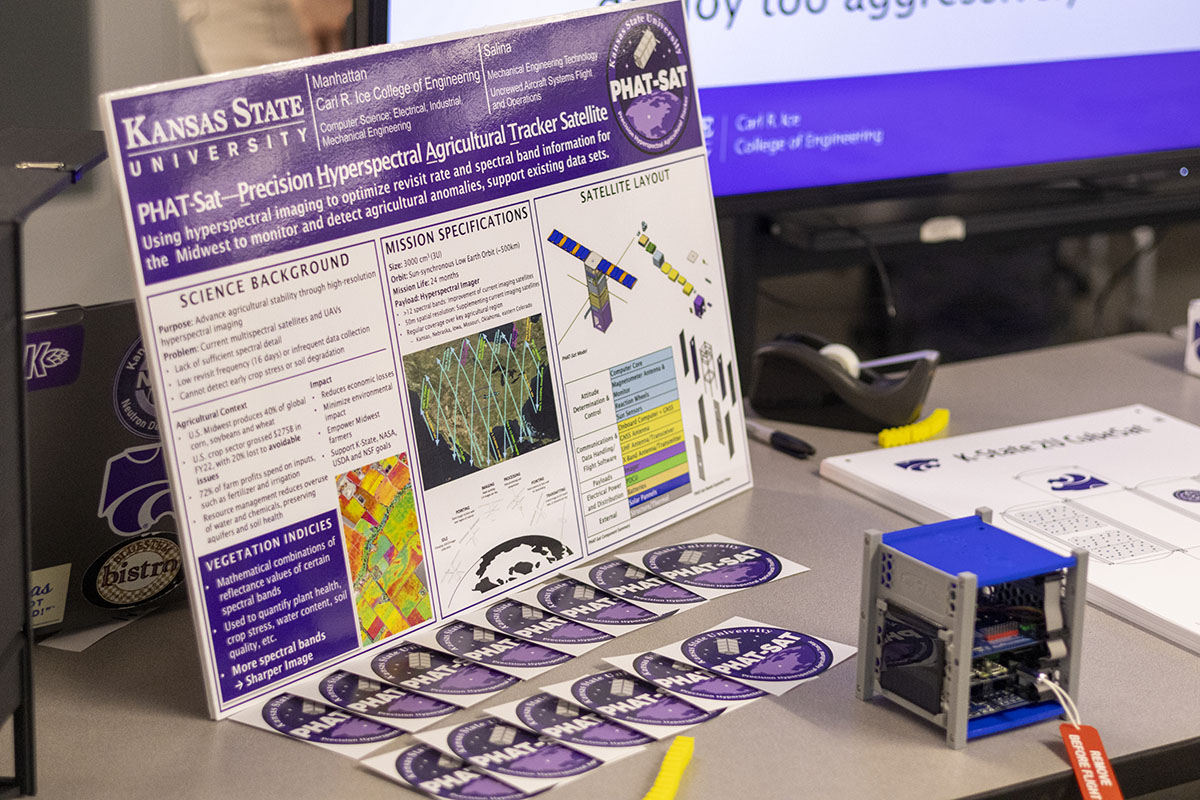
Out of that process came two viable and feasible missions: PHAT-Sat, or the Precision Hyperspectral Agricultural Tracking Satellite, and NuKAT, or the Neutron Detector: K-State Analysis Tool.
By 2030, the PHAT-Sat project plans to launch a three-unit CubeSat equipped with advanced, hyperspectral cameras that can point toward Kansas and the surrounding region and help detect crop health anomalies. Farmers and drought managers could then analyze that satellite imagery to implement precision agriculture techniques for better irrigation, resource management and sustainability.
In the meantime, the class decided to formulate a "pathfinder" mission to PHAT-Sat by spinning off what had previously been a smaller, submission payload into NuKAT, a two-unit satellite tentatively set to launch in 2027.
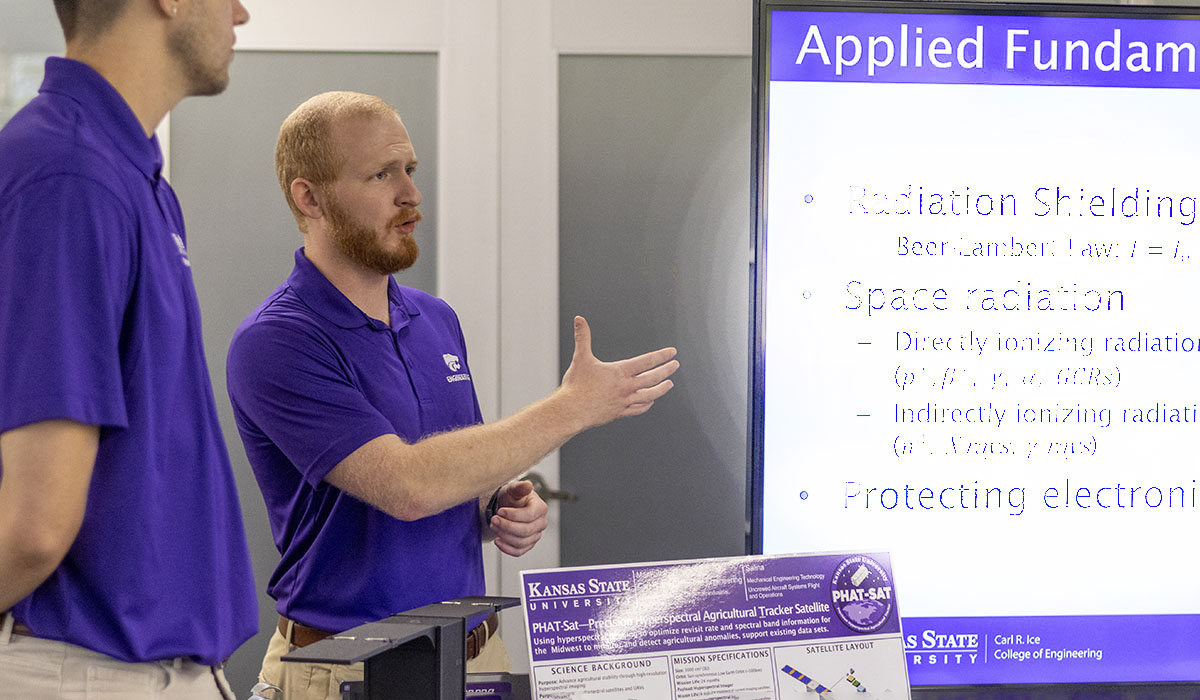
“This is one of the closest-to-industry classes I’ve taken because we're troubleshooting engineering problems on our own and dealing with challenges, just like you would in the real world.”
Colby Johnston
NuKAT will help validate the Microstructured Semiconductor Neutron Detector — produced by the K-State-affiliated Radiation Detection Technologies Inc. — as a viable sensor for use in the various radiation environments found in space, said Colby Johnston, principal investigator for the NuKAT mission.
"At its core, we're trying to use this new detector technology and verify it works," said Johnston, senior in mechanical and nuclear engineering, Shawnee. "But we’re also asking: how can we get specific day-to-day data in space on a less costly and smaller scale than a giant satellite? By making it more student-oriented and open-source, other universities — and even businesses and the government — could pull from this mission."
The goal is to get smaller, more power-efficient and more radiation-resistant technologies in space, Johnston said — and maybe even on bigger missions.
"If we can verify and space-qualify it now, that kind of technology could even become a way to cut down on bulk on a mission to the Moon or a rover on Mars," the senior said.
…Per aspera
For any part of that principal mission to have success, though, a whole host of supporting systems and software on the miniature satellite have to work in near-perfect coordination.
Take communications, for example. The mission provides little useful information if the radiation detector can't move its data from sensor to computer to antenna to ground station — also planned for and developed by K-State students.
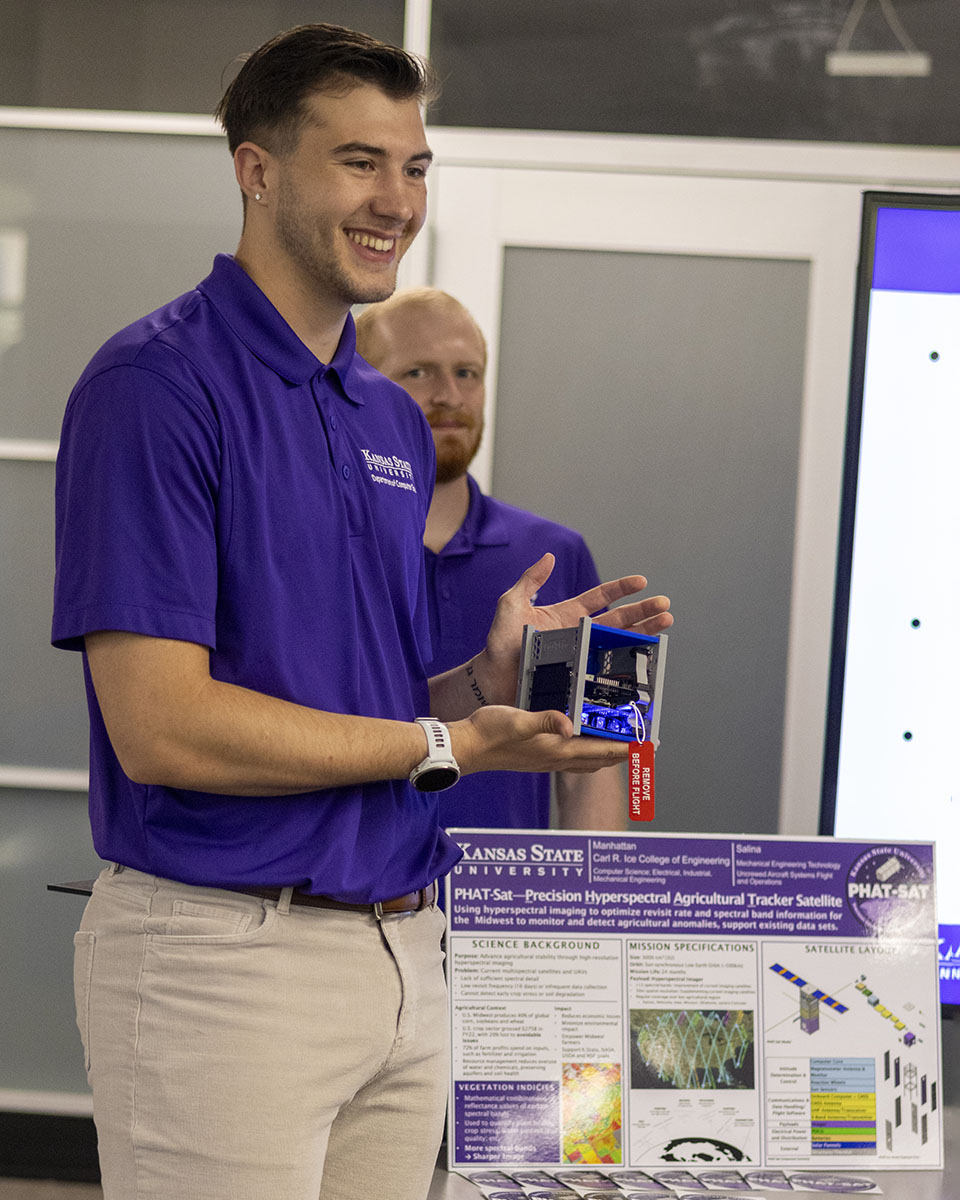 Where does the antenna need to go on the CubeSat? How big can it be? How powerful does it have to be? How do you balance power so that each system receives the necessary amount? What communications band works best for the mission? How often can the satellite communicate its data? What happens if neutrons flip a bit on the satellite's computer and change the message? How long can the research mission remain viable if a data transmission is missed because of cloudy weather?
That’s just one subsection, and they’re but a sample of the hundreds of interactions the students have to account for.
Any number of solutions can solve any individual question. The challenge is finding solutions that solve as many questions as possible without introducing new issues, while also minimizing risk to the lowest acceptable level.
But in the students' eyes, each challenge is one that can be overcome with proper planning and design.
"A satellite is a very critical system," said Logan Hayward, senior in computer science, Oberlin. "You can modify software while it’s in space, but for the most part, once you ship it, you have to hope and pray it works. It's a stressful spot to be in, but it's been an incredibly fun challenge to work on alongside my classmates, and I've learned more from this process than any other class I've had at K‑State."
Eyes on new horizons
With the launch of NuKAT still at least a year away, the CubeSat students — through their connected Wildcat Space Program student organization — are still fundraising for the first mission.
It is expected to cost around $200,000 between launch and equipment costs, with some support from the college and vendors who are helping provide equipment at cost.
"The funding part is also big — knowing what mission you have for the stakeholders that would actually care and be able to fund it," said Braden Adams, senior in computer science, Abilene. "Learning about some of those higher levels of program work has also been interesting. We could design the best satellite ever, but if we don’t have the funding to actually build it, then it doesn’t matter."
Since becoming involved in the class, several students like Bailey Walke, West Des Moines, Iowa, have shifted their career ambitions and have sought out internships and careers in the aerospace and satellite design industry.
Applied engineering
Build satellites, design racecars and experience engineering like never before at K-State's Carl R. Ice College of Engineering.
A soon-to-be master's recipient in mechanical engineering, Walke is joining Ursa Major Technologies, a Colorado-based aerospace company where she previously interned, and will tentatively work on the company's in-space satellite propulsion team.
"I know it will be more complicated in the industry, but I know I'm ready for it, because I've had that opportunity to learn from someone who has been in the industry for 30 years and to problem-solve alongside a great team of classmates," Walke said.
Many of the students currently involved in the class — including the several seniors who have been with the class since its inception — will have graduated by the time rockets clear their towers and hurdle toward the sky with their missions.
Still, they'll keep their eye on the horizon, looking for a streak in the night sky that they helped paint.
Related Stories
Mapping the future
As AI begins to reshape the global tech landscape, K-State's computer science department is positioning itself as a leader through innovative academics designed...
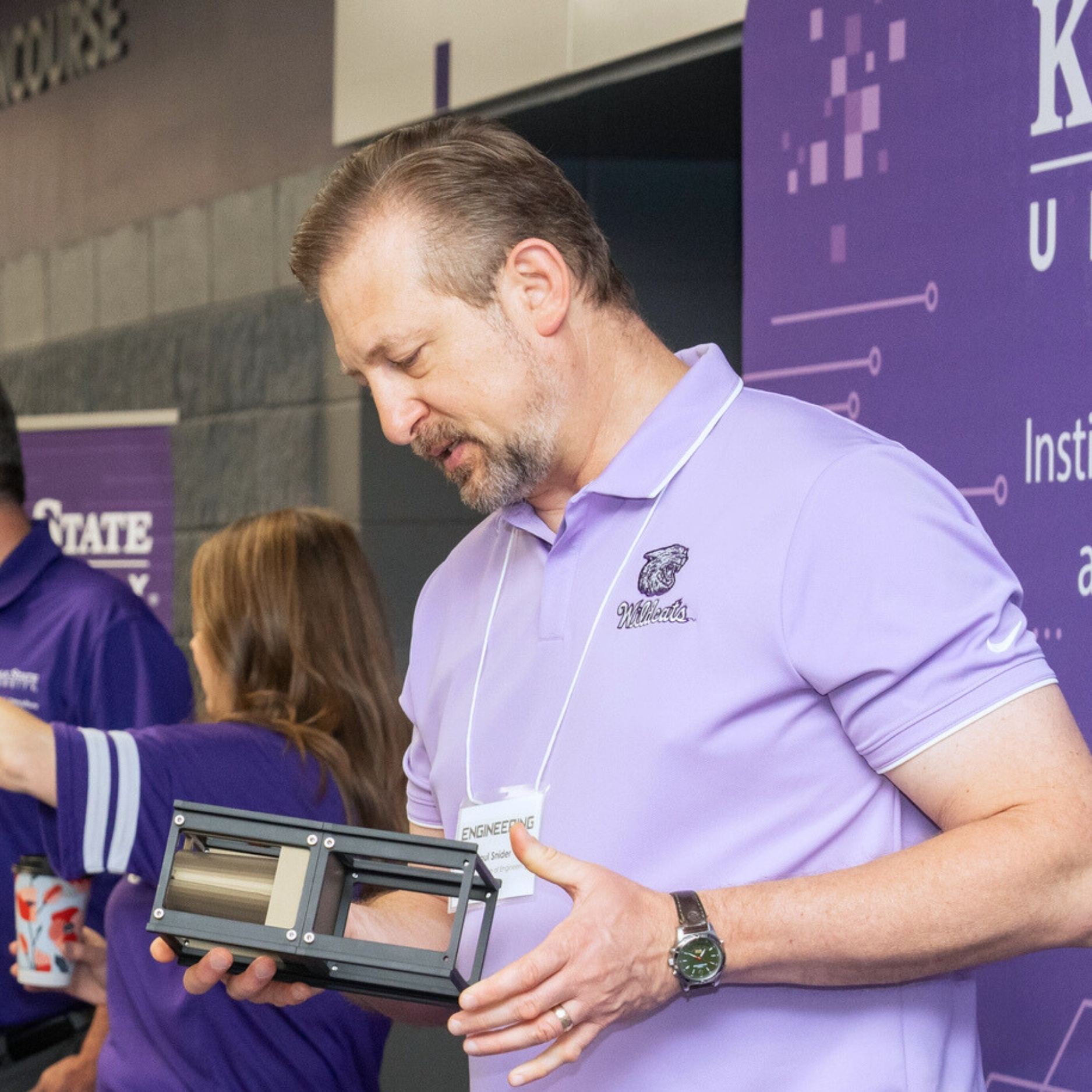
People with Purpose: Paul Snider
After a 30-year industry career, Paul Snider returned to his alma mater with a mission: to help the next generation of engineers think outside the box.
The sound of rural school music
What started as a small independent study is now a thriving certificate program at K-State. Students in the newly-created instrument repair certificate and...