The sound of rural school music
K-State program puts working instruments into the hands of Kansas' next generation of great musicians
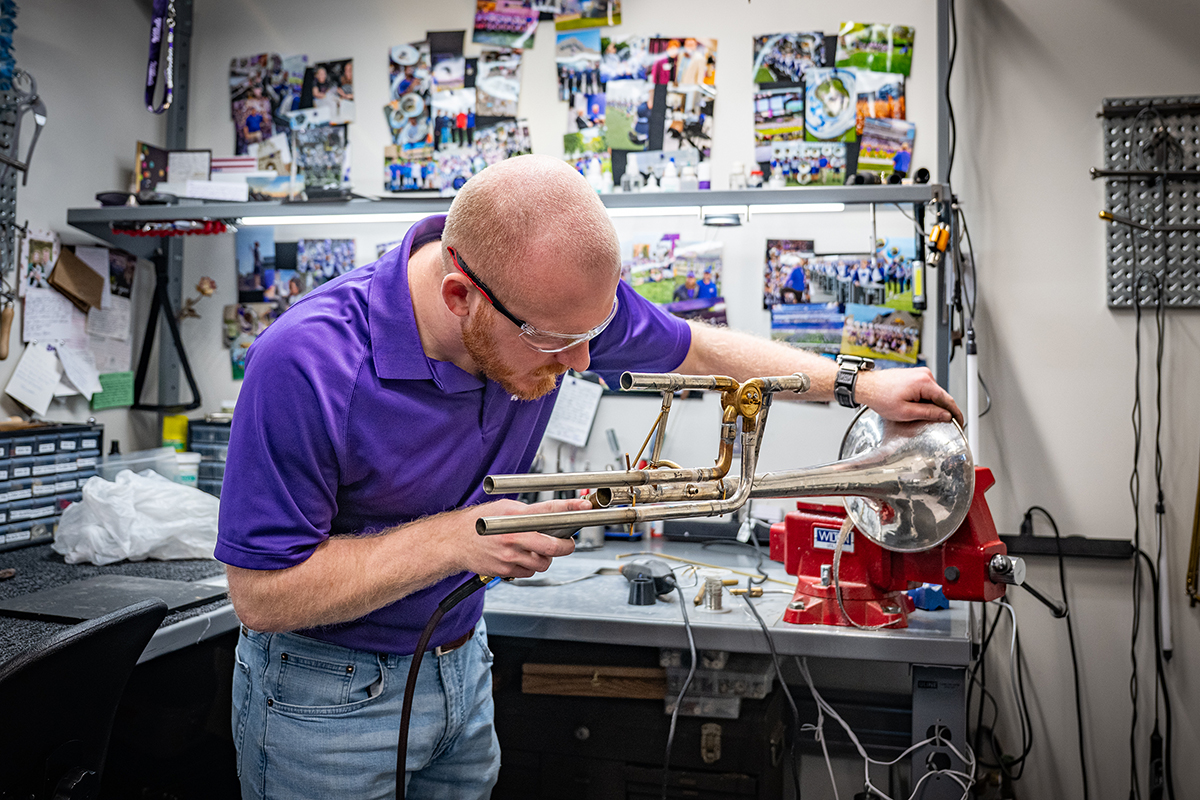
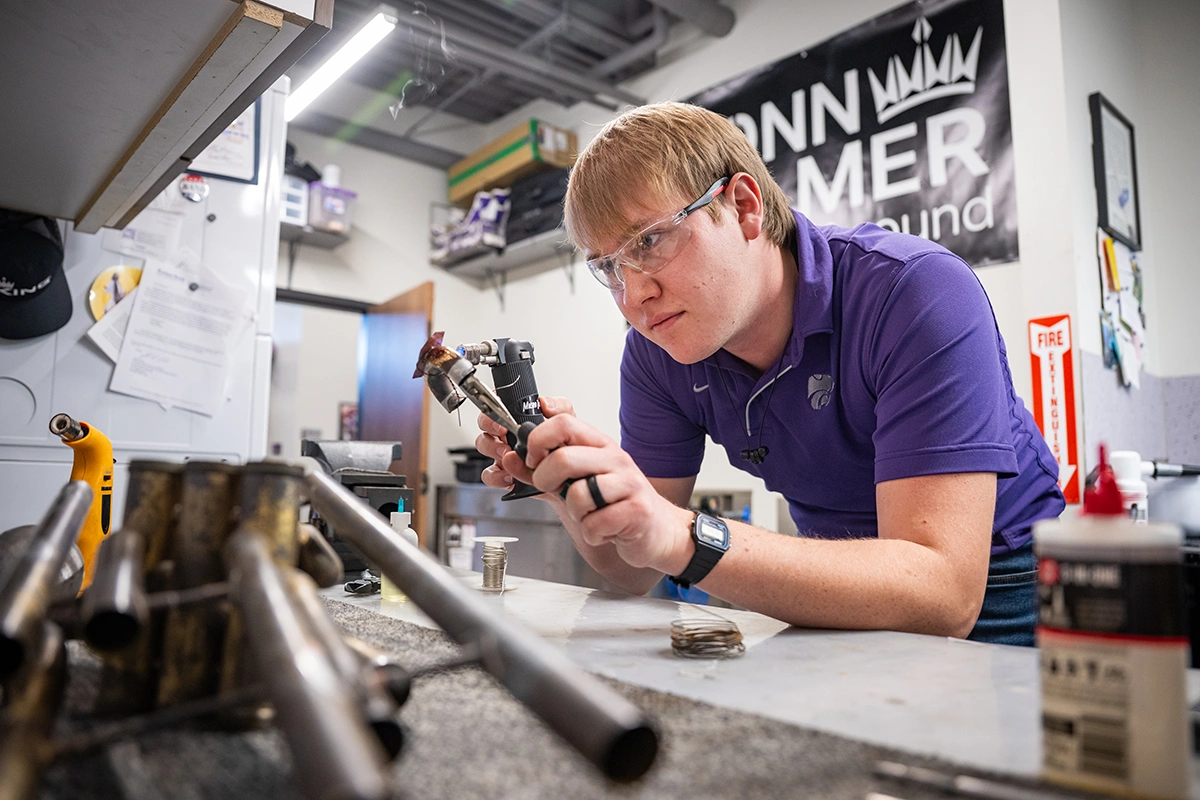
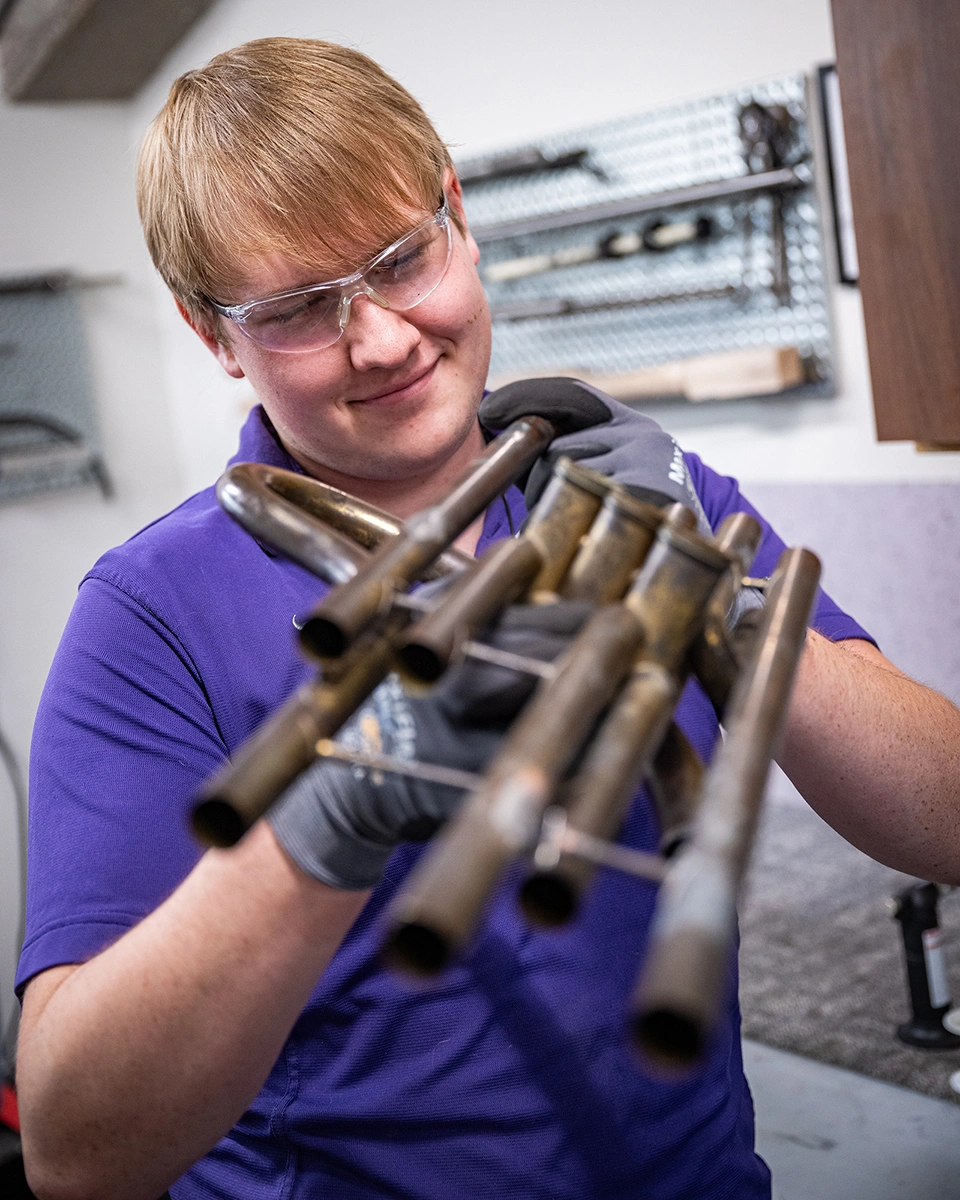
Using a tool to balance the horn, Colby Johnston, a senior in mechanical and nuclear engineering and student in an instrument repair class, sodders a brace onto a trombone he is restoring. Photos by Jeff Moore/Kansas State University.

By Loren Miller and Rafael Garcia
Kansas State University
Wednesday, March 4, 2026
The next Charlie Parker could be in Scott City, Kansas, and we might never know it, if that child's saxophone fails them and makes them think they're not a great musician.
An aspiring Joe Walsh could be shredding guitar over in Cimarron, but no one will hear that music student if their bridge needs an adjustment but they instead put down the guitar for good. We might never have another "Dust in the Wind" if tomorrow’s Robby Steinhardt doesn’t have a good violin to pick up.
There's no shortage of great musicians who have come from Kansas schools, said Joshua Cook, instructor of instrument repair at Kansas State University.
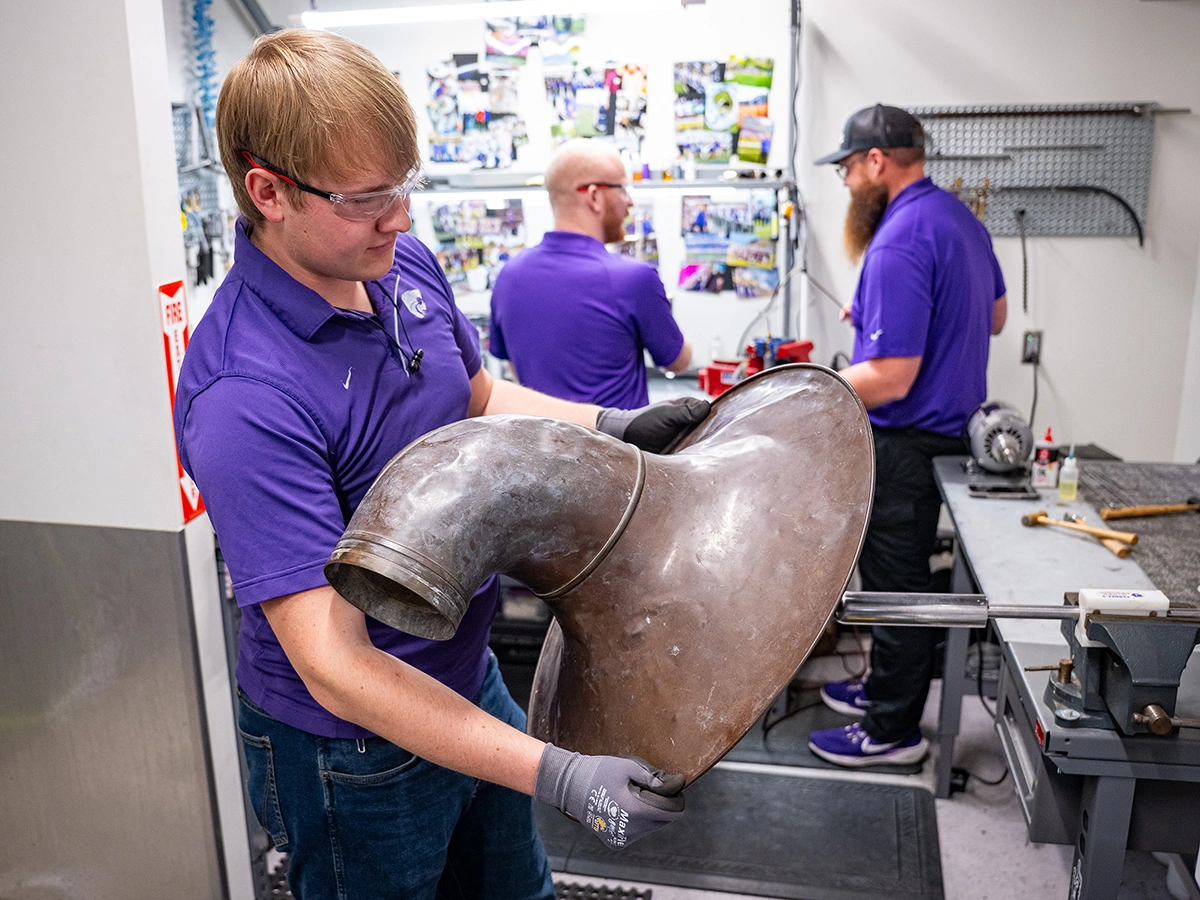
But like many other community challenges, rural Kansas schools often lack access to convenient, affordable repair options when musical instruments break, leading to student frustration and potential abandonment of music altogether.
"If you hand a fifth grader a trombone and the slide doesn’t move well, it’s going to feel like more work and more effort," Cook said. "They’ll think they’re the problem when really it’s the instrument. And when kids get frustrated, they’re more likely to quit or do something else.
"If we can make sure their instruments are functioning properly, we can help retain more students in band programs and help create the next generation of great Kansas musicians."
A new program and certificate at K-State is putting working, well-maintained instruments right into rural Kansas students' hands — all while also equipping K-State's future music teachers to handle most basic repairs themselves when they begin teaching in Kansas schools.
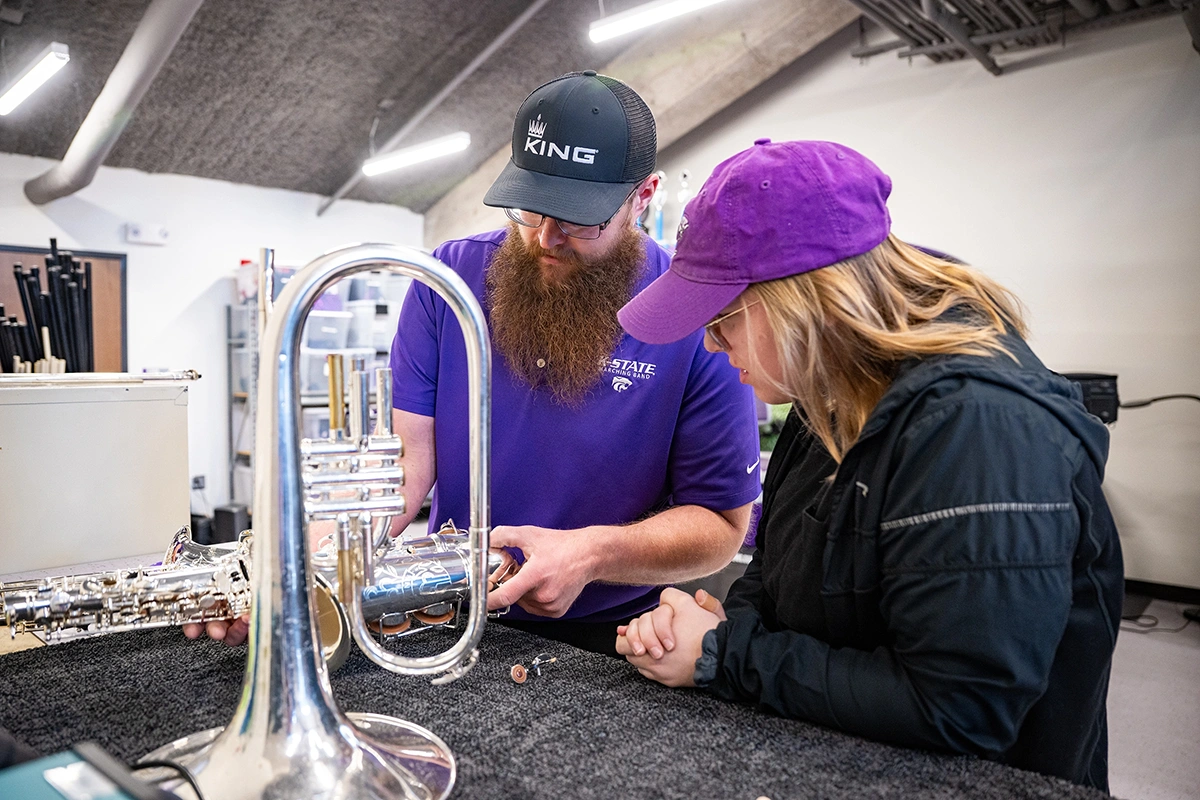
Instrument repair becomes an Applied Learning Experience for K-State students
What began as a small independent study has quickly grown into a thriving program that blends applied learning with meaningful community service.
For years, Cook had worked with music programs and bands — including the university's Pride of K-State Wildcat Land Marching Band — across eastern Kansas to repair and maintain instruments. Eventually, K-State Bands director Frank Tracz figured they were working with Cook so often that they may as well hire him full-time.
Around that same time, the Tracz Family Band Hall was finishing construction, and since the beginning of planning for the hall, Tracz had insisted on creating a space for a cutting-edge, fully-outfitted repair room.
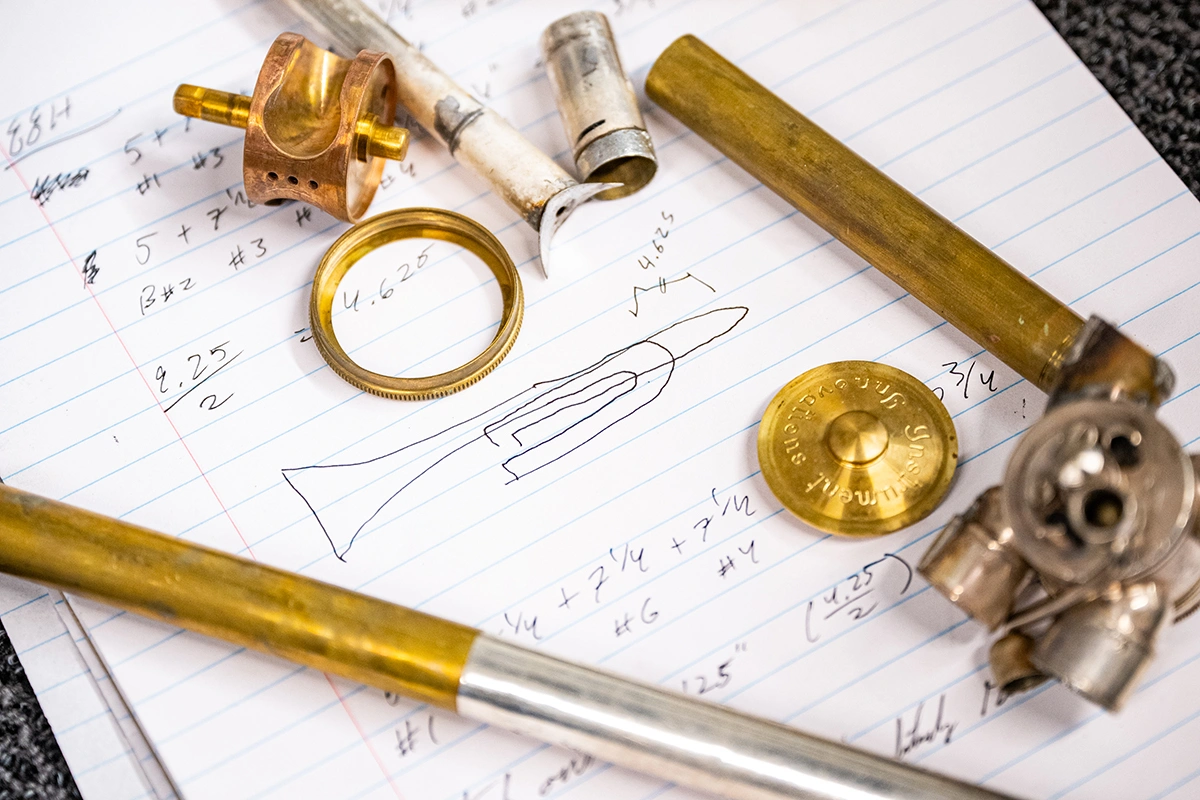
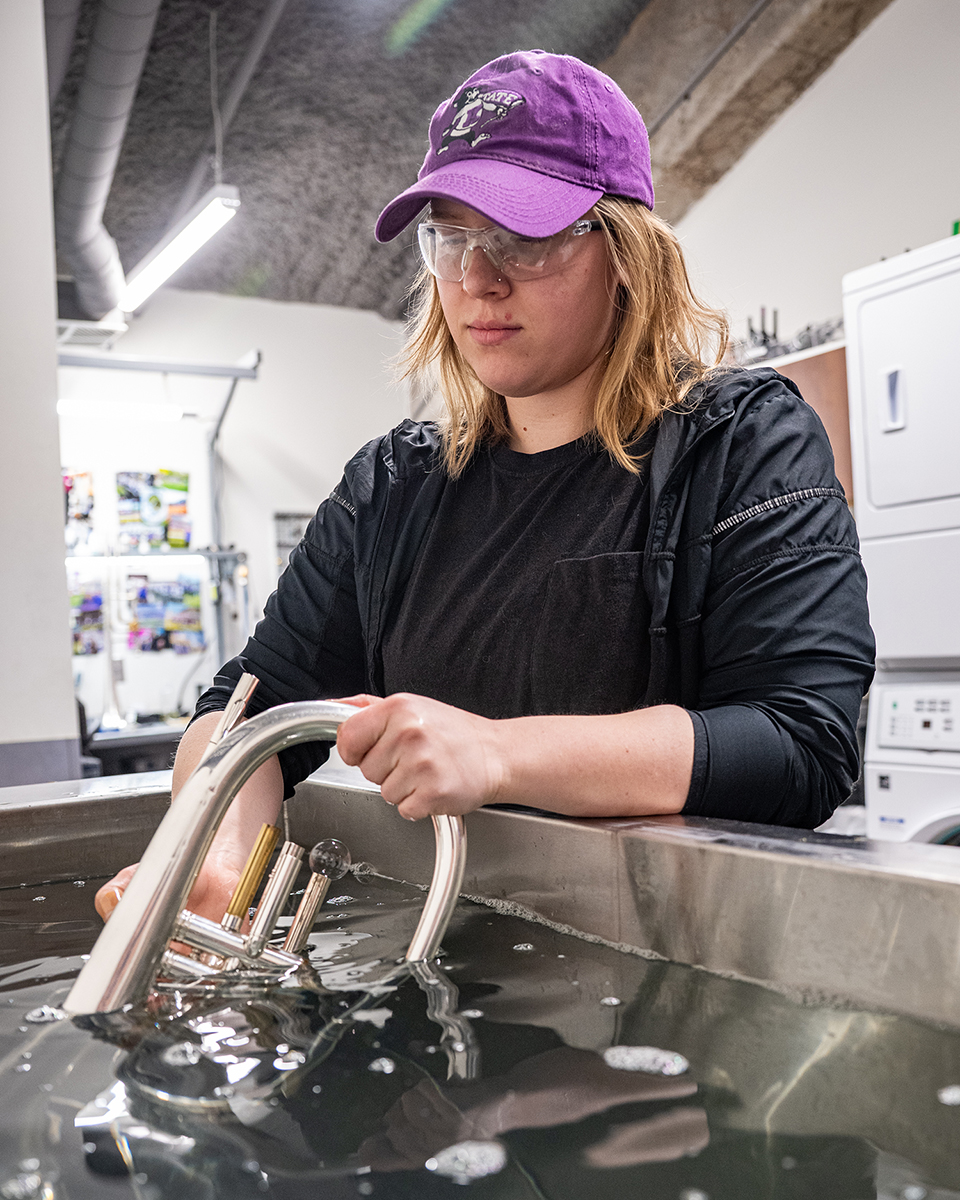
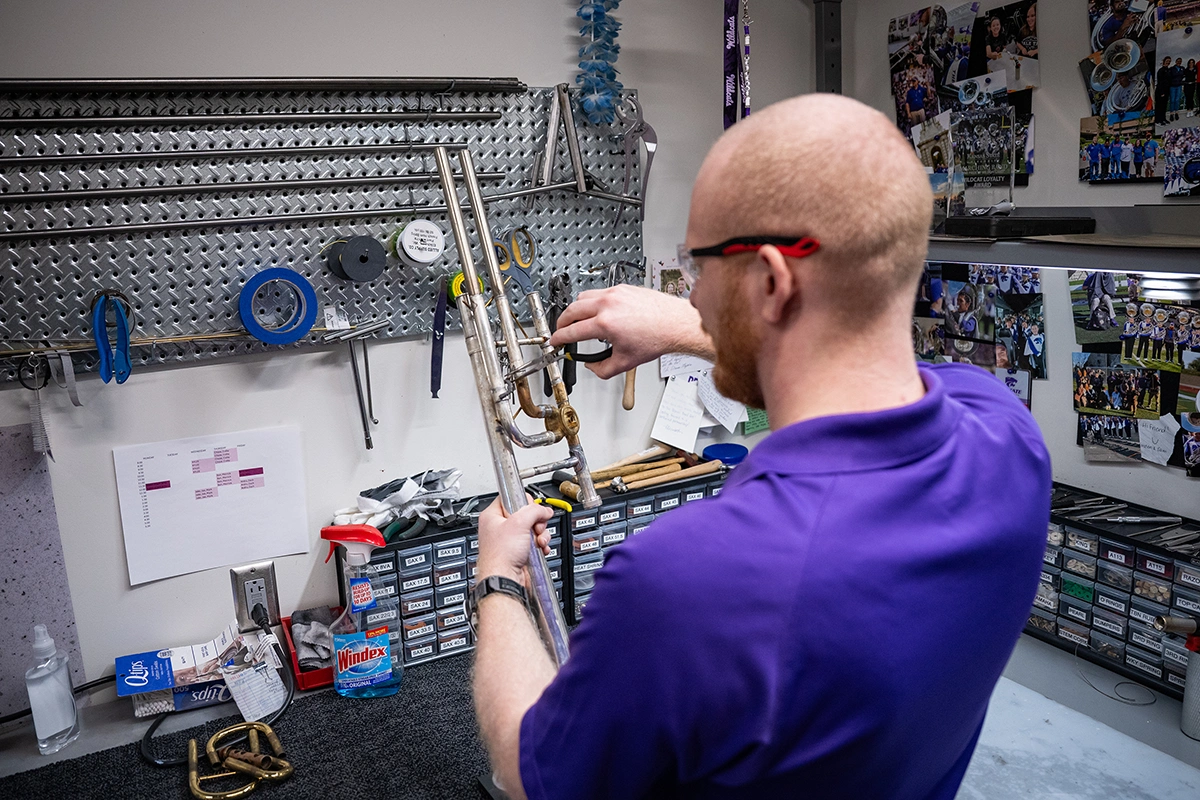
Thanks to the generosity of Gib and Brenda Compton, Tracz’ vision was realized through the Compton Repair Room — a repair facility for the K-State Bands program that is outfitted with the newest, highest-quality tooling and equipment in the industry.
Cook — who joined K-State's School of Music, Theater, and Dance full-time in August 2023 — initially used the space to teach instrument repair to a handful of students while managing repairs for the university’s band program.
As interest surged and resources remained limited, Cook partnered with Ben Worcester, academic advisor in the College of Arts and Sciences, to explore ways to support more students.
“I get to do something that truly interests me, with great tools and an instructor who shows me the right way to do things. This program has made a huge difference for me. I am not sure I would still be a student without it.”
Chase Wassom
The two explored funding through the inaugural round of grants from K-State's Applied Learning Experiences program, which funded faculty and staff to develop initiatives that support, expand, deepen and scale authentic experiential learning opportunities across the institution.
“Ben found the opportunity, and we started brainstorming how to build a program that truly worked,” Cook said. “We combined our experience, wrote the curriculum, and figured out what it would take to launch it.”
Throughout summer 2025, Cook and Worcester developed a curriculum for a certificate program. They outlined how grant funding could be used to expand equipment and instructional capacity.
By the end of the summer, their proposal won approval, and the 12-credit hour instrument repair certificate was officially launched, alongside a 15-credit minor option for music educators.
With new tools and a structured curriculum in place for the fall semester, enrollment quickly exceeded expectations, and the workshop classes have had to put students on waitlists.
“The grant transformed this from a one-person shop into a learning space for students,” Cook said. “I had what I needed to do the job, but now we have what we need to teach.”
Bringing musical instrument repair to Kansas communities
The program’s impact extends well beyond campus.
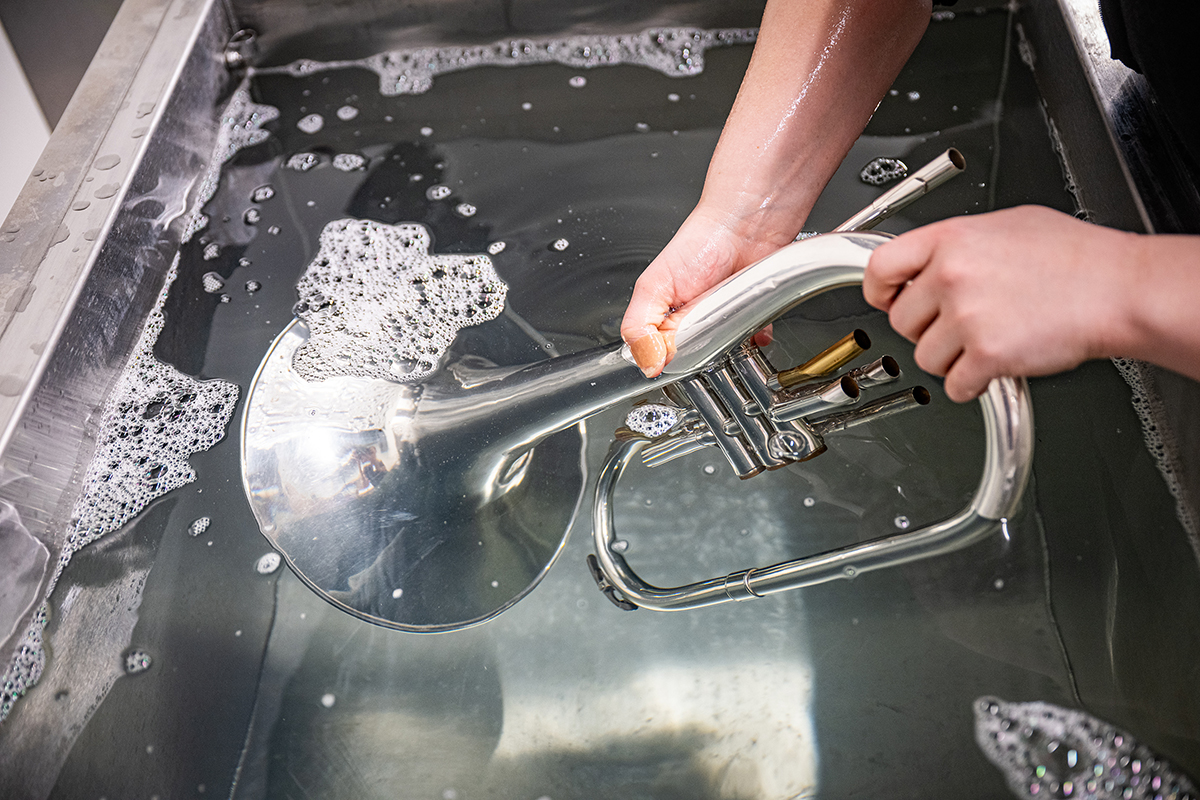
Through the School of Music, Theater, and Dance's Sawin Arts Extension outreach program, Cook has been able to take students to communities the state like Hays and Scott City to apply their learned instrument repair skills where they can most make a difference.
"Through that support from some very generous donors, I can travel to rural schools, fix what I can and bring my students along," Cook said. "Not every band room will have all these tools and equipment, so this gives students a chance to learn what they can do with just a toolbox and a backpack."
At Bandtober, a marching band festival at Riley County High School, Cook’s students provided free horn repairs for schools unable to afford them. In 2024, one student repaired three instruments. With support from K-State's Applied Learning Experiences program, four students repaired 10 instruments in 2025.
Students also partnered with the Manhattan Optimist Club to repair 12 donated instruments for local youth and worked alongside Band of Angels, a charity that provides instruments to Kansas students.
Over the past two years, K-State students have collaborated with the organization to repair more than 30 instruments.
“We are using what we learn to serve the community, and that is something I am passionate about. We want to use our skills to do good,” Cook said.
One of the students contributing to that impact is junior Chase Wassom, a music performance major who joined the repair program in early 2023.
“We get to give back to the community and help lay a foundation that will benefit music education for years,” Wassom said.
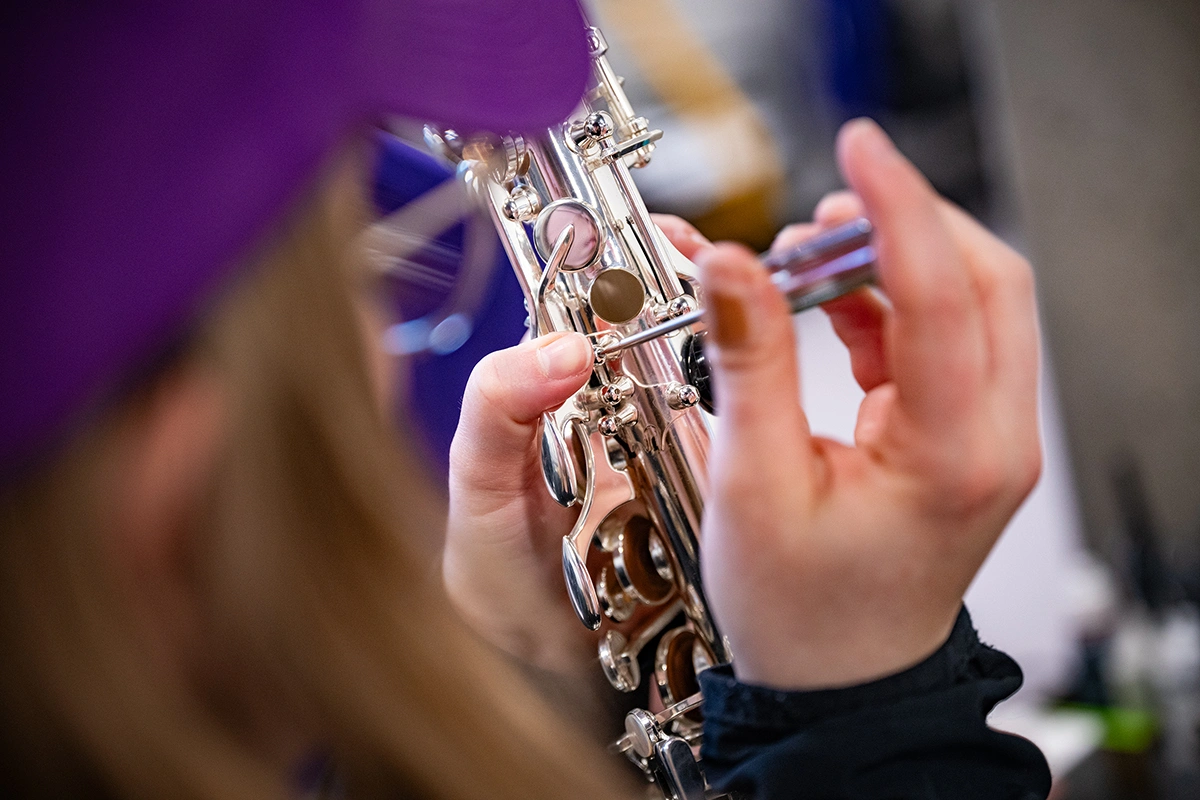
For Wassom, the program has been transformative both academically and personally.
“I get to do something that truly interests me, with great tools and an instructor who shows me the right way to do things,” he said. “This program has made a huge difference for me. I am not sure I would still be a student without it.”
Wassom plans to pursue a career in instrument repair after graduation while continuing to perform. He has already attracted interest from companies impressed by the skills he has developed through the program.
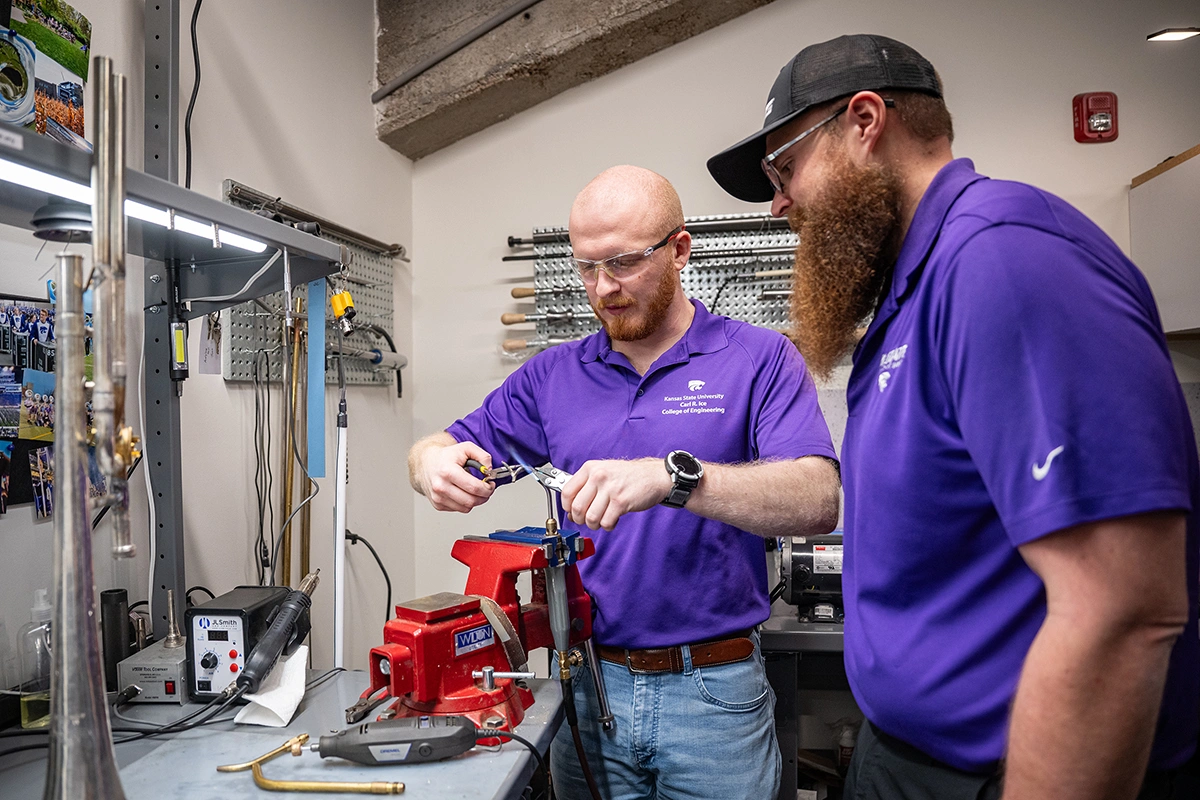
“This repair facility and program are thanks to the vision of Dr. Frank Tracz, who really championed having this kind of facility to not only take care of K-State bands but train the next generation of students who can tackle these instrument repairs”
Joshua Cook
Although not all students in the class plan to teach music, many of them do, and the workshop equips them with the skills necessary to make most basic instrument repairs and maintenance.
"Repair costs have skyrocketed since I started," Cook said. "Back in the day, a trumpet cleaning might have been $65. Now some shops charge $100. Schools that are barely making ends meet can’t always afford that."
If these future educators know how to handle basic maintenance, they can care for their students and community better, Cook said.
"There are instruments sitting in closets all over rural Kansas — kids who tried band and quit," Cook said. "If those instruments can be donated, fixed up and put in the hands of younger musicians, that’s a real difference we can make for our state.”
###
Related Stories

Small batches, big ambitions
From sourdough startups to statewide networks, K-State's Community Food Systems team connects small business entrepreneurs with the tools, labs and partners...
Experience, reflection and relationships
Hosted by the Staley School of Leadership, Alternative Breaks give K-State students the opportunity to spend their college breaks serving, building professional...

Building a BrAND
As he prepares to retire after more than 33 years as K-State Bands director, Frank Tracz reflects on his legacy and his constant ideal to "leave it better than...