Wildcats at Wolf Creek
K-State nuclear engineering students gain experience, career connections at Kansas' only nuclear power plant

By Malorie Sougéy
K-State News and Communications Services
Wednesday, Feb. 11, 2026
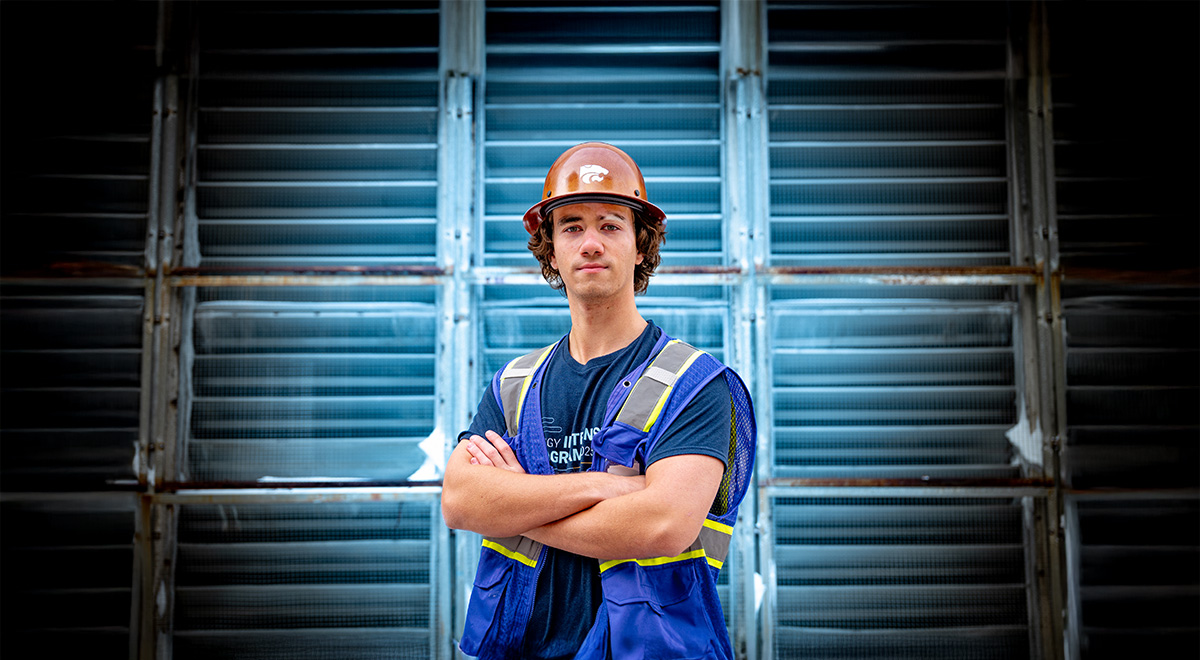
Aiden Butcher will never forget the first time he saw the cool blue hue.
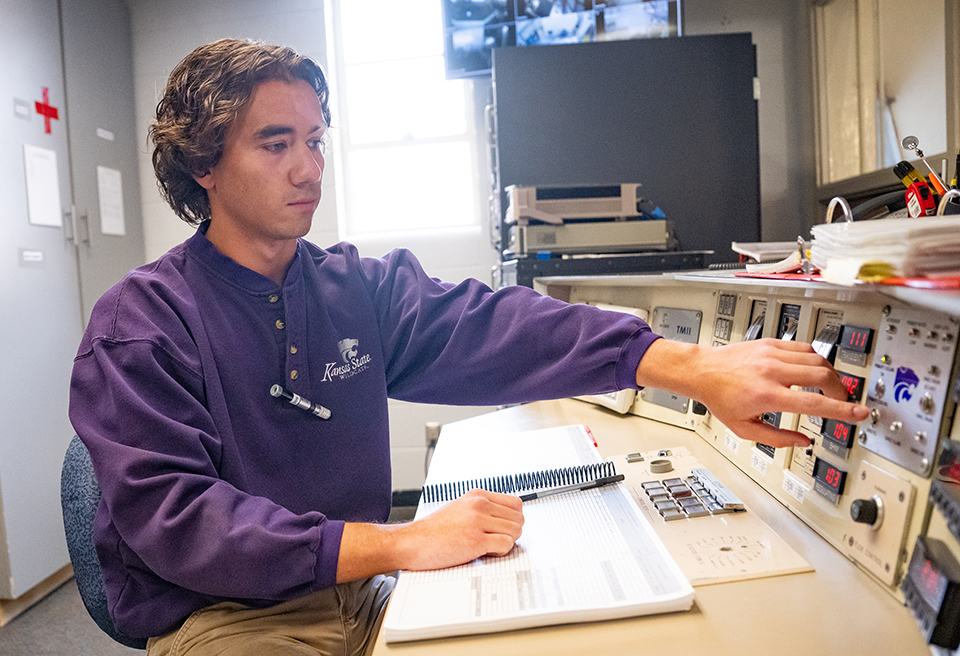
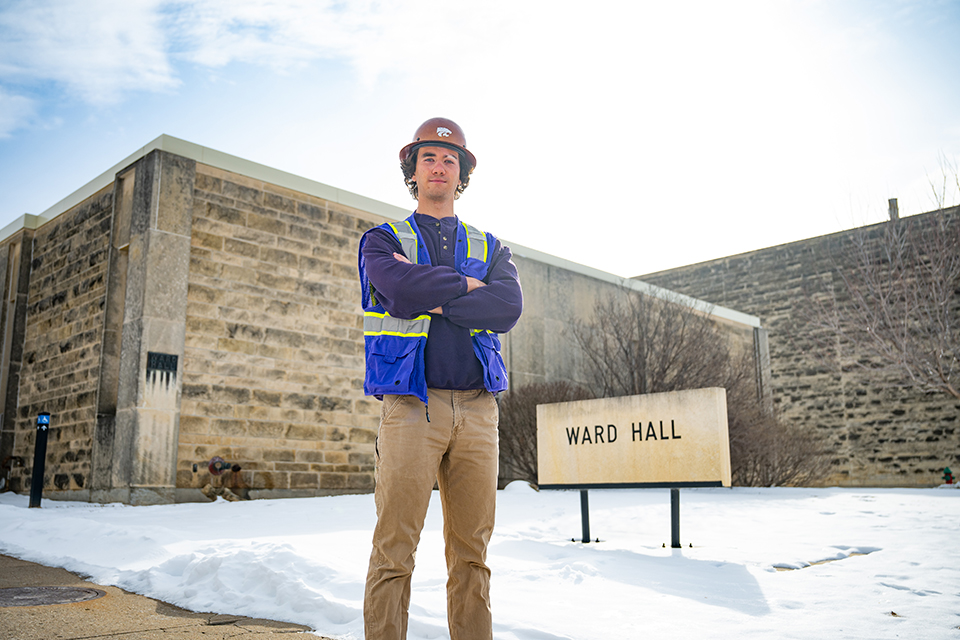
As he gazed down into the glow from Kansas State University's TRIGA Mark II nuclear reactor, Butcher knew that the powerful moment connecting him to his future career would forever be a standout memory from his K-State story.
While most people will never come near a nuclear reactor, Butcher, a senior in mechanical and nuclear engineering from Topeka, has been near two during his time as a Wildcat.
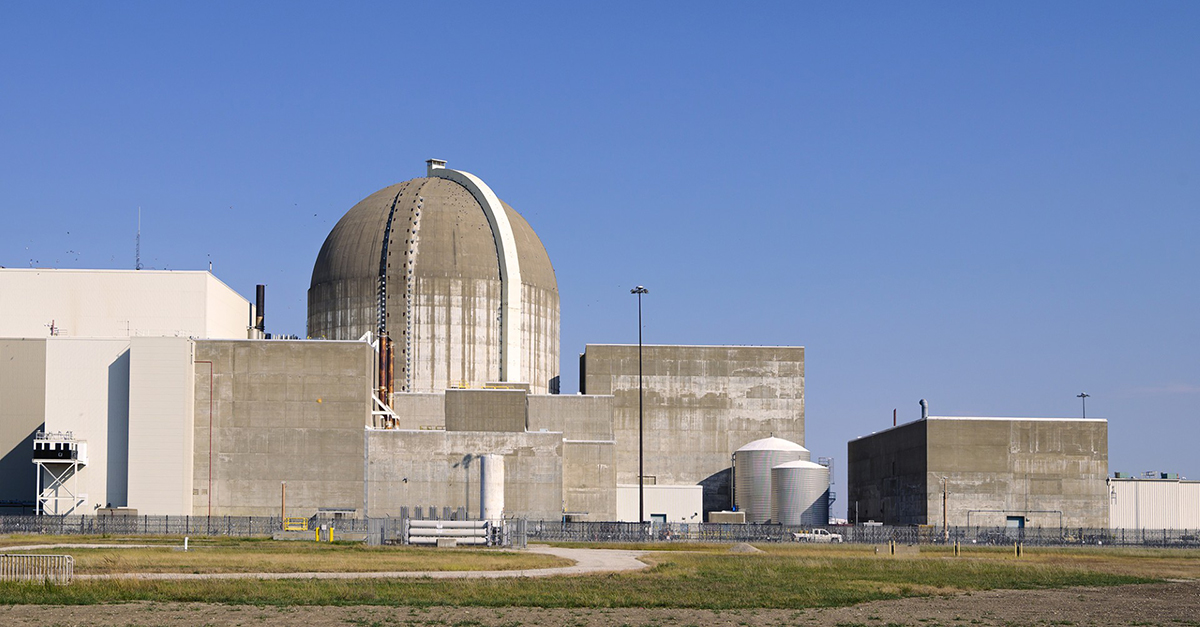
In addition to the time he's spent with K-State's research reactor in Ward Hall, he has spent the last two summers in eastern Kansas at Evergy's Wolf Creek Nuclear Generating Station, the state's only nuclear power plant, where he's put his classroom knowledge to the test and developed hands-on industry expertise as an intern.
His experience is just one example of how K-State is preparing tomorrow's nuclear industry leaders to enter the workforce. Between the top-notch education and research opportunities at K-State and the real-world career experience through Evergy internships at Wolf Creek, the future of the nuclear industry is bright.
K-State students thrive in internships at Kansas nuclear plant
Wildcats are ready for field experience to enhance their nuclear engineering education, and Evergy, the Carl R. Ice College of Engineering's 2025 Company of the Year, has plenty of opportunities available for them.
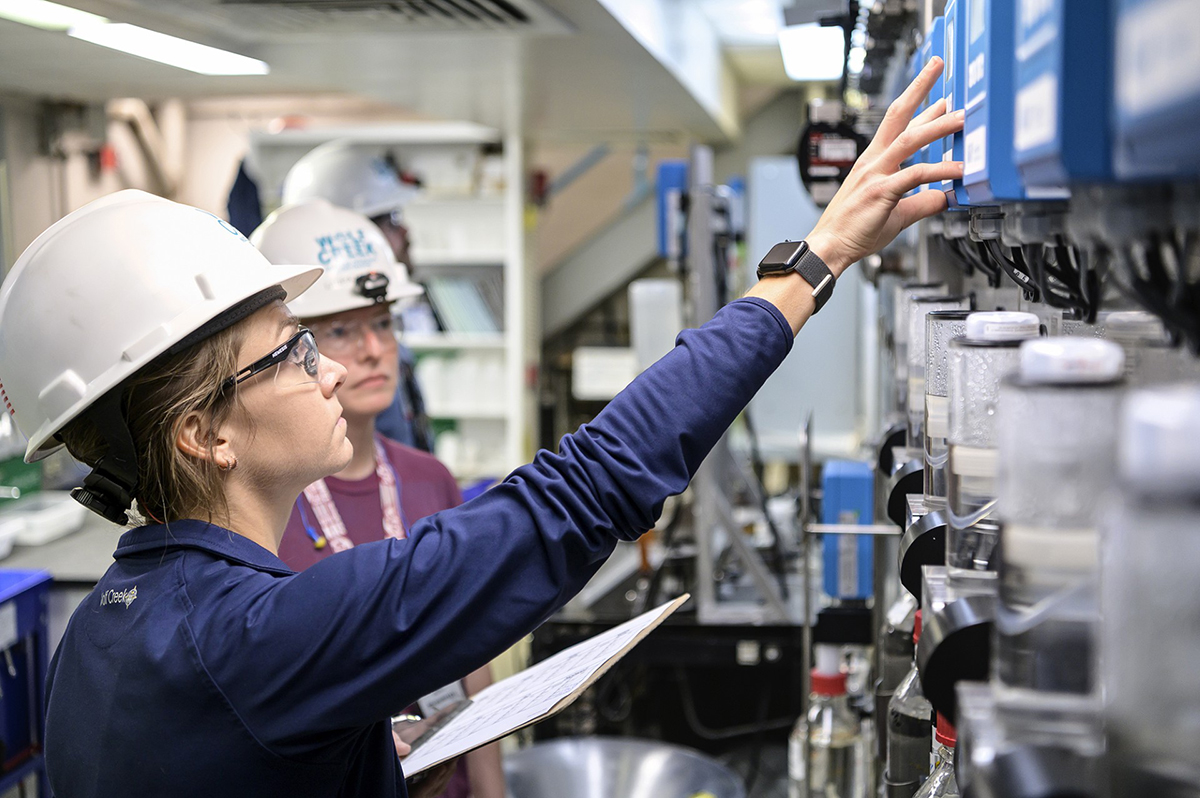
Evergy offers a variety of student roles spanning the vertically integrated company, and for future nuclear engineers, there are two ways to work at Wolf Creek: internships and co-op experiences. Co-op students take a semester off school and work at Wolf Creek for eight months, overlapping with interns, who work at Wolf Creek during the summer.
In addition to work experience at Wolf Creek, interns and co-op students participate in programming through Evergy that introduces them to all aspects of the company and its culture, including tours and site visits to substations, transmission and distribution system operation centers, and other power plants; service events in the Evergy community; and networking events with employees and executives.
Once students are selected for an internship or co-op experience, they become eligible for a scholarship offered only to Evergy interns. With a smaller application pool than most awards, Evergy's $5,000 per-semester scholarship, renewable for up to four semesters, is well within reach for interns.
"The goal is to have them start formulating how they're coming to that conclusion and then be able to communicate what the next steps are," he said. "We really want to kind of throw them in the deep water, but we'll be there to help them figure that out."
Last summer, nearly 30% of all Evergy interns were K-State students, and 10 Wildcats have been at Wolf Creek for internships and co-op experiences during the last two years.
When I think about some of the K-Staters at the plant, they stand out because of their ownership and the responsibilities that they take on. They recognize the importance of this plant and want to achieve good things for it. They're very passionate about their jobs.
Eric Carlson, Wolf Creek plant manager and K-State alumnus, said one of the best things the program does is gives students focus and vision for how their classroom work is applied in a real setting.
Interns and co-op students make a difference at Wolf Creek
Van Erdewyk said there is clear value in having Wildcat interns at the nuclear power plant.
"When I think about some of the K-Staters at the plant, they stand out because of their ownership and the responsibilities that they take on," he said. "They recognize the importance of this plant and want to achieve good things for it. They're very passionate about their jobs."
During Butcher's first internship at Wolf Creek, he worked with the License Renewal and Fire Protection team to help bring fire protection lines up to code.
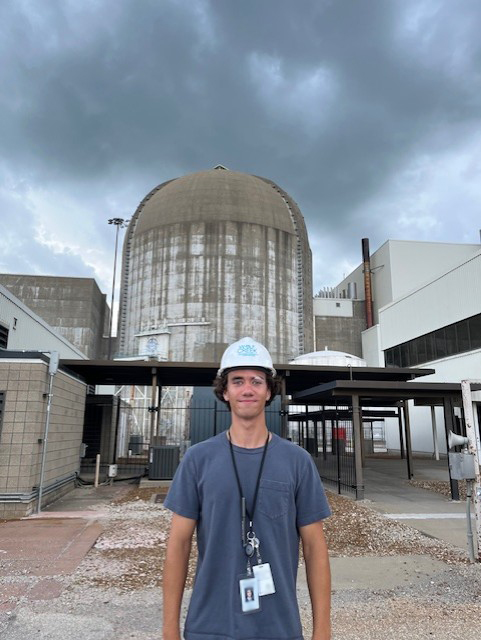
Due to settling at the plant, some of the fire protection lines were at the wrong angle, causing rust where water was not properly draining. Those pipes hold significant water and pressure, and Butcher's project during his first summer at the plant was to figure out how to fix the slope to prevent further damage.
His second internship at Wolf Creek came as the plant was preparing for refueling. This time, he worked with the Reactor Engineering team to receive and offload the new fuel, and he developed a training video for safer fuel handling. The video, he said, gives new employees and contractors a basic understanding of fuel handling to ensure an error-free process.
Butcher used firsthand experience to create the training video. His team encouraged him to gain more field experience, which led him to actually interact with the fuel — with gloves, since oil from a person's fingers can't touch the sensitive fuel assemblies.
New nuclear fuel is safe to be around because the fuel pellets within the fuel rods give off only weak alpha radiation, which can't escape through the metal cladding, Van Erdewyk said. Since the pellets are sealed and cannot be inhaled or ingested, touching or standing near new fuel poses no radiation hazard.
"Helping with the new fuel was amazing," Butcher said. "They let me put on the gloves and rotate it around, which is an experience not many people get. They didn't have to ask me to help, but they chose to, because they knew I wanted the experience."
Long-standing internship support
That level of hands-on experience is not unique to Butcher.
Alex Higbee and Seth Phelps, both K-State alumni, also participated in the intern/co-op program during their time as K-State students. Higbee completed internships in 2023 and 2024, and Phelps completed a co-op experience in spring 2024. Both were recipients of Evergy's intern scholarship.
Higbee, '24, designed a bracket system that made it easier and safer to set up cameras for fuel inspections during his internship. He also brought an essential program back online for the plant while he was there.
At all nuclear power plants across the U.S., there is a control room and a simulator. Operators will train on the simulator before getting licensed to do the real thing in the control room.
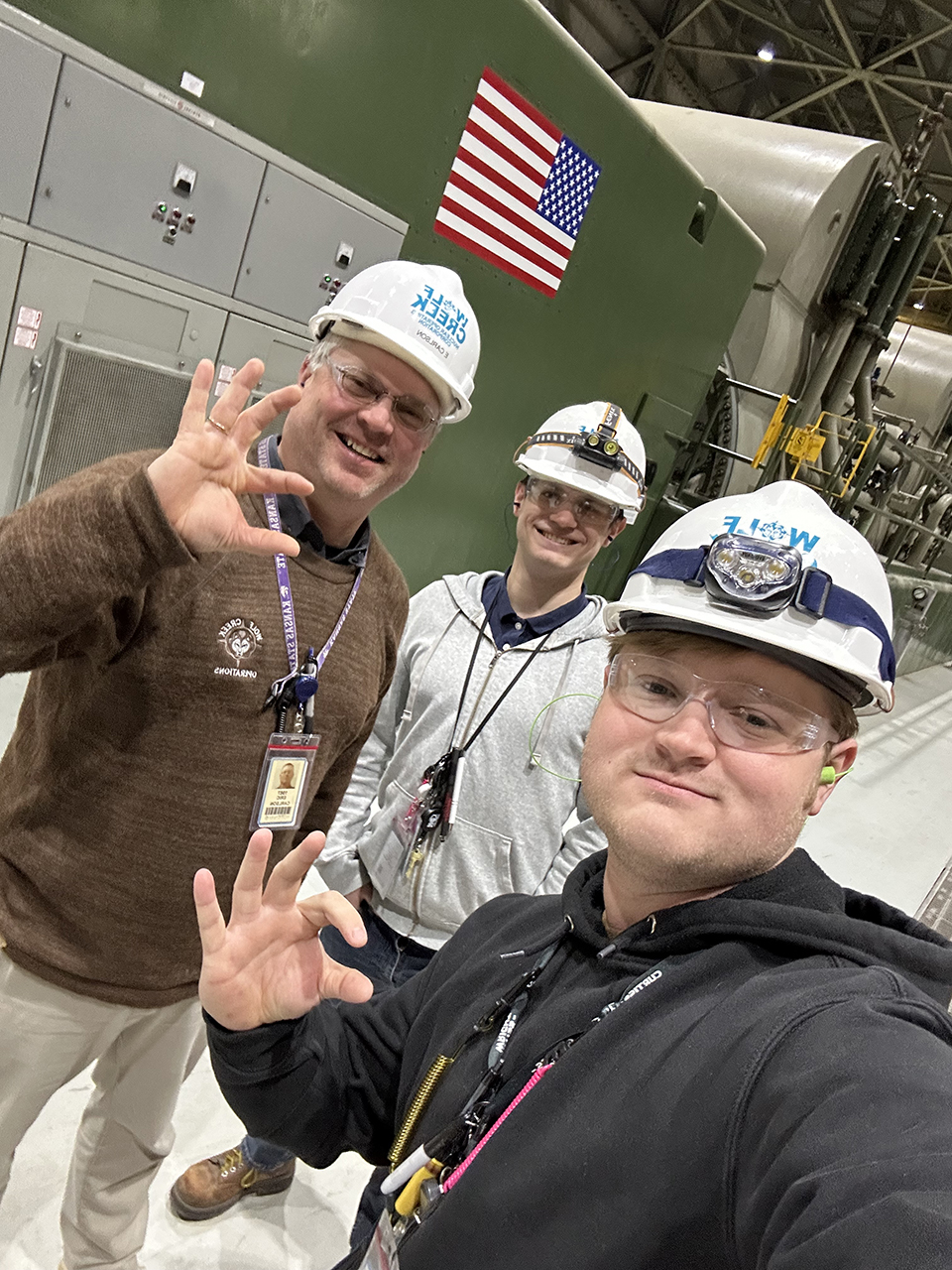
Higbee restored a tool called the engineering desktop simulator, which allows engineers to quickly learn how the plant works and how it responds in an equipment failure scenario — all without having to go to the actual simulator. The desktop simulator is a huge asset for engineers, who can log in anytime to learn how the plant will respond under certain conditions.
"I was the lead on that and got it all running again — that was a big win," Higbee said.
Phelps, '25, got to experience a refueling, otherwise known as outage, at Wolf Creek during his time as a co-op student.
He teamed up with operators to pressure test pipes running through the containment wall to make sure there were no leaks. He also learned the best spot to see the fuel, thanks to a member of the Reactor Engineering team.
Phelps' usual duties during fuel movement were sitting in an office about half a mile away, pressing "start," "stop," and "record" buttons during the fuel testing.
But a colleague from Reactor Engineering told him he didn't want to miss out on seeing the fuel for himself, and he gave Phelps the tip to watch it not inside containment, where many go to view it, but outside of containment when it's being moved into the spent fuel pool.
The tip paid off.
"Seeing the fuel getting moved was definitely a standout moment from my time as a co-op student," he said. "Normally, it's all sealed away under fourteen feet of water. But when they move it, you get to be within those fourteen feet of it. It glows bright blue. It's unforgettable."
Wildcats are set up for success in the nuclear industry
In the face of growing demand for nuclear energy, K-State is meeting the moment to ensure that the next generation of nuclear leaders are well-prepared to enter the workforce — and that students are ready to jump into internship and co-op roles at places like Wolf Creek.
One on-campus career preparation opportunity for students is the university's chapter of the American Nuclear Society, an organization dedicated to advancing nuclear science and technology that offers professional development for future nuclear professionals. Club meetings often feature presentations from different companies in the nuclear field, and in addition to these professional connections, students get to know professors in K-State's nuclear engineering program and learn about research opportunities.
Other career preparation, like hands-on research and cutting-edge courses, coincide to ensure K-State nuclear students are well-qualified and prepared applicants when they graduate.
"Our program emphasizes applied learning to ensure our graduates can contribute immediately when they start full-time employment," said Amir Bahadori, nuclear engineering program director and Hal and Mary Siegele professor in the Carl R. Ice College of Engineering. "In addition to learning simulation and modeling techniques, we provide unique opportunities for hands-on learning through coursework, undergraduate research and employment at the reactor. These experiences are a big part of what makes our students so attractive to companies like Evergy."
The university's TRIGA Mark II reactor provides unique opportunities for K-State faculty and students to conduct powerful research. Students also benefit from the use of the reactor in their coursework, and with K-State's newly revitalized bachelor's degree in nuclear engineering, that is sure to be a steady component in the curriculum.
Nuclear engineering students utilize the reactor in two reactor operation laboratory classes and as a neutron and gamma source for a course in radiation detection.
Butcher said the detection course helped him during an internship project focused on faulty detectors. Understanding how those detectors work, he said, gave him critical insights into why the faulty detectors were failing.
If coursework and research don't supply enough reactor time for students, they can study to become reactor operators in the Reactor Operations Laboratory course, and the Nuclear Regulatory Commission licenses them.
"In the next five years, the need for reactor operators and senior reactor operators is going to start going up exponentially," Carlson, Wolf Creek plant manager, said. "K-State has the same senior reactor operator and reactor operator that Wolf Creek does through the Nuclear Regulatory Commission, and probably one of the best things they could be doing is getting people licensed to get that real-life application. The licensing process is identical for us; ours is just on a larger scale."
Career connection: Internships lead to full-time roles at Wolf Creek
K-State's preparation of students in the nuclear engineering program makes it easy for them to land internships at places like Wolf Creek, and once they go through the internship/co-op experience, a full-time position often isn't far behind.
"An internship has the potential to be a first step in a career with Evergy or at Wolf Creek, specifically because we use our internship program as the number one pipeline for entry-level talent," said Katie Patten, the leader of Evergy's campus programs. "That's one of the cool things about the nuclear internships — there aren't many nuclear plants around, so if that's what you want to do forever, you could possibly do that here."
Phelps and Higbee have certainly found that to be the case. After completing the co-op and intern program, respectively, they both accepted full-time roles at Wolf Creek and have been working there ever since. Both currently serve as system engineers at the nuclear power plant.
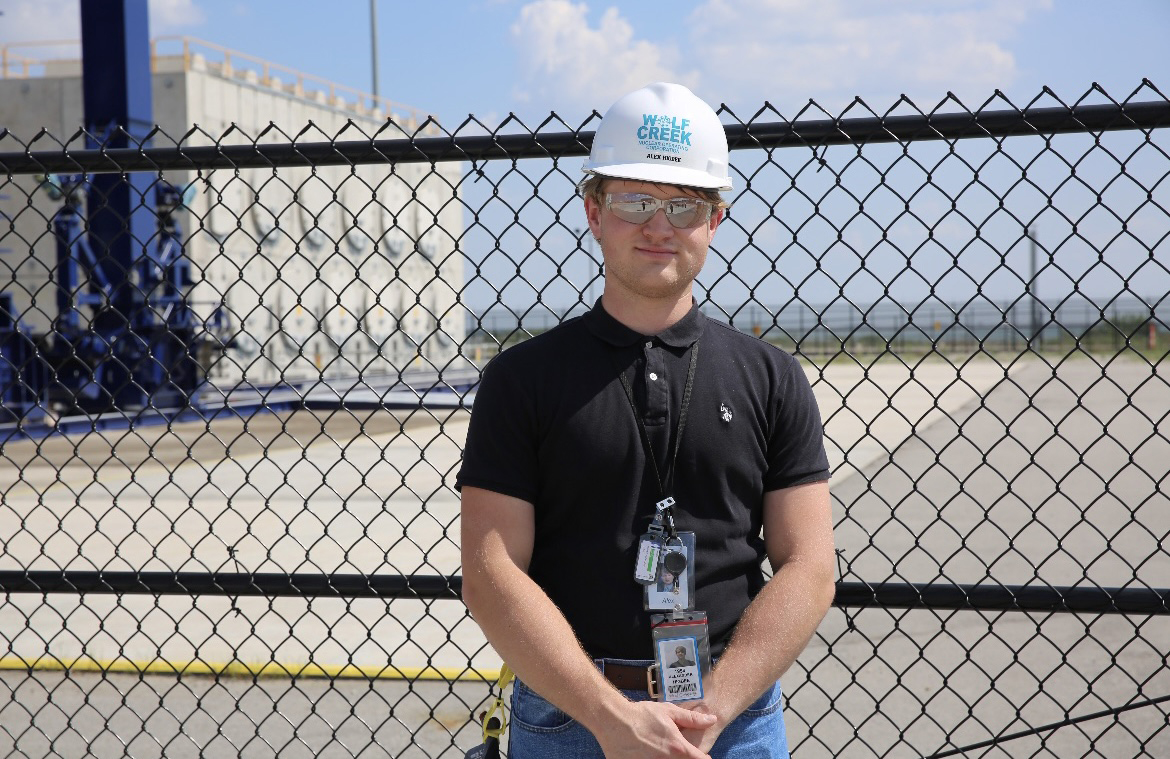
“I care deeply about K-State's nuclear program, and I want to see it succeed. I want to see more people from K-State come to work either at Wolf Creek or anywhere else in the nuclear industry. But come to Wolf Creek first.”
Alex Higbee
One thing they've learned throughout their time with Wolf Creek is that nuclear power plants work together exceptionally well.
"It's been unbelievable seeing how this industry comes together," Higbee said. "All of our success is due to everybody's actions. It's not just due to one plant — working together is a huge part of it."
Just as nuclear power plants work together to maintain excellence in the industry, K-State's nuclear engineering program and Evergy's intern and co-op experiences at Wolf Creek work together to produce top-of-the-line nuclear professionals who are ready to make change in the industry.
"My internship experience has definitely shaped my confidence in knowing that I'll have a job," Butcher said. "They talk about all the time how much nuclear is booming right now, and how much it's going to keep increasing in the next 10 years or so, until there's a huge fleet of new plants. Knowing that the job market is growing so rapidly for this particular degree has been very comforting."
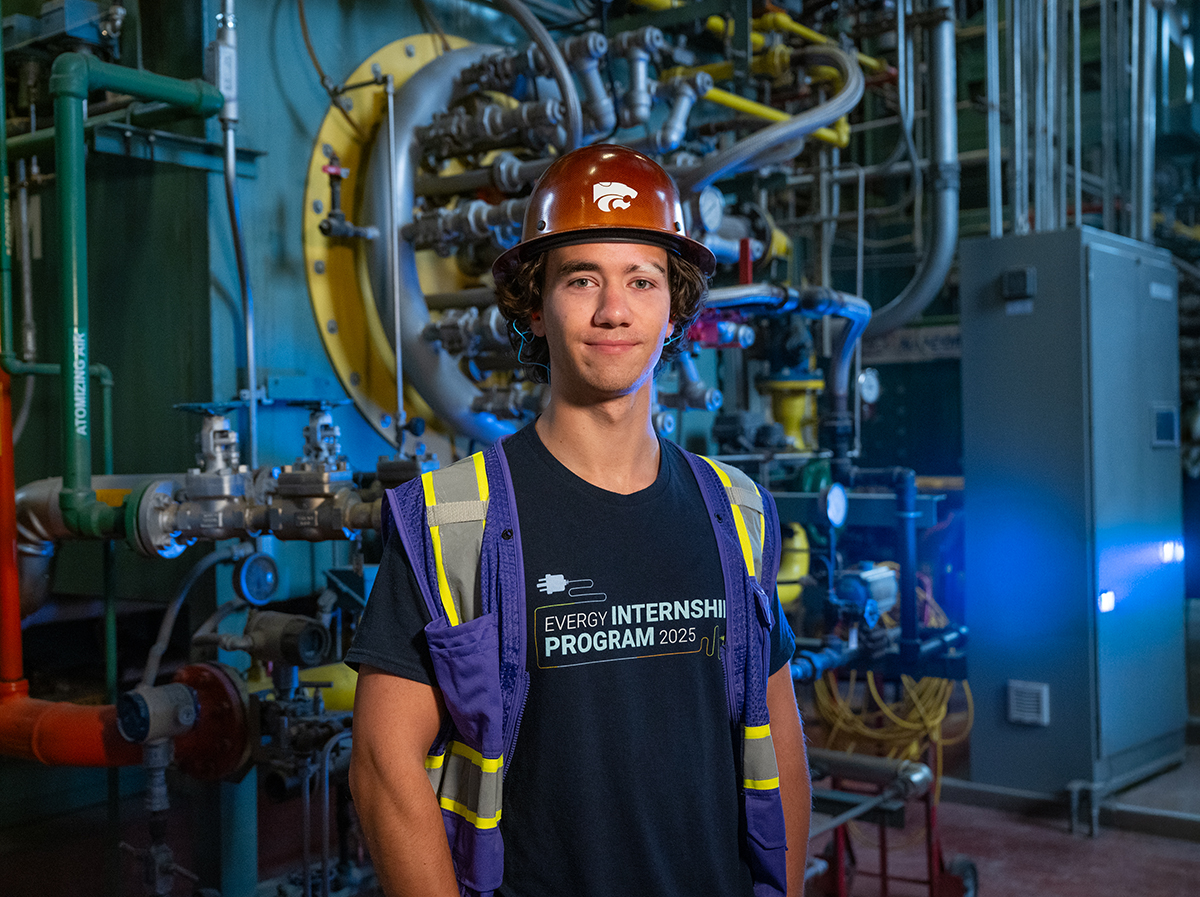
As Butcher continues his nuclear engineering education — working toward his master's degree through K-State's accelerated nuclear engineering master's program — he is also looking forward to another internship at Wolf Creek in the summer of 2026.
Wildcats get the best of both perspectives, academic and industry, as they take advantage of the educational and research opportunities K-State has to offer and the hands-on career experience from Evergy's internships and co-op experiences at Wolf Creek.
As K-State continues to develop tomorrow's nuclear leaders, there's a resource that the alumni at Wolf Creek advise students to take full advantage of: the knowledgeable and dedicated engineering faculty.
"One thing that's really cool about these professors is they're very willing to help," Higbee said. "If they know you really care about a certain research topic, they will find a way to connect you with that. It's a small program, but these are very driven students that are going to be involved, and faculty want to see them succeed."
###
Related Stories
Bringing technology to the table
K-State event and hospitality management students working at Lacy’s Fresh Fare and Catering now receive enhanced service education thanks to a new byte-sized...
From classroom to career
From discovering her academic path to stepping into a leadership role soon after graduation, Kimberlee Westcott's journey reflects how hands-on learning and...
'Opportunities always within an arm's length'
K-State has been recognized as one of the best schools in the nation by The Princeton Review, reflecting the university's commitment to its students through...