Making plant stress visible
Kelechi Igwe is using drones, machine learning to map crop stress

By Kelechi Igwe
Graduate School
Wednesday, Sept. 9, 2026
Editor's note: "Driven to Discover" spotlights Kansas State University graduate students who are turning research ideas into real-world impact. Through their own voices, they share how their time at K-State is shaping discoveries that strengthen Kansas and serve the world.
As humans, we often carry a lot of stress. When someone asks how we're doing, we smile and say, "I'm fine." On the surface, everything looks OK, but on the inside, it can be a different story.
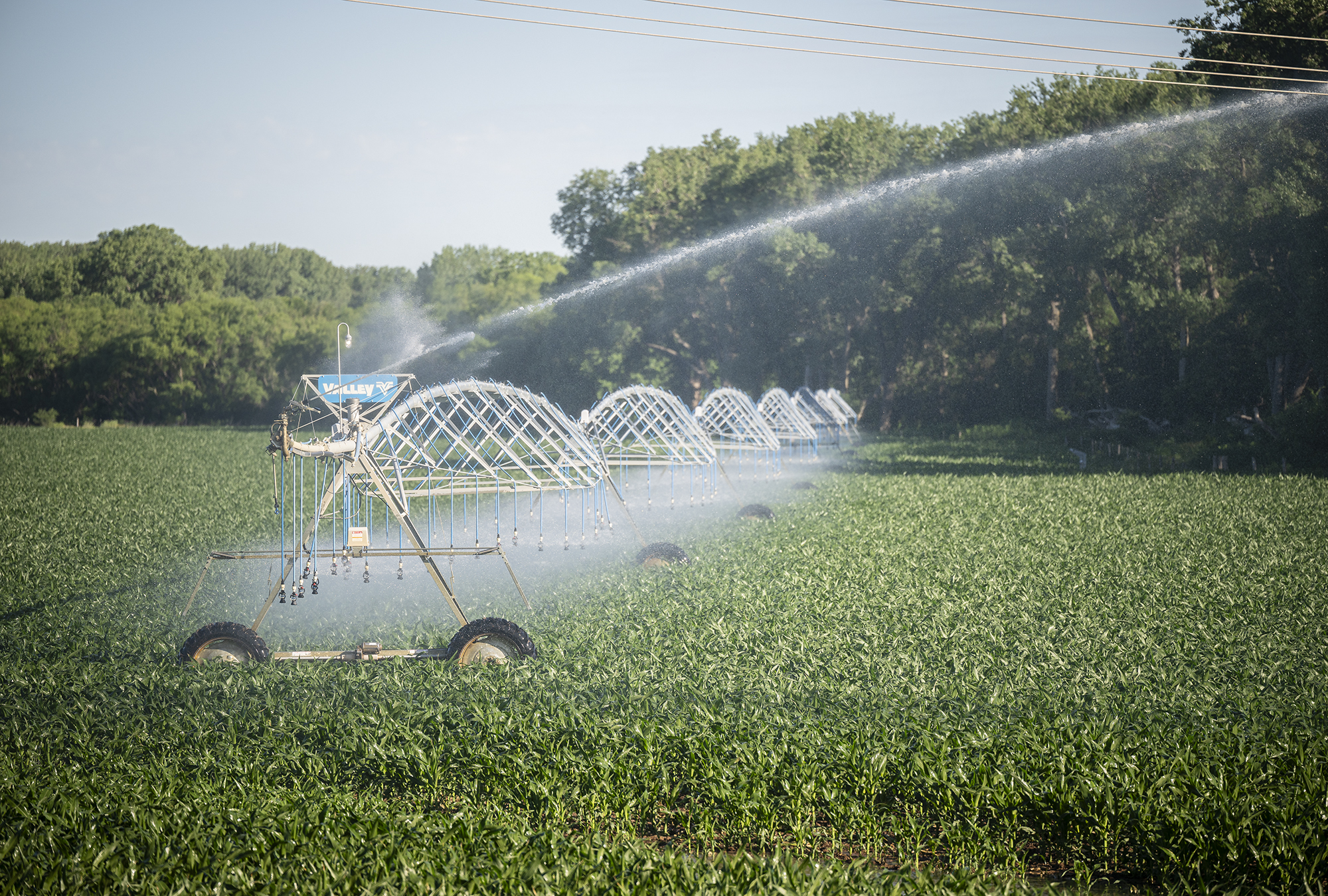
Appearances can be misleading, and while that's true for people, it's also true for crops. A field of crops can appear green and thriving, while internally, they're already under stress. Prolonged periods of stress can affect productivity, sometimes long before a farmer realizes there's a problem.
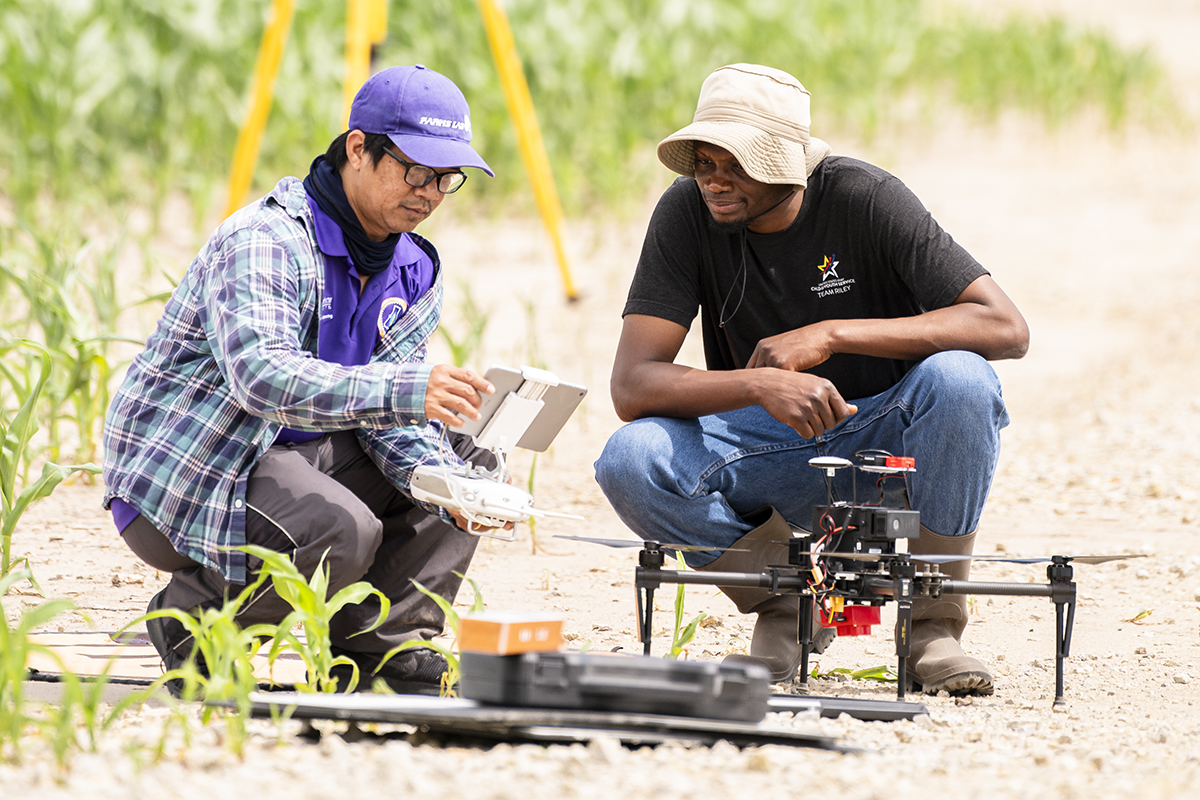
My research starts with a simple but crucial question: How can we detect crop stress, early enough to act, before it becomes too late?
A good place to start is monitoring how crops feel, rather than how they look. When crops begin to feel stress, such as heat or lack of water, their first response is to try to protect themselves. They close the tiny pores on their leaves called stomata, through which they breathe and exchange water with the environment.
Measuring how freely plants are allowing exchange of water with the environment, a process we call Stomatal conductance, can therefore be an early indicator of stress. The problem is, measuring stomatal conductance is a labor-intensive process. Traditional methods involve measuring each leaf by hand with a porometer. This process is cost and labor-intensive, and practically speaking, it's impossible for large agricultural fields.
My next question was: How can we map stomatal conductance across an entire field without touching a single leaf?
To answer this question, I combined multiple data sets, including drone imagery from my field, as well as air temperature and soil moisture data — basically, variables within the environment that could be influencing crop stress in the first place.
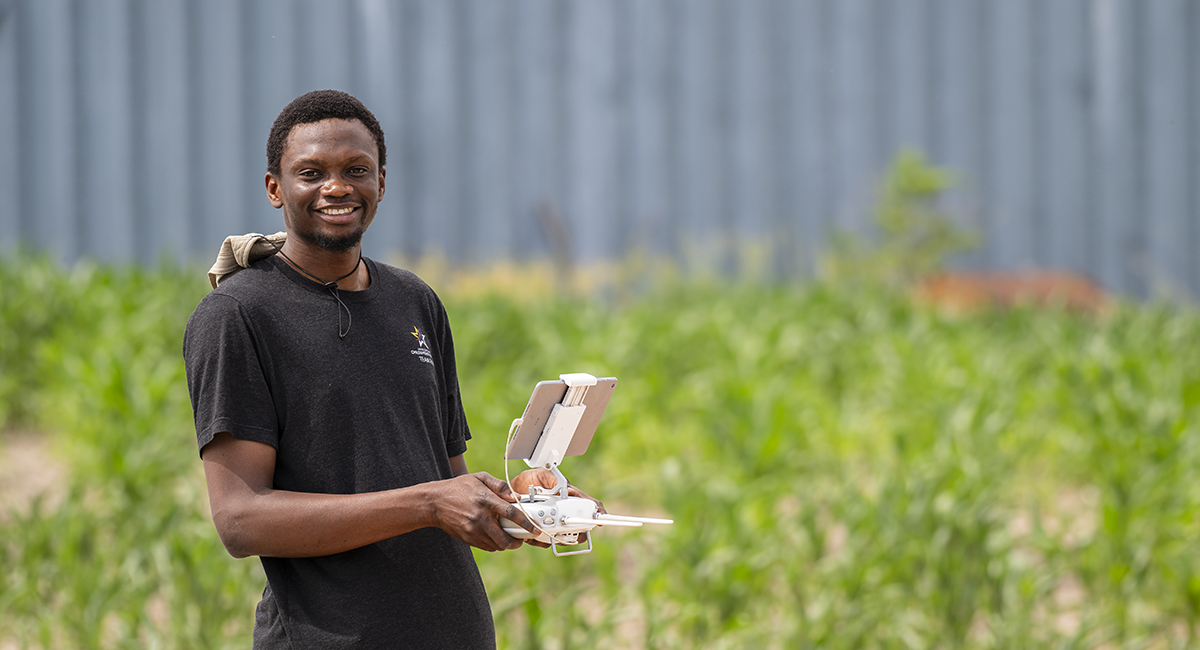
“My results are a promising first step toward turning invisible stress into visible information. Farmers can use that information to respond promptly with irrigation, because in agriculture, timing is everything.”
Kelechi Igwe
I used these variables in a machine-learning model to predict stomatal conductance for my field with measurements taken on the same day and time. My model achieved about 50% accuracy, and I used it to produce a stress map . The areas in red show crops that are already under stress, [so we can see that not all crops are as healthy as they look].
My results are a promising first step toward turning invisible stress into visible information. Farmers can use that information to respond promptly with irrigation, because in agriculture, timing is everything.
Kelechi Igwe is a doctoral student in biological and agricultural engineering. This column was adapted from Igwe's Three-Minute Thesis presentation, "Beyond the Visible: An Early Warning System for Detecting Water Stress in Maize."
Related Stories
A cooler kind of capsaicin
Could the chemistry behind chili peppers help protect the heart—without the burn? Doctoral student Nik Carpenter is studying a capsaicin-inspired compound...
Spinning sustainable food packaging
Elif Peker, a spring 2026 master's graduate in food sciences, is developing methods that can electrospin sorghum byproducts into useful, biodegradable packaging...
Unwrapping the sweet mystery
Shivaprasad Prakash is driving techniques that will make flour-based products, like raw cookie dough, safer for everyone.