Foraging solutions in foreign fields
K‑State's Romulo Lollato, Australia's John Kirkegaard collaborate to improve global wheat production

By Pat Melgares
K-State Extension
Monday, June 1, 2026
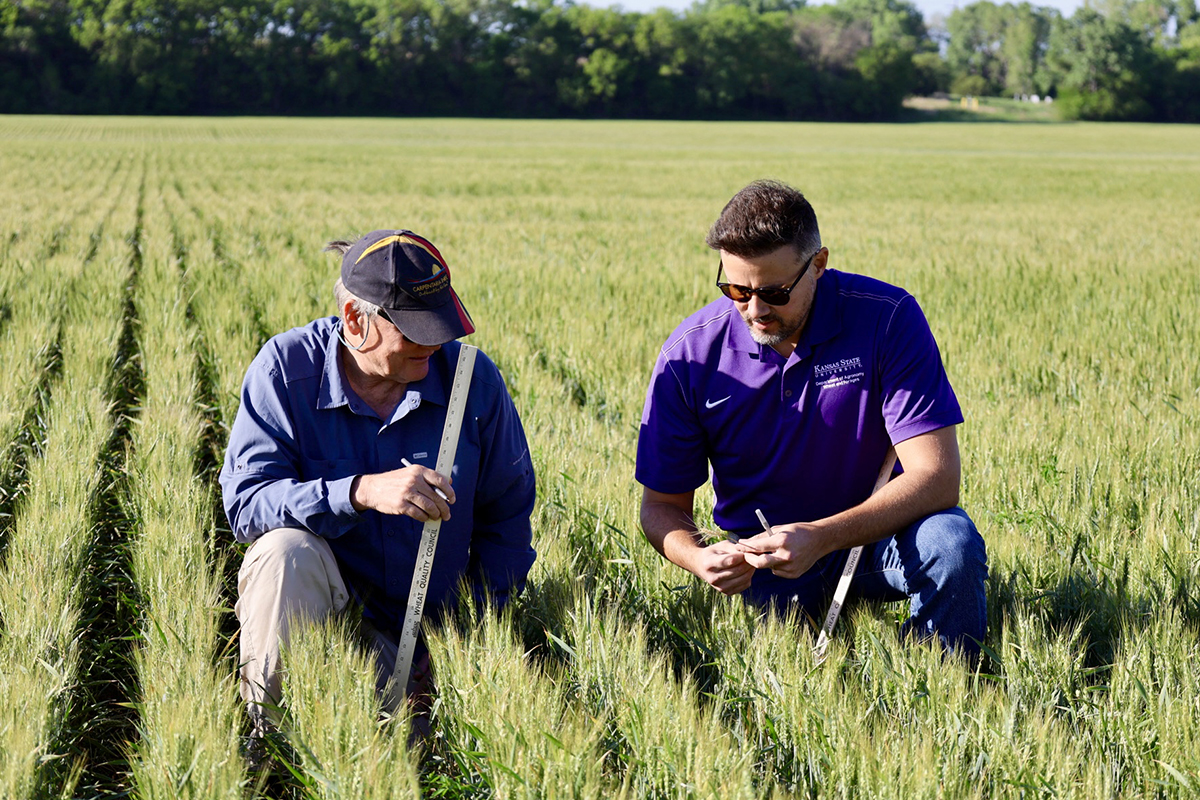
Even though Romulo Lollato had traveled more than 9,000 miles and 30 hours away, he ended up in a climate and wheat-producing region that looked almost exactly like the one he had just left in Kansas.
But that was kind of the point of Lollato's sabbatical — a six-month jaunt to Adelaide, Australia — to learn from the country's agriculture industry, meeting with experts and colleagues and touring agricultural operations in the land down under.
"Australia is a really large wheat-producing country with a lot of the challenges that relate to Kansas growers, as well," Lollato said.
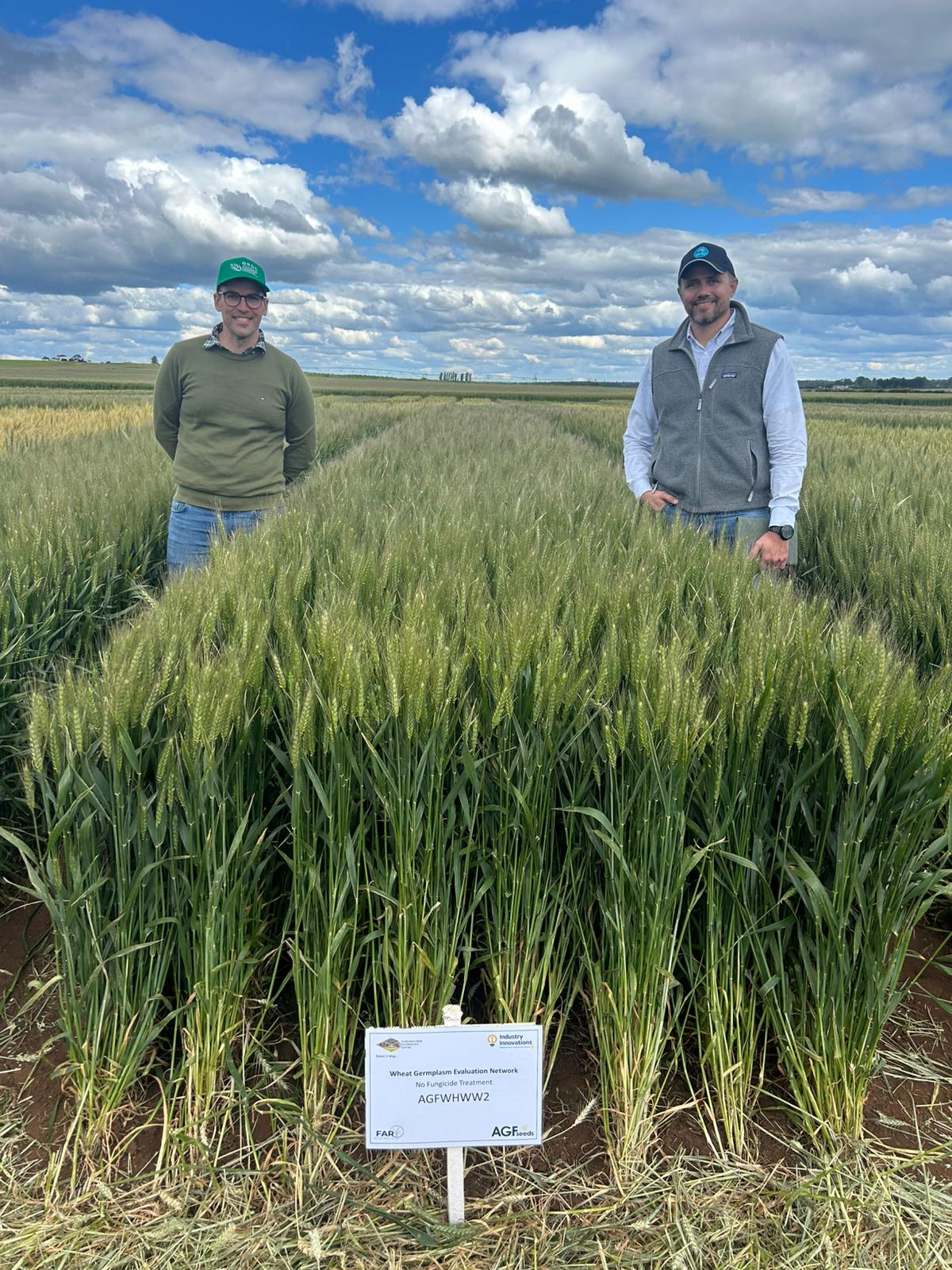
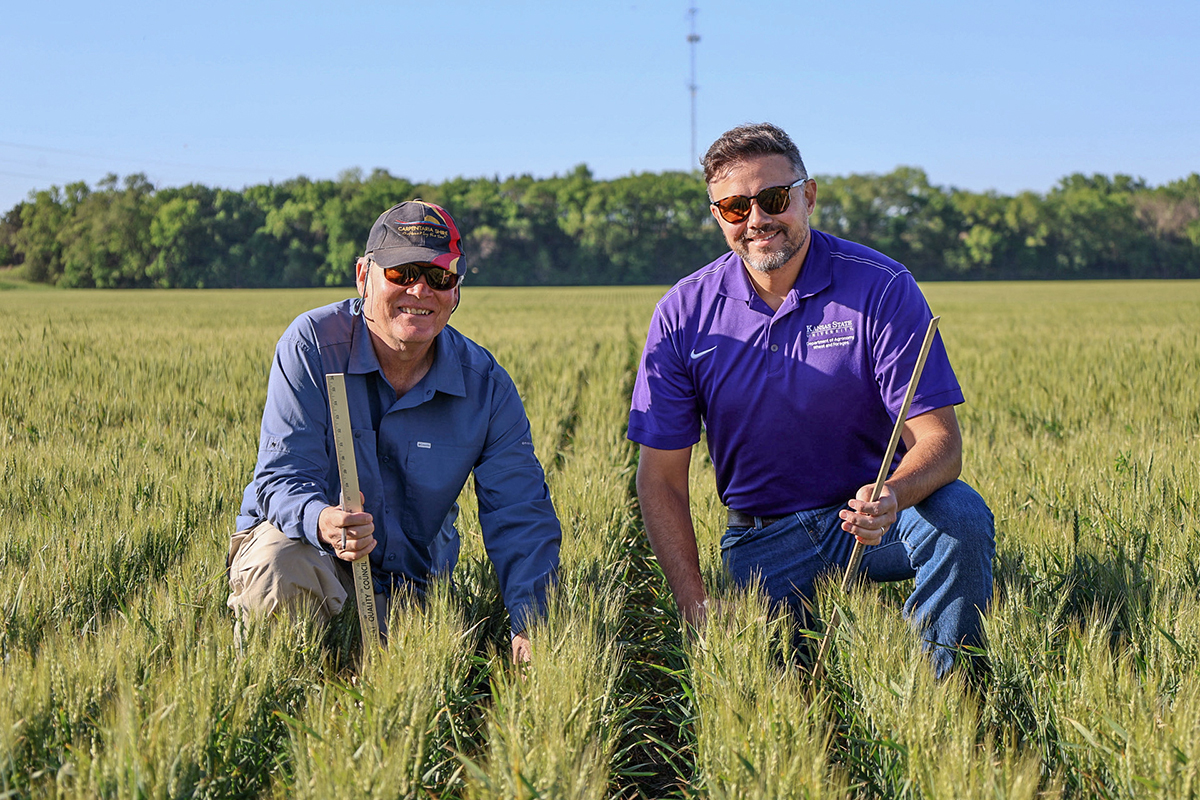
K-State’s Romulo Lollato and sabbatical host Dr. Kenton Porker, farming systems agronomist with CSIRO, stand by a 208 bushel per acre wheat crop in Tasmania.
In fact, conditions in parts of Australia are actually "much harsher than what we experience in most of Kansas."
"Australian growers have challenging soils like we have here, but it seems like a large portion of their wheat production takes place in sandy soils," he said. "They have been very creative in terms of how to make wheat systems work in challenging environments."
Lollato's sabbatical from his position as a wheat and forage extension specialist at K‑State highlighted his quest to continue finding ways to improve wheat production in Kansas, a state with a well-deserved reputation as the 'Breadbasket of the World.'
In return, John Kirkegaard — a farming systems agronomist with the Commonwealth Scientific and Industrial Research Organisation in Canberra, Australia — is now in Kansas, learning from the systems Lollato has helped advise as an extension specialist.
Together, the two researchers are collaborating to learn from each other's wheat production systems and strengthen agriculture industries separated by an ocean but connected by much of the same challenges.
Farmers, scientists work together
Working side by side with Australian scientists and growers, Lollato hoped his stay in Australia would be a success.
Much like their K‑State counterparts, Lollato said, Australian agronomists work closely with growers to develop agronomic innovations that lead to economic ones.
"Conceptually, wheat growers and scientists together come up with ways to solve a problem, then they work with agricultural engineers to come up with the actual mechanical solution for that problem," he said.
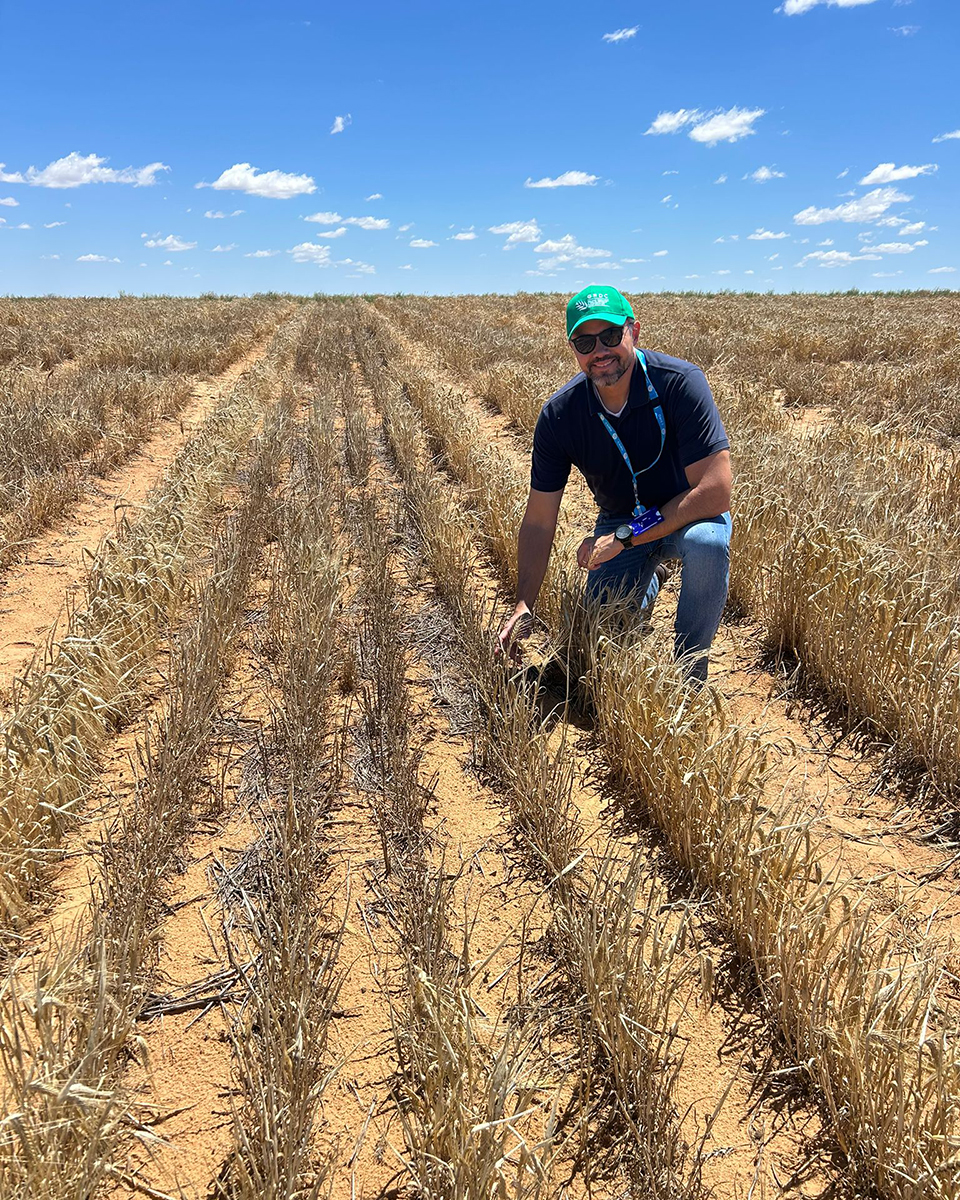
He noted the abundance of sandy soils with a naturally compacted layer that limits root growth. The effective root system, Lollato noted, may be less than a foot and a half. Working with their engineers, the Australian researchers developed new methods to break through the soil's compaction layers so that wheat plants' roots could go much deeper.
In areas where Australian farmers were bringing in yields of 20 bushels per acre, the innovation led to yields of 40-50 bushels, Lollato said.
"How often can we say in agriculture that we came up with a solution that has doubled our yields?" he said. "They're coming up with these kinds of solutions, integrating their understanding of soils, agronomy, crops and engineering.
"That's the type of mentality I'm bringing back from this sabbatical," Lollato continued. "I'm going to be asking more often about how we in agriculture can coordinate with growers and with other disciplines to come up with solutions to our challenges."
Lollato's leave was partially funded by a fellowship of the Grains Research and Development Corporation and by K-State.
Additionally, Lollato will return to the island continent in August as an invited keynote speaker to the 2026 Australian Agronomy Conference.
Similar climates, challenges
John Kirkegaard has spent more than 35 years studying challenges unique to crop production systems in Australia, including wheat.
After hosting a visit by Lollato during his Australian sabbatical, Kirkegaard is now in Kansas as the Fulbright Distinguished Chair in Agriculture and Life Sciences for six months through the Australian Fulbright Commission and K‑State's Office of International Programs.
"The Great Plains and Australia are both very big wheat-producing regions of the world, and both face very difficult, variable climates," Kirkegaard said. "Whether you think those climates are changing or not, it doesn't matter. They are extremely variable, and wheat in both of our regions is limited by water and temperature extremes. So, we share a lot of challenges in growing wheat."
Kirkegaard's long career encompasses studies in soil fertility, crop rotations, no-till farming and subsoil amelioration for improved rooting depth.
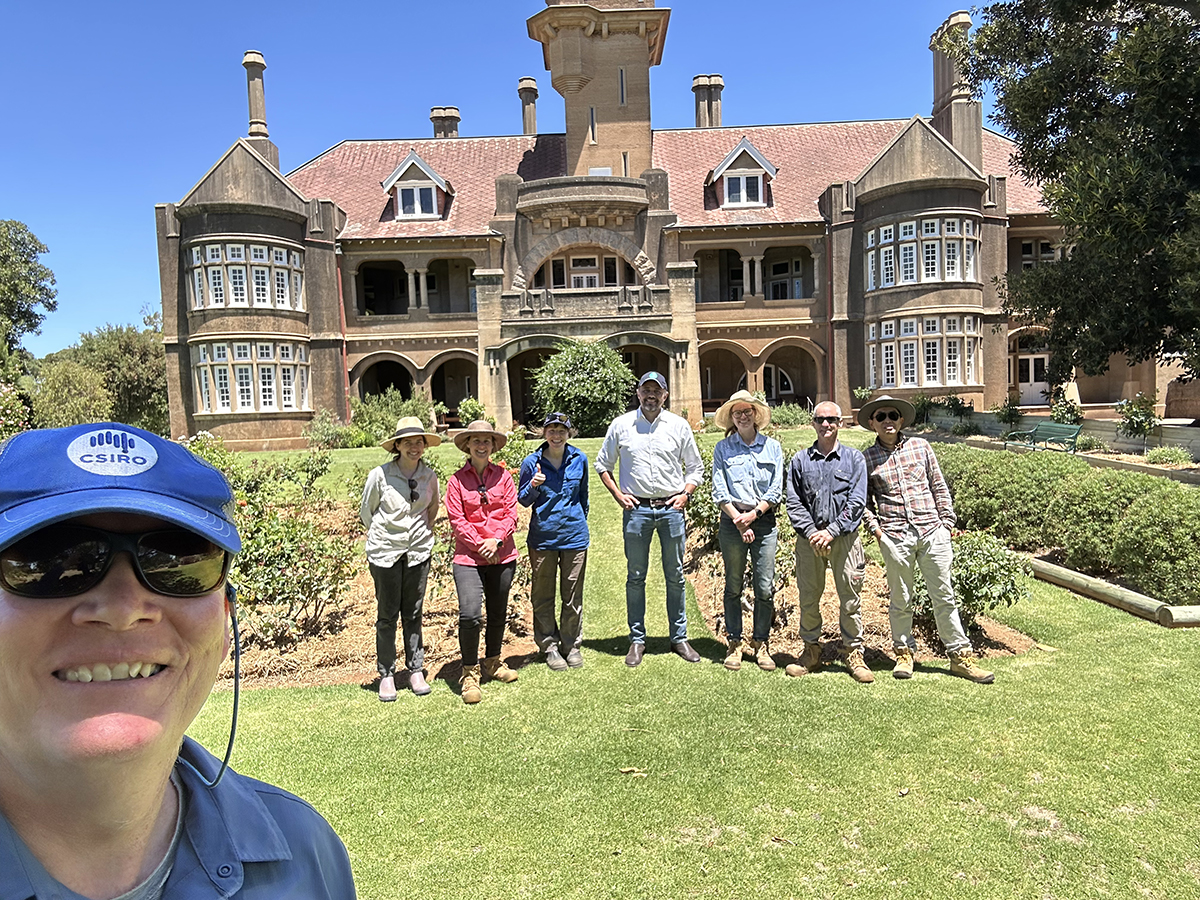
His focus, though, is on how all of these combine to improve the use of water and nutrients in the cropping system.
"The breadth of experience he has helps us as K-State researchers get a fresh look at things that we may not be seeing in our cropping systems," Lollato said. "His perspective helps us to better understand the next opportunities that we may have here in Kansas."
As a young scientist, Kirkegaard remembers finding opportunities to work alongside farmers growing the crop and scientists with 20 or more years of research experience, similar to the extension service that is critical to farmers in Kansas and every other state.
"I was lucky to have that early experience because I could bring things that I was seeing and did not understand and be able to talk to these really, really experienced specialists, and maybe do some experiments with them," Kirkegaard said. "Then, I could bring those back to the farmers and see if we could solve their problem."
Water also a central concern in Australia
Lollato said one of the rare highlights of his Australian stay was seeing a 200-bushel wheat crop in Tasmania, Australia's southernmost island state.
By comparison, Kansas yields are closer to 50 bushels per acre, as are those in much of the rest of Australia.
"That was very exciting for me to see, but even more than that, it was interesting to hear what growers in those types of environments are concerned about," Lollato said.
Their concerns, he added, centered on water – no different from Kansas farmers.
"Many of the decisions that Australian growers are making are based on how much water is available in the soil," Lollato said. "They can't count on in-season rainfall in the northern part of their country, so they need to rely and manage around storing water at depth in the soil."
That's similar to the issues producers in western Kansas, Lollato said. Oftentimes, those wheat producers will let ground go fallow — a period of agricultural rest or inactivity — but then there is rainfall and they adjust, and by May they are planting corn.
Kirkegaard will continue working with Lollato and other K-State researchers through the end of summer 2026.
Once "the dust settles," Kirkegaard said, both groups hope to establish ongoing working relationships that may include joint research and cross-continent trips for faculty and graduate students to continue learning from each other.
"Through our work so far together, we've developed an expert working group for agronomy in global wheat production," he said. "I'd like to see these young people take this work to the next level. That would be good."
Related Stories
From the groundwater up
Kansas State University researchers are taking a closer look at how groundwater quality could shape the future of agriculture in south-central Kansas.
A farm for the future
At Flickner Innovation Farm, K-State researchers collaborate to develop practical solutions for Kansas agriculture’s biggest challenges.
Good for the steer, great for the rooster
A team of researchers in K‑State's College of Veterinary Medicine is leveraging successful bovine vaccine technology to create a new line of defense against...