Good for the steer, great for the rooster
K‑State researchers are adapting a cattle vaccine to also protect chickens from bird flu

By Joe Montgomery
College of Veterinary Medicine
Friday, March 27, 2026
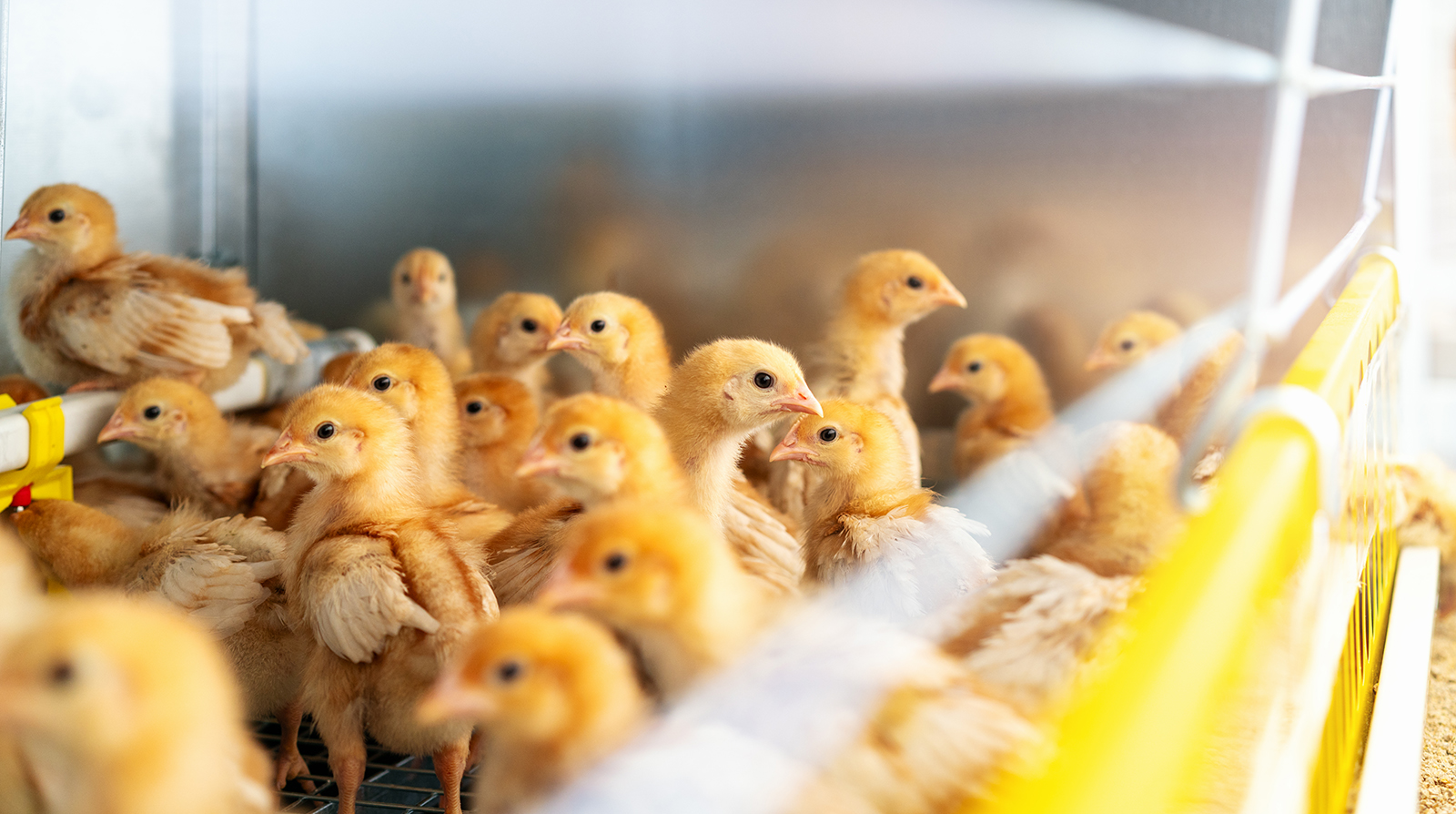
What's good for the steer may be good for the rooster. New research at Kansas State University seeks to adapt a successful cattle vaccine as a new method for protecting chickens from the threat of Highly Pathogenic Avian Influenza, or HPAI.
In Kansas, more than 413,000 poultry have been affected statewide since late 2025, and nationwide, reported cases exceed 196 million.
A team of College of Veterinary Medicine researchers is developing a new vaccination strategy by adapting existing technology, supported by a $2 million grant from the U.S. Department of Agriculture's Animal and Plant Health Inspection Service, or APHIS.
From bovines to broilers
The ongoing spread of HPAI, also commonly known as bird flu, poses a serious threat to the poultry industry, said Waithaka Mwangi, lead investigator and professor of veterinary immunology.
Mwangi's team had previously developed a new type of cattle vaccine that guards against three genotypes of Bovine Parainfluenza Virus Type 3 and Bovine Viral Diarrhea Virus. They later adapted that vaccine to also protect cattle against H5N1, the virus that causes HPAI in cattle and other animals.
In lab tests using chicken embryo cells, this modified vaccine grew rapidly and successfully produced the specific proteins that trigger a strong immune response.
Since the bovine parainfluenza virus is not a chicken pathogen, Mwangi said it allows for the development of a lateral flow device, or LFD — a testing device similar to those many people used for at-home COVID-19 detection during the pandemic.
Using a process called Differentiating Infected from Vaccinated Animals, or DIVA, these LFDs detect immune responses specific to both the vaccine backbone and H5N1 antigens.
Such devices could help animal producers and health officials more rapidly respond to HPAI in chicken flocks and hatcheries, as well as support more effective disease surveillance and poultry trade requirements.
Preliminary vaccination research could lead to broader poultry protection
"Our project has two main aims: first, to assess the safety, immunogenicity and efficacy of the prototype H5N1 vaccine in chickens; and second, to develop and validate a companion DIVA diagnostic LFD," Mwangi said.
The goal is to fast-track product development to enable rapid deployment and help curb the spread of HPAI in chickens, Mwangi said.
So far, Mwangi's team is focusing on methods for vaccinating fertilized eggs in ovo, or before the chicks hatch, and on administering the vaccine to day-old chicks and young female chickens via spray or water. They will test and validate the LFD diagnostic performance using study and field samples.
If proven effective in protecting young and unhatched chickens, the research team will then explore expanding the vaccination protocol to mature chickens or even other poultry species.

"The vaccine's flexibility for administration in ovo via spray or water makes it well-suited for integration into existing hatchery and farm-based mass vaccination systems," Mwangi said. "Early immunization will provide protection to broilers, layer chicks and pullets, ensuring broad applicability across production types. Beneficiaries include poultry hatcheries, farmers, allied service providers, consumers of poultry products and poultry meat exporters, which are vitally dependent on disease-free certification."
Mwangi's co-investigators are K‑State's Santosh Dhakal, Igor Morozov, Juergen A. Richt and Huldah Sang. With the support of the Kansas State University Research Foundation, Mwangi has a patent application pending for the new use of the vaccination technology.
The research project was funded through the HPAI Poultry Innovation Grand Challenge program administered by APHIS. The U.S. Secretary of Agriculture allocated $100 million for innovative projects to advance prevention, therapeutics, vaccine development and other mitigation strategies.
Through a highly competitive process, APHIS received 417 proposals totaling over $793 million in funding requests. Less than 60 projects were approved for funding.
###
Related Stories
Next-generation innovation
K-State is one of the nation's top patent-producing universities and has climbed to No. 83 in the Top 100 U.S. universities granted utility patents in 2025,...
Protecting the nation's poultry supply
New research at K-State aims to tackle one of the most significant threats to global animal health and food security — highly pathogenic avian influenza —...
'A silent symphony’
In high-containment labs at K-State, Juergen Richt is building a global network of well-trained scientists trained prepared to stop the next big animal disease...