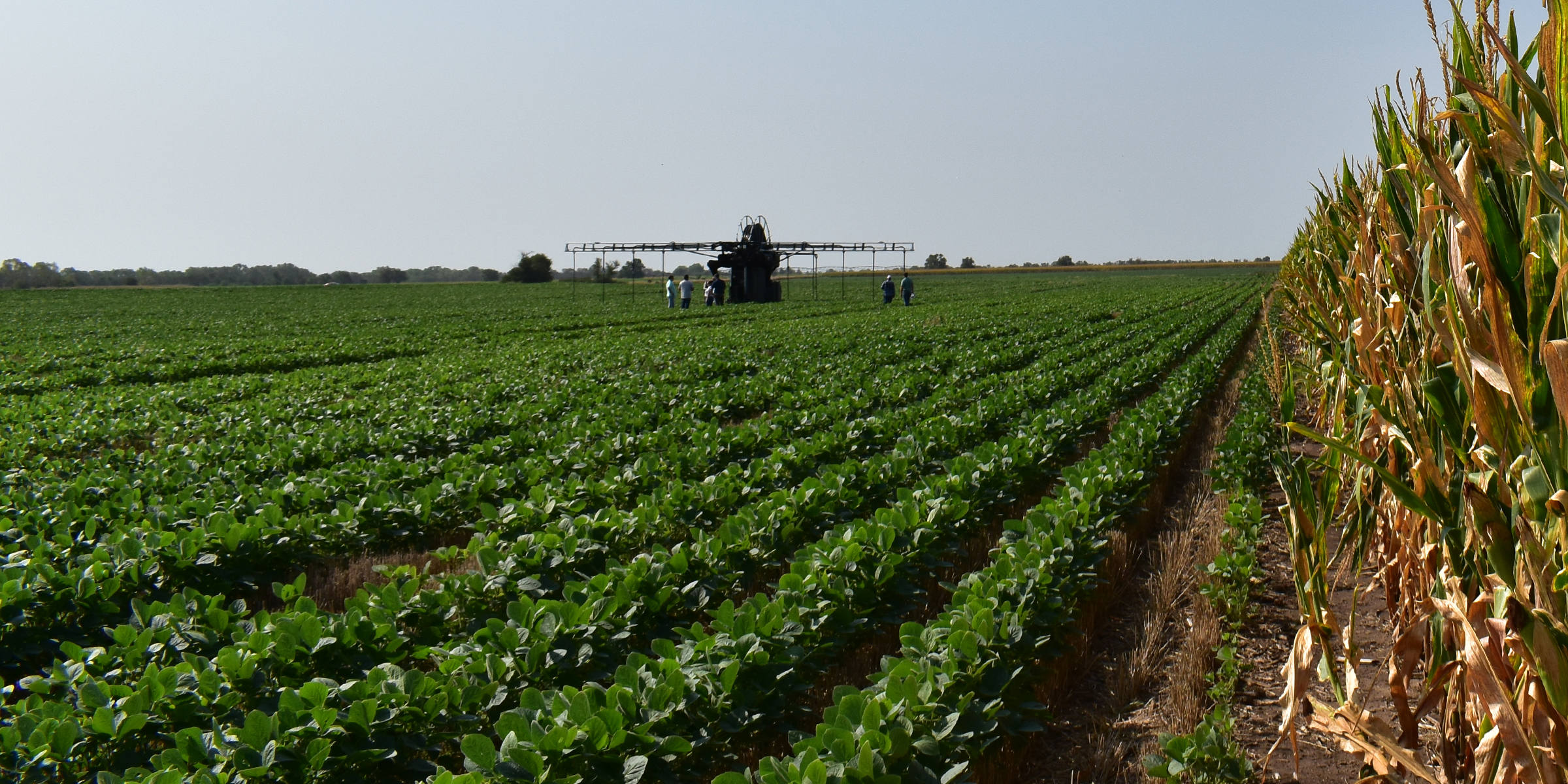
A farm for the future
Rooted in the first chapters of Kansas agriculture, the Flickner family is an invaluable partner for K‑State's next-generation agricultural research

By Rafael Garcia
K-State News and Communications Services
Monday, April 20, 2026
The way Ray Flickner tells it, he must be one of the luckiest farmers in all the state, because his life has been a front row seat to the future of Kansas agriculture.
It's both a blessing and a responsibility for the fifth-generation Kansan farmer. His great-great-grandparents — Anabaptists from Ukraine and among the state's first homesteaders — took a boat to Ellis Island, a train to Halstead and a hike to fertile prairie fields near present-day Moundridge in central Kansas. There, using Turkey Red winter wheat seeds from back home, they established Kansas as a new breadbasket for the world.
Later generations of Flickners were some of the first farmers to install irrigation wells in the area, and more recently, Ray was among the first to adopt strip-till methods and sub-surface drip irrigation in managing the nearly 1,000-acre corn, soybean and wheat operation.
Throughout that century-plus history, the Flickners have been pioneers not out of a desire to be first, but to protect the land and advance new methods for their fellow Kansas farmers. Through a partnership with Kansas State University researchers, the family sees yet another opportunity to build the next generation of Kansas agriculture.
For the past several years, the family's Flickner Innovation Farm has been a farm-sized proving ground for some of K‑State's cutting-edge research, allowing faculty and graduate students to put innovative agricultural techniques and technologies into practice.
"When we can work with real-world conditions on a real farm, our research is that much better, but much more important have been the Flickners," said Dorivar Ruiz Diaz, interim head of K‑State's Department of Agronomy. "Beyond allowing us access to their farm, they've been critical members of our team, and their generosity with their time and insights has allowed us to shape our research in a way that helps farmers make the decisions they need to be successful."
Providing a blank canvas for research opportunities
Kansas agriculture, for all its variety, is a land of extremes. In much of western Kansas, where water resources are in limited supply, dryland farming is becoming increasingly prevalent, while irrigated farming is more feasible in other areas of the state, said Gaurav Jha, assistant professor of precision agriculture.
Flickner Innovation Farms in central Kansas has the climate for both.
"When you think of Kansas and the many situations farmers face, Flickner Innovation Farm is uniquely located to represent those different environments," Jha said. "The Flickners are especially well-tuned into their agricultural landscape, and when they allow us to use their farm as a field laboratory, we get practical perspectives into how we can make this research useful."
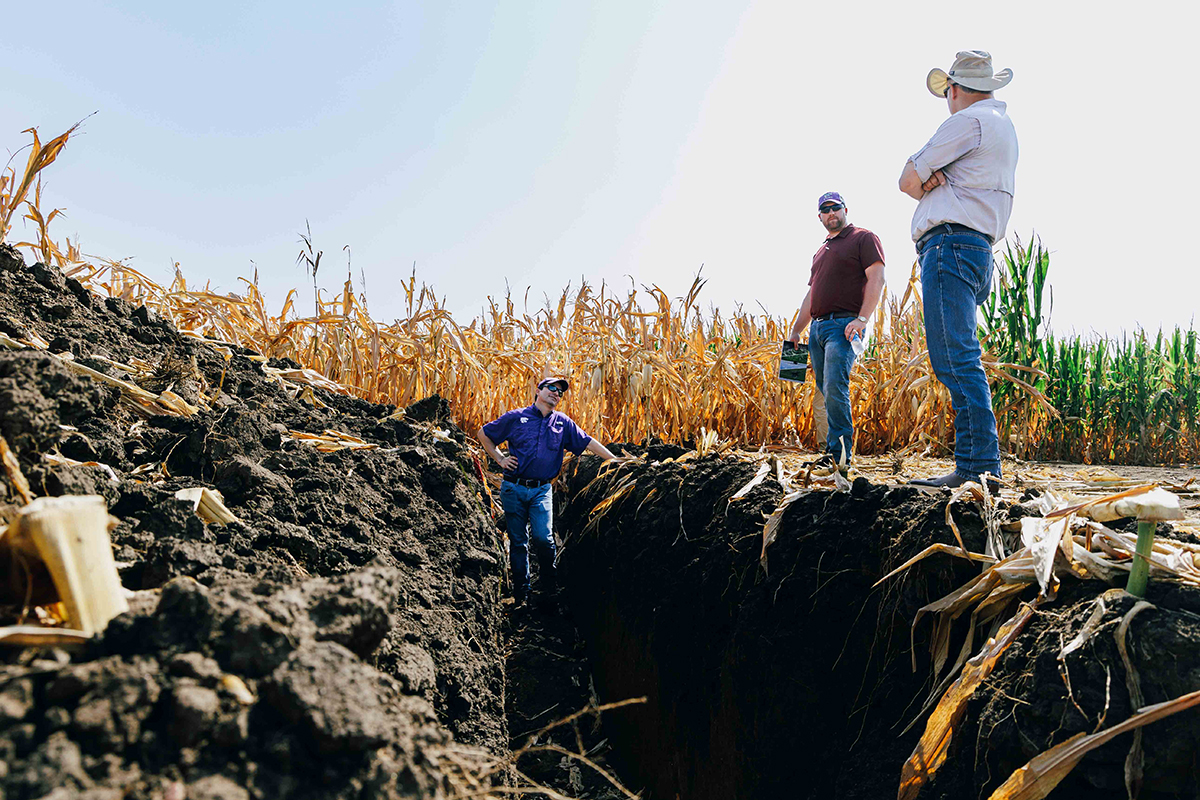
Much of the K‑State research at Flickner Innovation Farm has focused on precision agriculture, which uses advanced technologies such as biodegradable soil sensors, targeted irrigation and satellite-based imagery to grow more with less.
K‑State projects at Flicker Innovation Farms include:
- Tracking watersheds, testing practices — A long-term study at Flickner Innovation Farm, in partnership with KCARE and the Kansas Water Office, tracks water quality and farm management in real-world conditions. By pairing watershed monitoring with trials of widely marketed biological products, researchers are generating trusted evidence to help farmers protect water without sacrificing profitability.
- Smarter spraying — Field-scale research shows "See & Spray" technology can treat just 30–50% of a soybean field while still achieving over 90% weed control and maintaining yields. The results point to a promising way to cut herbicide use without sacrificing performance.
- Building better soils — Research at the farm shows that cover crops improve soil health, with noticeable benefits emerging after five years. The results help producers and advisors set realistic expectations for soil health improvements and inform carbon measurement and verification efforts.
"These test sites have been like a living library for us," Jha said. "We can do research at the experimental or greenhouse scale, but if it stays there, it can only ever be hypothetical. The Flickners allow us to translate this work to the field."
Although the farm has been in the family for generations, the Flickners formally began calling it the Flickner Innovation Farm in 2018, especially as they began to look more closely at irrigation and water-conservation practices, said Ryan Flickner, Ray's son, who represents the family's sixth generation of farmers.
The family retains the final say over what happens on the farm, Ryan said. But in practice, they strive to give broad latitude to researchers to experiment with ideas that might fail but could also advance agriculture.
"When we embarked on this, I wasn't sure what it would look like," Ray said. "But it's been very fulfilling. Both Ryan and I emphasize to researchers that this is a blank canvas, and they can paint it however it needs to be painted."
Serving as a voice for Kansas farmers
Besides their personal expertise and experiences on the farm, both Ray and Ryan Flickner have been invaluable partners for K‑State research because of the way they advocate for Kansas agriculture, Jha said.
In addition to their work with K-State researchers, the Flickners have partnered with public, private and international organizations like the City of Wichita, John Deere and Netafim, among others.
"Ray is a bridge who connects us to so many people from around the state, like the Kansas Geological Survey and the Kansas Water Office, to work together to advance Kansas agriculture," the professor said. "If he's not on the farm when we're visiting for research, it's because he's around the country and world speaking as a voice for Kansas farmers."
A former member of the Kansas Water Authority, Ray has traveled to countries such as Ukraine to learn and share new insights into precision agriculture from a farmer's practical perspective. International ag visitors often make a special stop at the Flickner Innovation Farm. Visiting groups of farmers and researchers from far-flung places in South America, Europe and Africa have used the farm as a place where they can see the newest farming innovations put into practice.
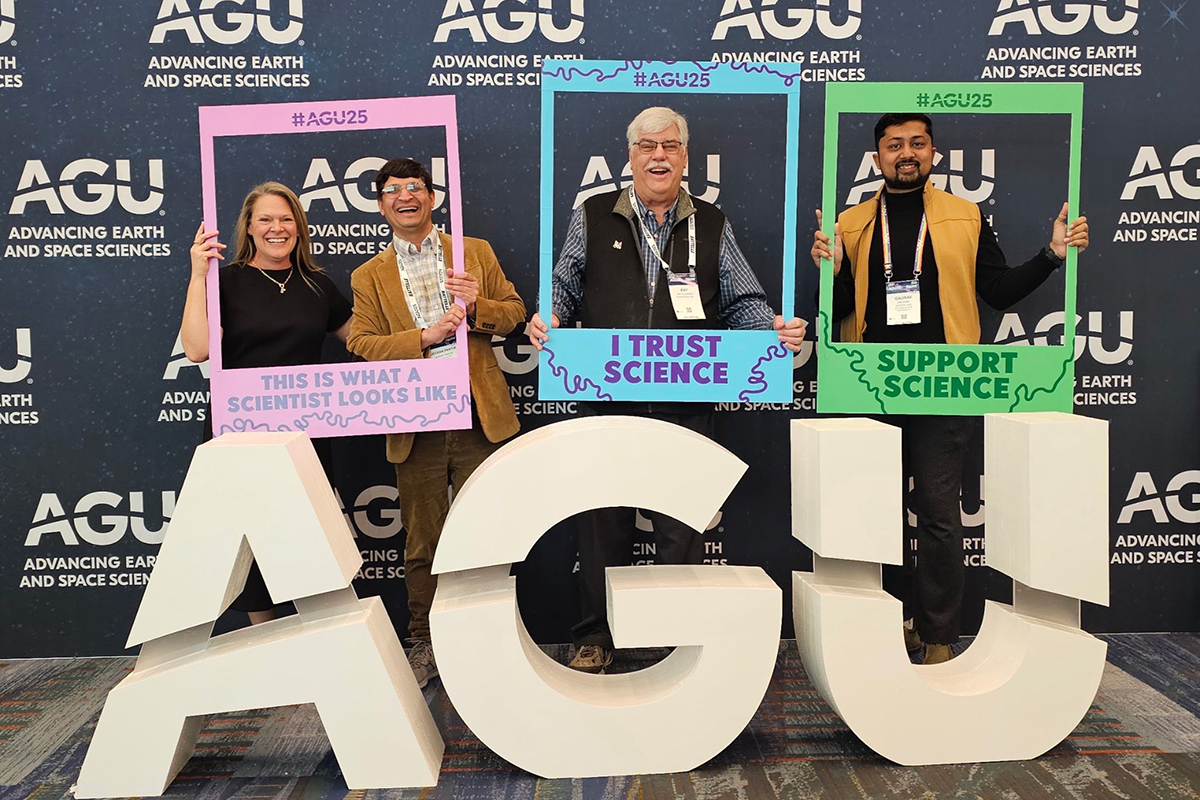
Ray was recently named to the steering committee for NASA's Acres Farm Innovation Ambassador Team, which connects farmers with NASA researchers to turn high-resolution satellite imagery into a resource that helps producers make near-real-time, data-driven decisions.
"Taxpayers pay for satellites, and that imagery provides Earth observation back to producers," Ray said. "I can't change a management decision based on a six-month-old Google Earth image, but if I get aerial imagery within 48 to 72 hours, I can actually go ground-truth that and make a decision."
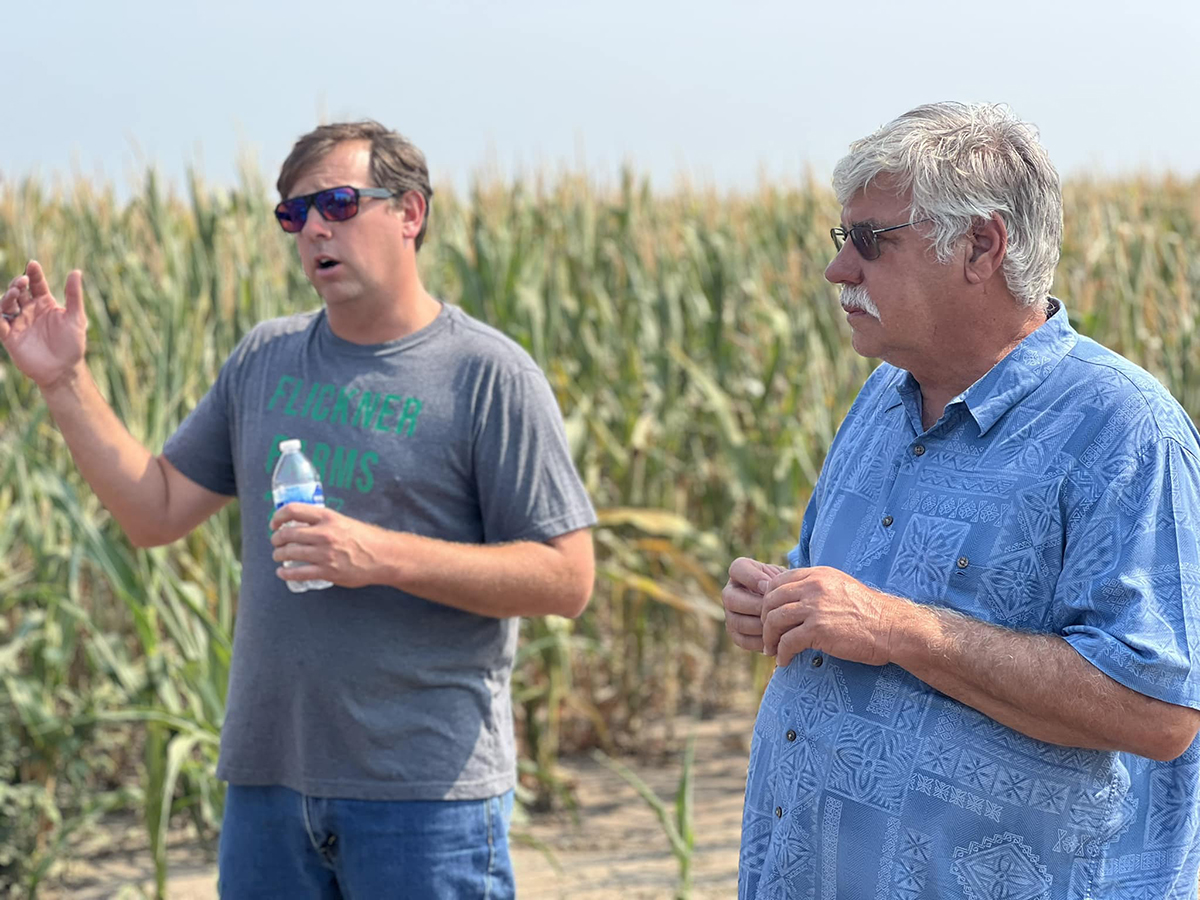
For Ryan, senior director of advocacy at the Kansas Farm Bureau, the farm — and the research it advances — helps him better understand the resources and support farmers need to be successful, and how he can advocate for them.
"When I go to Topeka or to Washington to talk about state water law changes or the Farm Bill, I can do that as someone who has dirt on my boots, and who has had to complete Farm Service Agency paperwork and read through Division of Water Resources reports," Ryan said. "We stand on the shoulders of giants who came before us, and when our ancestors came and broke ground on the prairie, that started us on this path of pushing the envelope for Kansas agriculture."
Developing the next generation of Kansas agriculture experts
For Ray and his late wife, Susan, the decision to open their gates to K-State was an extension of their lives' work. Both former teachers and K‑State alumni, the couple always viewed education as the bedrock of a thriving community.
While the farm produces corn, soybeans, and wheat, Ray sees its most vital "crop" as the research minds it helps develop.
"We believe in advancing the young minds of the world," Ray said. "The whole 'people development' concept was always a major portion of my life and Susan's, and to see students obtain their doctorates and go on to teach and research at other universities based on work they did right here on our soil — that has been incredibly rewarding."
By turning their acreage into what Ryan calls a "cultural melting pot," the Flickners provide a bridge between academic theory and the grit of rural reality. It's a place where international students and Kansas natives alike can trade institutional knowledge for "dirt-on-the-boots" experience.
That educational mission has extended to the public, with the family regularly hosting field days at Flickner Innovation Farm. The events have featured K‑State faculty, technology demonstrations and hands-on activities to inspire the next generation about the future of farming.
Ryan’s children, the seventh generation of Flickner farmers, have been regular participants at those field days.
"We do this for the future, so that kids like mine can see what’s possible," Ryan said. "Agriculture looks different now than it did even twenty years ago. If you're excited about entomology, there's a path. If you like machine learning and AI, there's a suite of tools for that. There are so many more niches and entry points for the next generation to get involved beyond just sitting on a high-horsepower tractor."
As the Flickners look toward the next century of Kansas agriculture, they remain anchored by the same stewardship and pioneering spirit that brought their family to Kansas five generations ago.
"The Lord blessed us with these resources, and I am cognizant of that," Ray said. "The challenge is: what do we do to make it better now than it was 50 years ago? We want to make sure the family, the neighbors and the students all become better because of what we've done here.
###
Related Stories
K-State leads international collaboration for next-gen global agriculture solutions
K-State researchers are developing an AI-driven system to help soybean farmers worldwide as part of an international project funded by the National Science...
Doing good for Kansas
In recognition of the university's commitment to partnering with Kansas communities, K-State is one of more than 200 universities to receive the Carnegie Foundation's...
Sky-high innovation, boots-on-ground farmer insight
K-State’s ID3A and Kelly Hills Unmanned Systems, a leader in next-generation agriculture, are partnering to advance drone technology, empower farmers and...