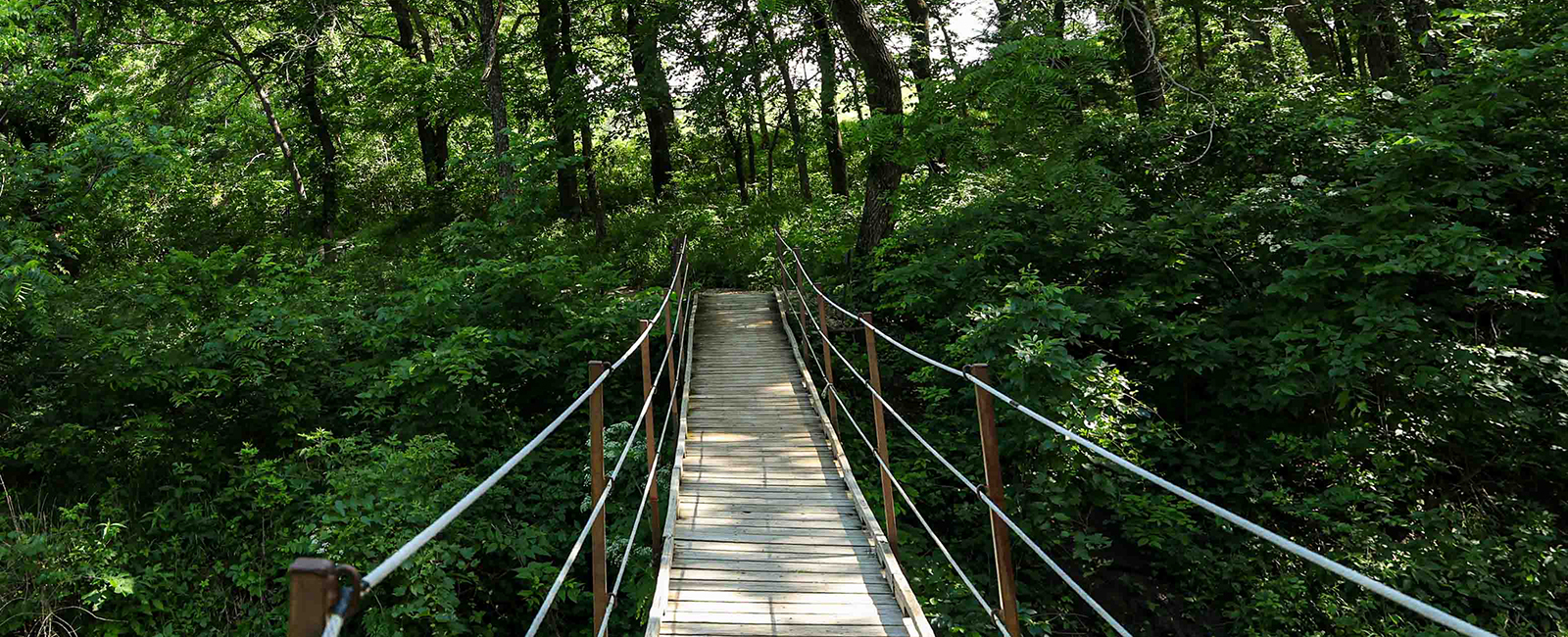
Songs of the Konza
Katharina Bremser studies Konza prairie soundscape's restorative effects

By Julia Hall
Graduate School
Wednesday, June 10, 2026
To most people, the prairie isn’t the first place that comes to mind when they think of awe. But to Katharina Bremser, it’s been one of the most surprising and inspiring landscapes of her research career.
Bremser, a Ph.D. student in park management and conservation, has traveled across the U.S. visiting national parks and nature preserves to conduct research on the positive effects of natural soundscapes and will tell you that the Konza Prairie Biological Station is one of the most quietly magnificent landscapes she's ever encountered.
Her love of wildlife began as a child and deepened after a stint with Western Ecosystem Technology, where she conducted prairie chicken lek surveys and avian and bat fatality research near wind farms. That work inspired her to pursue a master's degree in parks management and conservation at Kansas State University.
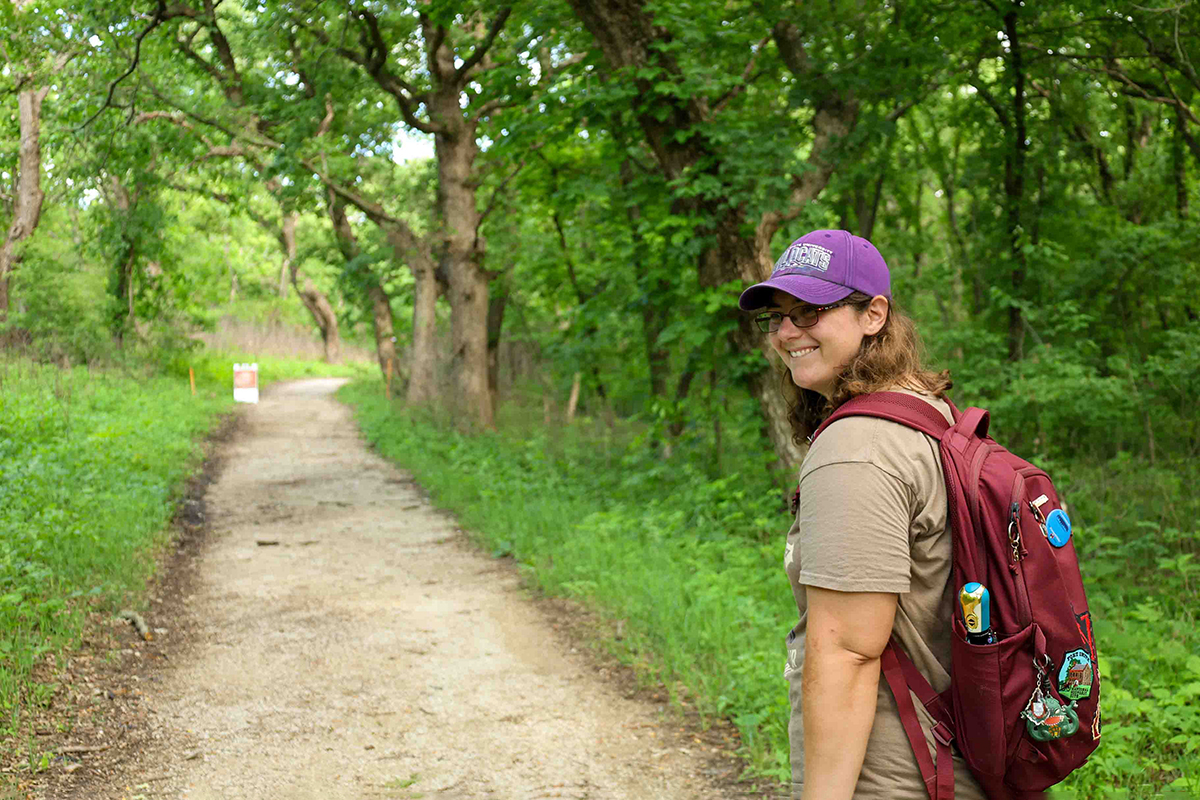
Bremser’s master's research focused on visitor use, activity type and nature-relatedness at Cimarron National Grassland and eventually led her to acoustic research as a means to access long-term data at a site without disrupting the wildlife.
When she began collaborating with Brian Peterson, assistant professor of park management and conservation, on a 2022 soundscape study at the Konza Prairie, something clicked. Peterson encouraged Bremser to pursue her Ph.D. and push the work further.
Exploring restorative soundscapes, brain benefits
Bremser’s doctoral work focuses on natural soundscapes and their effect on cognitive restoration. Responses from the 2022 study provided initial insight into how the study could be improved. Bremser wanted visitors and survey participants to be more present in the landscape before data collection began and to know what to listen for.
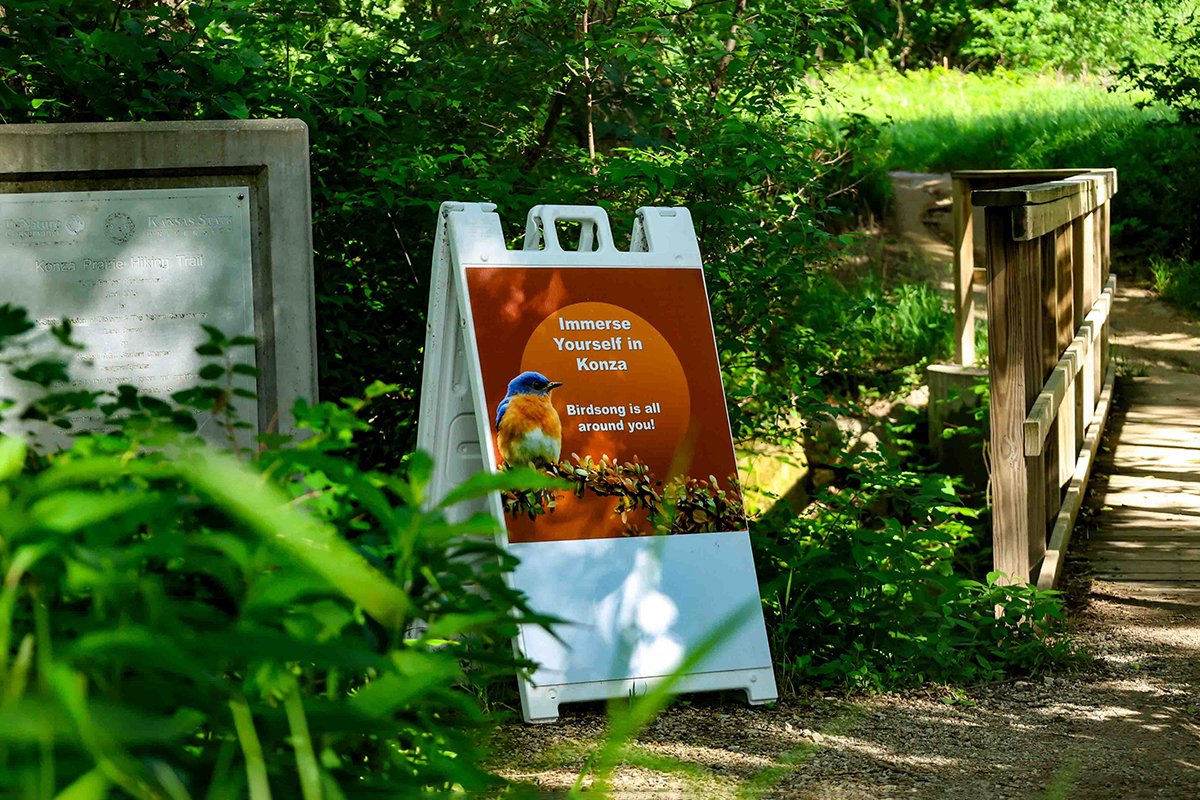
“Now the recording devices, signage and survey collection are located at the end of the trail instead of the beginning,” Bremser said. “That way, visitors have the opportunity to get acquainted with the trail and immerse themselves in nature before the section where we collect data and responses.”
Bremser also altered the verbiage of the signs.
“In the original study, the signage was vague, asking people to ‘be quiet,’ with no clear direction as to why,” Bremser said. “I wanted to give people a clearer direction as to what they should be paying attention to.”
Now the signs read “Immerse yourself in Konza. Birdsong is all around you,” offering visitors specific sounds to listen to and align more closely with the research topic.
The work is meticulous, but the landscape has a way of reminding even the most focused researcher to look up. Even for someone who spends much of her time on the land, Bremser still recalls one moment that stopped her in her tracks.
“It was fall, and we were wrapping up some data collection on the back side of the trails, and the sun was beginning to set,” she recalled. “I remember standing up, and as I turned around, the whole side of the hill behind me was glowing red with sumac bushes reflecting the setting sun on their newly turned leaves. It is one of my most memorable moments of being out here, on the Konza.”
Each season brings something new to the landscape. In spring, new wildflowers pop up weekly, and as you lean into the sounds, you’ll hear a different bird's song every week as they migrate through the area.
Conservation and the restorative benefits of nature, Bremser believes, begin with noticing.
“The prairie sometimes appears all the same, but when you stop and look closer at all the shades of green, you begin to see the beauty in the scene,” Bremser said.
Connecting the dots between conservation and cognitive restoration
That instinct to stop and notice what’s around you is part of what the social piece of the study aims to measure. The survey asks visitors who walked the trail to answer a few questions about their perceived level of restoration.
To measure the psychological impact of those sounds, Bremser uses the Perceived Restorativeness Soundscape Scale, a tool that evaluates how sounds in a setting, such as bird songs on trails, contribute to cognitive and physiological recovery based on Attention Restoration Theory.
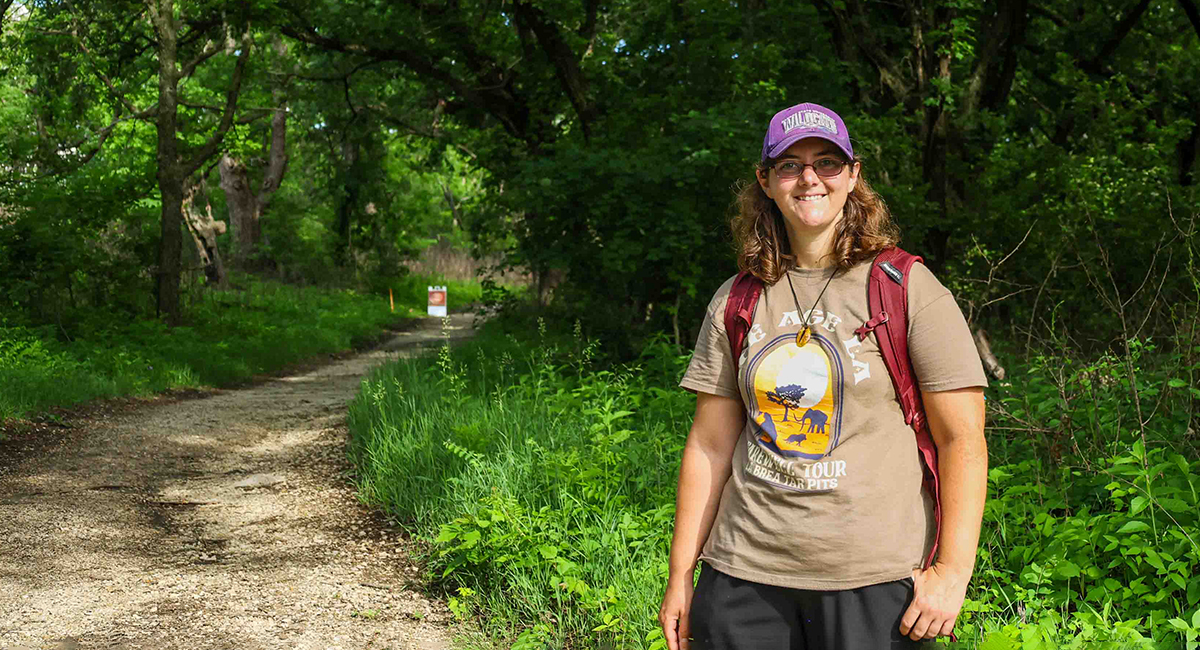
“The prairie sometimes appears all the same, but when you stop and look closer at all the shades of green, you begin to see the beauty in the scene.”
Katharina Bremser
There is no shortage of research confirming what most people already sense: Time spent in nature is good for mental well-being.
Bremser uses these studies to build a bridge between her conservation work and the restorative benefits that nature provides.
“Without conservation efforts, we would not have beautiful natural places to explore,” Bremser said.
Applied Park Science Lab
K-State's Applied Park Science Lab addresses natural resource challenges through research and graduate education, equipping future leaders to manage parks and protected areas and communicate their value worldwide.
Bremser's main goal in her work is to encourage people to notice more. Even if you spend most of your time in the city and never make it out to the prairie, the sounds of nature are closer than you think. A city park offers bird songs to listen to, and a breeze rustles leaves; small flowers line a sidewalk, and vibrant green moss grows between a red brick path.
As Bremser puts it, “noticing can start anywhere.”
Related Stories

Building beyond game day
What can Kansas City gain from hosting the World Cup? Salma Aouam, a spring 2026 master's graduate in regional and community planning, says the event could...
Small talk, big impact
Sarah Fenn, master's student in kinesiology, is developing a toolbox that doctors can use in speaking with women and helping them reduce their risk for major...

Unwrapping the sweet mystery
Shivaprasad Prakash is driving techniques that will make flour-based products, like raw cookie dough, safer for everyone.