Small talk, big impact
Sarah Fenn is developing a doctor's toolbox for engaging with women through a critical life transition

By Sarah Fenn
Graduate School
Monday, May 4, 2026
Editor's note: "Driven to Discover" spotlights Kansas State University graduate students who are turning research ideas into real-world impact. Through their own voices, they share how their time at K-State is shaping discoveries that strengthen Kansas and serve the world.
Every year, more than 2 million women in the U.S. undergo menopause. Menopause is the time in a woman's life when her hormone levels change, and she stops getting her period. And while this can be an uncomfortable topic, it's crucial to talk about openly, especially when it affects so many women.
This midlife transition is about more than just bothersome symptoms like hot flashes; it's actually a major turning point for women's heart health.
Heart disease doesn't develop overnight — it takes years, even decades, and is influenced by factors like weight, blood pressure and cholesterol. Menopause accelerates these risk factors, which means that after menopause, women are at a much higher risk of developing heart disease.
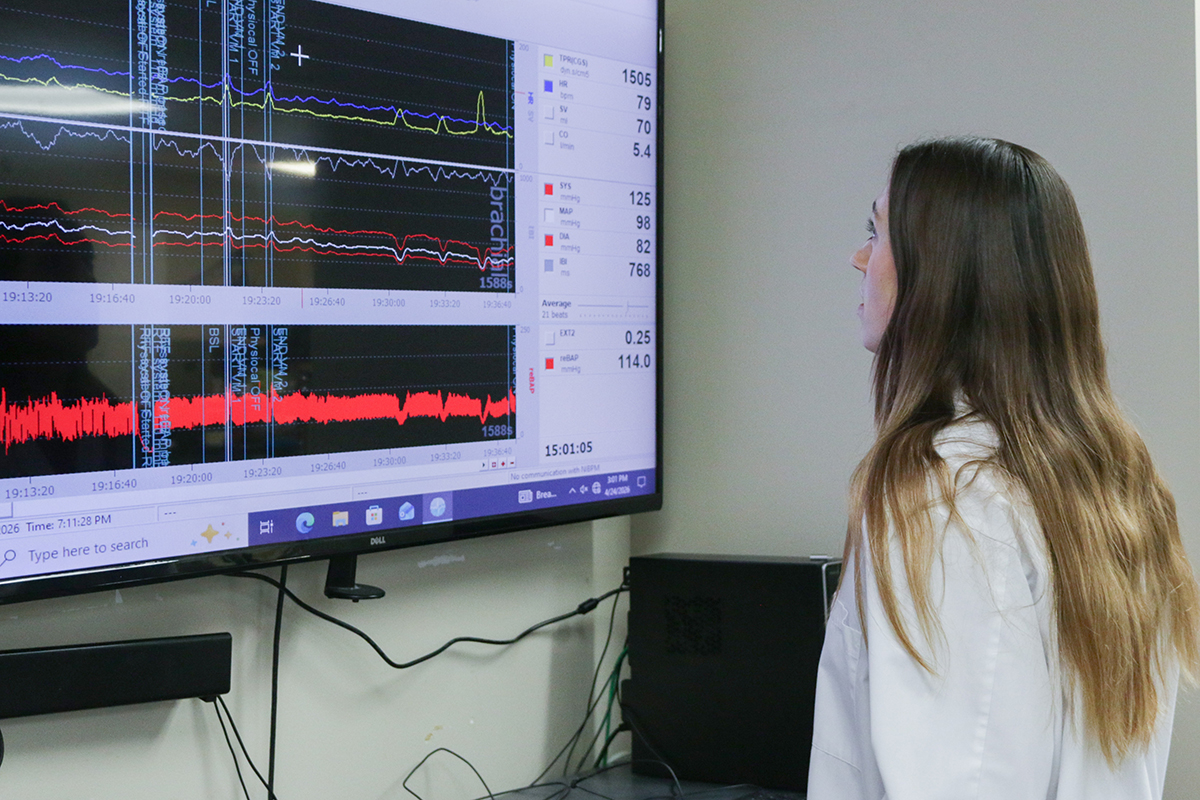
Testing a simple idea
This is also a time when women are likely seeing their doctors more often, which could provide a powerful opportunity to prevent heart disease progression.
My research asks: Can something as simple as a conversation with your doctor — where they give you advice about exercise, diet and positive lifestyle change — have a meaningful impact on heart health trajectory during this critical transition?
To answer this question, we used two large U.S. data sets and studied thousands of women. We first wanted to know how many women were receiving this advice from their doctor, and what characteristics differentiated them from women who weren't. Then we followed women as they moved through the menopause transition to see if receiving advice from their doctor had a meaningful impact on their heart health.
“With timely advice, improved awareness and inspired action, women and their health care providers can take tangible steps to improve heart health and reduce the burden of heart disease in Kansas and across the U.S.”
Sarah Fenn
Here's what we found: About half the women in the study reported receiving lifestyle recommendations from their doctor, and they were more often overweight and had high blood pressure.
When we looked at women as they moved through menopause, one result really stood out. Women who reported receiving lifestyle advice from their doctor saw a significantly smaller rise in harmful cholesterol levels in the years right before menopause — when cholesterol usually spikes the most.
Why early intervention matters for women's heart health
This tells us that something as simple as a conversation with your doctor can effectively buffer a major heart disease risk factor. Cholesterol is a substance that can build up and clog your arteries, leading to life-threatening events like heart attack and stroke. And unlike age or genetics, cholesterol is a modifiable risk factor.
Overall, our findings support the notion that menopause doesn't need to mean a downward spiral in cardiovascular health.
With timely advice, improved awareness and inspired action, women and their health care providers can take tangible steps to improve heart health and reduce the burden of heart disease in Kansas and across the U.S.
Sarah Fenn is a master's student in the School of Health Sciences. This story was adapted from Fenn's Three-Minute Thesis presentation "Small Talk, Big Impact: How Doctors' Advice Can Improve Women's Heart Health During Menopause."
Related Stories

The heart behind the classroom
In her Spanish classroom at Kansas State University, graduate student teacher María Camila Ramírez Quimbayo goes beyond grammar, guiding students through...
Fighting cancer by building nature's most complex molecule from scratch
Vidya Nadar’s journey in the Three Minute Thesis Competition takes her from the Little Apple to the national stage —illustrating why communicating research...
Unwrapping the sweet mystery
Shivaprasad Prakash is driving techniques that will make flour-based products, like raw cookie dough, safer for everyone.