The science of spring burning
Why prescribed fire remains essential to managing land and livestock in the Flint Hills

By Emerson Tarr
College of Agriculture
Thursday, May 7, 2026
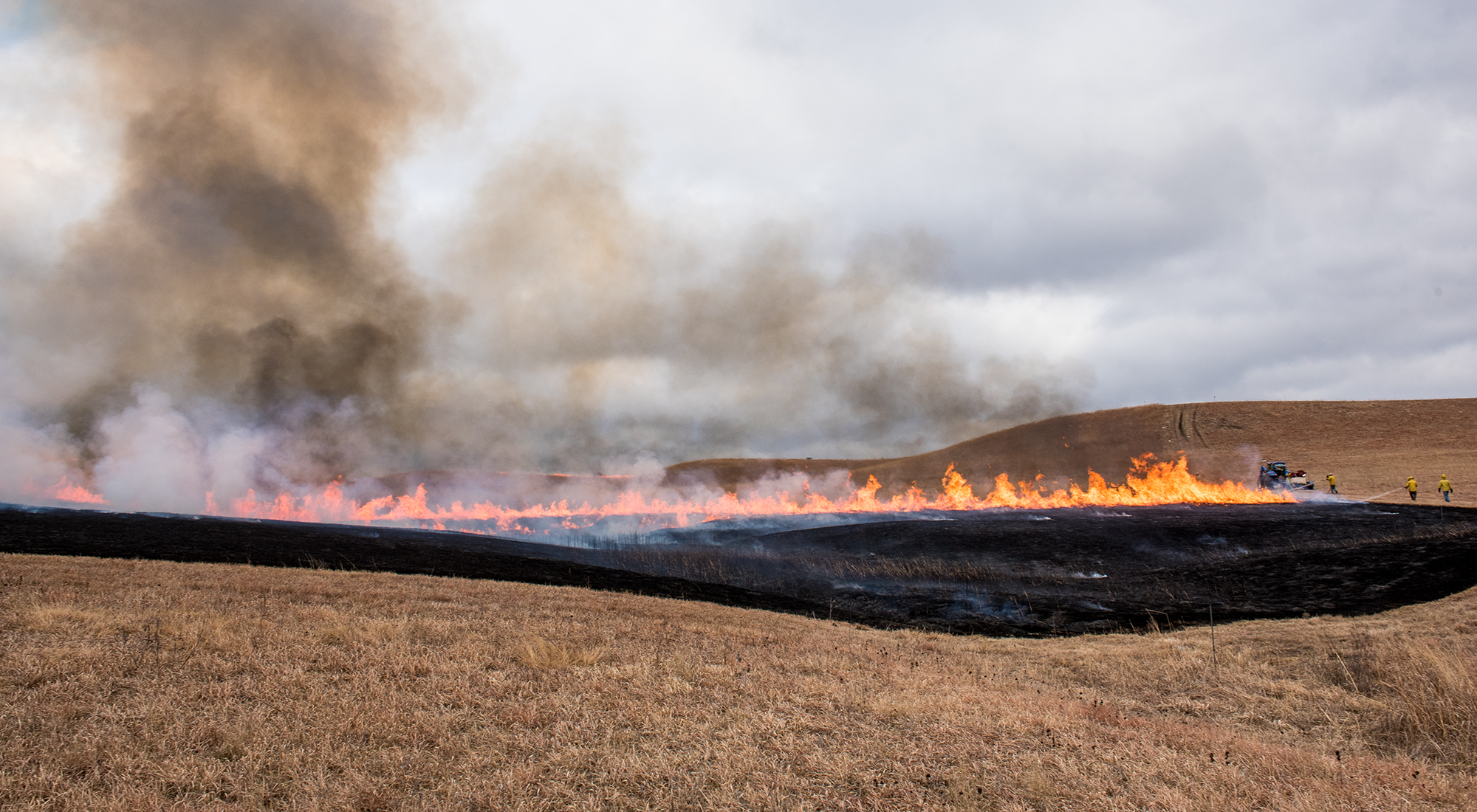
If you’ve driven past Exit 313 on Interstate 70 during the spring, you’ve probably witnessed the grey smoke rising and low flames moving across the Flint Hills. Whereas smoke can be cause for concern, these fires are planned, managed and an important part of how the land and cattle are cared for by producers.
“Where I grew up, we dealt with more wildfires. Coming to Kansas, it’s been an adjustment to see how comfortable producers are with fire,” said Logan Thompson, director of Rannells Ranch and assistant professor of animal science.
Prescribed burning is common across Kansas, but it is especially important in the Flint Hills, where tallgrass prairie depends on fire to stay healthy. At Rannells Ranch, burning is used as a management tool to support both the land and the cattle grazing it.
Before a burn ever happens, there is a lot of preparation involved. Weather conditions, fuel levels, timing, and available help all factor into whether a burn can take place. Sometimes, that decision is not made until the last minute.
“It can come down to the minute before you decide to start lighting grass,” said Thompson.
Burning also requires coordination. Rannells Ranch works with Konza Prairie Biological Station crews to burn each spring. Across the prairie, ranchers work together with neighbors to burn pastures safely and efficiently, especially when managing larger areas of land. It becomes a shared effort, with crews relying on each other for labor, equipment and experience.
That coordination also reflects a broader connection. The outcomes of prescribed burning, grassland health and cattle performance extend beyond the ranch and into the food system.
Even with that planning, prescribed burning is becoming more visible to the public. Smoke, safety concerns and increased development in the region all influence how people view the practice. That makes it important to explain why burning happens.
“This is a safe and natural process,” Thompson said. “Grasslands and fire go hand in hand.”
One of the main reasons for burning is to improve the quality of grass for cattle. Fire removes old plant material and allows new growth to come in. The new grass is higher in protein and easier for cattle to graze, which can lead to better animal performance during the grazing season.
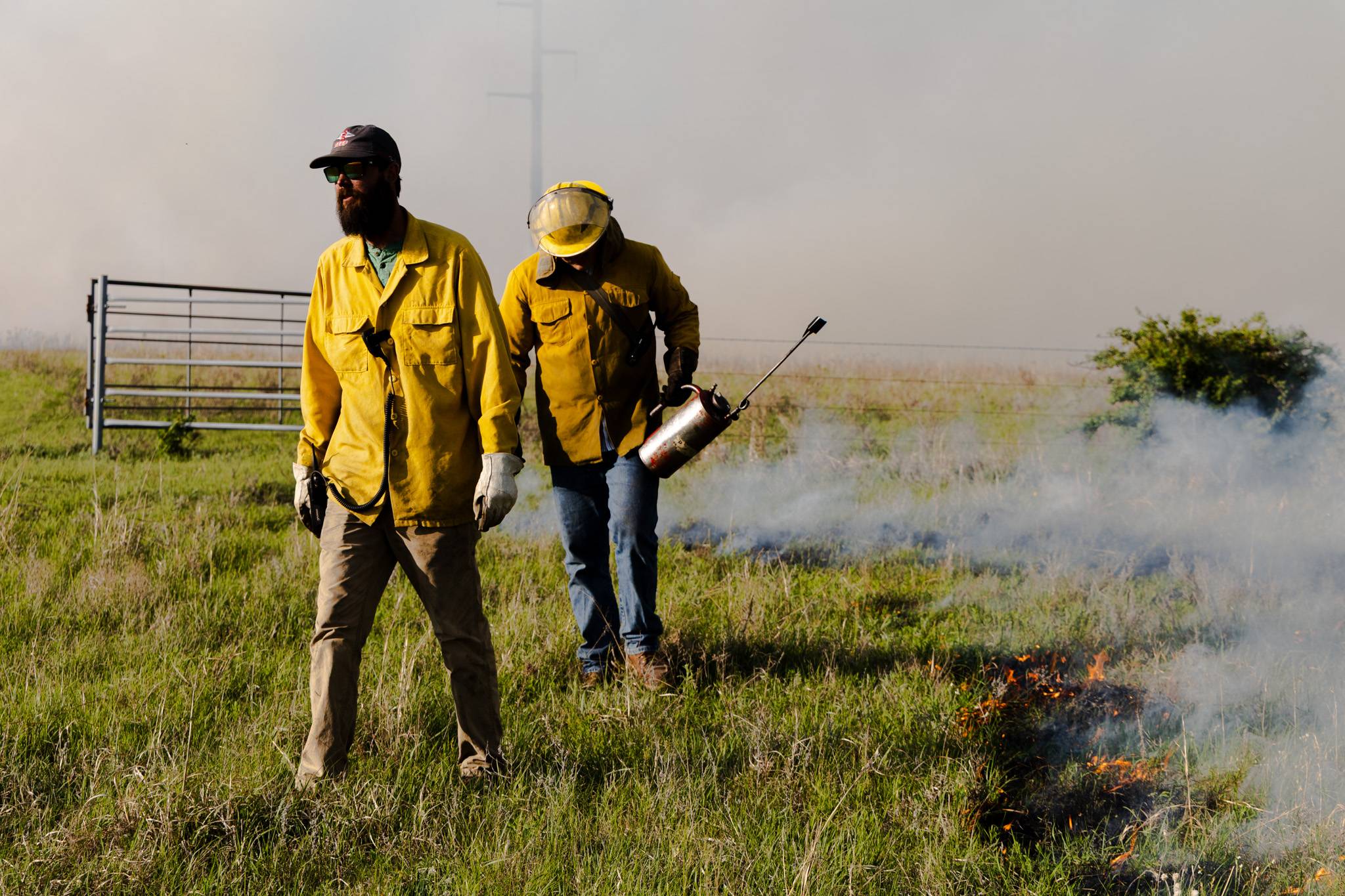
“We burn in this region quite a bit because it’s a tool to manage the landscape and improve animal gains,” Thompson said.
While that may seem like a benefit only to the ranch, it connects directly to consumers. The way cattle are raised and how pastures are managed influences the beef people see at the grocery store or order at a restaurant.
Fire is also important for maintaining the grassland itself. Without it, woody species like eastern red cedar begin to spread, taking over areas that would normally grow grass. Over time, those trees reduce the amount of available forage and limit how many cattle a pasture can support.
“Cattle are grazers. They’re not browsers,” Thompson said. “When those plant species take hold, our carrying capacity decreases.”
Another goal of prescribed burning is to influence grazing distribution. Many ranchers aim for a fairly even burn across an entire pasture so cattle are more likely to graze evenly. However, grazing patterns are also affected by factors like water availability and plant diversity. Different burning strategies, such as patch-burn grazing, can be used depending on management goals.
“If we don’t get a good burn in part of a pasture, that impacts grazing distribution and overall productivity,” Thompson said.
Get connected
Stay up to date on research, teaching and outreach activities at Rannells Ranch by signing-up for their quarterly newsletter.
At the same time, prescribed burning is becoming more complex. Changes in weather patterns and burn timing can influence how plant communities respond over time, which adds another layer to management decisions.
“When you change your burn timing, you’re going to see differences in plant community dynamics,” Thompson said.
Because of that, public understanding plays a role in the future of prescribed fire. Support comes not only from ranchers, but also from the communities connected to these landscapes.
“We can’t remove fire from these landscapes and expect them to function the same,” Thompson said. “It’s tied to everything we do; from the land itself to the cattle we’re trying to produce.”
Prescribed burning is one part of a larger system linking land management, beef production and the people who rely on both.
###
Related Stories
From the groundwater up
Kansas State University researchers are taking a closer look at how groundwater quality could shape the future of agriculture in south-central Kansas.
A farm for the future
At Flickner Innovation Farm, K-State researchers collaborate to develop practical solutions for Kansas agriculture’s biggest challenges.

Connecting care where it's needed
K-State Extension community health workers are improving access to care across Kansas, helping neighbors overcome barriers and take control of their health.