Cooking up great research
The CoSearch recipe is K-State's approach to sparking new campus connections for solving interdisciplinary water challenges
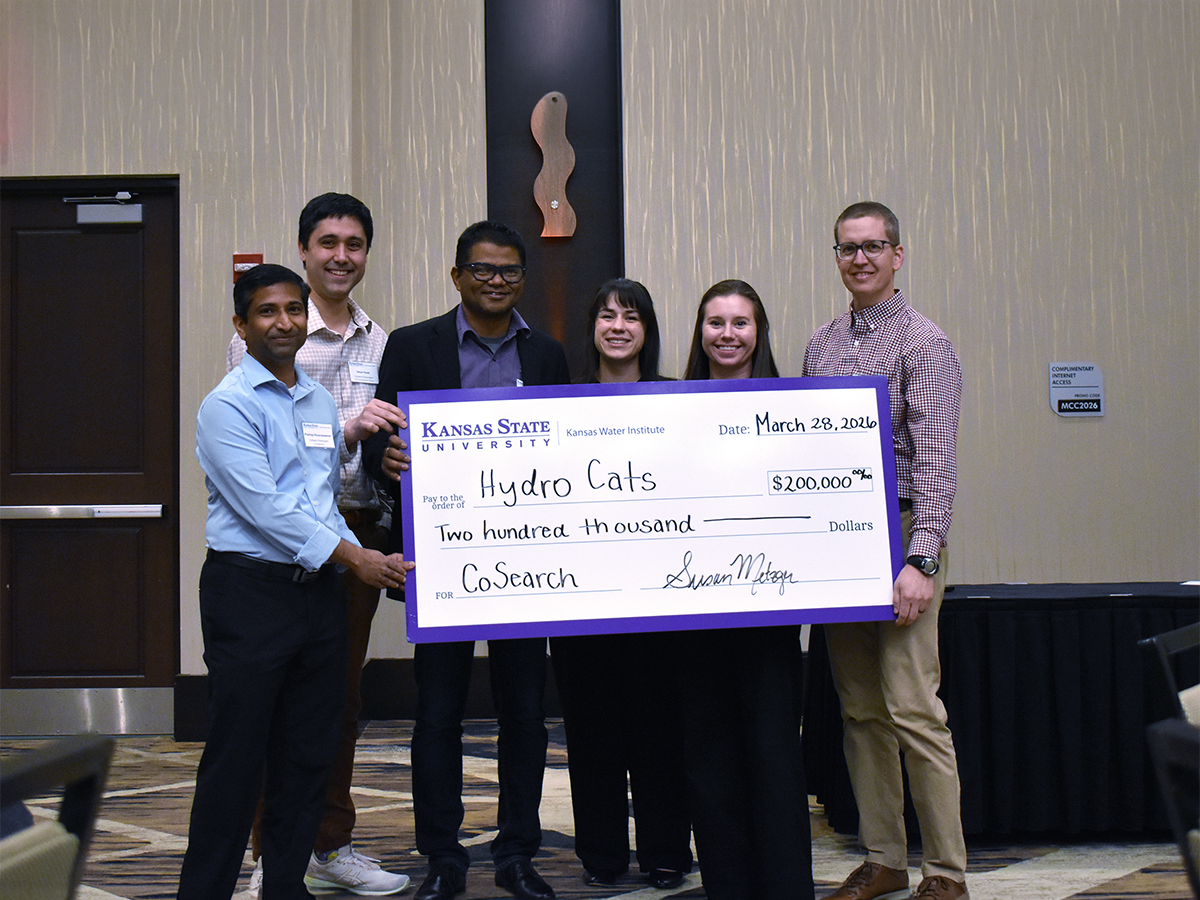
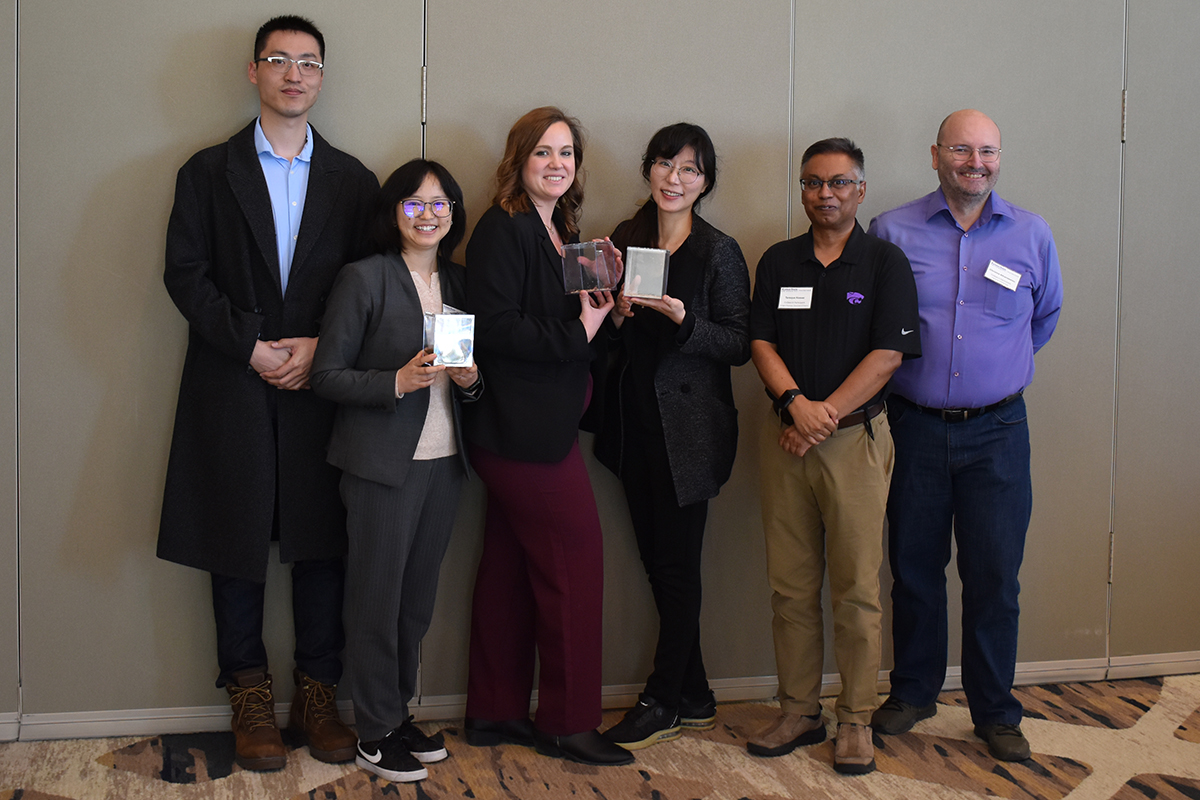
At K-State's 2026 CoSearch interdisciplinary grant-writing workshop, the catch of the day was research funding for Team HydroCats. From left, Prathap Parameswaran, Umut Yucel, Suprem Das, Elizabeth Sorensen Montoya, Katie Silas, and Matt Kirk.
By Melissa Harvey
Kansas Water Institute
Tuesday, Aug. 18, 2026
What happens when the Kansas Water Institute puts an entomologist, a journalist, a chemical engineer, a statistician, and a graphic artist at the same table and asks them to tackle a water resource challenge?
It’s not the usual recipe for solving these types of problems, but that’s the big idea behind CoSearch, Kansas State University’s version of a competitive grant-writing workshop that brings together researchers to develop innovative solutions in interdisciplinary teams.
By the time this year’s CoSearch workshop wrapped up, those interdisciplinary collaborations had developed new ideas and pitched their projects to win seed funding to turn those ideas into reality. And as this year’s teams demonstrated, bringing the right ingredients together can lead to entirely new recipes for solving water problems in Kansas.
CoSearch stirs the pot
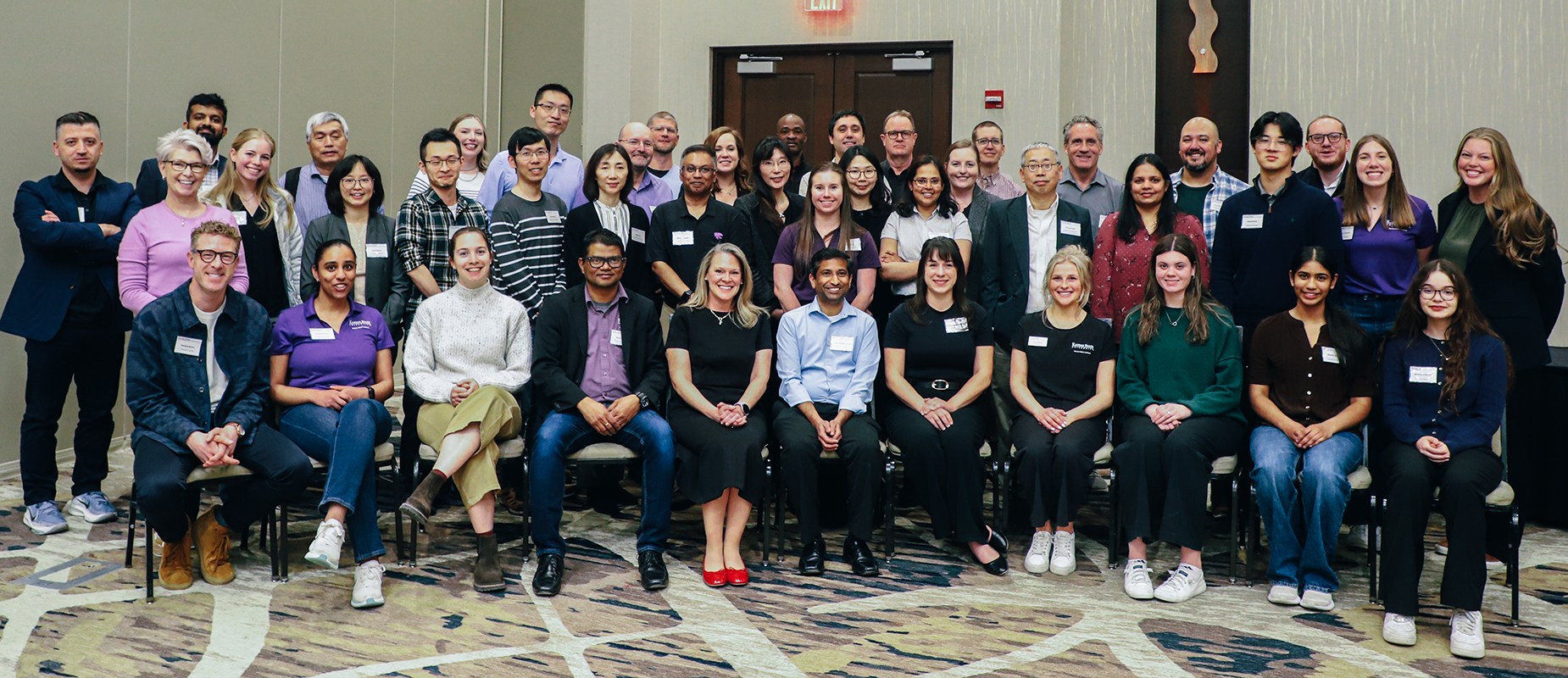
Last spring, K-State faculty representing 22 departments, seven colleges, two campuses, and Extension participated in CoSearch. The event has become one of KWI's signature approaches to building water research collaborations at K-State because it is designed to help researchers from any university department identify shared interests and develop solutions to real-world problems.
The workshop framework was created by Michael Burns, teaching assistant professor in the Department of Communication at the University of Colorado Boulder.
“We believe that many of our world’s problems could already be solved if we did a better job as academics of stepping out of our silos,” said Burns, who served as CoSearch moderator in Manhattan.
To help participants move beyond their disciplinary boundaries, Burns led a series of quick activities designed to break the ice and encourage collaboration. Throughout the weekend, participants were encouraged to think of the work as a way to test the waters, not make a lifetime commitment to a research team.
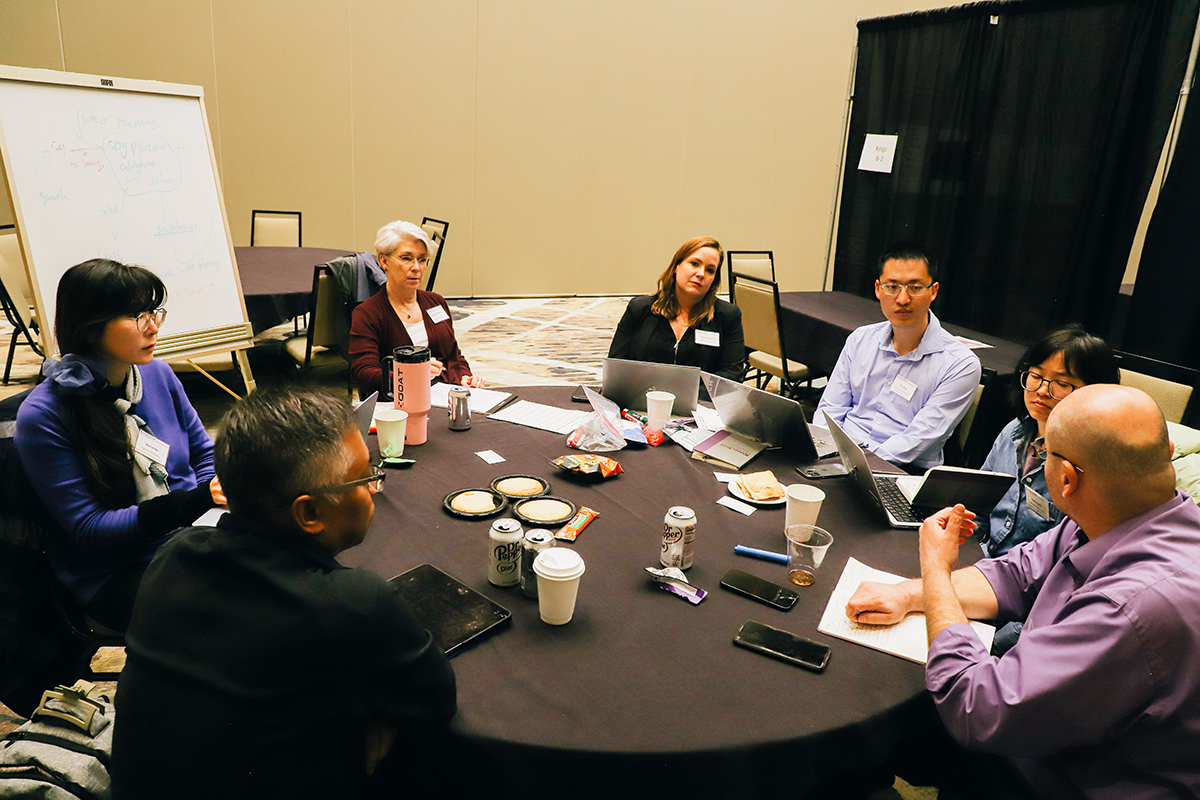
The idea is simple, but the execution is harder. The process takes only a day and a half: faculty gathered to brainstorm their ideas, winnow down dozens of concepts into coherent research projects, form groups, write full proposals and pitch these to a panel of judges in hopes of receiving seed funding for their work.
What emerged from this pressure cooker were research projects with the potential to make meaningful impacts on Kansas water issues. Teams proposed everything from new technologies to remove contaminants like nitrate and PFAS from groundwater to innovative ways to quantify the value of water in livestock production in order to help communities make more informed groundwater management decisions.
“We definitely ask people to push their comfort zones during CoSearch, and most of them walk into the room not knowing what to expect,” said Susan Metzger, director of strategic interdisciplinary program development at K-State and the Kansas Water Institute.
She said there were two big hurdles for most participants: first, they weren’t used to working with teams from outside their departments or colleges. Second, most of them never even met before they walked through the door.
But it didn’t take long for the awkwardness to disappear, and “unlikely collaborations” started to form quickly.
“Strangers become colleagues, and colleagues become teammates very quickly during CoSearch,” Metzger said. “Everyone is there because they’re passionate about this work.”
Water research on the front burner
This year’s first-place team was Team HydroCats, winning $200,000 in seed funding from CoSearch.
With expertise in engineering, geology, statistical data analysis, agricultural economics, and food sciences, the team’s six members plan to map groundwater contaminants like microplastics and nitrates across the state. The goal is to make that information publicly and easily accessible for Kansans, creating a foundation for new technologies that can improve water quality and protect public health.
“One unique aspect of our team is its dual focus on public-facing tool development to serve communities across Kansas and to raise awareness about drinking water quality, while also developing technology to address specific water quality issues by degrading them rather than concentrating the contaminants,” said Prathap Parameswaran, HydroCats member and associate professor of civil engineering.
The secret sauce for their success wasn't any single discipline, but the willingness to experiment across them. Their enthusiasm has already paid off: they have collected more than 100 water samples from western Kansas and begun planning their design for a dashboard interface to help the public access information about what’s affecting their water quality, all before their project’s official Aug. 1 start date.
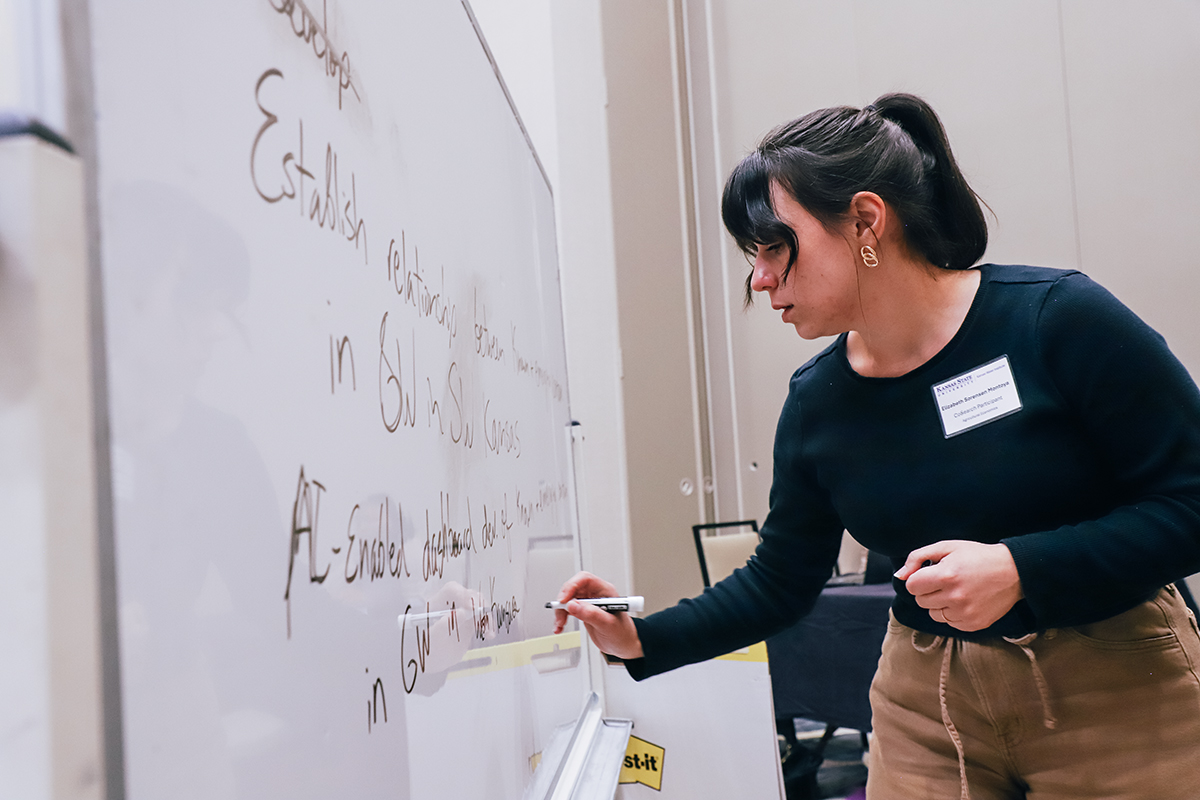
“We’re just starting to dip our toes into the water,” said Matt Kirk, professor of geology and HydroCats member. “It will be exciting to see where we are at this time next year.”
Second place and $100,000 in seed funding went to Team Aqualoop for their new approach to improving water efficiency and reuse in agricultural and food production systems. They’re bringing together expertise in chemistry, entomology, grain and food science, finance and public relations to turn agricultural waste into valuable products that can purify water and reduce environmental impacts. The team is exploring how insect farming and agricultural byproducts can be used to create fertilizers, water-treatment materials and other products that support a more circular agricultural economy.
On paper, these teams may seem unusual, but Metzger said that’s precisely the point of CoSearch.
“Some of these people would never have even thought about collaborating with each other, but now they are working on making real solutions for real problems facing real people,” she said.
When you need more cooks in the kitchen
To hear Team Aqualoop tell it, they met each other for the first time on Friday, wrote their project pitch by Saturday at lunch and secured funding by Saturday afternoon. After that, the group barely took a chance to celebrate before they hit the ground running.
In fact, they joke that in their initial meetings, they’ve started discussing who will be awarded financial stakes in Aqualoop when they turn it into a separate company.
“What makes this fun is that we can focus on integration across disciplines instead of only focusing on scientific outcomes,” said Patricia Calvo, assistant professor of chemistry and Aqualoop member. “It’s almost like we’ve started our own company, which is very different than a normal research project, where you focus on specific objectives but go no further.”
That kind of collaboration is one reason K-State has made interdisciplinary research a priority. By bringing together people who wouldn't normally work together, researchers can tackle problems that no single discipline could solve alone, Metzger said.
KWI's CoSearch is one part of that effort, but participants say it has already generated new collaborations across the university.
“I got lucky with this group,” said Tareque Nasser, Aqualoop member and associate professor of finance. He applied to CoSearch with few expectations and a lot of uncertainty, especially as his research has never focused on laboratory experiments, field work or grant applications.
“This is my first rodeo,” he said. “Everyone on our team has their own experience in industry, or extensive research in their field. I deal with data, but the types of data others collect are very different from what I’m used to. I hope I can make a difference.”
What’s next on the menu?
Although the CoSearch teams are focused on their project outcomes, they are taking a wider view of how this work can affect other K-State programs and beyond.
Even before CoSearch, Kirk led several large projects focused on private well testing and nitrate contamination in Kansas groundwater. Now, he’s looking to expand the impact of the HydroCats project while providing hands-on research experiences for undergraduate students. To do this, he’s connecting his HydroCats work with K-State's new Vertically Integrated Projects, or VIP, program.
Through VIP, students will participate in groundwater sampling and water-quality analysis, allowing them to contribute information that will become part of the larger HydroCats dataset.
It’s one way for undergraduate students to dip their toes into field work and get experience in a larger research effort.
“The topic really fits together well, and if any VIP students are inspired by some of the adjacent work, we may also be able to clear a path that allows them to participate to some extent as part of their VIP experience,” Kirk said.
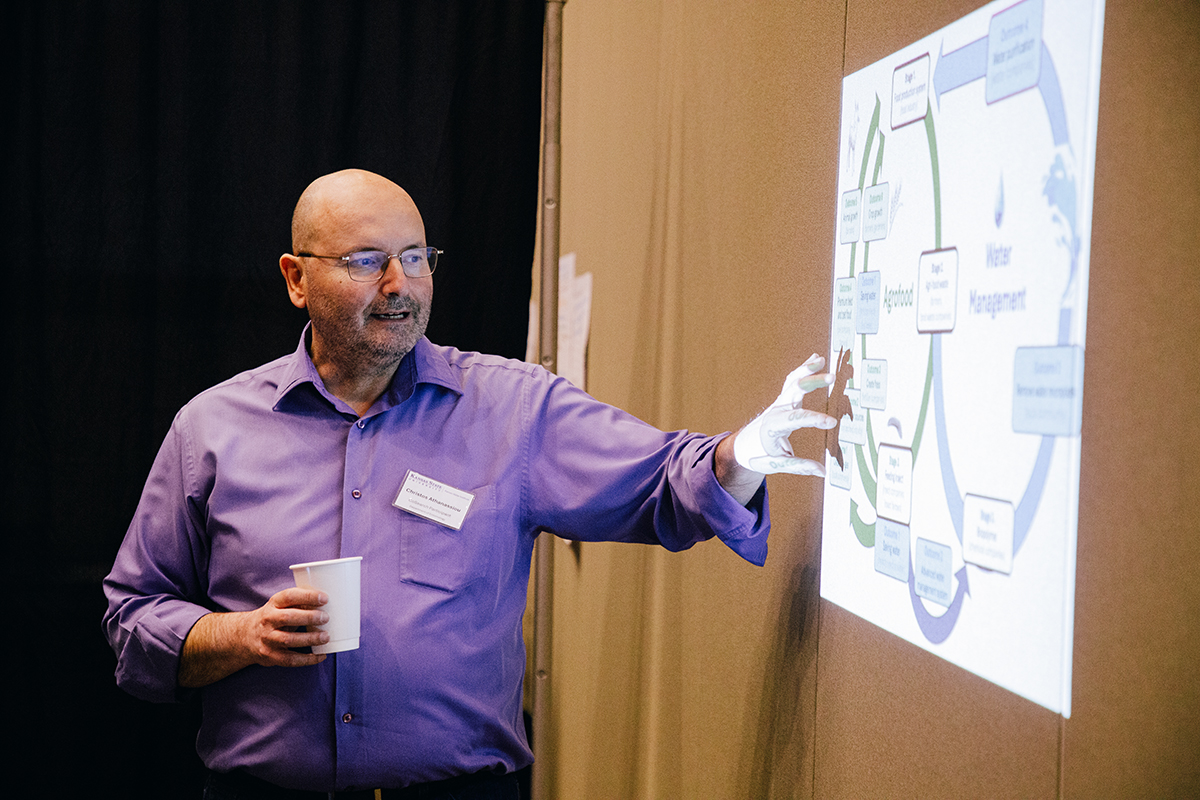
The members of Team Aqualoop are also thinking beyond their immediate research goals. In addition to developing technologies that could transform agricultural waste into valuable products, they hope to share new methodologies with the broader scientific community and create stronger connections between K-State research, industry and public engagement.
For Christos Athanassiou, research professor in the Department of Entomology, the Aqualoop project goes far beyond the traditional recipe for scientific research.
“Look, I’m a typical entomologist who counts bugs all day in the lab,” Athanassio said. “Scientists can communicate our results, but what this group can do is create public awareness. The thing is that if we stick to publications only or to one or two conference presentations, it's not worth it.
“We have to go beyond that, and we have the experts here to do it.”
Related Stories
Sedimentary sleuths
K-State biological and agricultural engineer Trisha Moore is leading a project to test the effect of water injection dredging on sediment levels in the Big...
From the groundwater up
Kansas State University researchers are taking a closer look at how groundwater quality could shape the future of agriculture in south-central Kansas.
A farm for the future
At Flickner Innovation Farm, K-State researchers collaborate to develop practical solutions for Kansas agriculture’s biggest challenges.