Waiting for a homecoming
K-State Missing in Action Project works to recover Kansas' lost service members
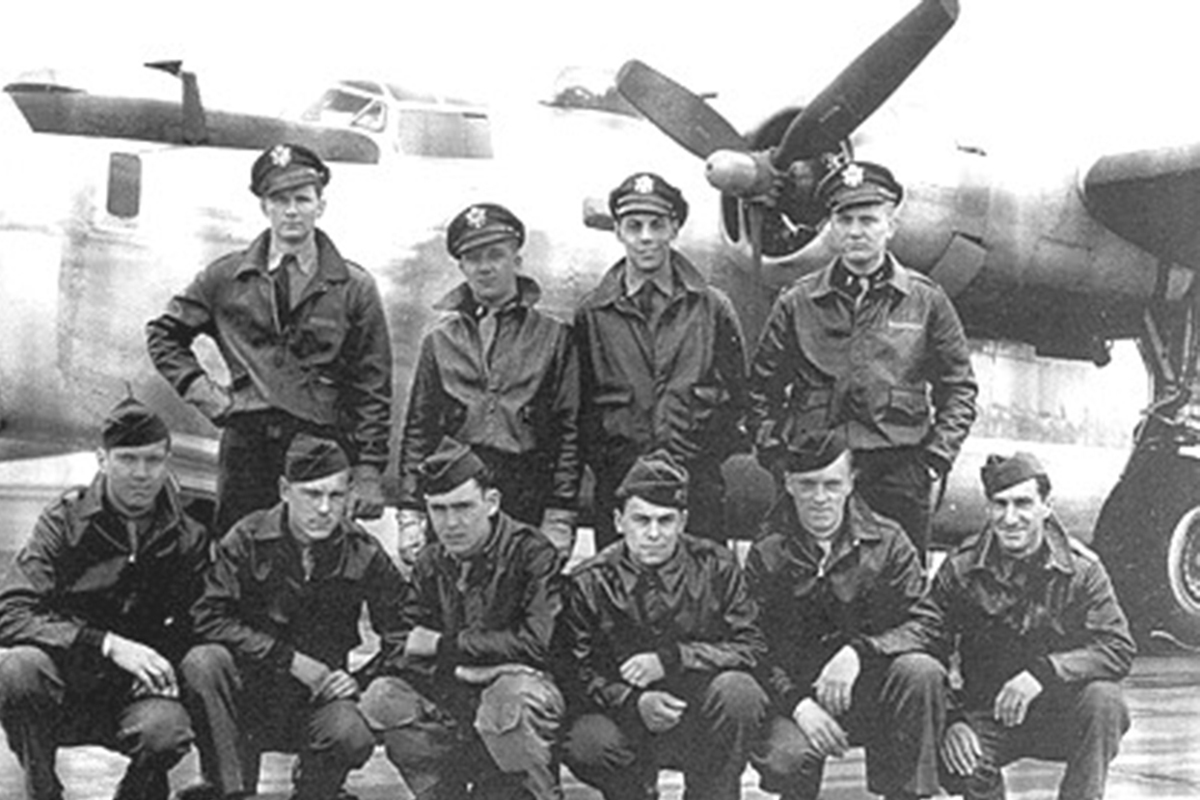
For several decades, native Kansan 2nd Lt. Victor Dolecek — back row, last on the right — has been missing after his plane crew was captured after parachuting over Nazi Berlin in 1944.

By Rafael Garcia
K-State News and Communications Services
Thursday, May 21, 2026
One of the last factually sure — but intrinsically bravest — things known about 2nd Lt. Victor Dolecek is that in the face of death over contested enemy skies, the hero jumped in anyway.
A son of the Kansas plains and classmate of the future-U.S. Sen. Bob Dole, the Russell native was only a couple years out of high school when he enlisted in the Army Air Forces in 1942, training as a bombardier in Texas and Wyoming. Arriving in Europe in May 1944 alongside his crew on the B-24 Liberator Heavy Bomber, Dolecek provided aerial support as Allied troops stormed the beaches of Normandy on June 6 that year. Three other missions in the days after went smoothly, even as the U.S. Army's Eighth Air Force sustained heavy casualties in the fight for supremacy over European skies.
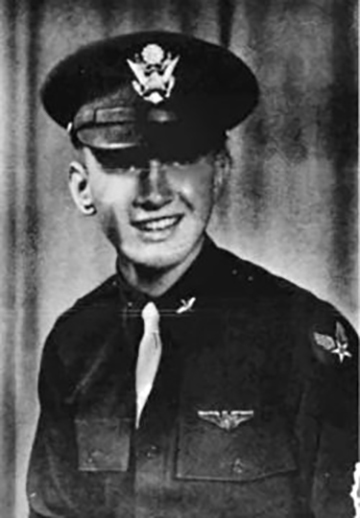
Victor Dolecek.
The fifth mission — a June 21 direct attack on Berlin and the first against German soil — would prove considerably riskier.
As the plane of young but battle-tested airmen approached the German capital for their bombing run, fiery explosions of thick, black flak suddenly engulfed the plane and the other bombers of the wing it led. Flight Officer Robert Branizza later recalled an explosion taking out the plane's second engine, while the pilot fought to keep the bomber stable. Over enemy lines and amid the intense aerial strikes, each crew member — equipped with parachutes but no prior training — was faced with a stark choice: a near-certain hard crash into enemy territory, or the faint hope of opening their chutes and gliding to safety.
With a final look at Dolecek, who nodded back in understanding, Branizza opened the plane door, and they jumped into the abyss.
How DJ Schaefer found a calling in searching for Missing in Action veterans
D.J. Schaefer is patient when he has to be. Much of his life has been spent waiting for the right opportunity. Graduating from high school in Wisconsin in 2012, his first opportunity was to enlist as an infantryman with the 101st Airborne Division at Fort Campbell, Kentucky. After five years in the military, Schaefer pursued his undergraduate degree at the University of Wisconsin-Madison, where his next opportunity was joining the college's Missing in Action Recovery and Identification Project — an initiative searching the world for the missing military men from the past century of U.S.-involved conflicts. Using a strategic mix of faculty experts, students and volunteers trained in history, forensic anthropology and biology, the project examined the historical record for cases where enough gleaned information and connected dots could identify and recover previously lost service members.
Even in the hard-to-solve cases, the project was exactly the opportunity Schaefer had been waiting for.
"You'd join a case and realize it was going nowhere. Another case would be a dead end," Schaefer said. "But then you'd find one that kept giving more and more information, and you'd realize there was a real possibility of recovery."
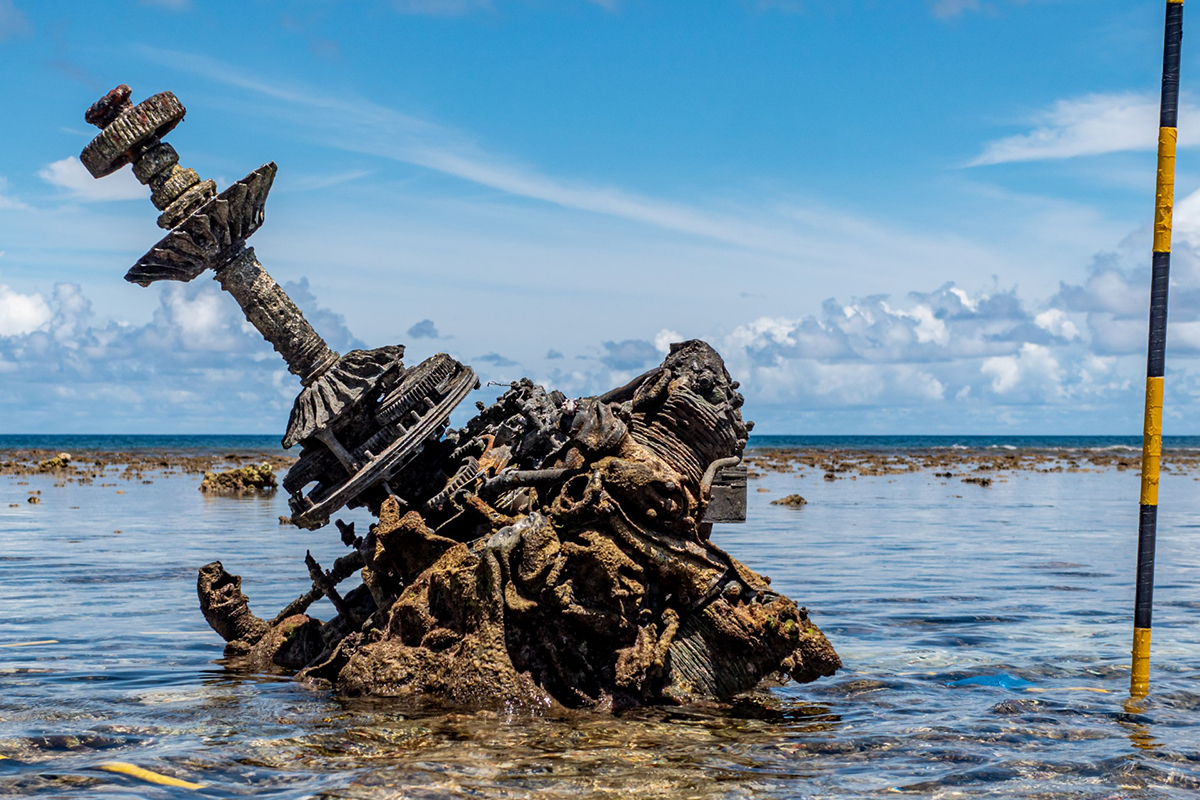
At Wisconsin, Schaefer was part of a team that successfully found and recovered a B-29 crew that had disappeared over Chinese Manchuria. Later, as Schaefer pursued his master's in history from East Carolina University, he joined a similar project at that school and was able to track, travel to and recover a submerged aircraft just off the coast of Saipan in the western Pacific Ocean.
Both cases, as well as others, became deeply personal for the researcher. Part of it was the opportunity to use the reconnaissance skills he'd learned in the Army, along with the research and historian experiences he later had in college.
But more than anything, Schaefer was driven by a debt he saw as owed to these men who had given their lives for their country.
"They should not be forgotten, even nearly a century later," Schaefer said.
K-State Missing in Action Project gives students interdisciplinary experience in military history
When it came time to pursue his doctoral degree, Schaefer found his next opportunity in Kansas State University's Department of History, where he would have the chance to head his own chapter of the MIA Project.
In Manhattan, Schaefer found support for the concept from K-State's Institute for Military History and Military Affiliated Resource Center, as well as easy access to historic archives such as the Eisenhower and Truman presidential libraries. Close proximity to resources provided by Fort Riley and Fort Leavenworth was also key.
Nationally, about 81,000 individuals are listed as Missing in Action, or MIA — a federally-designated formal term for personnel who disappear while involved in a combat operation. Less formally, some service members are understood to be more "missing," or recoverable, than others. For example, the U.S. military might have documentation for recovered remains from a beach where a soldier is known to have crashed in battle, but no positive identification — either from artifacts around the remains or more modern DNA testing — has been accomplished. In contrast, a pilot who went missing during a mission over the deep waters of the Pacific Ocean is considered more "missing" and less likely to ever be found.
Kansas accounts for about 1,200 of the MIA individuals, and Schaefer estimates that about 30 of those might be recoverable, given time and research into the circumstances of their disappearances. But Schaefer is only one person, and even countless days spent poring through books, personnel records, film and archival materials would make only a small dent in the volume of scholastic research needed to connect the dots and bring these men home.
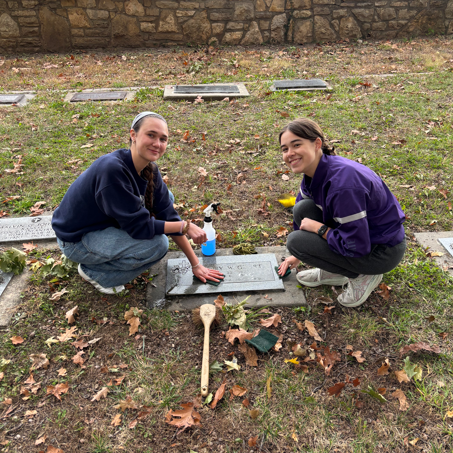
So, he began recruiting.
"When I first got the email from D.J., I thought it sounded fascinating," said Heidi Brauer, a sophomore in history, Ellinwood. "My great-grandfather was a World War II veteran, and since then, my family has had a strong military background. I knew this work was important, and with my major, I knew I was in a good place to help."
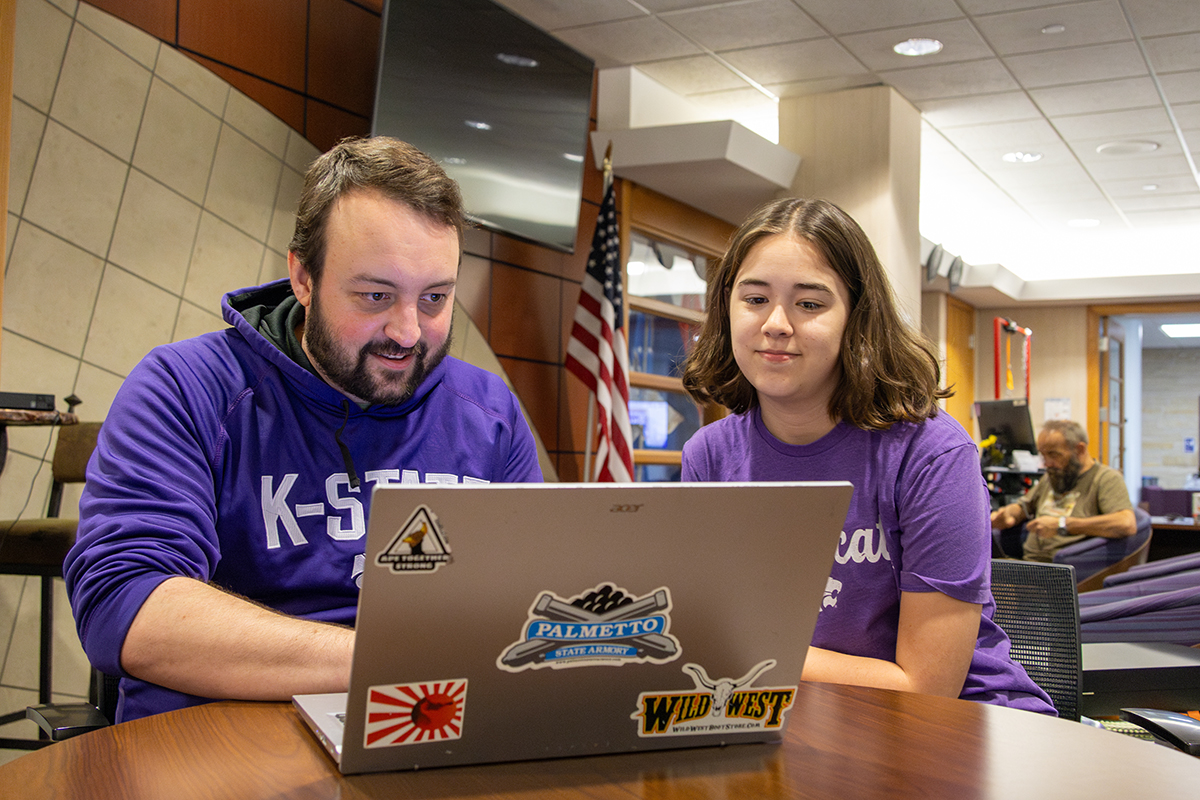
Brauer, one of about 15 students who responded to Schaefer's recruitment pitch, has been working with the K-State Missing in Action Recovery and Identification Project regularly each week, working on cases assigned by Schaefer.
The project has also attracted volunteers from local and veteran communities. John Walker, an Army veteran, had listened to Schaefer present about the project at the local Veterans of Foreign Wars post and was intrigued in the work. Schaefer soon found him a case to work on involving a separate bomber that had gone down over Berlin.
"Being ex-military and coming from a background of a military family, I know how important these stories are to the families of these missing men," Walker said. "If we don't find this information and bring some closure, their stories may never be finished, and that would be the great tragedy."
Each case involves dozens, if not hundreds, of hours of research: cross-referencing after-action reports to triangulate potential locations of missing remains, fact-checking items from officers' reports that may have missed key details and following up on recovered remains that were never identified, among other research entry points.
The work, by nature, is interdisciplinary, Schaefer tells the students. Although the club's main work is with historical materials, students and volunteers on the project must work with experts and materials in archaeology, geography, forensics and other related fields.
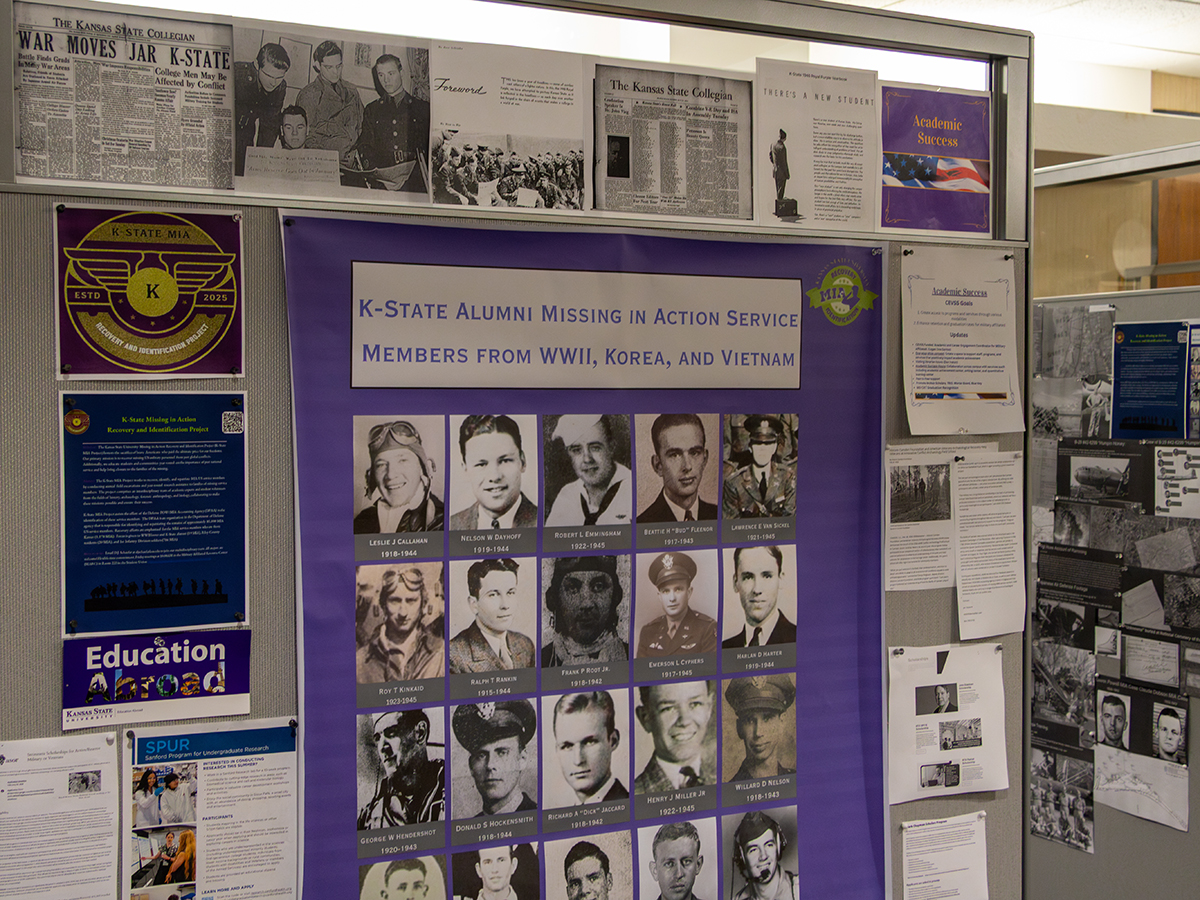
"When I can connect these dots and find new connections to help solve these cases, I feel like a detective," said Lena Higgins, junior in geology, Evansville, Indiana. "You don't have to be a geology major. You don't have to be an anthropology major. You don't even have to have a certificate at this point. If you don't want to actually do the dives and digs and all that other stuff, and you just want to be the person who looks things up, that's cool too. We use help in every way we can get."
Although the team has worked on any case it can feasibly research, Schaefer has directed K‑State's MIA Project to focus first on cases involving K‑Staters, Manhattan and Riley County residents, Fort Riley-stationed soldiers and Kansans at large. Brauer has been working on a case involving Sgt. Bernard Becker, a Seneca-born aerial gunner who disappeared in a 1943 raid over France.
Research on the case has pushed Brauer to hone the skills she's learned about in the classroom into tools that both help her identify and recover Kansas MIAs today and prepare her for a future career as an archivist or historical curator.
"I would love for the number of missing personnel to go down," Brauer said. "These were real people, with real families — many of whom are still around. There's too many of them, and it's up to us to keep looking for answers."
Victor Dolecek's disapperance
It took a while to learn more about what had likely happened to Dolecek after that fateful June 1944 jump.
Branizza, for his part, had survived the jump and been taken as a prisoner of war, or POW. In the POW camps, Branizza reunited with his pilot, Cleve Howell, who reported that the other seven crew members had been able to evacuate the plane, but he did not know what had happened to them.
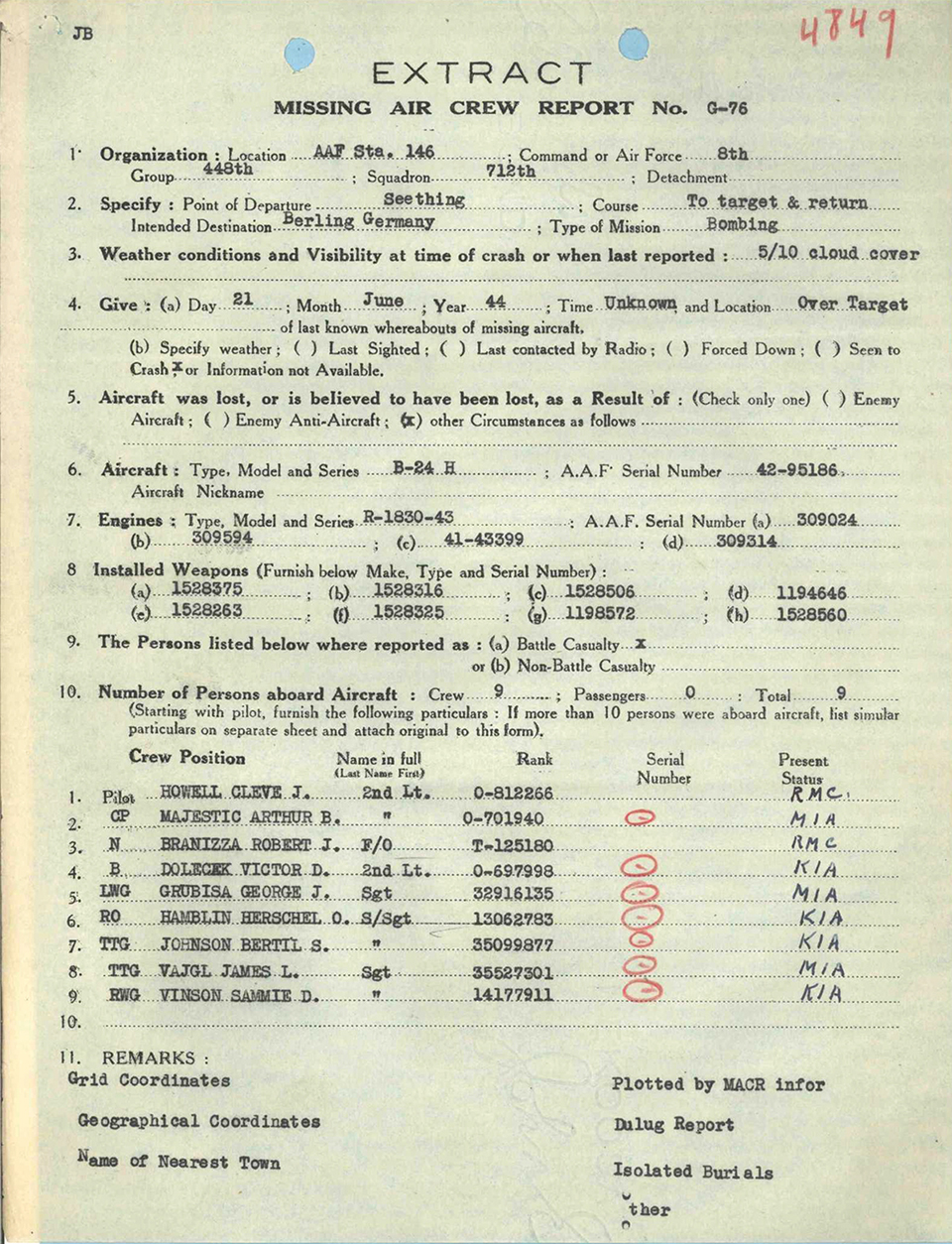
Students and volunteers with the K‑State MIA Project pore over materials like this Missing Air Crew Report, which may not be completely accurate and require cross-checking with other sources.
Reports from the German government, relayed by way of the International Red Cross, later that year shared that the crew had bailed and landed in the countryside northeast of Schwerin, Germany, where they were later captured by local police and Nazi forces. Most of the crew were executed nearly immediately, while Dolecek was made to march another kilometer down the road by local Nazi party chief Kurt Müller. On the road and at the edge of a canola field near Veelböken, Germany, Müller murdered Dolecek with two shots in the back.
In the couple of years after victory in Europe and Japan, investigators from the U.S. Army's Grave Registration Services and War Crimes Investigation Team were on the ground around the world, asking questions and recovering remains of thousands of military men who had disappeared in combat. An eyewitness in Germany told investigators in May 1945 that two Americans were buried in the local cemetery.
Analysis of the recovered remains, registered as X-7207 and X-7213, showed that both were likely MIA cases from the downed B-24. It was only a few years before the Grave Registration Service's Central Identification Laboratory, tasked with the scientific identification of American military remains recovered overseas, identified X-7207 as Sgt. George Grubisa, a waist gunner on the crew.
Conclusively identifying X-7213 would be trickier, even given the circumstantial evidence. The Nazis had severed the remains' head, hands and feet and removed his clothing — presumably to remove any trace of his identity. Given other measurements and known information about Dolecek at the time of his death, the lab estimated that the expected weight, height, age, hair color and shoe size were "more favorable for Dolecek" than for the other MIAs from the crew.
But without other, more conclusive pieces of information, the lab could not be sure.
After the lab's analysis, X-7213 was first reburied at France's Lorraine American Cemetery, then transferred in 1952 to the Luxembourg American Cemetery and Memorial in Hamm and buried in glory under the standard headstone for unidentified remains, marked only as "known but to God."
He remains there to this day.
Finding resolution for Kansas Missing in Action veterans
What stood out most about Dolecek's case to D.J. Schaefer was the scrawls of "X-7213" across pages and pages of his case file.
Schaefer was interested from the start, noticing that Dolecek's case was a loss over land. But the labeled pages meant that at some point, even early in the case, someone had good reason to suspect the unidentified remains at Plat 1, Row 7, Grave 24 of the Luxembourg cemetery were almost certainly those of Dolecek.
Someone just needed to connect the final dots.
"In the decades after World War II, Graves Registration was dealing with thousands of bodies they needed to identify, return and rebury, all with a limited budget and resources," Schaefer said. "Our benefit today is that we have DNA analysis, and with some effort, we can finally connect the dots and bring closure to a lot of families."
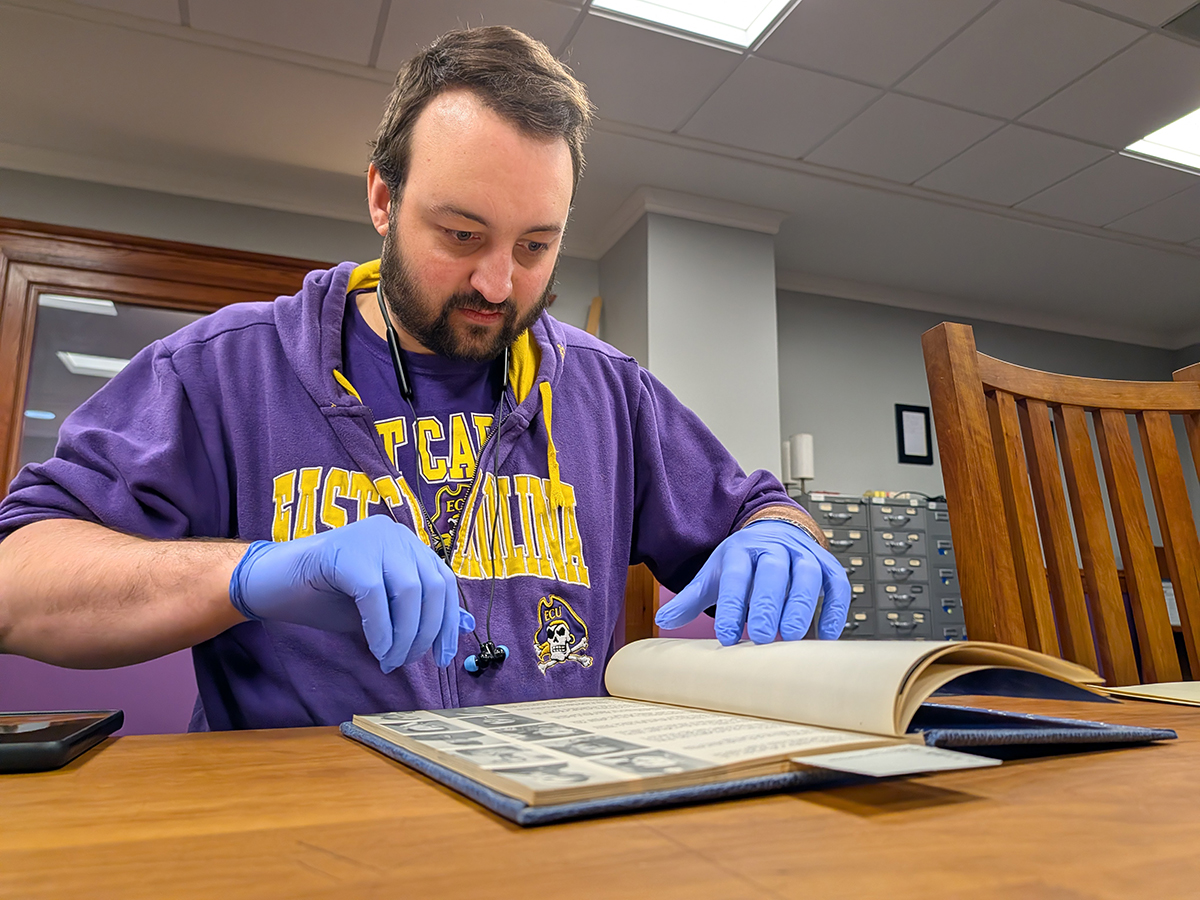
While Schaefer is hopeful for the positive identification of X-7213 as Dolecek, he knows it could be months, or even years, before he can find and contact enough of the MIA crew's next-of-kin for DNA samples to submit to the Defense POW/MIA Accounting Agency, or DPAA. Once enough samples are collected, that agency could then process a disinterment request for X-7213 and send the remains to the agency's lab at Offutt Air Force Base in Omaha for DNA matching.
After this first year setting up K‑State's MIA Project, Schaefer's goal is to grow the initiative, first by bringing in more expertise from other departments on campus, then by collaborating with similar projects and organizations at other universities in the country that have followed the University of Wisconsin-Madison's model.
Eventually, those collaborations could even lead to field work, Schaefer said, with K‑State students traveling to beaches, jungles and fields around the world to investigate MIA cases.
Each case means waiting. Waiting for families, who may have previously stopped decades ago when their loved ones appeared unrecoverable. Waiting for MIA Project members, who navigate hundreds of hours of research and wait weeks for the wheels of bureaucracy to kick in and slowly roll along. Waiting for the MIAs themselves, whose remains have lain buried under the short history of a few decades of sandy soils or mangrove muds.
But waiting implies a resolution, or at least the hope of one.
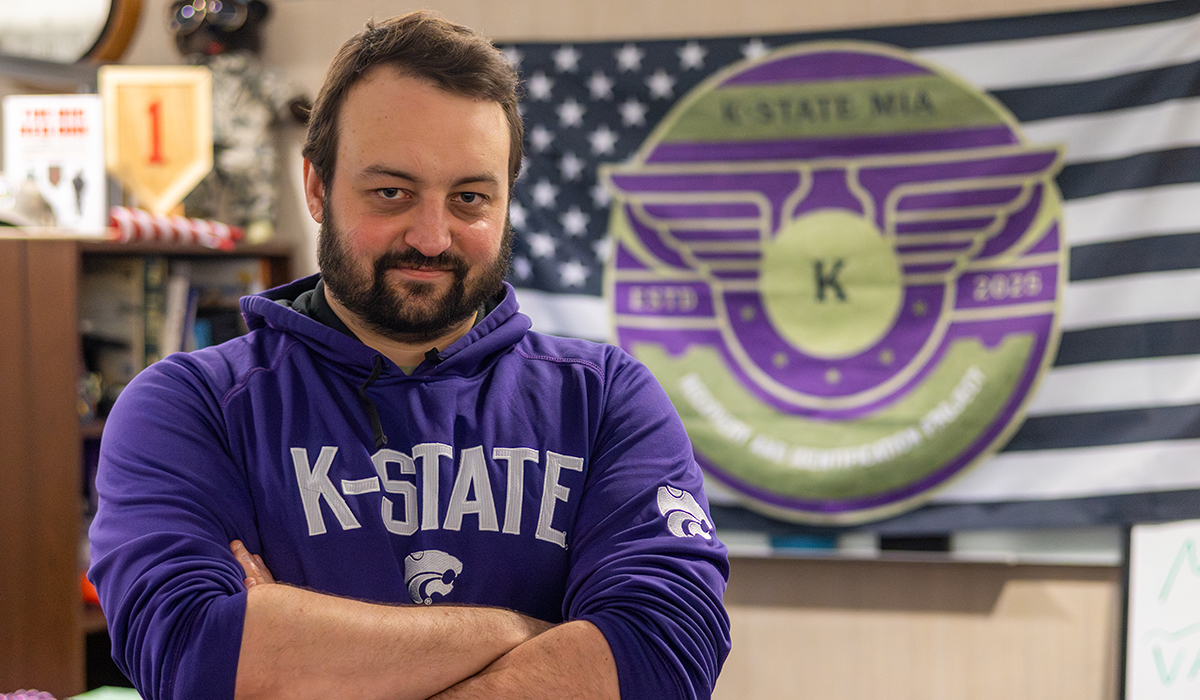
“Our duty is to make sure these sacrifices are never forgotten. Not every case will be recoverable, but as long as the physical evidence is there, we can make every attempt to bring some resolution to these stories of sacrifice.”
D.J. Schaefer
And sometimes, that waiting is interrupted by unexpected news, as in the case of 1st Lt. Robert Aikman, a 1927 K‑State graduate who earned several decorations — including a Silver Star, a Bronze Star and a Purple Heart — for his service in World War II. He was captured by Japanese forces in 1942 and presumed dead after the ship he was on sank. After the war, the U.S. military unearthed several mass graves of service members in the Pacific, with those who could not be identified buried as unknowns in Honolulu. In recent years, DPAA has disinterred some of those remains and, using DNA technology, restored identities to these MIAs, including Aikman.
Aikman will be reinterred this month in his hometown of Forsyth, Missouri. Although K-State's MIA Project began after Aikman’s identification, Schaefer will attend the internment ceremony to share materials from Aikman's time at K‑State and to underscore the amazing life that led him to become a hero.
It’s a glimpse of what Schaefer hopes to see with even more MIAs.
"Aikman is proof that there's huge potential for recovery in a lot of cases, not just with ours, but around the country," Schaefer said. "Our duty is to make sure these sacrifices are never forgotten. Not every case will be recoverable, but as long as the physical evidence is there, we can make every attempt to bring some resolution to these stories of sacrifice.
"And sometimes, we can even bring them home."
Related Stories
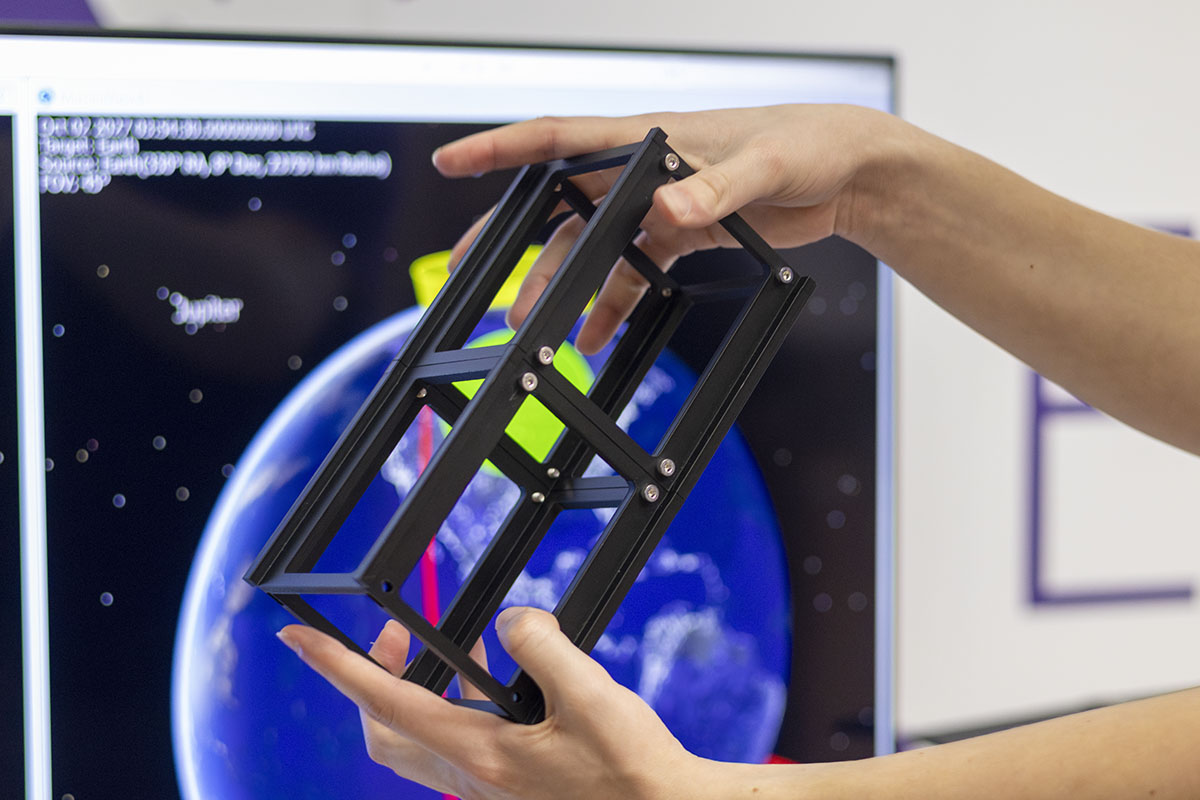
Classroom to the cosmos
The Wildcat Space Program is giving K-State students the opportunity to collaborate across disciplines and tackle the real-world challenges of building satellites...
K-State joins Military Spouse Employment Partnership
K-State, a top military-friendly school, has been inducted as a partner in the Military Spouse Employment Partnership. The partnership seeks to boost military...
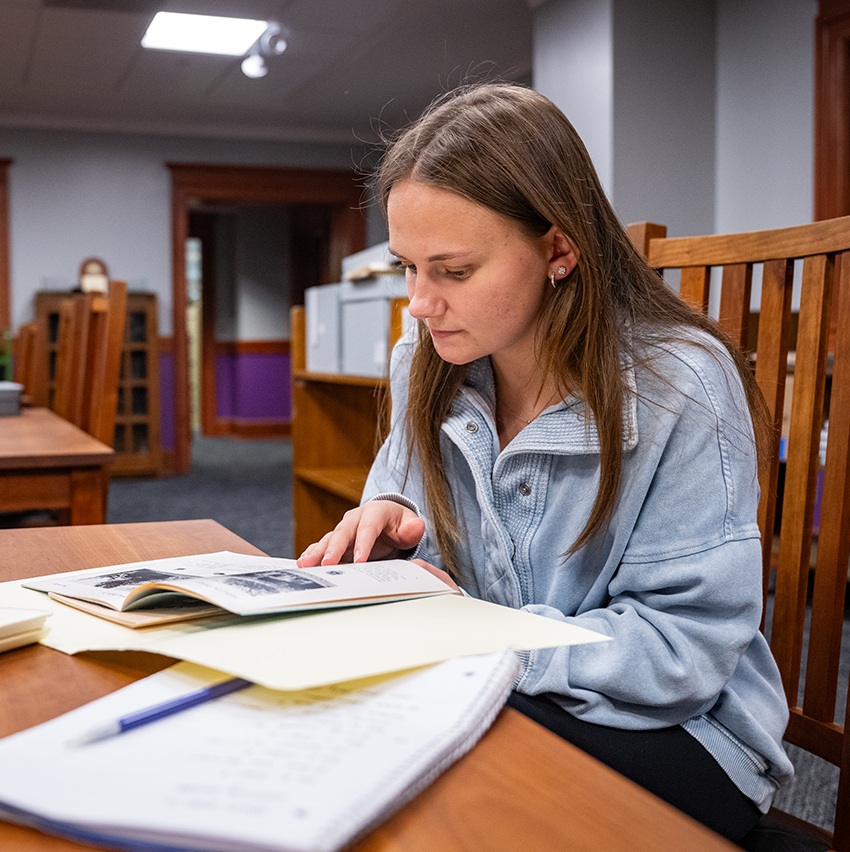
Hands-on history
Through the hands-on History of K-State Workshop course, students work closely with K-State Library's Richard L. D. and Marjorie J. Morse Department of Archives...