A molecule for every challenge
Through chemistry and collaboration, Patricia Calvo's research group designs polymers to tackle scientific challenges
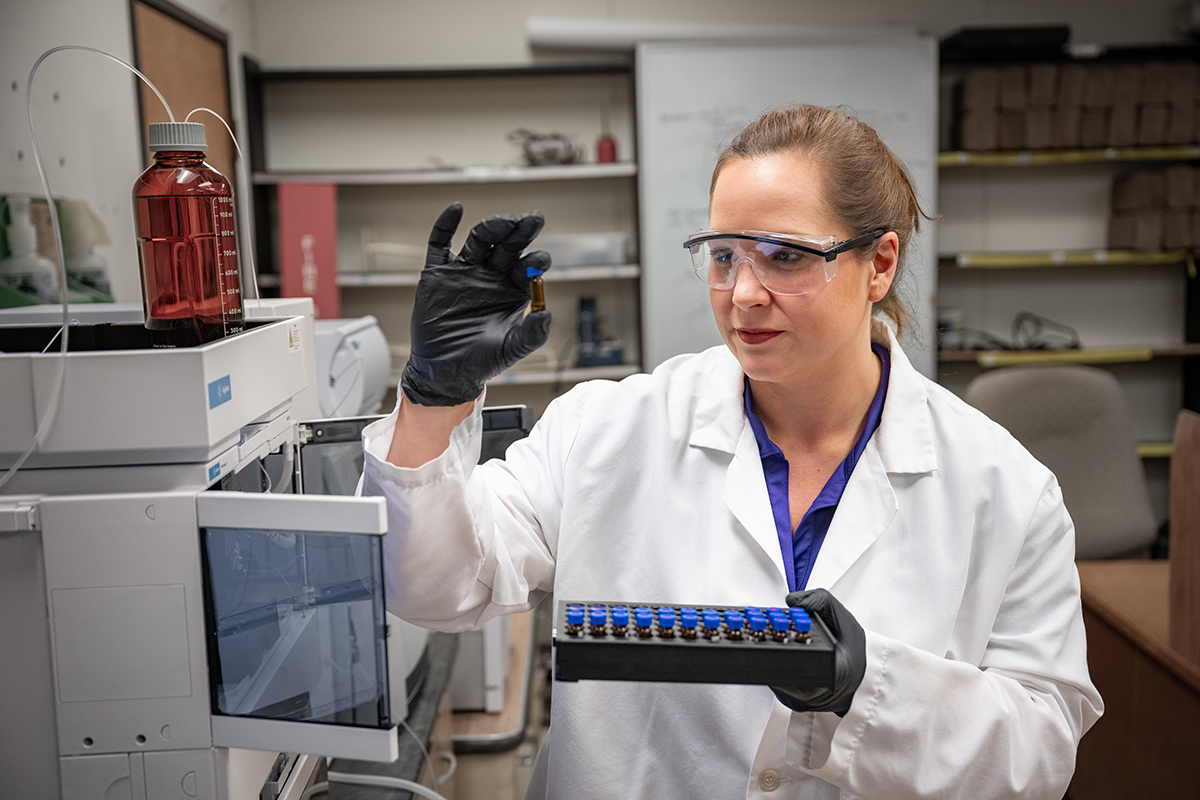
Some of science's biggest challenges may need some very small solutions. Patricia Calvo, assistant professor of chemistry at K‑State, leads a research group designing synthetic polymers for applications ranging from medicine to manufacturing.

By Rafael Garcia
Division of Communications and Marketing
Monday, Nov. 2, 2026
It is a truth universally acknowledged that every scientific or industrial challenge in modern society must be in want of a good molecule.
So thinks Patricia Calvo.
No challenge is so insurmountable, no application too far-fetched. In Calvo's lab, the work of designing molecules — or synthetic polymers, more precisely — to tackle these challenges is often difficult, but rarely without possibilities.
"There’s something special about being an organic chemist," said Calvo. "We get to make molecules that nobody else has ever made because sometimes they’re not easy to make, or you would otherwise need a lot of knowledge and training to be able to make them."
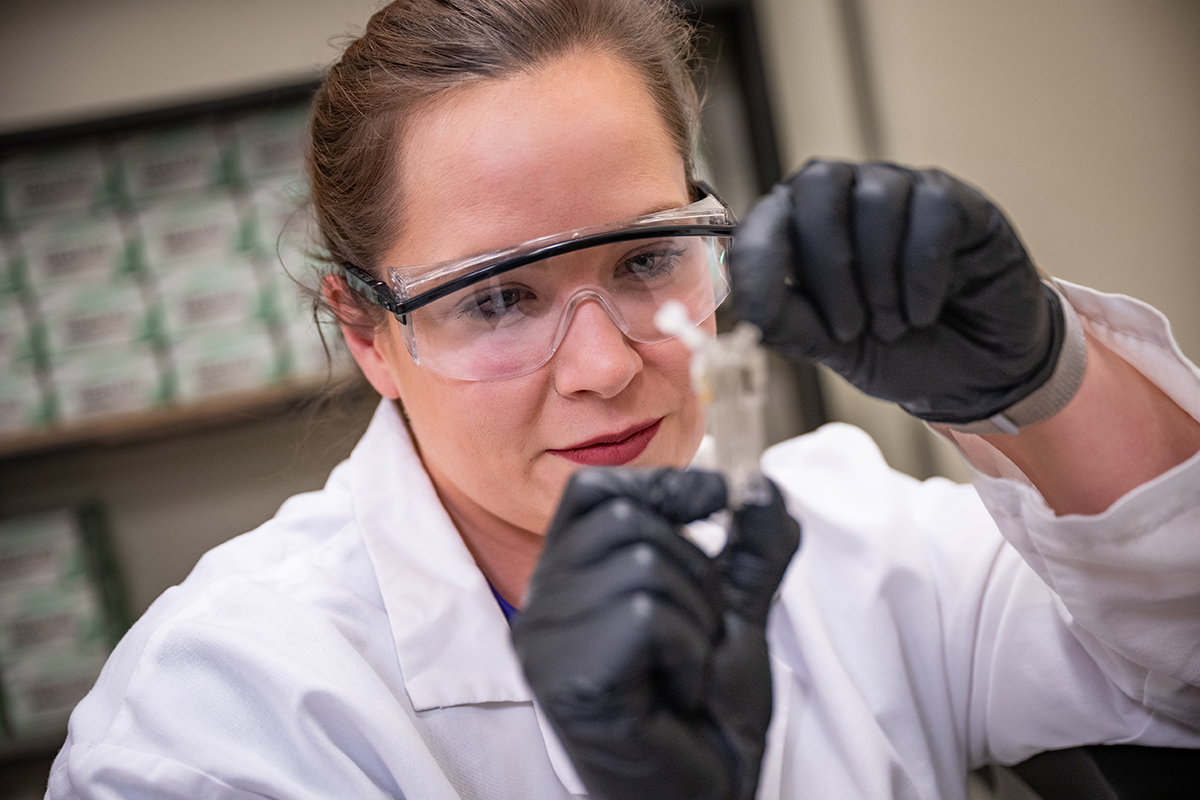
As an assistant professor of chemistry in Kansas State University's College of Arts and Sciences, Calvo leads a research team that synthesizes polymers to tackle challenges in areas like drug delivery, antimicrobial materials, hydrogels, polymer-metal chelation and Renewable feedstocks.
Polymers are made of repeating molecular building blocks that chemists can modify to control their properties. By changing their chemical composition, architecture and functionality, Calvo's team can tailor these materials for specific applications, from delivering drugs to capturing metal ions.
The work demands technical expertise, but also a particular way of thinking: identifying a problem, considering what's feasible and finding the simplest practical path toward a solution.
"It takes a certain kind of mindset to be really problem-oriented while also coming up with a solution that’s maybe not the most complicated solution," she said. "What approach can we take that’s feasible and realistic, and that isn’t too complicated, to get the outcome we want?
"I don’t think polymers can solve everything, but they can solve a lot of things."
Meaning in medical molecules
Calvo has extensive experience developing functional polymers for biomedical applications, including drug delivery and cancer-related research. When she arrived at K-State in 2023, she found opportunities to expand this work through theJohnson Cancer Research Center. The center approached Calvo with a donor-funded grant to develop a potential new treatment for rhabdomyosarcoma, a very rare childhood and adolescent cancer.
"The donor’s son passed away from this cancer, and she wanted someone to research this particular type of cancer," she said. "Most companies won’t spend money researching it because there isn’t enough money to be made, but I thought about what I could contribute, with my background and expertise."
One of the issues with rhabdomyosarcoma is that it often doesn’t respond well to chemotherapy, and radiation isn’t always feasible. Calvo's research looks for a method to deliver treatment more directly to the cancer cells. She has also partnered with Laura Miller, associate professor of veterinary virology in the College of Veterinary Medicine, to leverage her molecular biology expertise to come up with a way to target rhabdomyosarcoma.
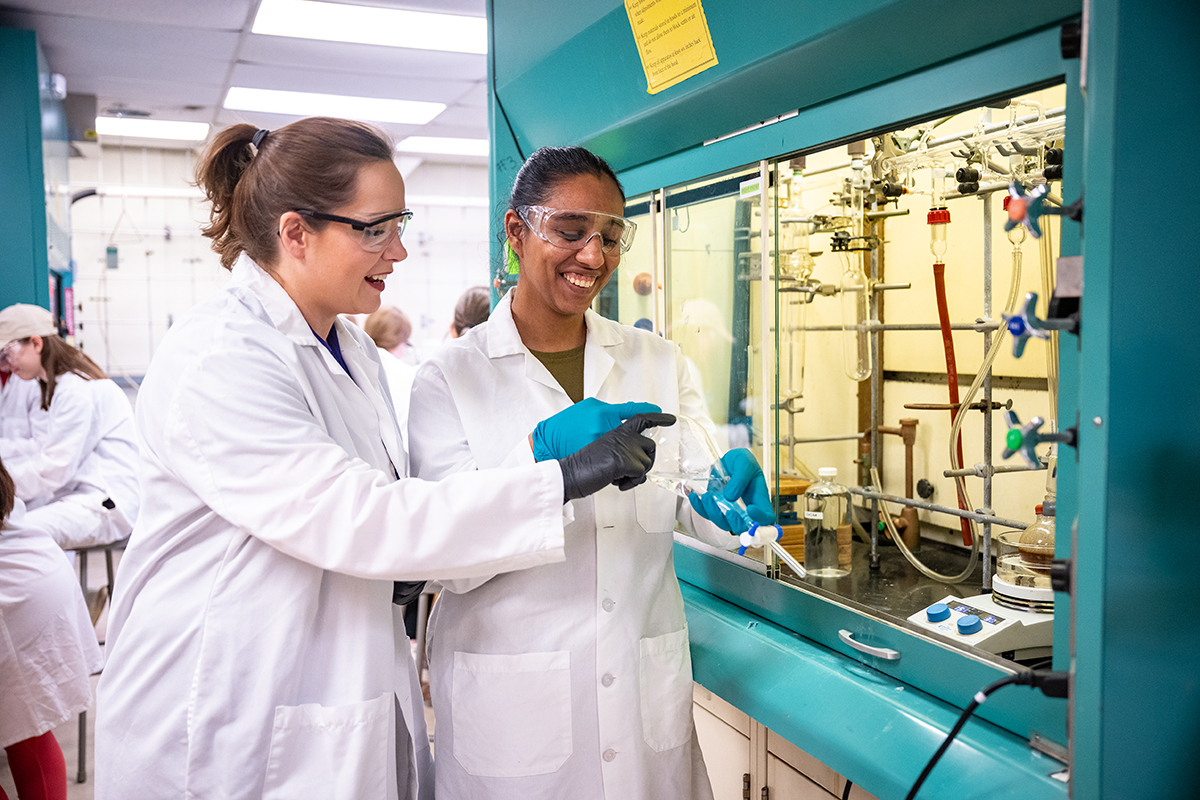
Given the cancer's rare and unique profile, the pair sought to use an antibody-mediated approach to target receptors overexpressed on those cancer cells. By attaching specially designed polymers to antibodies that recognize cancer cells, the researchers hope to develop targeted drug delivery systems that concentrate therapeutic agents at tumors while reducing their effects on healthy tissues.
The research partners have the pieces in place to combine their antibody and polymer approaches, and Calvo said they are eager to see their research progress to the next stages.
"This kind of work is motivating for me," Calvo said. "My 5-year-old daughter knows that my work is in making new molecules, like medicines for cancer, and she says that when she grows up, she wants to 'be like mommy' and make new medicines. It's a great feeling to know that what you do helps people while also being something your kids can understand."
Training the next generation
These days, Calvo herself isn't in the lab as often. She leads and guides the research, but most of the experimentation is done by undergraduate and graduate students she mentors.
It's a big part of why she chose to return to academia after working in industry.
"This teaching and mentorship opportunity is probably the most important part of our jobs as faculty because you can do research in many different places. You could be at a research institute, a national lab or a company, but to truly build the next generation of scientists is a huge honor," she said.
For Calvo, mentoring the next generation of scientists also means teaching them to look beyond the boundaries of their own disciplines.
Science, she said, is increasingly interdisciplinary, as researchers recognize that many of today’s most pressing challenges cannot be solved from a single perspective.
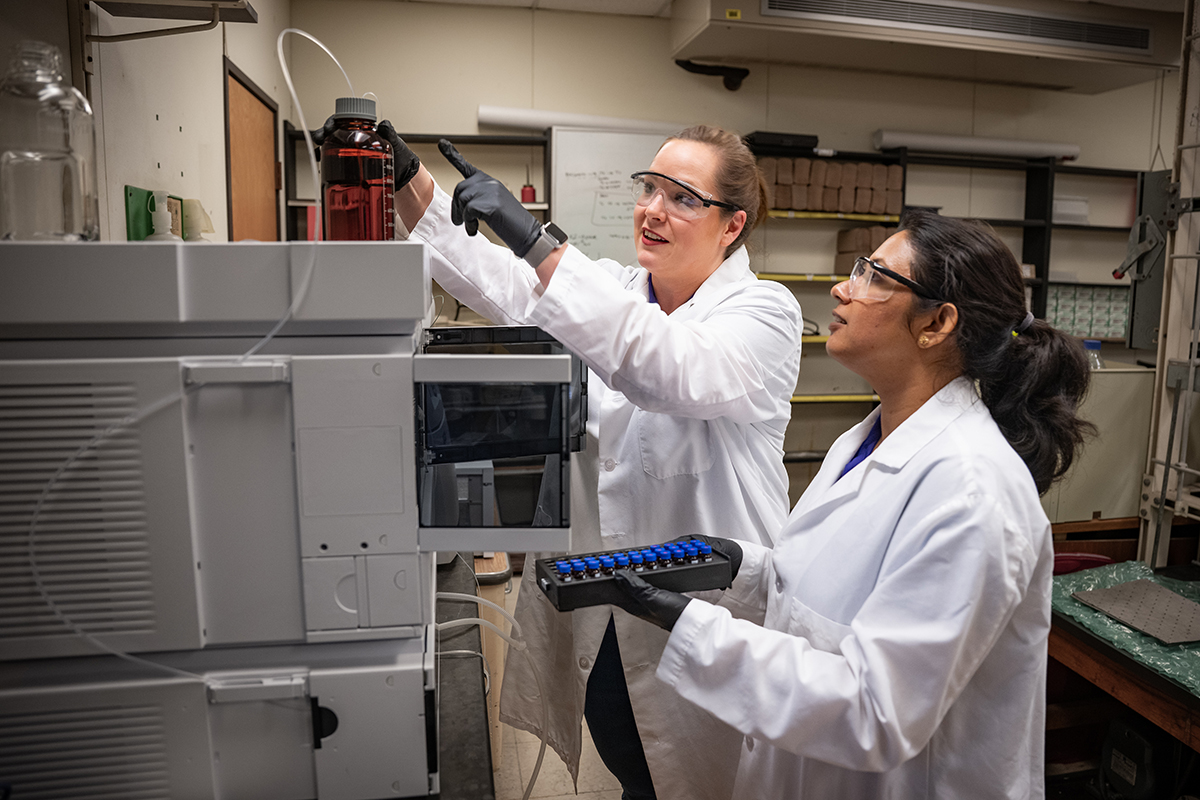
“I don’t think polymers can solve everything, but they can solve a lot of things.”
Patricia Calvo
Even within chemistry, the traditional divisions between specialties matter less when the goal is to solve a complex problem.
"The easy problems have been solved at this point," she said. "We’ve done a lot of good science, and we’ve also solved some hard problems, but many of the remaining challenges are really big ones that require collaboration."
That means knowing when to look beyond one's own expertise and finding the right people to help move an idea forward.
Calvo said K-State’s research community offers an advantage in that regard: Though relatively small, it brings together experts across a wide range of fields, making it easier to find collaborators with complementary knowledge and skills.
"You can never be the expert at everything, so seeking out other people is really helpful," she said.
It is an approach that reflects the philosophy behind Calvo’s own research. Whether the challenge is developing a better way to deliver cancer treatment or designing a polymer for an industrial application, the work begins with a problem — and the understanding that finding a solution often requires looking at it from more than one angle.
The right molecule, in other words, may be only part of the answer.
Related Stories
Beyond the breaking point
For three decades, Jim Hodgson has transformed glass into specialized equipment, giving researchers the tools to tackle problems standard labware can't solve.
Radiant research
The newest member of K-State's nuclear engineering team is already transforming lives through her research and preparation of the future workforce.
People with purpose: Laura Miller
With a strong commitment to advancing agile approaches for preventing infectious diseases in dogs and horses, Laura Miller focuses on transforming research...