Compensation study update: Recapping the journey that has led us to today
Dear colleagues,
Today marks an important step forward in Kansas State University’s Compensation Study journey: Staff will receive individual notifications about how their positions map to the updated staff structure, which will officially go into effect across HR systems in early December.
Beginning around 10 a.m. this morning, college/major unit HR managers will provide individual notifications to staff members. The notification will share how your position maps to a job title within the new structure, including any changes to your Fair Labor Standards Act, or FLSA, status for exemption. Additionally, if your current pay falls below the new market-aligned pay range associated with your mapped job title, you will also receive details regarding an under-market adjustment that will bring your pay up to your new range minimum, which will be reflected in Dec. 31 paychecks.
Should you have any questions regarding your individual market alignment, you’re encouraged to reach out to your supervisor or college/major unit HR manager as a starting point.
Creating this foundation for a market-aligned staff structure is the first of multiple milestones in the Compensation Study initiative. As President Linton and Provost Mendez shared on Nov. 5, additional collaboration will continue to drive the refinement of a market-aligned pay structure for faculty. Furthermore, beginning next calendar year, the university will begin the process of collecting compensable factors for individual faculty and staff, which will serve as the foundation for our ultimate goal of optimizing employee pay within range based on factors such as education, experience and contributions.
While this work moves forward, merit-based awards will also continue to recognize performance through efforts such as one-time bonuses, Targeted Faculty Salary Enhancements and Professorial Performance Awards.
Back to the beginning: Activating your request for competitive compensation
In 2022, as the university embarked on developing what is now the Next-Gen K-State strategic plan, surveys, stakeholder interviews and listening sessions were conducted to gather the perspectives of faculty, staff, students, alumni, donors and other external constituents. For faculty, staff and graduate students, one goal in particular was heard with resounding clarity: K-State needed a stronger solution for competitive compensation.
As the strategic plan was codified in fall of 2023 and the action plan to carry the goal of competitive compensation forward was solidified, the Compensation Study initiative took shape with a refined institutional compensation philosophy in tow, outlining clear objectives:
- To attract and retain top talent at all levels of the institution.
- To support responsible and effective use of the university’s financial resources.
- To determine pay based on objective factors.
- To encourage career growth and reward performance.
- To establish compensation guidelines that promote consistency across units while allowing flexibility to reflect differences across disciplines and programs.
In fiscal year 2025, the discovery and planning phase of the Compensation Study initiative was launched in partnership with a consulting partner, guided by an executive leadership team and three cross-functional steering committees: One for faculty compensation, one for staff compensation, and one for graduate student compensation.
Together, these groups reviewed and assessed current practices, classifications and salary structures based on internal and external pay equity and market competitiveness, identifying opportunities for improvement and growth. Their work contributed to the underlying methodology that would ultimately inform the path forward for implementation.
A critical challenge: Funding competitive compensation
With a foundational methodology set in early fiscal year 2026, university leaders began to wrestle with a critical question: In an unpredictable budget environment, how will we secure the funds to make good on our promise for competitive compensation — and fund other critical financial challenges facing the institution?
To answer that question, the university launched its Budget Transformation initiative, anchored by a core team and five working groups charged with identifying ways to maximize the flexibility and utilization of existing funds in an effort to more strongly align financial resources with the university’s Next-Gen K-State strategic plan. This effort to create a novel path forward to meet our core financial objectives and solve for the factors applying budgetary pressure led to an early Budget Transformation framework, which was ultimately operationalized through the work of the Advisory Budget Committee in spring 2026.
A key outcome of this effort was the design of a flexible budgetary framework with a clear purpose: To strategically reallocate approximately $66.8 million to fund both under-market adjustments and range optimization over the course of Compensation Study implementation, as well as address the university’s other financial challenges.
Advancing Compensation Study implementation
As the funding plan was coming together, a three-phased, multi-year implementation approach for the Compensation Study was subsequently developed for faculty and staff:
- Phase I: Align positions to market and enact under-market adjustments as necessary.
- Phase II: Collect and validate compensable factors to refine pay range placement for individual faculty and staff.
- Phase III: Enact optimized pay placement for individual faculty/staff within ranges.
Also critical was identifying a path forward for the continued advancement of more consistent pay practices to support the sustainability of market alignment over time, work that continues to make progress with the active Pay Administration Guidelines working group.
For graduate student compensation, the original steering committee set forth three critical recommendations, including an increased minimum stipend, while also identifying that the university uses a myriad of current practices that need to be more strongly aligned to support consistency for graduate students. This resulted in the formation of the ongoing Graduate Student Compensation working group, who is currently untangling these practices and building a clear implementation path forward.
Moving forward together
As was shared by President Linton and Provost Mendez on Nov. 5, Phase I implementation work will continue for faculty beyond our initial timeline, ensuring time and space for additional input with a commitment to still ensure eligible faculty pay adjustments will be made retroactively to the same effective date as the staff compensation adjustments. Conversations continue with the academic deans, and ultimately, the Faculty Steering Committee will be reconstituted to provide additional input on a recommended path forward. Faculty Senate representation within that committee will be updated to reflect current leadership, and a University Distinguished Professor will also be added to provide input. You may view the updated committee members online.
Furthermore, next calendar year, the university will begin to set its sights on implementation phases II and III: Collecting individual compensable factors to inform optimized pay placement within ranges. Additionally, a graduate student compensation implementation timeline will be finalized through the ongoing working group efforts and shared in early 2027 as well.
There are many moving parts along this journey. Setting a strong, market-aligned foundation is no easy task. Continuing to recognize and reward individual performance along the way is also critical — and it is enabled by the university’s ongoing work to enhance both staff performance management and faculty evaluation processes.
As the university continues on this compensation journey, please remember that you can always access the Compensation Study initiative website for the latest information and guidance.
And always remember that the underlying goal of this work is to address the number one request put forth during strategic planning efforts: A path forward for more competitive compensation at K-State.
Go 'Cats!
 Jesse Perez Mendez
Provost and executive vice president
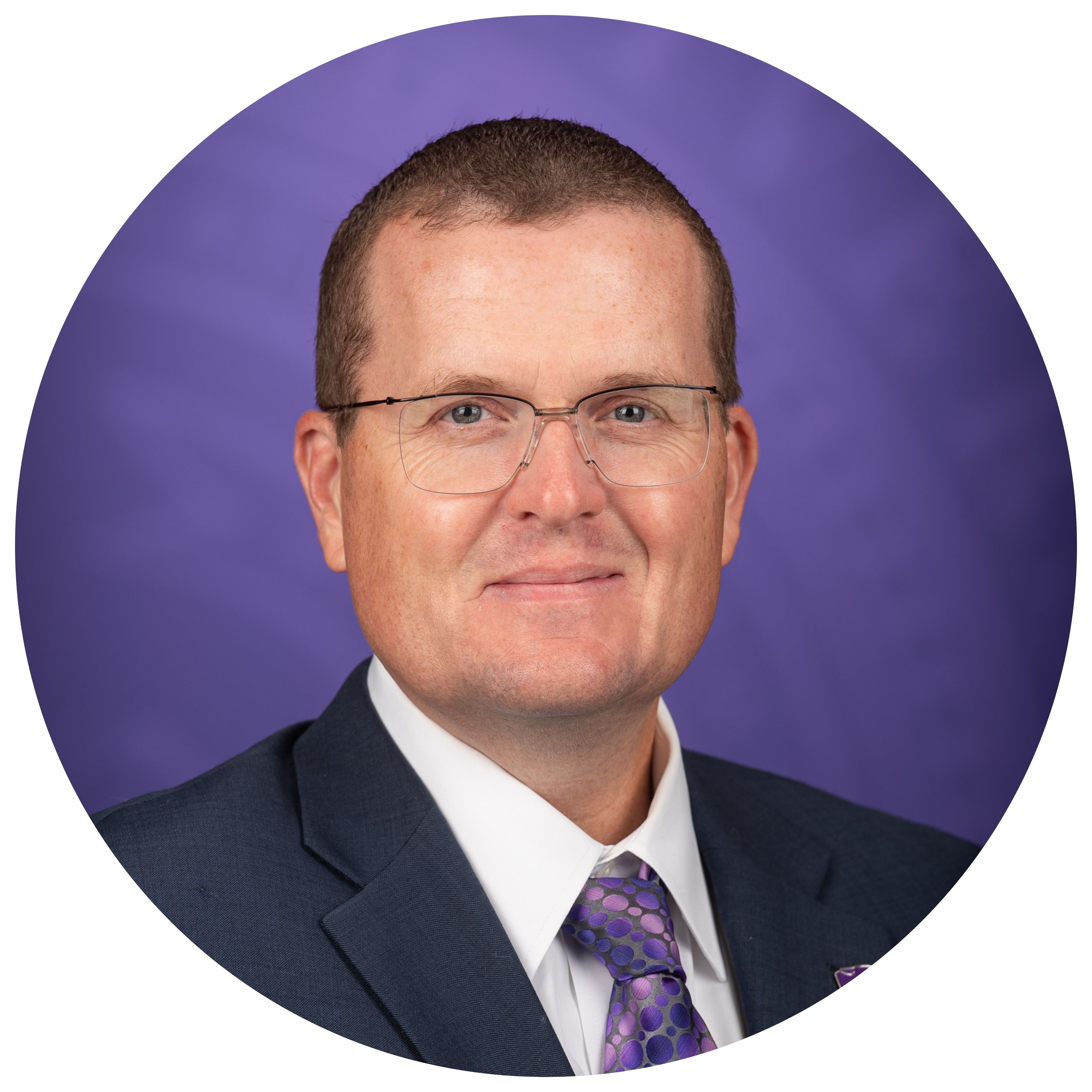 Ethan Erickson
Vice president for administration and finance