People with Purpose: Migette Kaup
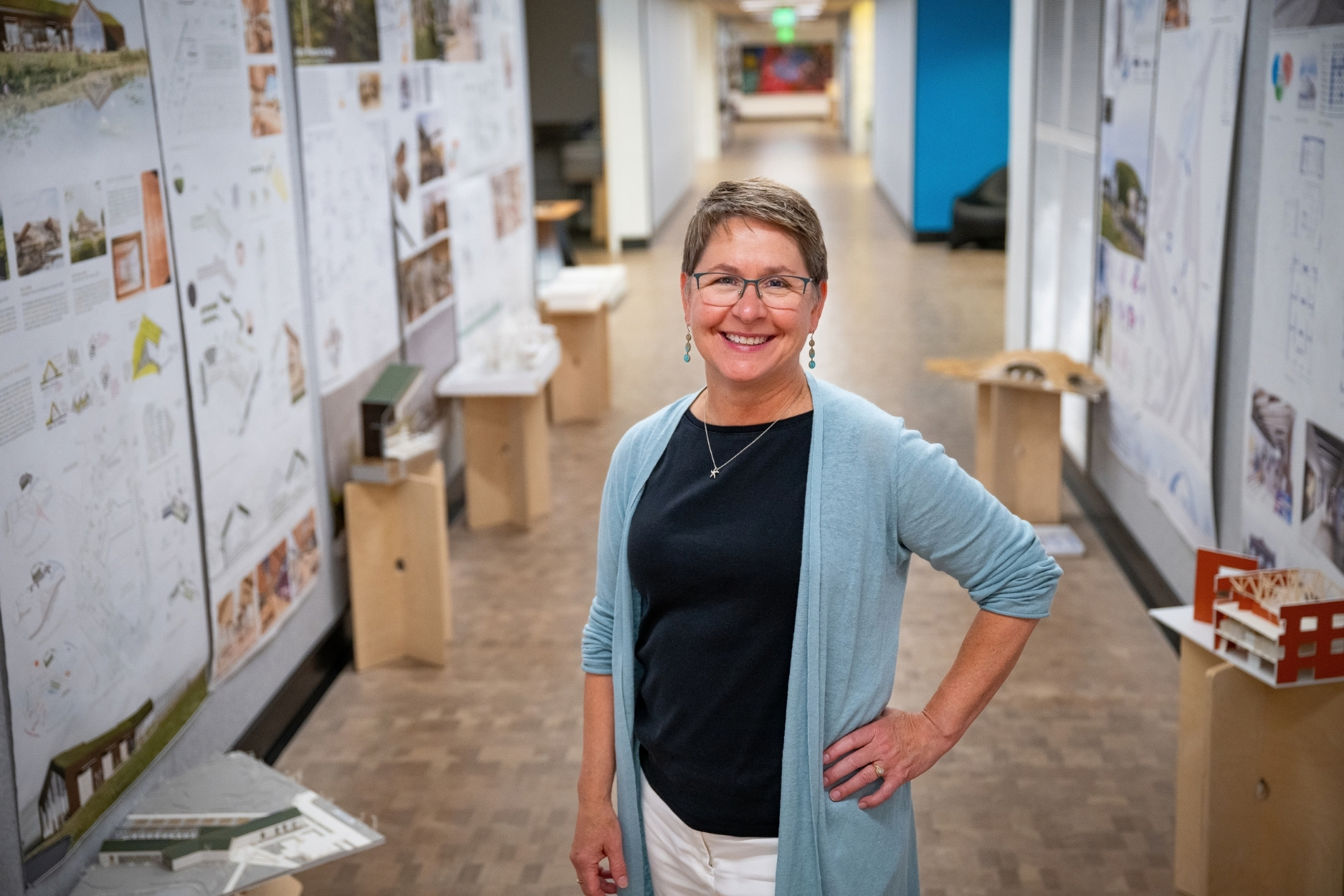
Migette Kaup approaches design as a lifelong relationship between people and place, reimagining how the spaces around us can evolve alongside us through every stage of life.
By Abbigail Marshall
News and Communications Services
Monday, Oct. 5, 2026
As we age, our needs change. Migette Kaup believes the spaces around us should be designed to keep up.
Kaup, professor of interior design and director of research for the Center on Aging, has dedicated her research and teaching career to gerontology-centered and universal design — finding her purpose in empowering others to create spaces that serve people at every stage of life.
Q: How do you help students connect research to the people and communities it serves?
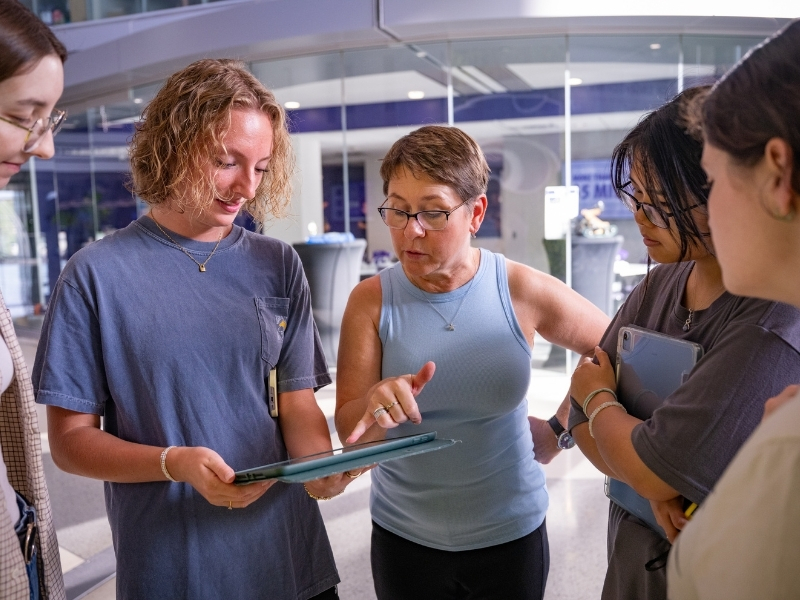
Kaup: Design research becomes meaningful when students can engage with topics and questions that interest them. My role is to help students recognize their capacity to participate in generating knowledge that makes a difference, so I encourage students to understand the experiences, priorities and challenges of the people who will ultimately use the places they create.
I want students to understand that rigorous research and human connection are not competing priorities; together, they lead to more responsive and effective solutions, making evidence-based design more durable. I start with the basics, build on this with current research and then challenge students to consider what comes next. When they see how their own ideas can improve someone's independence, dignity, health and well-being, research stops being an academic exercise and becomes a form of service.
Q: How does your work fit into the larger strategic vision of the university?
Kaup: My goal is to move ideas from the classroom and research settings into places where they can make a measurable difference — my work reflects our next-generation land-grant mission by connecting education, research and engagement with challenges that directly affect people and communities. I am not simply generating knowledge about aging and the built environment. I connect with students, providers, professional organizations, public agencies and communities to translate that knowledge into better environments, practices and policies.
In the classroom, I engage students in meaningful applied learning experiences and prepare them to use research in their professional practice. Through the Center on Aging and interdisciplinary collaborations, my work addresses issues such as age-friendly education, person-directed long-term care and the relationship between environmental design and health outcomes. Projects such as PEAK and our research with the Logan LIFE Center also demonstrate how K-State can work alongside Kansas communities to study promising ideas and help strengthen them.
Q: What is one misconception about aging you wish more people understood?
Kaup: That growing older makes people less capable, less individual or less relevant.
We also tend to speak about older adults as though they are a single, homogeneous group. In reality, people often become more different from one another as they age because they carry a lifetime of distinct experiences, relationships, abilities, cultures and expectations. There is no single type of "older person," just as there is no single environment that can support everyone in the same way.
Those assumptions show up in the choices we make about buildings, policies and daily routines. When we focus too heavily on what someone may no longer be able to do, we can unintentionally limit their independence. Good design should do the opposite. It should make it easier for people to make choices, follow familiar routines, stay connected with others, and continue doing as much as possible for themselves.
I remind students that age-friendly design does not simply mean "old-friendly" design, but means creating places to support people across their life span.
Q: What is one moment working at K-State that's made you proud to be a part of this campus?
Kaup: One particularly meaningful experience has been watching K-State students contribute to the interdisciplinary research surrounding the Logan LIFE Center, an innovative rural Kansas project that brings an elementary school and a long-term care community together.
Students from several disciplines have worked alongside faculty and community partners to understand what happens when children and older adults share experiences, relationships and community resources. Seeing undergraduate students collect and analyze data, listen to community members, and then present their early findings at the Kansas State Capitol and a national professional conference made me incredibly proud.
The students witnessed how research in a rural community fosters understanding of program impacts that could inform other communities facing similar challenges. They learned that collaborative research can be especially meaningful for the people whose lives are represented in the data.
That experience captured what I value most about K-State: students and faculty working across disciplines, in partnership with a Kansas community, to explore an innovative response to a real human challenge.
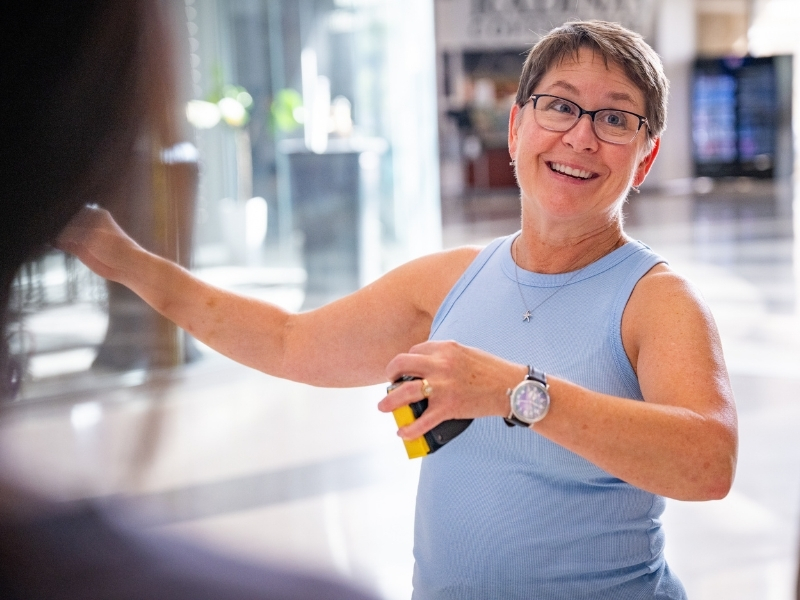
“I want students to understand that rigorous research and human connection are not competing priorities; together, they lead to more responsive and effective solutions, making evidence-based design more durable.”
Migette Kaup
Q: What is your favorite way to serve your profession and community? Why?
Kaup: My favorite form of service is bringing researchers, designers, care providers and community members together to examine what is working and what still needs to improve.
For many years, I have helped lead post-occupancy evaluations of senior living and care environments through the Society for the Advancement of Gerontological Environments. These evaluations allow interdisciplinary teams to visit completed projects, listen to residents and staff, study how the environments function and share lessons across broader professional communities. I also serve on a national code development committee of the Health Guidelines Revisions Committee.
I value this work because it bridges research and practice. A research finding has limited impact if it never reaches the people making decisions about our buildings, programs or policies. At the same time, researchers need to hear directly from practitioners and communities about the challenges they are encountering. I bring this dialogue into the classroom so students can also see how their research efforts can influence significant change.
My professional service keeps me connected to real-world dynamics, keeps my teaching and scholarship relevant and timely and enables me to contribute evidence that can advance future environments for older adults.
Q: What challenges are you trying to solve through your work?
Kaup: In my role as director of research for the Center on Aging, I am working to create stronger connections around all things aging. Growing older is the one human experience we all share, and remarkable age-related work is taking place across the K-State campus. Our goal is to build a stronger network of people, ideas and partnerships to advance education, scholarship and engagement.
My own research focuses on how specific, modifiable design features in long-term care settings influence the daily experiences and measurable outcomes of residents, staff and families. Many long-term care environments were designed primarily around efficiency, regulation and medical routines. As a result, the architecture can overshadow the qualities that make a place feel like home — things such as choice, privacy, autonomy, familiar routines, meaningful relationships and a sense of belonging. This is especially consequential for people living with dementia or other conditions that make them more dependent on environmental support.
My research team has been developing the Environmental Audit Scoring Evaluation, or EASE, an evidence-based tool that helps distinguish environments that support person-directed living from more traditional institutional models. We are now working to connect those environmental characteristics with resident quality indicators.
Ultimately, I want to give care providers, designers and policymakers stronger evidence to inform decisions about how to design planned care settings. Even when organizations cannot replace an entire building, they should be able to identify strategic changes that enhance dignity, independence, health and quality of life.
Related Stories
People with Purpose: Jesse Osnes
Jesse Osnes, a doctoral student and graduate teaching assistant in the Department of Mathematics, earned the Presidential GTA award for Excellence in Undergraduate...
People with Purpose: Justin Kastner
A professor in the Department of Diagnostic Medicine and Pathobiology, Justin Kastner encourages students to learn complex subjects through fresh perspectives,...
People with Purpose: Lauren McDaniel
Lauren McDaniel, kinesiology instructor and Exercise is Medicine campus coordinator, believes that every moment counts — whether through movement or meaningful...