People with Purpose: Jesse Osnes
Jesse Osnes believes the best learning happens when curiousity is nurtured, mistakes are encouraged and community is built.
By Abbigail Marshall
News and Communications Services
Monday, Sept. 28, 2026
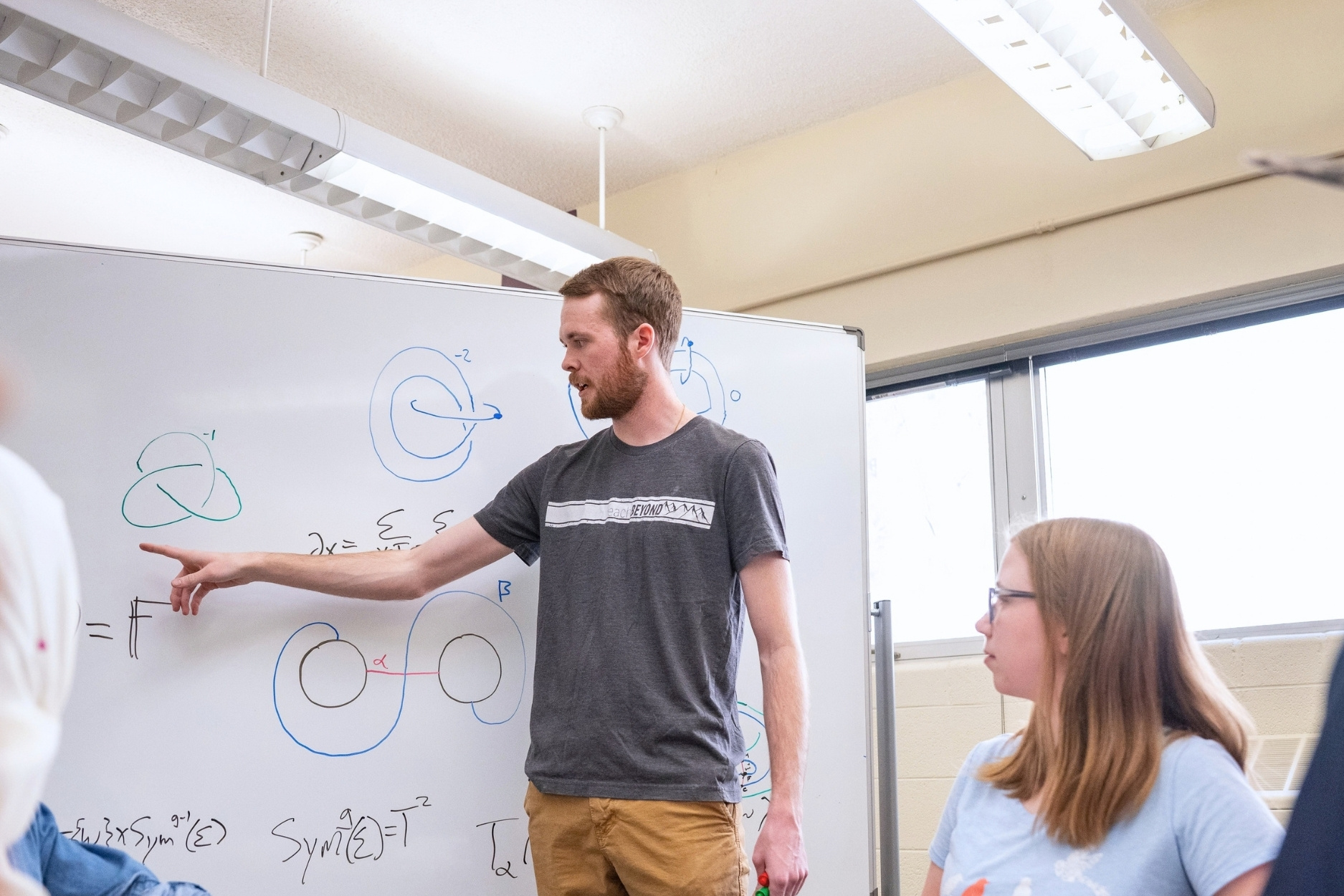
Jesse Osnes is changing the equation for math learning by helping students see the subject —and themselves — differently.
A doctoral student, graduate teaching assistant in the Department of Mathematics and winner of the Presidential GTA Award for Excellence in Undergraduate Teaching, Osnes knows learning can be intimidating. That's why he creates spaces where both questions and mistakes are encouraged — finding his purpose in helping students build confidence, embrace challenges and find joy in learning.
Q: How do you help students build confidence in their mathematics skills?
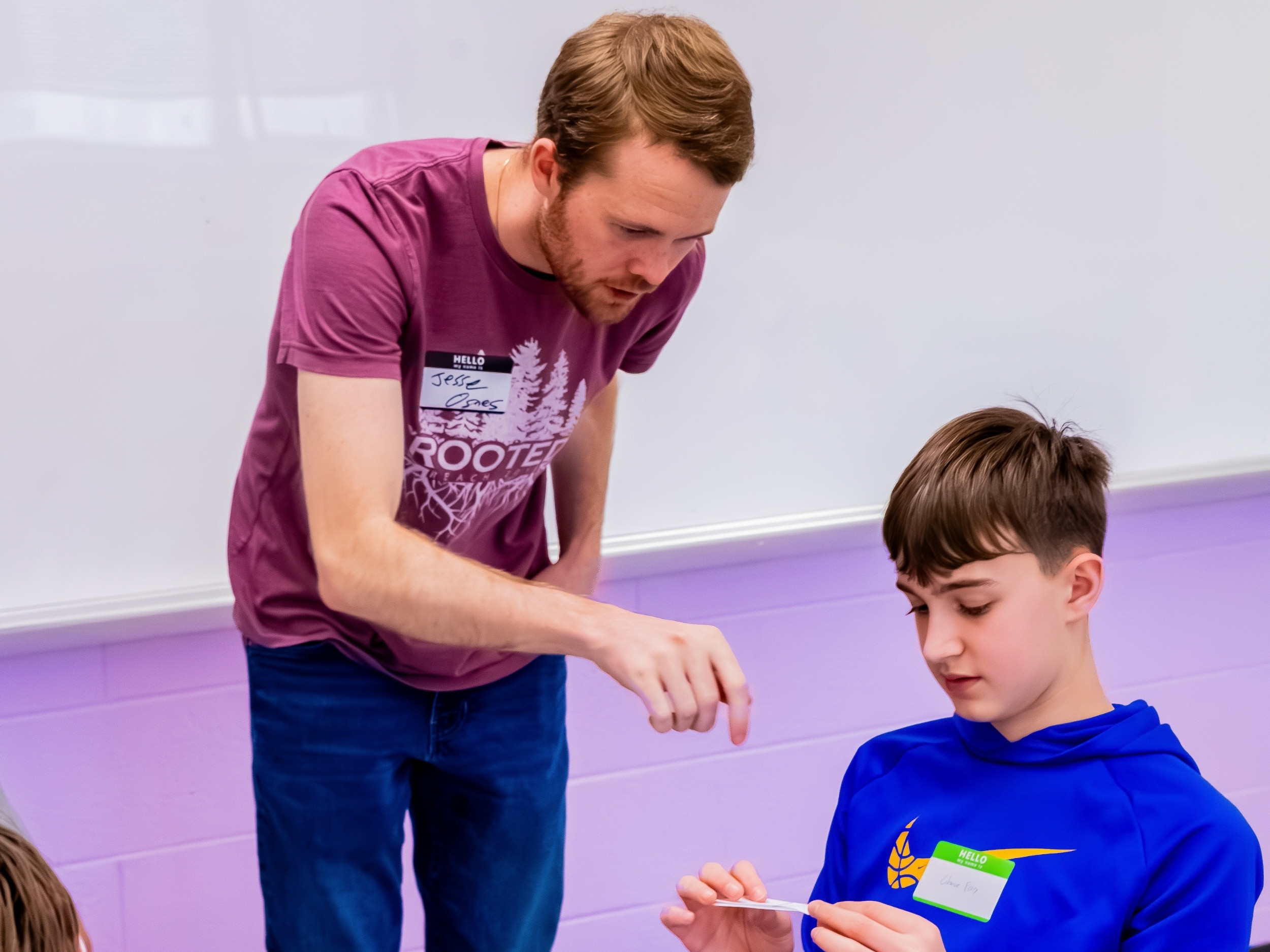
Osnes: I create environments where students are comfortable asking questions and making mistakes. A lot of times, students who are struggling to understand a math concept have a lot of shame in their lack of understanding. This shame leaves a student petrified of making a mistake in front of an instructor and extremely hesitant to ask questions.
To remedy this, I make sure to smile and encourage the student as often as possible. When it's not a distraction to the student, I will often deliver jokes to make the situation less tense. When presenting an example problem, I will point out mistakes that previous students or I have made to help them avoid them when completing it themselves. Sharing these common pitfalls shows them that I made mistakes when I first learned this, and hence, they can too.
Finally, I give my students frequent opportunities to ask questions, and I am intentional about my wording. I make sure to say things like, "What questions are there about what just happened?" rather than "Are there any questions?" The latter question invites a timid student to ask, whereas the former invites them to hide.
Q: What role do you believe education plays in creating access and opportunity?
Osnes: I believe that one key role that education plays is providing a community for an individual seeking to learn. While it's up to the individual to learn and own the material they are learning, I believe the process of learning is best done in a community. I think that educational institutions provide a space for people to come together on a level playing field and improve themselves. I think people learn best when they have someone else to learn, struggle and succeed with.
This is why I think as an instructor, creating a positive learning environment is so important. It creates a space where a student is comfortable not only learning individually but also learning with others.
While it's up to the individual to learn and own the material they are learning, I believe the process of learning is best done in a community.
Q: What connections have you made through your outreach efforts that have stayed with you?
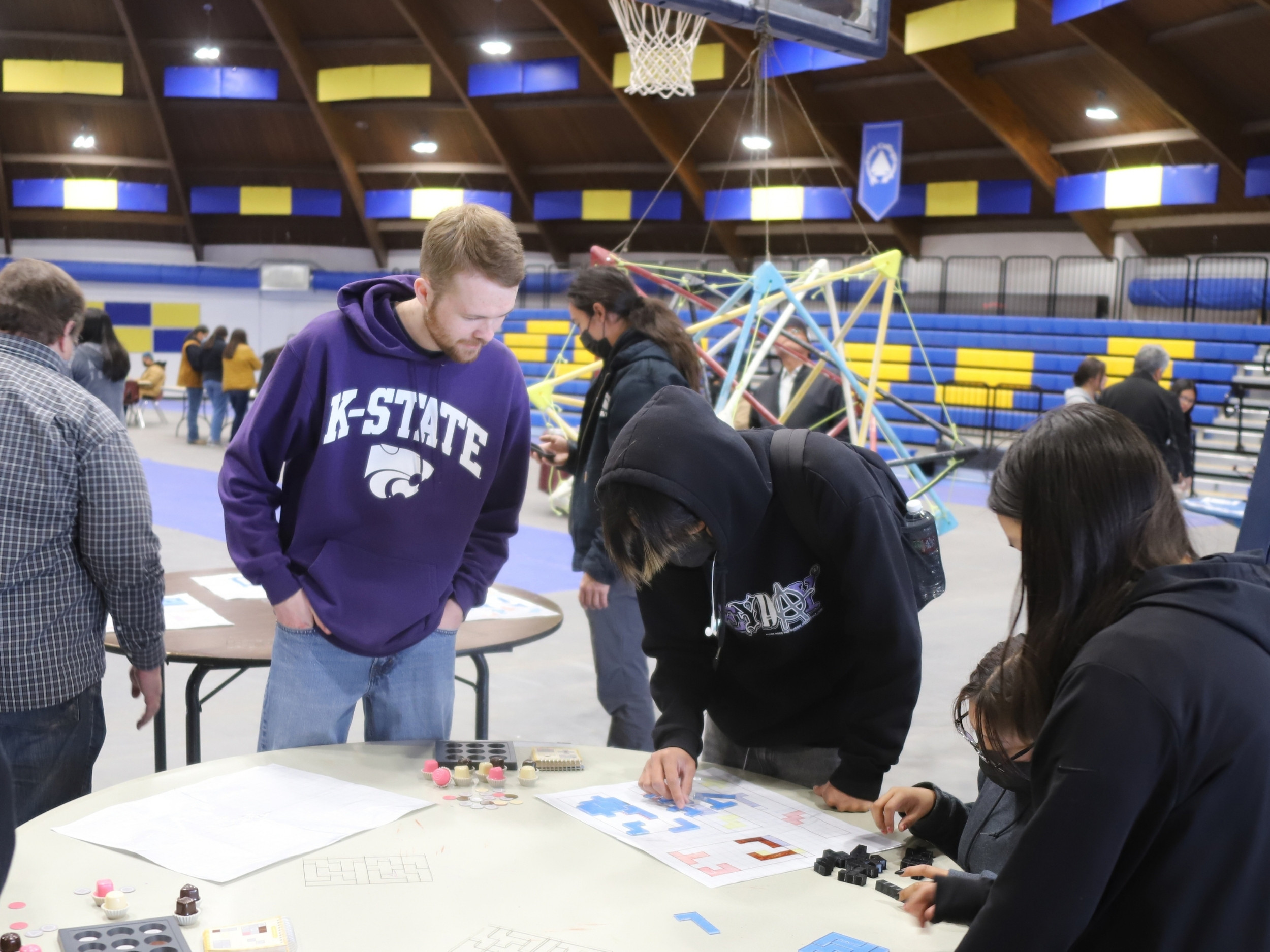
Osnes: For the past three years, I've had the opportunity to go to the Navajo Nation to volunteer at various programs for local middle and high schoolers — there are several moments that have stayed with me. In the spring, Diné College hosts a STEM festival where several hundred middle and high school students engage in fun science activities. I had the opportunity to help lead some of the math activities at this festival.
In the summers, I have also served as a mentor and activity leader at the Baa Hozho Math Camp, accompanying my advisor, David Auckly. This is a two-week camp for middle and high school students, with hands-on math activities each day.
Over the past two years, I’ve served as a workshop organizer for K-State's Sonia Kovalevsky Day, an event where middle schoolers come to Cardwell Hall to participate in fun math activities. Each year, fellow graduate students are responsible for creating a workshop activity that gives students the opportunity to have fun while learning problem-solving and critical-thinking skills, and we facilitate it.
In all of these outreach efforts, I am amazed by the students' creativity and energy. I love to see a student build confidence in themselves and grow comfortable in facing difficult problems. I love the opportunity to help students who may come from very different backgrounds and possibly very difficult situations, and to help them find joy in learning.
Q: What motivates you to continue making learning approachable?
Osnes: I'm motivated when I see a student accomplish a goal they set out to achieve. I'm motivated when I see a student become more confident with their gifts and abilities. I love to see people strive to better themselves. I enjoy working with students from backgrounds entirely different from my own and learning from them as I teach. For each student I interact with, I seek to explain the material clearly and in a collected manner, because that is how I would want to be treated if I were in their position.
Related Stories
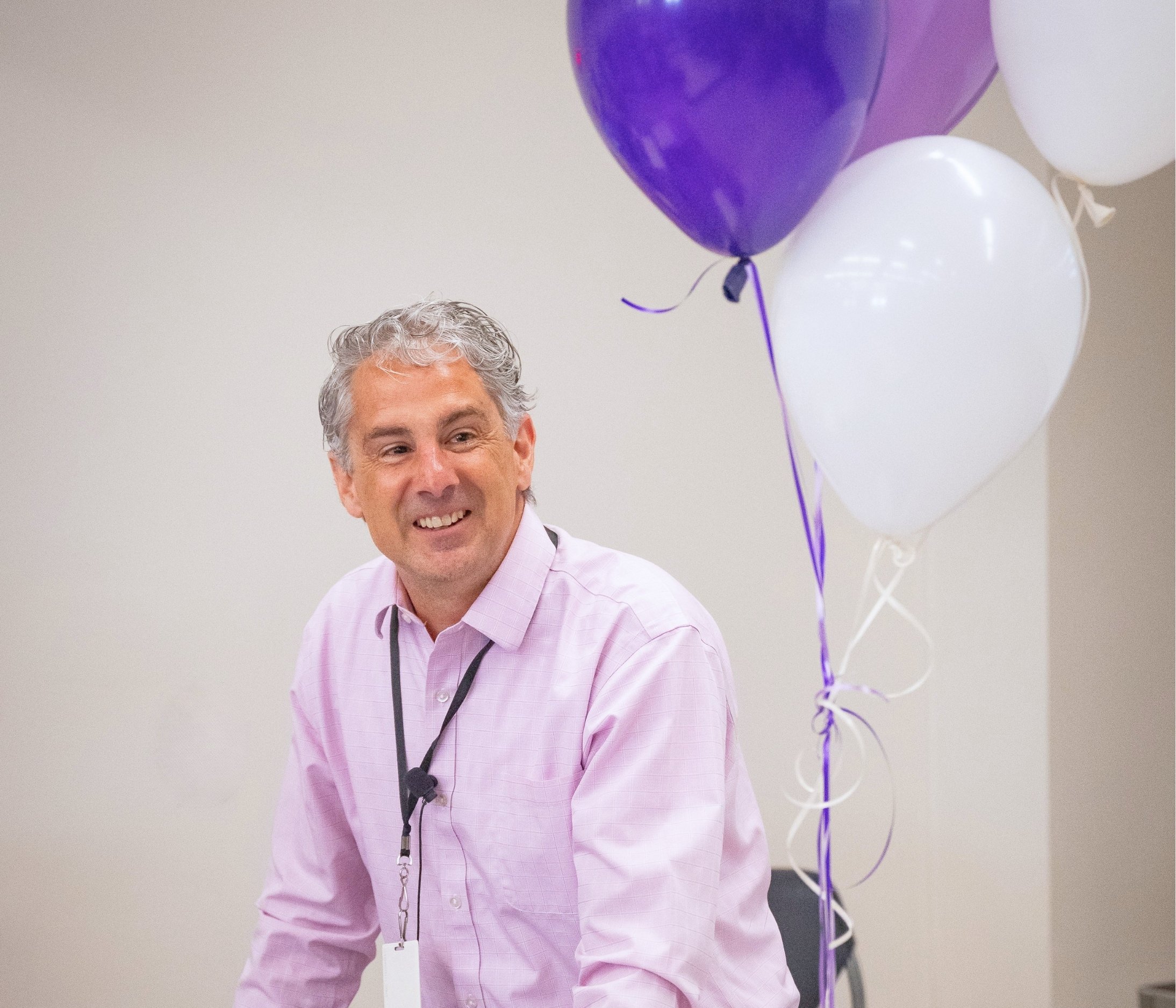
People with Purpose: Justin Kastner
A professor in the Department of Diagnostic Medicine and Pathobiology, Justin Kastner encourages students to learn complex subjects through fresh perspectives,...
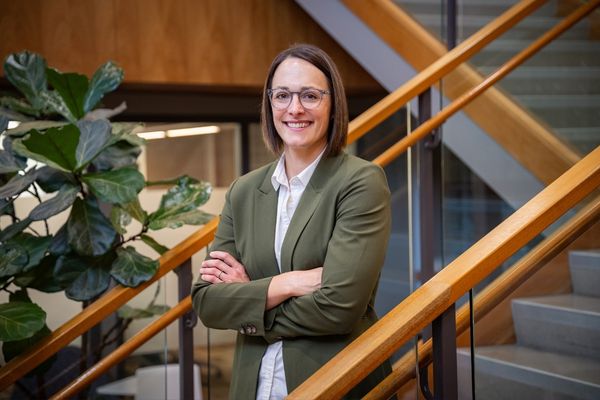
People with Purpose: Lauren McDaniel
Lauren McDaniel, kinesiology instructor and Exercise is Medicine campus coordinator, believes that every moment counts — whether through movement or meaningful...
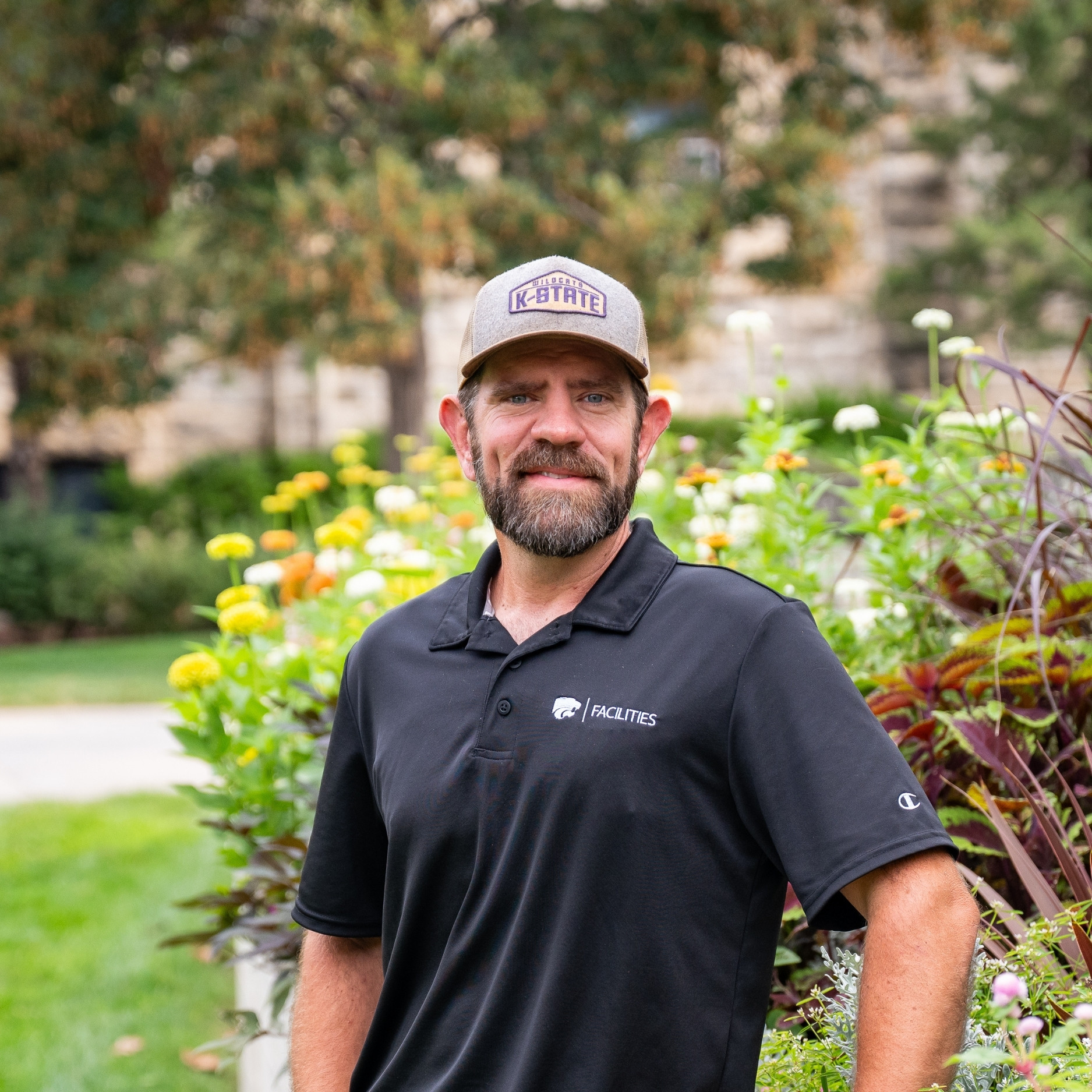
People with Purpose: Steven Snyder
As Landscape Services superintendent, Steven Snyder pairs a passion for people with a commitment to caring for the outdoor spaces that shape the campus experien...