People with Purpose: Lauren McDaniel
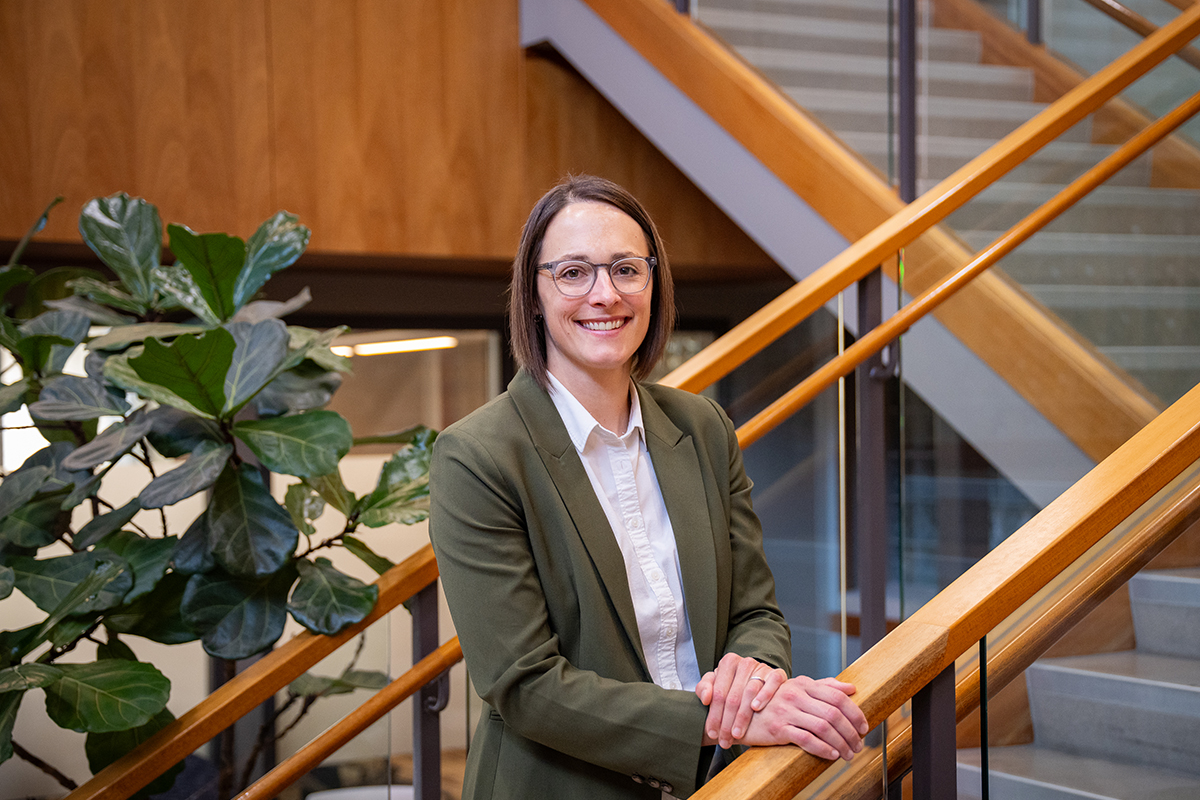
For Lauren McDaniel, the best lessons are the ones students carry beyond the classroom and into the clinic, where knowledge, confidence and a passion for movement can change lives.
By Abbigail Marshall
News and Communications Services
Monday, Sept. 14, 2026
For Lauren McDaniel, a little movement can go a long way: whether it's a few minutes of physical activity or a step outside your comfort zone.
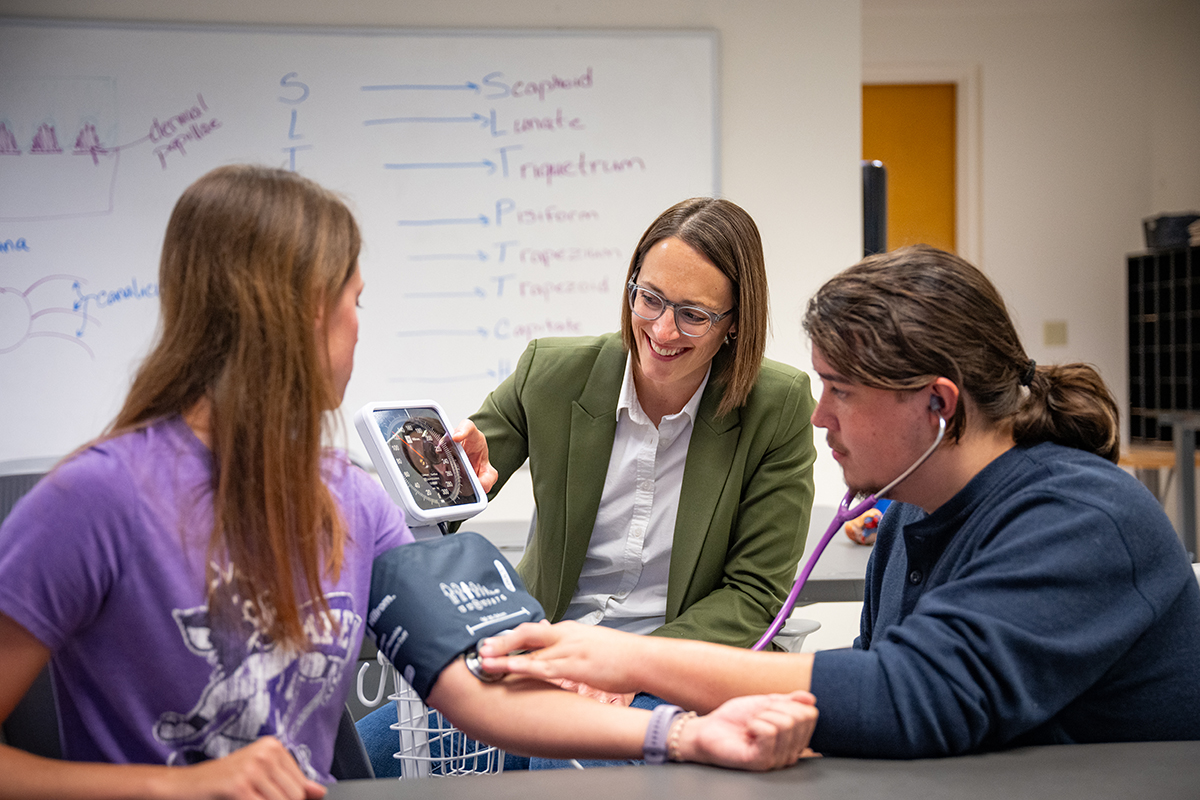
McDaniel, kinesiology instructor in the School of Health Sciences and winner of the Presidential Faculty Award for Excellence in Undergraduate Teaching, was once a quiet K-State student who'd never imagined teaching. Now, she helps future health professionals at her alma mater connect the dots between movement, medicine and everyday life — finding her purpose in helping students discover what they're capable of.
Q: What moments of student growth are most meaningful for you to witness?
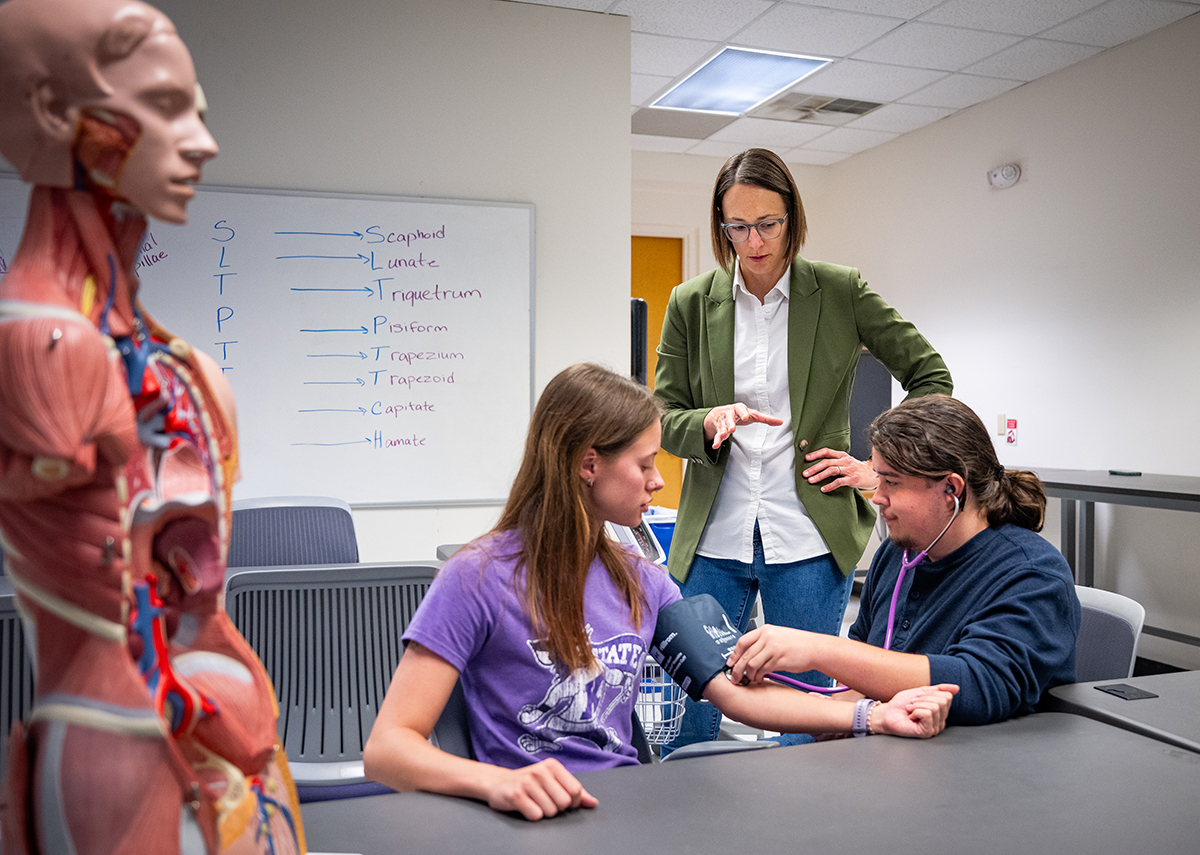
McDaniel: Teaching anatomy and physiology comes with a unique set of challenges. Given its rigorous, eight-credit-hour requirement, many students enter the course with significant apprehension. Because of this, the most rewarding part of my role is witnessing their transformation from that initial intimidation to self-belief.
My favorite part of teaching is getting to observe a "lightbulb" moment when students stop relying on memorization and begin to actively connect concepts. Being able to watch the transition from "What do I need to memorize?" to understanding how organ systems integrate or predicting a physiological response is what makes teaching anatomy and physiology so fun!
“When it comes to improving health, every minute of movement counts!”
McDaniel
Q: How do you encourage future health professionals to think beyond traditional problems and consider prevention?
McDaniel: Our students, or future health professionals, can participate in K-State's Gold-level Exercise is Medicine-On Campus, or EIM-OC, initiative. This is a joint effort between the kinesiology program, Lafene Health Center and Recreational Services focused on promoting the health benefits of physical activity and championing movement in the campus community.
Beyond participation in EIM-OC, our kinesiology curriculum embeds the concept of Exercise is Medicine directly into coursework. Students learn how targeted physical activity can be used to prevent and manage chronic disease, preparing them for successful careers in healthcare, exercise physiology and rehabilitation.
Q: What connections between health, movement and everyday life do you think more people should know about?
McDaniel: I think most people are aware of the many health benefits associated with physical activity, but it’s less widely understood how to go about obtaining them. For example, you don't need to go all out for 60 minutes every day to improve your health. The focus should be on finding an activity that is both enjoyable and sustainable over the long term.
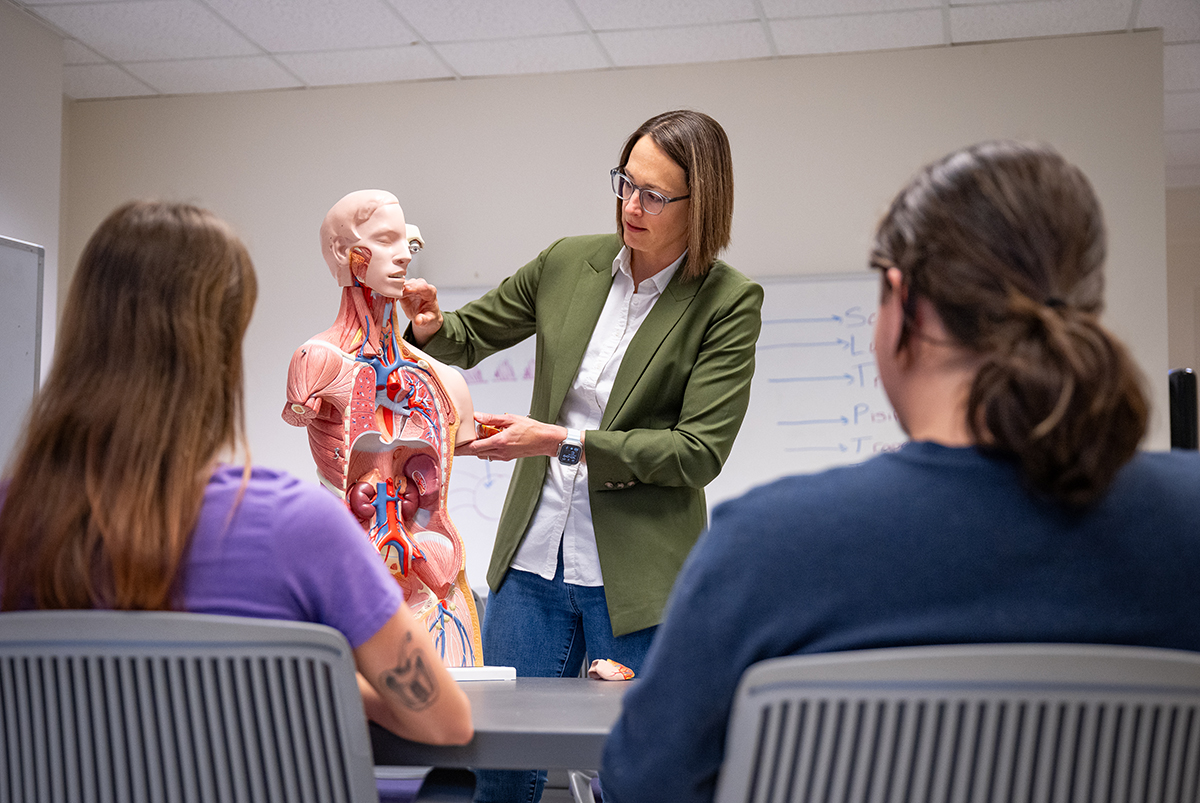
Start where you are and do what you can to achieve 150 minutes of moderate-intensity aerobic activity and two sessions of muscle-strengthening activity per week. A great way to achieve this is to start small by building brief physical activity "snacks" into your daily routine or standing more throughout the day. When it comes to improving health, every minute of movement counts!
Q: What opportunities in health science give you the most hope for the future?
McDaniel: The growing acknowledgment of physical activity as a vital component of overall health and well-being. I'm particularly encouraged by the shift towards a model in which Exercise is Medicine becomes standard in clinical practice instead of simply a catchphrase.
Recent policy updates have made physical activity assessment a reimbursable part of a healthcare visit, opening the door for referrals to qualified physical activity programs, exercise physiologists, and physical therapists. Watching healthcare systems shift to a model that encourages physical activity and seeing the potential career opportunities for our health sciences students is incredibly exciting!
Q: What piece of advice can you uniquely give to students?
McDaniel: Embrace opportunities and experiences during your time here. K-State offers endless ways to get involved. Whether that’s through an internship, student organization, research experience or job, find what excites you and pursue it!
Growing up in Manhattan, I never imagined I would be an instructor at K-State. As a quiet undergraduate kinesiology student, the thought of standing in front of a lecture hall of 125 students would have terrified me. Thanks to excellent mentors who encouraged me to step beyond my comfort zone, I discovered a passion for teaching, a career path I had never envisioned for myself. Now, I feel incredibly fortunate to teach and mentor students at the university where my own path began.
Related Stories
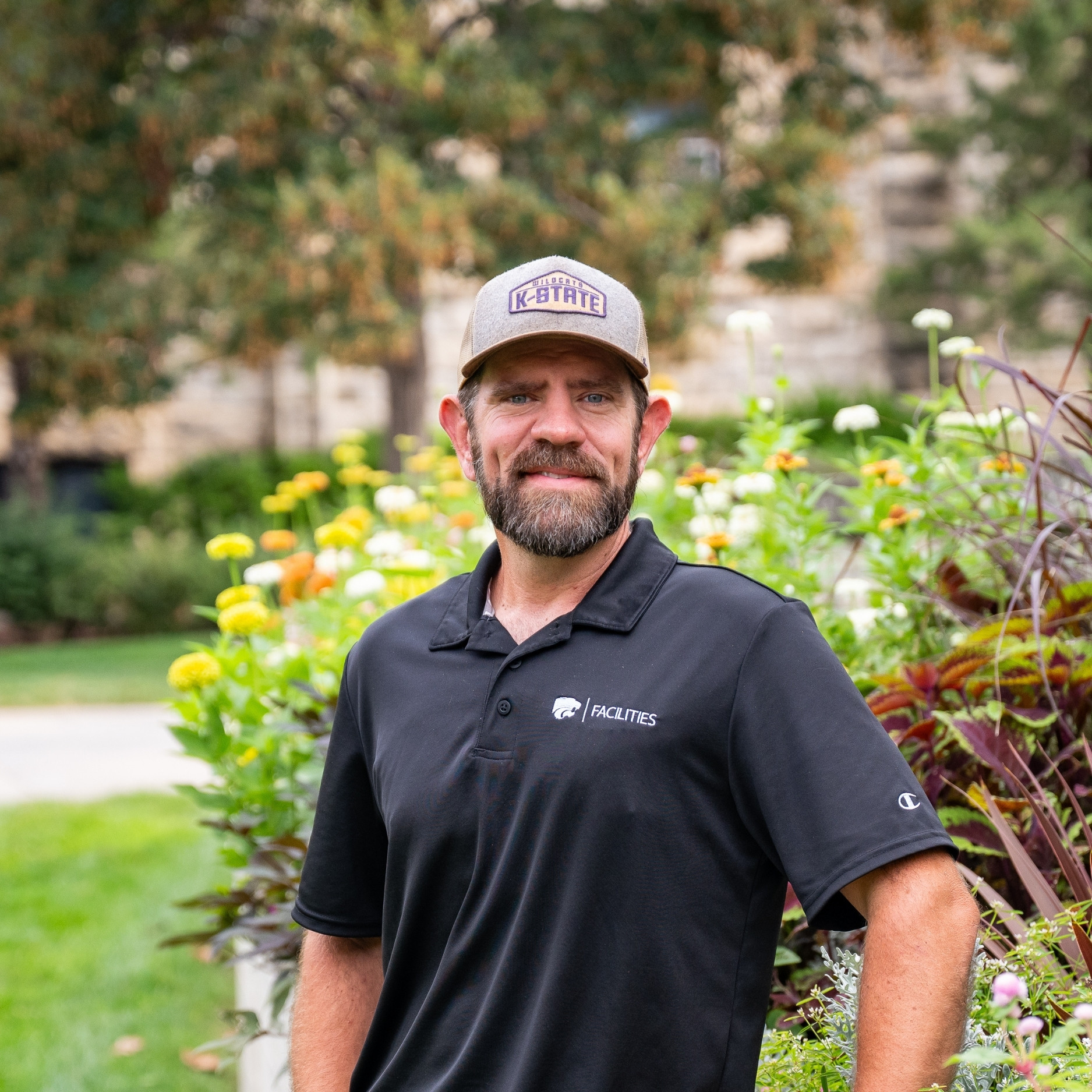
People with Purpose: Steven Snyder
As Landscape Services superintendent, Steven Snyder pairs a passion for people with a commitment to caring for the outdoor spaces that shape the campus experien...
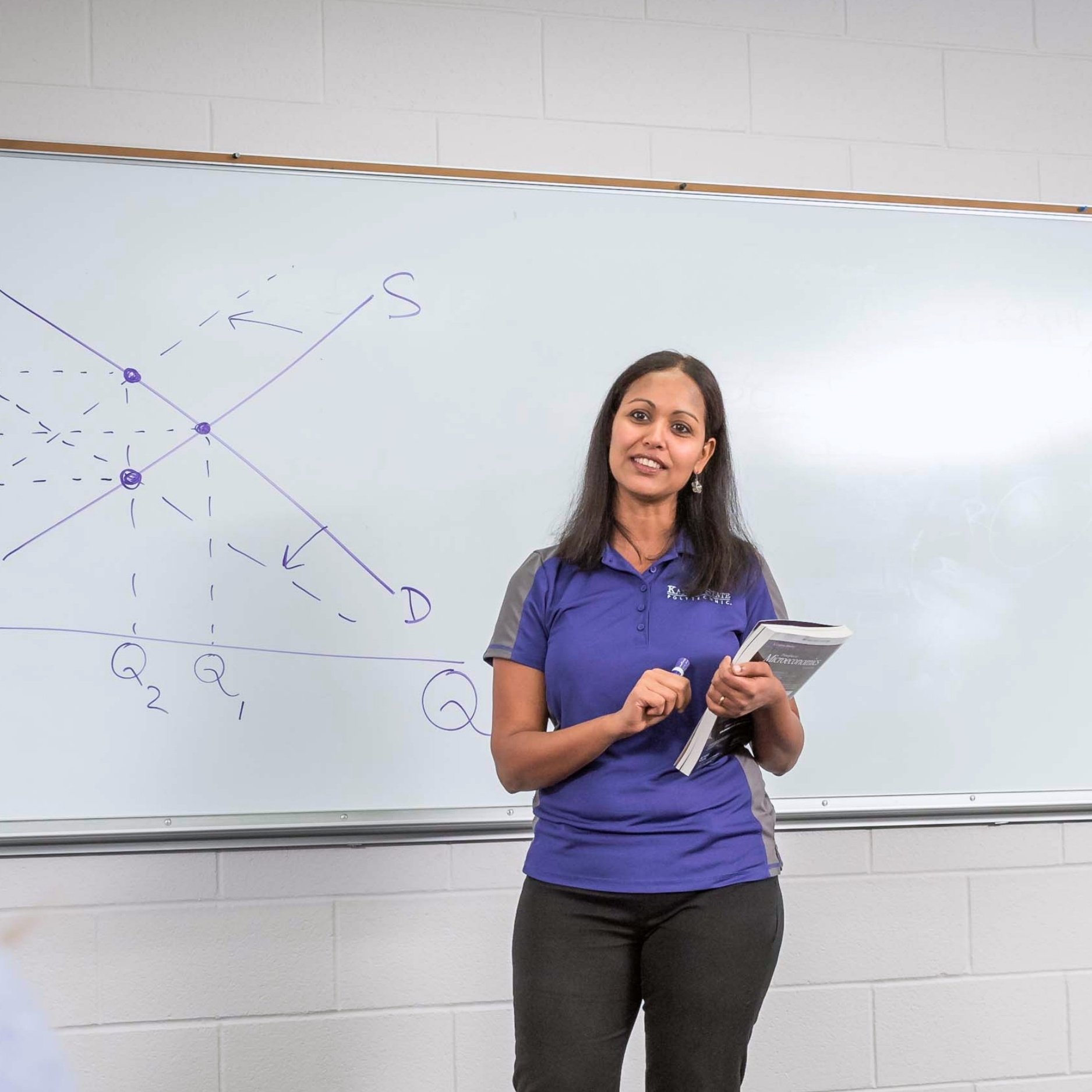
People with Purpose: Siny Joseph
A professor of economics at K-State Salina, Siny Joseph is driven by a desire to understand what people need and turn that understanding into meaningful change,...
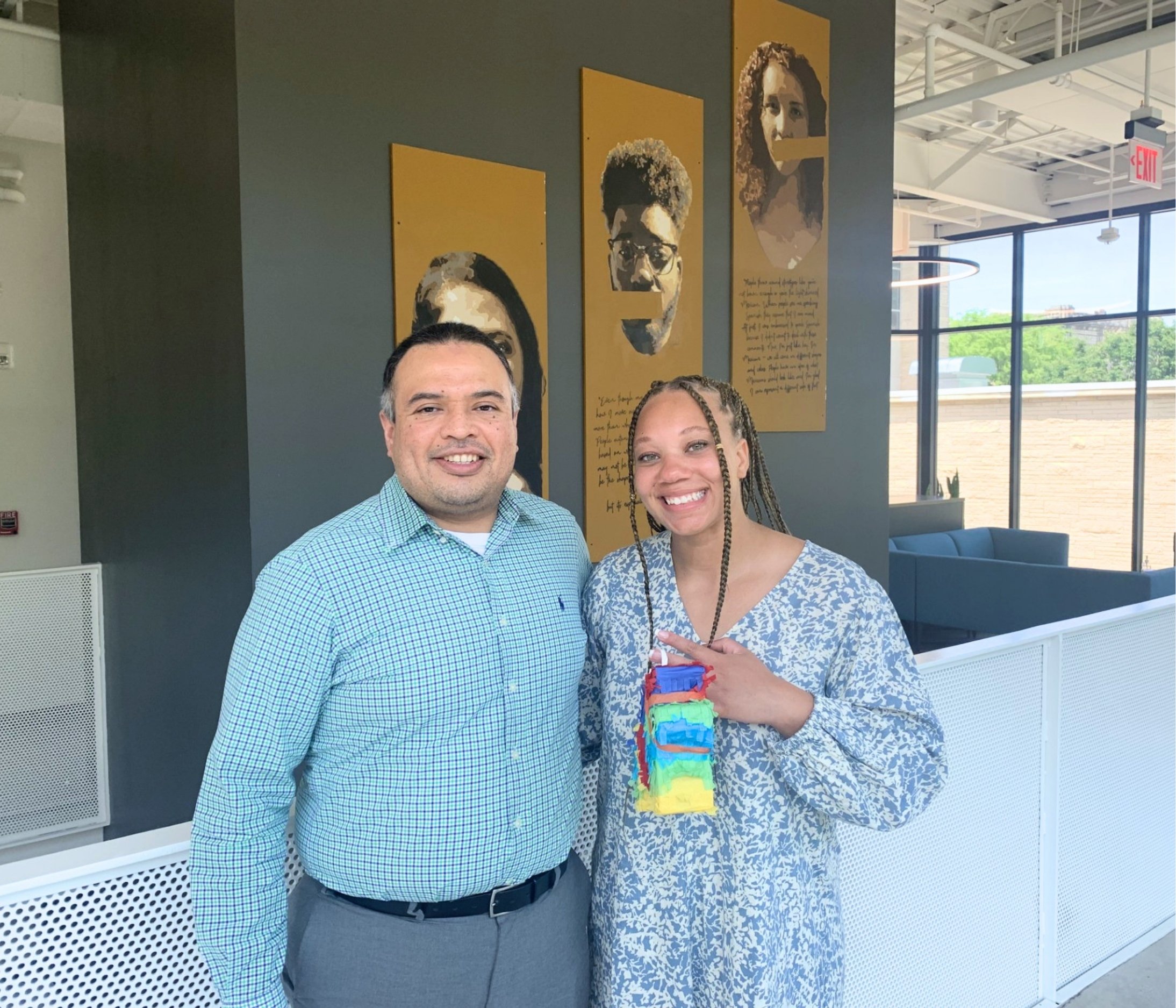
People with Purpose: Kevin Santos Flores
Through his role as director of student engagement and belonging, Kevin Santos-Flores works to cultivate a community of connection and collaboration.