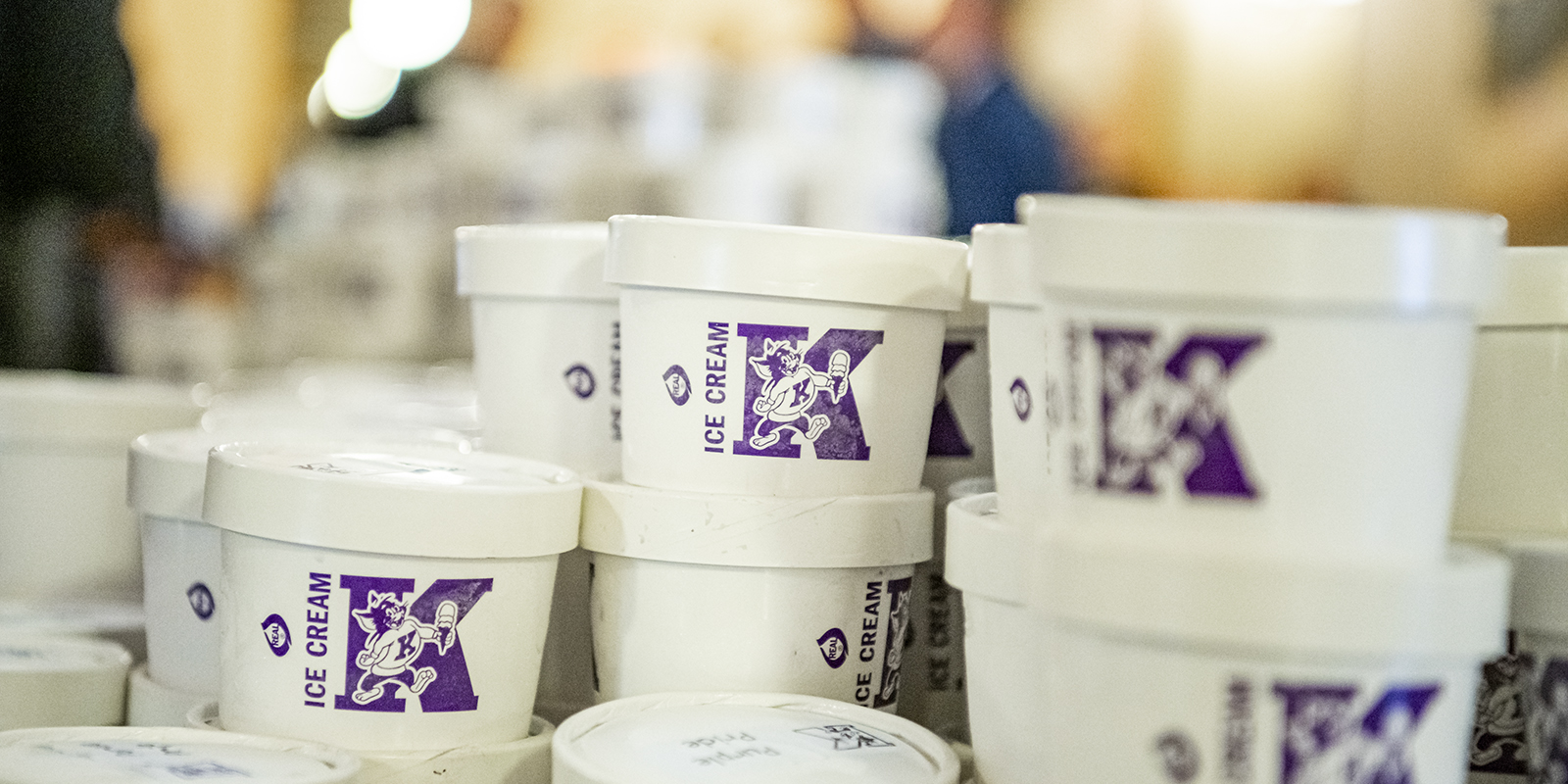
A sweet return
A renovated Call Hall dairy plant and new 1863 Marketplace are creating a better home for one of K‑State's most treasured traditions

By Rafael Garcia
K-State News and Communications Services
Monday, Sept. 21, 2026
Jared Parsons knows what you're thinking: where's the ice cream?
While there's been plenty of excitement for Kansas State University's new Western Star Grain and Food Center — a new state-of-the-art interdisciplinary center for food and grain research, development and education — there's also been a lot of buzz surrounding the return of Call Hall ice cream and other dairy products.
The university's dairy plant operations and Call Hall Dairy Bar services have been paused since spring 2025 for renovations and the installation of new equipment.
But behind the dairy plant's closed doors, a massive transformation is underway. When the facility reopens and returns to production this spring, the K‑State community will not only get a taste of their favorite purple ice cream — they'll experience a reimagined retail space for ice cream and other K‑State products in the 1863 Marketplace.
Renovated Call Hall Dairy Plant features modern equipment, expanded capacity
K‑State has a rich history of dairy operations dating back to 1923, when a small-scale dairy plant opened in Waters Hall and produced pasteurized milk, butter and ice cream. When the operation moved to the newly opened Call Hall in 1964, it was the pinnacle of industry technology, said Parsons, operations manager for the Call Hall Dairy Plant.
But more than 60 years later, the facility had begun to show its age.
"It was state-of-the-art in 1964," Parsons said. "But after six decades of constant use, relying on antiquated equipment meant dealing with daily breakdowns that limited the plant's true potential."
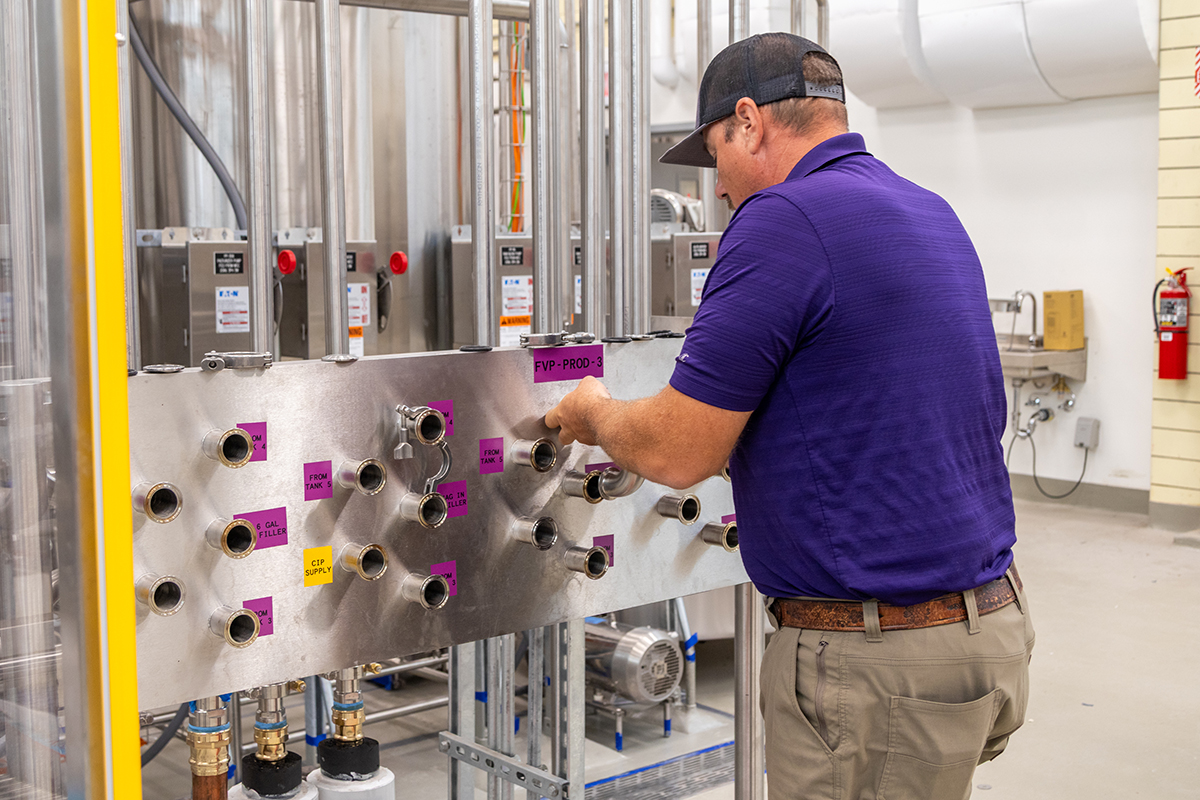
Now, the renovated plant is stepping into the future. The upgrade features individual flow panels and programmable logic controller, or PLC, controls. Before the renovation, students and staff had to assemble piping for the clean-in-place system by hand. The new facility utilizes fixed piping, taking the guesswork out of assembly and bringing the plant up to modern industry standards.
The renovation also doubles the plant's production capacity for fluid milk holding and freezer space, while introducing modern technology like a membrane filtration system. This system allows researchers to separate milk into its core components, such as proteins and minerals, opening the door to advanced coproduct development.
Beyond production, the plant will also serve as a vital educational pilot facility. A newly dedicated research and development room, along with a five-minute holding tube on the pasteurizer, will allow faculty to innovate with cultured products.
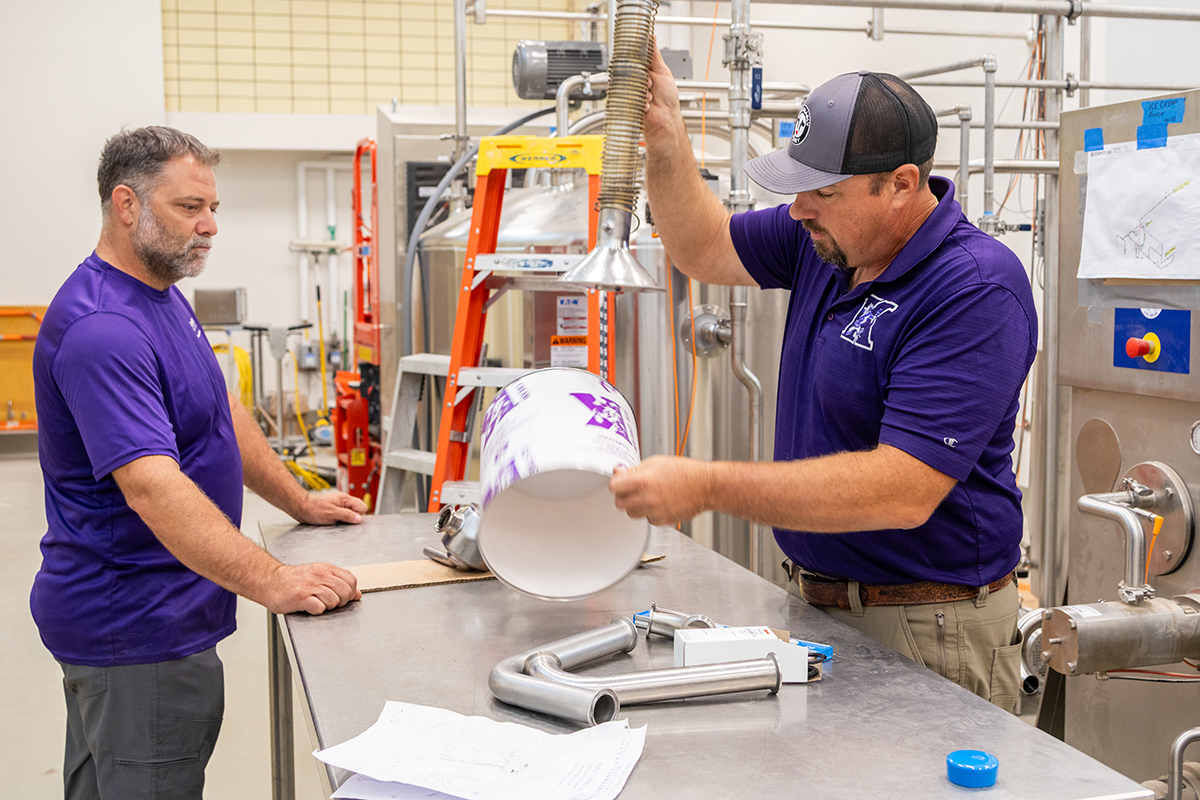
At the same time, students will get hands-on experience with these cutting-edge tools, allowing them to see and operate the same kind of machinery they might encounter in their careers after graduation.
As Kansas bolsters its dairy industry, that's crucial, Parsons said.
"This renovation represents a commitment from the university and the State of Kansas to continue supporting research and education in dairy processing," Parsons said. "Kansas is quickly becoming a major dairy-processing state, and with this renovation, we will be better equipped to support and train the next generation of dairy processors."
Despite the sweeping modernizations, the plant's emphasis on being a university-operated plant will remain. It's still a small-batch processing plant using milk strictly sourced from K-State's own herd of Holsteins, Parsons said. That milk will continue to be delivered straight to the university residence halls, where the beloved chocolate milk — made with a premium Dutch cocoa blend — remains a dining center staple.
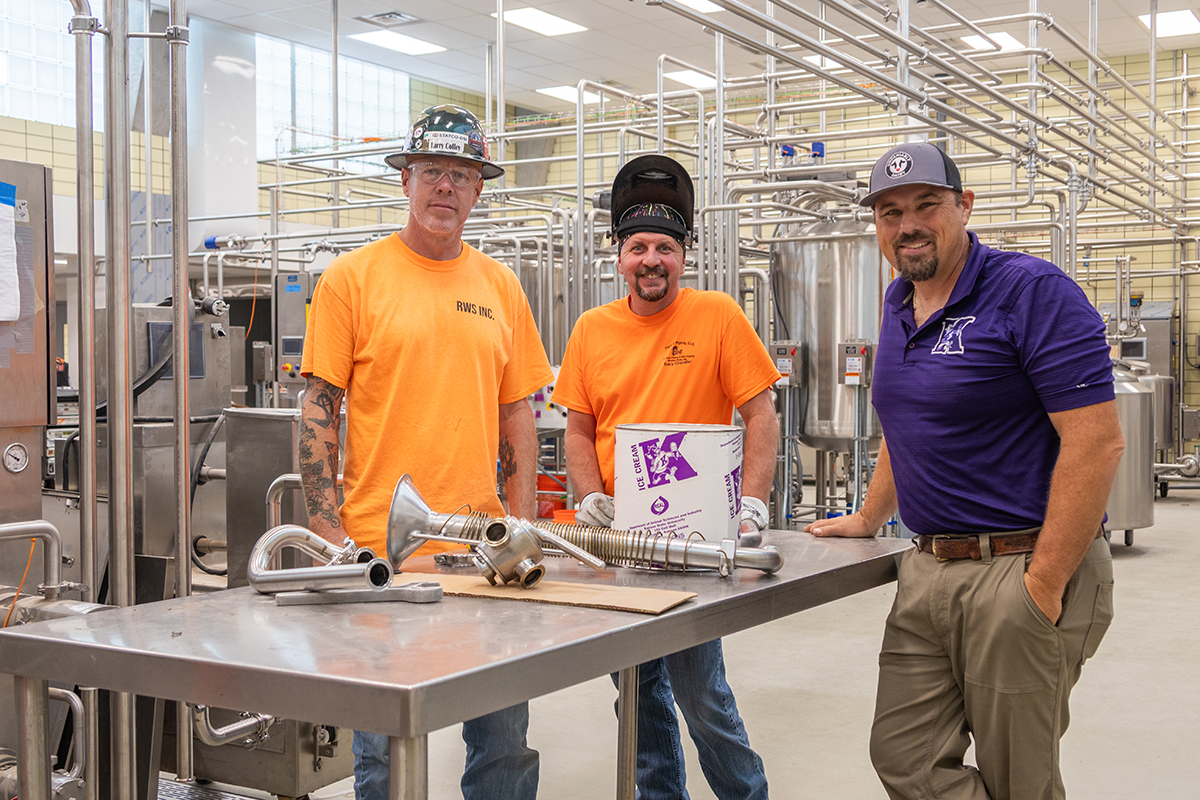
The dairy plant continues to be a point of pride for Parsons that he said every K-Stater should share.
"Something very dear to me is that Call Hall ice cream brand will live on," Parsons said. "The renovation will keep the production plant in its current location, allowing us to continue making our beloved ice cream and other dairy products. In so doing, we will keep the Call Hall brand alive for the community and future generations. What an opportunity that we get to make one of the most prideful and sweetest products made on campus."
1863 Marketplace: A new place to get your Purple Pride scoop
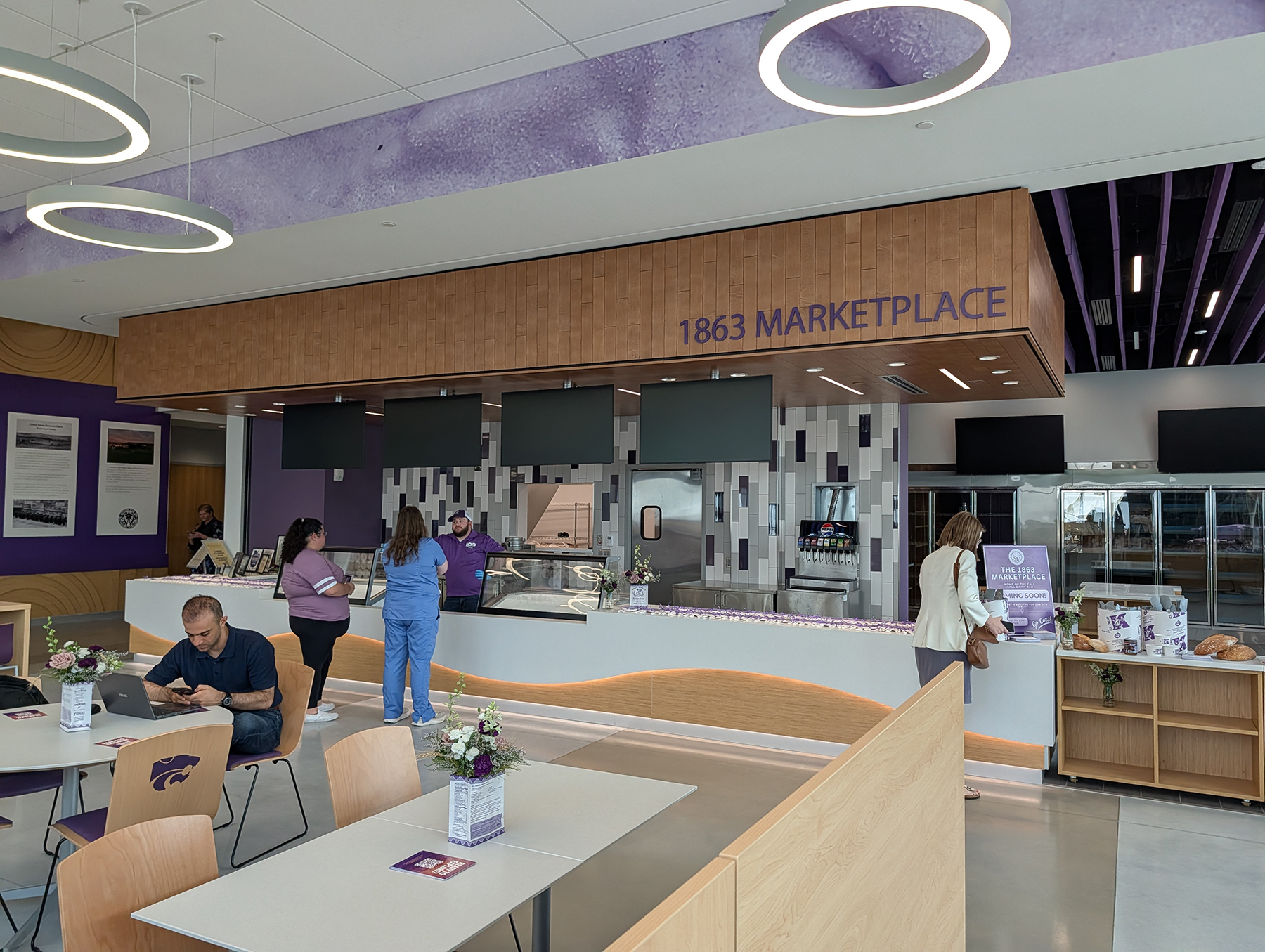
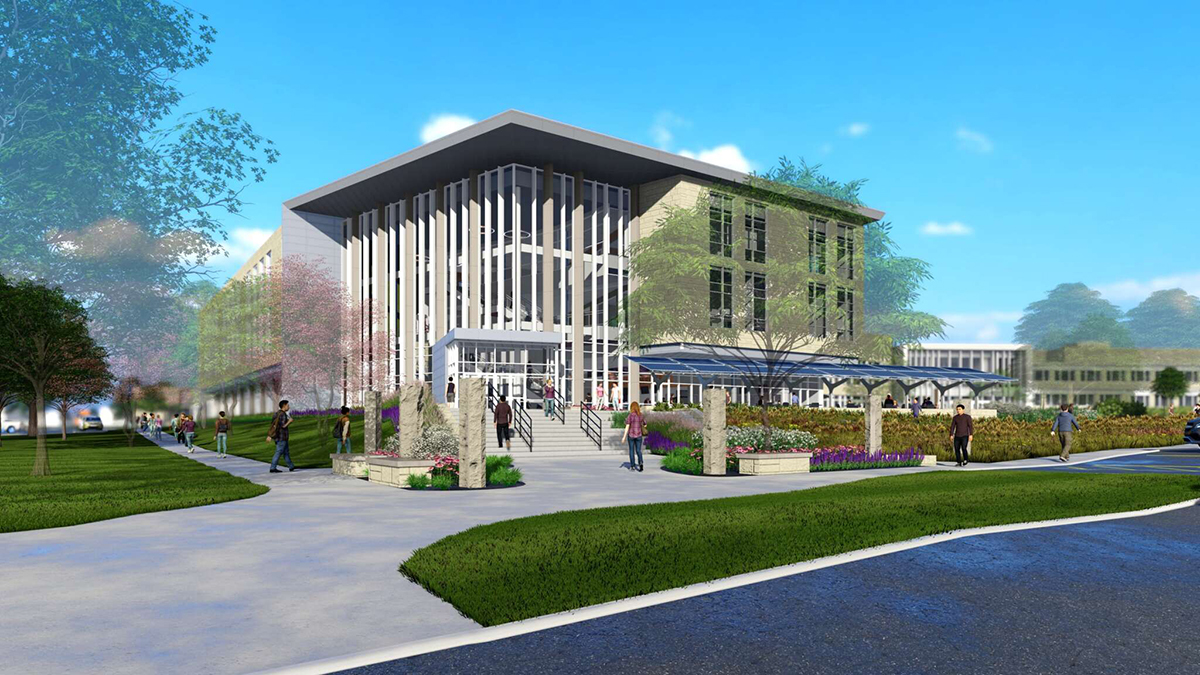
While the dairy plant is preparing to resume production, the customer experience is getting a massive upgrade right next door. The former Call Hall Dairy Bar is evolving into the 1863 Marketplace, which will be located at the front of the new Western Star Grain and Food Center between Call and Weber halls.
For Anthony Fink, food service manager for the new marketplace, the transition will help accommodate high demand while honoring one of K‑State's most storied traditions. The old dairy bar had undeniable charm, he said, but outgrew its footprint. With only one register and a tiny kitchen, lines often snaked out the door.
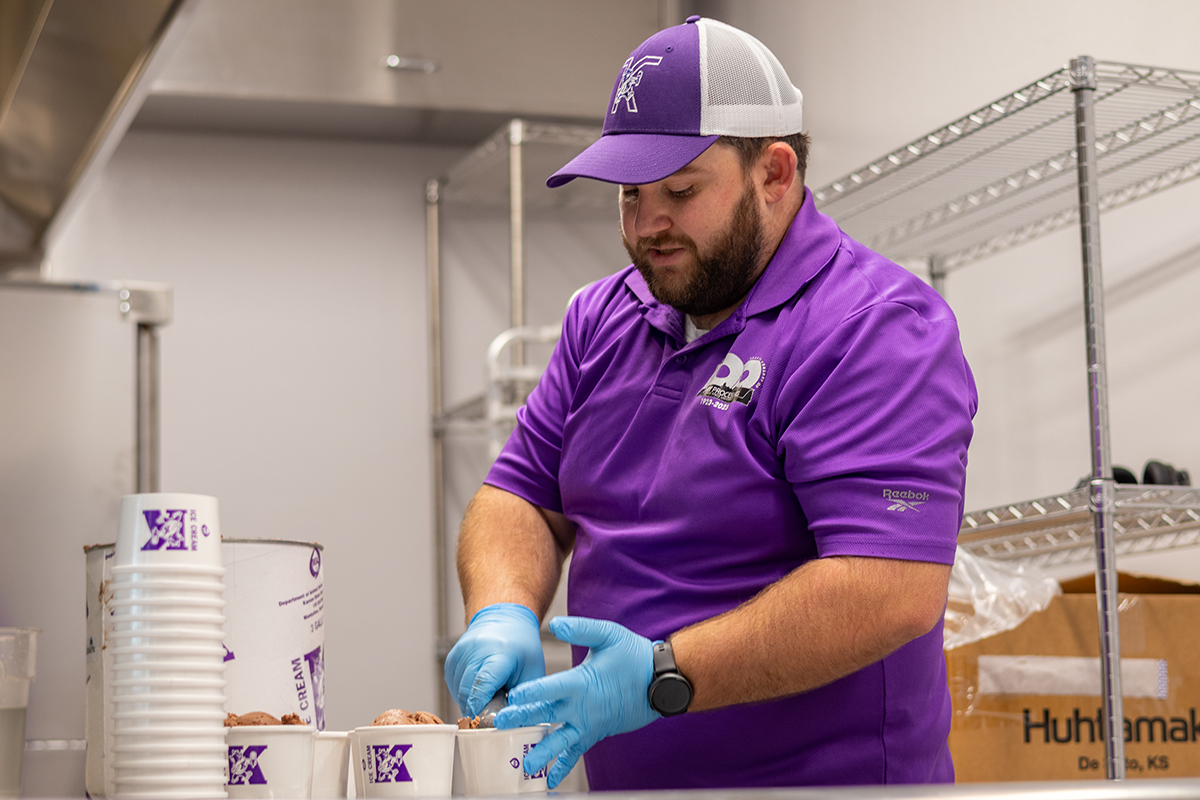
"With our new space, we're getting a big shell, and we're going to fill it," Fink said. "The entire kitchen from the original dairy bar space could fit on our new griddle."
Designed for volume and convenience, 1863 Marketplace features three registers to drastically reduce wait times, a sprawling prep space and an expanded parking lot that will more easily accommodate visitors to campus.
Recognizing the fast-paced lives of college students, the marketplace will also heavily feature grab-and-go items and fresh lunches. Not only will K‑State's hallmark Purple Pride ice cream return, but Fink said he's also exploring new products and concepts, such as fried cheese curds and in-house waffle cones made with flour milled right on campus.
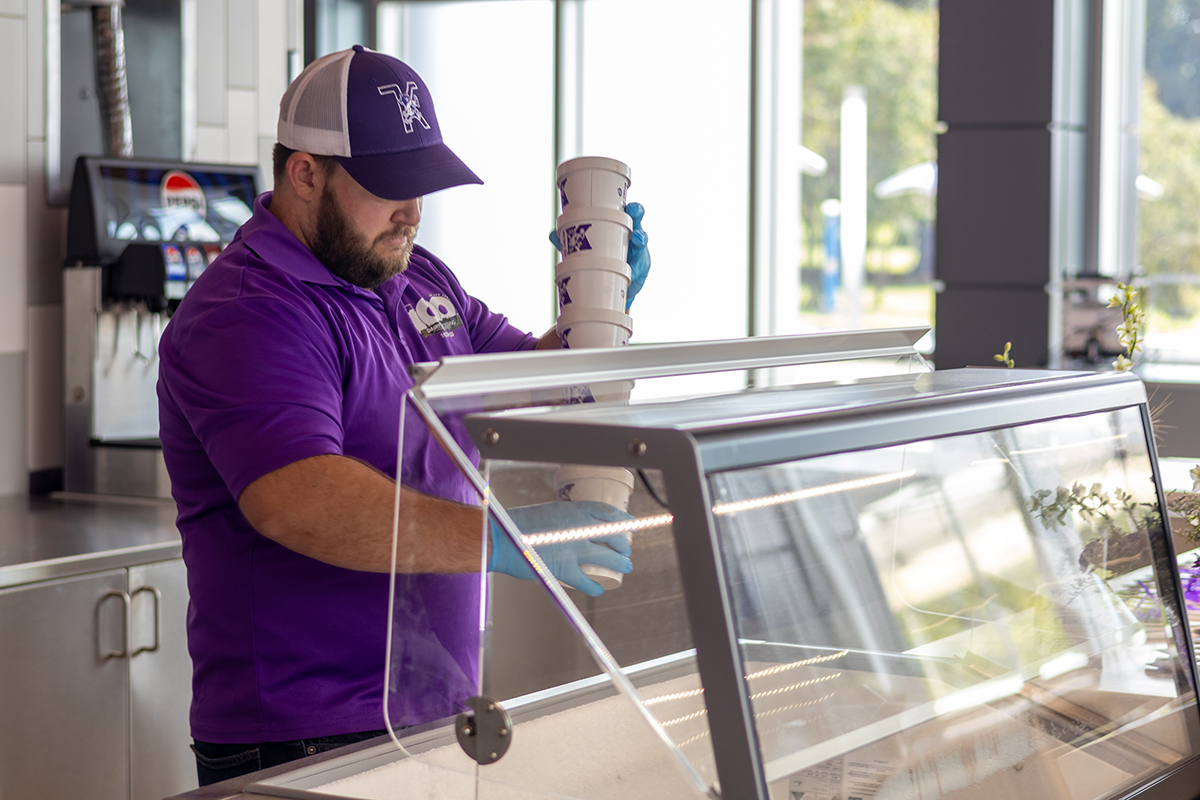
Besides expanding in space, the new location will also provide plenty more opportunities for students. Fink anticipates hiring close to 40 student workers —more than double the old Dairy Bar's workforce — to run both the front and back of the house.
Overall, the new space brings a lot of potential, Fink said.
"There are a lot of cool opportunities that we have moving forward, and there are ideas all the time in terms of what we can utilize here, but it is all about execution," Fink said. What can we focus on now to finalize prior to opening, because we can't do it all before the grand opening."
One-stop shop for K‑State's signature agriculture products
Although Call Hall dairy products will feature prominently in the new space when it opens in spring 2027, 1863 Marketplace will provide a much larger footprint and help better showcase the retail operations' role as a one-stop shop that highlights the comprehensive food-product prowess of K-State's agricultural programs.
When doors open, customers will find flour milled by the Department of Grain and Food Science, honey produced in partnership with the Department of Entomology and meat and eggs from the Department of Animal Sciences and Industry.
Looking further ahead, a One K‑State Fund grant to create a campus-scale sustainable food production system will eventually lead to fresh fruits and vegetables hitting the shelves at the 1863 Marketplace, Fink said.
But for Fink, one of the most important aspects of the 1863 Marketplace is the tangible sense of accomplishment it will provide.
As prospective students increasingly seek hands-on opportunities in their college education, Fink sees the 1863 Marketplace as a tangible, undeniable showcase of the university's impact. Students can work at the pilot plant or the new milling lab next door, then walk into the marketplace to see their product enjoyed by the public.
"It kind of gives that physical value of what they're doing here at the university, rather than just a theoretical mindset," Fink said. "To me, this is a way for them to physically feel prideful about what they're learning here."
Related Stories

K-State, NASA highlight satellite technology for Kansas farms at Flickner Innovation Farm
K-State partners with Flickner Innovation Farm to test NASA satellite data under real-world farm conditions. NASA's Space for Ag tour recently brought researchers,...
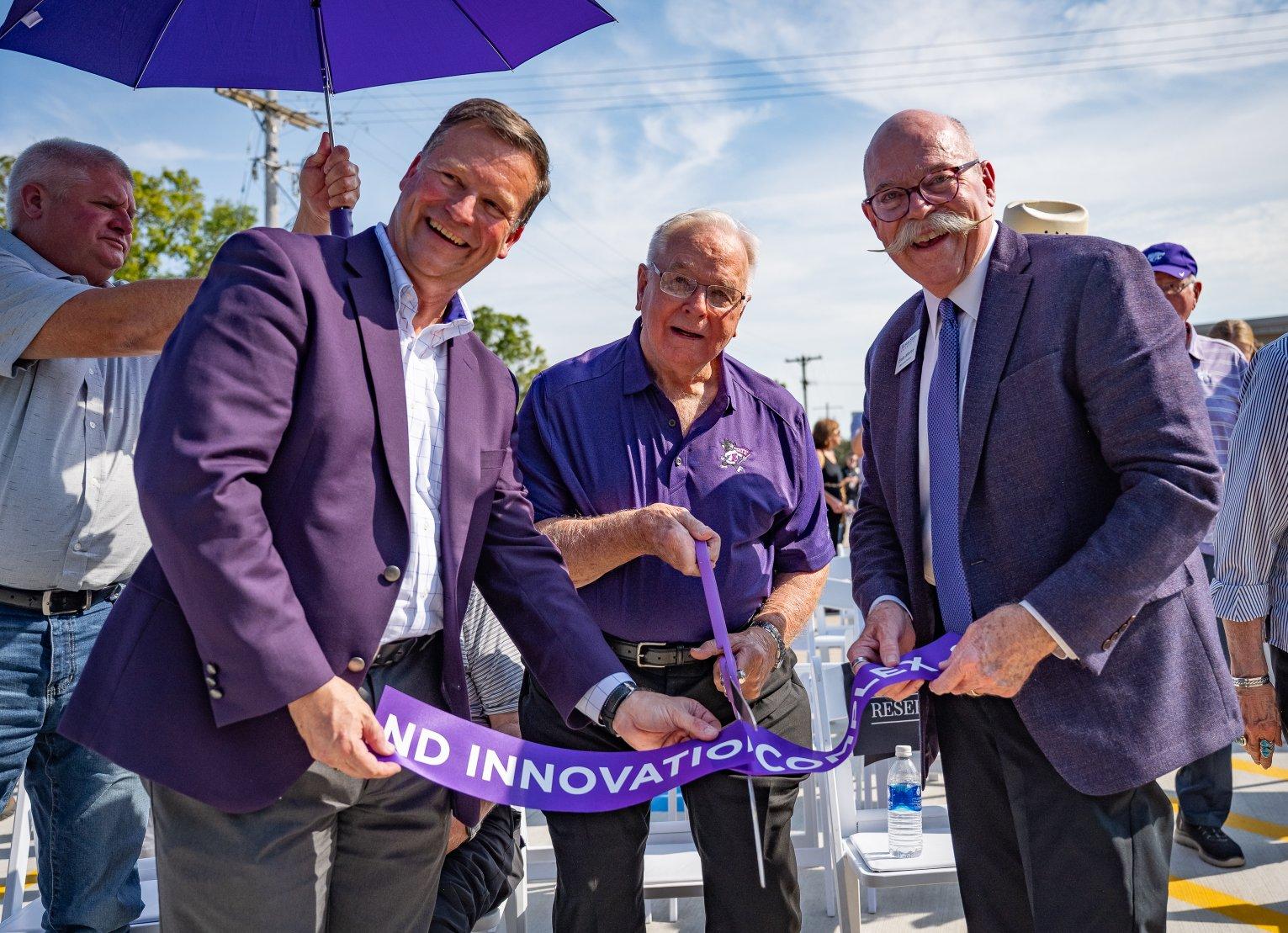
New K-State research complex to drive innovation for the future of agriculture
K-State is expanding its capacity to develop crops, technologies and management strategies to support producers from Kansas to the world with the opening of...
K-State's next-generation agriculture facility will be named Western Star Global Grain and Food Center
K-State's newly named Western Star Global Grain and Food Center, slated for completion in fall 2026, will support advances in food product development, food...