One K‑State Fund selects project to enhance sustainable food production on campus
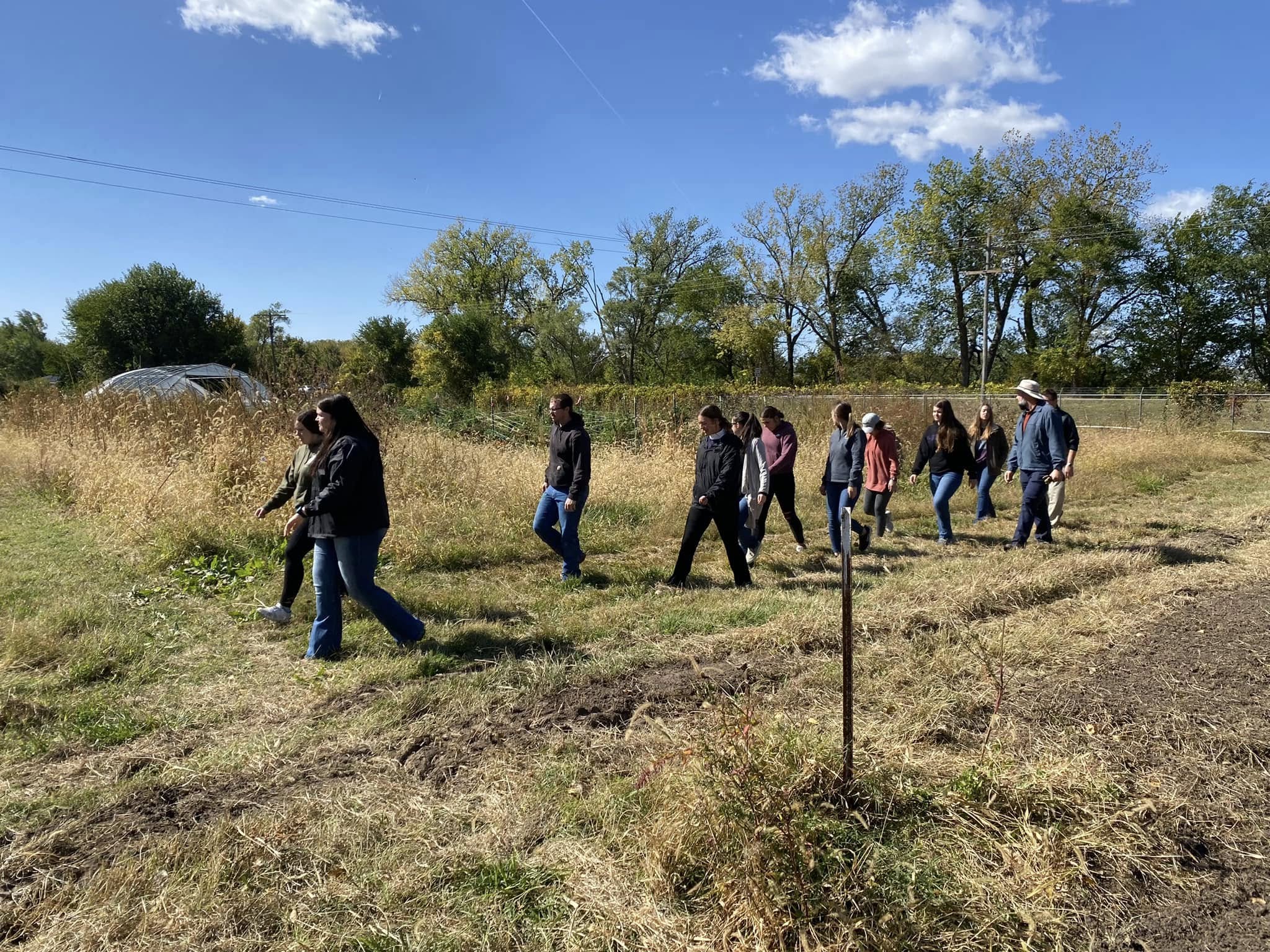
A new interdisciplinary pilot program will position Kansas State University as a national model for campus-scale sustainable food production systems, after being selected as the awardee of the $500,000 One K-State Sustainability Open Call.
The project — "Growing Sustainable Food Systems: Linking K-State’s Research, Learning, and Campus with Community Engagement" — will bring together faculty, staff and students from across the university to develop, evaluate and demonstrate various methods to grow healthy, locally produced fruits and vegetables.
The “Growing Sustainable Food Systems” project was selected from a competitive group of 29 proposals — the largest for a One K-State Fund call to date and representing nearly $11 million in requested funding — from the campus community.
"It was the genuinely interdisciplinary, multi-modal nature of the proposal that distinguished it in the eyes of both the initial review committee and our executive committee," said Ian Jacobs, university strategy officer. "To say we are excited to fund this work would be an understatement."
Setting a standard for food sustainability on K‑State's campus
Through the four-year project, K-State’s campus will serve as "a living laboratory" that demonstrates how organizations at the university scale can implement closed-loop, food supply chains.
Fresh produce grown in campus greenhouses and at the Willow Lake Student Farm will supply K‑State's Housing and Dining Services, Dairy Bar Marketplace and Cats' Cupboard. In turn, food waste generated on campus will be collected, composted and returned to the production systems — recycling nutrients and supporting a sustainable, circular model.
This reduces food miles, strengthens local procurement, enhances campus sustainability performance while expanding applied learning opportunities through coursework, laboratories, internships, undergraduate and graduate research, Extension engagement and student organization involvement.
Bizhen Hu, assistant professor of sustainable food production and director of Willow Lake Student Farm, will oversee the project.
Other faculty and staff involved in the project include:
- Tricia Jenkins, School of Applied and Professional Studies, K-State Olathe.
- Eleni Pliakoni and Kimberly Williams, Department of Horticulture and Natural Resources.
- Elizabeth Yeager, Department of Agricultural Economics.
- Matthew Sanderson, Department of Sociology, Anthropology and Social Work.
- Valerie Padilla Carroll, Department of Social Transformation.
- Priscilla Brenes, School of Health Sciences.
- Anita Dille and Sophie Westbrook, Department of Agronomy.
- Shreepad Joglekar, Department of Art.
- Cary Rivard, Olathe Horticulture Research and Extension Center.
- Lishan Su, Kansas Water Institute.
- Derek Jackson, John Green and Wesley Rostetter, Housing and Dining Services.
- Anthony Fink, Department of Animal Science, Dary Bar Marketplace.
- Shelly Williams, Cats' Cupboard.
- Jennifer Bormann and Deana Core, College of Agriculture Academic Affairs.
The bulk of the start-up funding will go toward student-centered staffing, giving students hands-on experience with campus-scale, sustainable food production systems. The project will hire 10 student interns annually, or 40 over the initial four-year timeline, to support production, distribution, data collection, outreach and experiential learning modules.
Finding solutions for Kansas food systems sustainability
Although the project's research focuses on enhancing K‑State's on-campus food systems sustainability, the researchers anticipate working with external partners and using their findings to develop solutions for sustainable food production elsewhere in Kansas.
Planned outcomes include:
- Development and validation of sustainable fruit and vegetable production systems, including integration of cover crops, soil fertility management, weed management and optimized light regimes.
- Evaluation of nutrient profiles and quality of produce grown under sustainable practices, including the effects of light quality on phytonutrient content.
- Assessment of the economic feasibility, environmental outcomes, and social impacts of local food sourcing and food waste reduction strategies.
- Resources—including factsheets, demonstrations, workshops and audiovisual kits—for K‑State Extension agents to use in working with Kansas' specialty crop growers and community stakeholders.
- Community-engaged screenings of short- and feature-length documentaries to foster dialogue and increase public awareness of food sustainability.
Additionally, the project will leverage collaborations with industry and community partners like Kubota, Land Pride, Flint Hills Breadbasket, K‑State Extension Master Gardeners, AmeriCorps and the K‑State Gardens' Purple Thumb Volunteers to further the initiative's impact.
One K‑State Fund empowers faculty, staff to drive meaningful impact
"The initiative strengthens K‑State’s leadership in sustainability, expands access to fresh, nutritious food, reduces environmental impacts and provides high‑impact experiential learning that prepares students for careers in agriculture, food systems, health, and sustainability," the project proposal reads. "Through strategic partnerships, diversified funding and earned revenue, the project is intentionally designed for long‑term operational and financial sustainability beyond the initial investment."
The One K-State Fund empowers faculty and staff to bring innovative solutions to institutional challenges and advance K-State's strategic priorities.
Open call proposals are evaluated for alignment with Next-Gen K-State imperatives, cross-unit collaboration and measurable institutional impact.
The fund will announce FY27 open call proposal topic areas later this summer that seek to implement creative solutions to institutional challenges, strategic investments that drive broader success across the Next-Gen K‑State initiatives and promising practices from other institutions that could be adapted to K‑State. Preproposals are due, depending on topic, either Oct. 1 2026, or March 1, 2027.
Questions about the One K‑State Fund can be directed to Ian Jacobs, university strategy officer.