Playing for the prairie
Undergraduate researcher Lauren Seybold designs board game that turns climate science into an adventure rooted in Kansas wildflowers

By Emily Boragine
K-State News and Communication Services
Wednesday, Aug. 12, 2026
"It's Oregon Trail, but for plants."
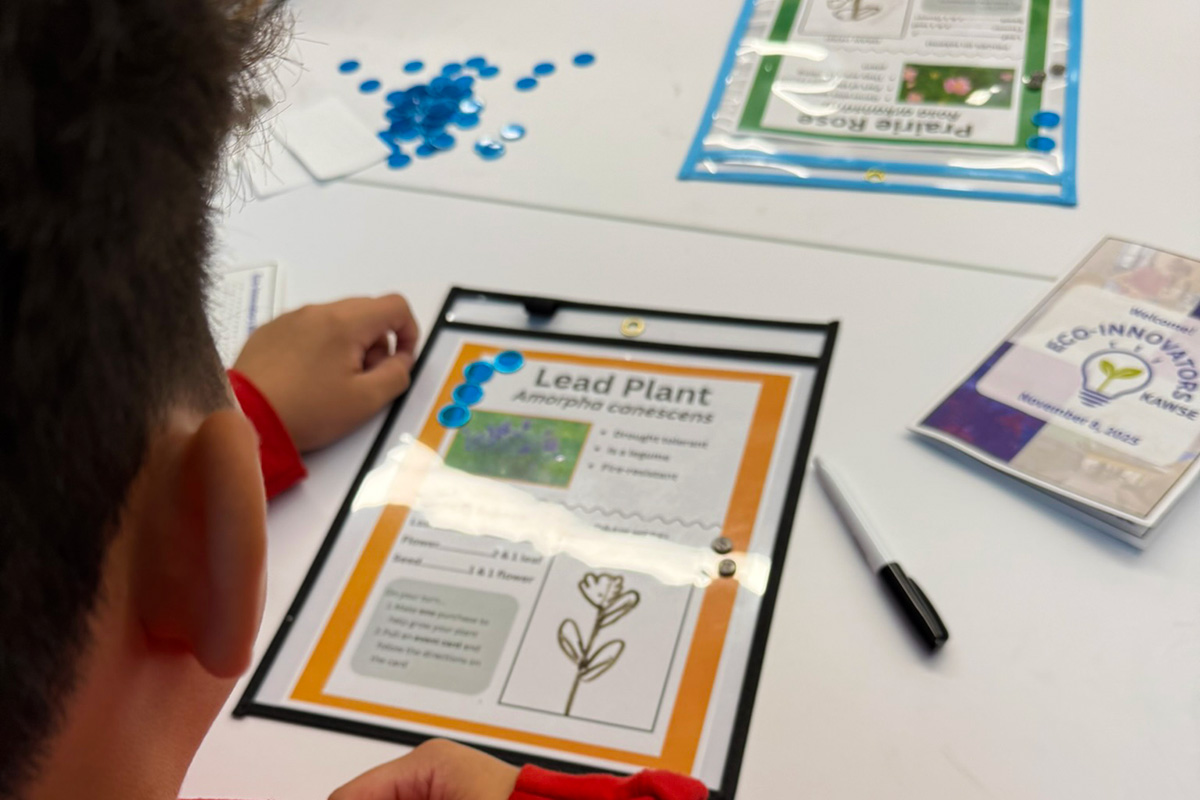
That’s how Lauren Seybold explains LeafSpan, the board game she designed to help middle school students learn about climate change through the lives of native Kansas wildflowers.
The comparison usually gets students talking.
As an environmental science student in the new School of Earth and Environment at Kansas State University, Seybold spends much of her time studying climate change and the native prairie ecosystems that surround campus. She has also spent the past few years thinking about how to help more people understand the science behind it.
"Climate action starts with an educated public," she said.
Bringing curiosity to climate communication
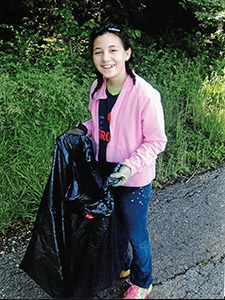 Growing up in Lawrence, Seybold spent plenty of time outdoors with her family, raising chickens and bees and participating in 4-H. Through Discovery Days, she became familiar with K-State years before she enrolled as a student. She also volunteered with Friends of the Kaw, where she saw firsthand how education can inspire people to care for the environment and take action.
Looking back, she sees those experiences as some of her earliest lessons in science communication.
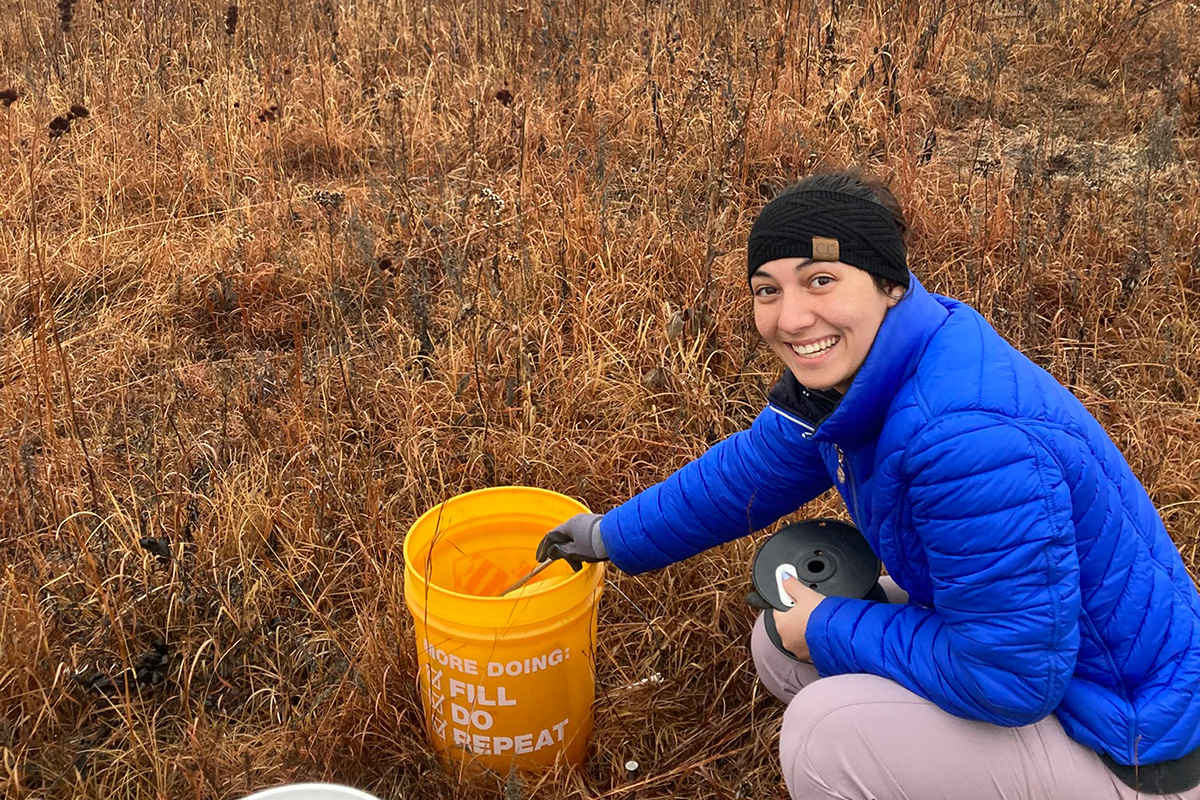
When she arrived at K-State, an environmental science degree felt like the right fit for her current interests and future career goals. As a freshman in the Developing Scholars Program, Seybold joined Allison Louthan's population ecology lab, where weekly discussions of scientific literature gave her the opportunity to apply her classroom knowledge in a new setting.
She sometimes found herself rereading passages or working through unfamiliar terminology before the research began to click, even though the subject matter was the focus of her everyday studies.
“It's really important to me that everyone has the chance to accurately learn about climate change and what it means for our future.”
Lauren Seybold
"When new information is discovered, it's often buried deep in literature that is highly technical, inaccessible or just plain difficult to understand," she said. "My interest lies in bridging those gaps."
Around the same time, an internship with K-State Extension introduced her to another side of science: teaching. She enjoyed watching students ask questions and gain confidence as they learned, and when she returned to Louthan's lab, she asked if she could pursue a science communication project instead of a traditional research project.
Learning through play
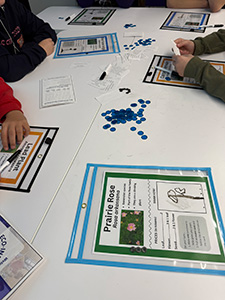 That project eventually became LeafSpan.
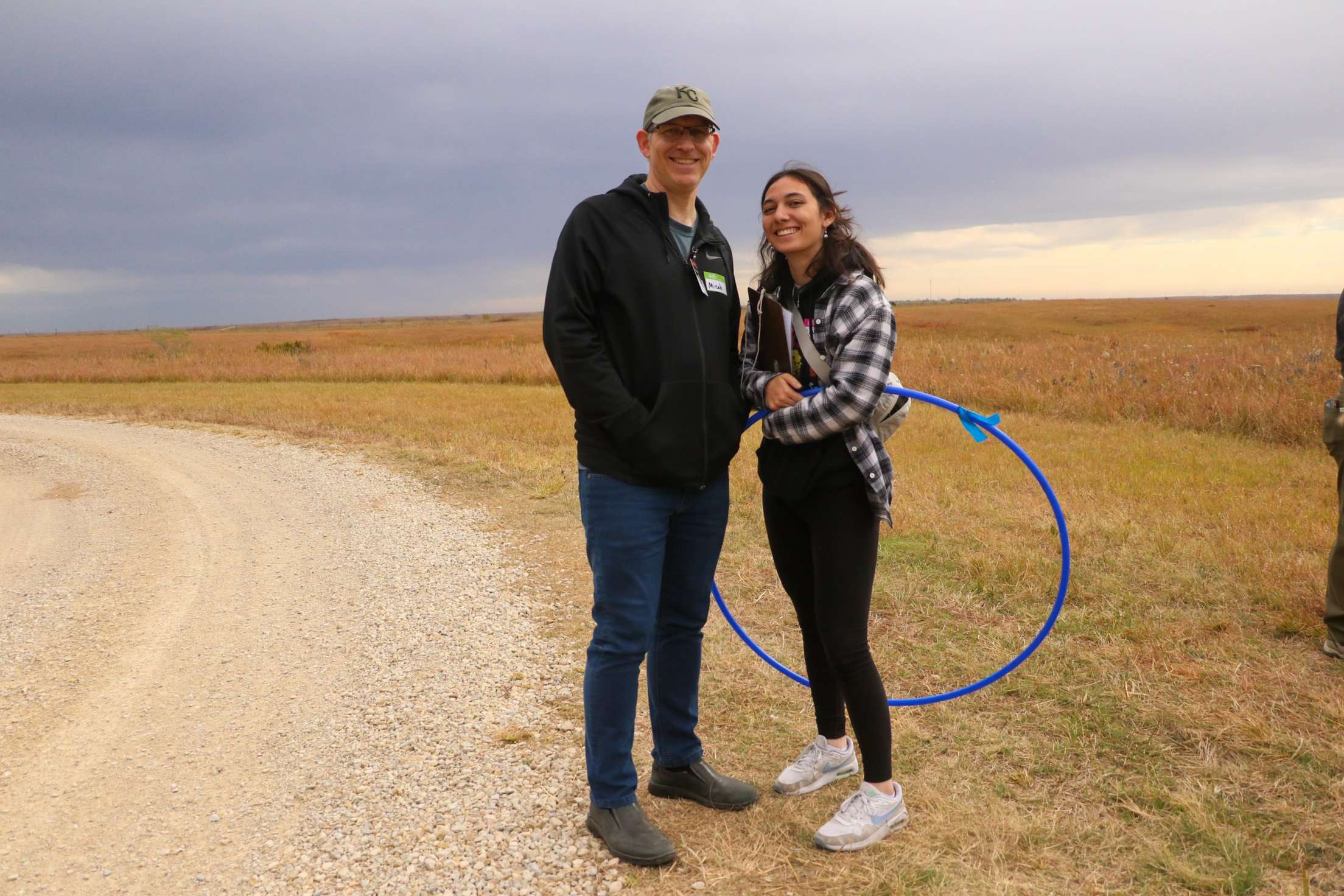
Using data collected during the annual Wildflower Walk at Konza Prairie, which is run by the Friends of Konza Prairie, Seybold created a board game that places students in the role of native Kansas wildflowers trying to survive long enough to produce seeds. Along the way, they encounter drought, competition and other challenges that researchers expect prairie plants to face as Kansas becomes warmer and drier.
Designing the game took months of testing and revision. Seybold played it with graduate students, family members, friends and classmates, using each round to refine the rules, adjust the pacing and decide how much scientific information belonged in the game.
One conversation centered on whether students needed to learn the scientific names of native plants. Seybold questioned whether they were necessary, but a graduate student encouraged her to keep them.
The conversation reminded her that students are often capable of more than adults expect.
"I think we often underestimate kids," she said. "I remember being a student who needed to be challenged."
More than 30 middle school students eventually played LeafSpan during the KAWSE science camp on campus. Seybold watched them compare strategies, notice patterns and ask questions that extended beyond the game itself. Many already knew about climate change, but the game gave them another way to explore the topic and connect it to the prairie around them.
As students discussed what they had observed, they recognized that some native plants handled drought better than others. The conversation naturally shifted to why drought-tolerant plants matter and how changing conditions affect the prairie, all in the comfort of a game. Rather than ending with uncertainty, students began sharing ideas about actions people can take to care for the environment.
Planting the seeds
Next spring, Seybold will study environmental science in Costa Rica, where she'll continue exploring the intersection of science and education while learning from one of the world's leaders in environmental stewardship.
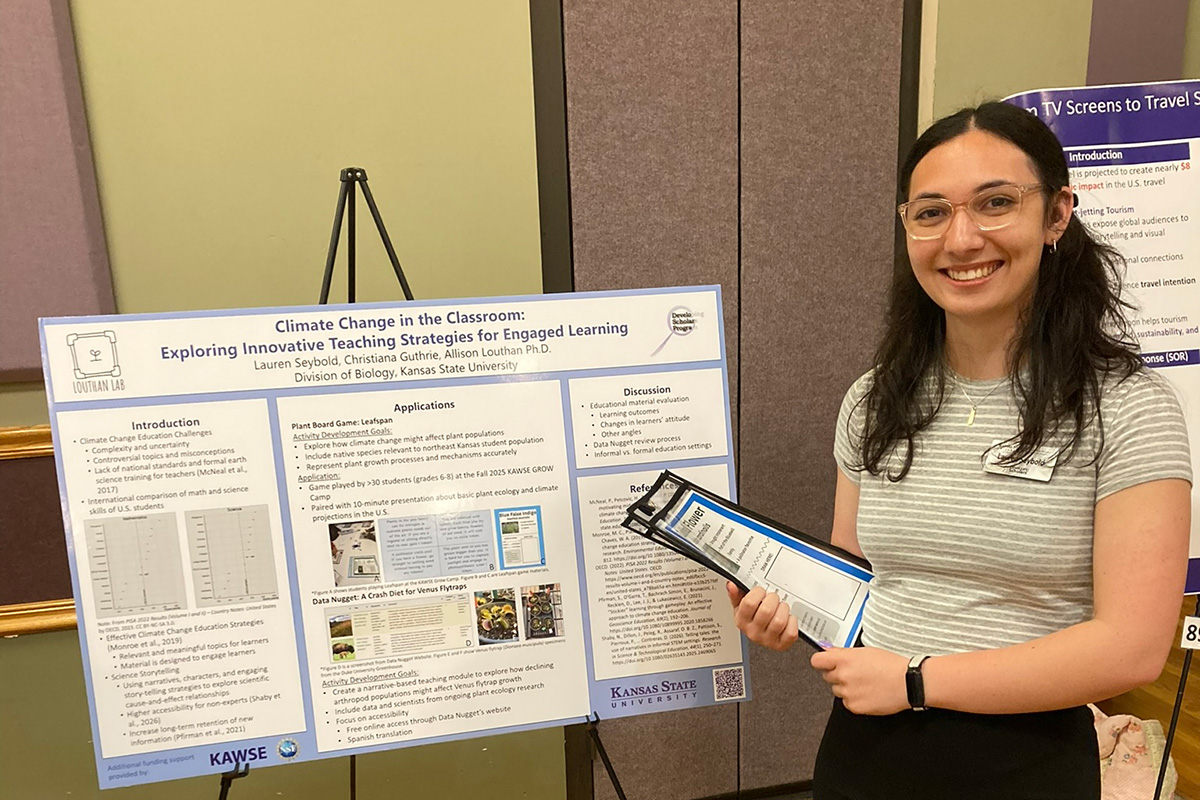
She also hopes to continue refining LeafSpan and finding new ways to make climate science more approachable for future students.
"It's really important to me that everyone has the chance to accurately learn about climate change and what it means for our future," she said. "Ultimately, I want to guide people toward environmental action, equity and hope."
Related Stories
A cooler kind of capsaicin
Could the chemistry behind chili peppers help protect the heart—without the burn? Doctoral student Nik Carpenter is studying a capsaicin-inspired compound...
Pushing the limits
Reese Greenlee, K-State assistant professor of architecture, is testing the limits of 3D-printed concrete to see if it can provide affordable, adaptable and...
Songs of the Konza
Through research on birdsong and natural soundscapes at Konza Prairie Biological Station, doctoral student Katharina Bremser is investigating how listening...