Advancing infectious disease research
K‑State's CEZID awarded $11.4M in continued NIH funding to advance emerging and zoonotic infectious disease research
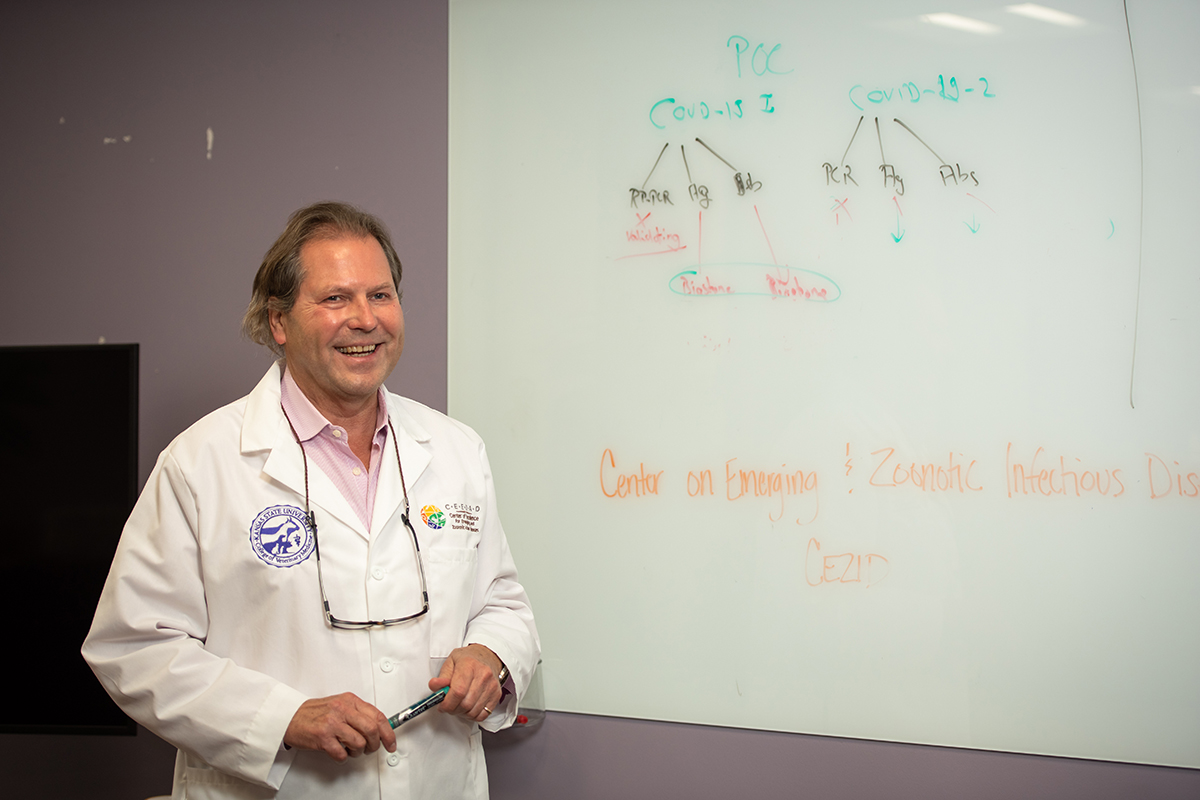
Continuing a research program that has strengthened Kansas State University's capacity to study diseases that threaten animal and human health, the National Institutes of Health has approved $11.4 million in funding for Phase 2 of the Center on Emerging and Zoonotic Infectious Diseases in the College of Veterinary Medicine.
The NIH award supports the program for an additional five years through April 30, 2031.
"The Phase 2 funding demonstrates the outstanding dedication, collaboration and scientific excellence of our investigators, staff, core personnel, mentors, collaborators and institutional partners," said Juergen A. Richt, CEZID director and Regents and university distinguished professor in the College of Veterinary Medicine. "It recognizes the remarkable accomplishments of CEZID researchers during Phase 1 and provides an important foundation for advancing our research, training and capacity-building efforts over the next five years."
Established in 2020 through the NIH National Institute of General Medical Sciences Centers of Biomedical Research Excellence program, CEZID has been a key center in building K‑State as a leading institution for emerging and zoonotic infectious disease research.
The center develops early-stage investigators into independent, externally funded scientists; strengthens biomedical research capacity; recruits faculty in strategically important areas; and builds a sustainable, multidisciplinary research program.
Building research capacity and expertise in emerging and zoonotic infectious diseases
CEZID's impact during Phase 1 is reflected in the research funding its investigators secured. In its first four years, researchers submitted 93 research proposals and received 21 awards totaling nearly $9 million. During its fifth year and the no-cost extension period, they submitted another 33 proposals and received nine awards totaling approximately $9 million.
Two CEZID Phase 1 Research Project Leaders, Stephanie Shames and Yan-Jang Huang, received NIH R01 awards in 2026, an important milestone demonstrating their progression to independent NIH-funded research.
The center also expanded K-State's infectious disease research community through faculty recruitment and development. Six additional faculty members were recruited by the College of Veterinary Medicine and the College of Arts and Sciences in CEZID's mission area during Phase 1.
The Pilot Project Program also expanded participation across K-State, the University of Kansas and the University of Kansas Medical Center, creating additional opportunities for collaboration and research development across the region.
Another lasting impact of Phase 1 was the establishment and expansion of two shared research resources:
- The Animal Model/Pathology, or AMP, Core provides advanced animal model development, pathology expertise, BSL-2 and BSL-3 research capabilities, and assistance with experimental design and regulatory protocols.
- The Molecular and Cellular Biology, or MCB, Core provides advanced molecular and cellular technologies, including next-generation sequencing, flow cytometry and spatial transcriptomics.
Together, the cores have helped researchers conduct more rigorous and reproducible studies while providing specialized capabilities that strengthen collaboration and competitiveness for external research funding. Both are now integrated into K-State's Biomedical Core Facilities, providing greater long-term sustainability, institutional support and access for investigators across K-State and the broader regional research community.
During Phase 1, CEZID investigators produced more than 190 peer-reviewed publications, many of which specifically acknowledge the support, services and expertise provided by the CEZID core facilities. CEZID researchers also contributed extensively to scientific conferences, delivered invited seminars, and supported mentoring and workforce development.
Continuing momentum in emerging and zoonotic infectious disease research
With the funding for five additional years, Phase 2 will build on these accomplishments by supporting continued research into pathogen virulence, host-pathogen interactions, immune responses and mechanisms of disease. Investigators will use basic and translational approaches in laboratory systems and animal models to advance understanding of emerging and zoonotic infectious diseases.
The AMP and MCB cores will continue to provide specialized infrastructure, services and expertise to support this research, while CEZID continues to develop researchers and expanding opportunities for multidisciplinary collaboration across Kansas and the surrounding region.
The continued NIH investment will allow CEZID to build on the foundation established during Phase 1 — advancing research, developing the next generation of biomedical scientists and strengthening K-State's capacity to address emerging and zoonotic infectious disease threats in Kansas and beyond.
Related Stories
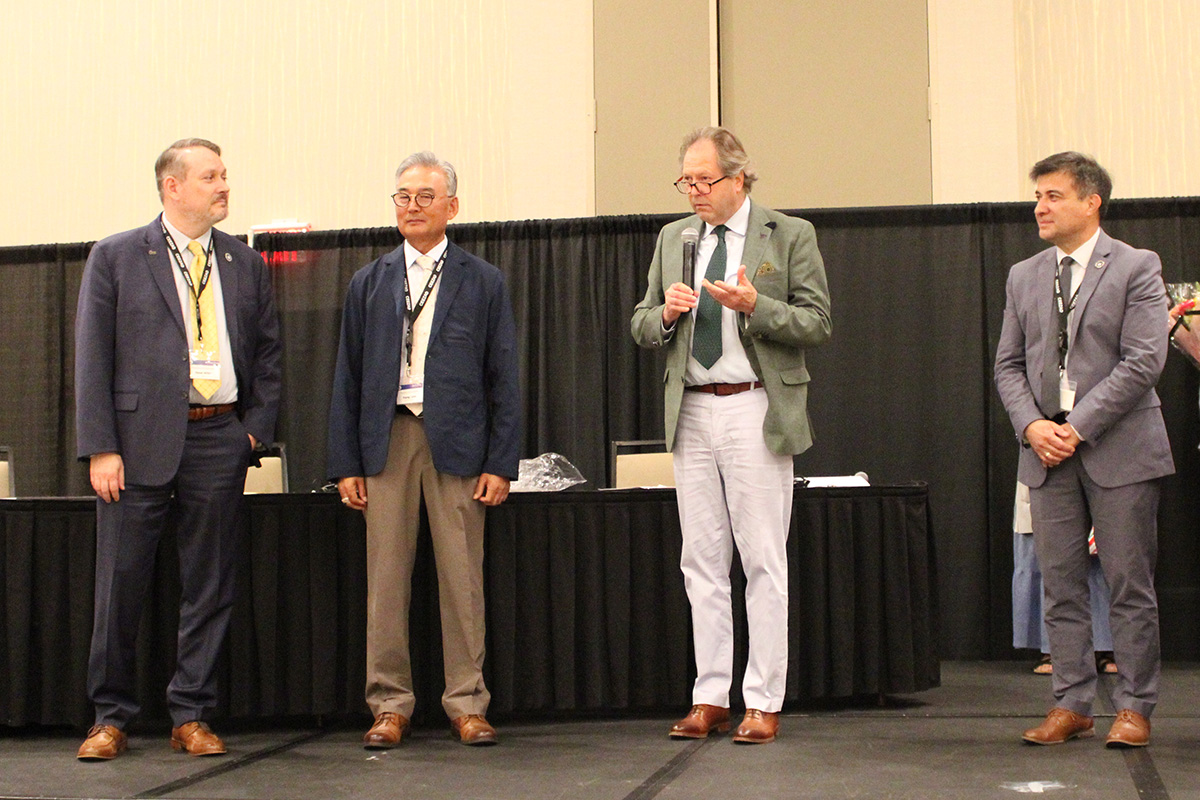
K-State brings together global experts to strengthen animal health preparedness
K-State and the National Bio and Agro-Defense Facility brought together more than 110 leaders from industry, government and academia for a global symposium...
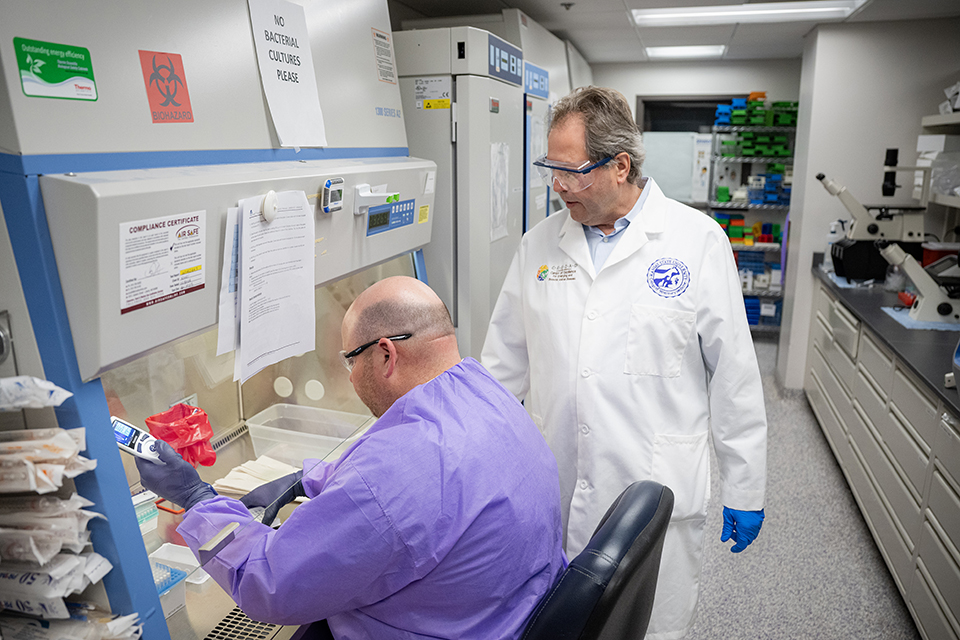
'A silent symphony’
In high-containment labs at K-State, Juergen Richt is building a global network of well-trained scientists trained prepared to stop the next big animal disease...
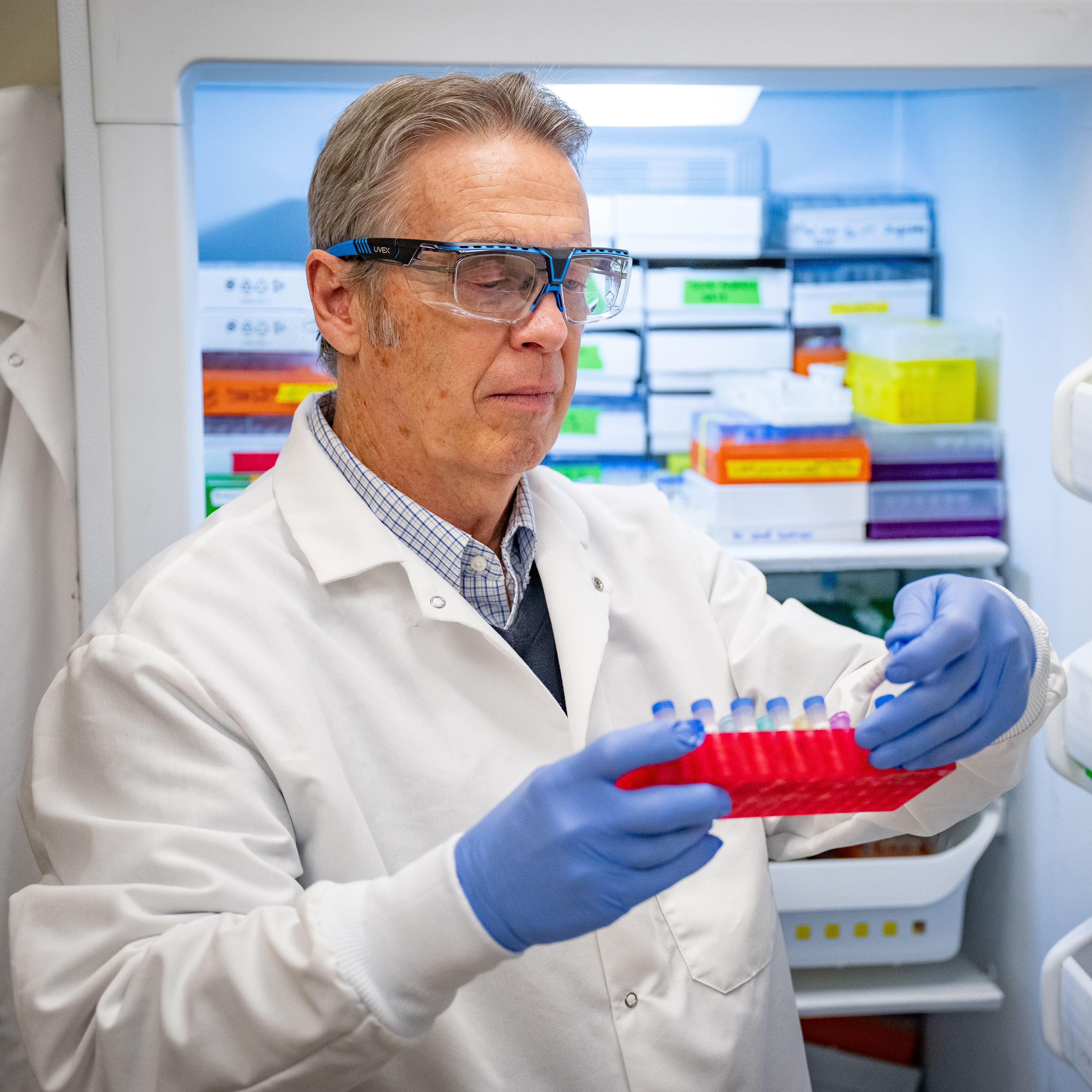
Strengthening global biosecurity
James Stack, university distinguished professor in the College of Agriculture, has been appointed to an endowed professorship at the Biosecurity Research Institute...