Three Minutes to make an impact
From cancer-fighting molecules to digital cattle traceability, K-State’s top Three Minute Thesis finalists showcased research with global implications.
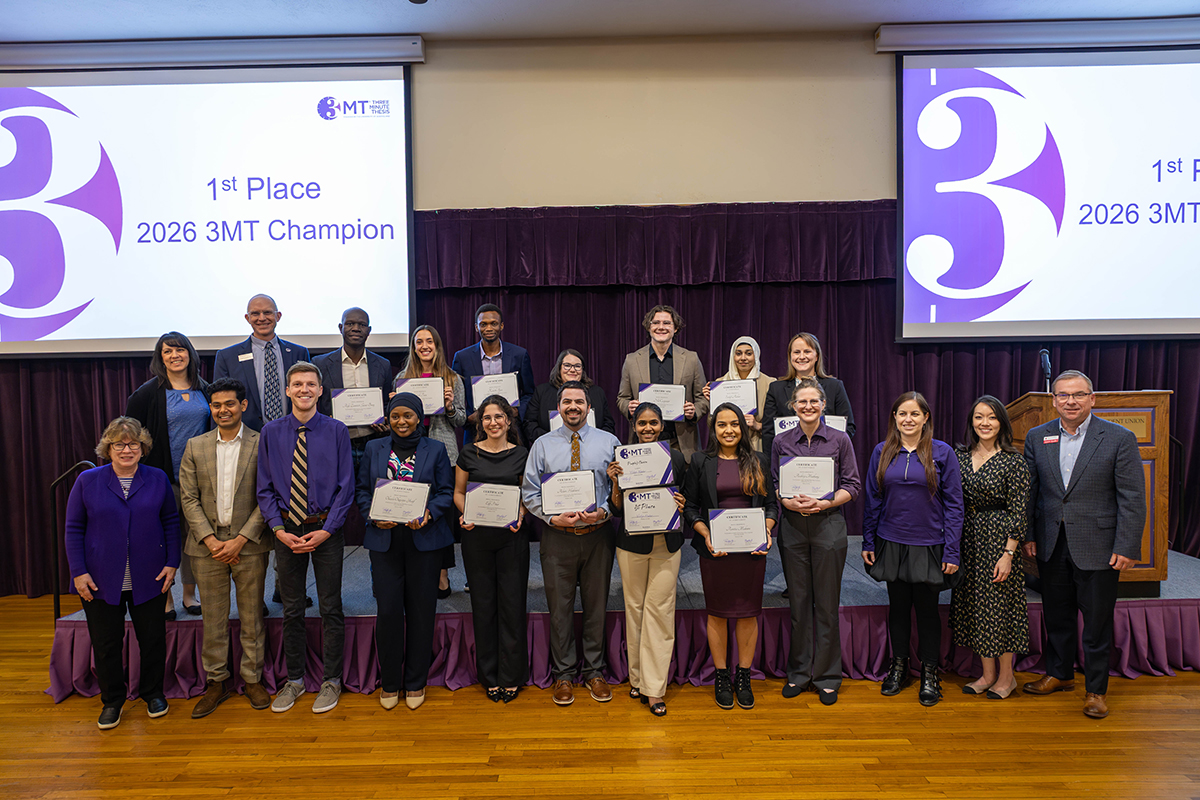
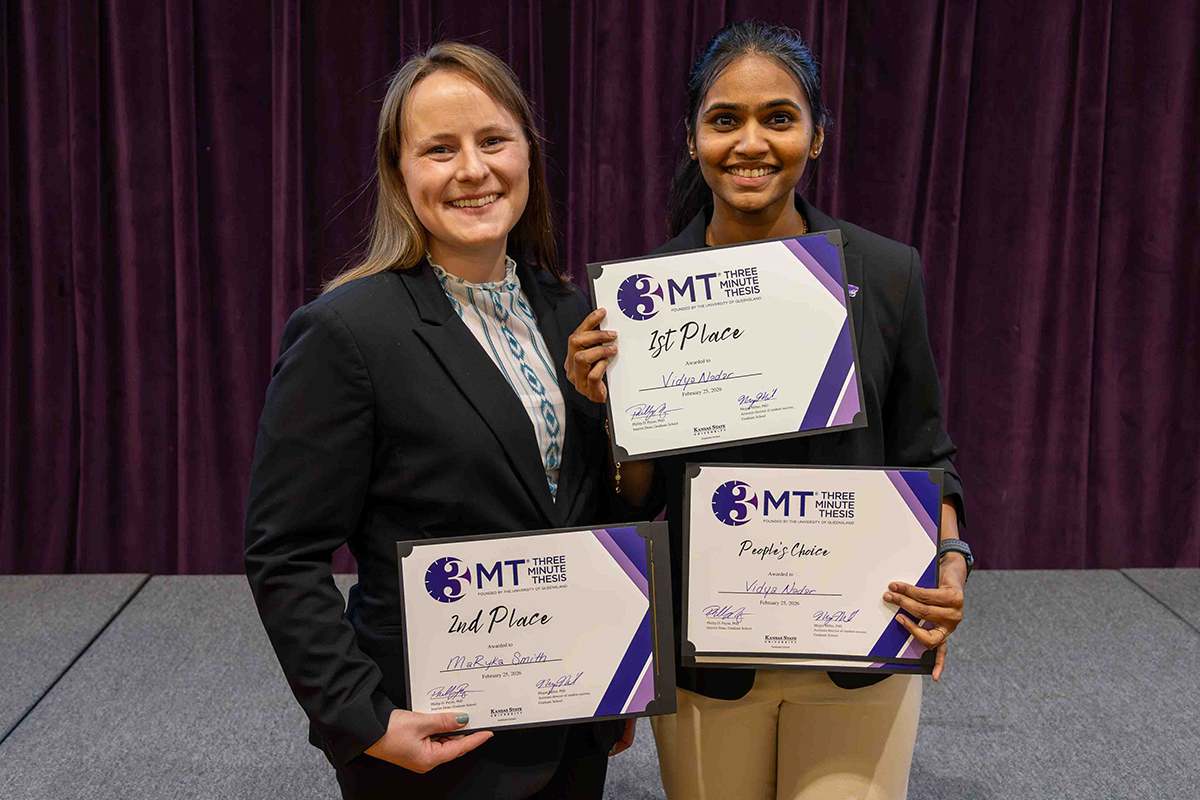
Several K-State students competed at this year's Three Minute Thesis Competition, which challenges students to showcase their world-changing research in a digestible, compelling format. Vidya Nadar, doctoral candidate in chemistry, took first place for cancer-fighting research, while MaRyka Smith, doctoral candidate in pathobiology, earned second for her work strengthening foot-and-mouth disease traceability.

By Julia Hall
Graduate School
Friday, March 6, 2026
Could one of the keys to fighting cancer be found in marine mangrove plants? How can we better design bread recipes to handle the "punch" of added protein? If catastrophic foot-and-mouth disease ever comes knocking, could computer models help trace and nip the disease in the bud before it decimates the American cattle industry?
Graduate students at Kansas State University are tackling some of the world's biggest challenges from unique, niche and often surprising angles — and several of them showed off their chops at the final round of K-State's annual Three-Minute Thesis Competition, hosted last month by the Graduate School.
Three-Minute Thesis, or 3MT, participants compete by presenting a compelling oral presentation on their thesis/dissertation topic and its significance to a non-expert audience — all in no more than three minutes and using only a single presentation slide.
This year marked the largest first round in the competition's history, with more than 80 students representing 36 academic programs in eight colleges presenting in early February.
From the preliminary round, thirteen presenters were selected to advance to the final competition, and these finalists presented to a panel of judges and a packed Union Ballroom on Feb. 25.
Vidya Nadar takes first place for research exploring rare molecules as medicine
First place and People's Choice honors were awarded to Vidya Nadar, a doctoral candidate in chemistry from India, for her presentation "From Rare Molecules to Real Medicines."
Nadar studies brocazine, a rare molecule found in marine mangrove plants that scientists believe is effective in fighting seven deadly cancer types.
The challenge is that brocazine naturally occurs in small amounts, so chemists like Nadar are exploring ways to produce it in the lab.
"Imagine building a complex Lego set without the instruction manual," Nadar said. "You have to figure out the entire building strategy — which pieces to connect, and in what order — to reach the final structure. My research focuses on designing a new synthetic route for brocazine — the first reliable way to build this molecule step by step from simple building blocks."
Nadar received a $500 scholarship and will represent K-State in the 2026 Midwestern Association of Graduate Schools 3MT Competition on March 25 in Kansas City. Her major professor is Ryan Rafferty, associate professor of chemistry and interim director of the Johnson Cancer Research Center.
For Nadar, the motivation to compete stemmed from a desire to bridge the gap between lab work and the public.
"I was motivated by the challenge of explaining years of complex research in a way that anyone, not just chemists, can understand," she said. "This was my last opportunity to participate in 3MT before graduating, and I wanted to make the most of it."
After practicing with family members who don't have a background in chemistry, Nadar began emphasizing purpose over technical details.
"I discovered that people engage deeply when I focus on why the research matters, why making medicines available is just as important as discovering them," she said. "The ability to translate complex research ideas into meaningful stories will stay with me throughout my career."
MaRyka Smith leads efforts to improve cattle disease traceability
Second place was awarded to MaRyka Smith, a doctoral candidate in pathobiology, Hoyt, for her presentation "Traceability 'til the Cows Come Home."
In the world of large animal health, Smith said, there's one disease above all others that worries veterinarians: foot-and-mouth disease, or FMD. Distinct from the hand, foot and mouth disease that affects humans, FMD has been eradicated from the U.S. since the early 20th century.
But reintroduction to the U.S. would be catastrophic, and current disease tracing methods — often done by hand using paper records and phone calls — are simply too slow to control the spread of FMD, Smith said.
Her research examines the benefits of electronic tagging and digital reporting to speed disease tracing and reduce the risk of a large outbreak.
"Improving traceability extends beyond FMD outbreak control," Smith said. "Producers can use electronic tags today to improve the efficiency of animal recordkeeping on their farm. Improving traceability can help us control diseases that are already in the U.S., like highly pathogenic influenza viruses, and help us fight emerging threats like the New World screwworm."
For her presentation, Smith received a $250 scholarship. Her major professor is Michael Sanderson, professor of diagnostic medicine and pathobiology.
Smith, who competed in public speaking through 4-H at the state and national levels, said the greatest challenge was not the stage, but the translation of research.
Reflecting on feedback from a previous 3MT competition, she recalled a judge's comment: "Grandma could not have understood that in three minutes."
This time, she built her script with clarity as the central goal, refining the language and rehearsing "'til the cows came home."
For Smith, the impact of 3MT extends well beyond the competition.
"The exercise in plain-language communication will definitely stick with me beyond graduate school," she said. "No one outside my committee will know my research as well as I do. Being able to explain it clearly, and still convey the value, is essential."
Developing research communicators for a broader Impact
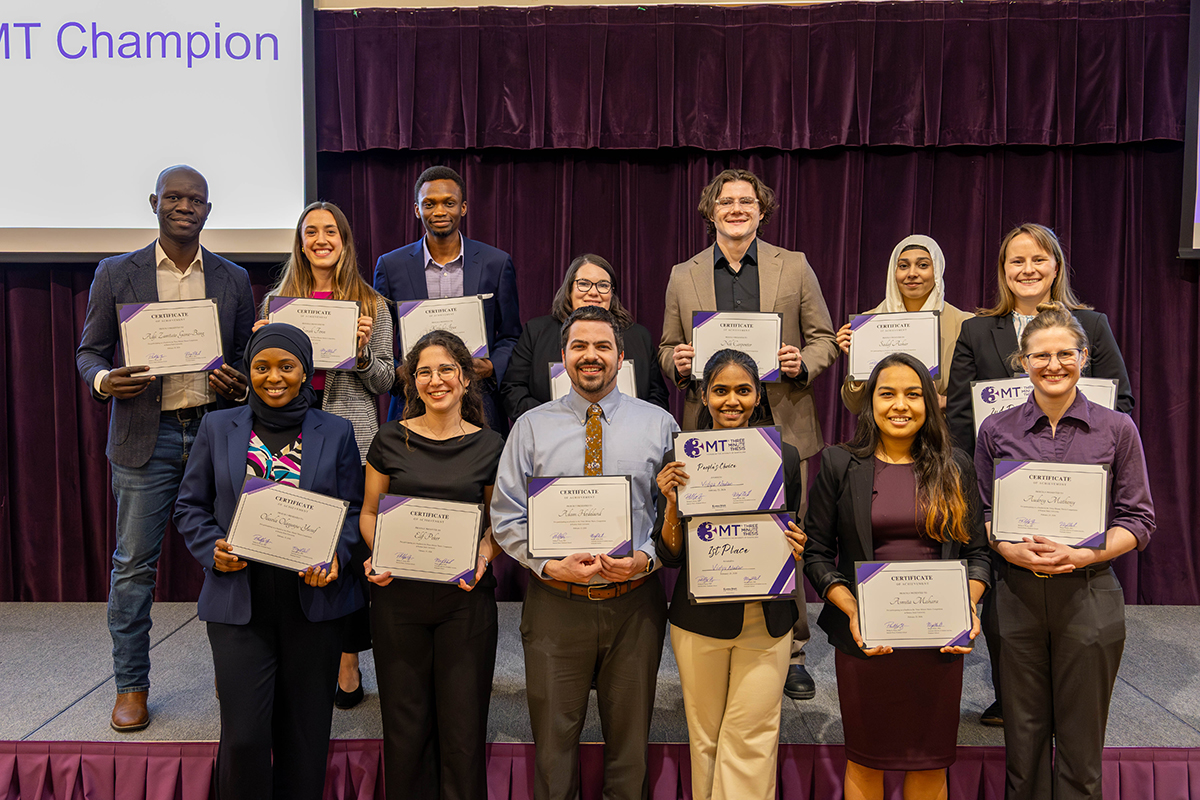
The final round of the 3MT also featured the following finalists:
Rachael Cox, doctoral candidate in curriculum and instruction, Wakefield.
From out of state: Adam Hedelund, doctoral student in couple and family therapy, Newberry Park, California; Audrey Matheny, doctoral candidate in pathobiology, Oklahoma City, Oklahoma; Nik Carpenter, doctoral student in kinesiology, Beloit, Wisconsin; Sarah Fenn, master's student in kinesiology, Sheboygan Falls, Wisconsin.
From out of country: Kelechi Igwe, doctoral student in agricultural engineering, Nigeria; Olusola Olagunju-Yusuf, doctoral candidate in grain science, Nigeria; Adji Zamtato Gane-Bang, master's student in agricultural economics, Chad; Elif Peker, master's student in food science, Turkey; Sadaf Azhar, doctoral student in food science, Pakistan; Asmita Mahara, doctoral student in biological and agricultural engineering, Nepal.
"The 3MT competition showcases the outstanding scholarship, engaging components, and impact of graduate student research across every academic discipline," said Phil Payne, interim dean of the Graduate School. "It challenges them to engage a broad audience on specific topics by drawing them into the impacts of their research. They do this through creating a story around their research that can be shared across academic disciplines and with the broader community."
K-State's chapter of Sigma Xi, the Scientific Research Honor Society, sponsored this year's 3MT competition.
The chapter sponsored the first-place award and provided finalists with a one-year membership to Sigma Xi, which will give them access to professional development, networking, and funding opportunities.
Judges for the 3MT final competition were Lisa Rubin, director of K-State's Institutional Review Board and professor in Special Education, Counseling, and Student Affairs; Amy Button Renz, Graduate School Advisory Board member and former president and CEO of the K-State Alumni Association; Rachel Mui, associate professor of management; Jason Smith, president and CEO of the Manhattan Area Chamber of Commerce; Shivaprasad Prakash, 2025 3MT winner and doctoral candidate in grain science; and Jack Sytsma, president of K-State's chapter of Sigma Xi and doctoral candidate in biology.
The 3MT was developed at the University of Queensland in 2008 and was first held at K-State in 2016. Today, competitions are held at more than 900 universities in 85 countries.
Related Stories
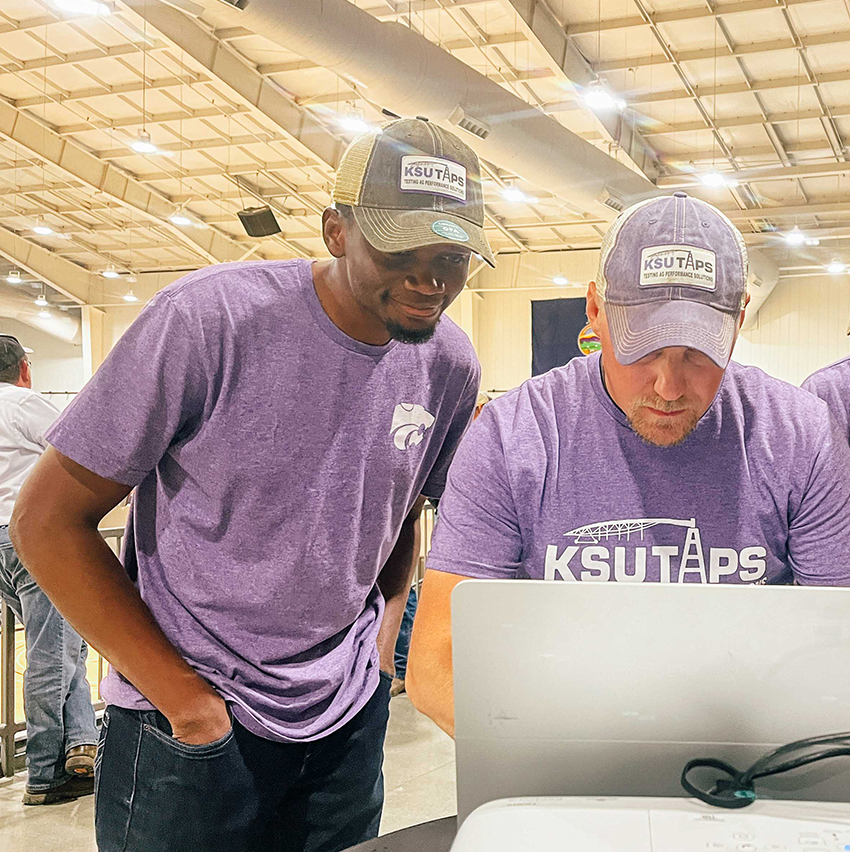
From Kampala to Kansas Fields
From Kampala to the Kansas prairie, Rayhaan Kabenge— a graduate assistant with the Testing Ag Performance Solutions team at Kansas State University — is...
K-State joins national effort to prepare next generation of veterinary entomologists
K-State is training future veterinary entomologists through the REEVES program, offering students real-world research experience in livestock insect and tick...

Graduate Student Parent Success Scholarship supports scholars balancing family and advanced study
K-State’s Graduate Student Parent Success Scholarship provides vital financial and emotional support for graduate students raising families while pursuing...