Cancer rates are rising in western Kansas. K-State is helping community members address the issue
Johnson Cancer Research Center leads community-driven effort to reduce cancer risks in Russell, Ellsworth and Lincoln counties.

By Taylor Provine
K-State News and Communications Services
Thursday, March 5, 2026
When residents of three western Kansas counties raised concerns about rising cancer rates and potential environmental cancer risks in their communities, Kansas State University researchers responded with research and collaboration that led to results.
A project led and funded by K-State's Johnson Cancer Research Center has been studying and testing groundwater contamination in private wells and radon levels in homes in Russell, Ellsworth and Lincoln counties since March 2024. The project was initiated from residents' concerns about increasing cancer rates in these counties, including colorectal cancer in Russell County and prostate and lung cancers in Lincoln County.
Now that the initial research phase has concluded, the researchers have identified results and implemented strategies to help reduce cancer risks and promote community health.
Innovation with integrity
Ryan Rafferty, interim director of the Johnson Cancer Research Center and associate professor of chemistry, is leading the research team alongside collaborators in geology, public health, environmental science and K-State Extension.
As part of the project, community members could volunteer to have K-State researchers test their homes for radon at no cost. Rafferty said the radon testing results have been a significant concern, prompting the need to install radon mitigation systems.
"The radon tests were off the charts," Rafferty said. "It was concerning to see what the levels were, but luckily, once we got mitigation systems into about 90% of the houses tested, they were back down to safe levels. Anyone who wanted help received it."
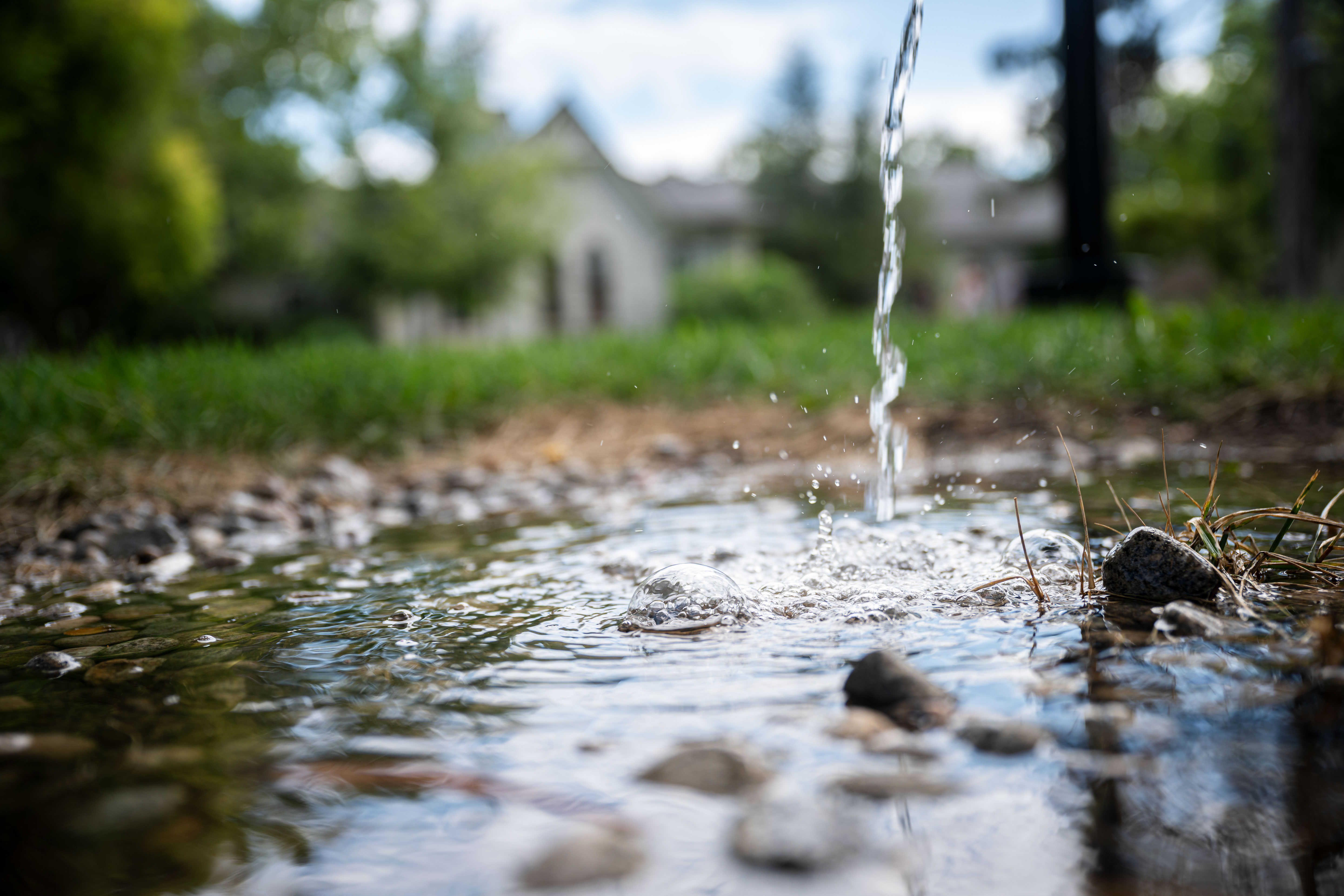
Private well water testing across the three counties, also conducted voluntarily, found elevated mineral levels that may also pose health risks, Rafferty said, and improved water filtration systems could help reduce the public's exposure.
Putting the people first

Jessica Kootz is a family and consumer sciences specialist in Ellsworth for the K-State Extension Midway District. As a dedicated catalyst for improving community health, she has been a strong advocate and partner for the project.
"Sometimes a lot of our focus is just on healthy living, but healthy living can run a lot deeper," Kootz said. "With this project, one of the focuses was, if there is something in the ground that's contributing to our health, how long has it been there? What we're doing to our environment today might not affect us, but it could affect generations to come."
Kootz helped coordinate town halls in Ellsworth, Lincoln and Russell counties for residents to learn more about the project and how they could participate in research efforts.
During follow-up town hall meetings, the researchers shared anonymized results of their findings with community members for their awareness.
"The people in these counties are hungry for knowledge," Rafferty said. "They want to know what is happening in the ground that they farm and live on."
Living K-State’s land-grant mission
The project reflects K-State’s land-grant commitment to addressing real-world health challenges, Rafferty said, helping to provide not only education, but also education for Kansans’ quality of life. The group is working on the next steps to continue the project and implement additional mitigation efforts.
"We are working to rebuild the team, as both professors who started this great work have retired," Rafferty said. "The team is excited to return to these communities, continue to provide results and build connections so that the community members can continue to feel like their voices are being heard."
With the anticipation of additional funding from the Johnson Cancer Research Center and potential support from other entities, the team could expand water and radon testing to more homes, he said.
"We are living our land-grant institution's mission," Rafferty said. "That's why it was so important for us to get out there with the center's mission for fighting cancer. Radon is a big cause of cancer, and we're happy that we can mitigate it in so many homes in that area, and we look forward to helping many others."
"Every single person in this wonderful state of Kansas deserves to live a healthy and long life," he said.
The project team also includes Shreepad Joglekar, professor and head of the art department, who is documenting the daily lives of community members through photography and video interviews for the project "Surveying the Invisible: Cancer and Research in Kansas"; Helene Avocat, visiting assistant professor in geography and geospatial sciences; Luke Romang, a 2025 graduate in geology; Karin Goldberg, adjunct professor of geology; Matt Kirk, professor of geology; and Sherry Fleming, former director of the Johnson Cancer Research Center.
Related Stories
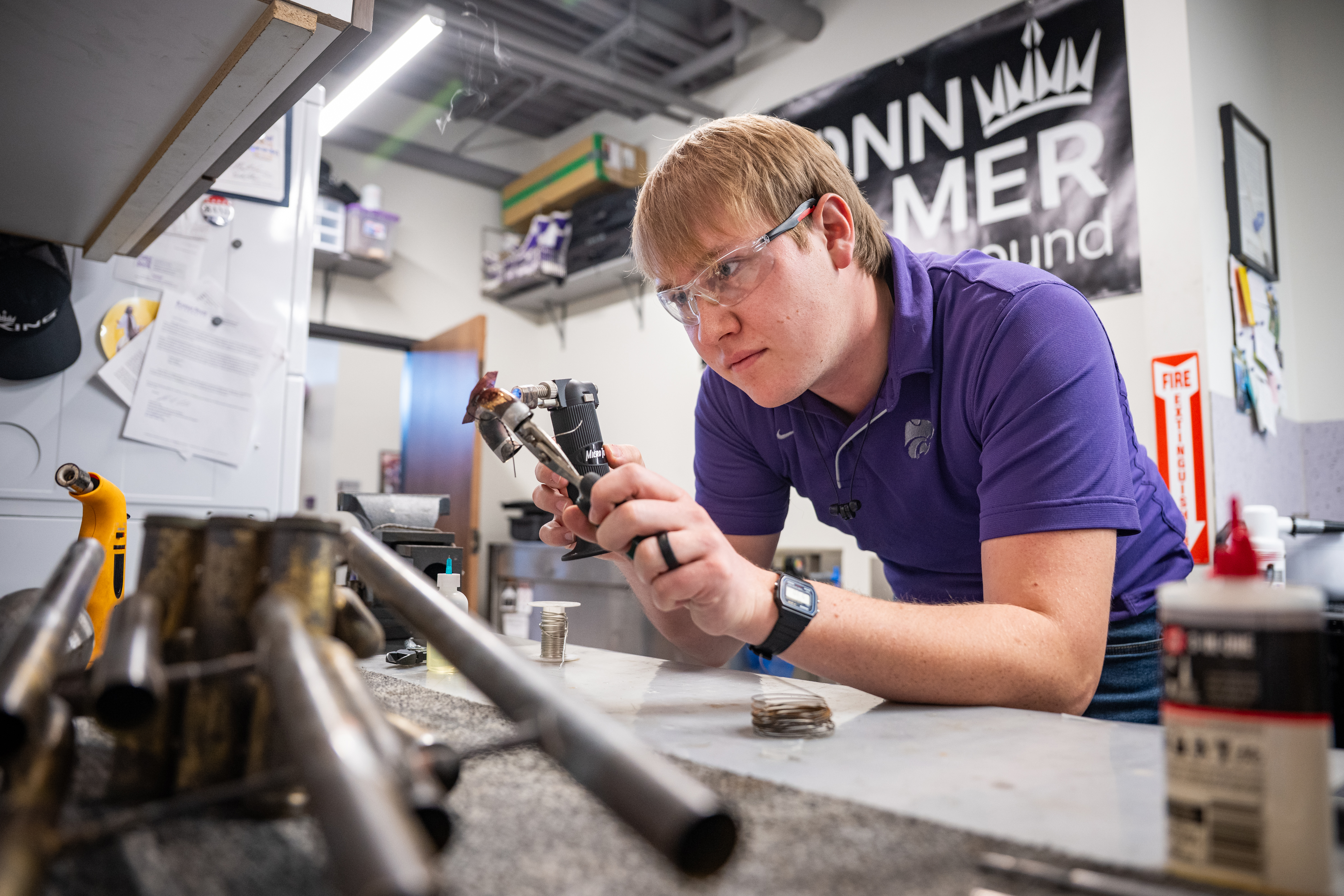
The sound of rural school music
What started as a small independent study is now a thriving certificate program at K-State. Students in the newly-created instrument repair certificate and...
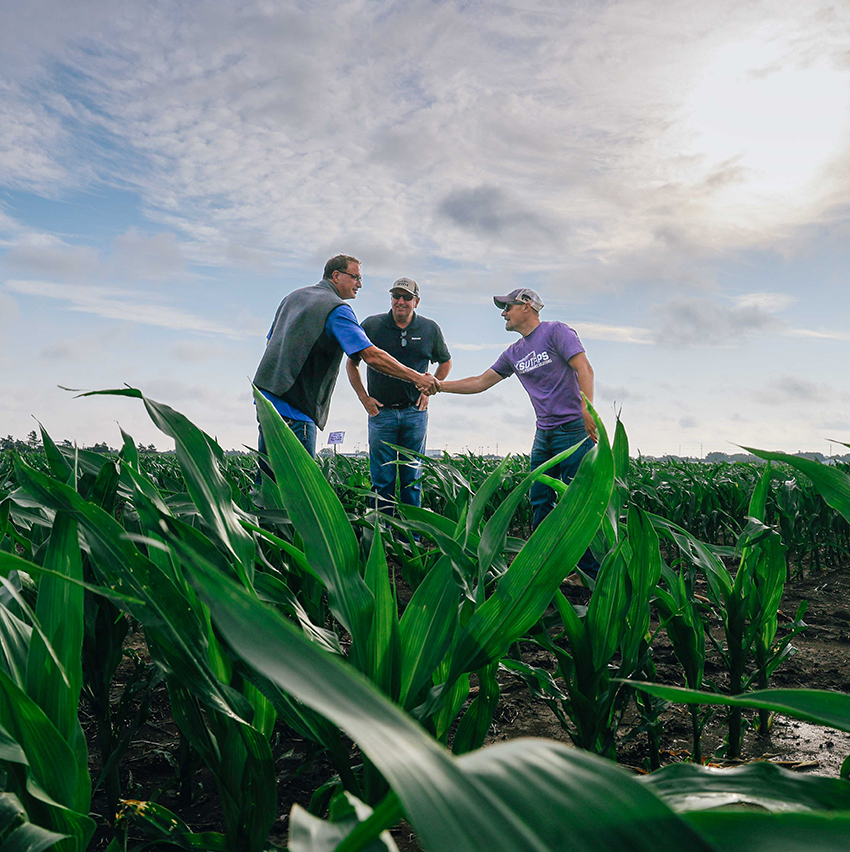
Doing good for Kansas
In recognition of the university's commitment to partnering with Kansas communities, K-State is one of more than 200 universities to receive the Carnegie Foundation's...
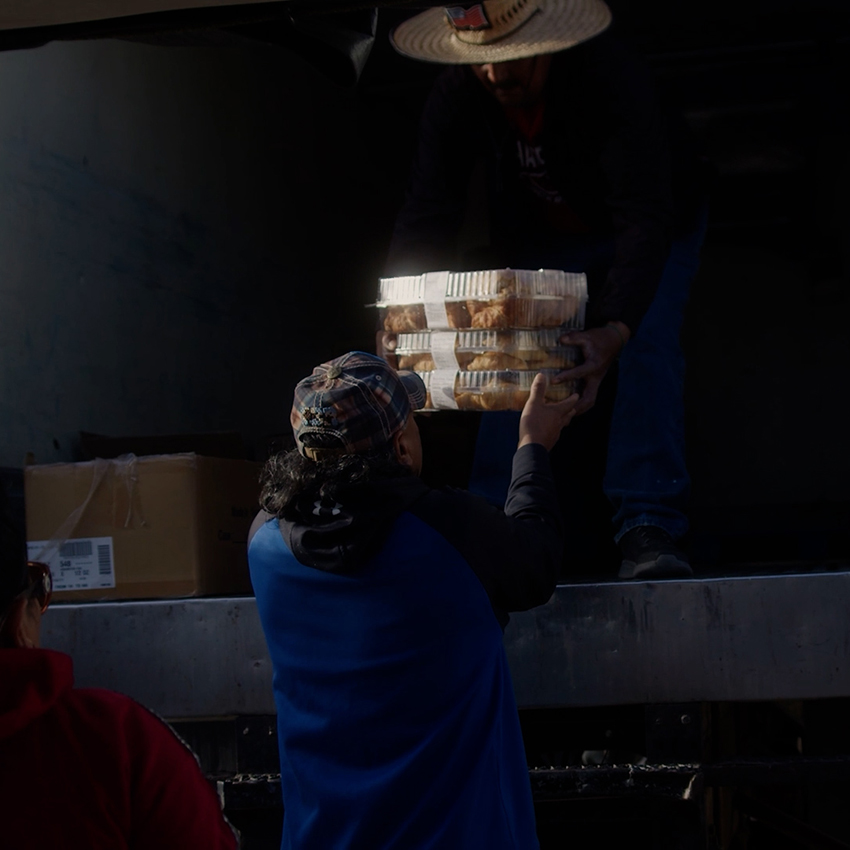
K-State team produces award-winning documentary on food insecurity in Kansas
K-State students and faculty members came together through the Hungry Heartland project to produce "The Table We Share," an award-winning documentary addressing...