K-State team produces award-winning documentary on food insecurity in Kansas
In "The Table We Share," Wildcat students and faculty members highlight community shelter, food distribution center in Garden City.
Even amid the abundance of America's breadbasket, people experience hunger. According to the Kansas Health Institute's Hunger-Free Kansas Data Walk, 14% of Kansans face food insecurity, meaning they don’t have enough food for an active, healthy lifestyle.
Addressing this concern in Garden City is Emmaus House, which provides food and shelter for community members. It is the subject of a new, award-winning documentary produced by a multidisciplinary team of students and faculty members at Kansas State University.
The team created the film, "The Table We Share," through the Hungry Heartland project in the Department of Social Transformation Studies' Engaged Stories Lab. The Hungry Heartland project uses storytelling to shed light on food insecurity in rural Kansas and highlight inspirational initiatives that demonstrate community resilience and care.
Students harness classroom experience, passion for people to create award-winning film
"This project became one of the most meaningful parts of my education," said Brock Edwards, graduate student in sociology and editor of the documentary, from Wellington. "Not only did I get to apply the ethnographic skills I developed from courses, but I also gained a deeper understanding of the strength and connection in these communities by listening to the people's stories. It completely changed how I think about food access."
Edwards, who received his bachelor's degree in anthropology at K-State, is interested in visual ethnography as well as social inequality and community. His research explores how people in rural America with different political, social and religious beliefs find common ground through working the land together.
"This project challenged me to think about how research and storytelling can work together to spark understanding and change," Edwards said. "It reminded me why I love telling stories. Sharing these stories is a huge honor and responsibility, and I'm grateful for the opportunity."
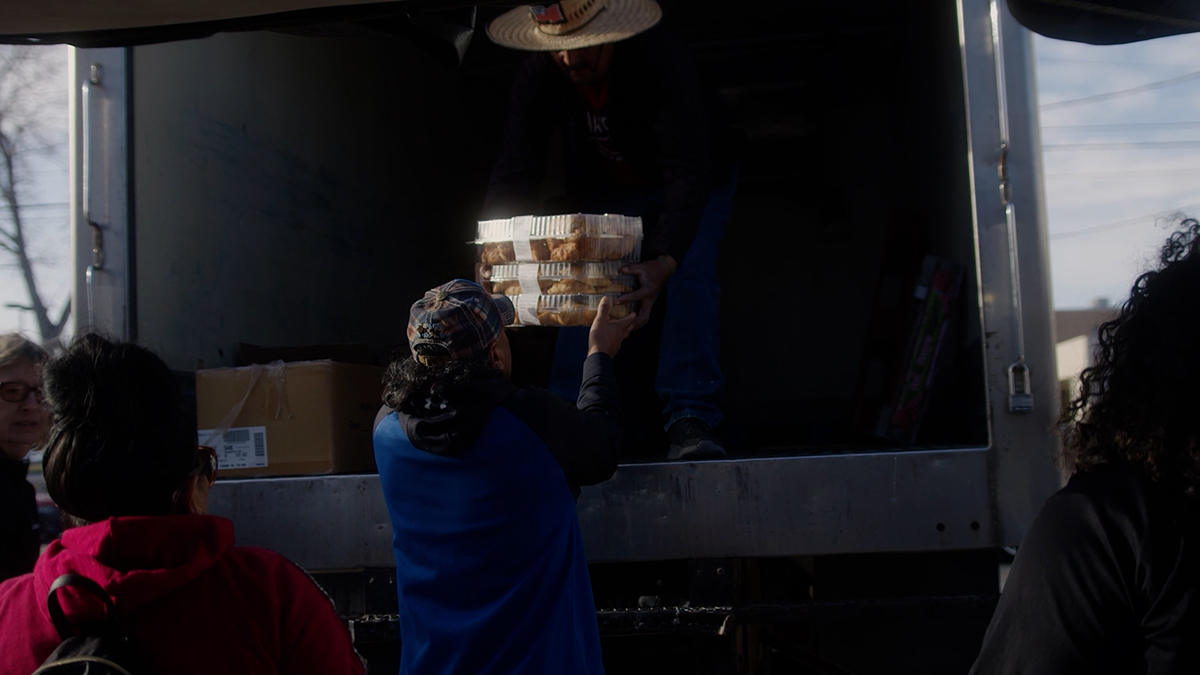
Jessica Ramirez, a doctoral candidate in leadership communication, coordinated the interviews for the film and conducted them in English and Spanish. As someone who benefited from places like Emmaus House as a child, she is passionate about food insecurity.
"This project was deeply personal for me," Ramirez said. "The woman wrapped in a blanket in the video reminded me of my grandmother. Even on a cold, windy day when she wasn't feeling well, she showed up to pick up food — not because she was taking advantage of the system, as stereotypes often suggest, but because if she didn't, our family would go hungry."
Originally from Oxnard, California, Ramirez first visited Garden City in January as part of K-State's Alternative Breaks program. The experience changed her perspective on Kansas and the Midwest and inspired her to learn more about the community and its food systems, which sparked this documentary project.
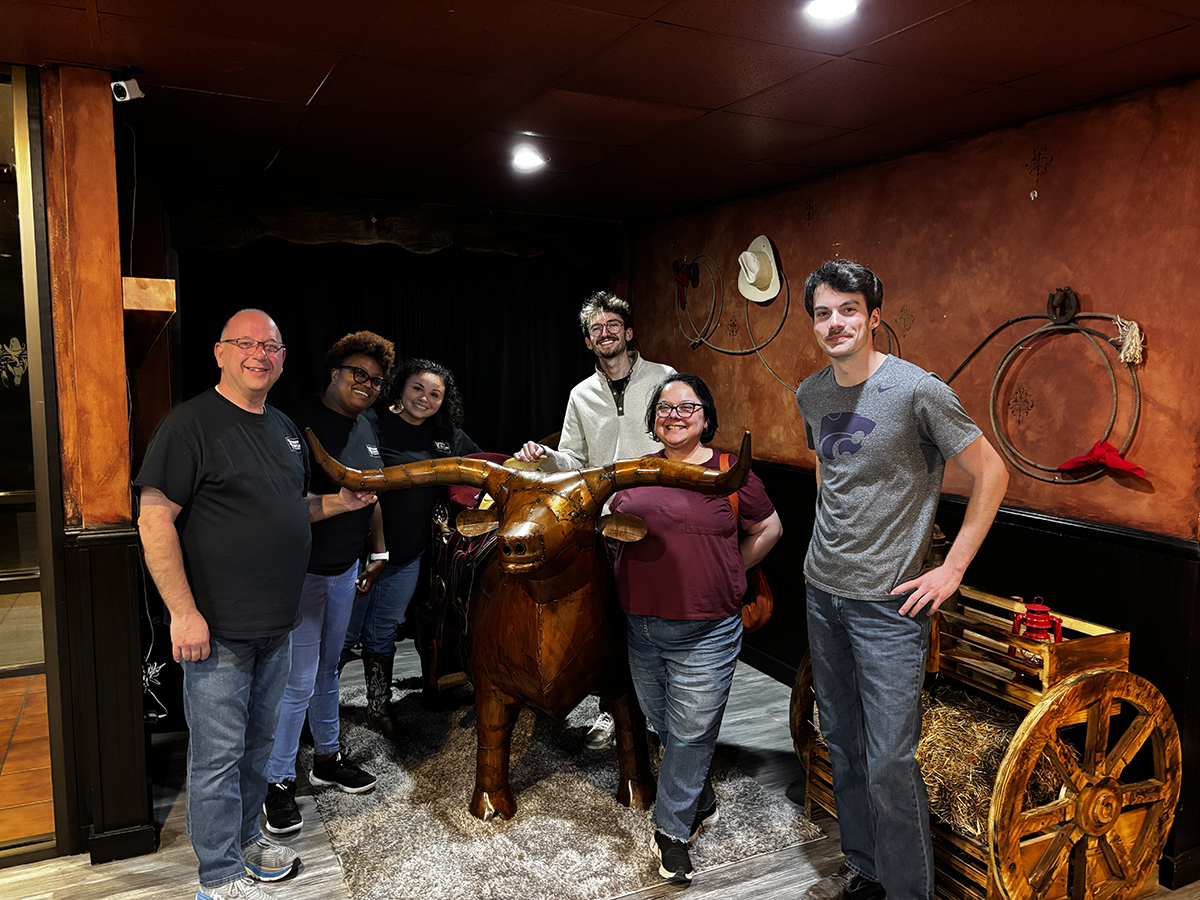
With guidance and support from the A.Q. Miller School of Media and Communication, the Chapman Center for Rural Studies, and the Department of Social Transformation Studies, a group of graduate and undergraduate students and faculty mentors formed a team. They spent part of their spring break in Garden City conducting and filming interviews with Emmaus House representatives and community members.
"This video humanizes an issue that many of us think we understand but actually know very little about," Ramirez said. "It invites viewers to see a reality that many assume lives elsewhere."
'The Table We Share' has earned numerous national and international accolades
The documentary has received multiple awards, including Best Social Justice Film and Honorable Mention for Best Editing at the New York International Film Awards. It also received Best Food Film and was nominated for Best Social Justice Film and Best Student Film at the Cannes World Film Festival.
"The Table We Share" earned Best Short Documentary, Best First-Time Director and Best Editing awards from the New York Movie Awards, as well as Best Ethnographic Film, Best Social Justice Film, and Best Documentary Short at the Oniros Film Awards–New York. It also received Best Inspirational Film at the Florence Film Awards and Best Documentary at the Stockholm City Film Festival.
"I'm so proud of our students for this well-deserved recognition," said Valerie Padilla Carroll, professor and interim head of social transformation studies. "Their film shows how public scholarship can amplify the resilience and voices of Kansans, and this project reflects the spirit of collaborative, engaged learning that defines our lab and K-State."
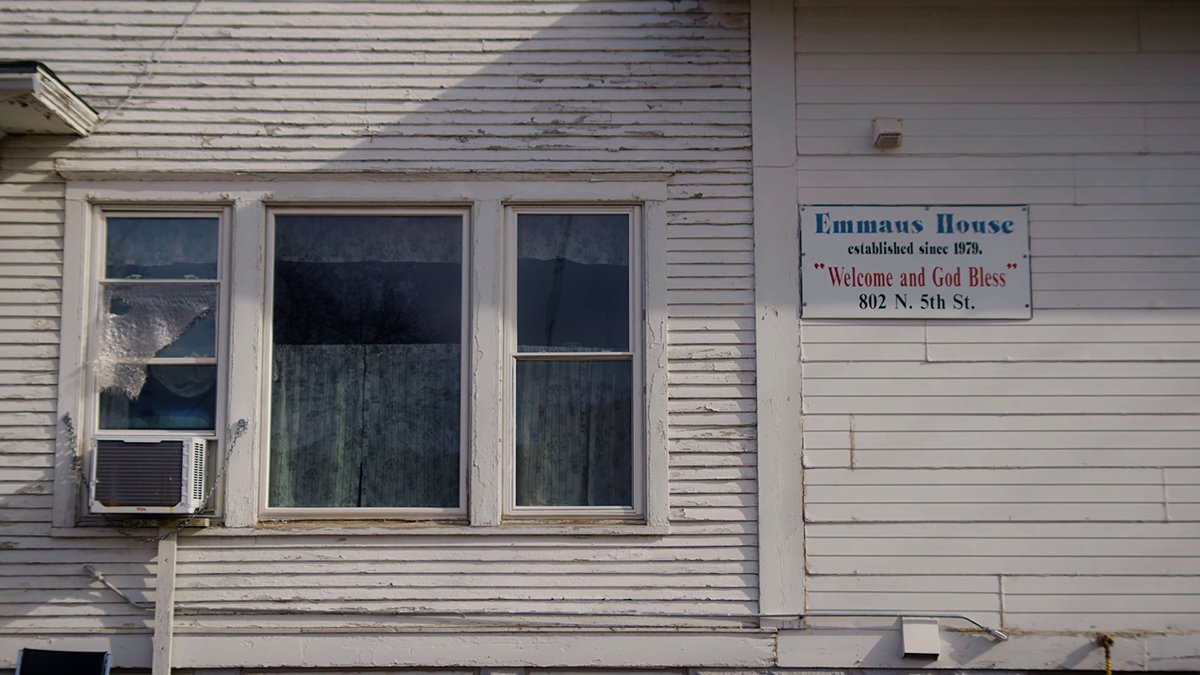
Emmaus House was established as a homeless shelter in 1978, with support from the Dodge City Catholic Diocese, and has evolved to also serve as a soup kitchen, food distribution center and longer-term transition program to meet the growing needs of the community, according to its director, Robin Marsh. It serves from 140 to 240 families at any given time.
"It can be easy to reduce food insecurity to an abstract issue or a political buzzword, but it is a daily reality for millions," Ramirez said. "I know that reality personally, and that lived experience deepens my commitment to community-engaged research and scholarship to improve lives in Kansas and beyond.
"Projects like this are why I am proud to be part of a land-grant institution. The knowledge and skills we gain allow us to share stories, grow empathy and co-create collaborative strategies that move us closer to a more equitable state, country and world for all."