K-State is For Everybody
Student Belonging Creates Culture of Celebration For All Students
K-State is a place where individuals can celebrate their unique identities and perspectives, and learn from the unique identities and perspectives of their peers. Student Belonging facilitates a campus community in which all people feel welcomed and celebrated.
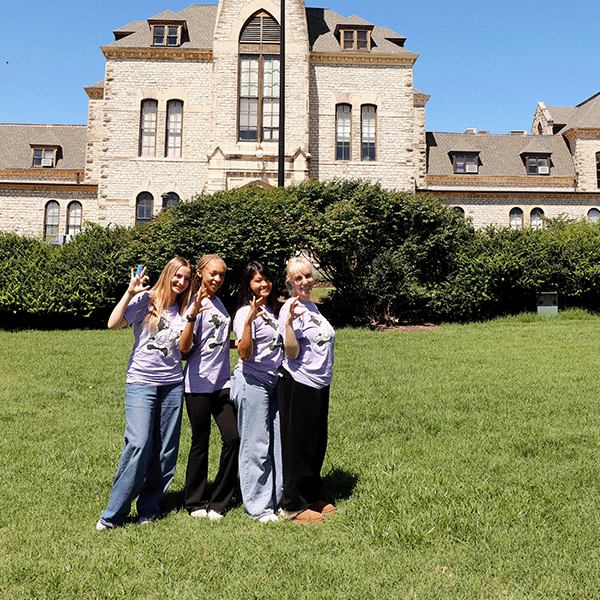
In doing so, Student Belonging advances K-State as a next-generation land-grant university. A culture of belonging encourages students to pursue higher education, to persistent to graduation, and to bring their talents with them into the workforce.
Reducing barriers to pursuing higher education
The TRIO Upward Bound program offers comprehensive academic, college readiness, and career exploration services at no cost to participants. Housed on the K-State Salina campus, Upward Bound prepares area high school students for post-secondary enrollment, while reducing barriers that first-generation or income limited students often face.
The program’s impact is evident: 13 of the 14 of AY25-26 seniors (92.8%) enrolled in post-secondary education.
Upward Bound scholars excel in their pre-college endeavors, too. This past year, three students received the Kansas Governor’s Scholars Award, which recognizes the top 1% of high school graduates for academic excellence and commitment to public education.
Supporting Wildcats’ academic success
Student Belonging’s suite of programs set students up for success from the moment their K-State journey starts, beginning with the MAPS and Kompass Summer Bridge programs. Through early exposure to campus resources, leadership development, community building and academic preparation, students who complete MAPS and Kompass report starting college with more confidence and a support system already in place.
The Fall 2025 retention data for the 2024 MAPS and Kompass cohort showed especially strong results. Of the 71 students in the cohort, 62 were retained, for a combined retention rate of 87.3%.
Support extends beyond MAPS and Kompass. Two TRIO programs—Educational Supportive Services and Student Support Services—provide holistic student support on the Manhattan and Salina campuses, respectively. Through the programs, students receive one-on-one tutoring, academic coaching, financial literacy workshops, writing support, and more.
The impacts are paying off: The most recent ESS program data show a 91% persistence rate for 2024 to 2025. TRIO ESS also reported that 86% of enrolled participants were in good academic standing, and 67% of 2019 to 2020 new participants graduated with a bachelor’s degree or equivalent within six years. TRIO SSS provided more than $20,000 in scholarships to active participants in good academic standing.
In Spring 2026, a student identified as A. met with a TRIO ESS staff member after earning a 1.3 GPA in Fall 2025. The student described herself as a bad procrastinator, but through conversation, it became clear that she was overwhelmed by classes, multiple part time jobs, and evening and weekend commitments. After joining TRIO ESS, the student worked on mindfulness strategies and time management resources.
By mid-semester, A. emailed to share that she had received As on three exams that week and was officially on track to keep all As and Bs this semester. She thanked her coach for helping her get on the right path and noted that the kindness and understanding she received helped her focus. A. is now in good standing, reinvigorated as a student, and re engaged in her academic path.
Celebrating multicultural learning and student life
Building belonging is rooted in creating spaces where unique identities are welcomed, celebrated and appreciated. Multicultural Student Life, the First-Generation Student Center and multicultural student organizations work toward this vision daily.
This year marked the fourth First-generation Education Abroad spring break experience, with nineteen students traveling to Spain. Thanks to grant support, the cost to participate was reduced—one of the most significant barriers of first-generation participation.
Of the 19 students who participated, 90% had never traveled outside of the United State before. They developed confidence in international travel, gained a new appreciation for other cultures, and formed strong bonds between peers and faculty.
K-State data indicate that four-year graduation rates increase significantly to 90.4% for first generation students who participate in Education Abroad. The retention rate of all First-Generation Education Abroad cohorts is currently 94%, with approximately half of participants having graduated. First generation student representation in Education Abroad increased from 16% to 23% over the past four years.