K-State Laboratory Signs
The Kansas State University Department of Environmental Health and Safety (EH&S) Research and Laboratory Safety Program commissions each campus laboratory or research location.
Hazard Communication and Laboratory Signage Presentation Video
To create or edit a lab sign in EHS Assistant (EHSA), see instructions. All laboratory signs (one per room number) will be stored in EHSA and must be printed in COLOR and posted at the door. If you need help getting access to EHSA or need a PI account, email safety@ksu.edu with your building, lab room number(s), and any workers you would like to be attached to this permit.
- Having trouble printing? Make sure pop-ups are allowed:
- For chrome: Click the settings button on the site to the left of the URL and then make sure the toggle slider next to "Pop-ups and redirects" is blue. Then click reload.
- For Firefox: You have to actually go into settings and add it as an allowed site. Go to settings > search "pop" > click "manage pop-up and third..." > add https://ehsa.prod.aws.ksu.edu/ to allowed sites > Allow > Save Changes > Reload page.
For any questions, comments, or for assistance with completing this form, please contact EH&S at safety@ksu.edu or 785-532-5856.
Thank you for your partnership and collaboration in campus-wide safety.
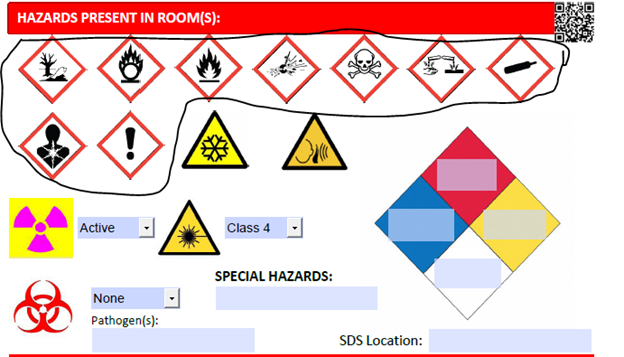
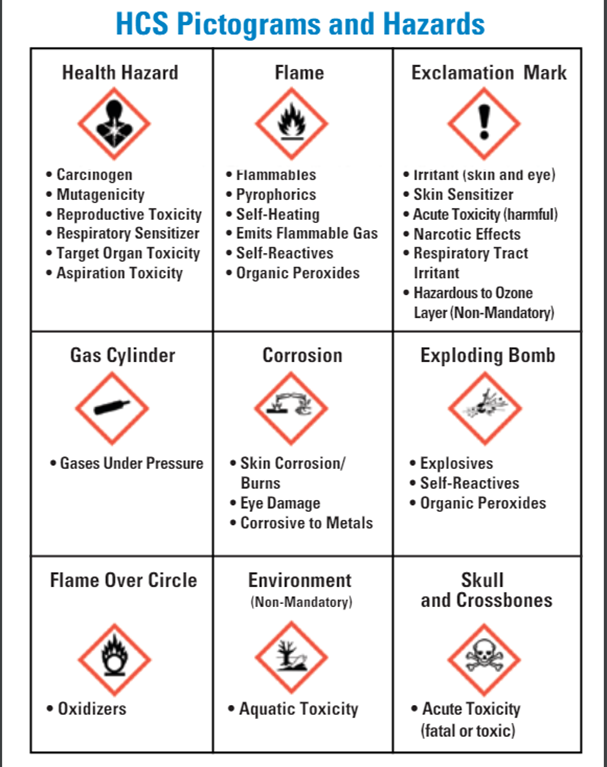
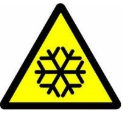
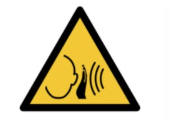
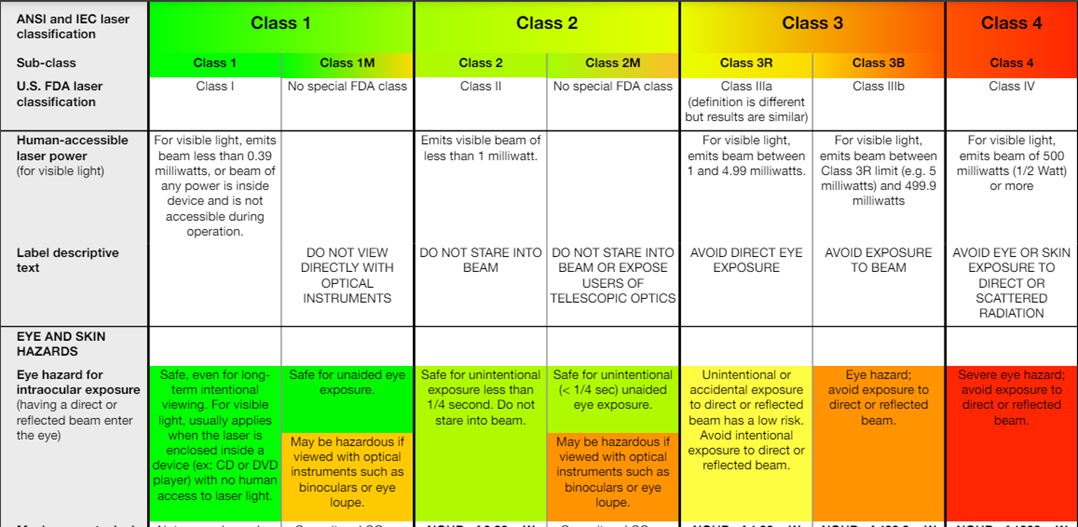
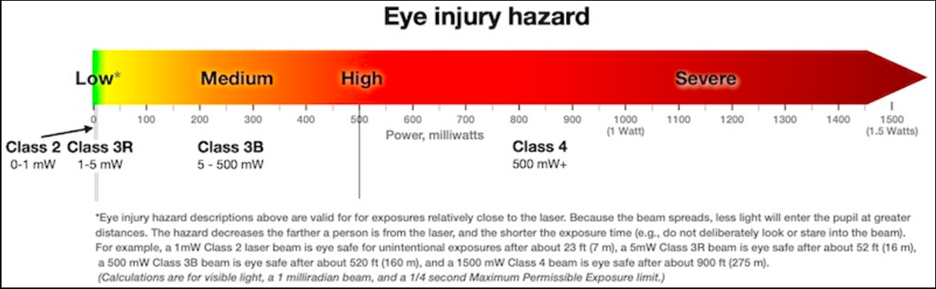
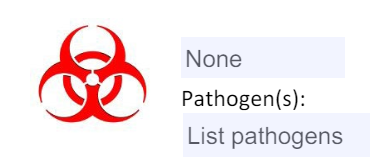
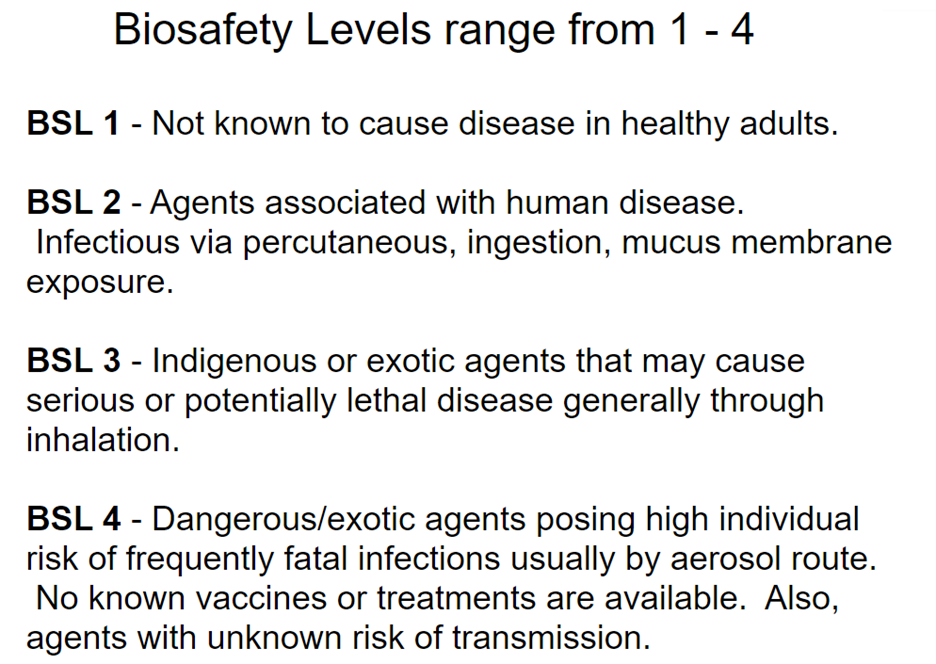
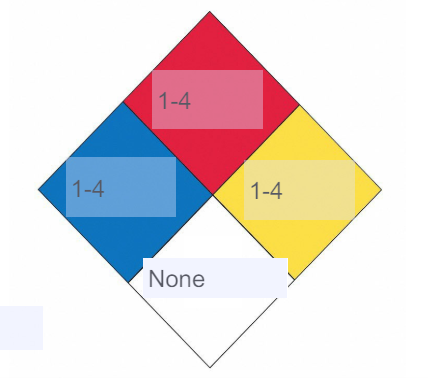
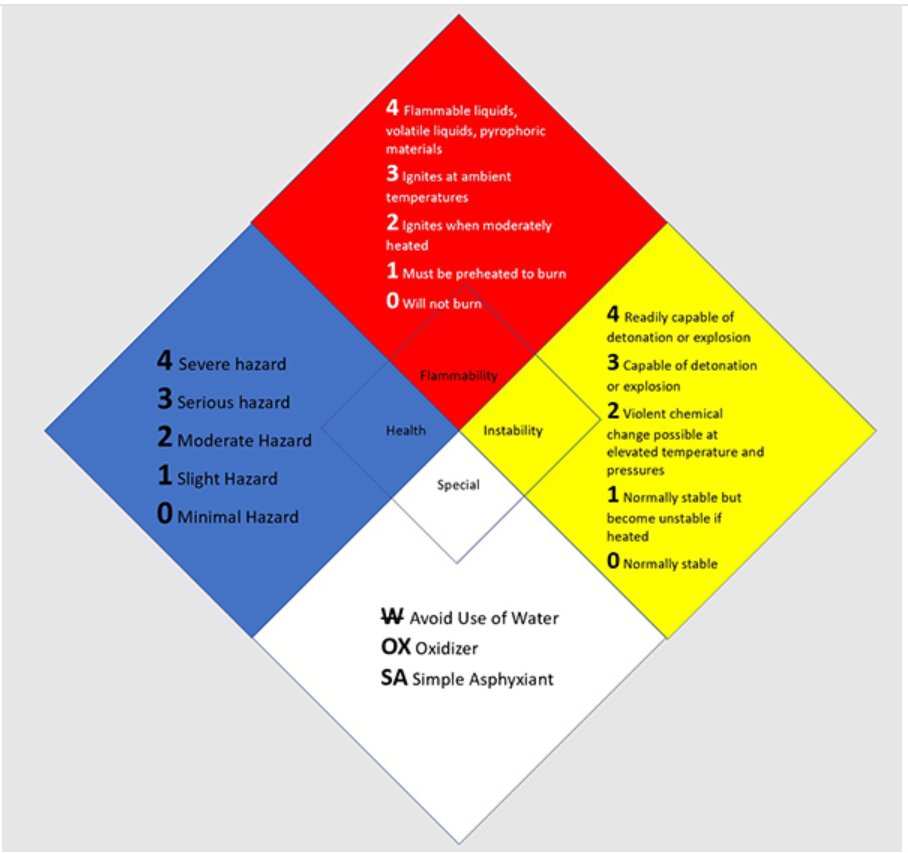
An updated and accurate Hazard Assessment is required for each laboratory by the Kansas Department of Labor (KDOL) through adoption of the Occupational Safety and Health Administration (OSHA) Hazard Communication Standard 1910.1200 and OSHA Personal Protective Equipment Standard 1910.132. Hazard assessments and laboratory signs provide information that aids workers, informs hazardous materials and emergency response, and facilitates emergency communication. Updated hazard information and signage are two of our most important research safety tools on campus. A laboratory sign must be posted on each entrance to your laboratory, including on internal doors between rooms. This sign must be posted in COLOR for compliance. Labs may choose to post the sign in a sign holder or binder sleeve for easy decontamination and rotation of signs in the future (if necessary). The Kansas State University Hazard Communication Program is administered by the Department of Environmental Health and Safety Research and Laboratory Safety Program. The following dropdowns are intended to provide a short overview of possible laboratory sign hazards and language for quick reference in the field. The Laboratory Hazard Assessment asks all laboratory groups to define routine access for each laboratory room on campus. Most laboratories on campus have access requirements aligned with one of the following options: All individuals accessing laboratories for non-emergency purposes are expected to follow each individual laboratory’s access requirements. Following laboratory access requirements protects individuals (laboratory visitors and laboratory members), supports research and operations integrity, and upholds laboratory security. Contact information for laboratory access is posted at the top of the sign. The PI is listed first, the laboratory manager or secondary laboratory contact is listed second, and the department safety coordinator is listed third. A PPE Assessment is conducted for each campus laboratory to evaluate potential hazards and provide personnel protection by choosing appropriate PPE for entry and work in the laboratory. All faculty, staff, students, and visitors to the laboratory must wear minimum PPE requirements as indicated on the laboratory sign. Specialty PPE may be used for specific operations in the laboratory, such as cryogenic gloves for liquid nitrogen work, or bite-scratch gloves for animal work. This specialty PPE must be communicated in laboratory-specific SOPs and work instructions, and in task-specific training for individuals performing these tasks. GHS Pictograms – Chemical Hazard Communication GHS pictograms communicate chemical hazards that may be present across the total chemical inventory of space. These pictograms are outlined in red and have a black image. The following table from the OSHA Hazard Communication Standard QuickCard defines the pictograms: As shown in the table above, single pictograms may represent multiple hazards. Before any work with chemicals, review each chemical safety data sheet (SDS) to ensure you understand the hazards present and recommended protective measures. Any questions about chemicals used or stored in a laboratory space should be referred to the contact information on the laboratory sign. The SDS location for each laboratory is posted on the laboratory sign under the NFPA diamond. Cryogen Symbol – Cryogens Cryogens are liquids with a normal boiling point below -240°F (-150°C, 123°K). VERY COLD! The most commonly used gases in the liquid state at cryogenic temperatures are argon, helium, hydrogen, nitrogen, and oxygen. Handling of cryogenic materials requires specialty PPE to protect individuals from the cold temperatures of these liquids. Please contact the laboratory at the contact information listed on the laboratory sign if you have questions. Loud Noise Symbol This symbol indicates the potential presence of loud noises (>85 dB) within a space. This can be from many sources, including equipment and animals. Hearing protection may be required in these spaces. Please contact the laboratory using the contact information on the laboratory sign before entry if you are unfamiliar with the noise hazard in the laboratory and if you need hearing protection upon entry. Trefoil Symbol - Radioactive Hazards The trefoil symbol indicates the presence of radioactive hazards inside a laboratory space. Radioactive materials should be handled while wearing PPE (lab coat, gloves, safety glasses) and often require shielding approved for the material. Any questions about the radioactive material used in the space should be referred to the contacts listed on the laboratory sign. The Kansas State University Radiation Safety Officer can be contacted at radsafety@ksu.edu or 785-532-5856. Laser Hazard Symbol – Laser Hazards The laser hazard symbol indicates the presence of lasers in the space. The class of lasers is listed on the laboratory sign. Hazards associated with laser classes are described on the table below. Increasing laser class (output in milliwatts (mW)) results in increasing eye hazard potential. Always avoid looking directly into laser beams. Shielding and/or eye protection may be required in spaces with lasers during active use. Refer to the laboratory contacts listed at the top of the sign for more information about a laboratory’s specific laser applications. The Kansas State University Laser Safety Officer can be contacted at radsafety@ksu.edu or 785-532-5856. Images: Laser Safety Facts Biohazard Symbol – Biological Hazards The biohazard symbol indicates the presence of biohazardous material in space. The biosafety level is always provided on the laboratory sign. Biosafety levels range from 1-4. The following chart from the NIH briefly describes each biosafety level as it pertains to human health. Image: NIH The pathogen type may be listed on some laboratory signs. Common pathogen types listed may include: Animal Pathogen Agent associated with animal disease Human Pathogen Agent associated with human disease Zoonotic Pathogen Agent associated with animal and human disease Agent-specific information is omitted from laboratory signs. Questions about specific agents in a laboratory should be directed to the contact information on the laboratory sign. NFPA 704 Diamond “The NFPA 704 hazard identification system is characterized by a diamond which is more precisely defined as a “square-on-point” shape. It identifies the degree of severity of the health, flammability, and instability hazards. Hazard severity is indicated by a numerical rating that ranges from zero (0) indicating a minimal hazard, to four (4) indicating a severe hazard. The hazards are arranged spatially such that health hazards are indicated in the nine o’clock position, flammability at the twelve o’clock position, and instability at the three o’clock position. The six o’clock position on the symbol represents special hazards and has a white background; it is not always filled.” (NFPA Hazardous Materials Identification) Many emergency responders are trained on the NFPA 704 diamond – it helps to facilitate quick decision making in emergency response. The NFPA diamond values and abbreviations on the laboratory sign are representative of the hazards of the laboratory chemical inventory. Image: NFPA “Special Hazards” Special Hazards are hazards or information that do not fall into the pictogram categories above, but that laboratories have indicated should be posted on their laboratory sign. The information included in this section will vary widely across campus laboratories and disciplines. Sometimes, the special hazards section may be used to directly inform emergency responders of additional considerations. Please contact the laboratory using the contact information listed if you have any questions about this section. Questions or Concerns Lab Specific: Any questions about laboratory sign hazards or language specific to a campus laboratory should be directed to the contacts listed on the laboratory sign. Hazard Communication Program: General questions about hazards, pictograms, laboratory signs, hazard assessments, or the hazard communication program may be directed to Environmental Health and Safety at safety@ksu.edu or 785-532-5856. Emergencies All campus laboratory emergencies should be directed to KSU Police at 785-532-6412.

Helpful Links:
CDC 4 Biosafety Levels
Biosafety in Microbiological and Biomedical Laboratories (BMBL) 6th Edition
NFPA 704 Diamond
OSHA Quick Card - GHS Pictograms and Hazards
OSHA Quick Card - Hazard Communication and Safety Data Sheets (SDSs)
OSHA Personal Protective Equipment Website Overview