K-State Current - September 1, 2021
K-State Current is a weekly news update for the Kansas Board of Regents to apprise the Regents on a few of the many successes and achievements made by K-State faculty, staff and students.
K-State News
Forbes ranks university as a top 3 employer in Kansas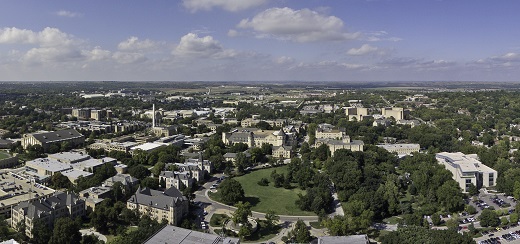 The annual survey by Forbes magazine, "America's Best Employers by State List," finds Kansas State University rates among the Top 3 employers in the state and is the best university employer in the Sunflower State.
K-State came in at No. 3 in 2021, up from No. 9 in 2020.
"Our faculty and staff are the heart of what we do at K-State and that has never been more evident than over the last year and a half," said Jay Stephens, vice president for Human Capital Services. "Making this a great place to work for everyone is always a priority."
As an employer, Stephens said the university's mission is to provide progressive, responsive and innovative solutions to attract, retain, develop and reward a highly talented, diverse and inclusive K-State community that cultivates an environment where students and employees flourish.
For the list, Forbes and Statista, a marketing research company, surveyed 80,000 workers from businesses with at least 500 employees. The rolling survey was conducted from October 2020 to June 2021 and in all 50 states and the District of Columbia. In the anonymous surveys, employees rated their employers on various criteria, including safety of work environment, competitiveness of compensation, opportunities for advancement and openness to telecommuting. Workers also were asked if they would recommend their employers to others.
Read more at forbes.com/best-employers-by-state/#17ce21b5487a.
K-State College of Ag nabs No. 7 in latest Niche.com rankings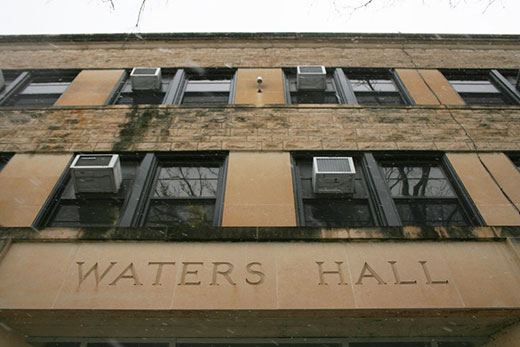 Kansas State University’s College of Agriculture has again been recognized as a top 10 college by Niche.com in its annual Best Colleges for Agricultural Sciences ranking.
Of the 142 agriculture colleges and programs Niche.com compared for their 2022 list, K-State ranks No. 7.
The Niche.com ranking is based on an analysis of academic, admissions, financial and student life data collected by the U.S. Department of Education, plus millions of reviews from students and alumni.
“There are many great agricultural schools doing incredible research and engagement, while also doing a great job preparing students,” said Ernie Minton, dean of the K-State College of Agriculture. “I’m proud that K-State again ranks among the top.”
“In looking at the data and survey results they’ve collected, one thing that sets us apart is the quality and commitment of our faculty. Every year, the student and alumni surveys consistently put our faculty first in areas related to teaching and helping students be successful.”
Scuyler Zenger, a K-State senior in food science and global food systems leadership, said the approachability and dedication of the faculty has had a significant impact on his time at K-State and ability to plan for his future.
"Dr. (Karen) Schmidt, my academic advisor and professor in food science, has helped me through so much during my time at Kansas State,” Zenger said. “When I thought I wanted to go pre-med, she helped me plan four years of coursework to accomplish that goal. When I changed my mind about medical school, she was supportive and insightful in determining a new route of classes to help me build a career I would be satisfied with and thrive in. The faculty are focused on helping students.”
Niche.com list of top 10 agriculture schools include:
No. 1 Cornell University
No. 2 Texas A&M University
No. 3 University of Georgia
No. 4 University of Florida
No. 5 University of California – Davis
No. 6 North Carolina State University
No. 7 Kansas State University
No. 8 Oklahoma State University
No. 9 Clemson University
No. 10 University of Wisconsin
Niche.com’s full listing of Best Colleges for Agricultural Sciences is available online.
K-State Faculty Highlights
Scoglio awarded USDA grant to develop tool to estimate insect pathogen risk
 Caterina Scoglio, professor in the Mike Wiegers Department of Electrical and Computer Engineering at Kansas State University, has received a U.S. Department of Agriculture — Research Education and Economics grant to develop a computer tool used to estimate the risk for arthropod-transmitted pathogens.
Scoglio, who holds the Paslay professorship in electrical and computer engineering and is a Steve Hsu Keystone research scholar, will lead the more than $275,000 four-year project, conducting research on "Predicting Insect Contact and Transmission Using Historical Epidemiological Data."
Researchers will collect data, develop algorithms and design a computer tool that provides predictive models that estimate arthropod-borne pathogen transmission risk in locations using environmental and dynamic real-time data, all with the goal of optimizing resources.
"Estimating pathogen transmission risk will reduce waste of limited shelf-life products and the movement of resources between locations," Scoglio said. "Planners will use this tool to evaluate mosquito-borne virus risk of a geographic location at specific times or durations of time. Users can also monitor conditions at specific locations to decide when and which products to reorder."
The platform will classify landscapes into three levels of transmission current risk — high, medium and low — and will feature a forecasting tool.
This project is closely related to major research goals in the Carl R. Ice College of Engineering for the areas of infectious diseases and health.
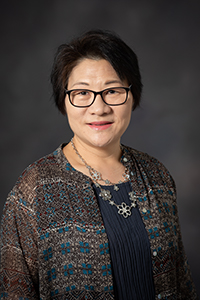 A team of K-State and the University of South Carolina researchers has received a $300,000 grant from the U.S. Department of Agriculture to develop sustainability education resources for higher education faculty in hospitality and retail management, HRM, programs.
The team is comprised of researchers from hospitality management, fashion studies and retail management programs at K-State and University of South Carolina. Junehee Kwon, professor of hospitality management, leads the multidisciplinary team. Co-project directors are Melody LeHew, professor of fashion studies at K-State, Robin DiPietro, professor of hospitality management, and Jeffrey Campbell, associate professor of retail management, both at the University of South Carolina.
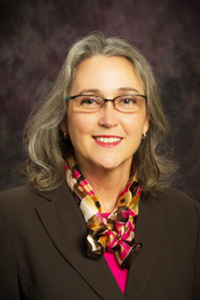 Hospitality and retail industries are consumer-facing sectors of the agricultural supply chain. These industries have a profound negative impact on the environment by large amounts of energy and water usage and waste production. To address these challenges, HRM baccalaureate programs must prepare their graduates to advocate sustainable business practices.
“Our preliminary survey revealed that these educators desire to prepare future industry professionals with science-based sustainability education, but the amount and depth of sustainability education still need improvement,” Kwon noted. The project aims to expand environmental sustainability knowledge of HRM educators, augmenting HRM educators’ capabilities for improving students’ exposure to sustainable management of energy, water, and waste.
“By advancing faculty preparedness and teaching competency, we will ultimately advance HRM students’ sustainability knowledge and self-efficacy to make choices that are sustainable for the environment,” Kwon stated.
“Students need to understand the tradeoffs when making business decisions”, LeHew emphasized. “We plan to develop sustainability education modules and supporting materials that can be easily incorporated into common HRM courses.”
“In order to stimulate student learning outcomes, we will use innovative teaching techniques such as 360-degree virtual videos and interactive choice-based simulation activities with differential outcomes,” Kwon shared. Deliverables will become available for all HRM educators via a web-based repository of sustainability education modules and supporting tools.
K-State Student News
College of Veterinary Medicine announces 2021 class of Early Admission Scholars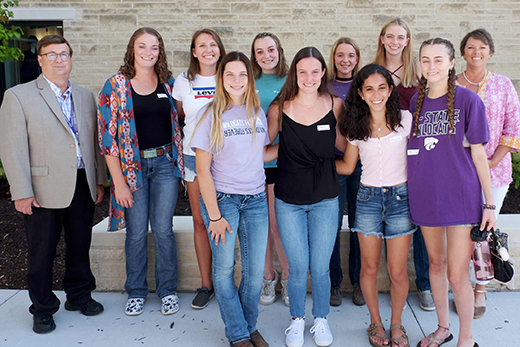 The 2021 class of Early Admission Scholars for the Kansas State University College of Veterinary Medicine. Back row, from left: Associate Dean James Roush, Kendra Siefker, Abby Schmoldt, Allie Livingston, Jenna Holt, Morgan D’Albini and Assistant Dean Callie Rost. Front row, from left: Masyn Arena, Katherine Kunkel, Tiffany Lee and Ava Wieser.
A new group of Kansas State University undergraduate students has a special opportunity to become veterinarians. The College of Veterinary Medicine recognized nine students for being selected in its Early Admission Program at the College of Veterinary Medicine on Aug. 27.
Established in 1999, the Early Admission Scholars Program recruits the best and brightest undergraduate students who are committed to studying veterinary medicine.
"The students inducted into the Veterinary Scholars Early Admission Program represent the top 5% of Kansas State University students academically," said Callie Rost, assistant dean for admissions. "I congratulate everyone selected. We had between 40 and 50 applications for the program this year, so these students are a very select group who impressed the selection committee with their potential for veterinary medicine."
The 2021 class of Early Admission Scholars, all first-year students in animal sciences and industry:
Jenna Holt, Mound City; Ava Wieser, Overland Park; and Morgan D'Albini, Spring Hill.
From out of state: Alexandra Livingston, Los Alamitos, California; Tiffany Lee, Pensacola, Florida; Kendra Siefker, Sibley, Missouri; Masyn Arena, Beatrice, Nebraska; Katherine Kunkel, Houston, Texas; and Abigail Schmoldt, Slinger, Wisconsin.
Successful candidates in the Early Admission Scholars program must maintain a 3.3 grade point average during completion of the science prerequisites and complete the 64 hours of prerequisites by the end of the spring semester prior to beginning the Doctor of Veterinary Medicine curriculum in the fall. Graduate Records Examination, or GRE, scores are no longer required for any applicant. The science courses on the prerequisite list must be completed at Kansas State University. Candidates also must strengthen their veterinary experiences, attend K-State events and participate in volunteer work.
The College of Veterinary Medicine assigns a veterinary student mentor to each Early Admit Scholar to stimulate career and academic development and to provide orientation and access to college activities. The pre-veterinary students attend regular meetings during the academic year to develop a sense of community and share their progress.
Information on how to apply for the program, including a link to a PDF on program requirements, is available online at vet.k-state.edu/admissions/early-admit/index.html. Current high school seniors can apply now through Feb. 1, 2022.
