About
K-State’s TRIGA Mark II nuclear reactor first achieved criticality Oct. 16, 1962, at 8:27 p.m. The reactor was licensed in 1962 to operate at a steady-state thermal power of 100 kilowatts (kW). In 1968, the licensed reactor power was increased to 250 kW steady-state and added pulsing capabilities to 250 MW. The latest license renewal in 2008 included a power uprate to 1250 kW steady-state and pulsing up to $3.00 reactivity.
Unlike commercial power reactors that generate electricity, research reactors are designed for education, scientific discovery and applied research. The reactor's research applications include:
- A variety of neutron beams for detector testing.
- Internal imaging using neutron radiography and tomography.
- Isotope production.
- Trace element analysis via neutron activation analysis.
- Material irradiation using neutrons and/or gamma radiation.
Researchers from across engineering and the sciences use the facility to advance innovations that impact energy, national security, healthcare and industry.
The facility relies heavily on undergraduate student staff, providing both an excellent opportunity for the students and supporting the worforce development needs of the local nuclear power industry.
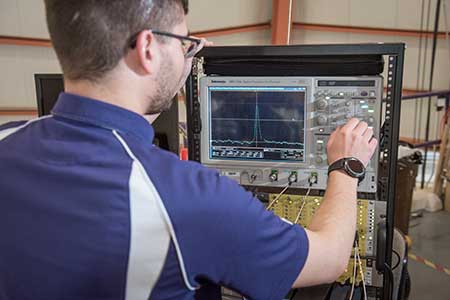
Explore available experiments and fees for services.
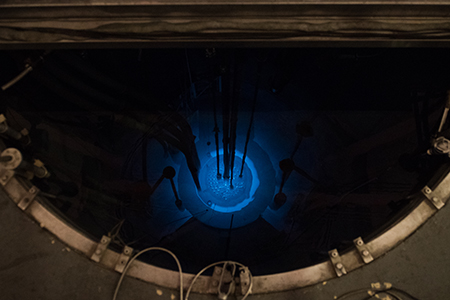
Learn more about the specialized systems that support reactor operations.