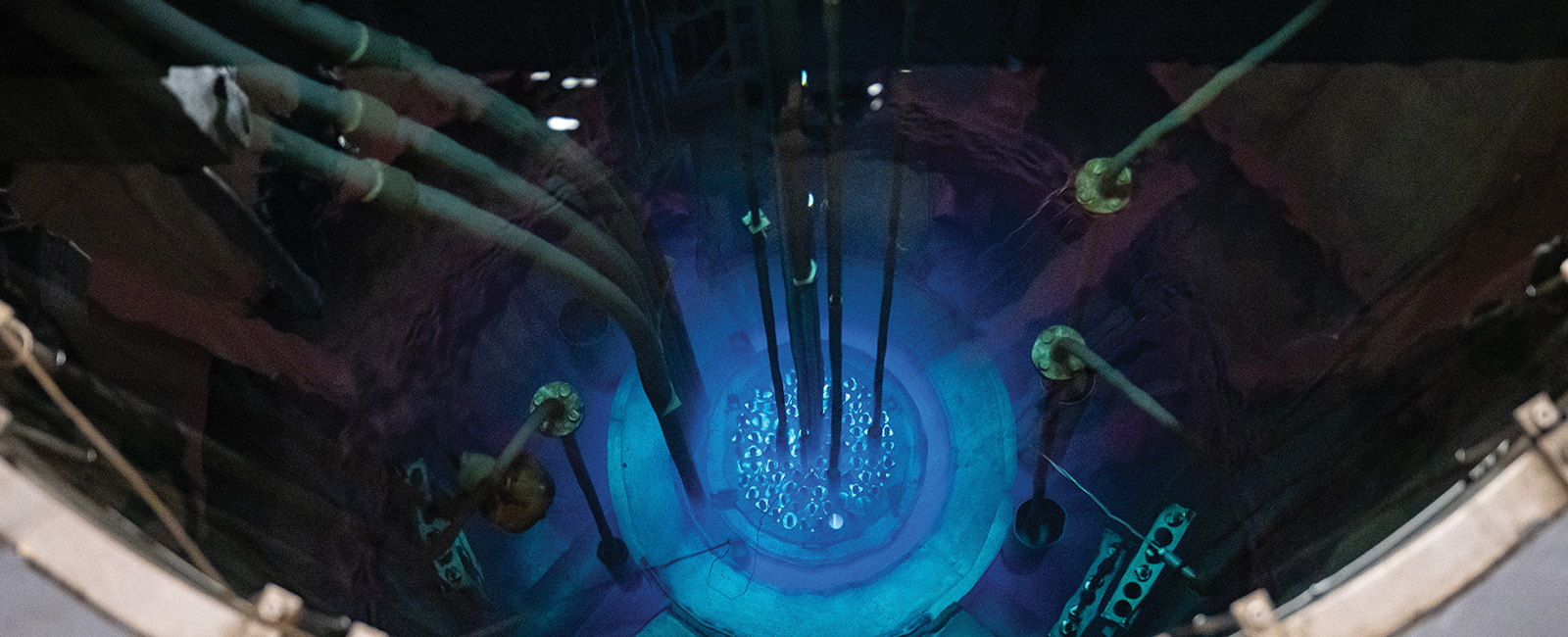
Powering the Future of Nuclear Innovation
K-State's TRIGA Mark II Nuclear Reactor Facility is one of only 25 university-operated research reactors in the U.S.
The TRIGA Mark II nuclear reactor has served Kansas State University since 1962, supporting cutting-edge research, hands-on student learning and workforce development in nuclear science and engineering. As one of only a few university-operated research reactors in the nation, the facility provides unique opportunities for students and researchers to explore radiation detection, materials analysis, reactor operations and emerging nuclear technologies.
What is a research reactor?
Unlike commercial nuclear power plants, research reactors operate at much lower power levels and are used to support hands-on learning, materials analysis and advanced research applications. These facilities help students and researchers study how radiation and nuclear systems work in real-world settings.
At Kansas State University, the TRIGA Mark II nuclear reactor provides opportunities to:
- Train future nuclear engineers and scientists.
- Conduct radiation and materials research.
- Study reactor operations and safety.
- Develop and test radiation detection technologies.
- Support interdisciplinary research across engineering and the sciences.
The reactor also produces neutrons, which researchers can use to analyze materials, study radiation effects and support applications in areas such as energy, national security, manufacturing and medicine.
Because university research reactors are designed for education and experimentation, they play an important role in preparing the next generation of nuclear professionals and advancing scientific discovery.