Summer Turf Wars: Battling Drought, Heat, and Seasonal Pests – Part 1. Drought & Heat Stress
Summer in the transitional zone can be brutal on our cool-season (C3) turfgrasses. As air temperatures climb, these turfgrasses face a barrage of environmental pressures, some fungal pathogens, and insect pests. To keep your turfgrass resilient, it is crucial to understand what stressors are at play, how to accurately identify the culprits, and how to manage them effectively using integrated strategies.
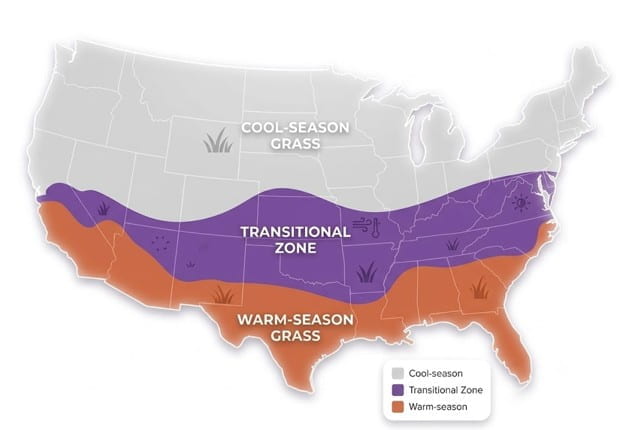 Figure 1. A map outlining the approximate boundaries of the turfgrass transition zone, where both cool- and warm-season grass species are widely grown.
The Summer Stress Showdown: Cool-Season vs. Warm-Season Grasses
The fundamental challenge of maintaining turf in our transitional climate comes down to the grass species itself. Turfgrasses are divided into cool-season (C3) and warm-season (C4) categories, each reacting differently to the summer stresses of drought and heat stress.
Drought Stress
When soil moisture drops in the summer due to less rain, warm-season grasses exhibit significantly higher drought tolerance.
- Most Resistance: Buffalograss, bermudagrass, zoysiagrass, and blue grama require the least water to survive.
- Medium to Fair Resistance: Tall fescue and fine fescues sit in the middle, offering reasonable drought resistance but still prone to stress under extended dry spells.
- Poor Resistance: Kentucky bluegrass, perennial ryegrass, and creeping bentgrass have low tolerance and quickly show signs of severe drought stress.
Drought Symptoms to Watch For: Early signs include leaf wilting (skinny, folded, or darker leaves) and footprints that remain visible long after traffic has passed due to a lack of leaf elasticity. Extended drought leads to leaf firing (browning) and crispy desiccation. These drought symptoms will often show up sooner in cool-season turfgrasses compared with warm-season turfgrasses. In addition to the above-ground symptoms, you can dig up a little of your turf and check soil moisture. Or use a soil moisture sensor or other hand-held probe to check soil moisture levels. Optimum soil moisture levels depend on your soil type (% sand, silt, & clay), more information here -
- Water Management on Greens wit Soil Moisture Sensors
- https://bookstore.ksre.ksu.edu/pubs/soil-water-and-plant-relationships_L904.pdf
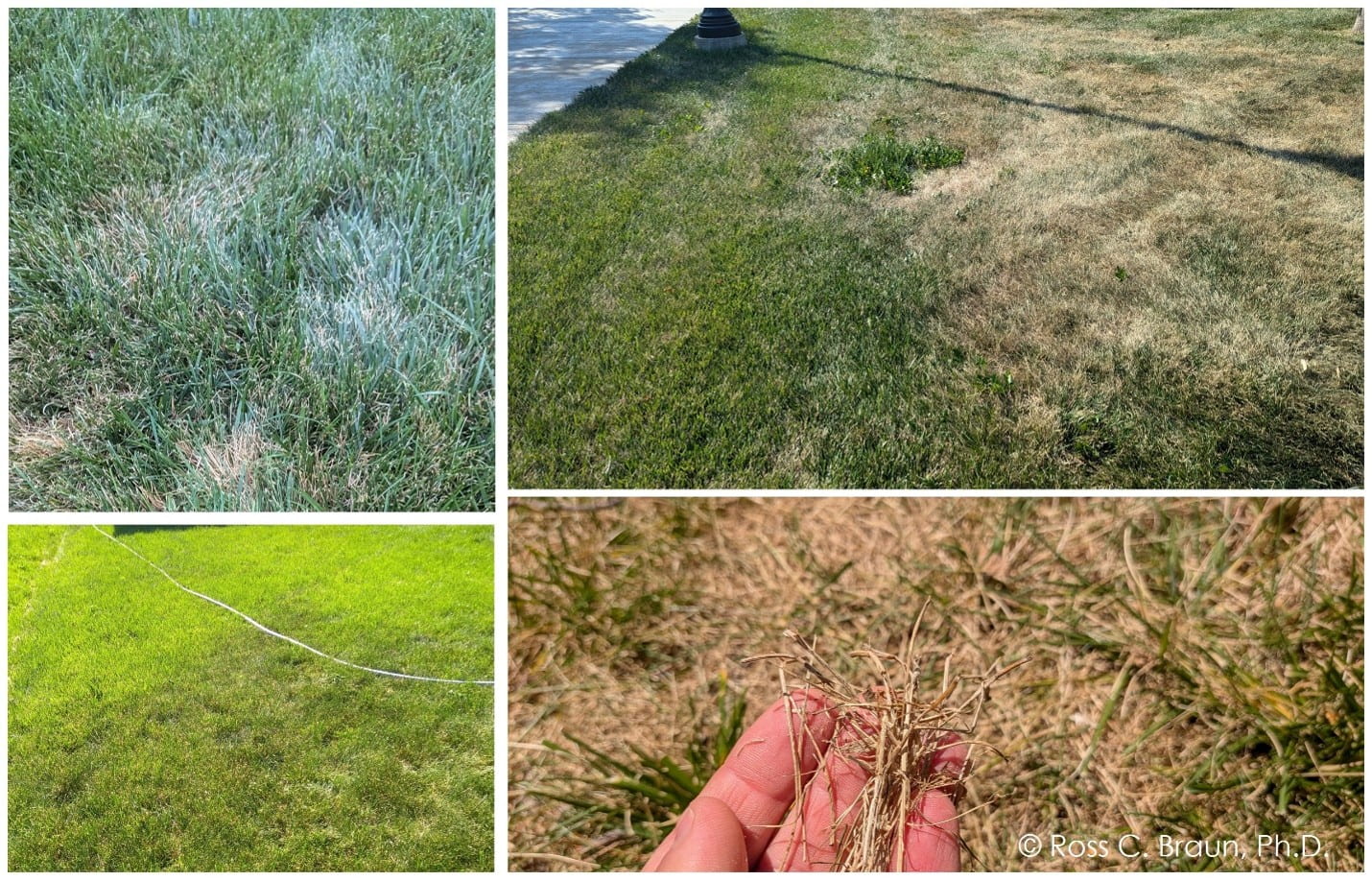 Figure 2. Drought symptom signs: Darker/gray/blue color and foot printing and leaf wilting (top left), leaf wilting – notice the darker leaves (bottom left), extreme leaf wilting and leaf firing (browning) (top right), and crispy desiccated leaves (bottom right)
Drought Stress Prevention and Relief: Implement “wilt-based irrigation” by watering deeply and infrequently (only 1–2 times per week rather than daily). This encourages deeper root systems for our turfgrass plants and overall stronger plants with less disease pressure. It is okay to see some wilting; it signals plant defense hormones and helps the plant look for water deeper in the soil profile. Once you see some initial signs of wilt, then immediately plan to irrigate.
Heat Stress
While drought stress is very common in the summer, heat stress is often the main culprit for a decline in quality of cool-season turfgrasses in the summer.
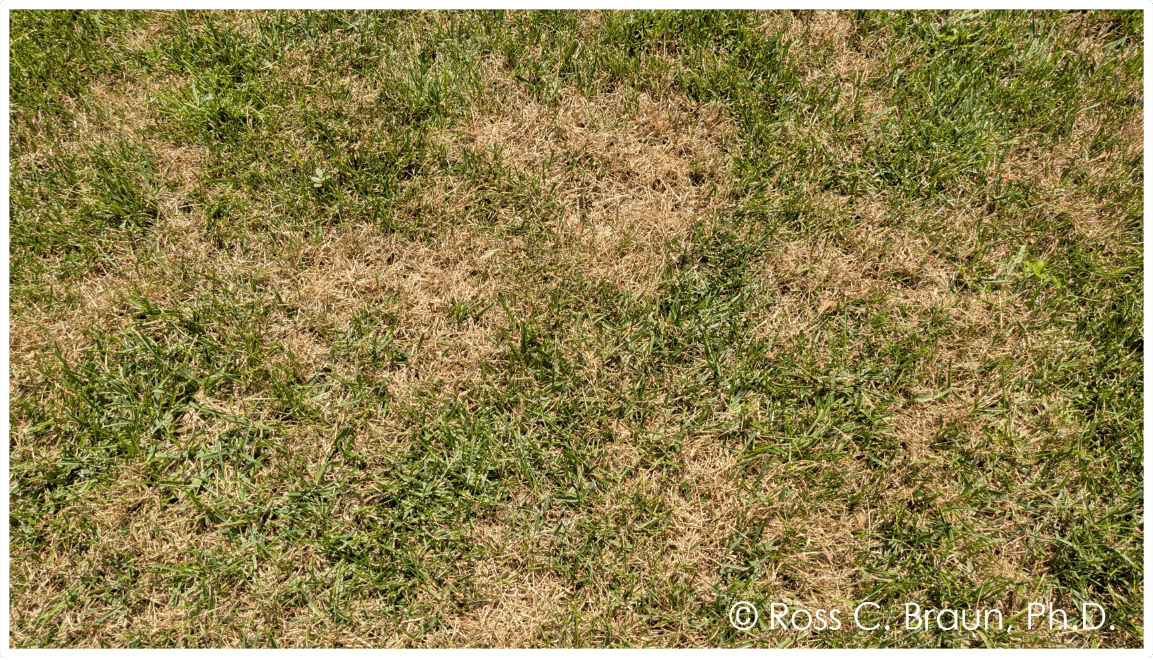
Figure 3. Heat stress in a tall fescue-Kentucky bluegrass lawn in July. How can I tell it was not drought stress? There was adequate soil moisture. The root zone has plenty of water, so it is not drought stress, but instead heat stress.
Cool-Season Grasses (e.g., tall fescue, Kentucky bluegrass, perennial ryegrass, creeping bentgrass): These grasses thrive best when temperatures are between 65°F and 75°F. Once air temperatures consistently exceed 85°F, they experience heat stress, entering a caloric deficit where the plant inefficiently burns more energy through respiration than it can produce via photosynthesis. This carbohydrate imbalance often leads to root dieback first, and then summer decline.
Warm-Season Grasses (e.g., buffalograss, zoysiagrass, bermudagrass): These grasses are highly adapted to the heat, with an optimum growth range between 80°F and 95°F. They maintain highly efficient photosynthetic rates even when temperatures rise to 100°F.
Diagnosis & Monitoring
- Identify True Heat Stress: Heat stress is frequently misdiagnosed as drought or brown patch (see below). Key indicators include leaf chlorosis (yellowing), a progressively thinning turf canopy, and underdeveloped roots due to underground root dieback. Check your soil moisture levels! If you have been watering your turfgrass but it continues to decline, you can rule out drought stress and it is more likely heat stress or a fungal disease (see below).
- Know the Temperature Thresholds: Cool-season grasses experience stress when air temperatures consistently exceed 85°F, especially when nighttime cooling is minimal. In contrast, warm-season grasses generally do not stress until temperatures reach 100°F. Advantage: Warm-season grasses in the summer!
- Monitor Soil Temperatures: Root decline often begins before visible foliar symptoms appear. When soil temperatures rise above 70 °F, root efficiency drops significantly. Investing in a digital soil thermometer can help turf managers track these critical trends.
Smart Water Management
- Avoid Overwatering: Increasing irrigation is a common misconception for treating heat stress, but excessive watering compounds the problem and could lead to fungal disease issues. Saturated soils restrict oxygen availability to the roots and retain heat longer, which heavily amplifies stress.
- Irrigate Deeply and Infrequently: Starting in late spring, apply a substantial amount of water and then allow the soil to dry until the turf shows signs of drought stress before watering again (wilt-based irrigation). This strategy encourages robust, deep root development rather than shallow, upward plant growth.
Proactive Cultural & Fertility Practices
- Adjust Mowing and Traffic: Maintaining a higher mowing height year-round—even raising it by just half an inch—significantly benefits the turf. Additionally, limiting foot traffic during peak heat stress in the summer limits damage and aids in recovery.
- Strategic Aeration: For cool-season grasses, core aeration should ideally be performed in the fall or early spring to alleviate soil compaction, improve air and water movement, and foster deeper roots. Summer solid or needle (thin)-tine aeration is often necessary on golf course putting greens and sports fields to increase airflow to the roots while minimizing damage to the stressed turf. Warm-season turf should receive aeration only in the summer months (June-August).
- Test Soil and Fertilize in the Fall: Conduct routine soil testing every few years to monitor pH, phosphorus, and potassium levels. Focus nitrogen fertilization in the fall for cool-season turfgrasses to support robust top growth and deep root development before summer arrives. Warm-season turf should be fertilized only in the summer months (June-August).
Successfully managing summer turf stress requires accurately diagnosing whether the turf’s decline is caused by abiotic factors like drought and heat, or biotic threats such as brown patch and insect pests (see Part 2), before applying any chemical treatments. By prioritizing proper scouting, proactive cultural practices for healthier turf, and professional diagnostic testing, turf managers can implement effective, targeted strategies and avoid wasting resources on misdiagnosed issues.
In Part 2 of this series, we will shift our focus from environmental stressors to biological threats, exploring how to effectively identify and control common summer pests like brown patch disease, fall armyworms, and white grubs. We will also discuss the critical importance of utilizing professional diagnostic testing to prevent misdiagnosis and avoid unnecessary pesticide applications.