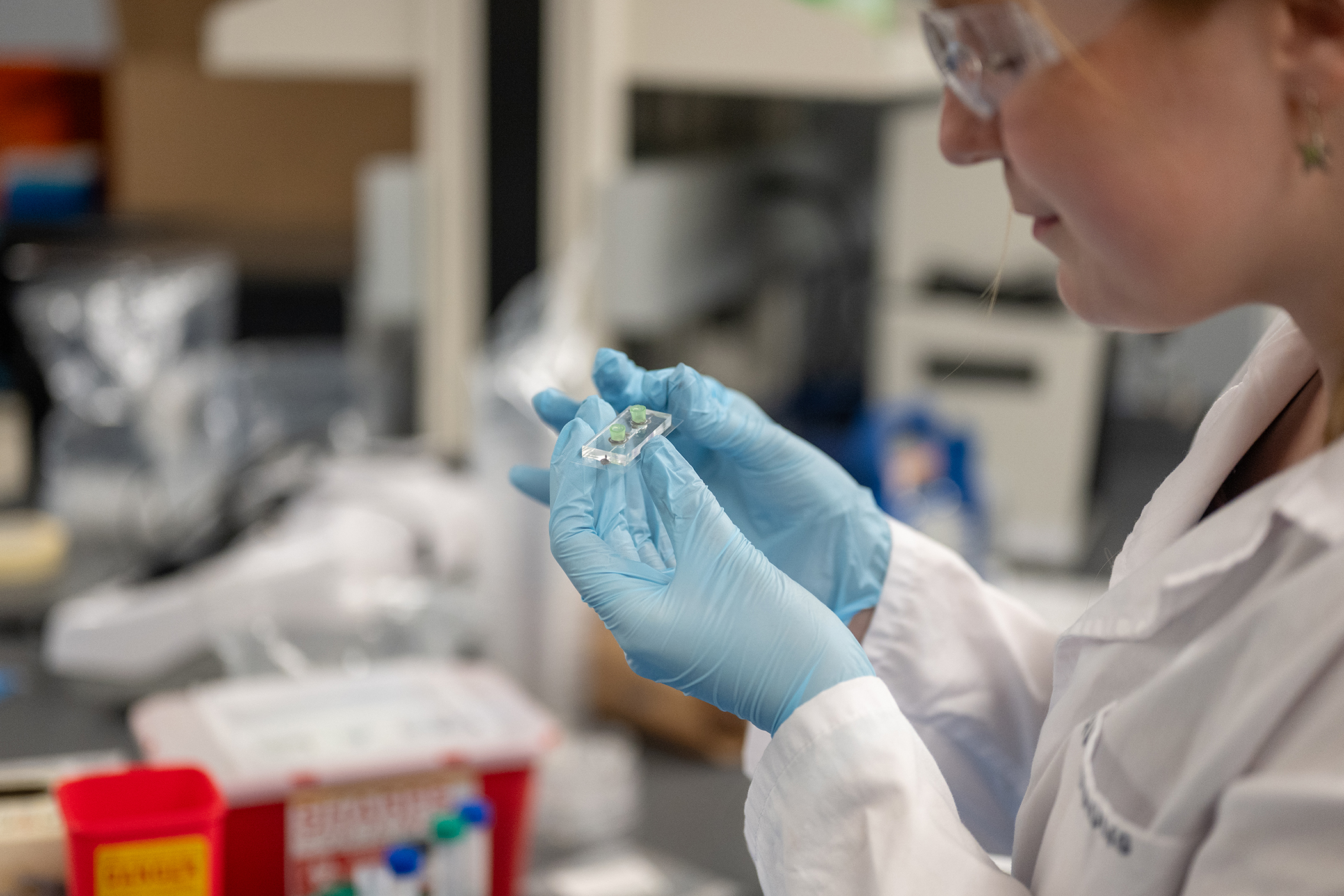
Small chips, big impact
Applied learning experience has undergraduate engineering students create 'organ chips' as alternative to animal trials
An applied learning experience gives K-State engineering students like Ava Hornung the opportunity to build organ chips, collaborate across disciplines and contribute to research with potential health applications.

By Cadence Brier
Applied Learning Experiences
Friday, Oct. 30, 2026
Every week, biomedical engineering students at Kansas State University produce about 20 'organ chips' — tiny devices designed to model human tissues and help researchers test potential treatments for disease.
These tiny devices give students practical experience with emerging research technology and professional skill development in connecting what they learn in the classroom to authentic applications.
Their current research focuses on Alzheimer's disease and aging, with the goal of better understanding how diseases affect the body and how new treatments might work.
Modeling human tissues
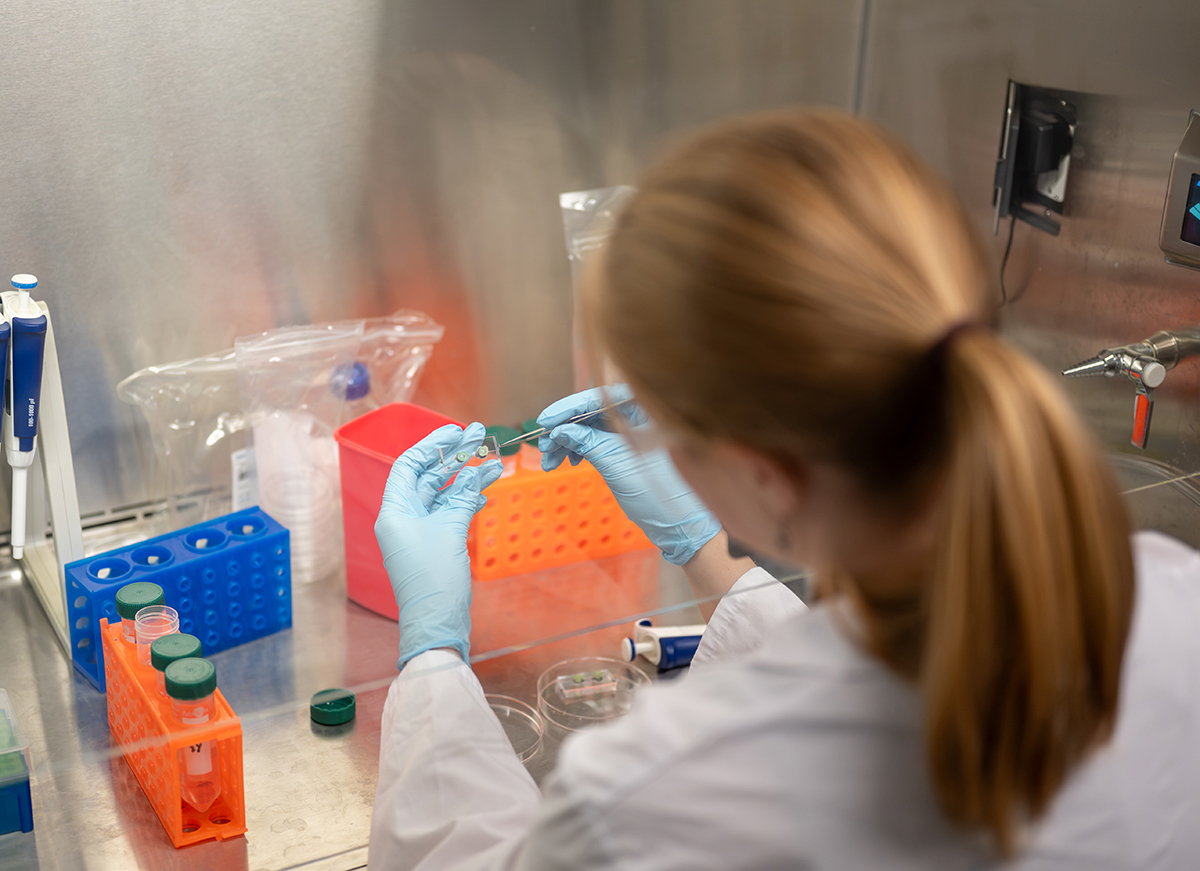
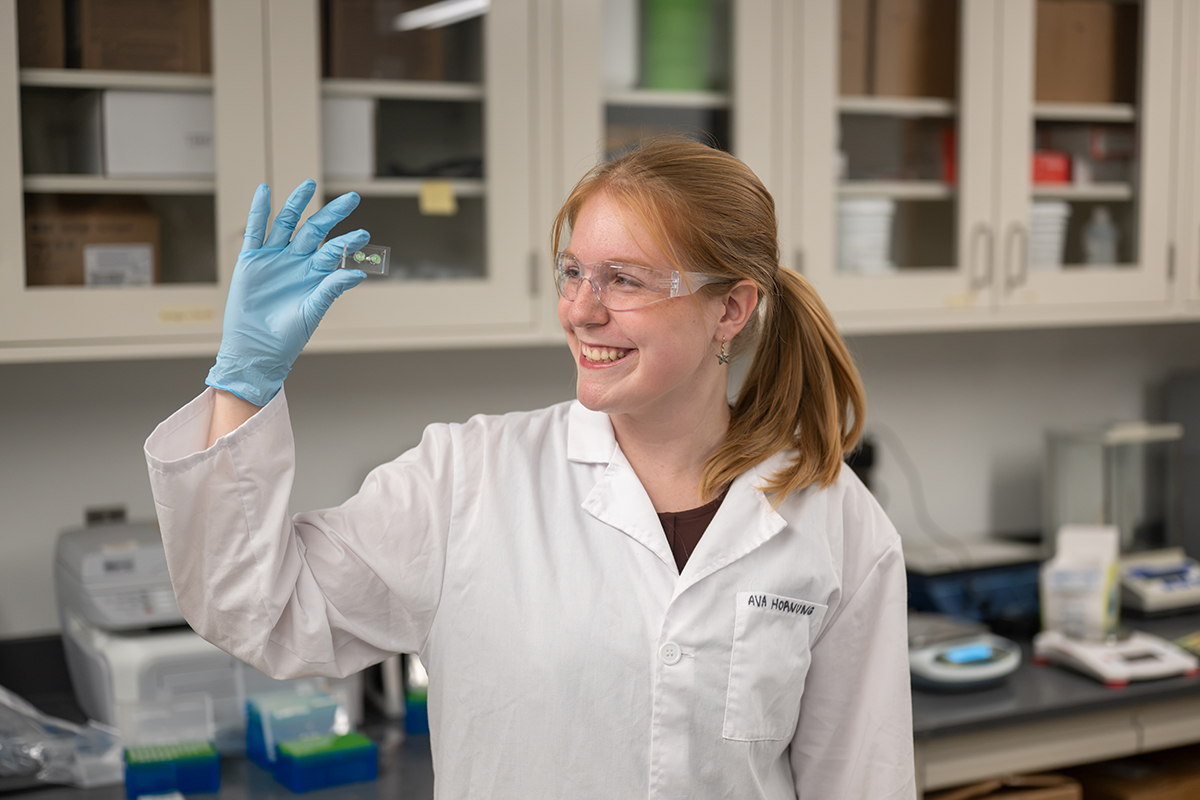
In their Carl R. Ice College of Engineering lab, students in the Biomedical Engineering course learn to produce organ chips, each about the size of a USB flash drive. The chips use cells to model human tissue and organs, allowing researchers to study diseases and evaluate potential drugs on the chip, without relying exclusively on animal testing
Traditional testing for an Alzheimer's drug typically takes four months to a year, while organ chip technology can produce results in as little as two to seven days.
Ninghao Eric Zhu, an assistant professor in the Mike Wiegers Department of Electrical and Computer Engineering, teaches the course and established the research program at K‑State.
He said this technology is speeding up production and result delivery.
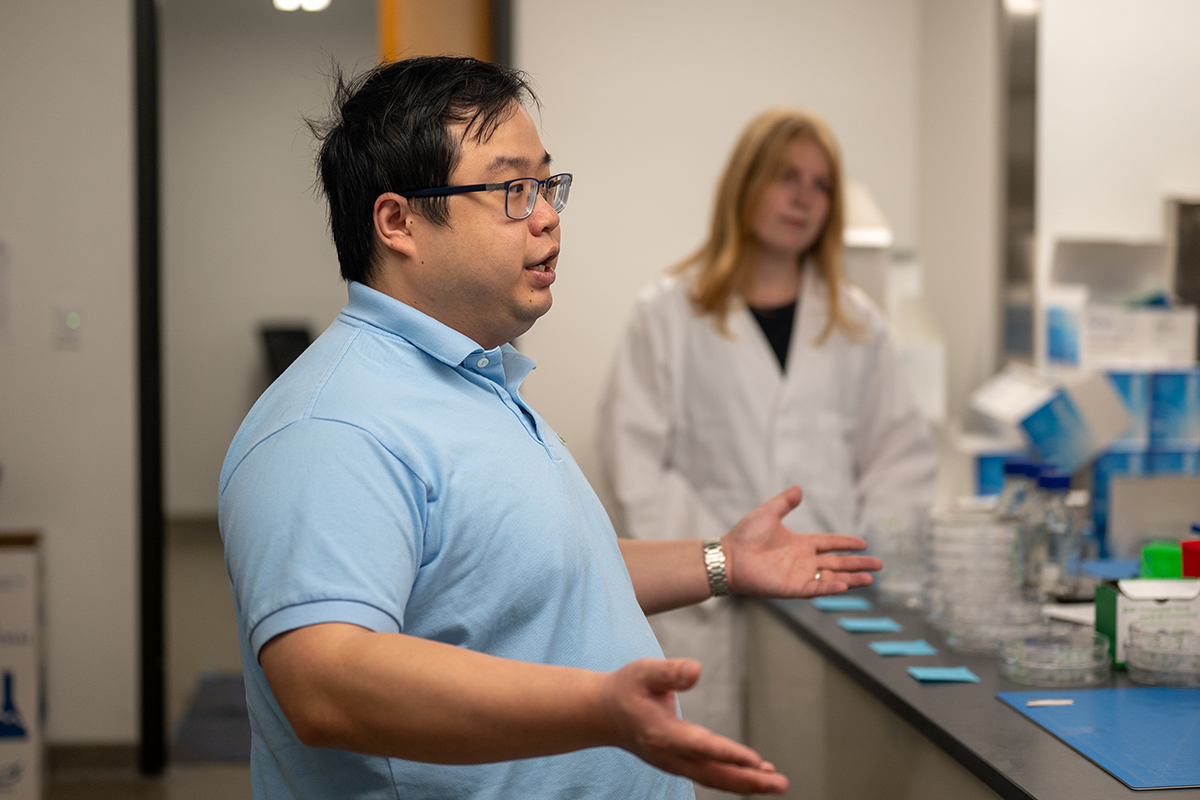
"It extremely increases productivity and accuracy in validating the new drug because this is human sourced cells," Zhu said.
To help cover the materials needed to build the organ chip, Zhu applied for funding through K‑State's Applied Learning Experiences office. The office leads K‑State's work to ensure every student has opportunities to apply what they learn in the classroom in deep, purposeful, and engaged ways throughout their path to degree completion.
Students are also working with the Johnson Cancer Research Center, through which undergraduate researchers can pursue cancer research awards and present their findings at a year-end symposium.
Guidance and growth
For Ava Hornung, a senior in biomedical engineering from Manhattan, the organ chip research has provided an opportunity to take ownership of specialized research while receiving guidance from an experienced faculty mentor.
Hornung received one of the Johnson Cancer Research Center's undergraduate cancer research awards. Throughout her research experience, Zhu has helped her plan experiments, troubleshoot challenges and determine next steps.
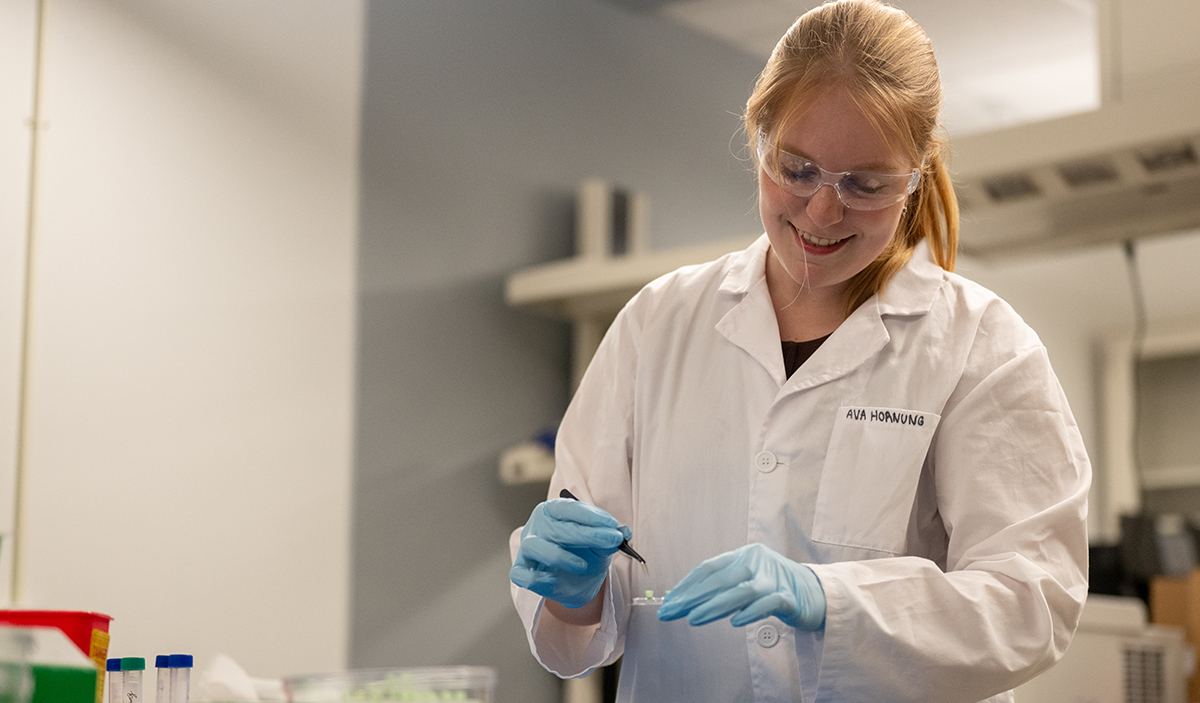
“Getting to do such individual and specialized research like this as an undergraduate is pretty rare.”
Ava Hornung
The pair meet weekly to discuss her progress and upcoming research tasks.
"He also provides a lot of support," Hornung said. "I'm applying to graduate programs and jobs right now, so he's always been a great resource for that."
Mentorship is built into the course itself. Students work with mentors who are seniors or graduate assistants, engage in frequent reflections and participate in out-of-the-classroom experiments.
As a more experience undergraduate researcher, Hornung also serves as a mentor to other students in the course, helping the next cohort develop the skills and confidence to pursue their own research.
Collaboration across disciplines
One distinctive feature of this applied learning experience research course is that students from any major can participate. Zhu designed the course to encourage collaboration across disciplines, allowing students to contribute their individual strengths to a shared research challenge.
"Biomedical students can focus on biomedical challenges and management engineering problems, while electrical and computer engineering students can contribute to the design and details of the chip for the readout of the final product," he said.
Through the course, students grow in communication skills, learn about the technology and research process, and gain practical lab experience while helping design and build an innovative research tool.
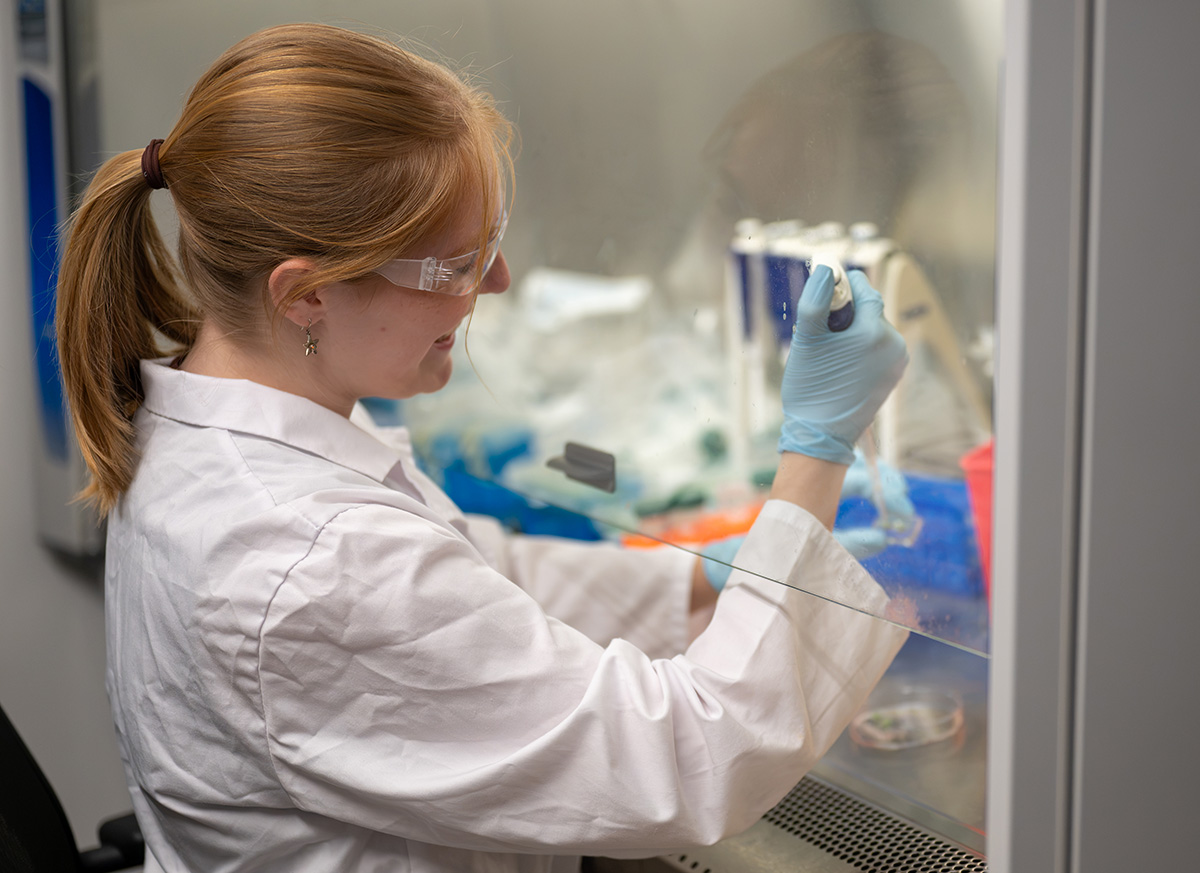
Hornung said these applied learning experiences are especially valuable for her and her fellow Wildcats as they prepare for graduate school and future careers.
"Getting to do such individual and specialized research like this as an undergraduate is pretty rare," Hornung said. "I've had a lot of ownership in this research, and graduate schools and potential employers are always asking about actual skills you've learned and what kind of initiative and ownership you've taken."
She encourages other students to seek out these experiences that allow them to apply their classroom knowledge in meaningful ways.
“I always tell people, to some extent, everyone is getting the same degree," Hornung said. "We're all taking the same classes, so it's really what you choose to do in your own time and the experiences you choose to seek out that set you apart.”
Related Stories
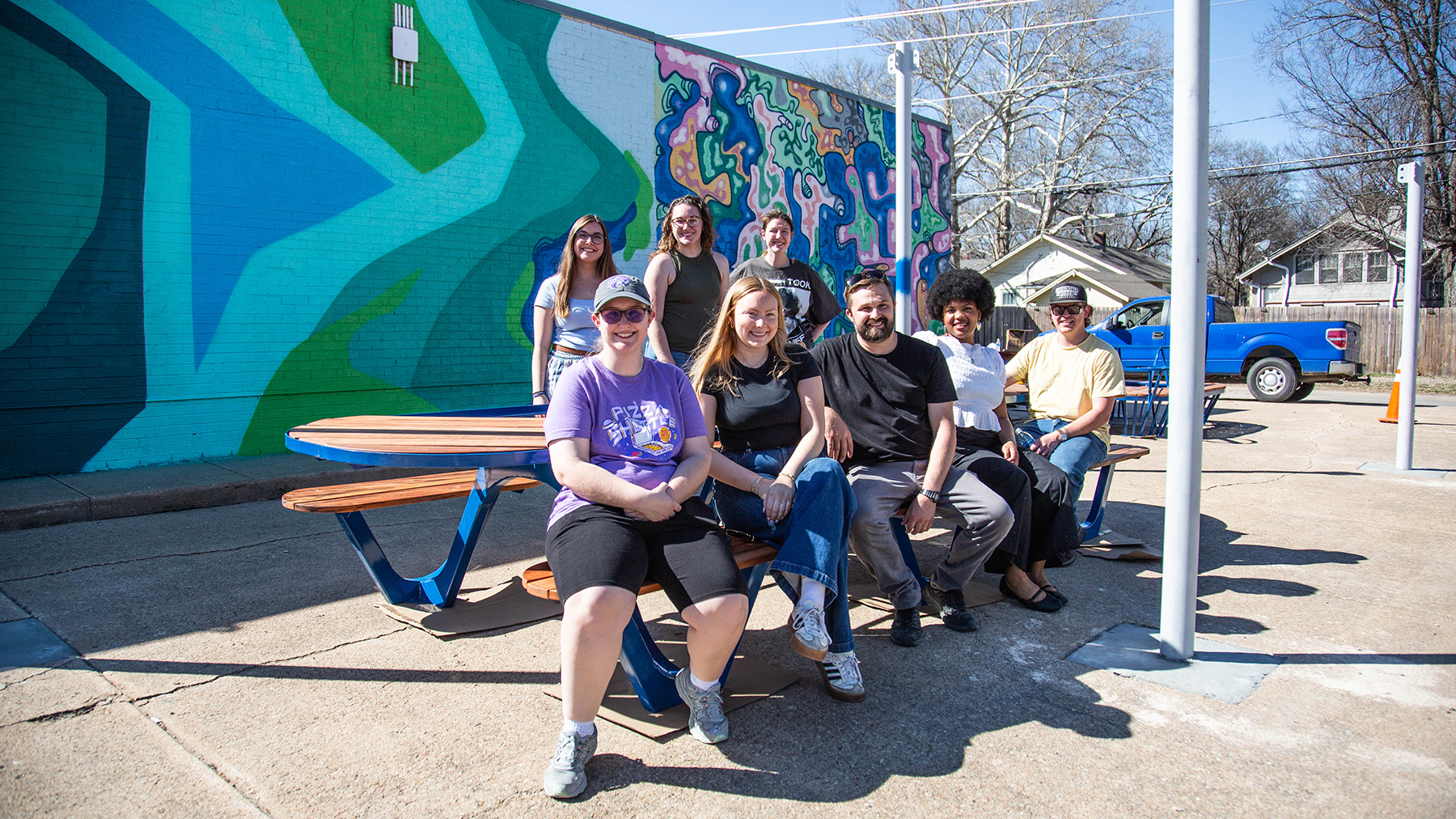
Designing beyond the classroom
Students in K-State's College of Architecture, Planning & Design take design beyond the classroom, partnering with the Manhattan Arts Center to envision a new...
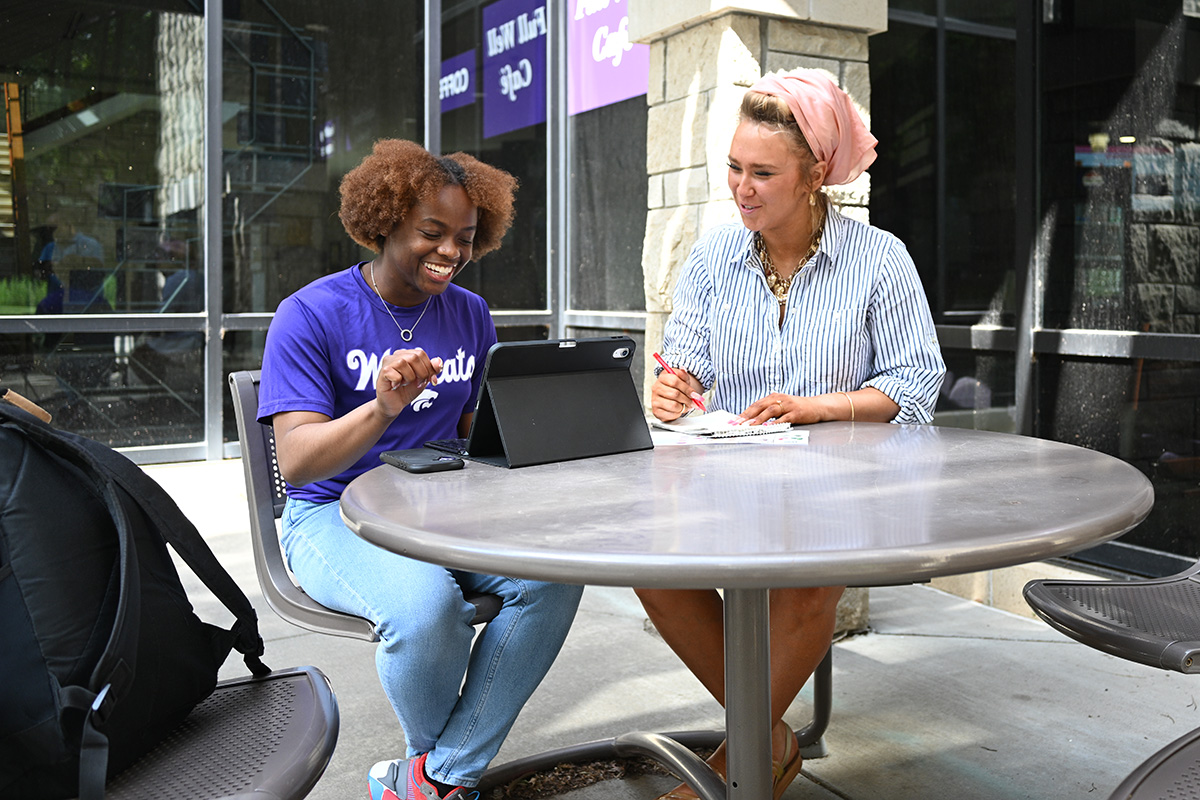
Healthcare from classroom to community
Through the Applied Behavioral Health Counseling course, students apply classroom concepts during health coaching sessions with real clients from the community.
The sound of rural school music
What started as a small independent study is now a thriving certificate program at K-State. Students in the newly-created instrument repair certificate and...