Bridging generations
At Logan LIFE Center, K-State researchers explore the benefits of intergenerational connection in rural Kansas
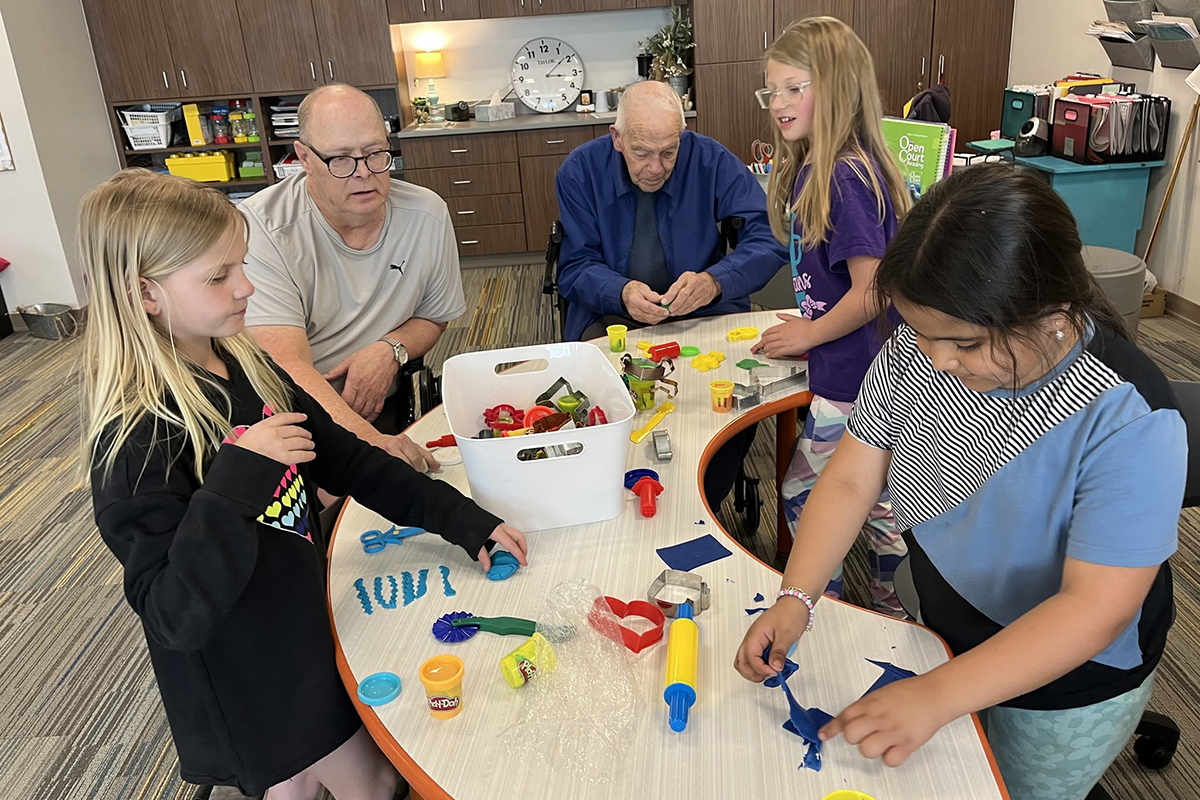
What can happen when a nursing home and an elementary school share a roof? K-State researchers spent a year finding out at the Logan LIFE Center in rural northwest Kansas, and the early results are encouraging. Photos courtesy Logan Manor.

By Emily Boragine and Rafael Garcia
K-State News and Communications Services
Wednesday, Sept. 23, 2026
It was the first day of school, and the kids at the Logan Intergenerational Family Education Center were not going to wait a second longer.
Normally, the hordes of elementary schoolers would take turns chattering down the hallway to meet and visit their best friends — the senior-citizen residents of the Logan Manor nursing home — during their morning breakfast.
But on the first day of school, no kid wanted to be left behind, and no resident could pay any mind to pancakes as the two generations caught each other up on a summer full of memories lived and remembered.
"It's amazing," said Teresa McComb, administrator of Logan Manor. "You can just tell when the kids are around, everybody kind of gets a little bit lighter. They get a little more pep in their step, and they're just excited to talk to the kids, help them with different assignments and classes, and just be able to watch them and interact with them on a daily basis."
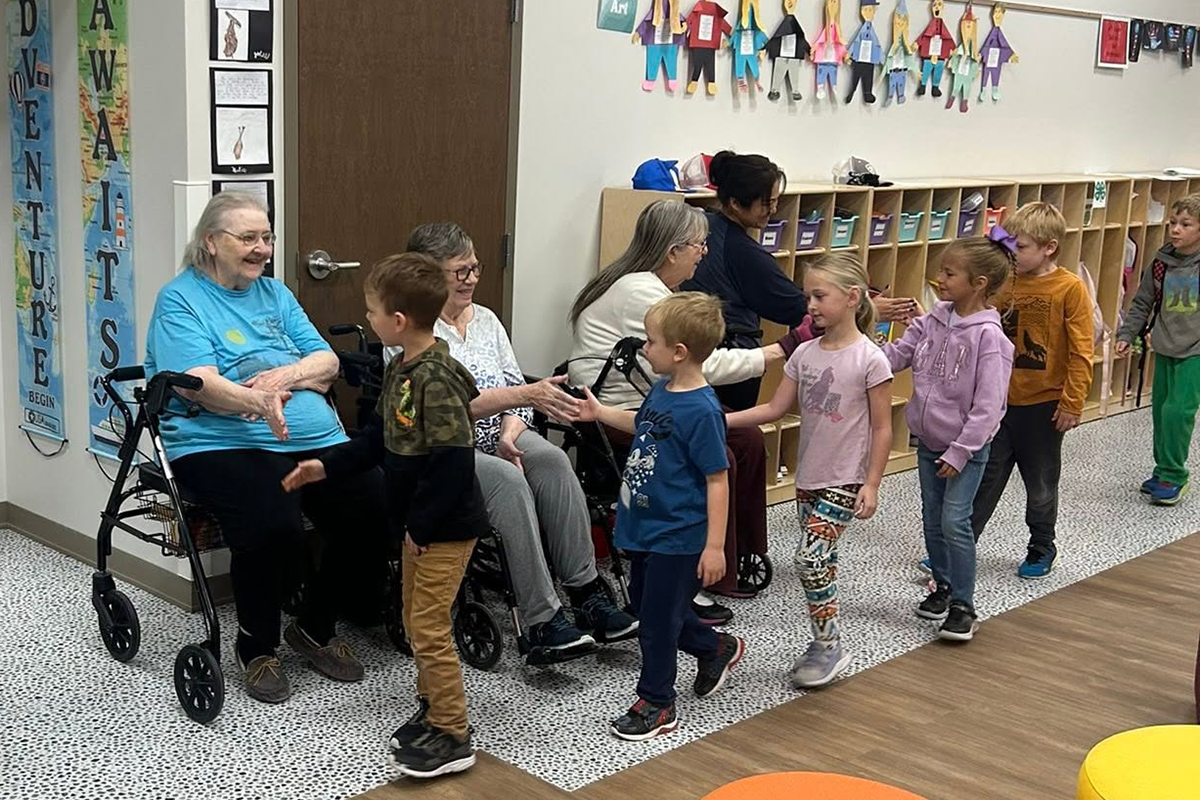
It's a phenomenal story of intergenerational connection in rural northwest Kansas, and a full year of research by Kansas State University experts is helping to understand better what happens when children and older adults regularly learn, interact and spend time together.
That interdisciplinary K-State team has completed its first full year of data collection at the Logan Intergenerational Family Education Center, or LIFE Center, where an elementary school and 36-bed nursing home are connected within the same facility.
Preliminary findings show improved mood and greater independence in daily activities among nursing home residents, increased social-emotional development among children and measurable differences in the new nursing home environment that support residents' quality of life.
Researchers in psychological sciences, gerontology and interior design are looking at different parts of life at the center, from residents' health and experiences to children's development and the role the physical environment plays in bringing the generations together.
"This project is highly interdisciplinary, which has made it possible to document outcomes from multiple lenses; the richness of the data is remarkable," said Laci Cornelison, director of K-State's Center on Aging and chair of the gerontology program.
A fuller picture of daily life
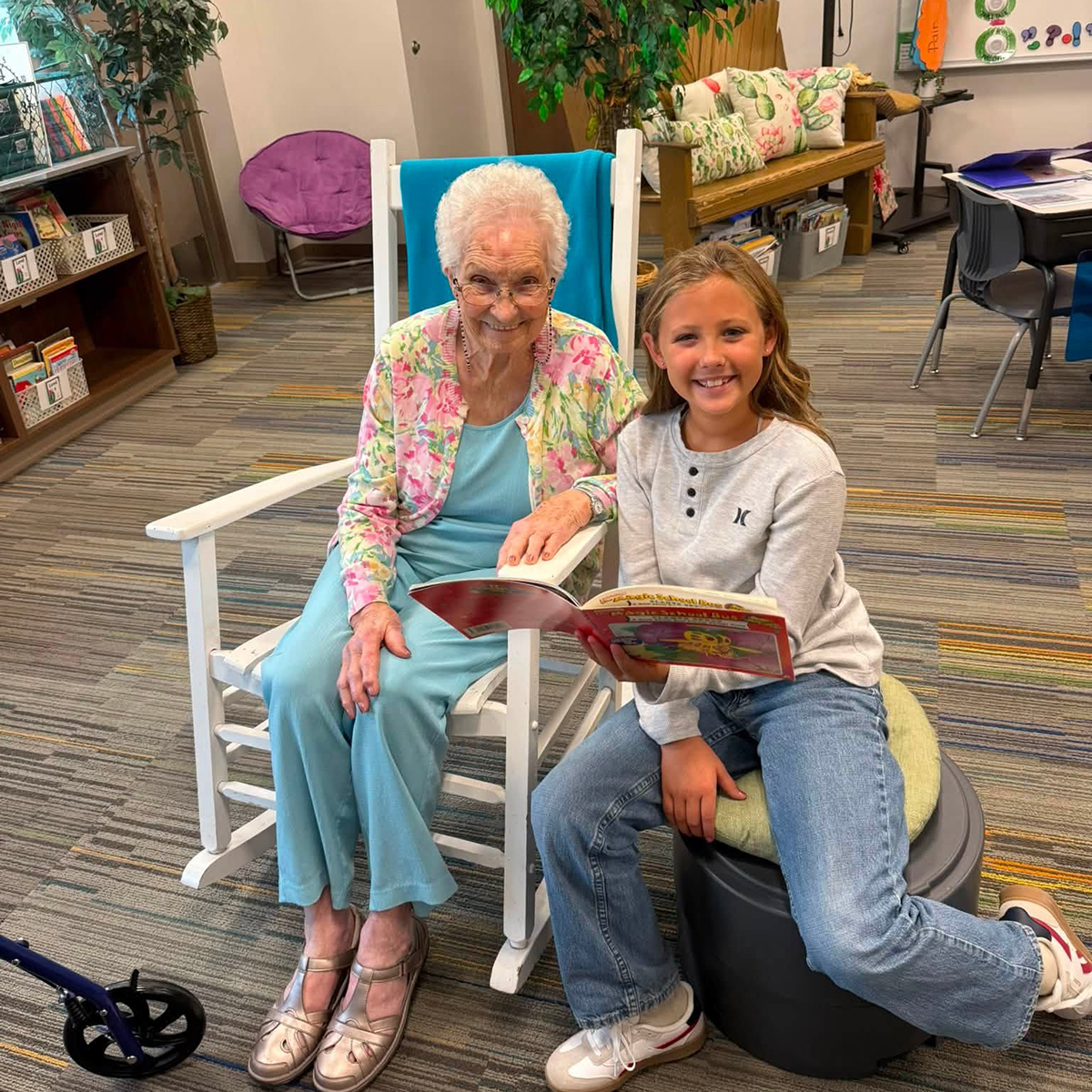
Heather Bailey, associate professor of psychological sciences, and researchers in K-State's Memory and Aging Laboratory analyzed data from 30 Logan Manor residents at two points approximately one year apart. Residents' cognitive functioning remained stable during that time, while symptoms of depression decreased and independence in daily activities increased.
Cornelison, Justine Irving, associate teaching professor of gerontology, and undergraduate researcher Michael Glenn have added the residents' own experiences to that data. They interviewed 17 residents about life in their new environment and their participation in intergenerational activities, hearing about the many opportunities to continue doing what matters to them.
Beyond the activities, residents described how simply having more people around has changed their days.
"I'm sure there are people that aren't happy to be here, but I don't feel that way," one resident told the research team. "I was living alone for 21 years. For me, basically, I'm not alone anymore."
The building plays a role in making those connections possible.
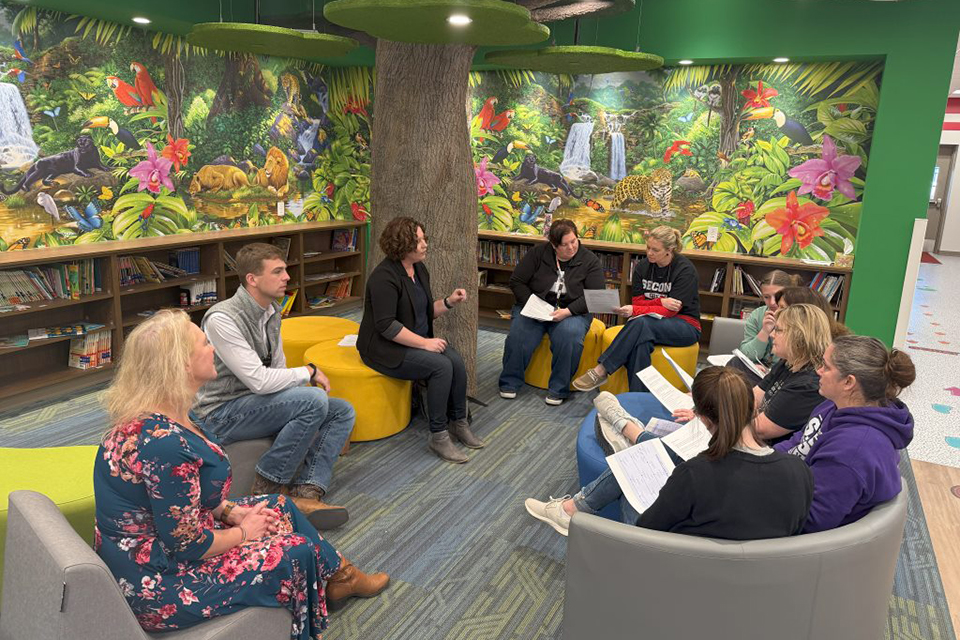
Migette Kaup, professor of interior design, and her team evaluated the former Logan Manor before residents relocated and later assessed the new nursing home households at the LIFE Center. Researchers examined 130 design features associated with person-directed quality of life and found measurable differences in areas including building layout, residential character, autonomy and residents' control over their private spaces.
Connecting hallways between the nursing home and the elementary school allows residents to visit the classrooms without going outside. One resident told researchers that they head to the school every Tuesday and Thursday to work on math with the children.
Growing up alongside older neighbors
K-State researchers are also learning from the children who spend their school days alongside Logan Manor residents.
Natalie Barlett, teaching assistant professor of psychological sciences, and undergraduate researchers began collecting data from elementary students in April 2025. They are studying empathy, attitudes toward older adults and feelings of relatedness, autonomy and competence.
So far, the findings have shown increases in social-emotional development as children engage in these intergenerational experiences, as well as significant increases in standardized reading and math scores during the first full year of data collection.
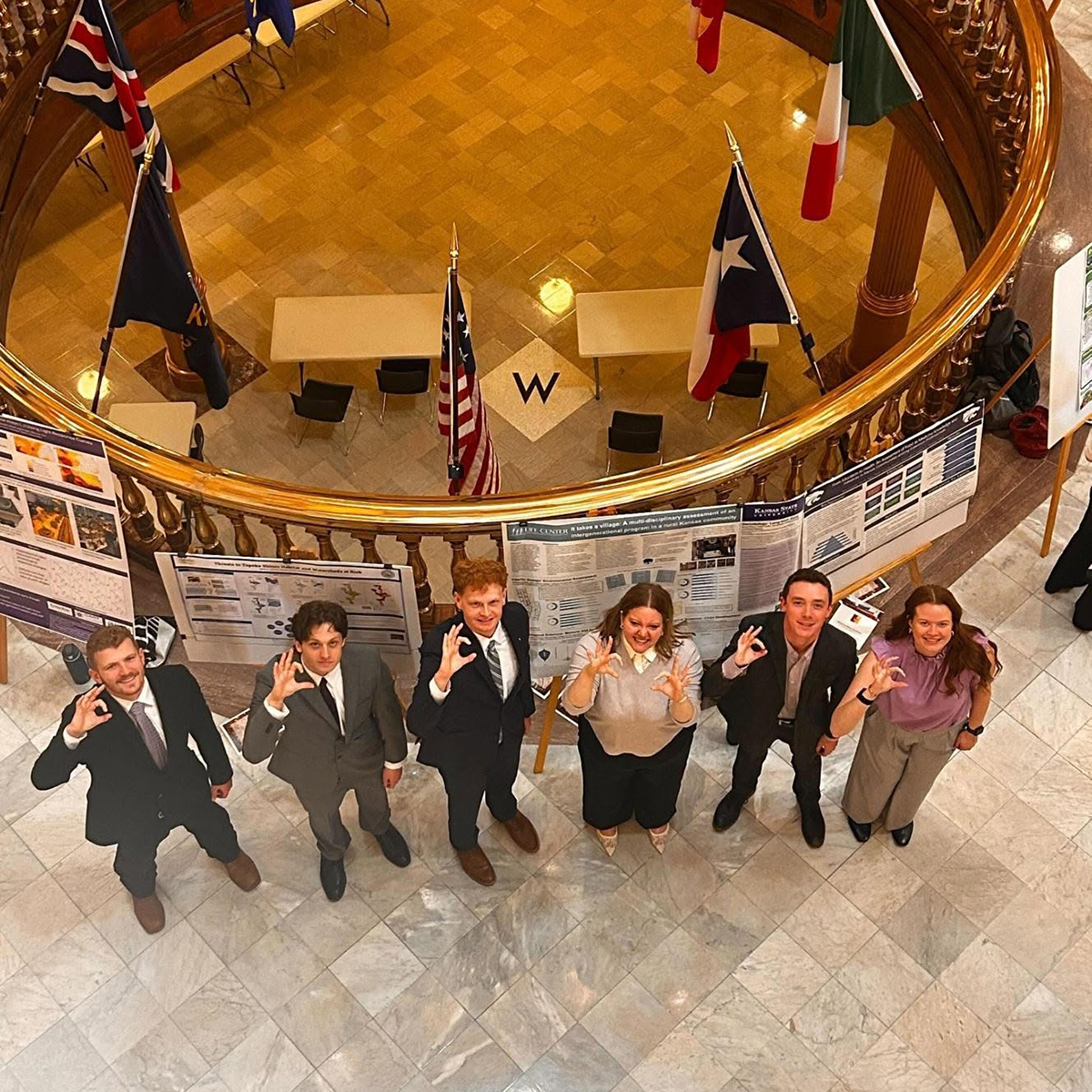
The project has also created research opportunities for K-State undergraduate students through the Chapman Center for Rural Studies. Students have helped develop research instruments, collect and analyze data and manage parts of the project alongside faculty mentors.
Their work has taken them well beyond Logan. Students and faculty have presented findings at the Kansas Governor's Conference on Aging, Undergraduate Research Day at the Capitol and several K-State research events, as well as national conferences in Chicago and Atlanta.
In reflections on the project, students said working with people in other disciplines helped them see how different perspectives can come together to address complex problems. They also described how getting to know people in Logan gave them a greater sense of responsibility for their research.
What comes next
The research team recently returned to Logan to share its first-year findings with community members at a town hall and continue collecting data.
In the next phase of the project, researchers plan to track outcomes over time and refine their measures of the frequency and quality of intergenerational interactions. They also want to understand which parts of Logan's approach could be useful in other communities.
That question has particular relevance in rural communities facing challenges around social isolation, childcare access, senior engagement and workforce shortages.
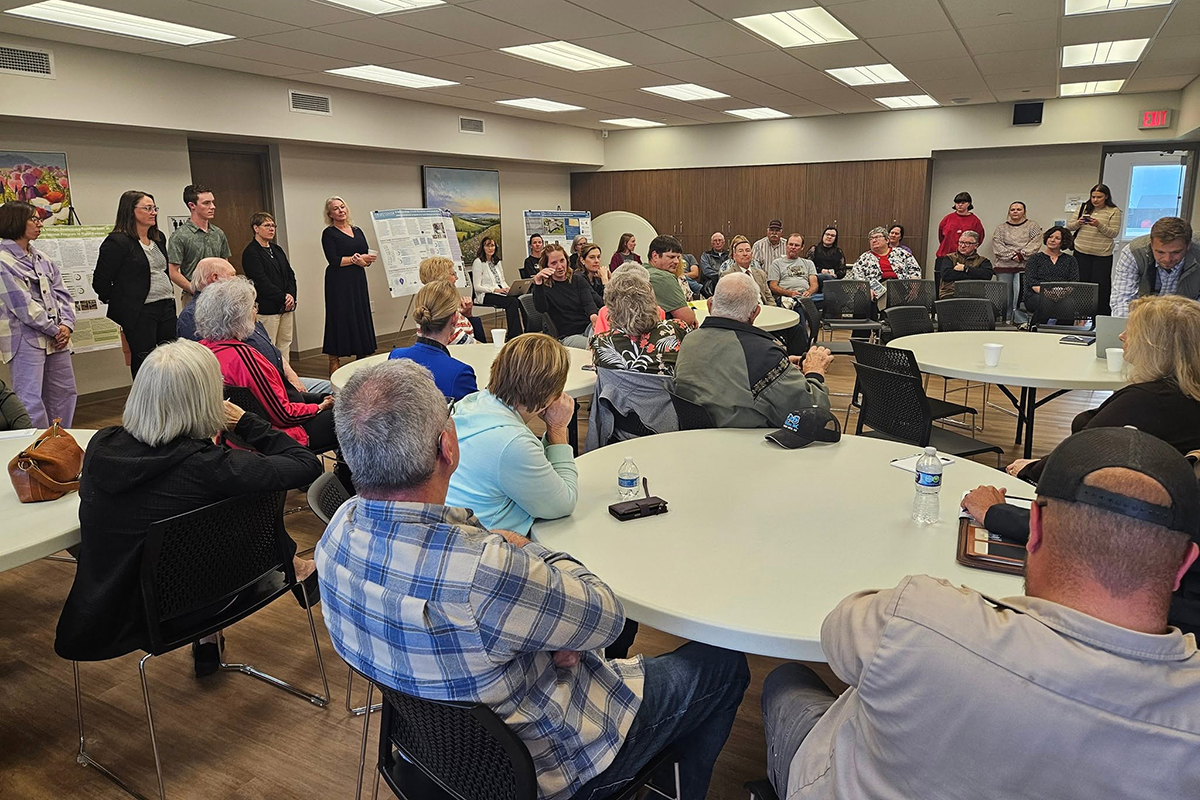
The team hopes its ongoing research can provide communities with more information as they consider intergenerational programs and spaces of their own.
"I'm excited to see how foundational aspects of these intergenerational interactions can be translated to other communities and settings," Cornelison said.
That data and findings will come. But for now, McComb — the Logan Manor administrator — said she's excited for more people to see and understand what she and the children and residents at Logan LIFE Center see every day.
"We see the smiles, we hear the laughter, we hear the joy," she said. "But to tell other people who don't necessarily see it or don't have the opportunity to hear it, I think the actual study will be so important to be able to show that there are benefits — not just in what we see on a daily basis, but in these residents' lives and the kids' lives — and we are so lucky to have K‑State believe in this work."
Related Stories

'Collaborative in nature'
How does land shape the people who call it home? During a recent residency, K-State professor Ursula Emery-McClure explored that question through the lens of...
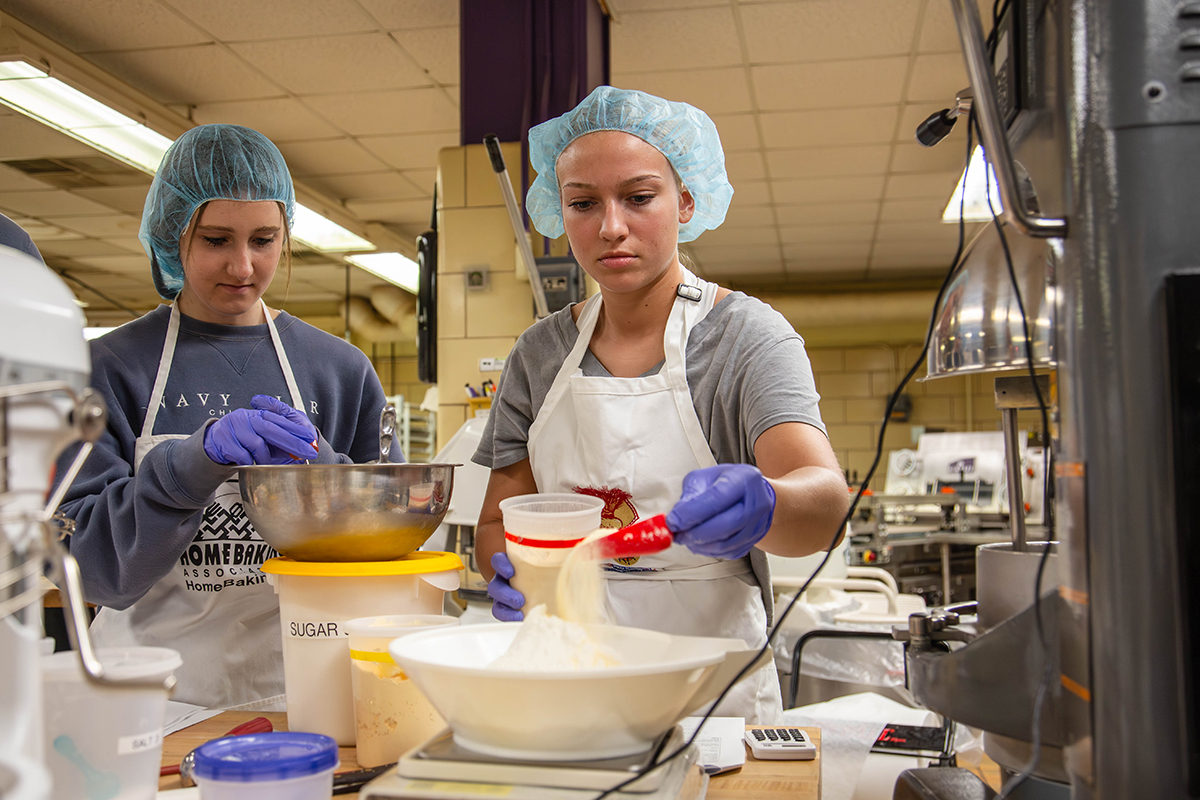
Building a better school breakfast
A classroom project with real-world impact is helping connect Kansas agriculture to school cafeterias. Students in K‑State's Department of Grain and Food...
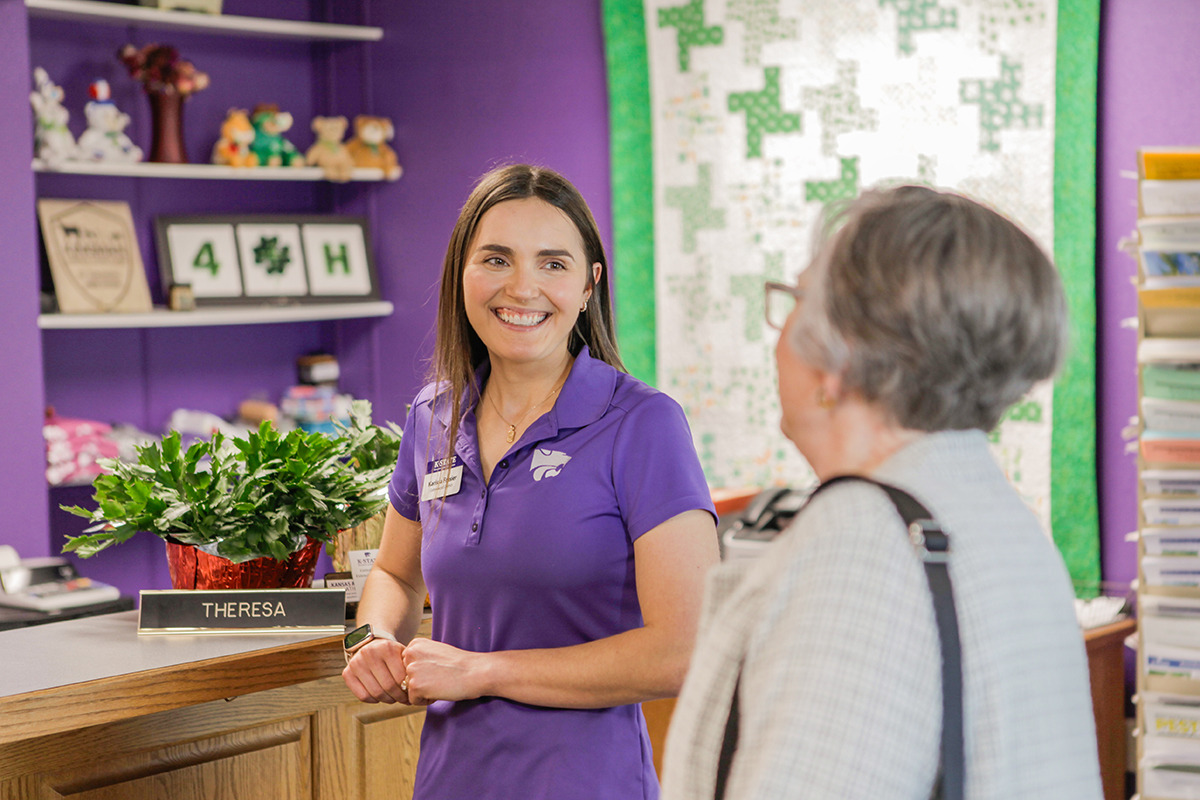
Connecting care where it's needed
K-State Extension community health workers are improving access to care across Kansas, helping neighbors overcome barriers and take control of their health.