How KVDL rabies testing protects Kansas people and animals
For more than a century, K‑State's Rabies Laboratory has turned diagnostic testing into lifesaving public health insight
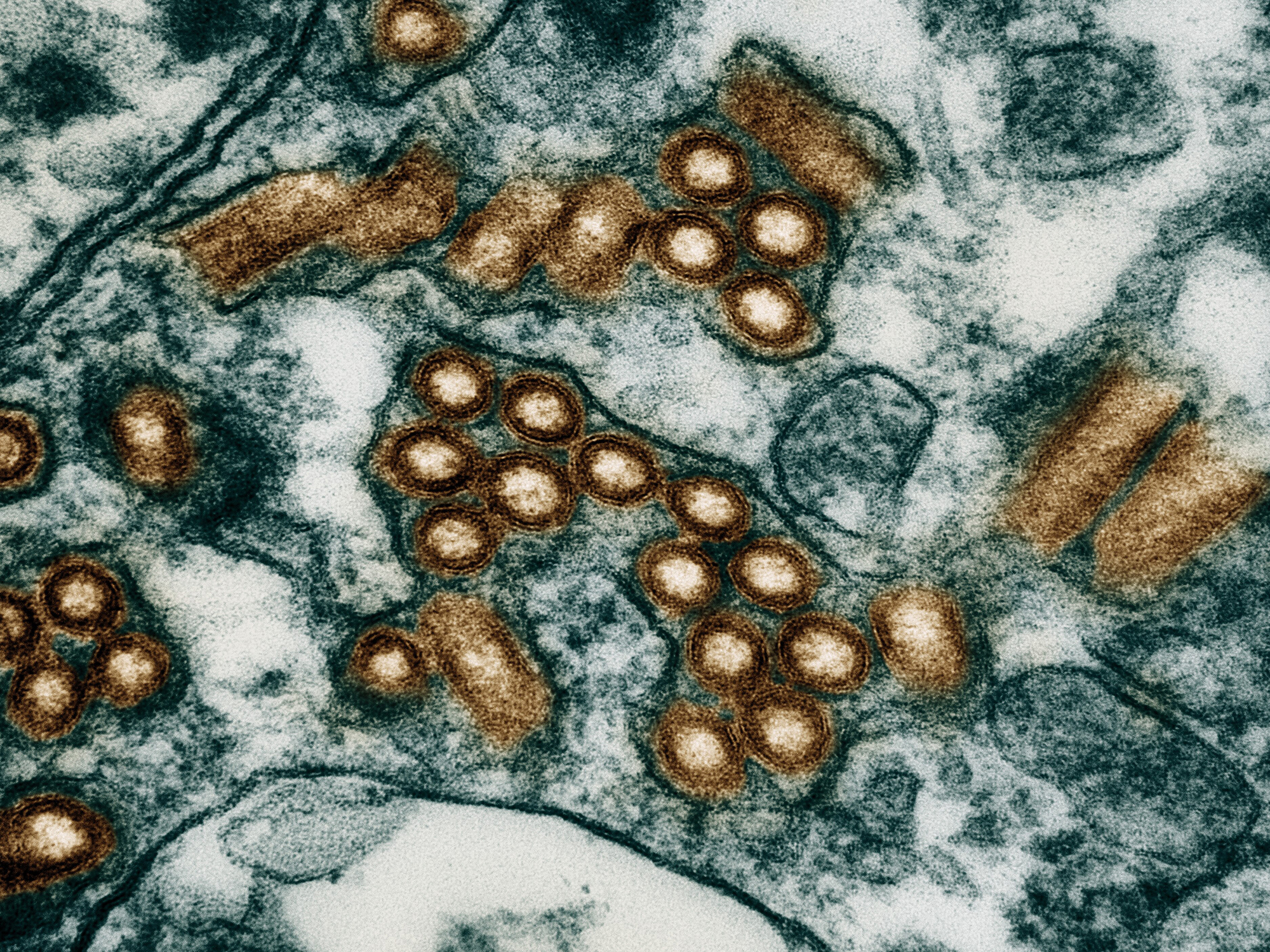
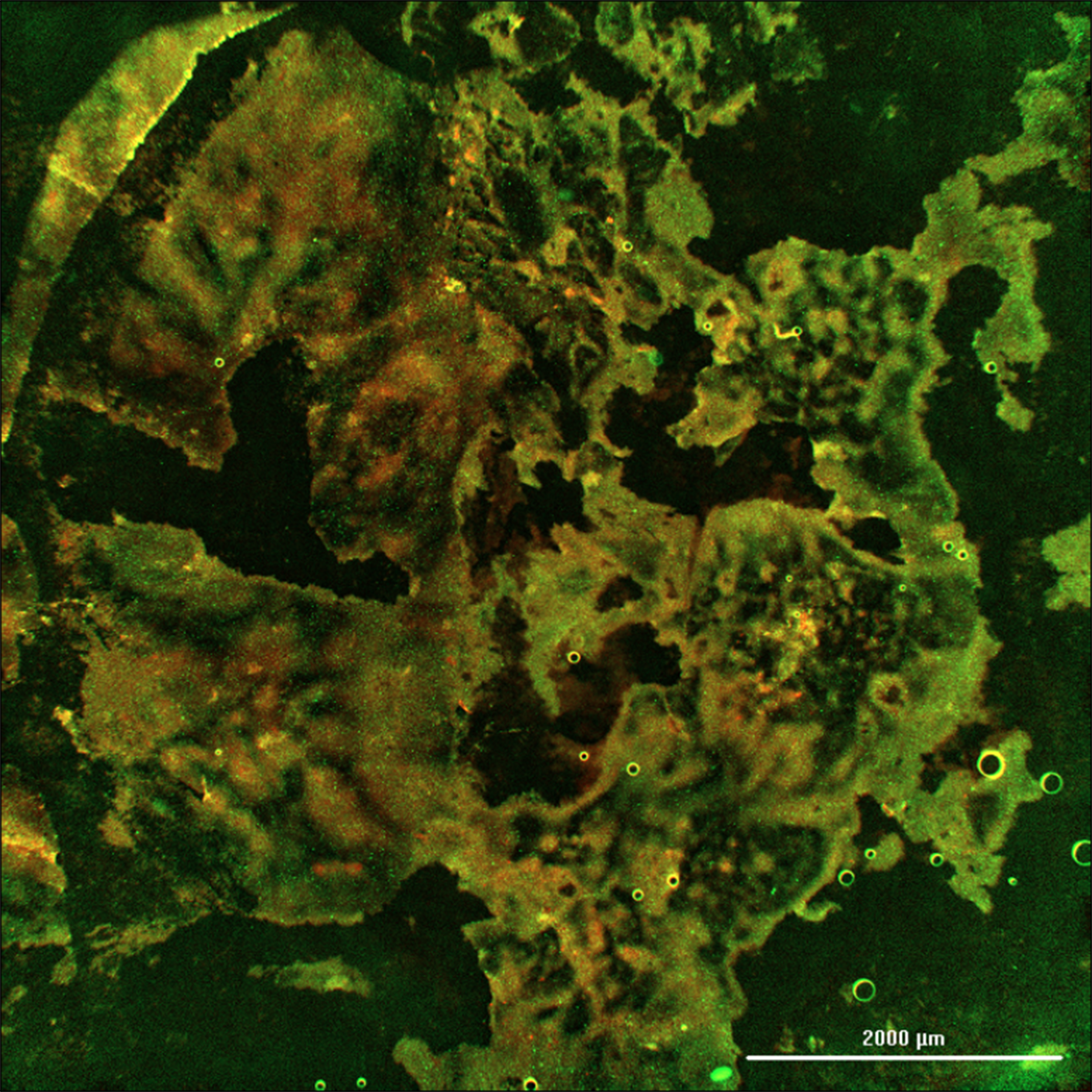
Colorized transmission electron micrograph of rabies virus particles. National Institute of Allergy and Infectious Diseases.

By Janine Seetahal
Kansas Veterinary Diagnostic Laboratory
Friday, Sept. 25, 2026
"Did that animal have rabies?"
It's a question no family ever wants to wonder as they sit in a doctor's office or emergency room following a bite from an animal.
Rabies has long presented a unique challenge to public health. The disease is nearly always fatal once clinical signs develop, yet it is completely preventable when appropriate action is taken promptly after an exposure.
Diagnostic testing can provide the critical answers that determine the next steps for exposed persons, placing laboratories like the Kansas Veterinary Diagnostic Laboratory's Rabies Laboratory at a pivotal intersection of animal, human and public health.
For the people waiting on those answers, the laboratory results are far more than words on paper. A positive result, while initially scary, provides the insight to initiate critical, lifesaving rabies preventative treatment — also known medically as post-exposure prophylaxis, or PEP. Equally important, a negative result provides reassurance and, when appropriate, prevents unnecessary treatment and or fatal consequences for animals.
But behind that answer is a process most people never see — a specialized testing laboratory with highly trained personnel, rigorous quality systems and decades of accumulated knowledge linked to a network of veterinarians, animal health professionals and public health officials working together.
A long history of rabies protection for Kansas
For more than a century, Kansas State University has been part of that process, with a history deeply intertwined with that of rabies surveillance in Kansas.
The roots of rabies diagnostics in Kansas date back more than 130 years, with veterinary personnel from the Kansas State Agricultural College Experiment Station responding to outbreaks described as “mad itch” or “cornstalk disease” in cattle and determining that they were actually rabies cases, then commonly called hydrophobia.
By 1910, the Kansas State Agricultural College's veterinary department served as a centralized rabies diagnostic resource for the state, and it provided detailed instructions for shipping animal heads to the Manhattan campus for testing. As early as 1926, it was clear that rabies testing had implications not only for individual animals but for broader human and public health.
This essential cross-disciplinary testing framework continued under the Kansas Veterinary Diagnostic Laboratory, or KVDL, which was established in 1961. Since then, the laboratory has played a crucial role in preventing Kansas rabies cases in humans, with the last known case in the state occurring in 1968.
Under the stewardship of the KVDL, the Rabies Laboratory continued to develop over the years to meet the demand for rabies testing. Many jobs require employees to be vaccinated against rabies, and when the World Health Organization began recommending boosters for people with immunity levels below a certain threshold in 1984, the Rabies Laboratory expanded its testing services to include rabies serology.
Later on, as the unit continued to grow, the laboratory moved in 2009 from Mosier Hall to a larger space at the K‑State Innovation Center across campus. Since then, the lab has only seen a surge in demand for its service, more than doubling from around 55,000 samples processed in 2009 to more than 140,000 in recent years.
From laboratory results to public health actions
Behind every rabies result lies a decision. Rapid and accurate rabies diagnosis is critical for medical providers to take the right course of treatment after exposure.
Usually, animals become a part of the diagnostic system in one of three ways:
- A human was exposed to or bitten by the animal.
- The animal was involved in an unusual encounter with a domestic animal.
- The animal was behaving abnormally.
So when the Rabies Laboratory provides a result, it provides not only an immediate answer for that specific animal, but it also informs the next steps for medical professionals, veterinarians, animal control personnel and local and state public health authorities.
For a rabies-positive animal, the result may initiate or intensify an investigation into human and animal exposures. Public health officials may need to identify everyone who came into direct contact with the animal, determine whether those individuals require post-exposure prophylaxis and evaluate additional animals that may have been exposed.
The recent confirmation of rabies in baby goats at a mobile petting zoo in North Carolina illustrates how a positive animal diagnosis can set in motion a much broader public health response and just how geographically expansive this can be.
On the other hand, when an animal involved in a potential exposure is confirmed negative, the result can be equally consequential. The exposed person may be spared unnecessary costly medical intervention, and families can avoid the anxiety and stress associated with rabies PEP.
Decades of surveillance: Building the Kansas rabies picture
Successive generations of Rabies Laboratory personnel have contributed to the long-term historical record and expanding body of information about rabies in Kansas.
Over time, these results have helped examine questions about when and where rabies occurs, which species are affected and how patterns change.
The value of maintaining such records becomes especially apparent when viewed collectively. The thousands of animal specimens submitted for rabies testing through the Kansas Rabies Laboratory represent thousands of encounters between people, domestic animals and wildlife, with thousands of individual public health questions and thousands of opportunities to contribute to the understanding of the disease and viral agent across the State.
The Rabies Laboratory, therefore, contributes not only to identifying rabies-positive animals but also to understanding the epidemiology of the viruses detected in them.
A laboratory without borders
Although Kansas remains central to the laboratory's mission, the geographic reach of the KVDL's Rabies Laboratory extends far beyond the state. Our rabies serology program is one of the highest-volume processors of rabies tests in the world, providing human and animal testing services to clients across the United States and worldwide.
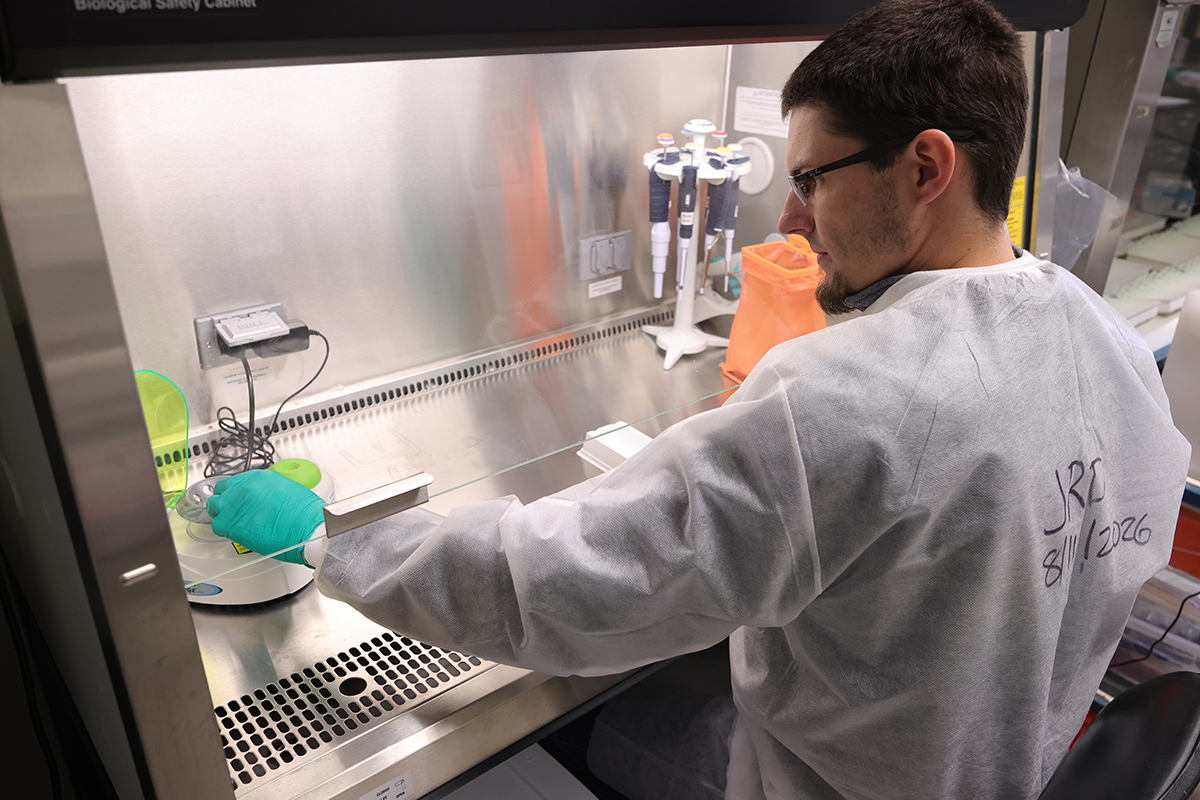
With extensive expertise in rabies virus neutralization assays, the laboratory provides internationally-recognized serological services that incorporate validated methods, skilled personnel, robust quality systems and expert interpretation. Organizations and government agencies use these tests to determine if an individual has developed an adequate immune response following rabies vaccination or whether an animal meets requirements associated with international movement.
Diseases do not recognize state and country boundaries, and the global movement of people and animals across state and country borders demands strong, capable rabies prevention programs. To that end, effective rabies programs require cooperation among veterinary laboratories, regulatory authorities, researchers, veterinarians, industry stakeholders and international organizations.
The KVDL Rabies Laboratory is part of that global network—with expertise that supports animal movement, vaccine research and evaluation, diagnostic development and other areas of rabies prevention and control, involving partners across multiple continents.
The result is a laboratory that does not simply apply testing methods, but continually contributes new knowledge to improve how rabies can be detected, understood and prevented more effectively.
World Rabies Day: Stronger Together
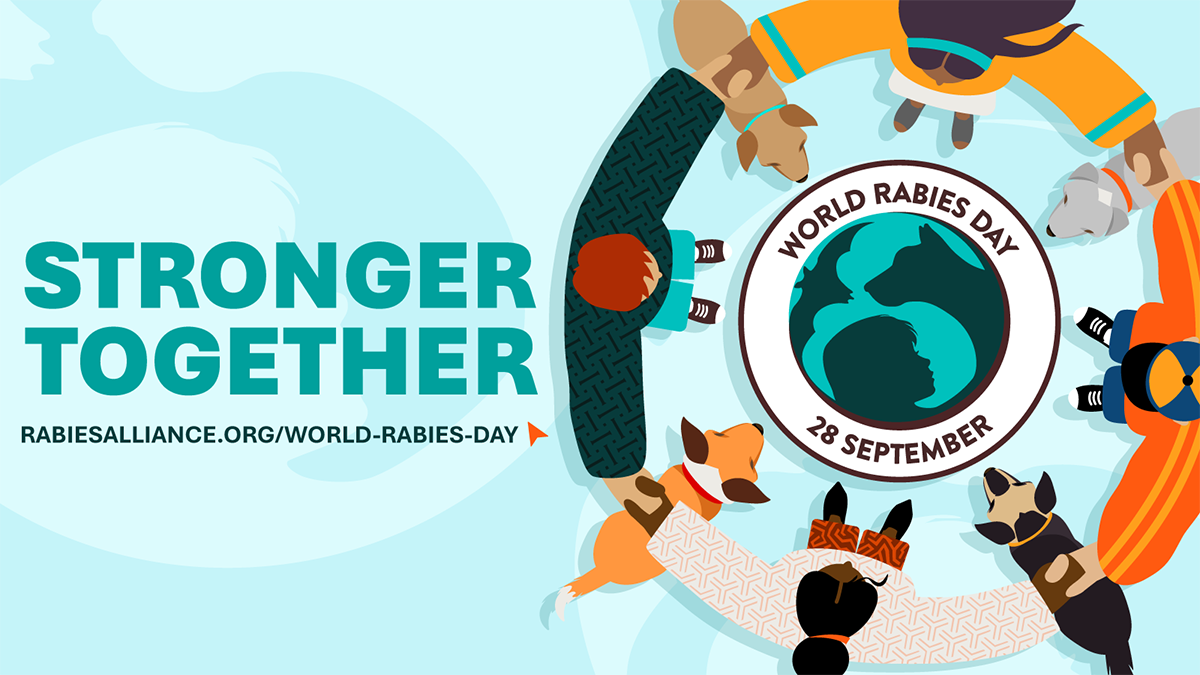
Every Sept. 28, World Rabies Day brings together communities, veterinarians, medical professionals, public health agencies, researchers, governments and other stakeholder organizations across the globe to raise awareness and accelerate action towards a rabies-free world.
The 2026 theme, “Stronger Together,” recognizes that rabies control and elimination cannot be accomplished by any one profession, sector, institution or country working in a silo.
No independent group can address rabies alone. A single rabies investigation routinely involves wildlife control officers, animal owners, veterinarians, diagnostic technicians, public health officials and health care providers. One specimen can therefore connect animal, human and environmental health.
Behind every result is a decision, and behind every decision are decades of expertise and people dedicated to one mission: preventing rabies and protecting public health across Kansas, the U.S. and the world.
Janine Seetahal
Section head, KVDL Rabies Laboratory
That is why rabies prevention provides such a clear example of One Health in practice. True progress will only be possible when disciplines work together towards coordinated action across these multiple sectors, supported by good communication and integrated surveillance.
On World Rabies Day, we're reminded that while rabies remains one of the deadliest zoonotic diseases, it is also one of the most preventable. Vaccination, responsible animal ownership, wildlife surveillance, diagnostic testing, public education, timely medical care and access to post-exposure prophylaxis are all essential components of rabies prevention.
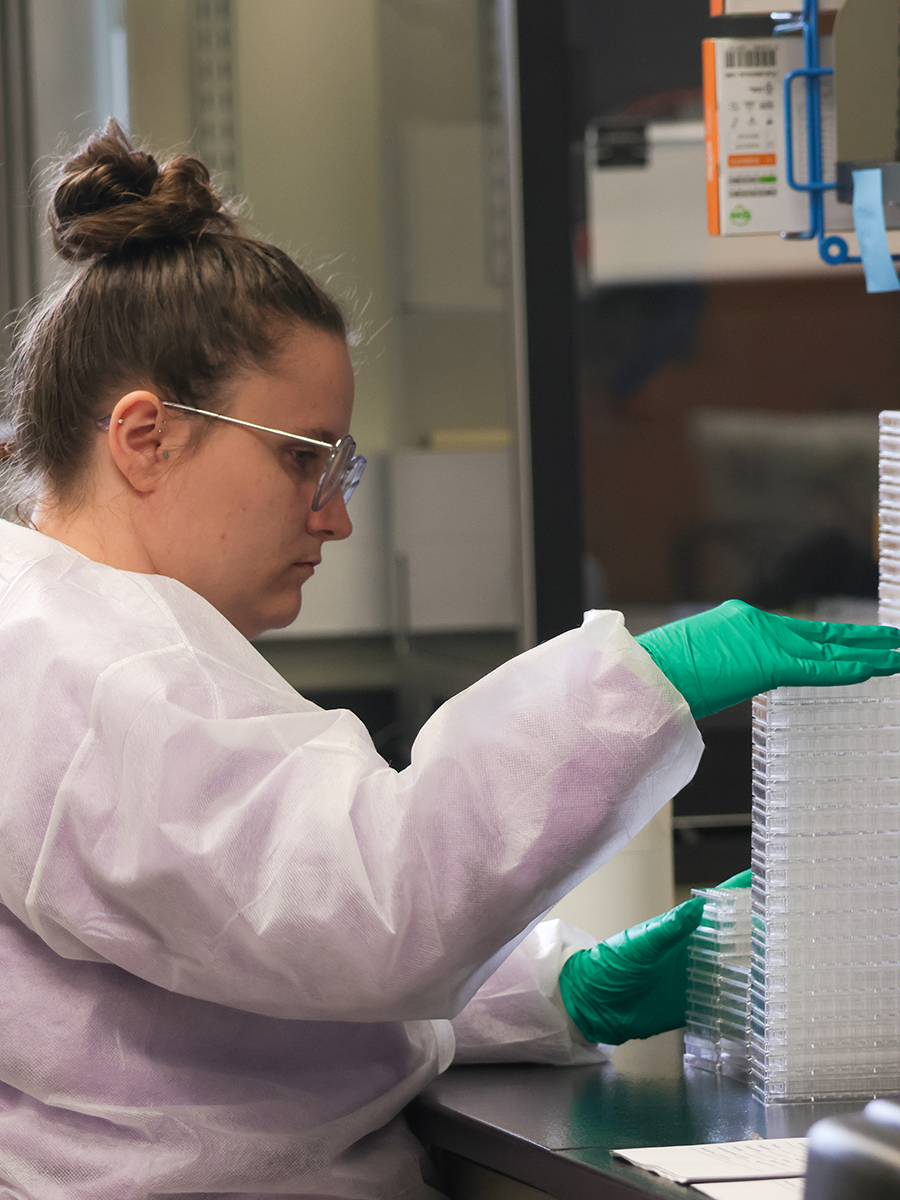
At the heart of these efforts is rabies diagnostic testing, which transforms biological evidence into scientific information needed to guide public health decisions.
What began decades ago as testing of animals suspected of having rabies has evolved into a nationally and internationally recognized rabies center. From suspected rabid animals in Kansas to rabies serology for an animal traveling the world, K‑State's Rabies Laboratory has spent decades turning laboratory results into public health action.
While the laboratory's mission has continually evolved, its fundamental purpose has remained the same:
- develop validated testing methodologies, knowledge and expertise to advance the field of rabies diagnostics;
- defend communities through disease surveillance;
- and deliver reliable answers needed to protect people and animals from rabies.
When a suspected rabies exposure comes up, people need immediate answers. But more than any single result, rabies diagnostics are crucial to public health.
Behind every result is a decision, and behind every decision are decades of expertise and people dedicated to one mission: preventing rabies and protecting public health across Kansas, the U.S. and the world.
Janine Seetahal is a clinical assistant professor of veterinary medicine and section head of the Rabies Laboratory in the Kansas Veterinary Diagnostic Laboratory — K-State’s diagnostic testing laboratory that helps identify and monitor diseases affecting animals across Kansas and beyond.
Related Stories
'A silent symphony’
In high-containment labs at K-State, Juergen Richt is building a global network of well-trained scientists trained prepared to stop the next big animal disease...
Biomanufacturing initiative links education, industry and workforce needs
Kansas State University is continuing the Multidisciplinary Hiring Initiative in Biomanufacturing with four new faculty hires whose work strengthens research,...
Investing in Kansas' first line of defense against animal disease
The Kansas Veterinary Diagnostic Lab drives $2.5 billion in economic value for the state and is set to grow with a new $128 million facility at K-State.