Biomanufacturing initiative links education, industry and workforce needs
Four new faculty hires expand K-State's multidisciplinary biomanufacturing expertise.
By Emily Boragine
K-State News and Communications Services
Friday, Feb. 13, 2026
Kansas State University is advancing its Biomanufacturing Training and Education Initiative with the addition of four new faculty members whose work strengthens connections across agriculture, engineering, biology and health sciences.
The hires are part of the university's Multidisciplinary Hiring Initiative in Biomanufacturing, a coordinated effort to expand expertise in biomanufacturing through intentional faculty recruitment.
Launched during the 2023–24 academic year, the hiring initiative supports K-State's goal of advancing biomanufacturing research and workforce development while strengthening industry connections. Through this initiative, the university is investing in faculty whose research links biological discovery with scalable applications that support long-term impact in Kansas and beyond.
"We are excited to have this talented and diverse group of new faculty members working in biomanufacturing-related disciplines join K-State," said Beth Montelone, senior associate vice president for research and director of the biomanufacturing initiative. "We expect that they will develop exciting new research programs and contribute to advancing their fields and training the next generation of researchers and the overall biomanufacturing workforce."
Prasad Parchuri: Engineering plants as biofactories
Prasad Parchuri, assistant professor in the Division of Biology, brings expertise in plant biotechnology and lipid biochemistry to the biomanufacturing cluster. His research focuses on decoding how plants synthesize, store and remodel oils at the biochemical and molecular levels, with the goal of redesigning plant lipid pathways to produce fatty acids used in food, fuel and industrial applications.
Before joining K-State, Parchuri completed postdoctoral research at Washington State University, where he worked on engineering plant lipid metabolism for bio-based product development. He earned his doctorate in biological sciences from the CSIR–Academy of Scientific and Innovative Research in India. He was a Fulbright Scholar at K-State earlier in his career.
At K-State, Parchuri's research addresses the challenge of engineering plants to produce valuable biomaterials at scale without diverting crops from food use or relying on fossil-based inputs. By examining the molecular regulation of oil synthesis and identifying metabolic bottlenecks, his work aims to improve oil quality and yield in engineered crops.
"Beyond academia, my research has the potential to support healthier foods, greener materials and reduced dependence on petroleum-derived products," Parchuri said. "In the long term, these advances can help strengthen agricultural and rural economies by creating new value-added uses for crops. Training students and young scientists to work at the intersection of synthetic biology and biomanufacturing is a central part of my mission at K-State."
Gabriel Converse: Advancing tissue-engineered medical devices
Gabriel Converse, associate professor in the Alan Levin Department of Mechanical and Nuclear Engineering, contributes expertise in tissue engineering and biomaterials with a focus on translational medical research. His work centers on developing medical products that integrate engineering design with biological systems.
Converse trained as a mechanical engineer and began his research career in orthopedic biomaterials. Before joining K-State, he spent more than nine years at Children's Mercy Hospital in Kansas City conducting research in tissue engineering. He also brings industry experience from Cook Advanced Technologies, a subsidiary of Cook Medical, where he worked in medical device development.
Converse is developing a tissue-engineered heart valve intended for children with congenital heart defects who require valve replacement. Existing valve substitutes do not grow with pediatric patients, often requiring repeated surgeries over time. The tissue-engineered approach seeks to address this limitation by creating valves that grow with the patient.
"Ultimately, the long-term goal in our work is to create a product. In the short term, we're looking at making advances in the biomaterial processing aspect of this and how to develop novel ways to introduce cells into a scaffold," Converse said.
His research also explores improvements in biomaterial processing and cell integration that may inform future work in other tissue-based applications.
Yian Chen: Rethinking downstream bioprocessing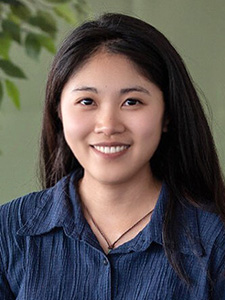
Yian Chen, assistant professor in the Carl and Melinda Helwig Department of Biological and Agricultural Engineering, strengthens K-State's biomanufacturing efforts through her work in downstream bioprocessing and bioseparations. Her research focuses on improving the separation, purification and preparation of biological products.
"A major challenge in biomanufacturing is that downstream processing often accounts for the majority of production cost, energy use and environmental impact," Chen said. "Many current processes are inefficient, rigid and difficult to scale across diverse feedstocks and products. My research seeks to fundamentally rethink how downstream operations are designed and integrated within biomanufacturing systems."
Chen earned her doctorate in chemical engineering from the University of California, Los Angeles, where her research focused on polymeric membrane materials and separation processes. She later served as a postdoctoral researcher at the National Renewable Energy Laboratory, working on the scale-up of downstream separation processes for carboxylic acids used in sustainable aviation fuel production. Before joining K-State, she taught biopharmaceutical downstream processing at Keck Graduate Institute.
Chen's work integrates separation materials with process modeling to reduce processing steps and improve efficiency. She also explores automation and real-time process control to support adaptable biomanufacturing systems.
Mohammad Saber Hashemi: Using AI to design next-generation biomaterials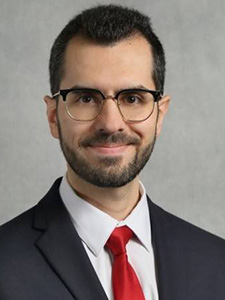
Mohammad Saber Hashemi, assistant professor in the Mike Wiegers Department of Electrical and Computer Engineering, brings expertise in AI-enabled modeling and computational design to the biomanufacturing cluster. His research applies machine learning and physics-based modeling to the design of biomaterials and biomedical devices.
Before joining K-State, Hashemi was a postdoctoral researcher at the University of California, Irvine, where he worked on NIH-funded projects combining cardiovascular imaging with computational analysis. His research focused on developing modeling approaches to assess cardiovascular function using advanced imaging technologies.
"By improving the way we design, manufacture, and customize biomedical devices and materials, my work aims to enhance clinical outcomes, patient safety and quality of life," Hashemi said. "At the same time, I hope it contributes to the broader biomanufacturing ecosystem by advancing data driven design methodologies, training a highly skilled interdisciplinary workforce, and strengthening collaborations between academia, healthcare and industry."
Hashemi's work at K-State focuses on optimizing biomaterials and tissue-engineered implants using data-driven and physics-informed models. His research aims to improve the reliability and manufacturability of biomedical devices while reducing the experimental burden required for design and testing. By integrating computational modeling with biomanufacturing workflows, his work supports the development of medical technologies positioned for translation.