The universal language of learning
On a College of Education study abroad trip to Costa Rica, K-State students discovered that connection matters, no matter the classroom.
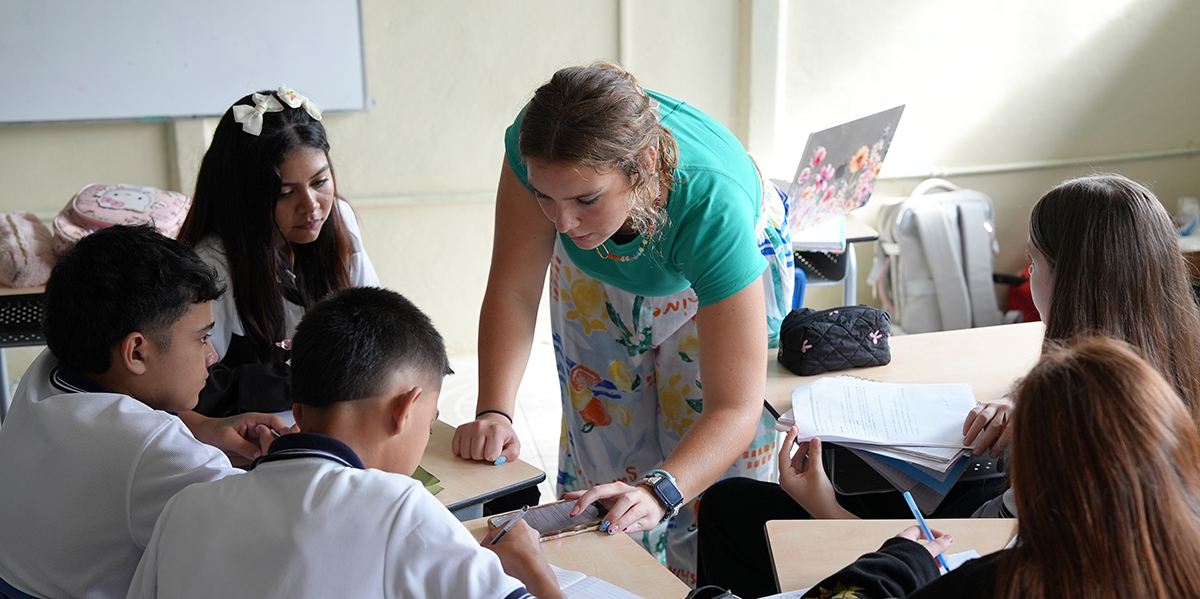
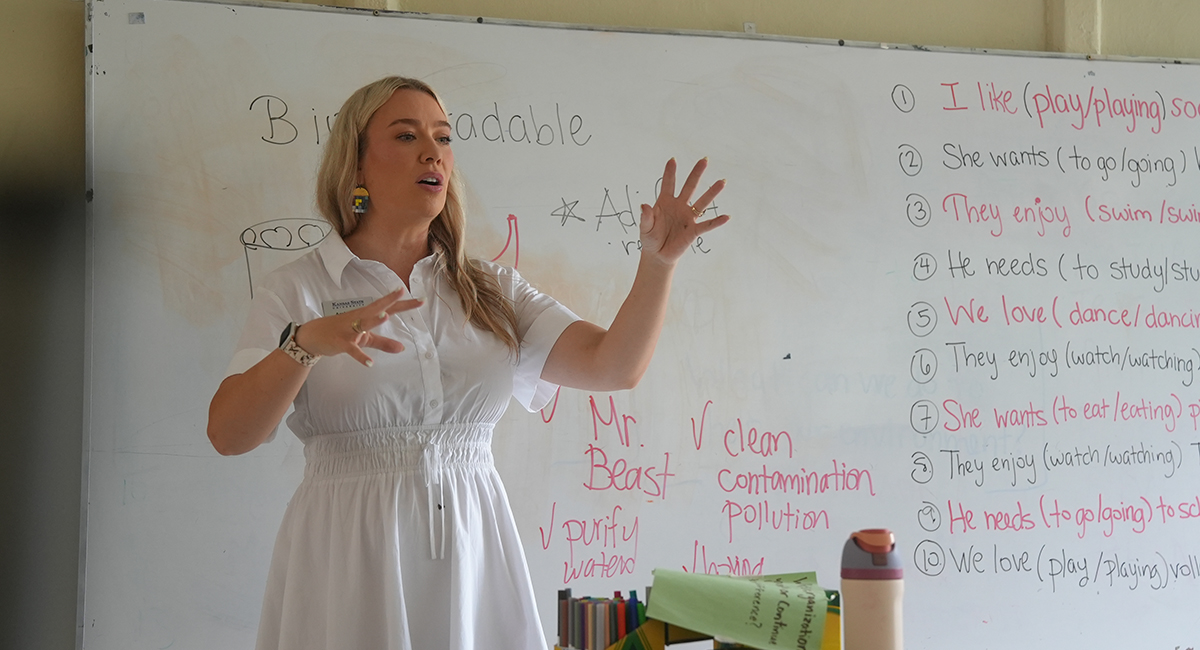
Kaity Bates, a junior in the elementary education major, Oswego, employs technology-supported English as a Second Language strategies as she engages with middle-grade English learners in a Costa Rican classroom.

By Rafael Garcia
K-State News and Communications Services
Wednesday, Sept. 2, 2026
For a little over a week this summer, several Kansas State University College of Education students walked through the rainforest each morning to get to school.
The destination was about as different from a Kansas classroom as they could imagine:
two rural schools in Costa Rica, a small primary school where kindergarten through sixth grade shared a single classroom, and an adjoining secondary school. There was no familiar school hallway, no rows of classrooms and no separation between individual grades — only between elementary and secondary settings.
But once the lessons began, the differences started to fade, said Ambyr Rios, associate professor and program director of secondary English, speech, theater and journalism teacher education in the College of Education.
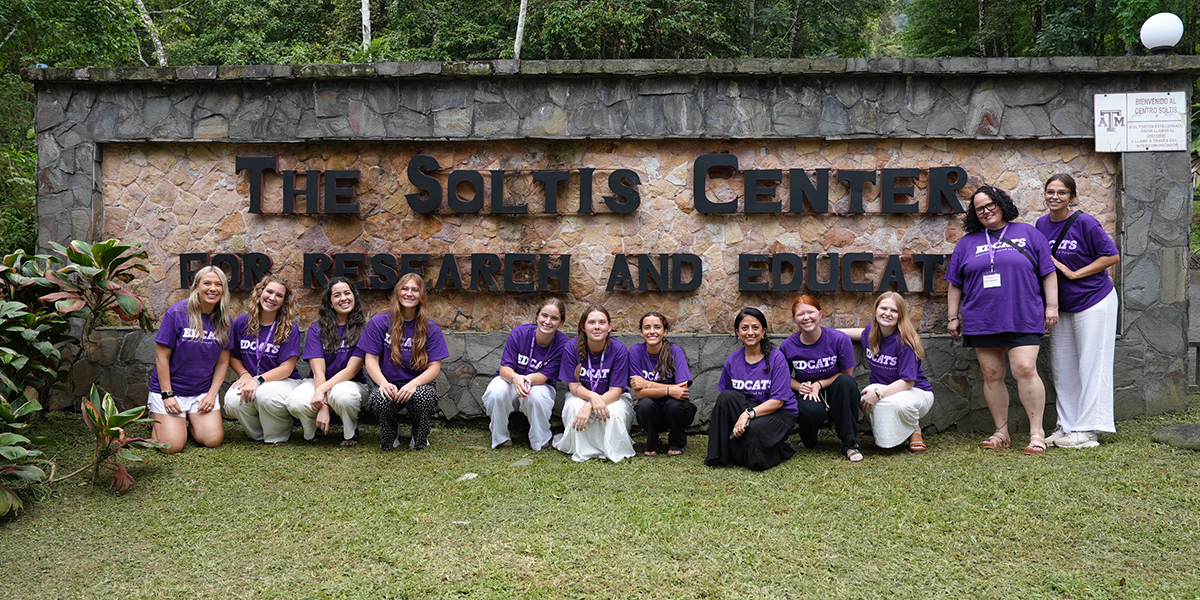
Rios and Shabina Kavimandan, assistant professor of curriculum and instruction at K-State Olathe, led 10 undergraduate education students to Costa Rica this summer as part of the "Society and World Perspectives in Education" and "Culture and Language in Classroom Practice" study abroad courses.
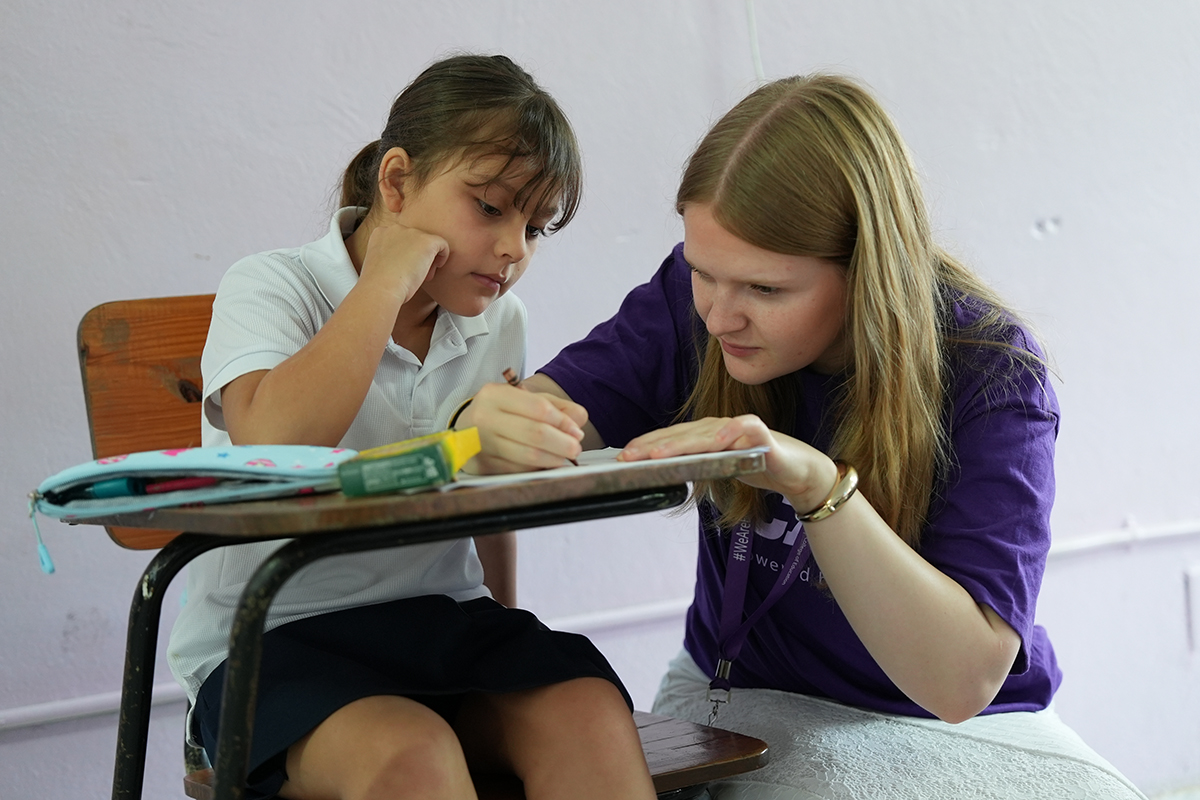
The nine-day experience combined teaching in local elementary and secondary schools with environmental and cultural education in partnership with the Soltis Center for Research and Education, a Texas A&M University research facility at the intersection of the Eternal Children’s Rainforest and Monteverde Conservation Area in San Juan de Peñas Blancas.
"Our goal was to provide our students with a global perspective of education and culture in Central America, specifically in Costa Rica," Rios said. "We aimed for our pre-service teachers to engage with and appreciate how education operates in different spaces, seeing how we might bring hallmarks of Costa Rican teaching and learning, like community-oriented learning, place-based education, and environmental science back into our classrooms here in Kansas."
Finding familiar connections
For the K-State students, the experience offered a chance to see education from a new perspective and to discover just how much of it felt familiar and what this might mean for their future classrooms.
In the elementary school, students from multiple grade levels learned together while their teacher differentiated instruction throughout the morning. K-State students had to do the same as they planned and taught their own lessons, often using a combination of English and Spanish language, gestures, and, in some cases, Google Translate to communicate.
"The power of education" was one of the biggest takeaways for Kerston Sipes, senior in educational studies, Haysville, who said the experience showed her how education can reflect different values and perspectives from one country to another.
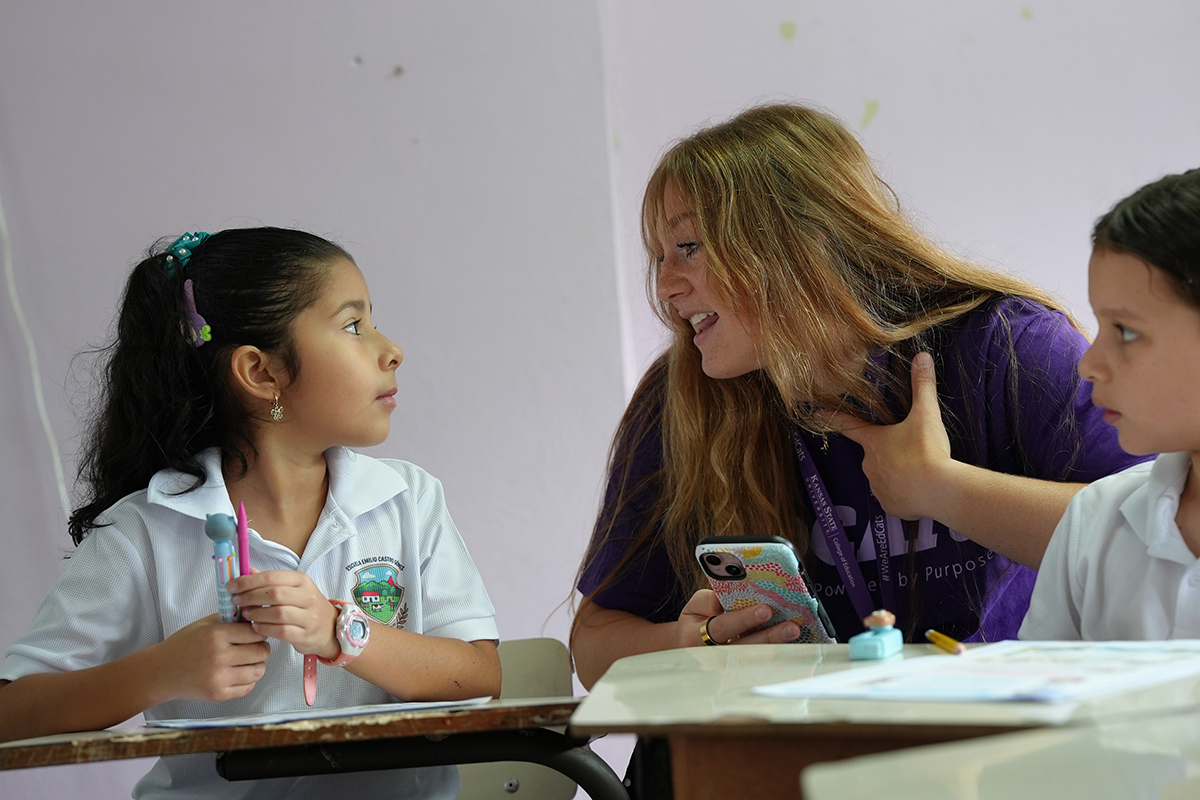
"The students in Costa Rica were so excited to come to school and eager to learn," she said. "We started to appreciate the differences of how they teach. They teach a lot of social awareness and things like that that aren't taught in some schools in the U.S. The U.S. really focuses on curriculum, which their schools also do, but maybe with a bigger focus on also being a good citizen and human in their communities."
At the secondary school, K-State students taught English and incorporated active learning strategies into lessons. They also joined students in a fundraiser, helping cook and sell Costa Rican foods to raise money for graduation.
"They were so willing to take us in," said Haydan Walters, junior in elementary education, Pomona. "The language barrier was very hard, but they were still willing to learn and participate in the lessons that we tried to come up for them. It was just so refreshing to see how eager they were and how interested they were in us as we were in them."
Bringing joy back to the classroom
For Rios, meaningful moments came not only from her K-State students, but from collaborations with the local English teacher as well.
The veteran teacher, the school’s sole English instructor for grades 7-11, shared with Rios that she’s been feeling exhausted because of her heavy workload. Over the course of the week, the teacher joined with K-State students as they employed interactive teaching methods, cooperative learning, and participatory engagement activities in their lessons.
By the end of the week, the teacher told Rios that the experience left her newly invigorated and inspired.
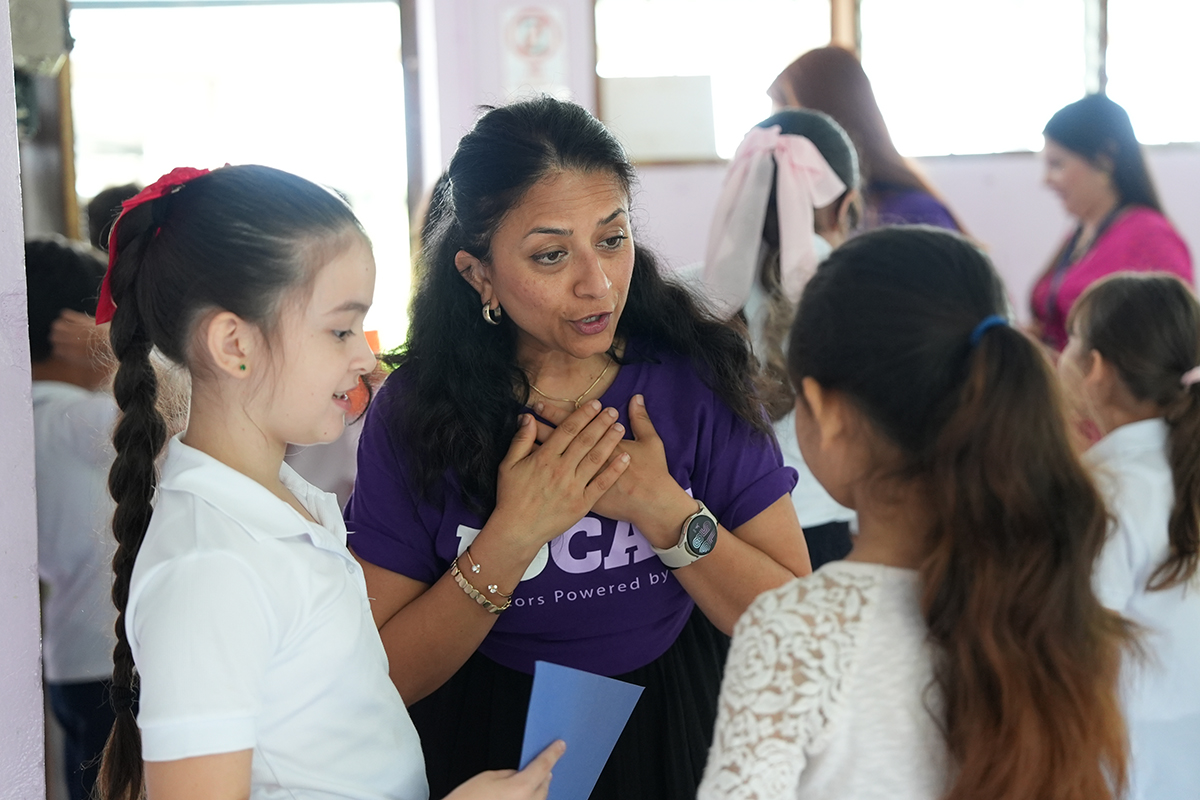
"I think our students really did a great job of bringing joy and EdCats happiness to teaching," Rios said. "This experience made them realize how small the world is in a beautiful way, and how we can all learn from each other, regardless of where we live and what language we speak."
That exchange — a group of future teachers bringing something new to a classroom while learning something equally valuable in return — became the heart of the trip.
“This experience made them realize how small the world is in a beautiful way, and how we can all learn from each other, regardless of where we live and what language we speak.”
Ambyr Rios
Kavimandan said the experience showed students that while classrooms, languages and cultures can look dramatically different, the fundamental connection between students and teachers remains much the same.
"A child's smile happens when learning makes sense to them, regardless of the language they speak," she said. "Both students' and teachers' hearts and minds open when there is a connection. Yes, language can be a barrier, but we can overcome that. Students saw firsthand that there are tools available that they can use as they work with their own multilingual learners, and that gives them an entryway and example they can use for the rest of their careers."
Related Stories
People with Purpose: Ambyr Rios
Through her work preparing secondary literacy educators, Ambyr Rios builds confident, effective classroom leaders who inspire a passion for learning.
What changes when the data gets personal
A statewide conversation about teacher retention often starts with numbers. How many teachers are leaving? Where are shortages growing? Which districts are...
From the ground up
Chelsy Champlin is a passionate educator who has built her career in rural schools across southeast Kansas. Now in the third year of the master's program in...