People with Purpose: Erika Geisbrecht
Through grounding research and graduate-student mentorship, Erika Geisbrecht is driving scientific discovery by inspiring curiosity.

By Abbigail Marshall
Division of Communications and Marketing
Monday, Aug. 10, 2026
Before a scientific breakthrough provides an answer, someone must first ask the right question.
For Erika Geisbrecht, professor in the Department of Biochemistry and Molecular Biophysics and winner of the Commerce Bank and W.T. Kemper Foundation Distinguished Graduate Faculty Award, that necessary curiosity is the most thrilling part of science.
Through her lab, which seeks to better understand and treat human myopathies, Geisbrecht is advancing her field while investing in students — finding her purpose in transforming lives through research.
Q: How do you encourage students to stay curious when the material is challenging?
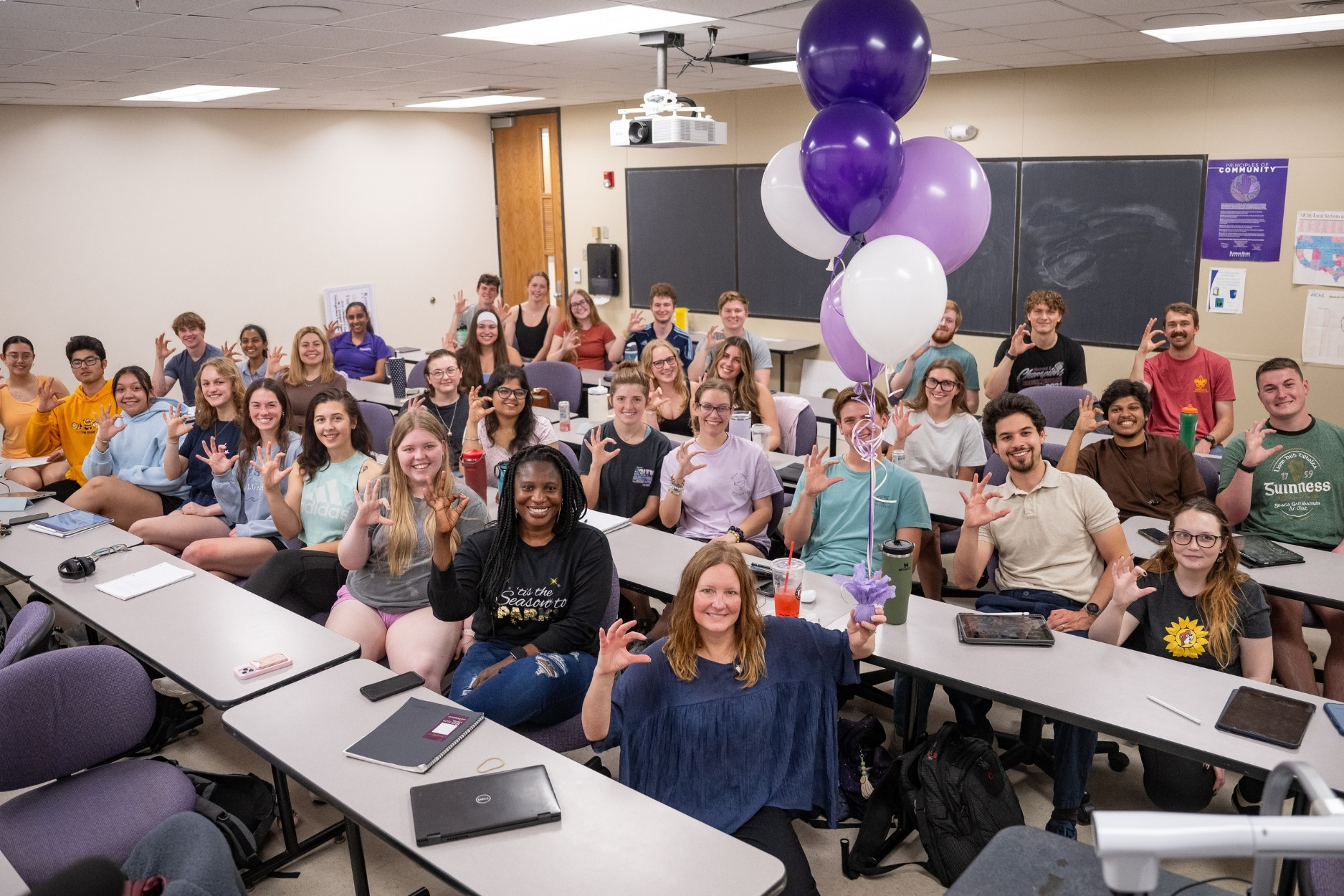
Geisbrecht: While some students are innately curious and crave challenges, many students struggle to see the relevance of challenging material. I have become effective at engaging students through a non-majors science class, BIOCH110: Biochemistry and Society, where I break down difficult concepts using everyday analogies and class discussions that intertwine scientific subjects, history, economics, culture and beyond. These same tactics also get integrated into my advanced science courses, where we take time not only to discuss topical material but also to explain why and how this information was discovered.
Q: What kind of culture do you seek to build in your lab, and how does that contribute to its success?
Geisbrecht: I try to encourage creativity, problem-solving and communication in my lab. Good science is highly collaborative and working with others to teach each other techniques, discuss results or troubleshoot potential problems results in both scientific advances and independent thinking amongst lab members. Over the years, our lab has been a mix of people at all career stages, including undergraduates, graduate students, postdocs and research technicians. This model ensures continual training expertise, but also brings new ideas and energy to keep the lab a fun place to work.
Q: What's a recent discovery or breakthrough that reminds you why you love research?
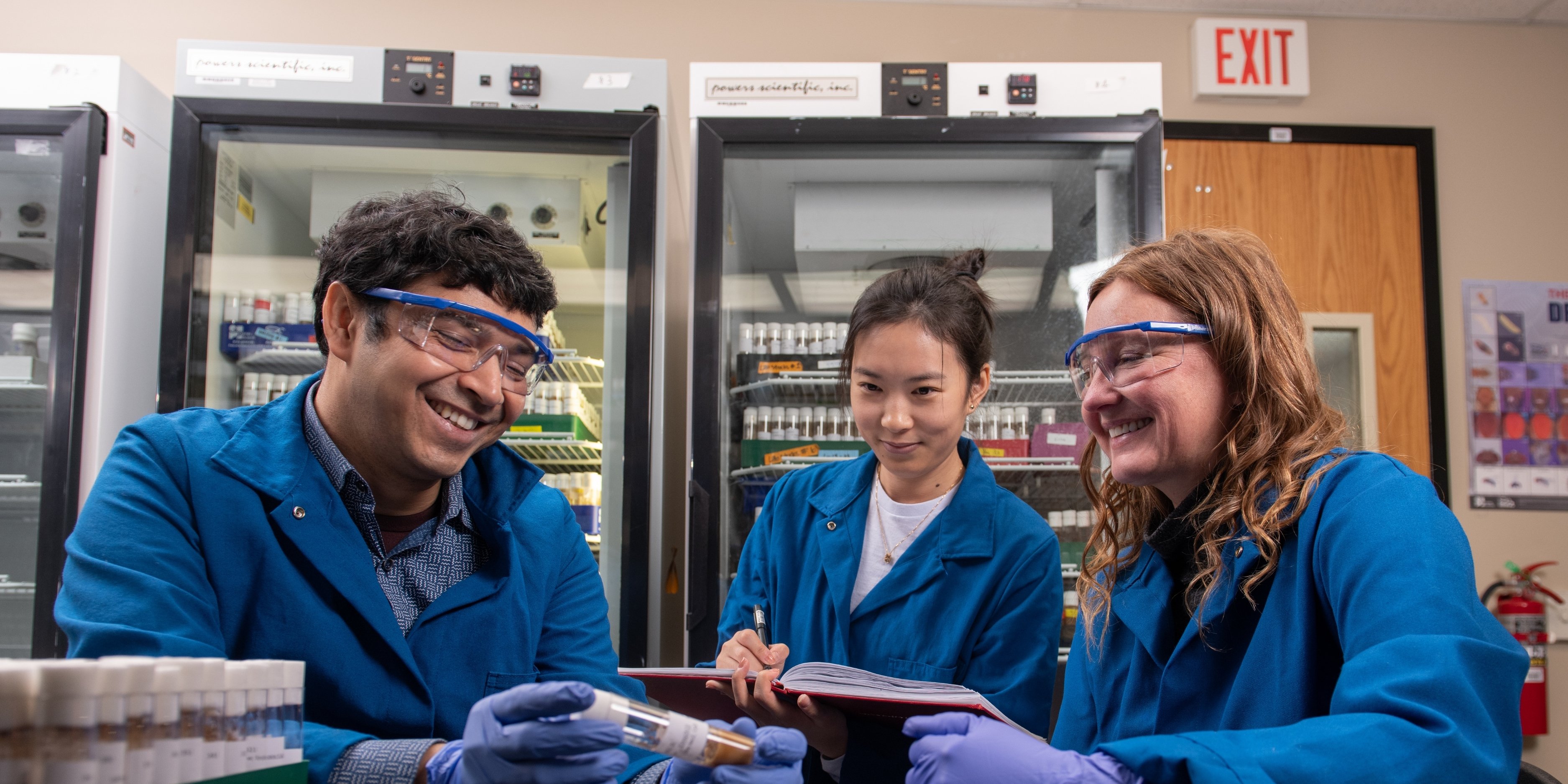
Geisbrecht: Science is a unique career — we are often the very first to uncover the unknown. This is especially true in my lab, since we use microscopy regularly to search for visual clues about the causes of muscle disease. I can remember the moment of each new discovery in my lab, including a recent advance by graduate student Ziwei Zhao.
Ziwei noticed that mutant versions of a human protein called CryAB form large, amyloid-like structures inside muscle cells. Rather than being degraded like other abnormal proteins, these mutant proteins are shuttled out of the cell, analogous to a broken refrigerator being sent to the dump, since you cannot dispose of it in your house. We think this might be a clever way for the cell to avoid accumulating toxic proteins or becoming overwhelmed, and it has implications for treating diseases caused by damaged proteins.
Q: What has been the most meaningful collaboration of your career? Why?
Geisbrecht: My most meaningful collaborative scientific investigation was my first time working with Richard Cripps, whom I first met when he was a researcher at the University of New Mexico. Soon after I started my first role as an assistant professor, I invited Rich to give a seminar and quickly realized we were working on the same gene. Lucky for me, as a new primary investigator, he suggested we collaborate and became my unofficial mentor as I navigated early investigator grant submissions. While we've both moved universities since, we've stayed connected; his collegiality and unselfishness left a strong impression on me, and I have made it part of my academic mission to similarly help new primary investigators in my field.
Q: How does your work fit into the larger strategic plan of the university?
Geisbrecht: Our research program fits a unique niche at K-State, bridging human and animal health while integrating with the university's broader goals of enhancing research productivity and providing practical learning experiences.
Broadly, we study how muscles form and how healthy muscles are maintained throughout adult life. The basic mechanisms of muscle formation and maintenance in humans and animals, including insects, are highly conserved, meaning they have changed very little over millions of years of evolution. Because these processes are so similar across species, discoveries made in one organism can often help us better understand another.
We are funded by the National Institutes of Health to study ways to prevent muscle disease in humans and are also part of a larger group of researchers across multiple land-grant universities working to better understand muscle development in livestock to improve meat production and reduce animal disease.
Related Stories
People with Purpose: Kim Coy
For Kim Coy, supporting students goes far beyond the classroom. Through thoughtful gestures, meaningful connections and a commitment to making every visitor...
People with Purpose: Rob Sanders
Through guidance, encouragement and practical support, Rob Sanders is a trusted career-readiness resource for students.

People with Purpose: Katie Thompson-Laswell
Katie Thompson-Laswell is preparing future educators and caregivers to build healthier childhoods and stronger communities.