People with Purpose: Rob Sanders
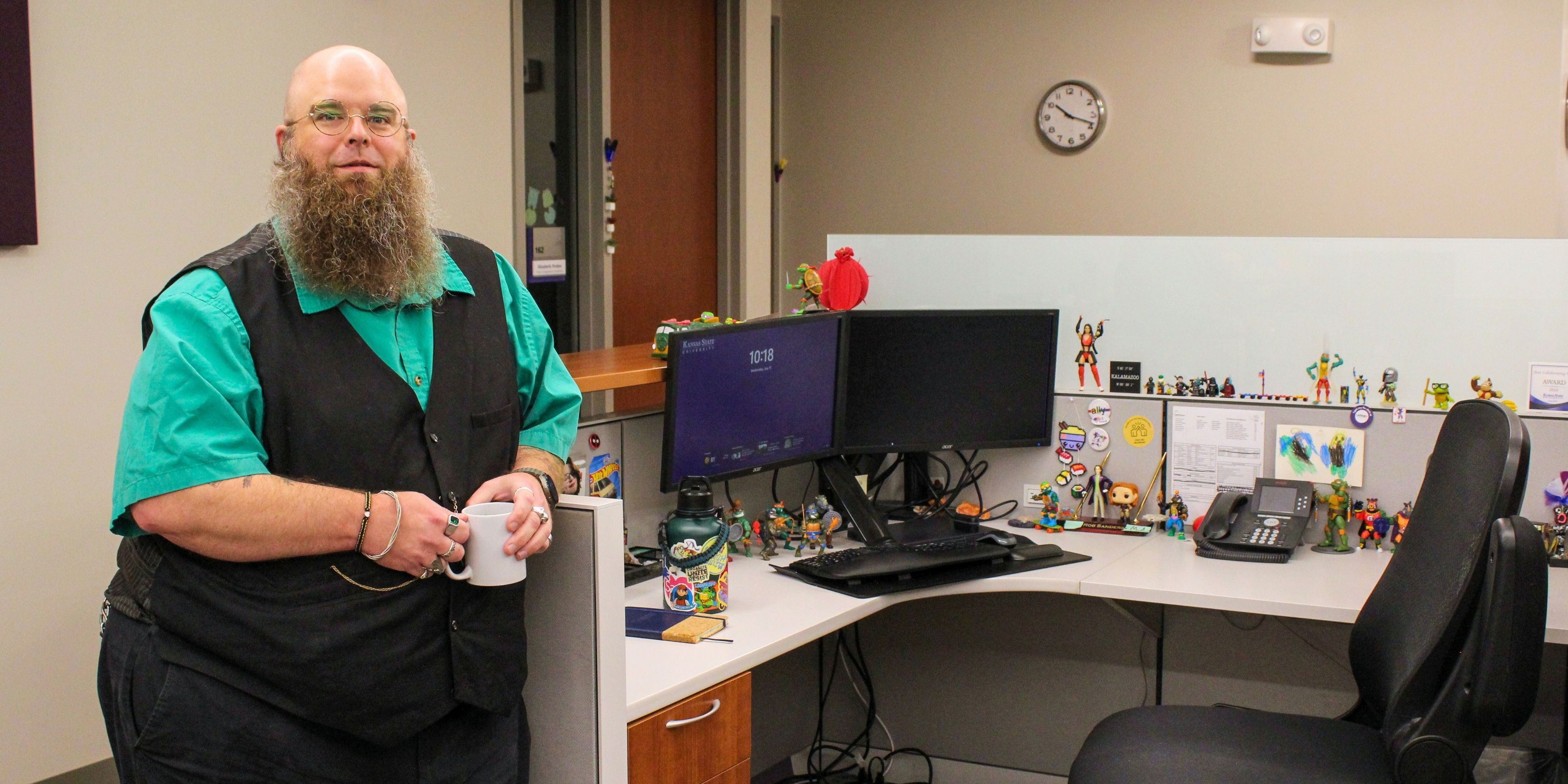
From first-year jitters to first jobs, Rob Sanders is there for students every step of the way.
By Abbigail Marshall
Division of Communications and Marketing
Monday, July 27, 2026
Many students' college journeys have moments of uncertainty. Add questions about careers, internships and life after graduation, and it's easy to feel overwhelmed. That's where Rob Sanders comes in.
As a program assistant for the K-State Career Center, Sanders helps students navigate both the college experience and the path that follows — finding his purpose in guiding students toward becoming confident career professionals.
Q: Besides a degree, what's one thing every K-State student should take away from their time on campus?
Sanders: I think one of the most important things to take from your college experience is that you never know what you will end up using in your career. My path to K-State was convoluted: a community college for an associate's degree, an undergraduate university in Michigan for my bachelor's degree and finally K-State, where I earned my master's in creative writing through the English department.
While I was earning all those degrees, I was also working in retail banking. I rarely had a chance to apply what I learned in my classes to my day job as a bank teller, but these degrees taught me how to learn, ask questions, and examine the mundane parts of the world and dig a little deeper. These are the lessons that I continue to take with me everywhere.
It's this curiosity that a well-rounded education fosters in people. Above all, I think it's important to keep learning about yourself, the world around you and the people who occupy that world. This is all of our first times doing this life thing, and we make mistakes. Give people grace and treat them the way they want to be treated. These are all lessons that you will learn in your college experience, but that don't necessarily come from in-class learning. It is also these "soft skills" that employers are looking for in their future employees.
Q: What drives you to support students?
Sanders: As a first-generation, non-traditional student, I remember the struggles I had finding my footing; I had many challenges finding the resources I needed to succeed. In everything I do in my job, I try to keep students at the center. I try to put myself back in the place of that first-generation student trying to navigate a new, and frankly, intimidating world of college for the first time. So, whether that is always working to adjust our scheduling system to better adapt to students' needs and expectations or taking the time to work with a student directly by email or on the phone, I am always picturing myself in the place of a student and trying to imagine what would have helped me avoid unnecessary challenges.
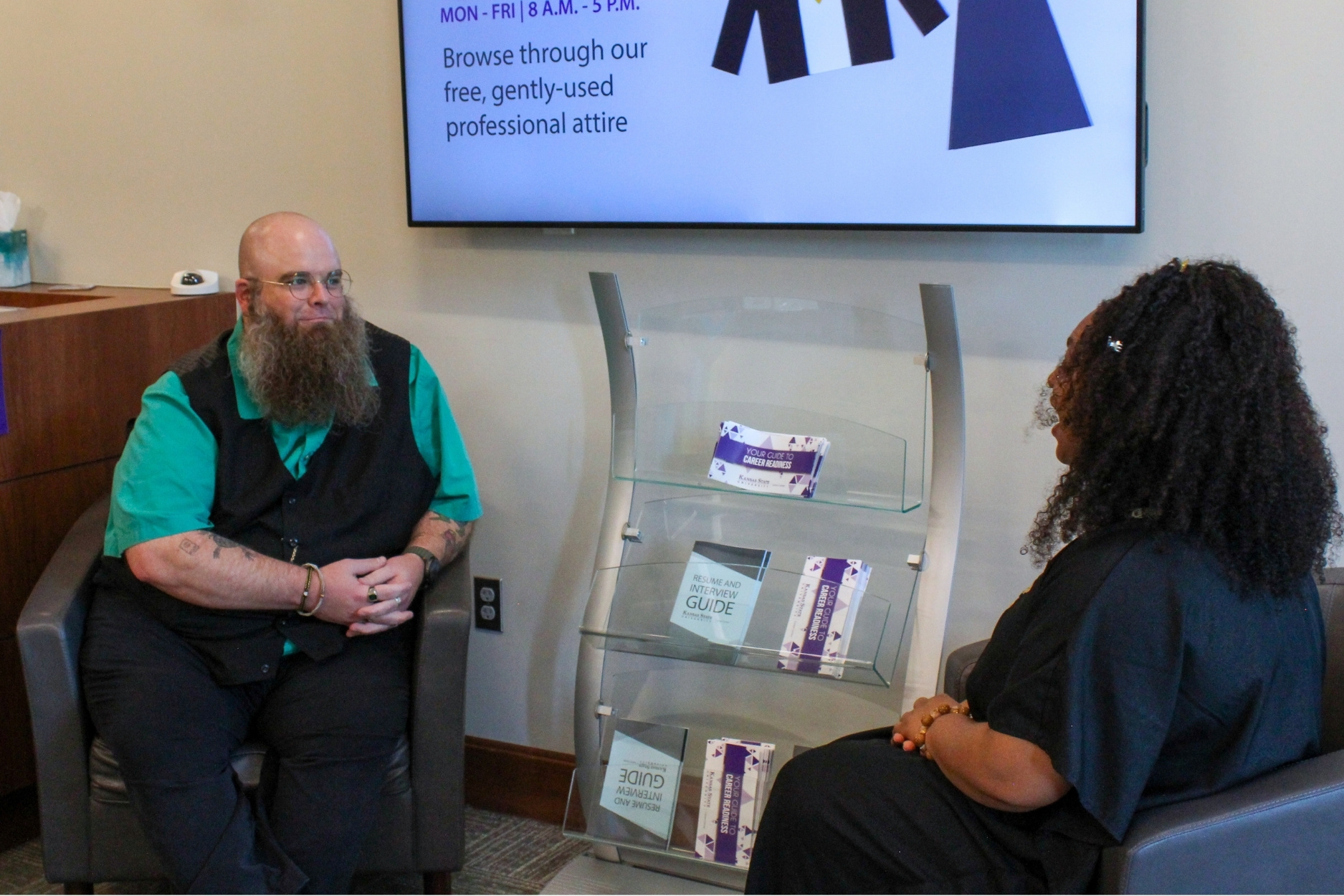
“No matter how minuscule the interaction with a student might be, it can have a long-lasting impact.”
Rob Sanders
Q: If you had to highlight one time when you felt most successful in your role, what would that be and why?
Sanders: A huge portion of what I do as a program assistant is not in the main job description. According to my job description, I spend my time working with statistics, scheduling appointments and presentations and helping students who come into the Career Center. But part of my job description is also "other tasks as assigned," which is where most of the challenge of this position starts.
One of those other tasks recently has been to lean into my master's degree and write some articles for the marketing coordinator here in the Career Center. I find it very rewarding to construct a compelling narrative. Most notably, I wrote the retirement brief for our long-time director, Kerri Keller. For this task, I researched her career at K-State and turned it into an interesting story covering her career highlights. I was honored to be trusted with telling the story of a more than 20-year career, and found it very rewarding when I saw that it had made it into K-State Today.
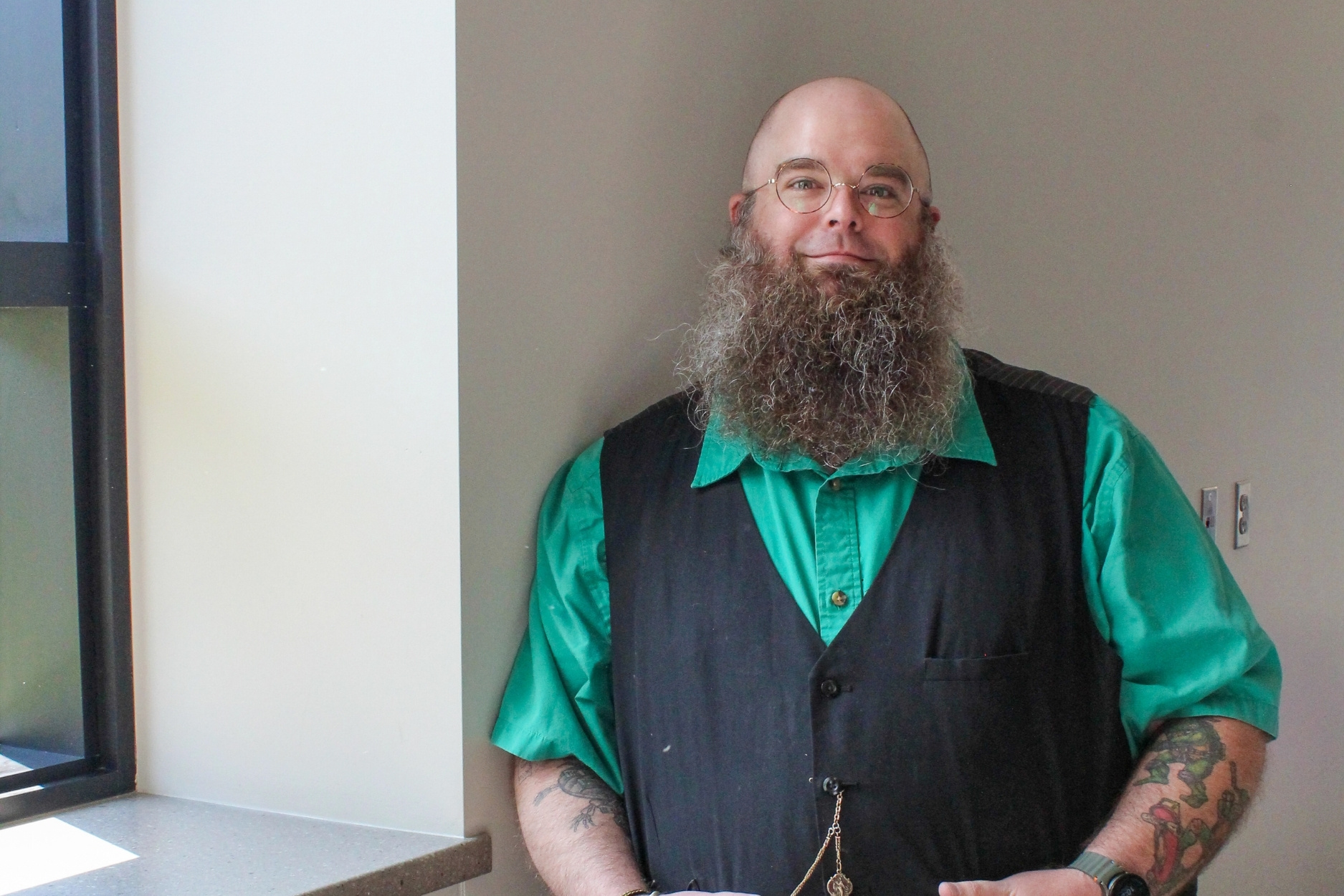
Q: What is a time a student interaction stayed with you long after the day ended?
Sanders: During the university's All-University Career Fair, one of our career engagement consultants and I are responsible for our student volunteers. It's not an exaggeration to say that without volunteers, we couldn't put on the All-University Career Fair. These student volunteers do everything from helping set up and tear down each day of the three-day fair to delivering packages to tables and even walking employers to their booths all throughout the day, while rolling out the purple carpet! It's this hands-on service that makes K-State's career fair different from other university career fairs and brings back the best employers year over year.
A few years ago, I had a student volunteer who was always asking for more work. She was a fantastic volunteer, so I felt very comfortable having her watch an employer's booth while they went off to get lunch, and I sent her to do so. That student volunteer returned to me a while later, excited about a fantastic conversation she had with that employer about her own future.
The next year, that student came up to me. This time, instead of wearing the K-State purple shirt with her student organization's name emblazoned on the chest, she wore a polo shirt from the company for which she had staffed the booth. She had parlayed that volunteer experience into a job recruiting for that company and wanted to come and show me the opportunity she had seized. That student has been recruiting for that company for years, and I expect to see her again this September at the All-University Career Fair.
This has always stood as a reminder to me that no matter how minuscule the interaction with a student might be, it can have a long-lasting impact. I simply assigned a task to an eager student volunteer, and that turned into the beginning of her career. We impact students with everything we do, and it's important that we bring our best to them and help them grow into the best versions of themselves!
Q: How does your work transform lives in Kansas and the world?
Sanders: I am on the team at the Career Center that collects and enters all the data for the university's post-graduation statistics. I think the biggest impact of my work on the greater world is hidden behind those anonymous statistics.
One of the ways our post-graduation statistics are used is in recruitment. With our carefully curated statistics as a backing, the university boasts a 97% post-graduation placement rate among respondents.
We often hear of K-Staters going off to impact the world through research and their regular work, but what is important to remember is that they were once uncertain folks looking to see which college would suit them best. They have a choice among many institutions, but not all of them can boast placement numbers that high. I am proud to say that the data we have spent the entire year collecting and curating is used to show the value of an education at K-State to potential students worldwide.
Related Stories
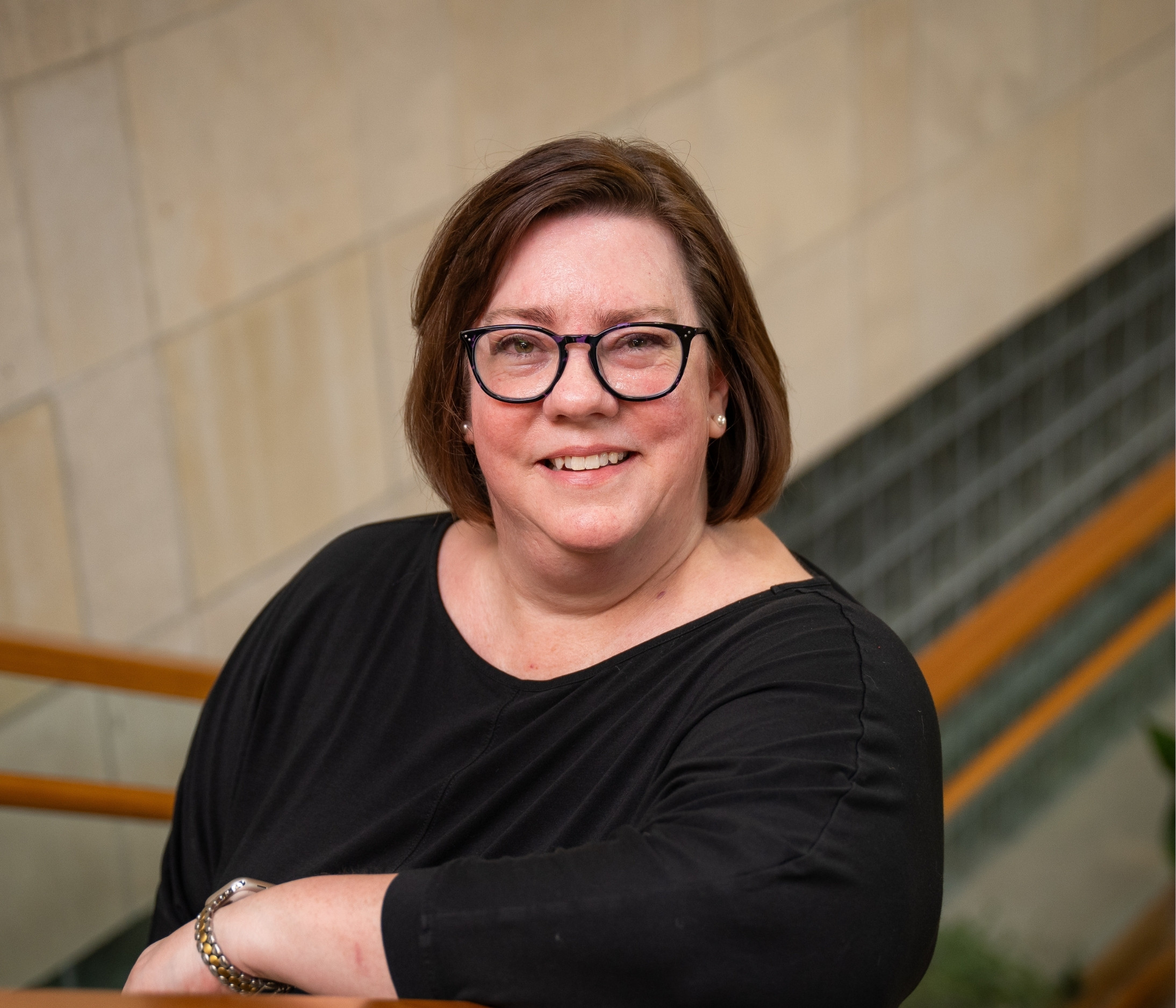
People with Purpose: Katie Thompson-Laswell
Katie Thompson-Laswell is preparing future educators and caregivers to build healthier childhoods and stronger communities.
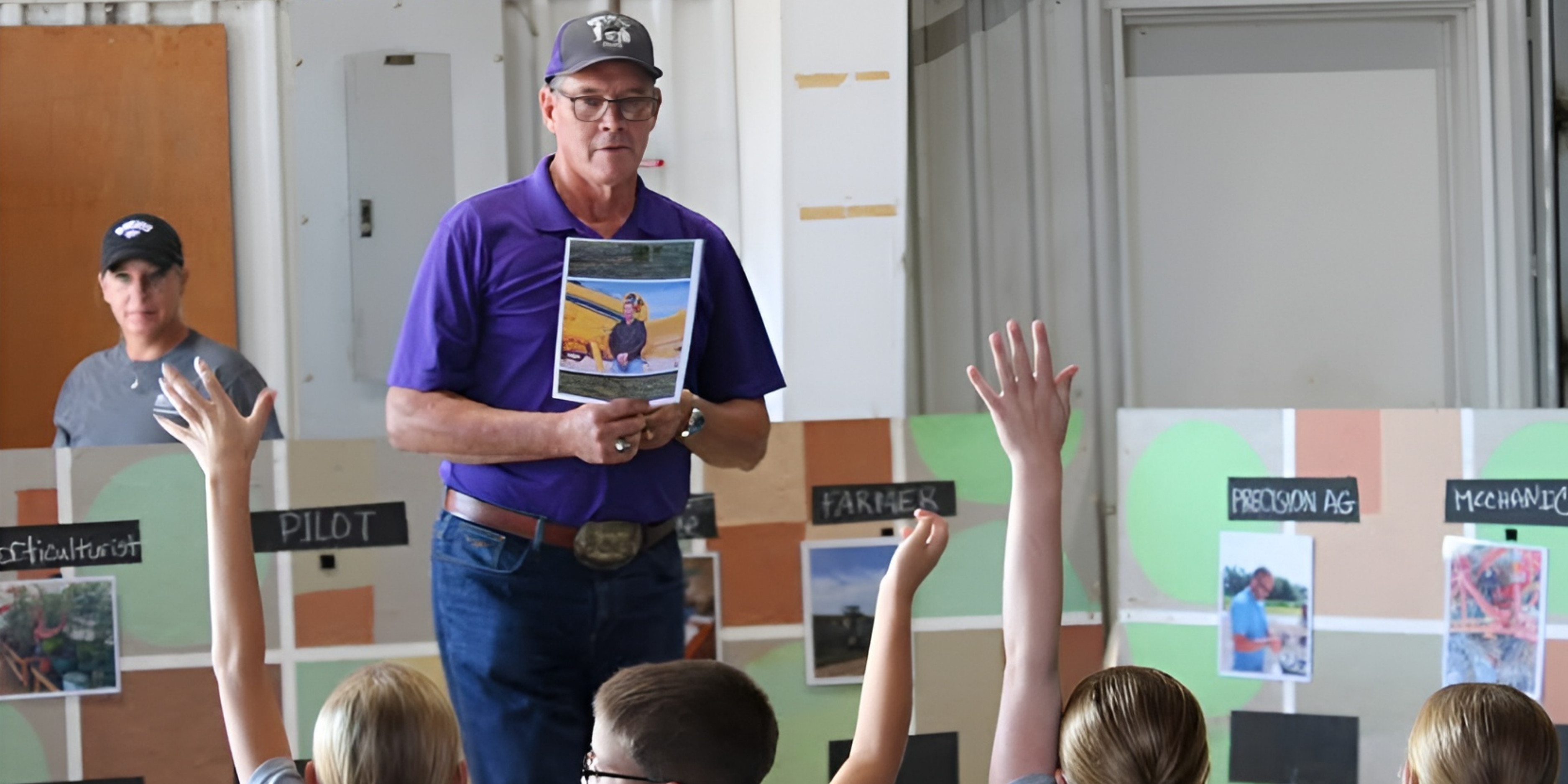
People with Purpose: Jay Harris
Jay Harris' leadership helps connect Kansas communities with research-based education that improves lives.
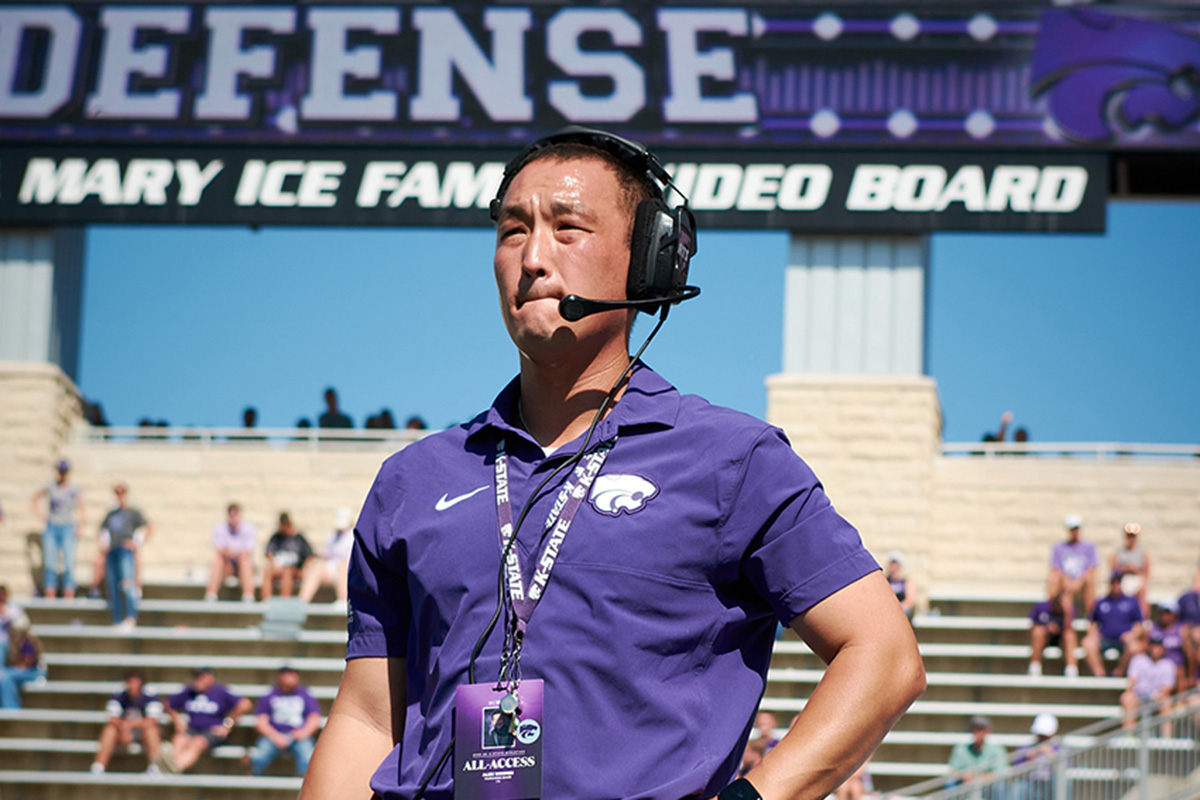
People with Purpose: Alex Wimmer
As K-State's director of bands, Alex Wimmer shares how music brings people together, why investing in the process matters and how helping students grow as musicians...