Kansas officials urge vigilance after New World screwworm detected in Texas calf
K-State entomologist explains what discovery means for people in Kansas
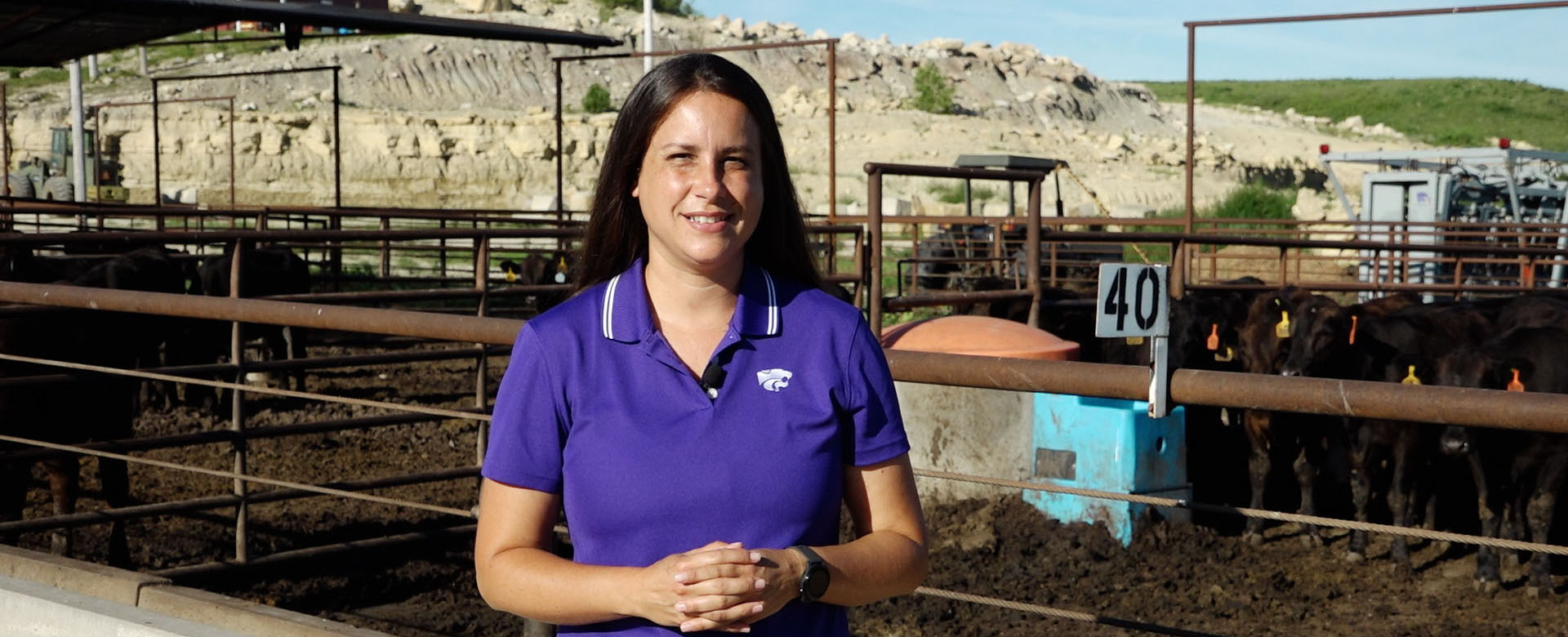
Cassandra Olds, K-State assistant professor and livestock entomologist, offers insight on the New World screwworm fly.

By Pat Melgares
K-State Extension
Monday, June 8, 2026
Kansas agriculture and animal health officials are urging livestock producers, veterinarians and pet owners to remain vigilant following confirmation of a New World screwworm infestation in a calf in Texas, marking the first detection of the pest in the United States in decades.
The U.S. Department of Agriculture's Animal and Plant Health Inspection Service confirmed June 3 that a three-week-old calf in Zavala County, Texas, was infected with New World screwworm, a parasitic fly whose larvae feed on the living tissue of warm-blooded animals.
Kansas officials emphasized that while the case is a serious concern, the state remains at low risk and has spent months preparing for the possibility of the pest reaching U.S. soil.
"While this new confirmed case in Texas is a serious concern, we have been preparing for this scenario for over a year, and we have confidence in the response plan that is in place," said Justin Smith, Kansas animal health commissioner. "We appreciate the awareness across the state and the help of livestock owners, veterinarians, pet owners and other stakeholders who are important partners in preventing NWS in Kansas."
Keep an eye on animals with open wounds, watch for larval stage, says K-State expert
Cassandra Olds, assistant professor and K-State Extension livestock entomologist, said the greatest concern is the larval stage of the fly.
"What we're concerned about is the maggot stage, or the larval stage of the New World screwworm fly," Olds said. "It needs to live inside a living organism, such as humans, cattle, dogs, cats or other."
Unlike many pests, screwworm larvae cannot create wounds. Instead, female flies lay eggs in existing wounds, where the larvae hatch and feed on living tissue.
"It's important to know that they can't initiate a wound," Olds said. "The only place where it can live is if a wound already exists."
Animals infested with screwworm larvae often experience significant pain and behavioral changes.
"Often we'll see that animals will lick or rub the area because it's quite painful," Olds said. "They can often sequester themselves because they feel so miserable. It is incredibly painful."
Because New World screwworm larvae can resemble other fly maggots, Olds said producers and pet owners should report any suspicious infestations in living animals to state veterinary authorities for proper identification.
"Anybody who sees maggots in a living animal should call state veterinary authorities," she said.
Actively monitoring livestock and pets is key to containment
Olds stressed that Kansas remains in the same risk category as it was before the Texas detection. Federal officials are treating infected animals, monitoring surrounding areas and restricting animal movement where necessary.
"We want to stay vigilant, but not panic," Olds said. "We are just as safe as we were three weeks ago."
She encouraged livestock owners to inspect animals regularly, monitor wounds closely and treat injuries promptly. However, she cautioned against treating entire herds with such antiparasitic drugs as ivermectin and doramectin as a preventive measure unless an infestation has been confirmed in the area.
"We really need to make sure that we do not prophylactically treat animals in Kansas when there’s no indication that we have any infestations," Olds said. "Wait for an infestation to be confirmed in your animals before you treat them for New World screwworm fly."
Olds said surveillance remains the key to containment. Federal officials can release sterile male flies to suppress populations, but success depends on quickly identifying infested areas.
The Kansas Department of Agriculture continues to provide updates to veterinarians and livestock producers and is reminding anyone traveling with animals to Texas or other areas near the Mexico border to be aware of additional movement requirements that may be in place.
Heather Lansdowne, spokesperson for the Kansas Department of Agriculture, said the agency also wants pet owners to understand that New World screwworm is not limited to livestock.
"We're trying to emphasize that any warm-blooded animal with an open wound would be a possible host for this pest," Lansdowne said. "A lot of the information coming from USDA is referring to cattle or livestock, but we're trying to include the reference to pets as much as possible."
More information about New World screwworm and current response efforts is available at screwworm.gov, a website maintained by USDA's Animal and Plant Health Inspection Service.