A world of probabilities
By studying foreign military intervention, Jeffrey Pickering seeks to understand how political decisions shape societies.
By Abbigail Marshall
News and Communications Services
Tuesday, June 23, 2026
If it looks like a duck, walks like a duck and quacks like a duck, it's probably a duck. In everyday life, that rule of thumb works well enough; in political science, that's where the debate begins.
For most of his scholarly career, Jeffrey Pickering, University Distinguished Professor in the Department of Political Science, has explored a deceptively simple question: when is a military action a duck? Using probabilistic data, Pickering identifies which phenomena meet the criteria for foreign military intervention — and examines their lasting effects on our world.
Career-long questions
"The big picture of my research is looking at why states send troops into other countries, and why that's important," Pickering said. "Beyond the factors that influence those decisions, we also study the consequences they have for societies."
A lifelong conflict scholar, Pickering began working on questions of foreign military intervention early in his academic career through the International Military Intervention, or IMI, dataset. As an undergraduate research assistant at the University of Missouri–St. Louis in the late 1980s, he worked alongside Frederic Pearson and Robert Baumann, the dataset's original co-principal investigators, examining patterns of military conflict and intervention.
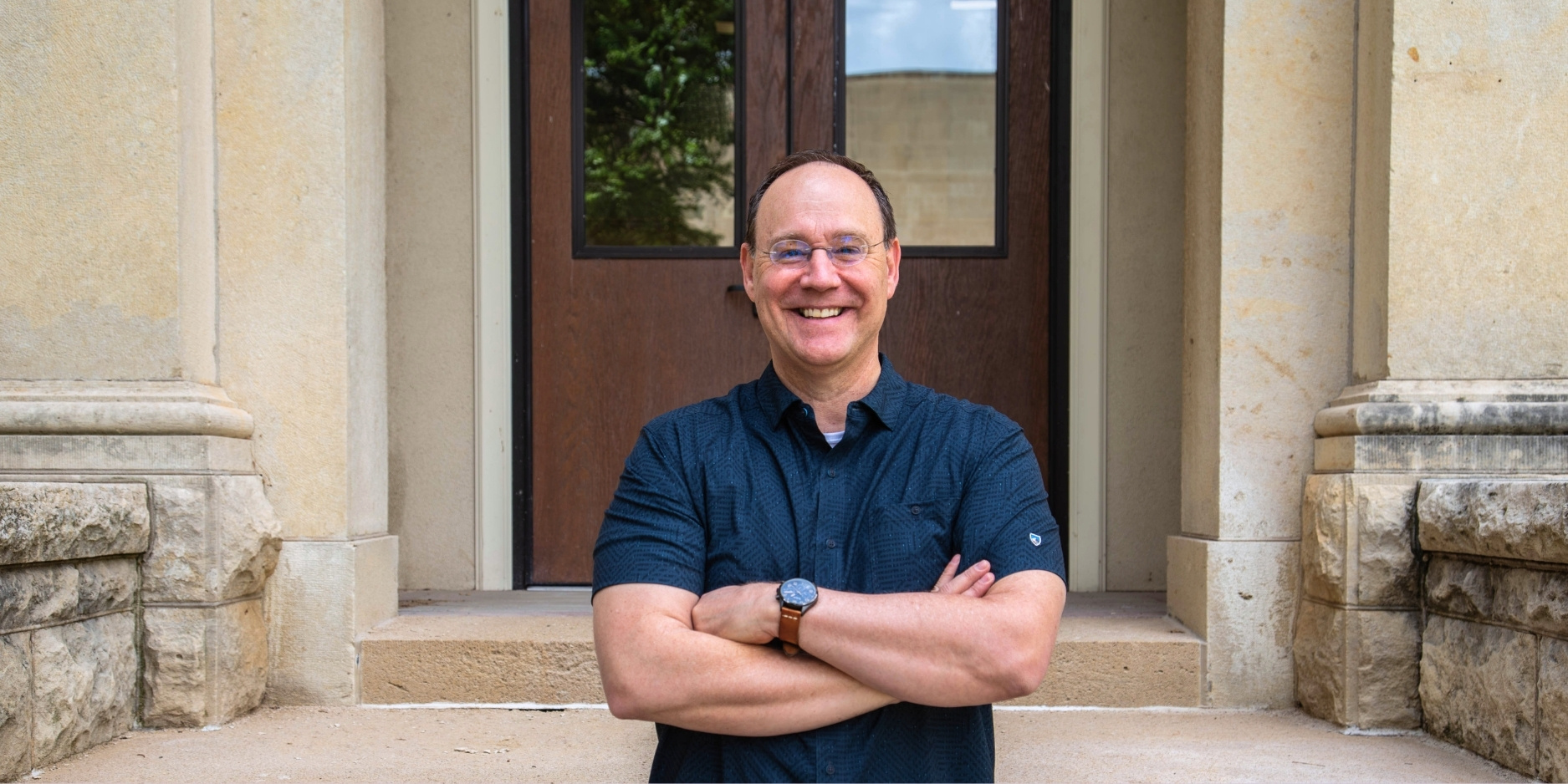
“It's not always about what you see on your news broadcast, but the patterns that influence international relations for years.”
Jeffrey Pickering
"Back then, that meant I was going through hundreds of stacks of paper archives, historical accounts, and other sources in the library for hours at a time," Pickering said.
Today, as co-principal investigator alongside K-State colleague Emizet Kisangani, Pickering helps lead efforts to expand and update the IMI dataset, which now includes 1,114 intervention cases developed over the course of his career.
Chasing patterns
By examining interventions ranging from limited military actions to large-scale campaigns, Pickering and Kisangani analyze a wide set of variables to identify both causes and consequences. But the diversity of cases also creates a central challenge: determining which events belong in the same category.
"We have these rules, and they're not perfect, but if an event fits, it's a duck," Pickering. "When we find evidence across multiple news and historical sources to back it up, that event becomes one of our ducks, lined up alongside hundreds of cases from countries around the world."
Although data collection methods have evolved, the IMI dataset's consistent criteria have preserved its value as a research tool. To structure a complex subject, it includes only interventions involving national military forces, a political objective and the crossing of international borders.
Military intervention is the outcome. There can be a mix of different variables in different countries at different times that lead to the same outcome. It's never universal that X equals Y.
A defining feature of the dataset is its inclusion of non-hostile interventions. While many datasets focus primarily on armed conflict, he argues that a broader spectrum of military activity — including peacekeeping missions, humanitarian deployments and evacuation operations — better captures how military involvement shapes political and social outcomes.
This broader scope allows researchers to examine not only when and why states intervene, but also the varied effects those interventions can have over time.
"When you look for those patterns and understand them, it gives you a much broader perspective on the world — but also on the human experience: who we are, how we affect one another and how human decision-making can have measurable ramifications," Pickering said.
Global events, local effects
For Pickering, connecting technical data work to real-world consequences means building an understanding that global politics is not a simple cause-and-effect relationship, but part of decision-making patterns that can inform future political phenomena.
"These global events really impact people's lives," he said. "Every time a new semester starts, I spend the first day of Intro to World Politics explaining to students why they should care about international relations."

That same logic applies to military intervention: decisions made in one political context can trigger chains of effects that reshape economies, institutions and long-term stability elsewhere. Rather than treating these events as isolated or exceptional, his research seeks to identify whether similar conditions tend to produce similar pressures over time, even when surface details differ.
"That's what makes our work different from researchers working with beakers. We're dealing with behavior, so it's never 100% — but that's what makes it exciting," Pickering said. "If we can look at data with this much variation and still see consistent patterns, then we know we're onto something."
Related Stories
An 'Architist's' journey
Using an “architist” perspective, APDesign graduate Vance Lor will explore untold Hmong histories in Laos through immersive travel-based research, supported...
Waiting for a homecoming
The K-State Missing in Action Project is blending student learning with meaningful public service, giving students the chance to contribute to real missing-in-action...
Jeffrey Pickering named University Distinguished Professor
The professor in the Department of Political Science has been awarded K-State's highest academic title.