Graduate students represent A.Q. Miller School at National Communication Association conference
Dec. 17, 2025
Several master’s and doctoral students represented the A.Q. Miller School of Media and Communication at the National Communication Association (NCA) conference in Denver last month. Read about some of their experiences below.
Karamatu Abdul Malik
Master’s student in mass communication
Abdul Malik presented research which examines how Ghanaian adolescents use digital media and online platforms to access sexual and reproductive health information, and how those behaviors predict teenage pregnancy prevention. This research highlights the importance of credible digital health communication in contexts where sexual health conversations are culturally sensitive, showing how online information can empower youth and help reduce teenage pregnancy in Ghana.
“I received encouragement to develop the study into a journal publication, which has become a driving motivation for me moving forward,” she said. “Engaging with scholars in digital and health communication expanded my academic confidence and sharpened my vision for applying this work beyond conference presentations.”
David Barnhart
Doctoral student in leadership communication
Barnhart and associate professor Sean Eddington conducted research into how resilience is communicated and enacted in the collaboration between the National Bio and Agro-Defense Facility (NBAF) and its Community Liaison Group. The paper, called Situated Resilience-as-Practice: Community Collaboration in High-Containment Laboratory Systems, was presented by Eddington at the conference. The paper provides theoretical insights into resilience-as-practice as a dynamic, communicative process and offers practical guidance for designing cross-sector engagement in high-stakes environments.
“The conference was energizing and deeply affirming for my work on resilience as a practice,” Barnhart said. “Engaging with scholars approaching resilience from different disciplinary angles expanded my perspective and highlighted new questions about how resilience is cultivated and sustained in everyday contexts. Seeing the amazing work being done on resilience from a communicative perspective further fueled my enthusiasm to stay engaged in this scholarship and continue contributing to its growth.”
Sultana Jahan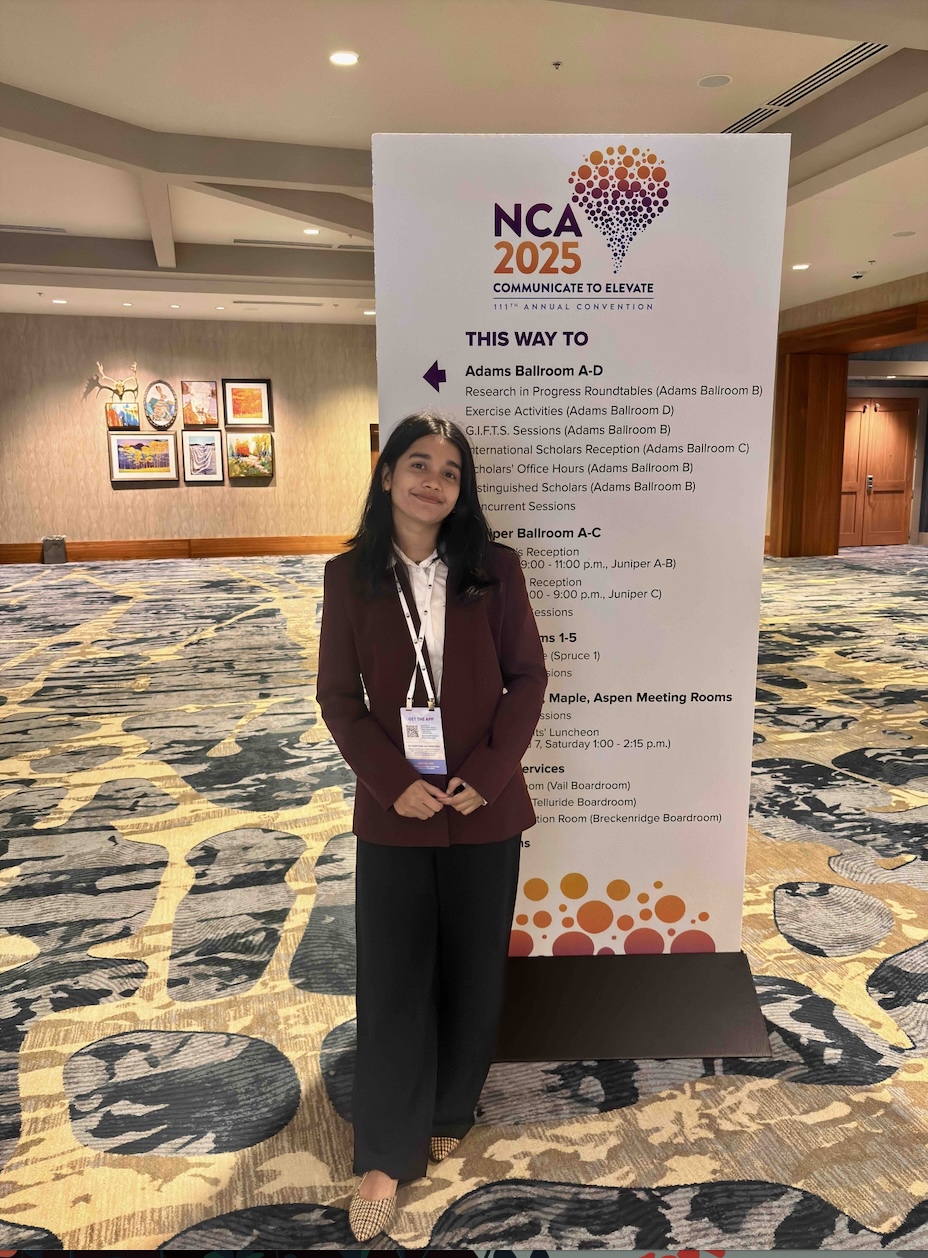
Master’s student in mass communication
Jahan presented research in two sessions. Her full paper was called Role of media in negative health communication: A content analysis of how diabetes-related health misinformation is framed on Facebook videos in the context of Bangladesh. This study analyzed 20 publicly available Facebook videos about diabetes and found that false and unverified remedies were frequently promoted, often through hope-based appeals. The findings highlighted how such misinformation can create serious health risks, especially in low-resource countries like Bangladesh, where many people rely heavily on social media for health information.
Jahan also presented some research in progress that focuses on how a fluid social collective in an oppressed context uses humor and memes to express shared frustrations and organize around common concerns. The paper argues that a meme page in such context can act organizationally by offering a safer, indirect communication space that enables individuals to critique authorities while minimizing the risk of retaliation.
“After presenting my papers and receiving feedback from other scholars, I realized how much it strengthened my confidence in the work I am doing,” Jahan said. “I was also able to connect with other students and professors who share similar interests, which I believe has opened the door to future collaborations. Overall, I would say, this conference exposure deepened my desire to remain actively involved in academic research.”
Monica Reeves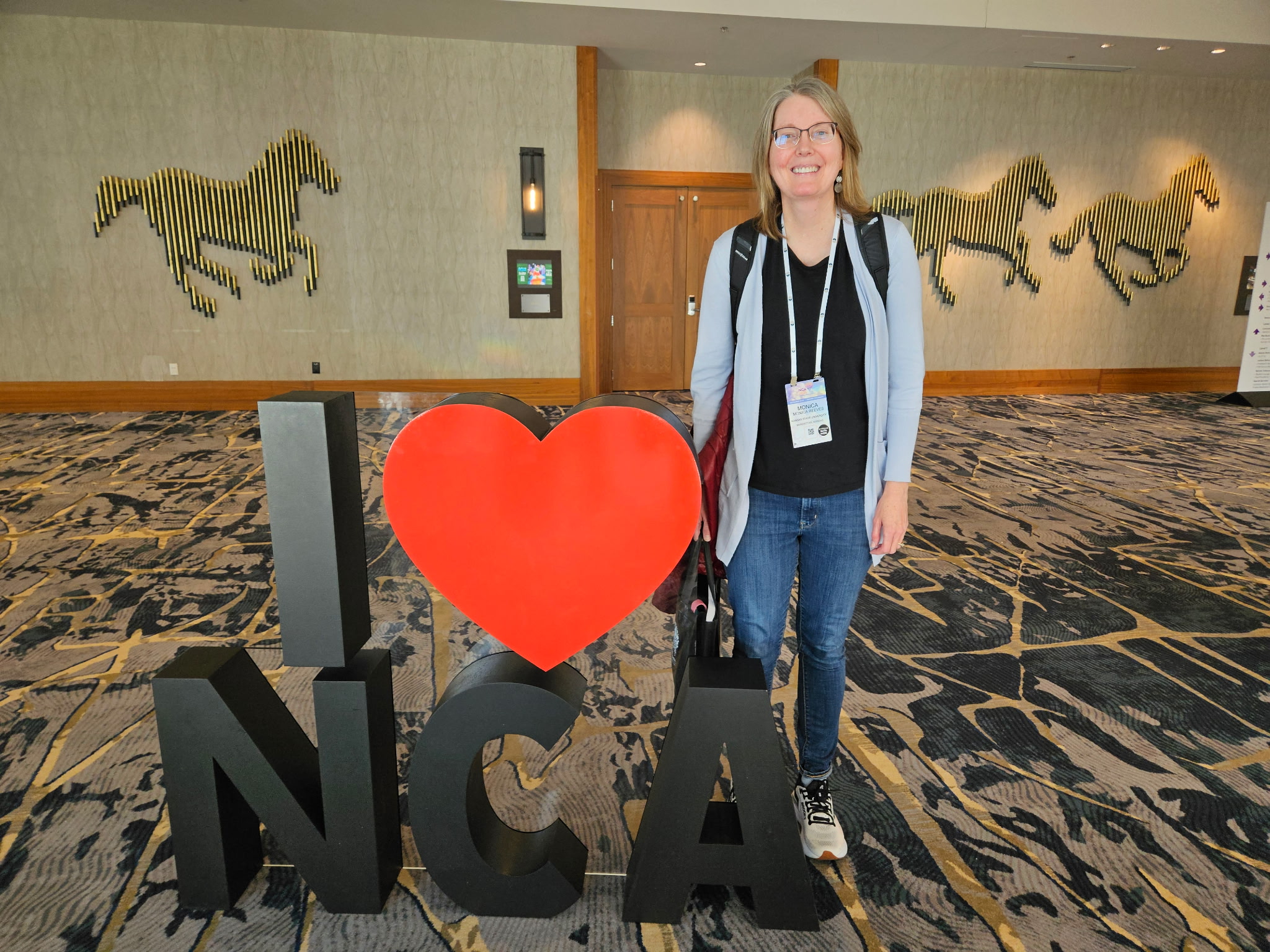
Doctoral student in leadership communication
Reeves presented her paper, Investigating the Stained-glass Ceiling, about the barriers to the leadership advancement of women in religious settings. This paper presents a study of the Evangelical Covenant Church and their support organizations for women, along with initial findings. Analyzing the role of communication through interviews and document analysis, this research aims to reveal challenges that are unique to women in pastoral work. Using community-engaged research, this qualitative study includes working alongside the women serving in these roles to base recommendations for change on their feedback. The purpose of this work is to better understand the reality for women in pastoral leadership in order to move the ECC forward in dismantling the stained-glass ceiling. This work also applies in many other settings and fields with similar dynamics hindering the leadership advancement of women.
“I was energized by the conference and inspired by the work of my fellow panelists,” Reeves said. “I loved connecting with other scholars and also enjoyed attending sessions on a variety of topics.”
Trevor Turner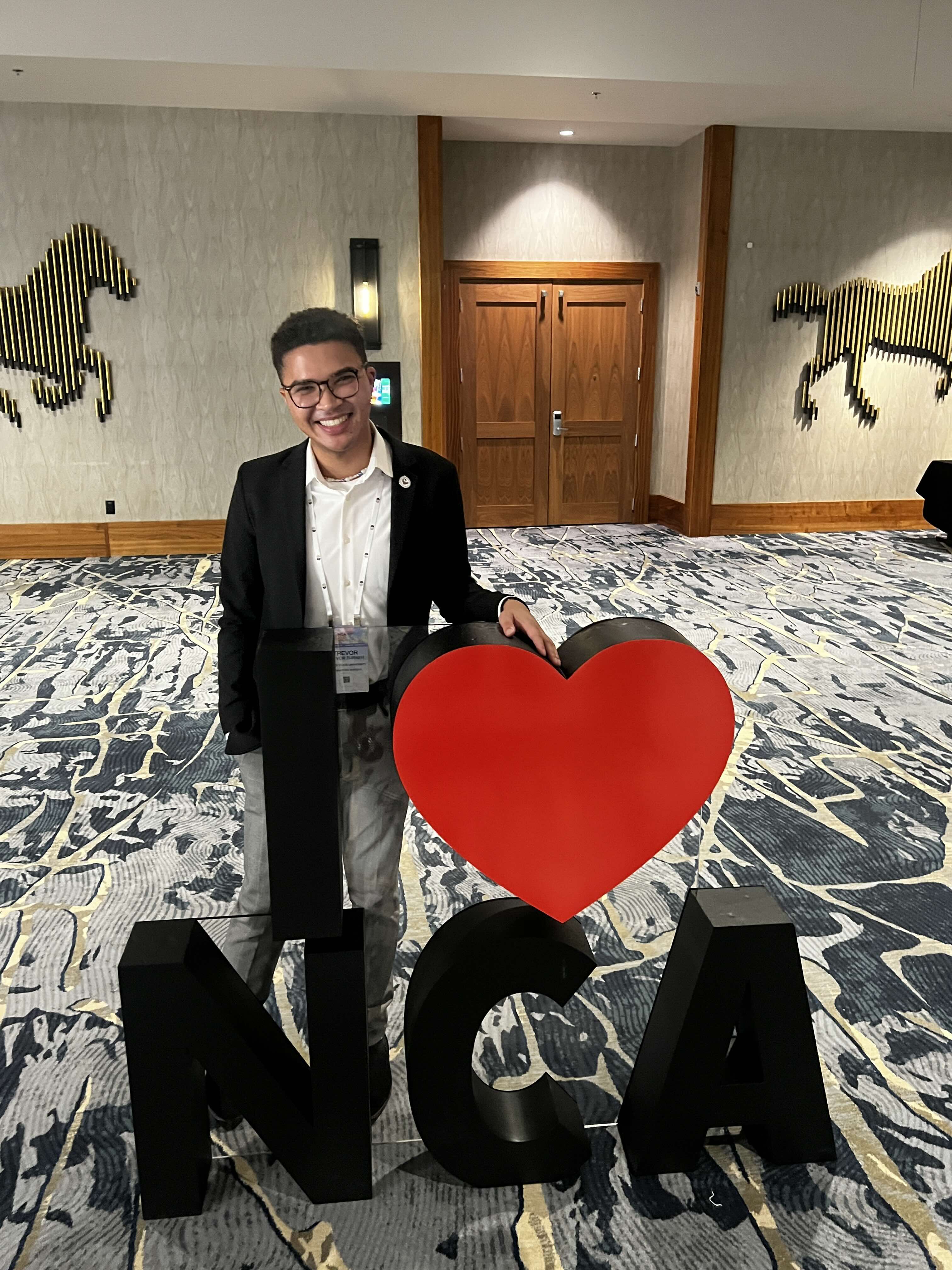
Master’s student in communication studies
Turner presented his individual research paper Uplifting Those the Wake Buried: A Rhetorical Analysis of the African Burial Ground National Monument, as part of the Media and Mourning panel discussion. Through a contextual rhetorical analysis of Rodney Leon and Nichole Hollant-Denis’ African Burial Ground National Monument, the essay considers how design and epistemology intervene in the historical erasure of Black presence. The monument’s architectural choices are analyzed for their capacity to disrupt dominant colonial vernaculars and foster a sense of Black memory. Ultimately, the essay calls for scholars, designers, and spatial users to engage in decolonial approaches that resist white epistemic dominance and uplift Black memorialization strategies within the built environment.
Turner also participated in an activity session called Play! Innovation in Practice. This activity explored the integration of haptic/tactile learning activities into public speaking instruction, specifically within contexts discussing “Importance of Language” in a Public Speaking 1 classroom. To bridge theoretical concepts with practical applications, the board game Hues and Cues is played to illustrate key aspects of language, including denotative vs connotative meaning, rhetorical use-cases, and contextual considerations. By engaging with color-based cues, students practiced deploying clear and concise language while recognizing the functional and vibrant nature of linguistic choices.
“This experience provided generative stepping stones as I transition from master’s to doctoral-level education,” Turner said. “It gave my individual paper exposure to similar scholars and scholarship in the field, highlighted my instructional practices as engaging and innovative, and well as allowed me to continue building a network of mentorship to help and move forward with PhD applications.”
Sherifatu Zakari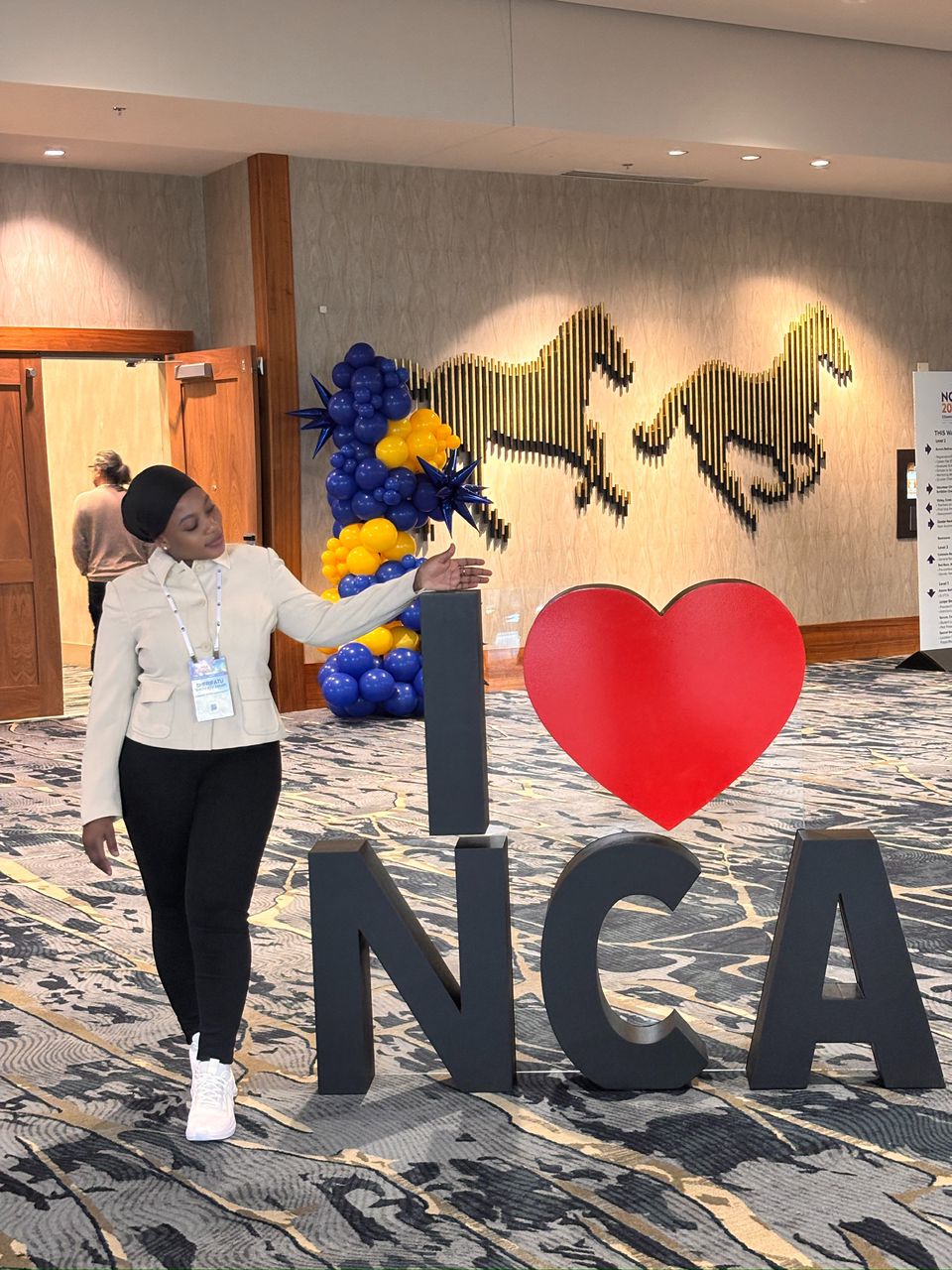
Master’s student in mass communication
At NCA, Zakari presented her research titled The Role of Media in HPV Awareness and Vaccine Acceptance Among College Students. This study investigates the influence of the media on how it shapes students’ knowledge, attitudes, and decisions about HPV vaccination. The topic is especially important because HPV-related cancers are largely preventable, yet many young adults still lack accurate information or feel uncertain about the vaccine. Her research helps sheds more light how media exposure and communication patterns can strengthen or hinder awareness, ultimately informing more effective public health messaging.
“Attending the NCA conference was an incredibly meaningful experience,” Zakari said. “Also, being given the opportunity and platform to present my research strengthened my confidence as an emerging scholar in health communication, and the thoughtful feedback I received helped refine my next steps as I continue developing this project for publication and expand it into my thesis.”